Approximately 40% of insect species worldwide are thought to be in decline and under threat of extinction. Among the key causes are habitat loss, pollution and climate change. Another threat is artificial light from sources like streetlights and security lamps. In new research published in the journal Biological Conservation, scientists say a simple change in artificial lighting could help reduce this particular threat.
The 15-inch Skylight Calendar 2 can stand on a table or mounted to the wall. | Image: Skylight
The start of a new school year can feel hectic, as parents juggle their kids’ classes, extracurriculars and sports on top of work, appointments, and other responsibilities. It’s easy for things to slip through the cracks, but Skylight’s shared smart calendars can help keep everyone on track, and from August 2nd through August 9th they’re up to $90 off.
The sale includes the 10-inch Skylight Calendar for $119.99 ($50 off), the 15-inch Skylight Calendar 2 for $259.99 ($20 off), and the 27-inch Skylight Calendar Max for $479.99 ($90 off). The 10-inch model takes up the least amount of space, though the newer, larger 15-inch Calendar 2 features faster performance, a brighter display, and swappable magnetic frames. The 27-inch Calendar Max, meanwhile, offers the sharpest and largest screen and must be mounted to the wall (the other models can stand on a table or be mounted), making it the easiest option for large families to view from across the room.
Regardless of which model you choose, every Skylight Calendar includes the same set of organizational features. Each member of your household can have their own color-coded profile, and each can sync events from Google, Outlook, Apple, Cozi, or Yahoo calendars. You can also create shared lists for groceries, chores, and other to-dos that everyone can access from the calendar or the companion mobile app, and even send your grocery list to Instacart with a couple of taps. Built-in weather forecasts also can help you plan around upcoming events, and you can also share calendar access with family members and trusted contacts.
You get even more perks if you subscribe to the $79 per year Plus Plan (the first month of the service is free to try). Skylight uses AI to automatically turn emails, photos, flyers, and spreadsheets into calendar entries. It also adds meal planning, tools for assigning and rewarding completed chores, and a mode that displays your photos like a digital picture frame.
Apple in China occupies a position unlike the company’s presence in any other country. China is simultaneously a major consumer market, a critical manufacturing center, an extensive developer economy and the home of Apple’s most determined hardware competitors.
That combination creates an opportunity few technology companies can ignore. China has hundreds of millions of affluent mobile users, a strong appetite for premium devices and a digital economy built around smartphones.
It also creates unusual complexity. Apple must compete with Huawei, Xiaomi, Oppo and Vivo while satisfying Chinese regulations, navigating tensions between Beijing and Washington and reducing its manufacturing dependence without damaging the supplier network that helped make the iPhone possible.
The latest market figures show why Apple cannot treat China as a business it has already lost. IDC estimated that Apple captured 18.1 percent of Chinese smartphone shipments during the second quarter of 2026, placing it second behind Huawei at 22.6 percent.
Apple’s shipments increased by 24.4 percent from the previous year even as the wider Chinese smartphone market contracted. The recovery demonstrated that Chinese demand for the iPhone remains substantial when product design, storage, performance and pricing align with consumer expectations.
The same figures also show why the position can never be considered secure. Huawei remains ahead, local brands respond quickly and a few percentage points can separate several major vendors.
Apple in China Still Has Room to Grow
China is already one of Apple’s largest markets, but its scale means that even established product categories contain room for expansion.
The country has a large premium smartphone segment, extensive 5G coverage and consumers accustomed to using mobile devices for communication, payments, shopping, entertainment, transport and work.
An iPhone purchase can also lead to AirPods, Apple Watch, iPad, Mac, iCloud storage and paid applications. The commercial opportunity is therefore larger than the initial handset transaction.
Apple’s strongest advantage is its integrated ecosystem. An iPhone can share passwords, photographs, messages and files with a Mac or iPad, while AirPods and Apple Watch extend the experience without requiring separate accounts and setup systems.
That continuity becomes more valuable as households accumulate devices. Replacing one iPhone is relatively easy. Leaving an ecosystem containing several products, purchased applications, cloud storage and shared family services involves greater friction.
Apple also benefits from a premium identity that remains recognizable in China. Local manufacturers now produce sophisticated flagship phones, but the iPhone continues to operate as both a personal computer and a luxury consumer product.
The importance of that status should not be exaggerated. Chinese buyers are technically informed and increasingly willing to support domestic brands. Brand recognition can attract attention, but it does not excuse weak features or an uncompetitive product cycle.
Recent iPhone Demand Shows the Opportunity
Apple’s 2026 recovery offers a useful example of how quickly its position can improve.
China’s smartphone shipments fell 4.3 percent during the second quarter as memory and component costs pushed several manufacturers toward higher prices. Apple and Huawei held prices more stable, giving buyers a reason to purchase while competing brands became more expensive.
The iPhone 17 generation also addressed several areas where Apple’s standard models had appeared conservative beside Chinese flagships. Stronger base specifications made the regular iPhone more competitive without requiring every customer to move into the Pro tier.
This matters in a market where consumers compare display technology, camera systems, storage, battery life, charging and AI features closely. Apple cannot depend entirely on iOS loyalty when domestic companies introduce visible hardware improvements at several price levels.
The rebound does not establish a permanent trend. Smartphone demand in China remains affected by economic confidence, upgrade cycles, government incentives and the timing of major shopping festivals.
Apple’s position can also look different according to the research firm and whether a report measures shipments or consumer sales. Quarterly rankings should be treated as evidence of momentum rather than a final judgment on the market.
The important signal is that Chinese consumers have not broadly rejected the iPhone. Demand can return rapidly when the product and price create a convincing upgrade.
Huawei Makes China Apple’s Hardest Market
Huawei gives Apple a competitor with advantages unavailable to most global smartphone manufacturers.
The company combines strong national recognition with advanced cameras, communications technology, custom chips, local services and an expanding HarmonyOS ecosystem. Its return to premium smartphones removed the opening Apple had gained when U.S. restrictions disrupted Huawei’s access to important components.
Huawei can also position its products as part of China’s technological self-reliance. That message carries commercial and political weight beyond a conventional comparison between two phones.
Apple must therefore compete against product quality and national sentiment simultaneously. An iPhone can offer strong performance and still lose a purchase to a domestic flagship viewed as technically capable and strategically important.
Xiaomi, Oppo and Vivo add different pressures. They move quickly across price categories, experiment with folding designs, adopt larger batteries and provide features adapted to local applications and buying habits.
Chinese phone makers also operate inside a retail and software environment they understand directly. They can build relationships with local platforms, carriers and commerce services without translating a global strategy into Chinese requirements.
Apple follows a more centralized product model. That consistency protects the identity of the iPhone, but it can make the company slower to answer features gaining popularity inside one country.
Services Depend on Local Rules
Apple in China is not only an iPhone business. The installed device base creates demand for applications, cloud storage, entertainment, subscriptions and digital purchases.
China has an enormous developer community producing games, commerce platforms, social services, education tools and productivity software. The App Store connects those developers with high-value iPhone and iPad customers.
The relationship is commercially important but politically complicated. Apple must operate the mainland App Store according to Chinese law, including rules affecting games, generative AI, communications services and content.
Applications available elsewhere may be absent from the Chinese storefront. Developers may also need licenses or regulatory approval before distributing certain categories of software.
Apple changed commission rates and related policies for the mainland China storefront in March 2026. The company described the adjustments as part of maintaining a strong business opportunity for Chinese developers.
Regulatory and developer pressure has not disappeared. Complaints involving commissions, distribution restrictions and payment policies continue to challenge Apple’s control of the platform.
The company cannot simply copy its response from another region. European rules focus heavily on alternative marketplaces and interoperability, while China combines competition concerns with content regulation, data localization and licensing requirements.
Every concession must therefore be designed for a distinct legal environment without fragmenting iOS into an unmanageable collection of regional systems.
China Is Also Part of the Product
Apple’s relationship with China extends far beyond the devices sold there.
For more than two decades, Apple and its manufacturing partners built a dense network of factories, component suppliers, engineers, logistics operators and toolmakers across the country.
That network does more than provide low-cost labor. It can place specialists from several suppliers near an assembly site, modify production lines quickly and increase output to enormous volumes during a product launch.
China’s infrastructure also supports the less visible stages of manufacturing. Components require precision tooling, testing equipment, chemicals, packaging, subassemblies and experienced quality-control teams before final assembly begins.
Apple has expanded iPhone production in India and moved parts of its Mac, iPad, Apple Watch and AirPods supply chains to countries including Vietnam. It is also increasing semiconductor and component commitments in the United States.
Those investments reduce the danger of relying on one country, but they do not recreate China’s complete manufacturing environment immediately.
A factory in another region may assemble an iPhone while still depending on Chinese machinery, materials, subcomponents or engineering support. Production diversification is therefore a gradual redistribution of individual stages rather than a clean departure.
Apple must reduce concentration risk without weakening the manufacturing system responsible for its product quality, scale and launch schedules.
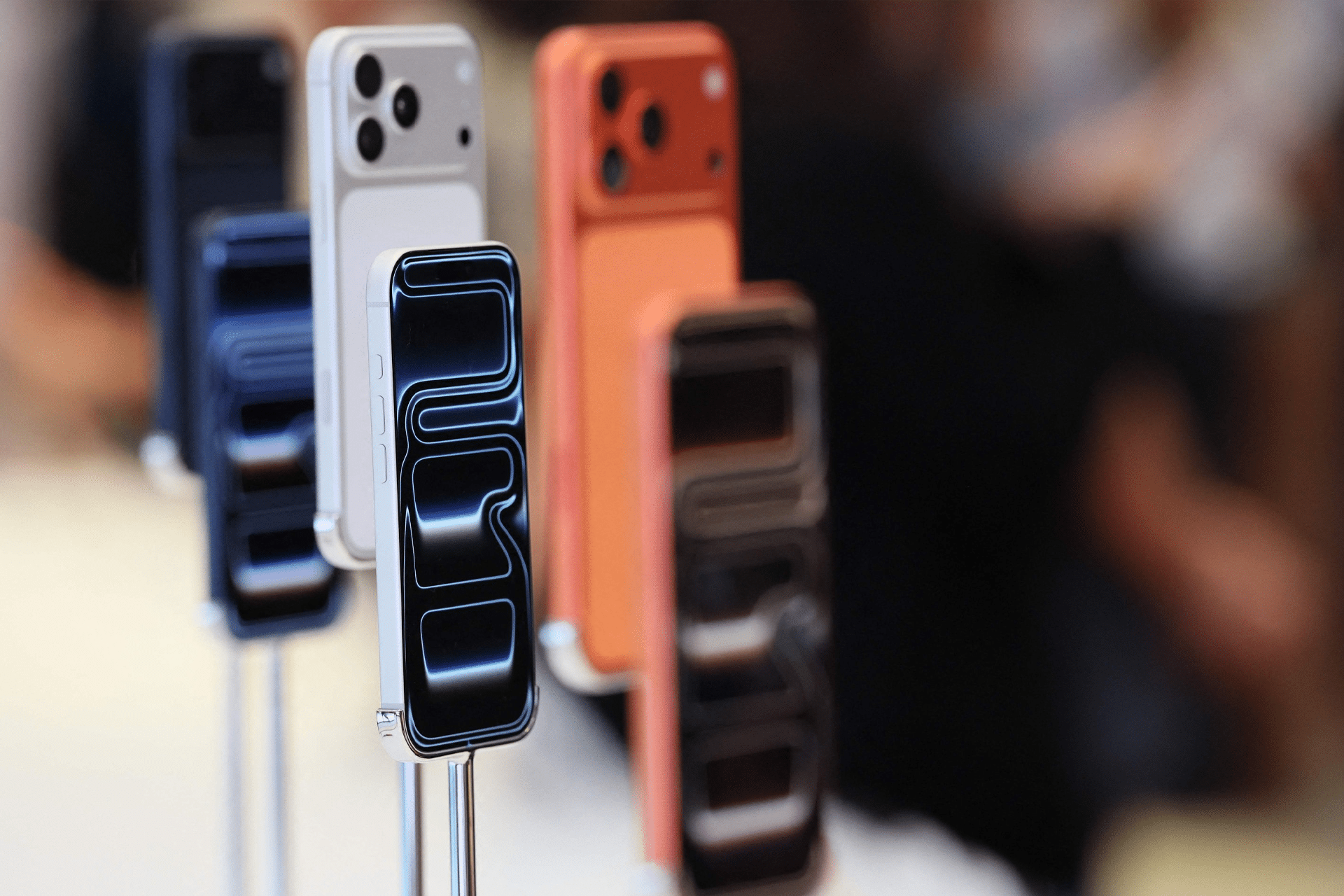
Image Credit: AFP Photo
Trade Tensions Turn Efficiency Into Risk
The same China supply chain that provides Apple with extraordinary efficiency also exposes the company to political decisions outside its control.
Tariffs can raise the cost of devices exported from Chinese factories. Export restrictions can limit access to materials or production equipment, while sanctions may affect suppliers and technology partners.
Chinese government policies can influence the use of foreign devices inside state agencies and companies. U.S. rules can restrict the technologies available to Chinese firms that also participate in Apple’s supplier network.
Apple cannot solve these problems through product design alone. It must maintain relationships with two governments whose technology policies increasingly emphasize security, domestic production and strategic independence.
Moving more assembly to India gives Apple additional flexibility, particularly for iPhones destined for the United States. China nevertheless remains important as a production center and consumer market.
An aggressive withdrawal could damage supplier relationships and local sales. Moving too slowly could leave Apple vulnerable to another trade disruption.
The company is trying to preserve Chinese capabilities while creating enough capacity elsewhere to keep a political dispute from becoming a worldwide product shortage.
Retail Stores Give Apple a Direct Relationship
Apple’s physical stores remain an important advantage in China because they give the company direct contact with customers.
The stores allow buyers to compare models, receive technical support, attend educational sessions and enter the ecosystem without depending entirely on a carrier or reseller.
That experience is particularly valuable for premium products. A customer considering a Mac, Apple Vision Pro or high-end iPhone may need more explanation than someone replacing an inexpensive handset.
Retail locations also communicate long-term commitment. A prominent store represents more than a sales channel; it signals that Apple intends to remain part of the local technology market.
Online commerce is equally important. Chinese consumers are accustomed to large shopping festivals, aggressive promotions and rapid delivery through domestic platforms.
Apple must balance its controlled global pricing with a market where discounts can change quarterly rankings. Too little flexibility makes the iPhone appear expensive, while frequent reductions can train customers to delay purchases and weaken its premium image.
The strongest 2026 performance came partly from avoiding price increases while component costs were forcing rivals to reconsider their pricing. That advantage may disappear when competitors adjust their supply chains or launch another cycle of promotions.
Chinese Consumers Set a Higher Product Standard
China is often discussed as a sales problem for Apple, but it also functions as a demanding test of the iPhone.
Domestic flagship phones compete through larger batteries, rapid charging, advanced camera hardware, folding displays and deep integration with local digital services.
Features considered experimental elsewhere can become established expectations more quickly in China. Apple’s slower adoption cycle may look disciplined in one market and conservative in another.
The company must decide which expectations represent durable improvements and which are temporary specification contests. Copying every local feature would weaken Apple’s focused product strategy, but ignoring major changes creates openings for rivals.
This pressure can benefit Apple globally. Competition in China forces the company to defend the value of its standard iPhone, improve battery efficiency, strengthen cameras and make software features more useful outside English-speaking markets.
The opportunity is therefore not limited to selling more devices. China can reveal where Apple’s global assumptions no longer match the most competitive part of the smartphone industry.
Amazon today has the AirPods Pro 3 available for $199.99, down from $249.00. This is the best price we've seen on the AirPods Pro 3 since Prime Day in June, coming in around $20 higher when compared to that all-time low price, and it's accompanied by a solid deal on the AirPods 4 and AirPods Max 2.
Note: MacRumors is an affiliate partner with some of these vendors. When you click a link and make a purchase, we may receive a small payment, which helps us keep the site running.
This model of the AirPods Pro launched in September 2025 and has 2x better Active Noise Cancellation than the previous generation, better audio quality, a revised fit that's meant to improve comfort and stability, Live Translation for in-person conversations, and heart rate sensing for workouts.
The AirPods Max 2 is available for $449.00 in all colors this week, down from $549.00. This one is a solid second-best price, and Amazon provides an estimated delivery date of August 7 for free shipping, with faster delivery options for Prime members.
You can also get the AirPods 4 for $99.00, down from $129.00. This is a second-best price on the AirPods 4, which is the base model without Active Noise Cancellation.
Additionally, you can get the AirPods 4 with ANC on sale for $144.99 right now on Amazon, down from $179.00. Similar to the base model, we haven't tracked a record low price on the AirPods 4 with ANC in months, making today's deal a solid second-best option for anyone shopping for AirPods this summer.
Head to our full Deals Roundup to get caught up with all of the latest deals and discounts that we've been tracking over the past week.
Deals Newsletter
Interested in hearing more about the best deals you can find in 2026? Sign up for our Deals Newsletter and we'll keep you updated so you don't miss the biggest deals of the season!
Most sensors are designed to do only one thing: detect what passes through them. But what if a sensor could do more? To create a new generation of technology, researchers have looked to living systems for inspiration. If a sensor could detect molecules, could it also remember previous interactions and selectively respond to them?
The 31-minute animated special follows Snoopy after his doghouse disappears during a yard sale. Charlie Brown attempts to help his devastated friend by organizing a search, but recovering the missing home becomes more difficult once it has left the neighborhood.
The story uses Snoopy’s doghouse as more than a familiar red prop. It is the place where he sleeps, stores his possessions and begins the imaginary adventures that transform him into a World War I flying ace, author and explorer.
Losing it removes the physical center of that private world. Charlie Brown and Snoopy must determine whether home depends on recovering the exact building or remaining close to the people and memories connected to it.
The Apple Original is rated TV-G and includes Dolby Atmos audio in supported languages and configurations. An Apple TV subscription is required, with availability extending across the Apple TV app and the service’s supported devices.
Image Credit: Apple Inc.
There’s No Place Like Home, Snoopy Begins at a Yard Sale
The central problem begins with an ordinary neighborhood event rather than one of Snoopy’s elaborate fantasies.
His doghouse is mistakenly treated as an item that can be sold. By the time Charlie Brown and the others understand what happened, Snoopy has lost the one place he regards as entirely his own.
The premise creates a recognizable childhood fear. A treasured object can appear unimportant to another person while carrying memories and emotional meaning for its owner.
Snoopy cannot explain that attachment through conventional dialogue. His reactions, imagination and physical comedy must communicate why the loss feels larger than a missing piece of outdoor furniture.
Charlie Brown responds by doing something he rarely manages for himself: taking charge with enough confidence to help someone else. His search gives the special momentum while preserving the uneven friendship at the center of many Peanuts stories.
Snoopy frequently ignores Charlie Brown, takes his meals for granted and escapes into fantasies. Charlie Brown continues caring for him even when the beagle’s behavior makes that affection difficult to return.
The missing doghouse reverses their normal relationship. Snoopy needs practical help, while Charlie Brown becomes the person capable of guiding him through the disappointment.
Why Snoopy’s Doghouse Matters
Charles M. Schulz turned Snoopy’s doghouse into one of the most flexible locations in the Peanuts comic strip.
From the outside, it is a simple red structure with a black entrance. Snoopy rarely sleeps inside it, preferring to rest on the pointed roof despite the physical impossibility of remaining balanced there.
The interior follows no ordinary rules. Comic storylines have suggested that it contains a pool table, television, library, guest rooms, paintings and other possessions that could not fit within its exterior dimensions.
Schulz generally avoided showing the complete interior. That decision allowed the doghouse to expand according to Snoopy’s imagination without requiring one definitive layout.
The roof also becomes the Sopwith Camel flown by the World War I flying ace. A few changes in posture and sound can transform a suburban backyard into an aerial battle with the Red Baron.
For Snoopy, the building is simultaneously a bedroom, stage, aircraft, writing desk and portal into imaginary lives. Selling it removes the starting point for nearly every identity he creates.
There’s No Place Like Home, Snoopy can therefore explore loss without introducing a permanent tragedy into the Peanuts world. The doghouse is physically replaceable, but Snoopy’s attachment to the original makes the search emotionally credible.
Image Credit: Apple Inc.
Charlie Brown Voices Lead the New Special
Riley Vargas voices Charlie Brown, while Terry McGurrin returns as Snoopy. McGurrin has become closely associated with the modern animated version of the character through Apple’s Peanuts programming.
Rob Tinkler voices Woodstock, the small yellow bird who frequently joins Snoopy’s adventures. Although Woodstock’s speech appears as rapid bird sounds, Snoopy understands him, allowing the pair to communicate without conventional dialogue.
Grace Nicolaou-Wood voices Sally, and Jo-Hannah Atchison performs Lucy. Kitai O’Garro plays Franklin, Josephine Nisbett voices Marcie and Lexi Perri voices Peppermint Patty.
Athan Giazitzidis appears as Linus, while Diego Whalen voices Rerun. Noah Paisley plays Milo.
The larger ensemble gives Charlie Brown access to the neighborhood network needed for a search without shifting the story away from Snoopy. Each character can respond differently to the problem according to an established personality.
Lucy may approach the situation with certainty, Linus with reflection and Sally with her own interpretation of what occurred. Woodstock has the closest connection to Snoopy’s private world and understands what the doghouse represents without requiring an explanation.
There’s No Place Like Home, Snoopy Behind the Scenes
Ridd Sorensen directed There’s No Place Like Home, Snoopy, with Rob Boutilier serving as series director. Rob Hoegee wrote the special.
Executive producers include Josh Scherba, Stephanie Betts, Logan McPherson, Paige Braddock, Chris Bracco and Mark Evestaff.
The production continues Apple’s collaboration with WildBrain, Peanuts Worldwide and Lee Mendelson Film Productions. Those organizations combine modern animation production with the characters and creative legacy established by Schulz.
The special was produced in Canada and is available with extensive dubbing and subtitle support.
Apple lists audio options spanning languages including:
Arabic
Cantonese
Danish
Dutch
French
German
Hindi
Italian
Japanese
Korean
Mandarin
Portuguese
Spanish
Thai
Turkish
Vietnamese
Audio descriptions are included across many of those language options. English playback supports Dolby Atmos and Dolby 5.1 on compatible equipment.
The wide localization reflects the international reach Peanuts developed long before streaming. Schulz’s comic strip appeared in more than 2,600 newspapers and reached readers across 75 countries.
Apple can now release one new animated story simultaneously across more than 100 countries and regions without waiting for separate broadcast schedules.
An Original Song Gives the Story Its Emotional Center
There’s No Place Like Home, Snoopy includes the original song “Home, Where Your Heart Found Me” by singer-songwriter Allen Stone.
Music has always occupied an important place in animated Peanuts productions. Vince Guaraldi’s jazz compositions became inseparable from the classic television specials, creating a musical identity that later productions must acknowledge without simply reproducing the same material.
An original song allows the new story to develop its own emotional language around home and attachment. It can express ideas that Snoopy cannot communicate verbally while avoiding the need for Charlie Brown to explain the complete meaning of the adventure.
The title connects home with an emotional discovery rather than an address or possession. That idea supports the special’s central distinction between the missing doghouse and the relationships Snoopy still has around him.
Apple previously expanded the musical side of its Peanuts catalog through Snoopy Presents: A Summer Musical, the first Peanuts musical special in decades. The addition of Allen Stone continues that willingness to use original songs rather than treating music only as background.
Image Credit: Apple Inc.
How to Watch There’s No Place Like Home, Snoopy
The special is available through the Apple TV app on iPhone, iPad, Mac, Apple TV 4K and Apple Vision Pro.
It can also be watched on supported smart televisions from manufacturers including Samsung, LG, Sony, Vizio and TCL. Roku, Amazon Fire TV, Google TV, PlayStation and Xbox devices provide additional access.
Web playback is available through tv.apple.com after signing in with an Apple Account carrying an active subscription.
Apple TV currently costs $12.99 per month in the United States and includes a seven-day trial for eligible new subscribers. Customers activating a qualifying new iPhone, iPad, Mac or Apple TV 4K may receive three free months, subject to Apple’s promotional conditions.
There’s No Place Like Home, Snoopy is presented as one complete special rather than an episodic series. Its 31-minute running time makes it closer to the length of traditional Peanuts television programs than a feature film.
Parents can locate it within the Kids & Family area of Apple TV. Its TV-G classification indicates that it is designed for a general audience, although rating systems and descriptions can vary by country.
Apple Builds a Permanent Peanuts Library
Apple has served as the principal streaming home for Peanuts since 2020, combining classic holiday programs with new specials, series and documentaries.
The agreement has sometimes received attention because programs such as A Charlie Brown Christmas, A Charlie Brown Thanksgiving and It’s the Great Pumpkin, Charlie Brown spent decades appearing on broadcast television.
Apple has provided limited free streaming windows for major holiday titles, allowing people without a subscription to continue watching selected specials during their associated seasons.
The wider library includes The Snoopy Show, Snoopy in Space and Camp Snoopy. Original Snoopy Presents specials have focused on characters and subjects that received less attention in the earliest television productions.
One-of-a-Kind Marcie centered on Marcie’s quiet approach to leadership. Welcome Home, Franklin expanded Franklin’s introduction to the neighborhood, while Lucy’s School explored the group’s anxiety about change.
Apple also carries the documentaries Who Are You, Charlie Brown? and Peanuts in Space: Secrets of Apollo 10.
The service added This Is America, Charlie Brown and The Charlie Brown and Snoopy Show during July 2026, bringing more material from the 1980s into the same streaming catalog as the latest production.
Snoopy’s Next Search Heads to the Big City
Apple’s Peanuts partnership extends through 2030, giving WildBrain and Peanuts Worldwide several more years to create original series and specials for the service.
The most ambitious announced project is Snoopy Unleashed, an animated feature film currently in production.
That story will reverse the situation presented in There’s No Place Like Home, Snoopy. Instead of Charlie Brown searching for the doghouse, the Peanuts gang will search for Snoopy after he runs away to the Big City.
The larger setting will move Snoopy beyond the familiar neighborhood and require Charlie Brown, Lucy, Linus and the others to navigate an environment rarely explored in the comic strip.
Apple plans to release Snoopy Unleashed in 2027. Until then, Snoopy’s missing doghouse provides a smaller journey built around the same question the film will approach from another direction: what remains of home when the person or place associated with it disappears?
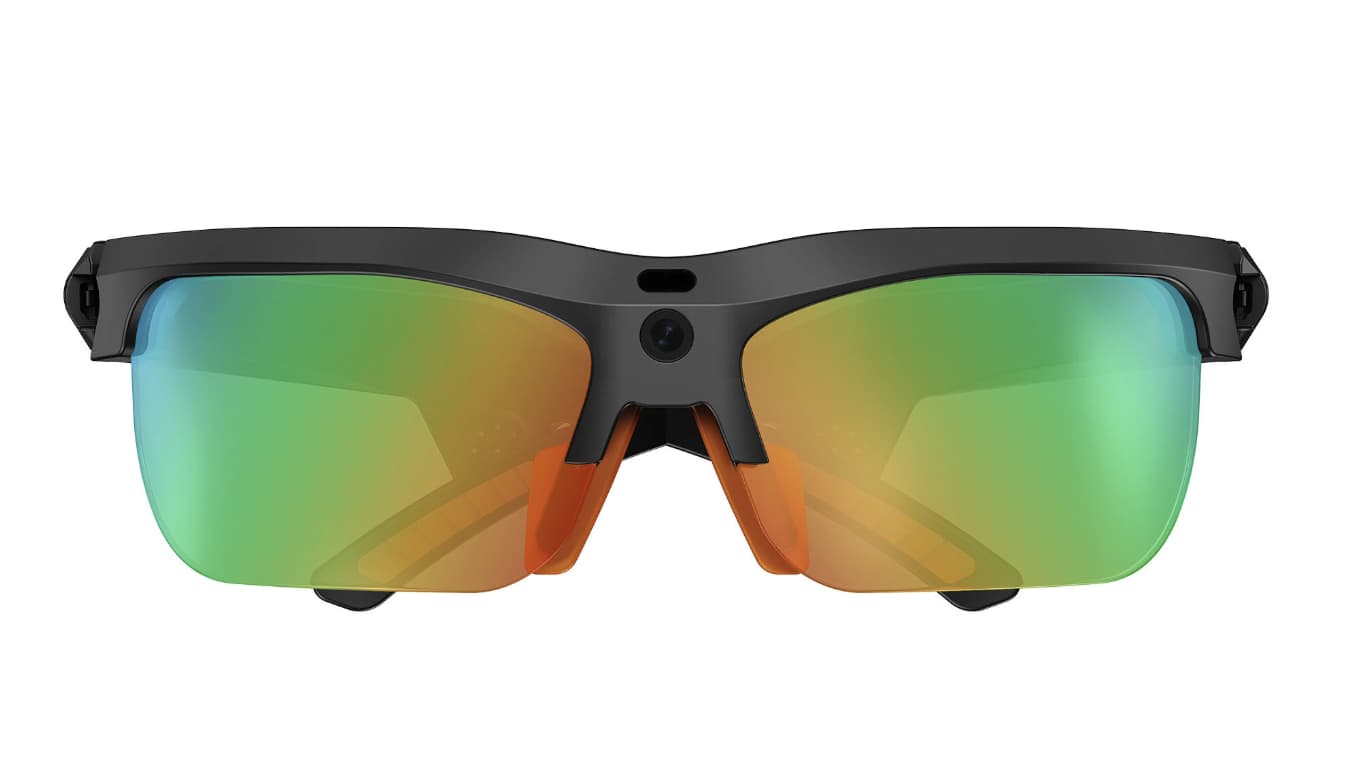
Smart wearables continue to evolve, and DT NO.1 E08 Smart Cycling Glasses are a perfect example of how artificial intelligence, photography, and audio technology can be integrated into a lightweight pair of sports glasses. Designed for cyclists, outdoor enthusiasts, and tech lovers, the E08 combines AI recognition, hands-free photography, video recording, music playback, and voice interaction into a single wearable device.
Designed for Active Lifestyles
The DT NO.1 E08 features a sporty cycling-glasses design that prioritizes comfort and stability during outdoor activities. Whether you’re riding a bike, hiking, running, or traveling, the lightweight frame provides a secure fit while offering protection from sunlight and wind.
Its modern aerodynamic appearance makes it suitable for both athletic and casual use, allowing users to capture experiences without carrying additional devices.
AI-Powered Smart Assistance
One of the biggest highlights of the E08 is its built-in AI functionality. The glasses support OpenAI-powered recognition technology, enabling users to interact with intelligent voice features while on the move.
AI capabilities include:
Object recognition
Voice assistant functions
Smart information retrieval
Voice interaction
Real-time AI-assisted experiences
These features transform the glasses from a simple recording device into a wearable AI companion.
13MP Camera with 32MP Photo Capture
The integrated 13MP camera allows users to capture moments directly from their point of view. Unlike traditional action cameras, the E08 records exactly what the wearer sees, making it ideal for cycling adventures, scenic rides, and outdoor exploration.
Photo resolution reaches up to 32MP, delivering detailed images suitable for sharing on social media or preserving memorable experiences. The hands-free design means users can focus on the activity rather than holding a smartphone.
1080P Video Recording with EIS Stabilization
For video creators and outdoor sports enthusiasts, the E08 supports 1080P HD video recording. Electronic Image Stabilization (EIS) helps reduce vibrations and shaking, producing smoother footage during movement.
Whether cycling through city streets or mountain trails, the stabilization technology improves recording quality and makes videos more enjoyable to watch.
Fast Wi-Fi 6 Connectivity
The inclusion of Wi-Fi 6 technology enables faster wireless transfers and improved connectivity. Users can quickly synchronize photos and videos with their smartphone, reducing the need for cables and simplifying content sharing.
Wi-Fi 6 also enhances communication between the glasses and companion applications, ensuring responsive performance for AI features and media management.
Open-Ear Audio Experience
The E08 functions as more than just smart glasses. Built-in speakers provide an open-ear listening experience, allowing users to enjoy music, navigation prompts, and voice responses while remaining aware of their surroundings.
This design is especially beneficial for cyclists and runners who need to hear traffic, pedestrians, and environmental sounds for safety. The device supports up to 10 hours of music playback, making it suitable for long rides and outdoor adventures.
Smart Features for Everyday Use
Beyond photography and audio, the DT NO.1 E08 offers a range of intelligent functions:
Voice control
AI recognition
Hands-free operation
Music playback
HD video recording
Wireless file transfer
Outdoor sports support
Smart assistant integration
These features make the glasses useful not only for sports but also for travel, commuting, sightseeing, and daily activities.
For cyclists and outdoor enthusiasts, the E08 provides a practical combination of safety and convenience. Users can listen to music, receive AI assistance, capture photos, and record videos without reaching for a smartphone.
The first-person perspective recording capability makes the glasses particularly appealing for adventure content creators, while the open-ear audio design helps maintain environmental awareness during activities. Smart-glasses users often view camera, audio, AI assistance, and battery life as the most important features in everyday wearable devices.
Final Verdict
DT NO.1 E08 Smart Cycling Glasses successfully blend AI technology, hands-free photography, HD video recording, and open-ear audio into a versatile wearable device. With its 13MP camera, 32MP photo capability, Wi-Fi 6 connectivity, OpenAI recognition features, and 10-hour battery life, the E08 offers an impressive package for cyclists, travelers, and outdoor adventurers.
For users seeking a smart wearable that can capture experiences, provide AI assistance, and deliver entertainment without sacrificing comfort or awareness, the DT NO.1 E08 stands out as a compelling option in the growing smart glasses market.
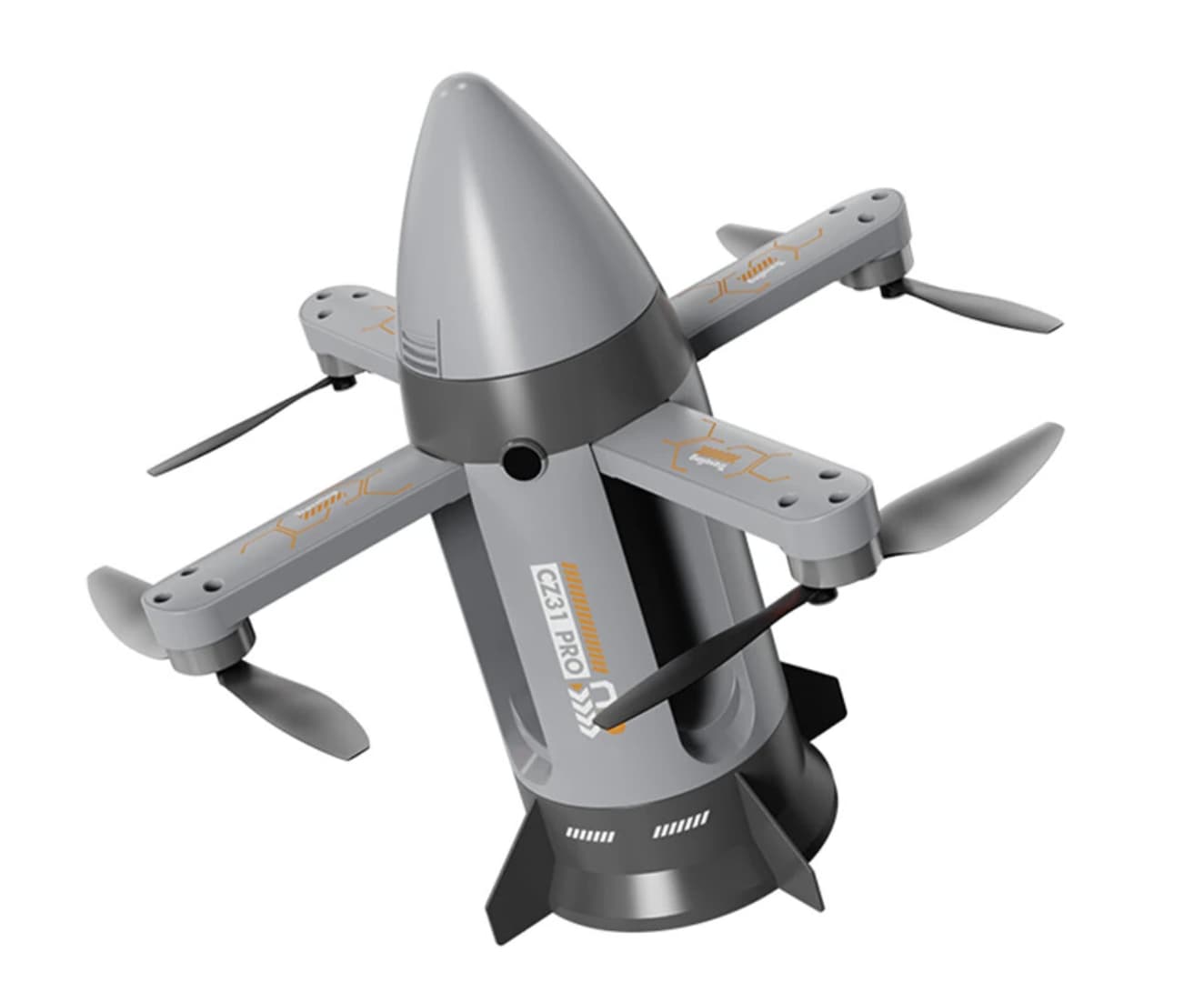
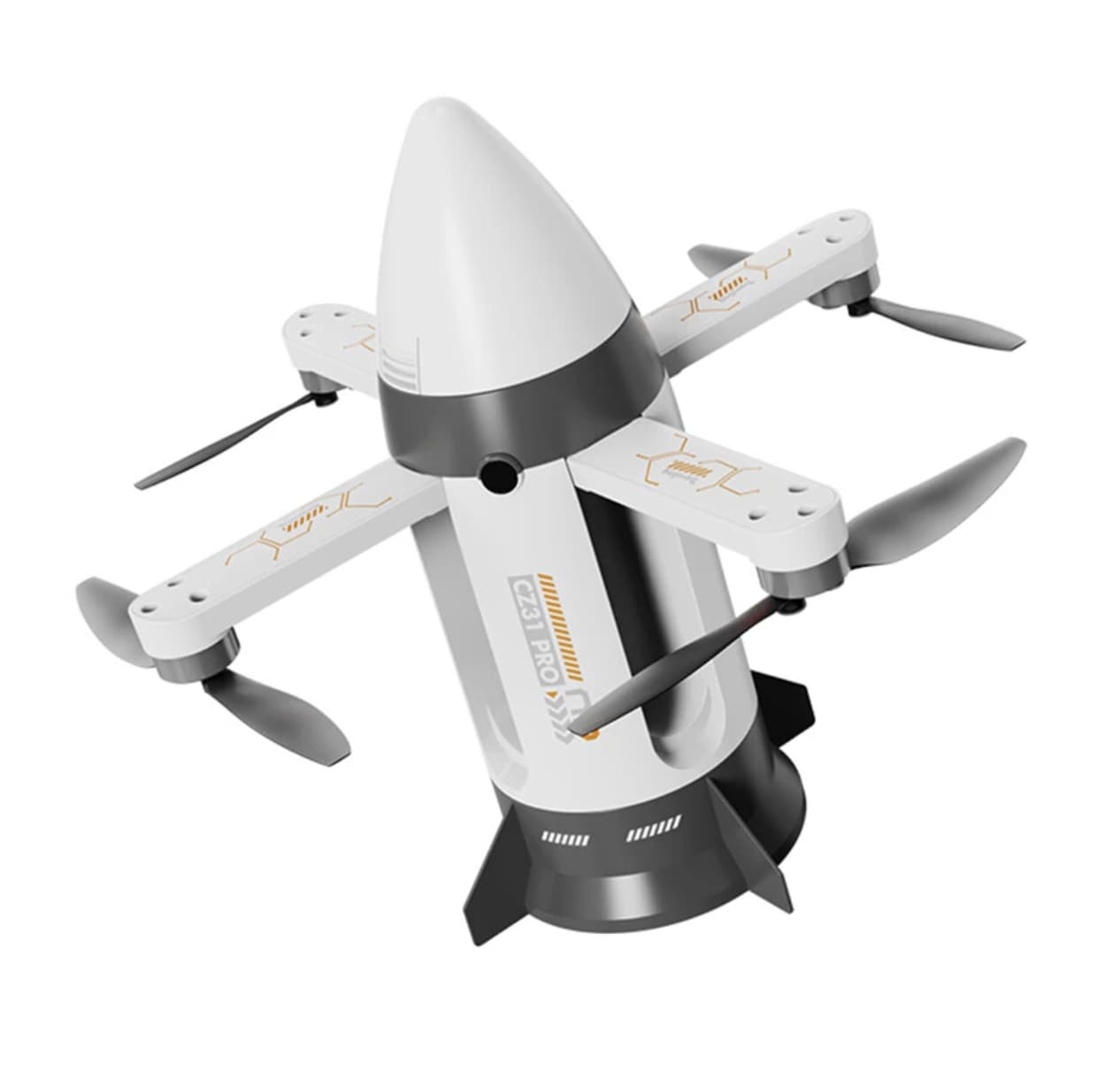
Looking for an RC drone that stands out from the crowd? CZ31 Rocket-Style RC Drone combines an eye-catching rocket-inspired design with beginner-friendly flight controls, brushless motors, Wi-Fi FPV, and unique visual effects that make every takeoff feel like a space launch. Designed primarily for recreational flying, this Ready-to-Fly (RTF) quadcopter offers an entertaining experience for kids, beginners, and drone enthusiasts alike.
A Rocket-Inspired Design That Turns Heads
Unlike traditional quadcopters, the CZ31 adopts a rocket-inspired appearance complete with folding arms that resemble a futuristic launch vehicle. During takeoff, the drone enhances the illusion with LED lighting and a mist spray effect beneath the aircraft, creating a realistic rocket exhaust visual.
It’s important to note that the “rocket missile-launch” branding refers purely to the drone’s appearance and visual effects—it is designed solely as a recreational RC aircraft.
Brushless Motors for Stable Flight
Powering the CZ31 are efficient brushless motors, which provide smoother flight performance and greater durability compared to conventional brushed motors.
Advantages include:
Improved flight stability
Longer motor lifespan
Lower operating noise
Better efficiency
Enhanced reliability for regular outdoor flying
Combined with its 6-axis gyroscope, the drone delivers stable hovering and responsive controls, making it suitable for both beginners and casual pilots.
Beginner-Friendly Flight Features
The CZ31 includes several intelligent functions that simplify flying:
One-key takeoff and landing
Altitude hold
Headless mode
Multiple speed settings
Stable hover control
These features help new pilots gain confidence while allowing more experienced users to enjoy quick and hassle-free flights.
Wi-Fi FPV with Built-In Camera
The drone comes equipped with a 480P HD camera that supports 2.4GHz Wi-Fi FPV (First-Person View) transmission.
Pilots can connect the drone to a compatible smartphone to:
View live video
Capture aerial photos
Record videos
Experience FPV flying
The FPV transmission range is approximately 30 meters, while the remote-control range extends to around 50 meters under ideal conditions.
Mist Spray and LED Lighting
One of the most entertaining features of the CZ31 is its one-touch mist spray system.
Using the included water dropper, users can fill the small reservoir to produce a visible mist beneath the drone. Combined with colorful LED lighting, the effect resembles rocket exhaust during takeoff, making evening flights especially enjoyable.
The spray system is intended purely as a visual effect and can operate for approximately 8 minutes after a brief activation.
Compact and Portable
The CZ31 measures approximately:
200 × 200 × 190 mm
Takeoff weight: 175g
Its foldable arms make transportation and storage convenient, allowing users to easily pack the drone into a backpack for outdoor adventures.
Battery Performance
The drone is powered by a 3.7V 1200mAh Li-Po battery, offering:
6–9 minutes of flight time
Around 60 minutes charging time
The modular battery design also allows for quick battery swaps if additional batteries are purchased separately.
Package Contents
The Ready-to-Fly package includes:
CZ31 Rocket-Style RC Drone
2.4GHz remote controller
3.7V 1200mAh battery
USB charging cable
Spare propellers
Propeller guards
Water dropper for the mist effect
Screwdriver and mounting screws
User manual
Key Specifications
Rocket-inspired foldable design
Brushless motor system
480P HD camera
2.4GHz Wi-Fi FPV
One-key takeoff and landing
Headless mode
Altitude hold
LED lighting effects
Mist spray “rocket exhaust” effect
3.7V 1200mAh Li-Po battery
Flight time: 6–9 minutes
Control range: approximately 50 meters
FPV range: approximately 30 meters
Who Should Buy the CZ31?
The CZ31 is a great choice for:
First-time drone pilots
Kids and families
Hobbyists looking for a fun recreational drone
Users who enjoy unique drone designs
Anyone seeking an affordable FPV quadcopter with visual effects
Final Verdict
CZ31 Rocket-Style RC Drone focuses on fun rather than professional aerial photography. Its rocket-inspired styling, LED lighting, mist spray effect, brushless motors, and beginner-friendly flight controls create an engaging flying experience that stands out from conventional toy drones.
While its 480P camera and modest flight time reflect its entry-level positioning, the CZ31 offers plenty of entertainment value for recreational users. If you’re looking for a unique RC quadcopter that combines imaginative design with easy-to-fly features, the CZ31 is a compelling option for weekend flying and family fun.
Bentham Science Launches Two New Journals to Accelerate Research in Wireless Communications and Engineering
Bentham Science Publishers has announced the launch of two new peer-reviewed journals designed to capture the rapid transformation of modern technology: Wireless and Communication Letters and Current Engineering Letters and Reviews. Both publications are now open for manuscript submissions, offering researchers an international platform to share emerging discoveries in communication systems, engineering technologies, and interdisciplinary innovation. The launches arrive as advances in artificial intelligence, sixth-generation wireless networks, satellite systems, advanced materials, and sustainable engineering continue to reshape scientific research and industrial development.
Wireless and Communication Letters is focused on the technologies that enable today’s increasingly connected world. The journal will publish original letters, full-length research articles, comprehensive reviews, mini-reviews, and guest-edited thematic issues addressing both theoretical developments and practical applications. Its scope covers the complete communication chain, from antennas and radio-frequency hardware to signal processing, network architecture, cybersecurity, and intelligent software. By emphasizing the efficient dissemination of research, the journal aims to provide a rapid channel for findings that could influence the next generation of wireless infrastructure.
The technical challenges addressed by the journal are central to the future of digital connectivity. Fifth-generation networks have already introduced high-speed mobile broadband, ultra-reliable low-latency communication, and massive machine-type connectivity, but researchers are now investigating 6G systems capable of supporting even greater data rates, extremely precise sensing, and seamless integration with artificial intelligence. These systems may combine terahertz frequencies, reconfigurable intelligent surfaces, distributed antennas, edge computing, and advanced machine-learning algorithms. Such technologies require new approaches to spectrum allocation, energy efficiency, network coordination, and data security.
The journal also welcomes research on the Internet of Things and machine-to-machine communication, areas in which billions of sensors and devices are expected to exchange data with minimal human intervention. In these environments, communication protocols must operate reliably despite limited power, unpredictable radio conditions, and enormous numbers of connected nodes. Research into low-power wide-area networks, intelligent scheduling, network virtualization, and secure device authentication could help support applications ranging from industrial automation and smart cities to remote healthcare and environmental monitoring.
A further component of the journal’s scope involves the physical science of communication. Antenna design, electromagnetic propagation, microwave engineering, optical links, and satellite communication determine how information travels through real environments. Engineers must account for obstacles, atmospheric conditions, interference, polarization, bandwidth limitations, and the movement of users or spacecraft. Developments in compact antennas, beamforming, optical wireless communication, and satellite-terrestrial integration could improve connectivity in rural regions, disaster zones, transportation systems, and future space missions.
Wireless and Communication Letters is led by Editor-in-Chief Dr. Nasimuddin of the Antenna and Optical Department at the Institute for Infocomm Research in Singapore. Supported by an international editorial board, the journal states that it will apply a rigorous and objective peer-review process. This is particularly important in a field where theoretical claims must often be tested through simulations, prototypes, channel measurements, or performance comparisons. Research involving modulation, coding, information theory, cognitive radio, software-defined networking, artificial intelligence, privacy, and communication protocols will be considered within the journal’s broad technological remit.
Alongside the communications title, Bentham Science has introduced Current Engineering Letters and Reviews, an interdisciplinary journal intended to connect research across the full spectrum of engineering sciences. Announced on 3 August 2026, the journal will publish research articles, short communications, comprehensive reviews, mini-reviews, and thematic issues. Its mission is to bring together discoveries that are often separated into specialist fields, reflecting the reality that many modern technologies emerge from collaboration among mechanical, electrical, materials, chemical, biomedical, environmental, and computer engineers.
The new engineering journal will cover aerospace, civil, structural, transportation, manufacturing, energy, robotics, automation, nanotechnology, artificial intelligence, and digital engineering. It will also address sustainable engineering, renewable energy systems, smart materials, advanced manufacturing, and biomedical technologies. These subjects are increasingly connected: an electric vehicle, for example, depends simultaneously on materials science, power electronics, software, communications, manufacturing, and transportation engineering. An interdisciplinary publication can provide a forum for examining such systems as integrated technological platforms rather than isolated components.
The scientific importance of this approach is becoming more visible as engineers confront challenges involving climate change, resource efficiency, resilient infrastructure, and automation. Renewable energy systems require improved storage, power conversion, and grid management; smart materials can respond to changes in temperature, pressure, or electromagnetic fields; and artificial intelligence can optimize industrial processes by identifying patterns in large streams of sensor data. At the same time, engineering research must demonstrate reliability, scalability, safety, and economic feasibility if laboratory innovations are to produce measurable benefits in society and industry.
Both journals invite contributions from researchers, engineers, scientists, academics, and industry professionals worldwide. Bentham Science says that information about open-access policies, article processing charges, waiver eligibility, editorial policies, and complaints and appeals procedures is available through the respective journal websites. With their emphasis on rapid communication, technical rigor, and interdisciplinary exchange, the two publications seek to become new hubs for research at the intersection of connectivity, intelligent systems, sustainable technology, and engineering innovation.
Subject of Research: Wireless communications, communication engineering, interdisciplinary engineering research, emerging technologies, artificial intelligence, sustainable engineering, and advanced technological systems.
Article Title: Bentham Science Launches Two New Journals to Accelerate Research in Wireless Communications and Engineering
News Publication Date: 3 August 2026 (for the announcement of Current Engineering Letters and Reviews; no publication date is provided for Wireless and Communication Letters).
Keywords
Wireless communications, 5G, 6G, Internet of Things, satellite communications, antenna design, signal processing, artificial intelligence, engineering research, sustainable engineering, robotics, renewable energy, smart materials, advanced manufacturing.
Scientists created an AI system that uses facial recognition and real-time touchscreen testing to automate cognitive studies of capuchin monkeys in the wild. The American Journal of Primatology published a proof-of-concept for the novel method—dubbed CapuchinAI—developed by researchers at Emory University and Georgia Institute of Technology.
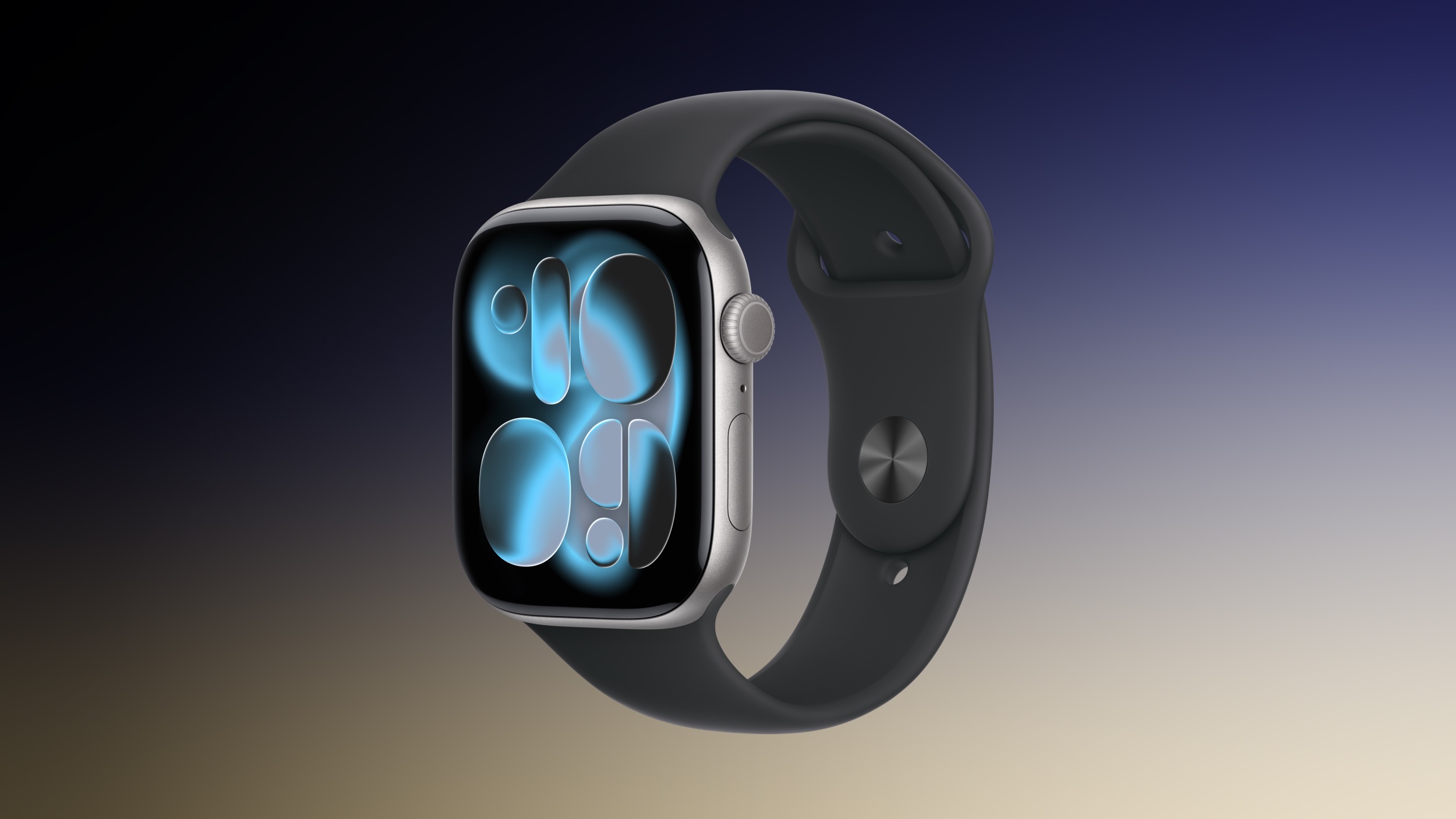
Amazon this weekend has low prices on the Apple Watch Series 11, with $99 discounts across numerous models of the smartwatch. This sale includes a handful of 42mm and 46mm GPS aluminum models, but cellular devices are a bit more rare this time around.
Note: MacRumors is an affiliate partner with Amazon. When you click a link and make a purchase, we may receive a small payment, which helps us keep the site running.
You can get the 42mm GPS Apple Watch Series 11 for $299.99, down from $399.00, and the 46mm GPS model for $329.99, down from $429.00. On Amazon, you'll find three of the 42mm GPS models and two of the 46mm GPS models on sale at these all-time low prices.
Compared to past sales, these are both solid second-best prices on the Apple Watch Series 11 and come within $20-$30 of those previous all-time low prices. Head to our full Deals Roundup to get caught up with all of the latest deals and discounts that we've been tracking over the past week.
Deals Newsletter
Interested in hearing more about the best deals you can find in 2026? Sign up for our Deals Newsletter and we'll keep you updated so you don't miss the biggest deals of the season!
When a team of physicists in Paris fabricated the world’s first temporal photonic crystal, they added a new dimension to humanity’s quest to control light: time. From lighting our homes to advanced fiber optics and lasers, humans have long worked to control light, and now researchers say that can be achieved in a fourth dimension.
Yannis Laplace led the team at the Laboratory of Irradiated Solids (LSI) in demonstrating the temporal photonic crystal, with the help of other European institutions, which was revealed in a recent paper published in Nature.
As light hits the crystal, a terahertz electromagnetic wave rapidly modulates its optical properties, producing a device that controls light over time without expending energy.
Crystal Power
Controlling the properties of light for applications in telecommunications, sensors, and light sources is an active research field and is often reliant on crystals. In technical terms, a crystal is simply a regularly and periodically organized system. While we primarily think of translucent, shining crystals, they can be constructed of other forms of matter, such as gas or liquids, so long as their atoms arrange into regular, well-defined intervals.
How atoms arrange to form crystals grants their electrons and the photons they emit unique properties, including color and energy. Targeting photons specifically became an interest of scientists in the 1980s, with the development of photonic crystals, whose alternating materials each had unique effects on photons. These photonics gave rise to modern lasers, optical fibers, and photodetectors, technologies that have advanced considerably in recent decades.
Into the Time Dimension
In the last decade, researchers have experimented with a new kind of crystal: the time crystal. They are comprised of a unique form of matter in which particles repeat a continuous sequence—not just in the three physical dimensions, but also in time, without expending any energy.
The LSI team sought to combine photonic crystals with time crystals to develop a temporal photonic crystal that would control a light-matter interaction by alternating over time. Their work represents the first time such an idea has moved from the theoretical realm into the physical.
The device the researchers constructed operates in the high terahertz range, pushing light to oscillate 1000 billion times a second. It consists of micrometer-scale gold structures, shaped like battlements, leaving open cavities separated from an indium-antimony semiconductor by an insulating layer. The cavities between the gold structures trap light photons.
Testing a Temporal Photonic Crystal
To demonstrate their device in the real world, the LSI team bombarded it with terahertz laser pulses and recorded the material’s optical properties, modulating light over time. The effect was incredibly powerful, creating a strong modulation that alternated one billionth of a billionth of a second.
At the semiconductor layer, the researchers observed electrons forming from the light waves in what are called “surface plasmons,” oscillating with their effective mass. The greater their speed, the heavier these electrons become, producing the device’s optical modulations.
Beyond this observed phenomenon, the researchers suspect other interesting conditions may be occurring within the crystal. Some indirect evidence suggests that photons trapped inside the structure are amplified, although presently no direct observations have confirmed this. The team is continuing with experiments in hopes of eventually capturing this photon trapping phenomenon.
Laplace and his colleagues see these unique time crystals as eventually being a pathway toward the creation of terahertz-scale light sources and detectors, which would fit between those of electronics and visible light frequencies.
Ryan Whalen covers science and technology for The Debrief. He holds an MA in History and a Master of Library and Information Science with a certificate in Data Science. He can be contacted at ryan@thedebrief.org.
We also have an update of our own: Live Science has launched Live Science Pro, a paid membership that gives you access to our exclusive features, analyses, interviews, book excerpts and opinion pieces, all without ads And to celebrate, we're offering an introductory price of only $3 for the first three months! You can subscribe here.
While the Northern Hemisphere battled heat waves and wildfires, Antarctica just experienced the lowest temperature recorded on Earth in over a decade. High-altitude research station Concordia, located in the icy continent's interior, logged a low of minus 119.4 degrees Fahrenheit (minus 84.1 degrees Celsius) on July 18, just shy of the coldest temperature ever recorded at the station.
"Even here, where extreme cold is expected, temperatures below minus 84 C are remarkable and highlight how variable Antarctic weather can still be," Gabriele Carugati, the station leader at Concordia for Italy's National Antarctic Research Program, told Live Science from the station.
Cats are known for having whiskers on their faces. But if you look closely, you'll see they also have them on their legs. So what are these leg whiskers for? And how do they differ from the ones on their face?
A significant portion of the Amazon rainforest remains unexplored, and even from above, it's almost impossible to see through the trees' thick canopies to find out what lies beneath. However, thanks to modern laser scanning technology, scientists have peered through this wall of leaves — and what they've found may offer new insight into lost human civilizations.
We're increasingly learning about the role of chronic inflammation in a range of diseases, from autoimmune conditions like rheumatoid arthritis to neurodegenerative diseases like Alzheimer's. However, scientists may have now added a new surprising side effect to this immune response: "out-of-body" experiences.
If you're looking for things to keep you busy over the weekend, here's a selection from our best interviews, explainers, skywatching guides and crosswords that we published this week.
It's like something from a movie: Seconds after China's Long March 3B rocket launched on July 23, the spacecraft was struck by lightning. Hundreds of spectators watched in shock as at least 100 million volts of electricity hit the craft and surged around its fuselage and through its exhaust plume, before shooting down to Earth.
Despite the strike, the uncrewed rocket safely reached space and successfully deployed its payload into orbit.
Cats are known for the whiskers on their faces. However, if you look closely, you can see that they also have whiskers on their legs. So why do cats have leg whiskers?
To answer why they're useful, it's important to understand what whiskers are. Technically known as vibrissae, whiskers are specialized hairs that are stiffer and several times thicker than other hairs. Although whiskers themselves do not contain nerves, their bases are rooted in specialized receptacles loaded with nerve endings, making whiskers very sensitive.
"Facial whiskers are as sensitive as human fingertips," Robyn Grant, a sensory biologist at Manchester Metropolitan University in the U.K., told Live Science.
A cat's whiskers around the nose, which are also known as the mystacial vibrissae, are the longest whiskers they have, according to the veterinary reference book "The Feline Patient" (Wiley, 2025). Although there is variation among cats, on average there are 12 mystacial whiskers set in four rows on each side of the muzzle.
Cat leg whiskers, scientifically known as carpal vibrissae, are attached to their forelegs. (Image credit: Future)
Facial whiskers help cats hunt when light is limited or when their vision is poor. Although cats are good at seeing distant objects, "cats can't really focus on anything less than 10 inches (25 centimeters) from their eyes, so they use their whiskers to figure out where things are," Jonathan Losos, an evolutionary biologist at Washington University in St. Louis and author of "The Cat's Meow: How Cats Evolved from the Savanna to Your Sofa" (Viking, 2023), told Live Science.
In addition, cats have a tuft of whiskers known as superciliary vibrissae above each eye. These whiskers help protect the cat's vision by triggering a blink when stimulated by anything that might fly into their eye, according to The Feline Patient.
Cats also have chin whiskers (mandibular vibrissae) and whiskers on each side of the head, between the ear and chin (genal vibrissae). These also help cats stay aware of the space around them.
Leg whiskers
Cats also possess a tuft of four to six whiskers on the back of each front leg, each about 0.8 to 1.2 inches (2 to 3 centimeters) long. These are known as carpal vibrissae.
"Carpal refers to the bones that, in humans, are in our wrists," Losos said. "Carpal whiskers are attached to cat forelegs near the carpal bones." However, in cats, the carpal bones are not located in the same place as the human wrist. Rather, they "are further up the leg, because cats essentially walk on their toes and not their palms," he explained.
Cats are not the only animals with carpal whiskers. "Most carnivores have them, and many rodents do, as do lemurs and armadillos," Losos said. "Dogs don't have them, but other canine species do. Rabbits don't have them either, nor do ungulates — that is, hooved animals, such as horses and cattle."
The species that have carpal whiskers "tend to be the ones that either grasp things with their forelimbs or climb up trees," Losos said. "The idea is that if it's hard for the animals to see what they're grasping, carpal whiskers can help supplement their vision. Perhaps cats have them and dogs don't because cats can move their forearms laterally from side to side and put their palms together to grab things, whereas dogs can't."
It remains uncertain what role carpal whiskers play in cats, but they likely "guide locomotion — that is, safe forepaw placement — especially during complex locomotion, such as climbing," Grant said. "They might guide prey handling too."
How much of a cat fan are you? Find out by taking our cat quiz!
When the history of our ancestry is written, the fact that we've interbred with some of our closest relatives, the Neanderthals and Denisovans, will have a central role. And it will be tempting to write it as a very tidy story: Once we got genomes from these other groups, it was possible to identify the sequences in our genomes that we shared with them.
But in reality, as scientists started poking large enough collections of data, there were regular hints of some strange ancestry in our genomes. It was hard to pin down, though, at least in part because the 2 percent on average of Neanderthal DNA found in many populations does not guarantee that any two individuals will have the same 2 percent. So having the genomes of those two groups made sense of some things researchers had already been seeing.
But knowing what we do about Neanderthal and Denisovan DNA is now allowing researchers to answer a somewhat different question: Is there anything else? Using recently developed analytical techniques, they find evidence of a third lineage that we apparently interbred with before any modern humans left Africa. Again, there were hints of this earlier, but so far, there's been no genome from a modern human relative to help us understand the details—the source of this DNA remains a "ghost lineage."
When the history of our ancestry is written, the fact that we've interbred with some of our closest relatives, the Neanderthals and Denisovans, will have a central role. And it will be tempting to write it as a very tidy story: Once we got genomes from these other groups, it was possible to identify the sequences in our genomes that we shared with them.
But in reality, as scientists started poking large enough collections of data, there were regular hints of some strange ancestry in our genomes. It was hard to pin down, though, at least in part because the 2 percent on average of Neanderthal DNA found in many populations does not guarantee that any two individuals will have the same 2 percent. So having the genomes of those two groups made sense of some things researchers had already been seeing.
But knowing what we do about Neanderthal and Denisovan DNA is now allowing researchers to answer a somewhat different question: Is there anything else? Using recently developed analytical techniques, they find evidence of a third lineage that we apparently interbred with before any modern humans left Africa. Again, there were hints of this earlier, but so far, there has been no genome from a modern human relative to help us understand the details—the source of this DNA remains a "ghost lineage."

 Login






 Note: MacRumors is an affiliate partner with some of these vendors. When you click a link and make a purchase, we may receive a small payment, which helps us keep the site running.










 Note: MacRumors is an affiliate partner with Amazon. When you click a link and make a purchase, we may receive a small payment, which helps us keep the site running.