❌

Reading view

Schools Deploying Pepper Spray Drones to Sic on Mass Shooters

How do we combat the scourge of school shootings? The distinctly cyberpunk gamble that some places of learning are taking: rapid response drones.

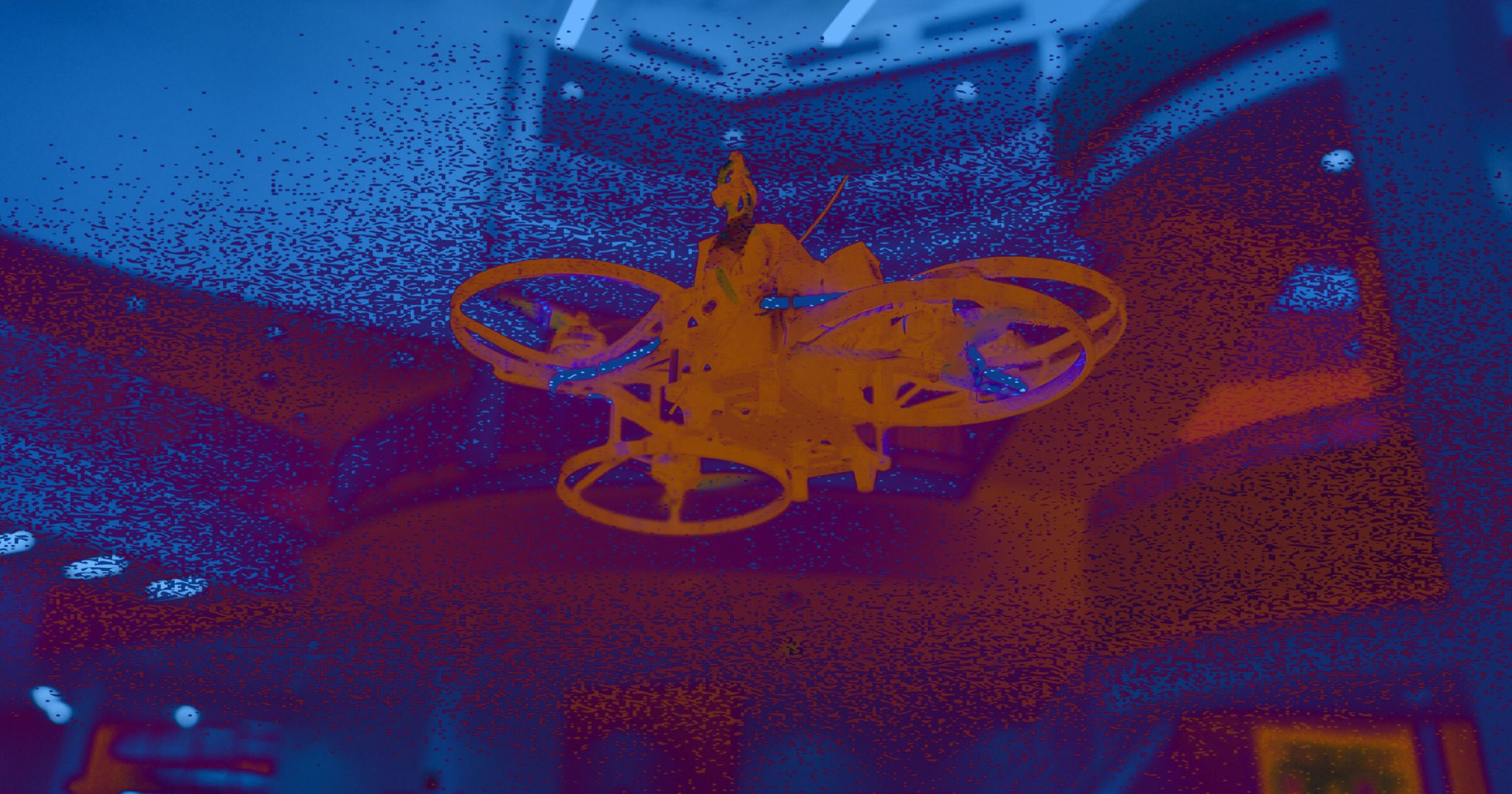
Multiple schools across three states will soon have their own veritable platoons of pepper-spraying drones to hunt down active shooters, The Washington Post reports, waiting to spring into action the moment they’re called on.

Traveling at speeds of up to 60 miles per hour and capable of smashing through the windows, the so-called “Campus Guardian Angels” can reach a gunman within just fifteen seconds, the manufacturer Mithril Defense claims.

In addition to blasting a shooter with pepper spray, they can also distract them with loud sirens and flashing lights, and even ram into them at high speeds.

“Once I get the drones on you, you just can’t escape them,” Bill King, a Mithril cofounder and retired Navy SEAL, told WaPo.

It remains a fringe solution, but seems to be picking up steam. The state of Florida last year allocated more than $557,000 to a pilot program to deploy the drones at three different high schools. Georgia recently approved its own $500,000 pilot to test Mithril’s system at five public schools. And in Colorado, a new K-12 public charter school decided it would pay to use the drones on its own.

The drones aren’t autonomous and are instead remotely controlled by human operators at Mithril’s headquarters in Austin, Texas. Somewhere between 30 and 90 of the drones will be placed throughout a school in storage boxes, which helps them arrive quickly at the scene.

But the efficacy of the drone defense systems remains a big question mark — and hopefully we’ll never have to know — as is whether these solutions distract from addressing the systemic causes of mass shootings, like weak gun control and poor mental health support services.

Mithril has promised that its tech could help local law enforcement who respond to a shooting by locating the shooter and relaying critical information, but that would require a high degree of coordination in a hectic and dangerous environment. What if the drone operators target the wrong person, or cause law enforcement to mistake an innocent person for the shooter because the drones happen to be near them? Are these drone operators ready to make split-second decisions in a life or death situation for the people on the ground?

“It’s almost like where gaming and school safety collide,” Curtis Lavarello, CEO of the School Safety Advocacy Council, told WaPo. “I have some really serious reservations about the deployment of drones in schools.”

It’s not the only tech-inflected solution being adopted to combat mass shootings. There are already numerous startups offering AI-powered gun detection systems, but their performance has been dubious. One called Omnilert called the cops on an innocent 16-year-old after it mistook his bag of Dorito chips for a weapon, and is being sued by a survivor of a Tennessee high school shooting after it failed to detect the handgun used by the shooter.

More on drones: We’re Admittedly Terrified That They’ve Now Invented Invisible Drones

The post Schools Deploying Pepper Spray Drones to Sic on Mass Shooters appeared first on Futurism.

  •  

The AI Industry Has Acted So Badly That It’s Now Dealing With a Huge Wave of Hatred

The tech overlords pushing the AI boom are quickly wearing out what little welcome they had.

You may have noticed big-name AI labs pushing new commercials lately. Meta’s new 60-second ad spot insists that the “future is for everyone,” even as CEO Mark Zuckerberg’s personal net worth eclipses the GDP of Hungary. Anthropic’s new commercial for Claude assures viewers that there’s “hope in hard questions,” seemingly embracing the discomfort that comes when your software is used to bomb elementary schools in Iran.

For as magnanimous as these new PR stunts appear on the surface, a vast swathe of the public they’re meant to sway are rejecting the industry’s faux-populism messaging out of hand, as the cost of AI — born out in inflation, data center pollution, fears of job loss and mental health concerns — becomes too much to bear.

According to data compiled by Pew Research, 40 percent of US adults predict AI will have a negative impact on society writ large, compared to just 16 percent who say it’ll have a positive effect. A whole 31 percent of those surveyed think AI will have negative consequences for themselves, personally, over the next 20 years.

As disgust with AI itself grows, so too does resistance to the hardware embodying its rise.

Per a separate poll by Gallup, flagged by Business Insider, an astonishing three-quarters of US adults are now resolutely opposed to hyperscale data centers popping up near their home. City councils are increasingly forced to reconcile with landowners hostile to any AI data center appearing in their district, putting significant strain on developers hoping to gorge themselves on the fruits of the AI boom. Protests against AI companies are flaring up across the country, with Time reporting 142 protests across 42 states in one day alone.

Beyond data centers, a decentralized but highly-motivated movement is growing around the chopping, hacking, and outright sabotage of AI-integrated surveillance cameras. A parallel struggle is being waged around AI-integrated surveillance drones, with organizers in cities like Minneapolis beating back ambitious police dragnets.

So if you’re a tech executive trying to win back the masses to the AI revolution, take note: it’s gonna take a lot more than a few smarmy commercials to solve your PR problem.

More on AI: Google’s Profits Look a Little Terrifying Under the Hood

The post The AI Industry Has Acted So Badly That It’s Now Dealing With a Huge Wave of Hatred appeared first on Futurism.

  •  

The Type of Orbital Data Centers That Billionaires Want to Launch Into Space Would Wreak Ecological Catastrophe, Scientists Warn

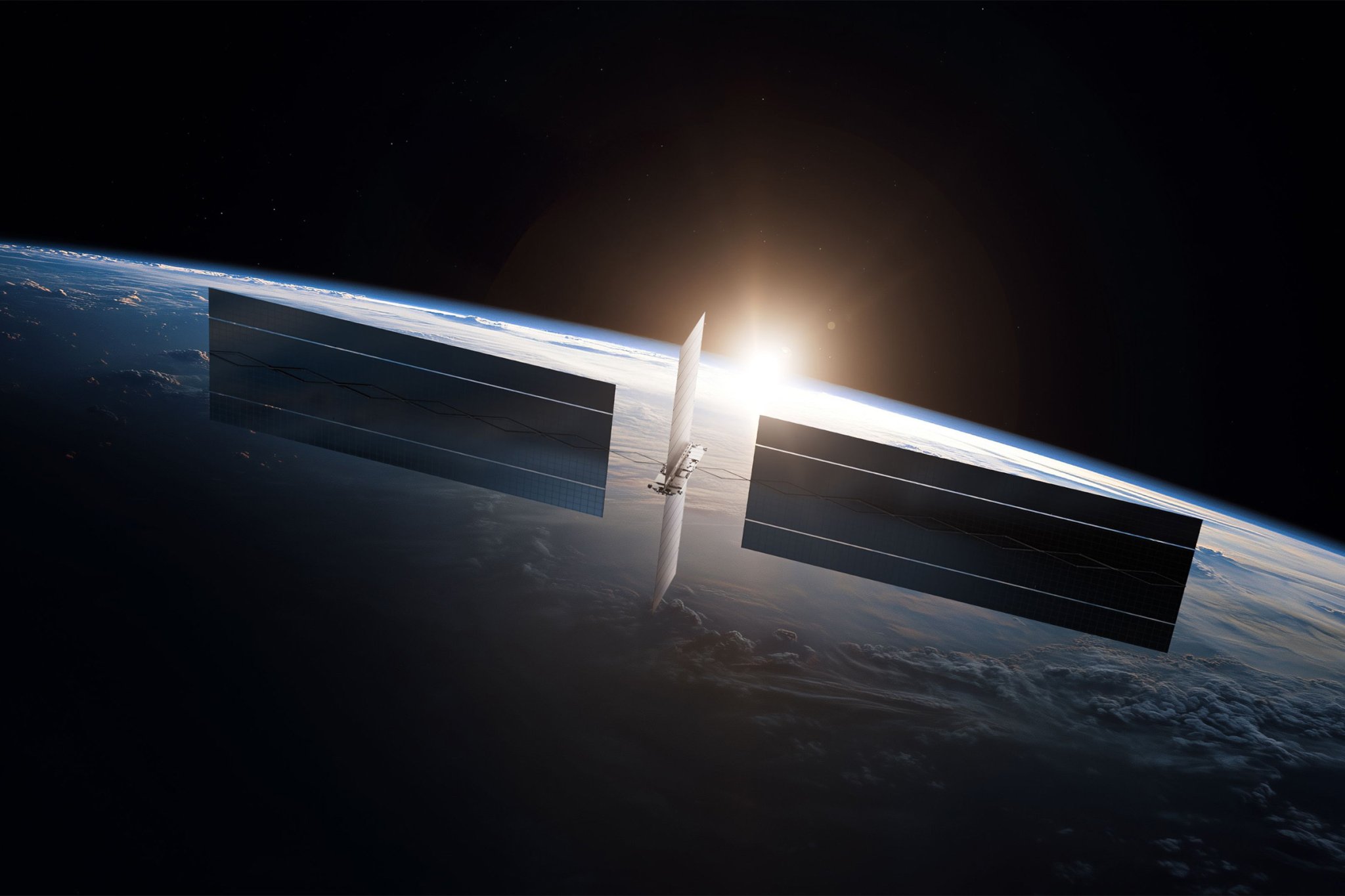
Over the past year or so, a puzzling idea has taken hold among billionaires ranging from Elon Musk to Jeff Bezos: that instead of trying to force data centers on communities that don’t want them down on Earth, it would be much easier just to launch them into space.

The economics and logistics of the scheme, many experts have pointed out, are absolutely absurd. And even beyond those practical concerns, if corporations actually did somehow manage to fill the planet’s orbit with the facilities, scientists are now warning that the environmental cost would be devastating.

A new petition organized by the group EarthJustice, first reported by the Guardian, is warning of “catastrophic” consequences for the planet if the billionaire-backed dream ever came to pass. The 29-page petition calls on the US Federal Communications Commission to investigate current orbital data center licensing requests as potentially in violation of “federal law,” joining the chorus of experts warning that it’s a horrible idea for just about everybody.

“The FCC is currently considering multiple requests for licensing extraordinary numbers of satellite-based data centers to be placed into low-earth orbit over the next decade,” the petition begins. “The proponents of these proposals describe their plans in grandiose, civilization-changing terms. But these same proponents have refused to embrace any inquiry into the impacts of their self claimed epochal technology on the environment, science, economy, or other values. This is not just poor planning and a missed opportunity: it violates federal law.”

The filing does double duty. On top of formally petitioning the FCC to prepare an environmental assessment, it’s also a “petition to deny,” which is a legal mechanism that requires the petitioner to back up their claims with verified facts. That requirement turns the document into a de facto review article — with 113 footnote citations, it’s easily one of the most detailed public accounts yet of what orbital data centers could actually cost the planet.

“The operation of more than a million data center satellites threatens potentially catastrophic forms and quantities of atmospheric pollution, risking damage to the climate, to the ozone layer, to human health, and to the chemistry of the stratosphere itself,” the petition reads.

In particular, the petition warns that giving free rein to tech billionaires to clutter our skies with experimental data centers would accelerate our contamination of the stratosphere, which is currently facing an unprecedented rise in heavy metals, noxious gasses, and carbon particles thanks to record satellite launches.

Satellite companies run by tech and aerospace tycoons are already facing scrutiny for their lack of transparency around this type of pollution, a situation the petition warns would make significantly worse. As the petition authors write, they are “concerned that no [company] has yet provided more than a token acknowledgment of environmental risks.”

“Moreover,” the authors continue, “no [company] has provided satisfactory detail to explain how it will mitigate the cumulative environmental harms flowing from the foreseeable operation of more than a million satellites [emphasis in original], orbiting our planet, colliding and disintegrating and plummeting back to Earth.”

More on data centers: Climate Activists Pelt Microsoft Data Center With Balloons Full of Acid

The post The Type of Orbital Data Centers That Billionaires Want to Launch Into Space Would Wreak Ecological Catastrophe, Scientists Warn appeared first on Futurism.

  •  

School District Pauses Plans to Deploy Humanoid Robots in Class After Outcry

Robotics company Realbotix LLC has long struggled to beat the allegations that its voluptuous humanoid robots are designed with prurient interests in mind.

Its $175,000 robotic companion, dubbed Aria, is platinum blonde, well-endowed, and tends to be decked out in tight-fitted sportswear at tech conventions. Yet the company has insisted she’s not a sex doll, leading to plenty of incredulity online.

Adding to the drama is the company’s corporate structure: Realbotix LLC is owned by Realbotix Corp, which also owns Intima LLC — a venture that holds an ownership stake in Realdoll, one of the best-known manufacturers of sex robots.

Those eyebrow-raising optics burst into view this month when, as New York Focus reports, the Salamanca City Central School District in western New York announced plans to deploy one of Realbotix LLC’s humanoid robots, dubbed Sally, in the classroom. The AI-enabled robot would reportedly serve as a teaching assistant for high school students enrolled in STEM and arts courses.

It’s hard not to see the company’s sex robot roots in Sally’s visage. The $57,000 android has smooth silicone skin, a dazed expression on her face, and an ill-fitting wig made of long brown hair. But after this story was first published, an attorney representing Realbotix reached out to emphasize what he said was a total divide between Realbotix LLC and Intima LLC.

“Realbotix Corp is a holding company with two separately operated businesses: Realbotix LLC, which focuses on AI-powered humanoid robotics for commercial service sector applications, and Intima LLC, which focuses on direct-to-consumer products,” the attorney said, in a statement echoing a press release the company issued last week. “Realbotix LLC and Intima LLC have different product offerings with no crossover. As a holding company, Realbotix Corp does not in itself have business operations but is responsible for managing capital markets, shareholders, listing requirements and accounting needs. The two subsidiaries maintain their own management, personnel, payroll, facilities, manufacturing operations, product development, and market strategies.”

“Realbotix LLC does not design, manufacture, or sell adult products,” the statement continued. “No Intima LLC or RealDoll employees, contractors, products, inventory, blueprints or technology are involved in Realbotix LLC’s design, engineering, manufacturing, deployment, or customer support whatsoever.  All education, healthcare, wellness, and enterprise initiatives are conducted exclusively through Realbotix LLC. Realbotix LLC and Intima LLC are different legal entities that are independently operated. The two entities do not share employees, products, inventory, manufacturing resources, or technology.”

Also after this story was first published, the Salamanca City Central School District announced that it was putting the deployment on hold after feedback from the community.

Prior to that reversal, district superintendent Mark Beehler told New York Focus that he was willing to give up banning AI in the classroom since “students will find a way around most rules that schools put in place.”

“I also believe it is critical for schools to teach proper use of technology, not simply exclude it,” he said.

Sally’s onboard AI can be used to generate lessons, provide translations in real-time in over 100 languages, and provide human teachers with guidance if a “teacher loses their place during a lesson or needs a prompt on what comes next,” according to New York Focus.

To us, that sounds like a pretty cynical take on the future of education. Teachers are already facing a major uphill battle thanks to the advent of the tech, with students suffering from declining cognitive abilities.

Of course, Realbotix LLC argues that it’s done its homework. Instead of hallucinating facts, a major shortcoming of the tech that makes it arguably unfit for most classroom use, Sally will allegedly say “I don’t know.” The company also said its robot won’t be directly connected to the internet to keep highly sensitive information about students from prying eyes.

Still, it’s a bizarre investment for the school district that comes at a particularly tough time for human educators. The reality is that teachers across the country are woefully underpaid. There’s a massive shortage of instructors, with tens of thousands of teacher positions going unfilled.

In a press release, the Salamanca City Central School District stressed that the “Realbotix educational robot will never replace teachers, staff members, or meaningful human interaction.”

But whether Sally will actually serve as “another instructional tool that educators can use to engage students, reinforce classroom learning, and spark curiosity about emerging technologies,” remains to be seen — especially considering its steep price tag and lascivious origins.

Updated to clarify the relationship between Realbotix Corp, Realbotix LLC, and Intima LLC.

More on Realbotix: “Companionship” Robot That Its Creator Says Is Definitely Not a Sex Robot Looks Around With a Dazed Expression

The post School District Pauses Plans to Deploy Humanoid Robots in Class After Outcry appeared first on Futurism.

  •  
❌