A protein that is a hallmark of Alzheimer’s disease may also ID a brain condition associated with head trauma in contact sports, early findings suggest.
Just over a week ago, Health and Human Services secretary Robert F. Kennedy Jr declared that the ongoing outbreak of the explosive diarrhea-causing parasite was “under control.”
But the reality is that cases are climbing into the thousands across 45 states, as USA Today reports, meaning his reassurances appear to have been a gross overstatement. According to the Centers for Disease Control and Prevention, the number of cases increased by an additional 2,500 cases between July 21 and July 28 alone.
As of this week, the CDC has confirmed over 6,700 cases since May 1 and is “aware of more than 11,500 additional cases that are not laboratory confirmed or require further investigation and analysis.”
There is a bright side: while the symptoms are gross, there have been no known fatalities. There have been 423 hospitalizations so far, but no deaths have been recorded, according to the agency.
Health officials are still racing to nail down the source of the outbreak of the microscopic parasite Cyclospora cayetanensis, which is known to cause frequent — and often explosive — watery diarrhea. The top suspect so far has been Taylor Farms, one of Taco Bell’s lead suppliers, whose bagged shredded lettuce was initially found by the Food and Drug Administration to contain the parasite.
While the FDA has since gone back on that claim, saying the results were a “false positive,” Taylor Farms has nonetheless agreed to lead a “voluntary” recall of the allegedly tainted lettuce.
The true count of cyclosporiasis cases in the US remains extremely difficult to tally. As the CDC notes, “surveillance updates do not include probable cases.” Many people who fall ill “recover without medical care and are not tested for Cyclospora.”
According to a map issued by the agency, the two hotspots are Michigan and Ohio. Michigan alone passed the 10,000 cases mark today, according to the state’s Department of Health and Human Services.
The only states that have yet to report or confirm a single case, per the CDC’s map, are Montana, New Mexico, Maine, South Carolina, and Hawaii.
Fortunately, it’s easy to protect oneself from the parasite. Public health experts recommend thoroughly washing fruits and vegetables or simply cooking them, which kills the tiny critters.
Glowy oils, tinted creams, misty sprays, chalky sticks, lightweight gels. Like many people, my pool bag is filled with many types of sunscreen. But all use the same sun-shielding chemicals. In fact, the allowed ingredient list for U.S. sunscreens hasn’t changed in 20 years — until now.
“I think we should all be super excited,” says Tanya Hathaway. She’s a dermatologist who specializes in treating high-risk skin-cancer patients. Hathaway works at the Fred Hutchinson Cancer Center in Seattle, Wash.
Bemotrizinol has many benefits. It lasts longer than other sunscreen ingredients. It won’t get quickly absorbed into the bloodstream. And it’s very good at blocking those rays of the sun that age skin.
Sunscreens in Europe have used the chemical for more than 25 years, Hathaway notes. More recently, it’s been approved in Japan, Canada, Australia and many other places.
There are some sunscreen ingredients used elsewhere that still are not allowed in U.S. products. Bemotrizinol’s approval could open U.S. doors for some of these. It’s “a great first step,” Hathaway says.
A new chemical sunscreen
Sunscreens use a few tricks to protect our skin from the sun’s rays. Physical sunscreens rely on minerals such as titanium dioxide and zinc oxide. These create a coating that reflects sunlight, like a mirror. But they can leave a white sheen on the skin. Just think of a lifeguard’s nose, says Jennifer Stein. She’s a dermatologist at NYU Langone Health in New York City.
Those zinc and titanium products also “don’t rub in so well,” she notes. “And if people don’t like the way their sunscreen smells or feels, they’re not going to use it.”
Non-mineral sunscreens often rub in a bit better. They often use chemicals such as avobenzone (Ay-vah-BEN-zoan) and oxybenzone to absorb the sun’s rays. But these molecules are not very stable. They start to break down when hit by sunlight, Stein says. That’s not ideal for something that’s designed for use in the sun.
Because bemotrizinol is more stable, people may not need to apply sunscreens with it as often. This new ingredient also is good at blocking ultraviolet A1 (UVA1) radiation. That’s a type that gets deep into the skin. Over time, UVA1 can make skin wrinkly, loose and spotted, Hathaway says.
Current U.S. sunscreens do a good job of blocking UVB, which causes sunburns. But U.S. sunscreens had fewer options for blocking UVA, she says. Bemotrizinol “really expands that UVA spectrum of coverage.”
You might have seen influencers on TikTok or Instagram making DIY sunscreens. Often, they will call the ingredients in commercial brands “toxic.” Sunscreen skepticism on social media is nothing new, Stein says. Patients who avoid sunscreen often worry about chemicals passing through the skin.
That can happen with things like avobenzone and oxybenzone. They may even get into your blood, Stein says — but only if “you apply them to large areas of the body repeatedly throughout the day.” Even so, people shouldn’t fear them. Hathaway says no studies have shown that U.S. sunscreen ingredients are unsafe when used at current levels.
Bemotrizinol, which is a big molecule, is less likely to pass through skin than these other chemicals. It’s “too big to squeeze through the skin cells to get down into your bloodstream,” Stein says.
FDA classifies bemotrizinol as GRASE (short for generally recognized as safe and effective). Titanium dioxide and zinc oxide are the only other U.S. sunscreen ingredients with this rating.
Bemotrizinol’s U.S. approval goes into effect on August 9. So sunscreens using it could hit shelves later this summer. But a new sunscreen is not the only way to stay safe from the sun. There are plenty of low-tech options, too: long sleeves, hats, sunglasses and staying in the shade. “The more clothing you’re wearing,” Stein emphasizes, “the less you have to depend on sunscreen.”
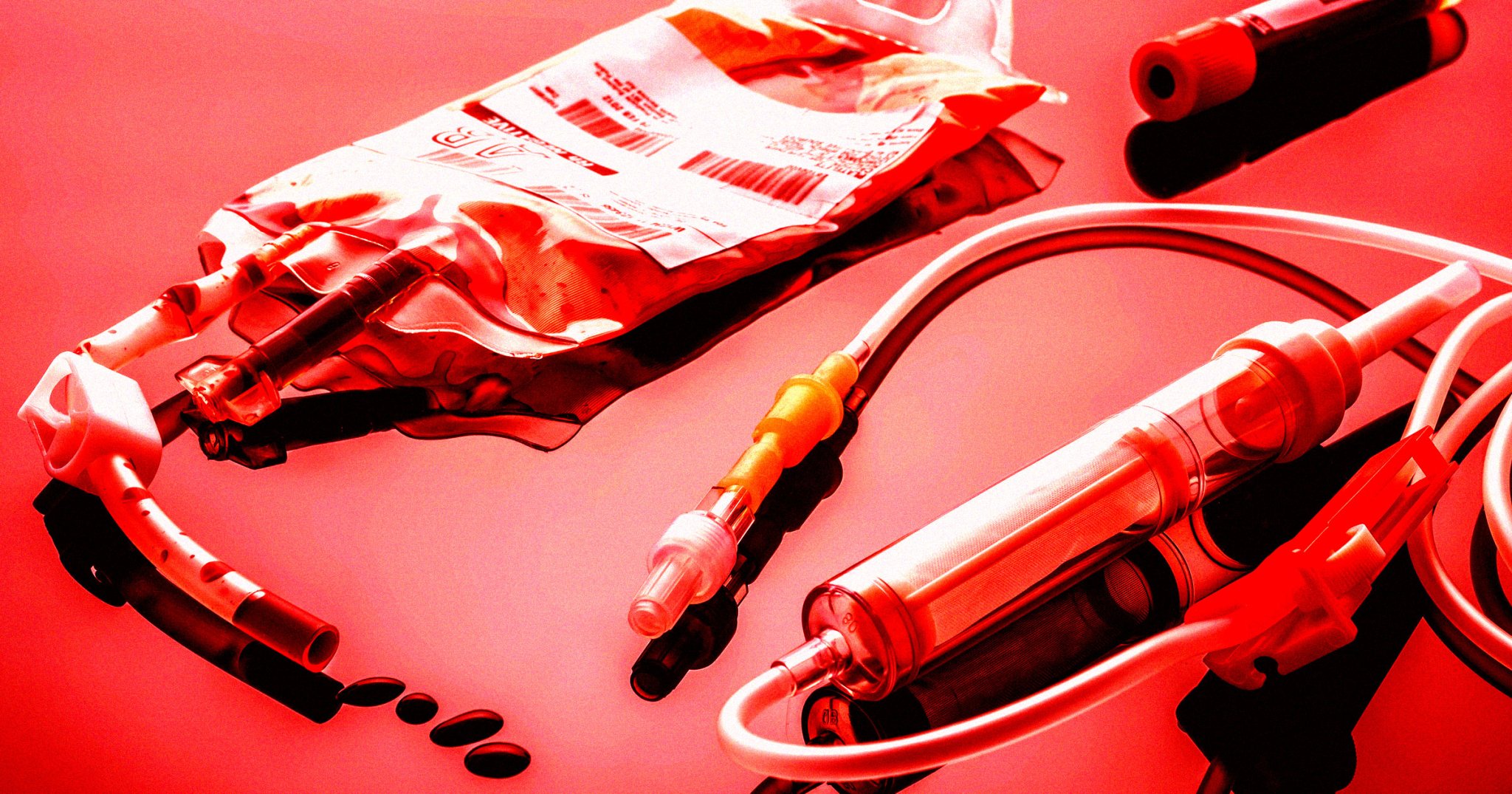
For only the second time in its history, the American Red Cross has declared a “national blood supply crisis,” after donations fell to a four-year summer low.
The hotter summer months conventionally trigger blood shortages because people are more likely to injure themselves while spending time outdoors.
And this summer has been particularly extreme. According to the Red Cross, extreme heat, poor air quality, and widespread foodborne illnesses have compounded into blood donations dropping precipitously, causing supply levels to plummet to a historic low.
The news comes amidst record-breaking temperatures this summer, devastating heatwaves that have killed at least 25 people in the US. Public health officials are also battling an outbreak of an explosive diarrhea-causing parasite that’s has spread to 45 states.
As a result of plummeting donations, the Red Cross, which is the largest single provider of blood products, has “less than a one-day national supply of type O positive blood.” Type O positive is the most commonly transfused blood type, and highly valued because can safely be used to treat over 80 percent of the population.
The Red Cross declared its first-ever national blood crisis in January 2022, triggered by a previous low in donor turnout due to ongoing COVID-19 surge disruptions.
“Every donation has the potential to help save lives, and we urgently need everyone who is eligible to make an appointment to give blood as soon as possible,” said Red Cross Biomedical Services president Chris Hrouda in a statement.
The risks of an extremely limited blood supply are considerable.
“There’s always the possibility, when the blood supply dips like it has, that patients won’t be able to get the blood products they need, when they need,” Red Cross spokesperson Matt Trotter told NPR affiliate KOSU.
To get back on track doesn’t require drastic action, either. The organization says that just “three more donors at each blood drive this summer can end this crisis and stabilize the blood supply.”
“One donation can help save multiple lives, so if you’ve got an hour you can spare, you can do a lot of good with it,” Trotter told KOSU. “Many people who think they are ineligible actually can donate blood.”
The tech overlords pushing the AI boom are quickly wearing out what little welcome they had.
You may have noticed big-name AI labs pushing new commercials lately. Meta’s new 60-second ad spot insists that the “future is for everyone,” even as CEO Mark Zuckerberg’s personal net worth eclipses the GDP of Hungary. Anthropic’s new commercial for Claude assures viewers that there’s “hope in hard questions,” seemingly embracing the discomfort that comes when your software is used to bomb elementary schools in Iran.
For as magnanimous as these new PR stunts appear on the surface, a vast swathe of the public they’re meant to sway are rejecting the industry’s faux-populism messaging out of hand, as the cost of AI — born out in inflation, data center pollution, fears of job loss and mental health concerns — becomes too much to bear.
According to data compiled by Pew Research, 40 percent of US adults predict AI will have a negative impact on society writ large, compared to just 16 percent who say it’ll have a positive effect. A whole 31 percent of those surveyed think AI will have negative consequences for themselves, personally, over the next 20 years.
As disgust with AI itself grows, so too does resistance to the hardware embodying its rise.
Per a separate poll by Gallup, flagged by Business Insider, an astonishing three-quarters of US adults are now resolutely opposed to hyperscale data centers popping up near their home. City councils are increasingly forced to reconcile with landowners hostile to any AI data center appearing in their district, putting significant strain on developers hoping to gorge themselves on the fruits of the AI boom. Protests against AI companies are flaring up across the country, with Time reporting 142 protests across 42 states in one day alone.
Beyond data centers, a decentralized but highly-motivated movement is growing around the chopping, hacking, and outright sabotage of AI-integrated surveillance cameras. A parallel struggle is being waged around AI-integrated surveillance drones, with organizers in cities like Minneapolis beating back ambitious police dragnets.
So if you’re a tech executive trying to win back the masses to the AI revolution, take note: it’s gonna take a lot more than a few smarmy commercials to solve your PR problem.
Over the past year or so, a puzzling idea has taken hold among billionaires ranging from Elon Musk to Jeff Bezos: that instead of trying to force data centers on communities that don’t want them down on Earth, it would be much easier just to launch them into space.
The economics and logistics of the scheme, many experts have pointed out, are absolutely absurd. And even beyond those practical concerns, if corporations actually did somehow manage to fill the planet’s orbit with the facilities, scientists are now warning that the environmental cost would be devastating.
A new petition organized by the group EarthJustice, first reported by the Guardian, is warning of “catastrophic” consequences for the planet if the billionaire-backed dream ever came to pass. The 29-page petition calls on the US Federal Communications Commission to investigate current orbital data center licensing requests as potentially in violation of “federal law,” joining the chorus of experts warning that it’s a horrible idea for just about everybody.
“The FCC is currently considering multiple requests for licensing extraordinary numbers of satellite-based data centers to be placed into low-earth orbit over the next decade,” the petition begins. “The proponents of these proposals describe their plans in grandiose, civilization-changing terms. But these same proponents have refused to embrace any inquiry into the impacts of their self claimed epochal technology on the environment, science, economy, or other values. This is not just poor planning and a missed opportunity: it violates federal law.”
The filing does double duty. On top of formally petitioning the FCC to prepare an environmental assessment, it’s also a “petition to deny,” which is a legal mechanism that requires the petitioner to back up their claims with verified facts. That requirement turns the document into a de factoreview article — with 113 footnote citations, it’s easily one of the most detailed public accounts yet of what orbital data centers could actually cost the planet.
“The operation of more than a million data center satellites threatens potentially catastrophic forms and quantities of atmospheric pollution, risking damage to the climate, to the ozone layer, to human health, and to the chemistry of the stratosphere itself,” the petition reads.
In particular, the petition warns that giving free rein to tech billionaires to clutter our skies with experimental data centers would accelerate our contamination of the stratosphere, which is currently facing an unprecedented rise in heavy metals, noxious gasses, and carbon particles thanks to record satellite launches.
Satellite companies run by tech and aerospace tycoons are already facing scrutiny for their lack of transparency around this type of pollution, a situation the petition warns would make significantly worse. As the petition authors write, they are “concerned that no [company] has yet provided more than a token acknowledgment of environmental risks.”
“Moreover,” the authors continue, “no [company] has provided satisfactory detail to explain how it will mitigate the cumulative environmental harms flowing from the foreseeable operation of more than a million satellites [emphasis in original], orbiting our planet, colliding and disintegrating and plummeting back to Earth.”
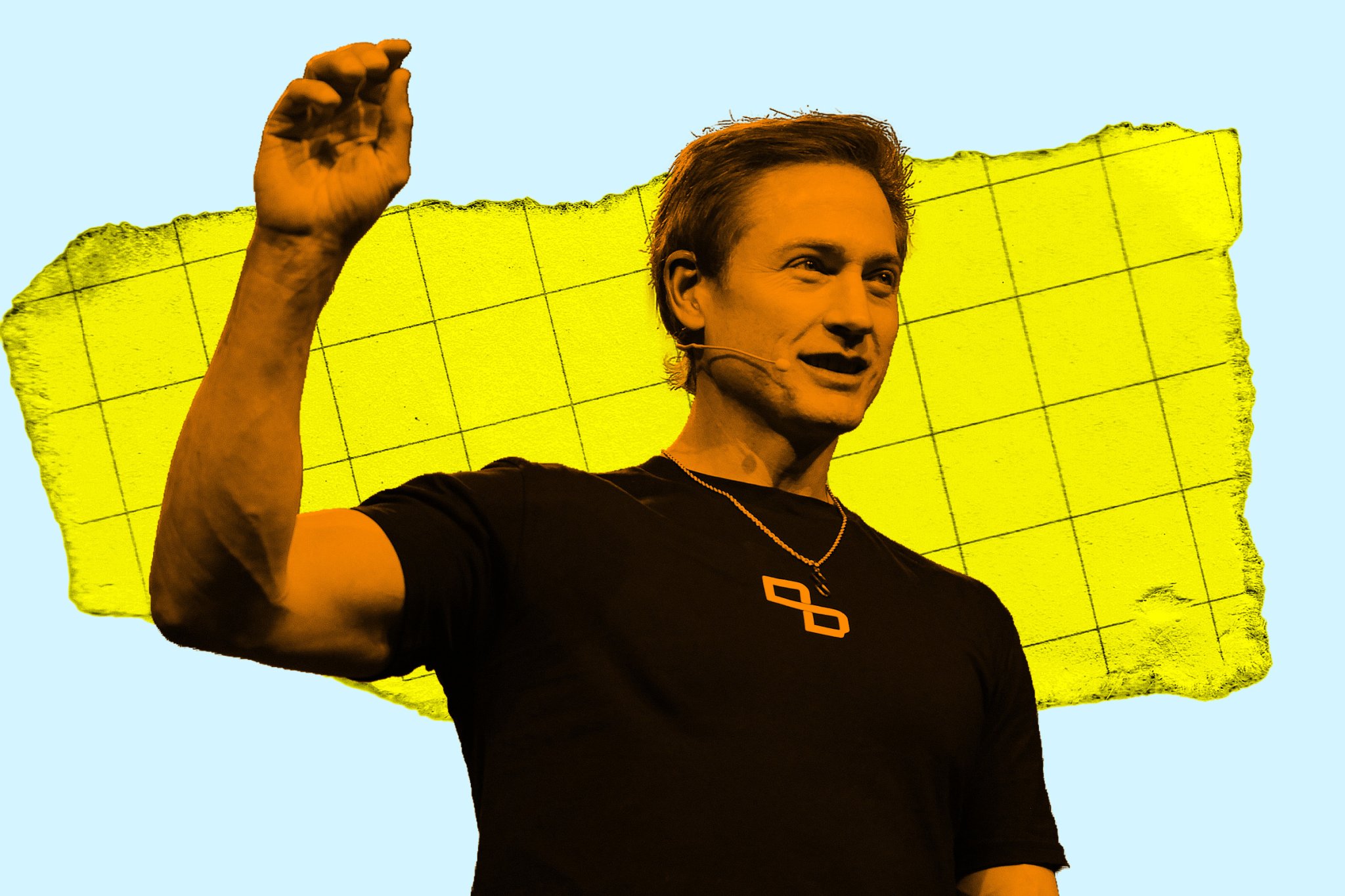
Zillionaire eccentric Bryan Johnson, fresh off of being diagnosed with an incurable disease, says he just “cloned” himself “as a newborn.” Yep, you heard that right.
The immortality influencer shared in an X update that he has a “baby” version of himself growing in a petri dish that he says will allow him to become his “own blood boy” — doesn’t he already have a son who does that for him? — and potentially even “grow organs for transplantation.”
“This may be scary to some people… a dystopian future,” Johnson wrote. “But, for others, they will see it as the inevitable future of health.”
In case this is all starting to sound like the grim sci-fi plot of a certain Michael Bay movie or Kazuo Ishiguro novel, it’s not a literal, living breathing clone. (Although by posting an infamous picture of himself edited to look like a baby, Johnson’s certainly playing into that impression.)
Instead, Johnson’s created his own pluripotent stem cells. These stem cells can self-renew and develop into any type of cell in the body, making them invaluable for repairing damaged tissue.
Where Johnson’s claims of cloning himself as a “newborn” come in is the fact that these highly versatile stem cells normally only exist when we’re still an embryo. But in recent decades scientists have developed techniques to reprogram regular adult cells into an embryonic pluripotent state, which are called induced pluripotent stem cells.
Johnson is confident that by having his own store of stem cells on hand he can “rebuild” his body, repairing everything from damaged lungs to eyesight.
“This technology gives us a path to reverse aging,” he declares.
An alternative that doesn’t involve stem cells, xenotransplantation, harvests organs from a genetically modified animal pig, but has only been demonstrated in human recipients who were braindead, with the transplanted organ slowly rejected over the course of several days.
All that’s to say is that we should be skeptical about Johnson’s longevity advice, though we will certainly keep rubbernecking to see how his quixotic quest is going.
For over two decades, a notorious fugitive accused of horrible crimes in Rhode Island hid out in one of the places you’d most expect — the corner office of a Big Pharma company.
Reported by Stat News, a 70-year old chief medical officer at the California-based firm Immix Biopharma was found to be afugitive sex predator who disappeared during his 2005 trial. Though he went by Richard Graydon in the more than twenty years since, his real name turns out to be Ronald Fischer — an anesthesiologist accused of raping numerous women on his various yachts (yes, plural).
“Although I believe my trial has gone very well and expect to be acquitted and dismissed, the small chance of losing could carry extremely and unacceptably harsh penalties,” Fischer told his lawyer via email before fleeing in 2005. “I have therefore decided not to take the risk and leave the US and enjoy life in another country where I have long been carefully planning a good, safe, secure and comfortable life.”
As it happens, Fischer never left for another country — at least not for good — but restarted his medical career in the US, leading him to rack up a number of aliases. Refusing to abandon his yachts or the medical career that paid for them, Fischer reportedly worked his way through a number of biotech companies, like Atossa Therapeutics, which appointed him interim chief medical officer in 2022.
After being hired by Immix in March of 2026, Fischer was arrested after US Marshals boarded his 56-foot vessel, The Silver Lining, as it sailed down New York’s East River. While it remains to be seen how he evaded authorities for so long, if there’s any real silver lining, it’s that this horrible fugitive is no longer lurking around the Biotech sector, or society at large.
 Login