❌

Reading view

Archaeologists find 2,800-year-old burial of person clutching sea turtle vessel in El Salvador

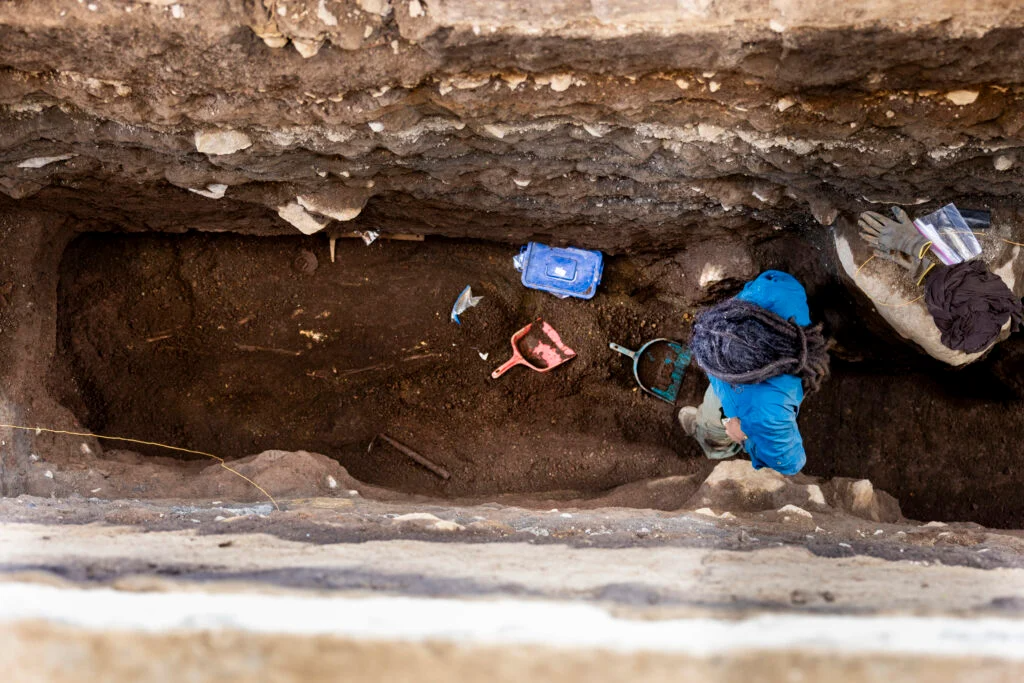
Archaeologists in El Salvador have uncovered the unusual burial of a face-down human skeleton that was interred along with a ceramic vessel shaped like a sea turtle nearly 3,000 years ago. The burial may be from a pre-Maya civilization that practiced human sacrifice.

According to a translated statement from El Salvador's Ministry of Culture, the burial was found July 2 in Antiguo CuscatlΓ‘n, a suburb of San Salvador, during excavation work directed by Carlos Flores Manzano, an archaeologist and doctoral student at Yale University.

Although the skeleton has not been radiocarbon-dated yet, it was discovered underneath a layer of volcanic ash from an eruption of the Plan de la Laguna volcanic crater thought to date to between 850 and 830 B.C., during the Middle Preclassic period (roughly 1000 to 400 B.C.) in Mesoamerica.

A person in a blue jacket holds a round ceramic vessel shaped like a sea turtle

A ceramic vessel shaped like a sea turtle was discovered in the grave. (Image credit: El Salvador Ministry of Culture)

During this period, societies in southeastern Mesoamerica were becoming more sedentary and developing more complex cultures, archaeologists have found. But in addition to the archaeological remains of crop cultivation and painted ceramics discovered over the years in Antiguo CuscatlΓ‘n, experts have pointed to some burials as evidence of human sacrifice β€” and the newly uncovered burial may be similar.

In the late 1970s, archaeologist William R. Fowler excavated at Chalchuapa, an ancient town east of Antiguo CuscatlΓ‘n with thousands of years' worth of history. While digging in an area known as Structure E3-7, Fowler found 33 human skeletons β€” mostly adult males β€” that he interpreted as sacrifices of war captives due to signs that their feet and arms were bound.
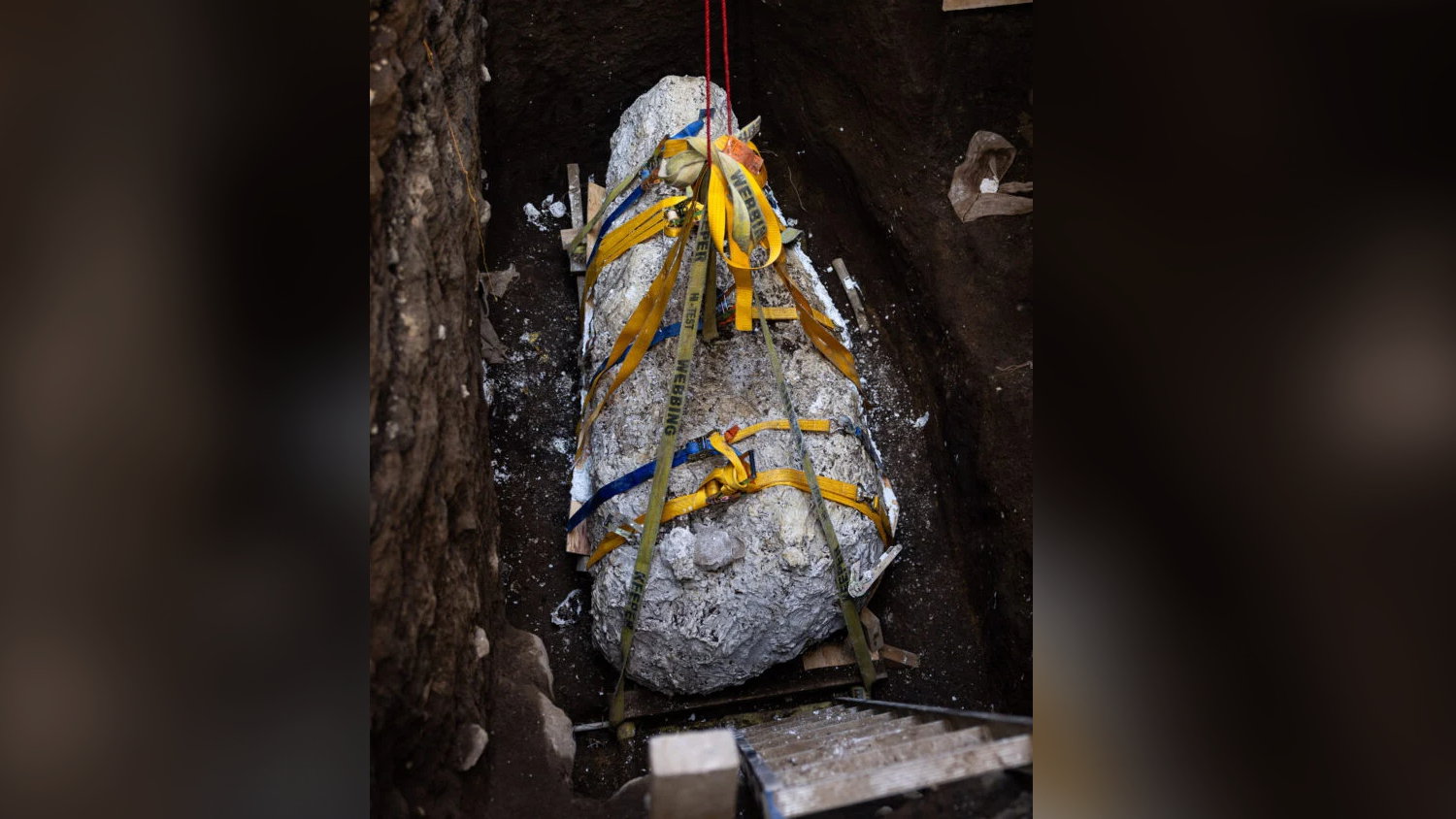
a bundle of white plaster is being hauled out of a deep ditch by means of yellow straps

The burial was encased in plaster to prevent damage during recovery. (Image credit: El Salvador Ministry of Culture)

According to the El Salvador Ministry of Culture's statement, the newly uncovered burial is likely not the only one in the area. Archaeologists may eventually find a burial mound with several dozen skeletons, similar to what Fowler uncovered at Chalchuapa. However, Fowler's interpretation of human sacrifice has been questioned in recent years, including by Flores Manzano in a 2020 study.

Instead of being linked to sacrifice, the unusual burial position might be related to an ancient understanding of the cosmos and underworld, Flores Manzano told Diario El Salvador. If that's the case, the sea turtle ceramic vessel found near the skeleton's hand may be associated with Orion's Belt, which features in later Maya astronomy as part of a sacred journey.

The fragile burial was encased in plaster before being removed for further study. Flores Manzano said the skeleton will now undergo chemical analysis so researchers can learn more about the individual's life, diet and possible cause of death. He expects the analyses to take about a year, after which the results will be announced to the public.

How much do you know about the first people to reach the Americas? Find out with our First Americans quiz!
  •  

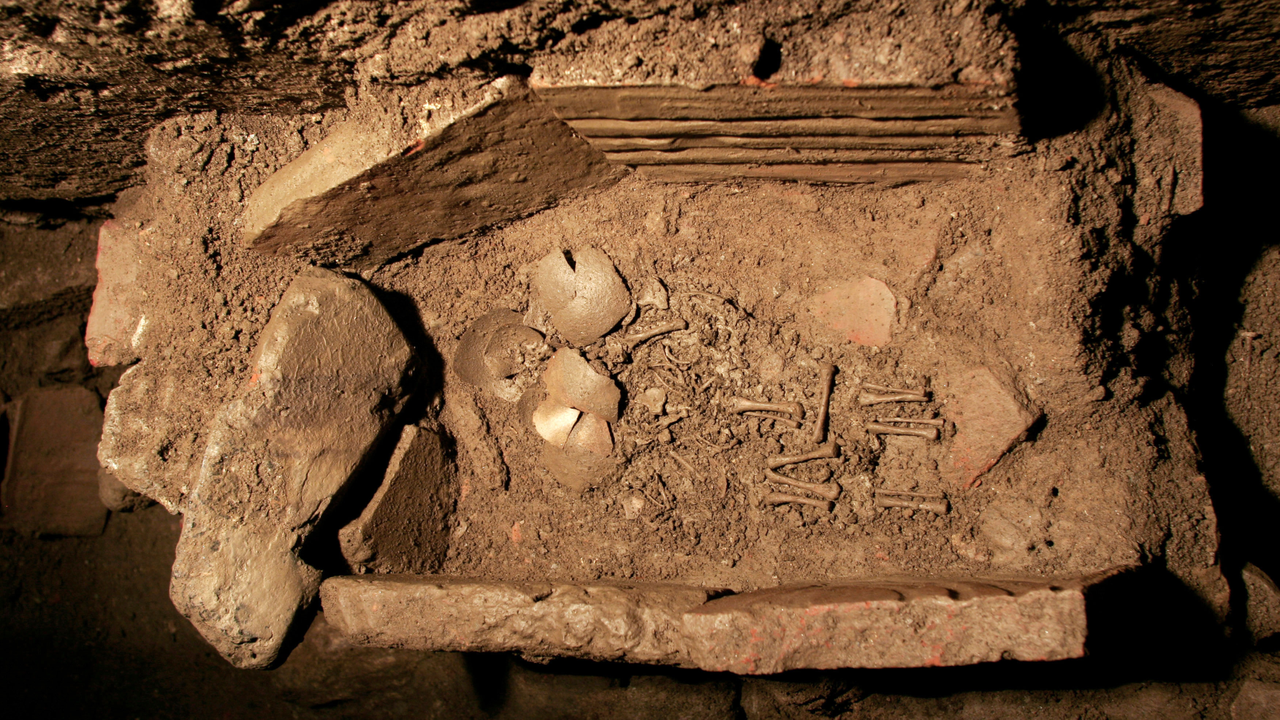
1,200-year-old infant burial found near famous Temple of Artemis in Turkey contains twins β€” one with an unusual extra rib

Archaeologists have uncovered a rare and unusual burial of premature twins in a 1,200-year-old tomb near the Temple of Artemis at Ephesus in Turkey. Although the burial was found in an abandoned latrine, researchers think the intention was to protect the babies in the afterlife.

"This interment was made in an unexpected and exceptional setting," Lilli Zabrana, an archaeologist at the Austrian Academy of Sciences who co-authored a new study detailing the discovery, told Live Science in an email. Burials previously discovered at Ephesus were made in a dedicated cemetery outside the boundaries of the ancient temple.

"What is even more unusual is that the burial contains two premature infants, who were probably twins, which is a rather rare occurrence," study co-author Caroline Partiot, a bioarchaeologist at the Austrian Academy of Sciences, told Live Science in an email. Evidence of a rare genetic condition found in one of the infants makes the finding even more unique, the researchers noted.

In the study, published online July 13 in the journal Childhood in the Past, Partiot and Zabrana analyzed bones found in a tomb that was likely built in the eighth to ninth century, during the middle Byzantine era. The grave was placed within an abandoned latrine channel, originally built during the second or third century, Zabrana said, but the latrine was a later addition to a Roman odeum β€” a building used for musical performances β€” that was built in the first century within the sacred area of the famous Temple of Artemis at Ephesus (one of the Seven Wonders of the Ancient World), which was originally built around 550 B.C.

view of the ruins of a Roman odeion in Turkey

The Romans built a music hall called an odeum at the Temple of Artemis. The infants were found in a tomb in the odeum's latrine. (Image credit: Β© OeAW-OeAI/N. Gail)

When excavators opened the cist, or stone-lined grave, they saw two tiny skeletons buried side by side. Based primarily on the size of the bones, Partiot and Zabrana estimated the skeletons were from infants who were likely born prematurely at around 33 to 34 gestational weeks, or 7.5 months in utero. (A full-term pregnancy typically lasts between 39 and 40 weeks.)

"The hypothesis that they were twins is based on the fact that they have very similar ages at death and were buried in direct contact with one another," Partiot said. "However, it will only be possible to confirm whether they were indeed twins through future DNA analyses."

Although the researchers did not find any evidence of trauma or disease on the babies' skeletons, they did notice a rare bone called a supernumerary cervical rib. This hereditary trait involves the growth of an extra rib bone that forms at the back of the neck in about 1% of people and usually doesn't cause any problems. However, Partiot has found that, in babies, there is an association between cervical ribs and anomalies in Hox genes β€” a group of genes that code for specific body parts during embryonic development β€” that can lead to stillbirth, prematurity or sudden infant death.

"To the best of our knowledge, no cases of twins with cervical ribs have been documented in an archaeological context" before this one, the researchers wrote.

The twins may have been buried in an odd location outside the known burial grounds at Ephesus because they died as premature infants who probably hadn't been baptized yet, the researchers proposed. The infants' final resting place was likely a kind of "practical compromise" between Christian burial practices and local customs, the researchers wrote in the study.

The team found no evidence of the twins' mother nearby or in the Ephesus cemetery. "It is possible she died at the same time, but it is also possible that she did not; it is difficult to say," Partiot said. "Both infant mortality and maternal mortality were very high at the time."

But the twins' protective cist grave preserved their skeletons for more than a millennium, which "clearly indicates that this was a respectful burial rather than the disposal of human remains," Zabrana said. Ultimately, the tomb reveals a family's "intention to care for the two deceased infants in death, and to acknowledge their fleeting place within the community," the researchers wrote.

What do you know about the bones in your body? Test your knowledge with our human skeleton quiz.

  •  

'Extremely rare' Roman military camp found in Slovakia holds hastily buried remains of Marcus Aurelius' soldiers β€” with some dumped in wells

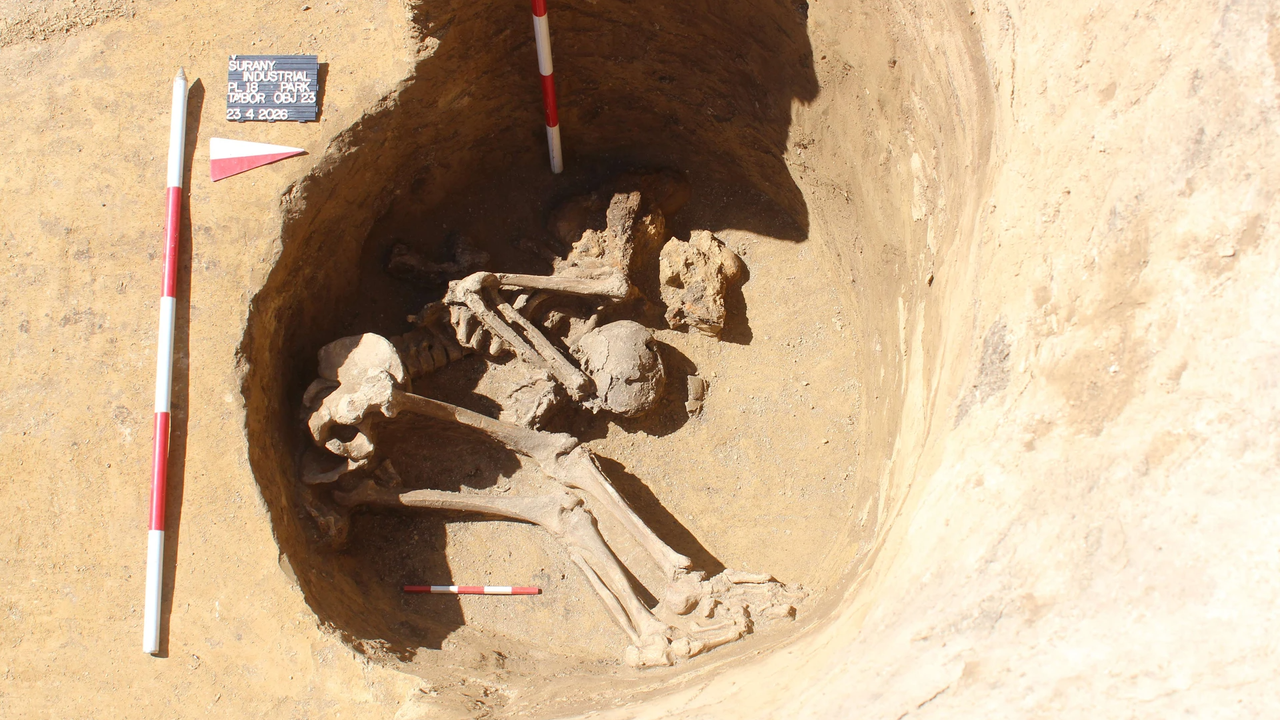
Archaeologists in Slovakia have uncovered a large Roman military camp likely used by Marcus Aurelius' troops during conflicts with Germanic tribes in the late second century. The "extremely rare" camp came as a surprise to archaeologists, as it holds the hastily buried remains of numerous soldiers in unusual graves, including wells.

Remains of the 18.2-acre (7.4 hectare) camp were found near the town of Ε urany in southwestern Slovakia, according to a translated July 17 statement from MH Invest, which excavated the area along with the Institute of Archaeology at the Slovak Academy of Sciences (SAS).

"We have a unique opportunity to explore practically an entire Roman marching camp, which is extremely rare in the European context," Matej Ruttkay, director of the SAS Institute of Archaeology, said in the statement. "We are clearly investigating a place that disappeared immediately after the military conflict between the Romans and the Germans."

Between A.D. 166 and 180, the Romans fought a series of battles against a Germanic people called the Marcomanni, who lived north of the Danube River along the border of the Roman Empire in what are now Slovakia and the Czech Republic. Marcus Aurelius, who reigned as Roman emperor from 161 to 180, commanded troops in the Marcomannic Wars with the goal of defending and securing Rome's border against barbarian invasions. But the wars ended upon Marcus Aurelius' death, when his son Commodus negotiated a peace with the Marcomanni, according to third-century Roman historian Cassius Dio.

The newly discovered Roman military camp had clear defensive characteristics, including five entrance gates, fortifications, and a curved ditch-and-rampart system typical of marching or legionary camps, according to the statement. The Ε urany camp is only the second Roman military installation ever found in western Slovakia; the first camp, discovered in 2024 by SAS archaeologists, is thought to be where Marcus Aurelius wrote part of his Meditations.

The Ε urany camp surprised archaeologists with a large number of skeletons β€” and parts of skeletons β€” buried in ditches, wells and hastily dug shallow graves, according to the statement.

"Our preliminary findings indicate that in most cases these are Roman soldiers," Marek Vojteček, an archaeologist at the SAS Institute of Archaeology, said in the statement. "Numerous components of Roman military equipment and weaponry were also found with the skeletal remains, such as spears, arrowheads, parts of helmets, segmented and scale armor, legionary brooches, coins, and the characteristic 'caligae' military sandals, from which iron nails on the soles have been preserved," he said.

X-ray analysis of blocks of clay revealed the intact sandal nails, which are now stored at the SAS Institute of Archaeology's specialized laboratory for further analysis. "It is literally a miracle to see the original footwear of a Roman soldier and even to be able to determine its size," Michal Cheben, an archaeologist at the SAS Institute of Archaeology, said in the statement.

The unusual burials raise important questions about the use and abandonment of this Roman military camp, according to Cheben, including whether the soldiers died from combat injuries or disease and why the bodies weren't looted before being thrown into storage pits and wells. "Laboratory analyses and further genetic and anthropological research may provide answers," Cheben said.

Because the camp was so large and the artifacts so numerous, a comprehensive analysis of the site will take several years and will involve international experts in carbon dating, soil analysis, isotopic analysis and ancient DNA, according to the statement.

"This is a long-term process, so many results will only become known in the coming years," Ruttkay said.

From Augustus to Nero, see how much you know about ancient Rome's famous leaders with our Roman emperor quiz!

  •  
❌