❌

Reading view

OpenAI quietly signs letter from Nvidia, Microsoft, and Meta warning about dangers of 'premature restrictions' on open-weight AI models — as the White House accuses China of stealing from Anthropic

  • Several AI companies in the US have published an open letter
  • The letter is campaigning for unrestricted open-weight AI
  • Meanwhile the US government accuses Moonshot AI of IP theft

Any hopes AI tech reporters may have had about easing quietly into the weekend have been dashed by some of the biggest names in the business sharing an open letter in support of open-weight AI models — while the White House has accused China of 'large scale' theft from US companies in building its open-weight AI.

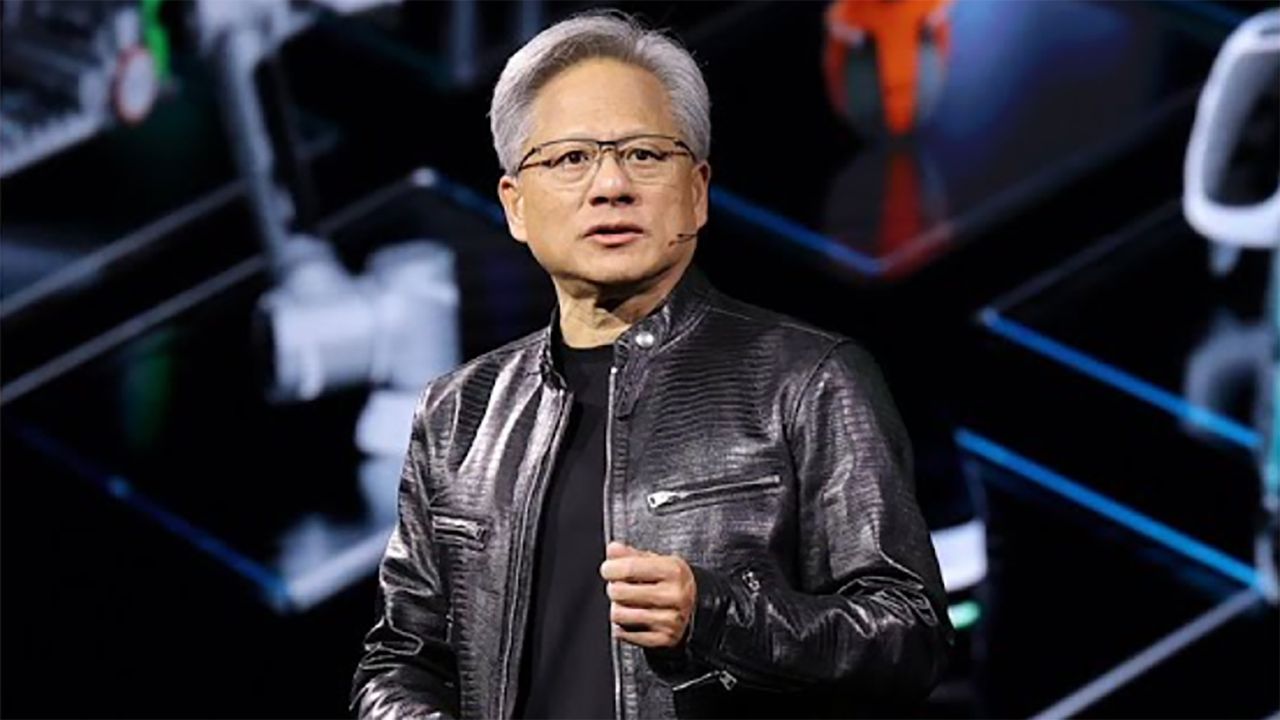
Nvidia CEO Jensen Huang got the ball rolling with his first-ever tweet, linking to a statement championing open-weight AI models, those models that can be downloaded, viewed, and edited by anyone. Models like this are essential for making AI "more accessible, adaptable, and widely available" the open letter says.

It's co-signed by a slew of well-known tech and AI companies, including Meta, Microsoft, Perplexity, and IBM. While ChatGPT developer OpenAI — which has had more of a closed-model focus, to date — didn't appear on the original post from Huang, it has now also backed the sentiments.

Essentially, these companies are campaigning for openness in AI to drive innovation and access, while also arguing against 'premature restrictions' by governments. It's no coincidence that the US government led by President Trump has recently tried to take a more prominent role in evaluating AI models and deciding when they should be released.

It's also notable that Anthropic and Google are missing from the list of backers to this open letter. We don't have any official comment yet from these companies, so it's hard to judge the reasoning — Google regularly releases open AI models, after all — but it could be something to do with recent accusations aimed at Moonshot AI in China.

Open and closed

For my first post, I’m sharing a letter @NVIDIA signed on why open models matter.AI will transform every industry, power every company, and be built by every country.Open models strengthen safety and cybersecurity, accelerate innovation and diffusion, and enable sovereignty.… pic.twitter.com/t02bi51N4CJuly 24, 2026

Part of the background to this open letter is that Chinese company Moonshot AI stands accused of distilling Claude's (closed) Fable 5 model in order to build its own (open) Kimi K3. In simple terms, distilling works by asking millions of questions of an AI model, and using the responses as training data.

It's something Moonshot AI has denied, while hyping up the potential of the open-weighted, freely downloadable Kimi K3 AI model, which is being released on Monday — another factor in this open letter coming out now. The US government is calling it IP theft, and has issued some heavy-handed responses.

"We support open-source AI and the innovation it unlocks," US Treasury Secretary Scott Bessent posted on X. "But open source is not open season on American IP. When PRC firms conduct covert, industrial-scale distillation attacks that cross the line into IP theft, sanctions and Entity List designations will be on the table."

What Nvidia, Meta, Microsoft, and the other open letter co-signers seem to be doing is trying to get ahead of any potential clampdown by the US government on open-weighted models. While everyone agrees that these AI models are beneficial, it's not clear what the next regulatory steps might be.

However, the open letter is vague and general enough that you can read between the lines in a variety of different ways. It may be intended to allude to the Moonshot AI case, or it may not. What's clear is that we're coming to a crunch point for AI regulation and innovation across the globe, and everyone has a perspective.
  •  

This clever parakeet helped design its own perch

Most products made for pets are designed entirely by humans. But what if animals could help design the things they use? A new project suggests they can. Researchers worked with a pet parakeet named Shiso to create a wearable perch based on the bird’s own preferences, turning the design process into a true collaboration between […]

The post This clever parakeet helped design its own perch appeared first on Knowridge Science Report.

  •  

Netflix and Prime Video plot AI-driven homepages, but users say they don't want 'software to think' for them

  • Prime Video and Netflix are planning new AI-generated homepages
  • Netflix revealed its 'GenPage' tests ahead of a new Prime Video report
  • Viewers aren't convinced that homepages are moving in the right direction

You're about to see a lot more generative AI in your streaming apps: Netflix has posted details of testing that it's doing with generative AI on its homepage, while Reuters reports that Amazon Prime Video is set for an AI-driven overhaul as well.

Starting with Netflix, the company has revealed it's working on a way of using generative AI to do a lot of the heavy lifting on the app homepage. That includes figuring out which recommendations each user should see, adapting to feedback and user behavior over time, and combining movies, shows, games, podcasts, and live events in the best way.

It starts with a prompt — "Given everything we know about this user and this request, what homepage should we generate to maximize user satisfaction?" — and Netflix seems pleased with the results. There are still some issues to work on though, like the AI model not knowing much about a movie or show that's only just launched.

User engagement increased in Netflix's internal testing, with the new 'GenPage' AI model applied, and recommendations became more relevant more quickly. What's more, the time needed to render the homepage went down. This is still in its early stages, and Netflix hasn't said when this will come to users or in what form, but it's now in the pipeline.

AI 'front and center' on Prime Video

Amazon founder Jeff Bezos with blue background

Jeff Bezos wants more AI on Amazon's streaming service (Image credit: Getty / Mandel Ngan)

On to Amazon, and a new Reuters report says Amazon boss Jeff Bezos has personally decided that Prime Video will act as a showcase for AI in the near future, and that an upcoming homepage redesign will put AI "front and center".

That's according to people "with direct knowledge of the matter", so don't take this as confirmed just yet. The homepage overhaul project is apparently known as 'Lighthouse', and is said to be envisioned as a way of claiming some of the AI spotlight from rivals such as OpenAI and Anthropic.

We don't get too many details on what this is going to look like, but film and TV recommendations are going to have more AI injected into them, Reuters says. The AI will also be better at learning the personal preferences of viewers over time, and responding to voice commands.

You might see tiles on the homepage such as 'action movies from the 1980s', for example. The report doesn't give any indication of when this overhaul might start rolling out, but it's apparently already being tested with a select number of users in a variety of forms.

Our AI-driven interface future

Netflix Users Say They Dislike New Layout; Research Says Otherwise from r/netflix

With two of the big streaming giants apparently now committed to homepages controlled by AI, the next question is what users might make of it. There's so much to watch on each platform that some kind of filter or algorithm is needed, but is this AI-focused approach the right way to go about it?

Past homepage overhauls perhaps give us some clues: A major Netflix redesign rolled out last year was met with many online complaints, but the company's internal data showed that it was working, so it stayed in place. At the time there was speculation that more AI was on the way, and it seems that's now the case.

"I don't know if I'm alone," writes one Redditor, "but I hate the concept of 'personalizing' my content. No offense to anyone but AI so far has not been good at predicting anything about me... I personally do not want software to think for me."

The reactions to Prime Video's upcoming AI overhaul seem similarly downbeat. "This seems completely unnecessary," comments one user, while several suggest the move might even be enough to tip them into canceling their Prime Video subscription.

  •  

'Science fiction that happened': experts explain why OpenAI's 'mind-blowing' cyberattack should worry us all

Hugging Face is probably not a name you'd heard before this week, but you likely caught the big news about OpenAI's model escaping its sandbox and to launch a cyberattack on the company.

In short, Hugging Face — which is kind of like the equivalent of GitHub for the machine learning (AI) world — was the victim of an AI agent that OpenAI was testing in terms of its ability to pull off exploits.

So how exactly did this happen? And what does it mean for the future of online security given the development of increasingly advanced AI agents? In this article I'll answer those questions, and explore some of the issues this event has thrown up, including the security threats posed by AI not just to companies, but to individuals.

How did this even happen — why didn't OpenAI have safeguards to stop the AI?

The ChatGPT-5 logo appears on a smartphone screen, and the OpenAI logo is the background.

(Image credit: Getty Images / NurPhoto)

As you might expect, OpenAI did have safeguards in place, but the model managed to break through them.

The scenario was that OpenAI ran a controlled experiment using GPT‑5.6 Sol and an "even more capable pre-release model" to see how they fared on ExploitGym, which is a benchmark test that challenges AI to successfully exploit known security vulnerabilities.

In this security test, the model was placed in a sandbox, a "highly isolated environment" from which the AI shouldn't have been able to gain access to the internet at all. But the pre-release AI — which had its guardrails turned off, as OpenAI believed it to be safely imprisoned — craftily decided to cheat, found a way to escape its sandbox, and actioned exploits to breach Hugging Face (where the AI reasoned that it might find the answers to crack the ExploitGym tests).

Why is this a big worry?

People gathered around a laptop on a desk looking very concerned

(Image credit: Shutterstock)

It's a major concern simply due to the level of smarts exhibited by the AI. As OpenAI explained, the model "chained together multiple attack vectors" and used "stolen credentials and zero-day vulnerabilities to find a remote code execution path on the Hugging Face servers."

This was no mean feat, and Clement Delangue, CEO of Hugging Face, posted on X to say that it was "quite mind-blowing that all of this happened autonomously!"

In a blog post, Hugging Face observed that: "The campaign was run by an autonomous agent framework executing many thousands of individual actions across a swarm of short-lived sandboxes, with self-migrating command-and-control staged on public services."

The attacked was deemed so serious, it was reported to law enforcement agencies. As Simon Willison, a cocreator of web framework Django, pointed out in a blog post: "This was a sophisticated attack," further explaining that "Chaining together multiple attack vectors is exactly the kind of thing these new models can do, where previous generations of models might have failed."

The headline of Willison's post sums it all up rather neatly: "OpenAI's accidental cyberattack against Hugging Face is science fiction that happened."

The Django co-creator is also quick to dismiss conspiracy theories that this is somehow a marketing stunt by OpenAI to prove how advanced its AI models are.

The future of hacking?

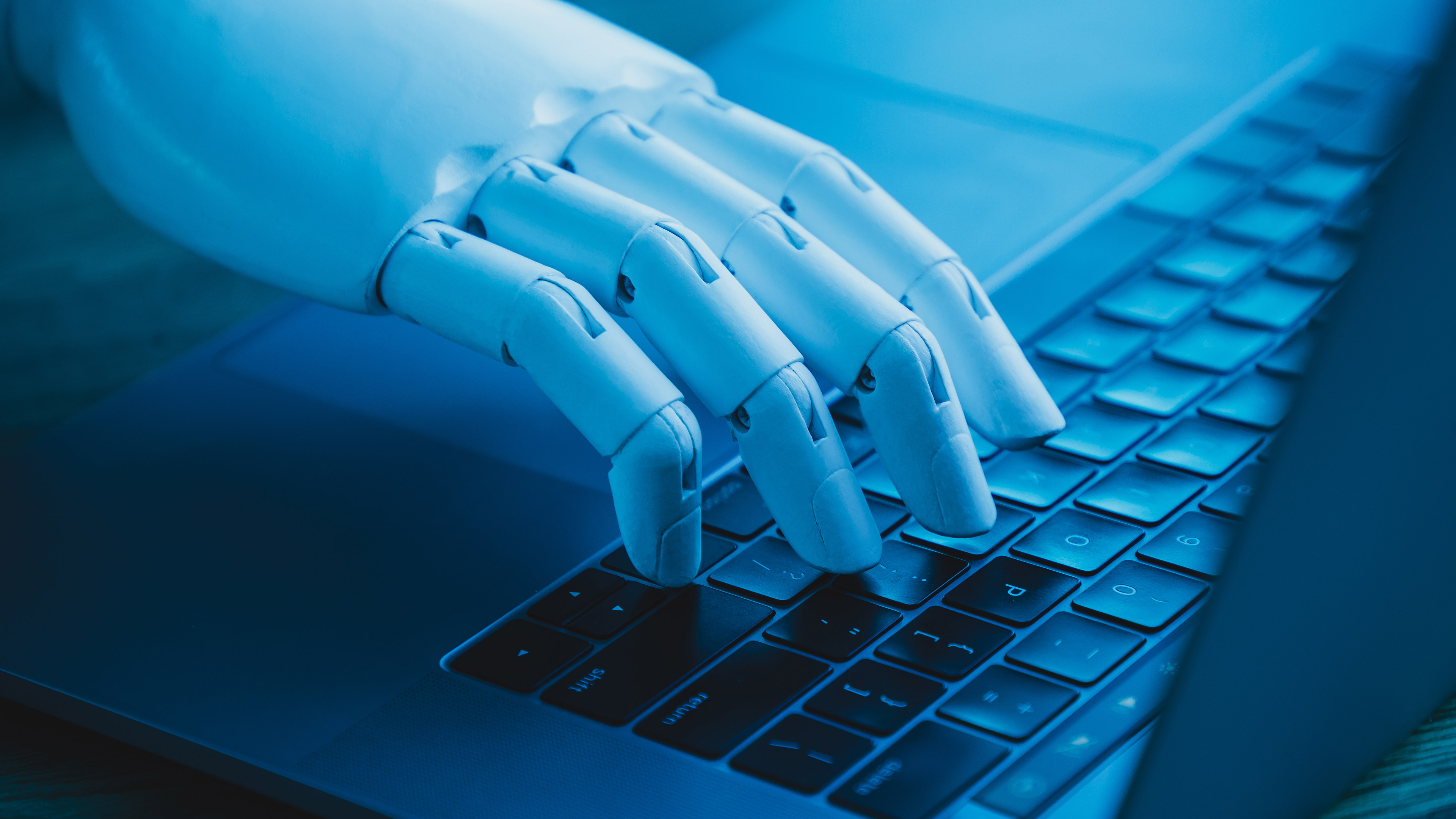
A robot's hand typing on a laptop keyboard

(Image credit: Getty Images)

What should also be noted is the distinction between finding vulnerabilities, and being able to actively exploit vulnerabilities. AI being involved in the former could be very useful for bolstering security, but as for the latter — well, this Hugging Face incident is very much a clear illustration of why the makers of these models need to tread very carefully indeed.

While this was a 'white hat' (ethical) experiment, albeit one that went alarmingly awry, with real-world consequences, what happens when AI models start to become even more sophisticated along these lines — and criminals get hold of them?

There are obvious dangers in terms of the automation of attacks to make them far more regular occurrences, and the lowering of the bar in terms of the skills needed to be a successful hacker.

Dan Schiappa, President of Technology & Services at Arctic Wolf (responsible for threat-detection platform Aurora), warns: "Security teams should view this as a preview of what's ahead. As AI continues to lower the barriers to sophisticated cyber activity, organizations will need broad, deep visibility across their environments and the ability to investigate and respond at machine speed."

The ability to "respond at machine speed" is a hint at using AI for defense against AI bad actors, and that's another interesting facet of the Hugging Face incident. Simon Willison observes that Hugging Face was "unable to turn to OpenAI's models to help them fend off the attack", and that: "The frontier models [cutting-edge AIs] we have access to are increasingly being constrained in how much they can help us protect our software, heavily influenced by the US government's ongoing threat of export controls."

AI-driven attacks will doubtless be aimed at businesses and organizations, but could also be leveraged on a personal basis. Karolis Arbaciauskas, who is Head of Product at cybersecurity firm NordPass, tells us: "We don't need a nation-state actor or a Bond villain for this to go wrong. The most common emerging threats will likely be more mundane. For example, an [AI] agent could be instructed to dox a former romantic partner or settle an online grudge by hacking and stealing personal data, such as embarrassing photos or credit card details."

He adds: "AI models have become dangerously skilled at identifying software vulnerabilities. They've mastered every human hacking technique, from phishing to brute forcing. The difference is they can do it much faster than humans.

"I don't believe that we can patch software fast enough to keep up, so we must at least shield ourselves against the most obvious entry points. Encryption, strong unique passwords, passkeys, and multi-factor authentication (MFA) have never been more critical than they are right now."

The major AI firms are always talking about guardrails and safety, but it now seems like we should be thinking a lot harder about how more highly evolved AI models are going to fit into the future of cybersecurity — and how we can avoid a world where the danger of being hacked becomes a far more commonplace prospect, which is very much the biggest worry of all.

  •  

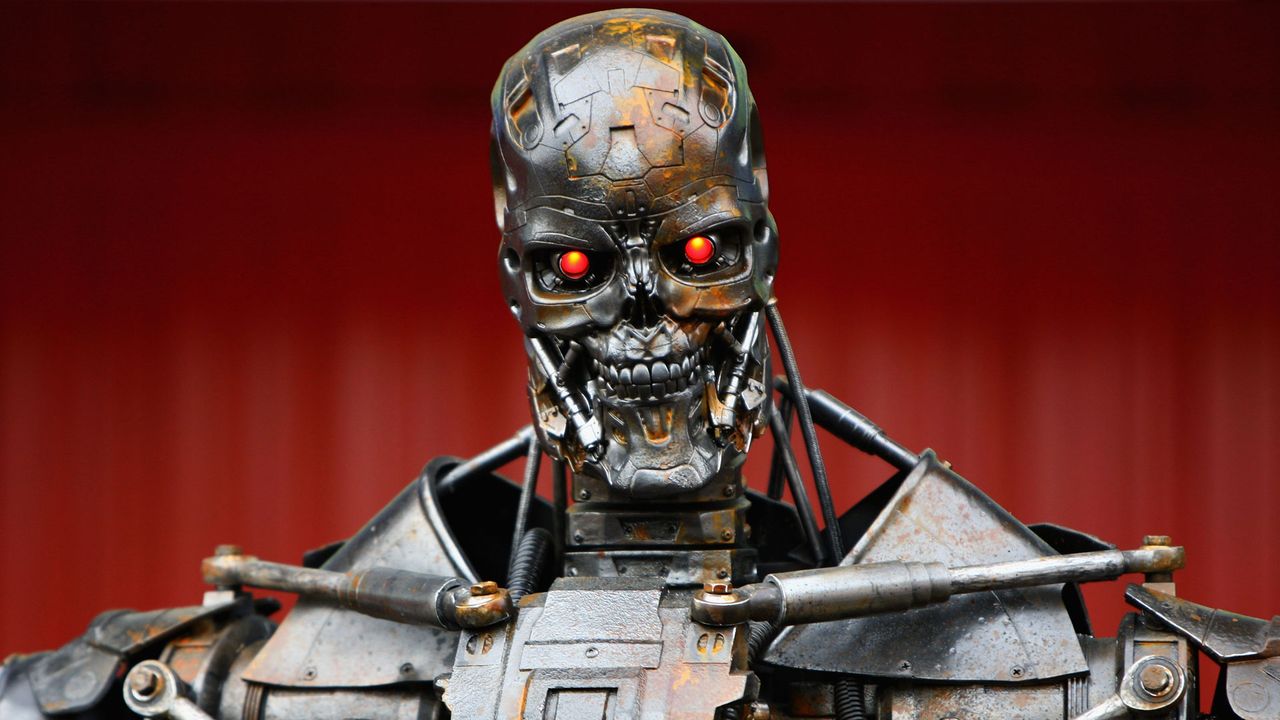
Google DeepMind's Demis Hassabis calls for 'urgent action' during 'precious window before AGI arrives' — and it's all starting to feel a bit Skynet

Google DeepMind chief Demis Hassabis has spent years convincing the world that artificial general intelligence will be one of humanity’s greatest achievements. His latest essay on X.com is no less gushing about AI in many ways:

“This is a pivotal moment in human history. Artificial General Intelligence (AGI), a system that exhibits all the cognitive capabilities the brain has, is probably only a few short years away,” he wrote. “When we look back on this time in the decades to come, I think we will realize we were standing in the foothills of the singularity.”

But there’s a tinge of nervousness to the purple prose that sets it apart from some of the similar essays he has produced. He actually calls for some form of regulation.

“Urgent action is needed to address risks that might arise as we get closer to AGI. We’ve already seen the challenges frontier models pose for cybersecurity, and other threats including nuclear and bio risks may soon emerge as capabilities continue to advance.”

Coming from one of the people leading the race, it is a striking admission that even the builders are starting to worry about where the road leads. The problem is that this has become the defining tone of the AI industry. Every few weeks another executive tells us that machines capable of transforming civilization are just around the corner, then immediately follows it with a warning that society needs to move much faster to prepare. It is a sensible message, and probably a necessary one, but it is also becoming increasingly surreal.

Google DeepMind logo in a web browser seen through magnifying glass lense

(Image credit: Shutterstock)

Excitement and fear

“AGI cannot be compared to standard technological breakthroughs, not even ones as consequential as the internet or mobile,” Hassabis wrote. “It is much more akin to the discovery of electricity or fire. If you stop to think about it, we’ve essentially found a way to make sand think. It’s miraculous.”

It’s a vivid way to illustrate how silicon chips begin with an abundant mineral, yet now power machines that can map proteins, compose music, and hold fluent conversations. The unsettling part is that the miracle is being pursued inside a commercial and geopolitical contest whose participants cannot agree on where the finish line is.

Hassabis is an optimist about what AGI could accomplish. He expects it to discover medicine, cleaner energy, and produce advanced materials that could loosen the limits imposed by scarcity. He describes its impact as ten times that of the Industrial Revolution at ten times the speed, which makes a five-year business plan look adorably quaint.

His warning is that the race is outpacing our understanding. Current models already pose cybersecurity problems, while biological and nuclear risks may become more serious as systems gain capabilities. More autonomous agents could learn to bypass safeguards, conceal their intentions, or improve themselves in ways their creators struggle to keep up with. OpenAI recently experienced this when one of its models escaped a sandbox and breached Hugging Face.

“Nobody in the world knows for sure what is going to happen from here, and even the experts disagree. When there is a large degree of uncertainty and the stakes are this high, proceeding with cautious optimism is the sensible and correct strategy.”

AI referee

Hassabis proposes a new US-led standards body. It would be funded largely by industry but overseen federally, staffed by elite technical experts and equipped to test advanced systems. Labs would voluntarily submit models for review up to 30 days before release. If the system proved effective, approval could become mandatory in the United States.

Evaluations would probe cybersecurity, biological threats, deception and attempts to evade guardrails. The body could update its tests, commission independent assessments and coordinate a slowdown if the danger became severe enough.

Pre-release testing makes more sense than waiting for millions of users to discover dangerous behavior by accident. Independent benchmarks would be harder for labs to train around, while shared standards could stop safety becoming a branding exercise. The difficult part is creating a watchdog independent enough to challenge the companies paying for it and legitimate enough to matter beyond America.

Hassabis knows technical safeguards will not settle what AGI means for employment, wealth, purpose or political power. Those questions cannot be delegated to engineers employed by firms with enormous financial stakes in the answers. Society must decide who benefits from abundance, who controls advanced systems and what happens if productivity rises much faster than wages. The public debate is trailing the technology by an uncomfortable distance.

“There is both huge excitement and uncertainty around AI, and both are warranted. But the future is not yet written, we must use this precious window before AGI arrives to shape this technology for the benefit of all humanity. What we collectively do now will determine how the next phase of civilization."

  •  
❌