❌

Reading view

'We're trying this out of frustration': Marmots star in OnlyFans account as researchers desperately look for ways to raise funds amid US budget cuts

A team of UCLA scientists has resorted to posting content on OnlyFans to raise money for research amid huge federal funding cuts to U.S. science. But the videos aren't of themselves, they're exclusive recordings of marmots.

"I spend a lot of time waiting for marmots to do things and had the idea one slow morning," Daniel Blumstein, a professor of ecology and evolutionary biology at UCLA, who leads the project, told Live Science in an email. "When I came back with this idea, one of my graduate students immediately said we MUST do this! So here we are!"

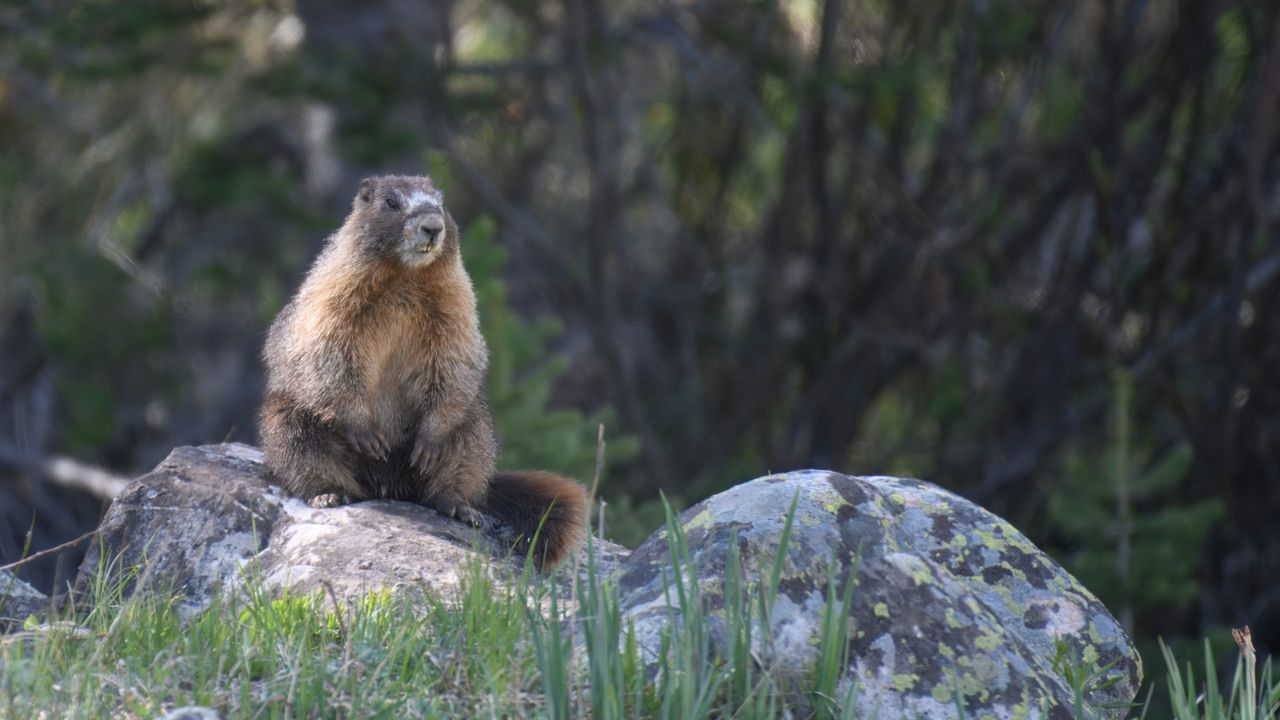
Researchers at the Rocky Mountain Biological Laboratory (RMBL) have been studying yellow-bellied marmots (Marmota flaviventer) at a field station in the Rocky Mountains near Crested Butte, Colorado, since 1962. "The RMBL marmot study is the second oldest continuous study of individually marked mammals in the world," Blumstein said. "We have up to 65 years of data on population dynamics, social and anti-predator behavior and ask a lot of questions about how animals respond to a changing environment."

Yellow-bellied marmots are one of 15 marmot species, a group of cat-size ground squirrels that can be found throughout the Northern Hemisphere. This particular species is widely distributed throughout the Rocky Mountains and several mountain ranges in California. The species live in social groups and are active during the day, which makes them a great subject for long-term behavioral studies.

"Long-term research like ours is both very valuable to understand how and why things change over time, and our project has been very productive," Blumstein said.

However, collecting data over such long periods comes with a significant price tag. And with federal funding cuts draining research budgets across the country, Blumstein and his team have had to look for other methods to raise money for their research. Enter OnlyMarms.

On June 17, the RMBL Marmot Project announced on Instagram that "the state of funding is so bad we are turning to OnlyFans, or as we like to call it 'OnlyMarms'."

Two marmots on a rock

With federal funding cuts draining research budgets across the country, Blumstein and his team have had to look for other methods to raise money for their research. (Image credit: Daniel T. Blumstein, Professor Department of Ecology & Evolutionary Biology Institute of the Environment & Sustainability UCLA)

OnlyFans is a subscription platform that allows users to pay creators to see exclusive photos and videos. The platform has become popular with adult-only content creators, but it hosts others too, including musicians, athletes and celebrities β€” and now marmots.

"We’re trying this out of frustration with an extremely challenging funding environment," Blumstein said. "If we’re lucky, it can help raise money for supplies and some expenses. But unless we are very lucky, it won’t replace the federal funding that has driven discovery in the US since the 1950s."

However, for anyone hoping for spicy marmot content, you might be a bit disappointed. "[It's] almost all G-rated content of marmots playing, being cute, digging, bringing plants to their burrows…normal routine stuff for marmots," Blumstein said. "The occasional scuffle makes it PG rated."

Emily Renkey, who also works on the project, said the team hopes to add videos of marmot pups soon.

"Our 'Onlymarms' page has gotten a bit of engagement since we started it a bit over a month back," Renkey told Live Science. "We've gotten 735 page visits and have 44 fans."

But how much has OnlyMarms actually been able to raise? "Not much," Blumstein said. "We’re letting folks have free subscriptions and ask for tips. They [OnlyFans] take 20% and I have to pay taxes on the balance."

Even so, the team is hopeful that the page is helping to increase public engagement and interest in the project. "Overall I think this can be an amazing way to teach people more about animal social behavior, which can sometimes be hard to observe," Renkey said. "Even we are learning more about marmots through these up close glimpses the game cameras provide."

While it is difficult to get signed consent from the marmots to use this content online, Blumstein said that the funds raised would be used to help protect the creatures in a rapidly changing world. "We are using these funds to help continue the study which provides valuable information about them and how they’re responding to climate change," he said.

The OnlyFans account is just one way the team has tried to share its research with new audiences. "We work hard to translate our research findings to the public," Blumstein said. "Our lab’s running a Fat Marmot Week contest this summer. We're hoping this will let people learn more about these fascinating alpine critters!"
  •  

'It was unlike anything I'd witnessed before': Orcas seen headbutting a sunfish so hard that it exploded

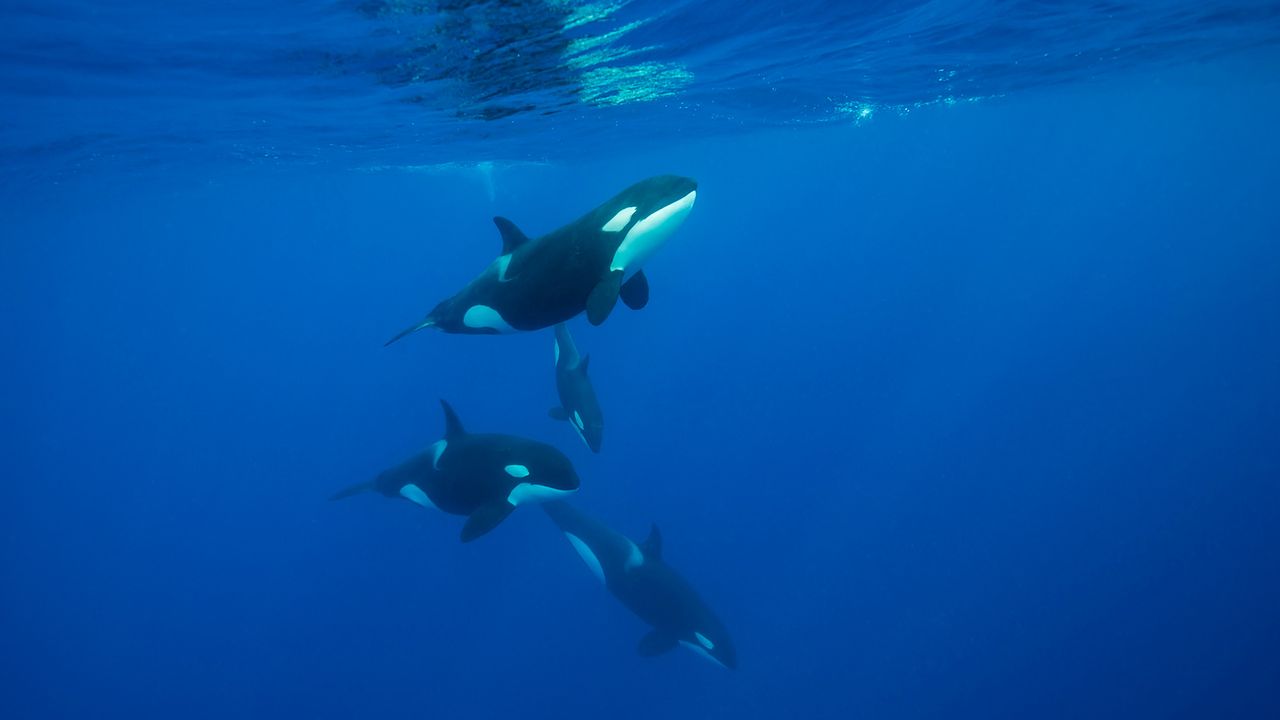
One of the ocean's most intelligent and aggressive predators has once again surprised scientists with a curious new behavior. In the Gulf of California, researchers witnessed orcas working together to smash dead sunfish into bits β€” a suspected food processing technique that makes it easier for younger whales to feed on the enormous bony fish that weigh up to 4,400 pounds (2,000 kilograms).

In two separate encounters, one orca gripped a sharp-tail sunfish (Masturus lanceolatus) while another orca charged toward the fish. The first whale released the carcass just before impact, allowing its companion to slam into the fish at high speed and scatter fragments of fish flesh throughout the water.

"It was unlike anything I'd witnessed before," Kathryn Ayres, a scientist at the conservation nonprofit Beneath the Waves told Live Science in an email. "As a scientist, moments like this are incredibly exciting because you realize you're observing something that may never have been documented in detail before β€” as you can tell in the video!"

Ayres and her colleagues dubbed the behavior "ram-to-fragment." Their observations, published July 23 in the journal Frontiers in Ethology, suggest the killer whales were not trying to kill the sunfish, which were already dead and appeared to have been disembowelled. Instead, the orcas may have been breaking down the bulky carcasses so members of the group, particularly younger animals, could feed more easily.

Hunting in action

The first encounter Ayres observed took place in July 2024 near an offshore seamount off Baja California Sur, Mexico. An adult female orca held a sharp-tail sunfish by its tail-like clavus, or rudder, while an adult male orca accelerated toward it, belly-up. The female released the fish an instant before the male struck.

The collision produced a loud noise and caused the sunfish's tissue to disintegrate. In the video, Ayres' shock is evident as she can be heard exclaiming, "Oh my god!"

A juvenile orca then swam into the cloud of suspended flesh and ate the smaller pieces, while the adults fed on what remained of the main carcass.

A second encounter, which the researchers credited diver HΓ©ctor Franz for filming in September 2025, followed much of the same sequence. One adult orca stabilized the sunfish, another rammed it and a calf later pulled tissue from the broken carcass.

Ayres had previously watched orcas hunt ocean sunfish (Mola mola), but this was different.

"I had also seen orcas ram their prey previously, but I had never witnessed an impact powerful enough to completely fragment the tissue like this," Ayres said. "That was what made this observation so remarkable."

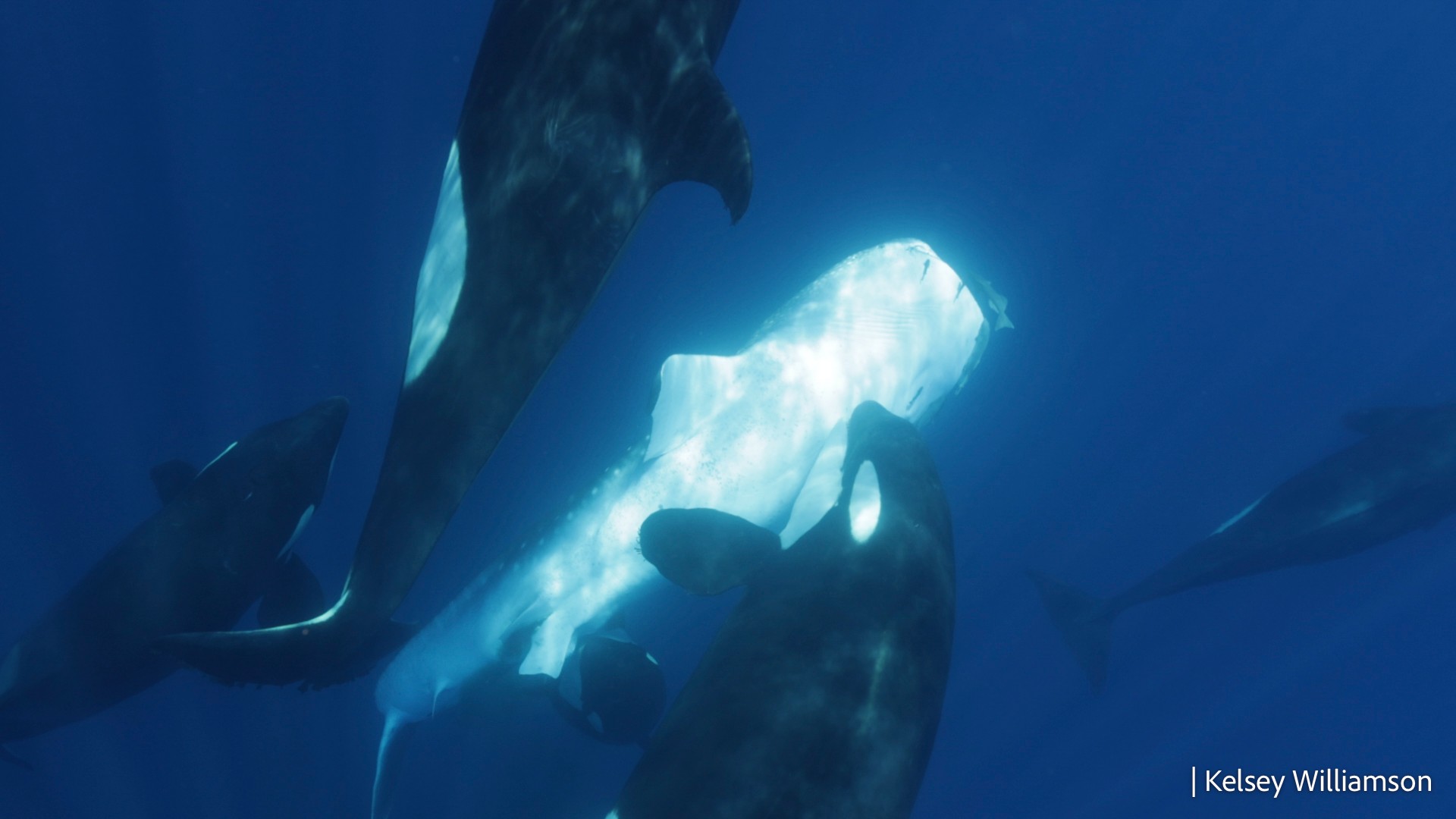
The maneuver resembled coordinated attacks Ayres and her team had previously documented, in which orcas confronted whale sharks (Rhincodon typus) β€” the largest living fish β€” in the Gulf of California. In those hunts, some orcas took turns ramming it.

An orca hits the under side of a small whale shark, which has been flipped upside down for easier predation

Previous footage from diver Kelsey Williamson shows orcas flipping a whale shark upside down to have an easier time preying on it. (Image credit: Kelsey Williamson)

Why make fish confetti?

Ramming is not a new killer whale hunting technique, said Matt Hansen, a postdoctoral researcher at the Leibniz Institute of Freshwater Ecology and Inland Fisheries who was not involved in the study. However, the hold-and-release sequences and shattering of carcasses may be new, Hansen told Live Science in an email.

The researchers proposed several possible explanations for the behavior. The predominant assumption is that the adults were processing food for younger whales. Orcas frequently tear apart prey and share portions with calves and juveniles, and in both newly described encounters, young killer whales were present.

But two observations are not enough to show that the adults were deliberately feeding or teaching the youngsters, Heather Hill, a professor and chair of psychology at St. Mary's University in Texas who was not involved in the research, told Live Science in an email.

"Whether or not it represents parental investment, observational learning, or distribution of resources remains circumstantial in my opinion," she said.

The researchers also suggested that the behavior could have been playful. Orcas are highly intelligent and social, and they sometimes manipulate, toss or strike prey without immediately eating it. However, Hill said that the two encounters appeared more practical than playful.

"If it was for fun, I would have expected multiple attempts made with variations in speed, point of contact, force of impact, and initiators because the point of playing is to try different things and not destroy the toy too soon," she said. "Since it appears that these events were 'one and done' so to speak, probably less playful and more functional β€” to eat the fish and maybe to model a foraging technique and possibly to share resources with the younger animal."

The study authors also raise a more speculative possibility that dispersing the sunfish's microbe-rich skin and gelatinous tissue could somehow affect the surrounding water or expose the orcas to potentially beneficial microbes. But what that benefit might be is unclear.

"I don't see how dispersing the skin into the water column would have a different effect from eating it," Hansen said. "Unless the authors are suggesting [the orcas] are using it like a lotion on their own skin? Who knows, the world is weird and wonderful."

Orca quiz: Will you sink or swim?

  •  

Mice on 'godforsaken' frozen volcanoes eat toxic plants to survive conditions 'not remotely compatible with long-term human survival'

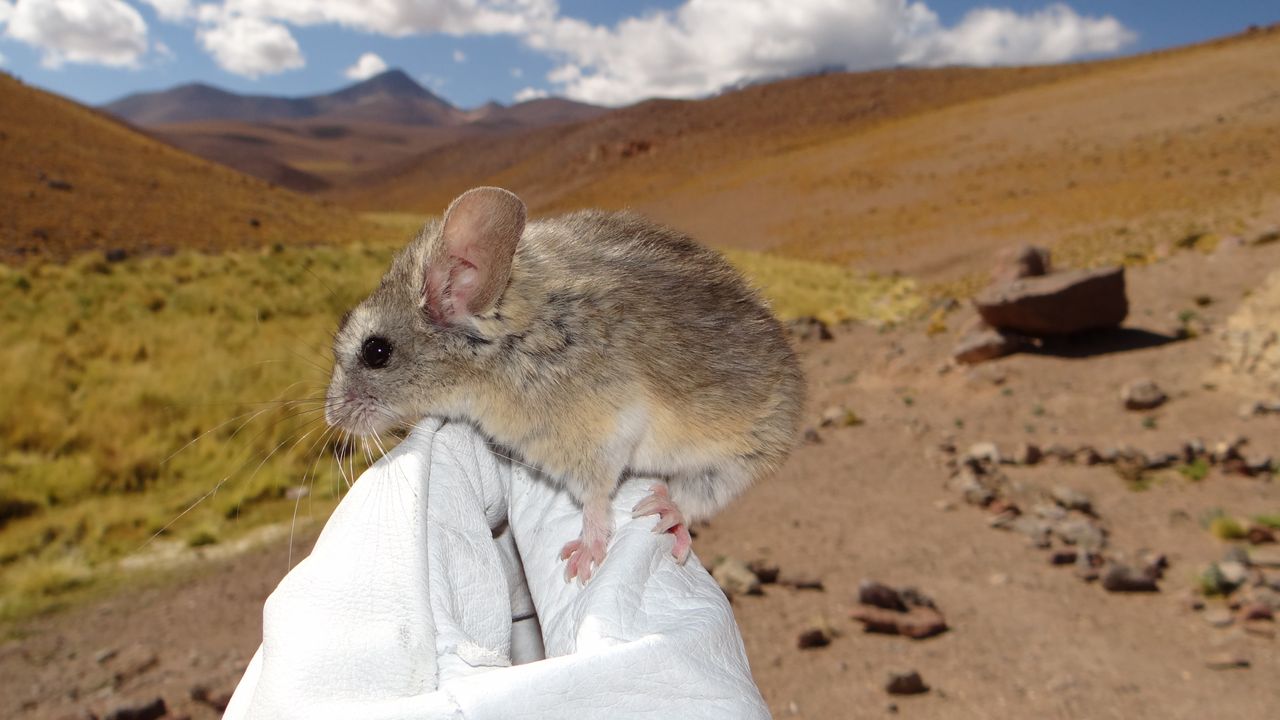
Scientists have discovered how mice survive at extreme altitudes on the tips of icy dormant volcanoes in the Andes.

The area where the mice call home extends more than 1 mile (1.6 kilometers) above the world's highest human settlement. The air is thin, temperatures are blisteringly cold, and a desert ecosystem ensures water and vegetation are extremely scarce.

"As a mountain climber standing on the summit of these peaks, the idea that there could be animals living in these barren godforsaken environments is just really mind-boggling," Jay Storz, a professor of biological sciences at the University of Nebraska–Lincoln, told Live Science.

In 2020, Storz led a team of mountaineering scientists who recorded Andean leaf-eared mice (Phyllotis vaccarum) at a record-breaking altitude of 22,110 feet (6,739 meters). The mice were living on the summit of Llullaillaco, the world's highest historically active β€” now dormant β€” volcano, located on the border between Argentina and Chile.

Now, in a new study published July 9 in the journal Science, Storz and his colleagues have revealed the biological mechanisms behind the mice's extreme survival. It turns out that the species has evolved a variety of adaptations to survive at such high altitudes, including the ability to eat plants that would normally be toxic.

Before the discovery of the high-altitude mice, researchers had assumed that mammals could only survive up to around 18,000 feet (5,500 m) above sea level. But these hardy animals smashed that record, while also thriving at lower altitudes.

"One of the really notable things about this particular species is that it has such a broad elevational range, from sea level along the desert coastline of northern Chile, all the way up to the summits of some of the highest peaks in the Andes," Storz said.

To better understand these remarkable mice, the researchers studied members of the species at low, middle and high altitudes between 2020 and 2023. The work mixed mountain climbing and animal surveying techniques, with Storz and his team ascending the mountains and setting traps to catch and record the mice.

Storz said that a well-acclimatized mountain climber can tolerate these high elevations for a very short period, but that the conditions are "not remotely compatible with long-term human survival."

The expeditions can be dangerous even for experienced climbers: one of Storz's colleagues was evacuated during a separate expedition in Peru after they developed high-altitude pulmonary edema β€” a life-threatening form of altitude sickness that causes fluid to build up in a climber's lungs.

A photo of Storz and two of his colleagues on the summit of Hualca Hualca in the Central Andes.

Storz surveyed the mice with other experienced mountain climbers. Here he is pictured with Mario PΓ©rez Mamani and Franz Checca on the summit of Hualca Hualca in Peru. (Image credit: Jay Storz)

The researchers sent some of their specimens to labs in Chile for further analysis. This included putting the mice into small chambers and measuring how they adapted to extreme cold and oxygen deprivation. The team also sequenced the Andean leaf-eared mouse genome, which revealed a variety of local adaptations to different altitudes. For example, the mice living at high elevations were better at maintaining their body heat and oxygen levels than those taken from lower altitudes, according to a statement released by the University of Nebraska-Lincoln.

Another change in the high-altitude mice's genes enabled them to digest food and detoxify plants that would otherwise be harmful to them, according to a statement released by McMaster University in Canada. This special adaptation helps the mice get enough food on the sparsely vegetated volcanoes.

The researchers also revealed that the high-altitude mice were much more active in the daytime, perhaps due to a lack of predators and warmer temperatures during those hours. However, despite local adaptations, the mice were still extremely similar genetically across their elevation range. All of the mouse populations overlapped, which prevented high-altitude individuals from becoming isolated or especially distinct from their low-altitude kin.

Not all of the mice survived the researchers' study. To fully understand the biology of the mice, researchers needed to euthanize them and study their tissues. They also wanted to preserve "voucher" specimens to act as permanent representatives of the species in museums, which researchers can keep returning to for further study. According to the study, the team collected 167 of these voucher specimens.

Storz noted that it's very valuable to have a biological record of specimens archived in museum collections for future generations. He added that their work was not having any impact on the viability of the mice populations, and that the animals were killed humanely, although he did not disclose any details.

"King of the mountains"

Study co-author Graham Scott, a professor of biology at McMaster University in Canada, said that the take-home message of the new research was how life can overcome such extreme environments, and not just survive but thrive. In this case, the mice did this by developing solutions for the cold, oxygen deprivation and food scarcity.

"It just shows the complex ways that evolution has made these animals the king of the mountains," Scott said.

Enduring harsh conditions high in the Andes likely comes with some benefits. Scott said that competition is probably the biggest reason for the mice living at such high elevations. The mice are also pretty much left to their own devices, and thus likely have less to fear from predators.

But this begs the question: Are there any animals living higher than the mice?

"Birds are always a bit hard to nail down because, of course, they can fly and there's certainly records of birds flying at higher elevations than that," Scott said. "But we think this is probably the highest-dwelling animal."

  •  
❌