❌

Reading view

‘I thought, I’ve tried everything else, why not give AI a shot?’: the long-lost family reunited by ChatGPT

Avtar spent decades wondering what happened to the mother he never got to know. Thousands of miles away, Nicci was haunted by the story of a half-brother given away before she was born. How did a chatbot bring them together?

As a small boy growing up in Amritsar, India, in the 1960s, Avtar Singh used to hear whispers. Your mum isn’t really your mum, the rumours would say. Your mum lives abroad. Avtar didn’t really pay any attention to it. “I thought, the neighbours are just making up stories.” But the stories were true: the woman raising Avtar was actually his grandmother. When he was too young to remember it, his father had emigrated to Canada to work as a teacher, leaving Avtar in the care of his paternal grandparents. His grandfather, a police officer, was a fearsome authoritarian, but his grandmother brought him up with tenderness, as if he were her own son. She called him by his nickname, Titu. He felt loved.

When Avtar was around eight years old, he was told about his family in Canada: his dad, his mum and a little brother were waiting for him there, and he would soon travel to join them. Just after his ninth birthday, Avtar found himself sitting on a plane, dressed in a three‑piece suit and tie. He was travelling alone. He had never flown before. He didn’t speak a word of English. He landed in Halifax, Nova Scotia, on Christmas Eve, 1968; his family met him at the airport and took him home. “I didn’t know what to think,” Avtar, now 66, tells me in a video call from his home in Abbotsford, British Columbia. “Before I knew it, it was the first week of January, and I was put in school.”

Continue reading...

© Composite: Courtesy of Nicci Dhamu / Guardian Design

© Composite: Courtesy of Nicci Dhamu / Guardian Design

© Composite: Courtesy of Nicci Dhamu / Guardian Design

  •  

ChatGPT's Apple Health Integration Now Rolling Out to U.S. Users

The Health in ChatGPT feature that integrates medical records and Apple Health data is rolling out to ChatGPT users in the United States as of today.


OpenAI announced plans for a health feature that used data from Apple Health and other sources back in January, but it was in beta and was not made widely available.

Health in ChatGPT can draw on health information connected by the user to compare lab test data, summarize changes since a prior appointment, track medications, and explore how sleep, activity, and workouts impact health.
With your permission, ChatGPT can consider relevant information you have connected, such as medications, lab results, recent visits, sleep, and activity, alongside the goals and context you share. This added context can make everyday conversations more useful. For example, ChatGPT can consider a dietary restriction when helping you choose a restaurant, or a recent injury when planning lower-impact weekend activities with your family. You can ask follow-up questions, add context, or correct information that is incomplete or out of date.

OpenAI says the feature is meant to help users understand their health information in context and keep track of what's changed over time. Users can get to the Health section from the ChatGPT sidebar.

Connected medical records and Apple Health information are not used to train OpenAI's models or target ads, nor are conversations that use health data. ChatGPT will ask for permission before using connected medical records and Apple Health information to personalize a response.

For users who would prefer not to connect health records, the Health section in ChatGPT works without them and can answer health-related questions.

Health is rolling out to logged-in ChatGPT users who are 18 years and older in the U.S. on web and iOS. The feature is available to Free, Go, Plus, and Pro plans.
This article, "ChatGPT's Apple Health Integration Now Rolling Out to U.S. Users" first appeared on MacRumors.com

Discuss this article in our forums

  •  

New Research Reveals How Traveling Brain Waves Allow Us to Predict, Reconstruct, and Perceive the World

Scientists from the Salk Institute have determined that brain waves in the visual cortex serve as a computational engine, allowing the brain to construct internal representations of the external world that enhance prediction, reconstruction, and perception capabilities.

While the scientists behind the new study focused their work on the visual cortex, they suspect that similar brain waves washing over other areas of the brain’s surface likely serve a similar role for other sensory systems.

Unraveling the Role of Traveling Brain Waves in the Visual Cortex

The human brain uses electricity to communicate between synapses. Research has shown that this electrical activity can travel in waves across the brain’s surface. Called neural traveling waves, the phenomenon’s role in brain function and consciousness is not completely understood.

Previous studies have established that traveling brain waves play a significant role in behavior and attention. In 2020, Salk neuroscientist John Reynolds, PhD, successfully identified traveling brain waves in the visual systems of animals during a wakeful state.

According to a statement from Reynolds, the senior and co-corresponding author on the new paper, and colleagues, the 2020 research effort also found a direct correlation between traveling brain waves in the visual cortex and an animal’s ability to perceive objects directly in front of them. The authors suggest this discovery explained the “classic conundrum” of searching for something like a pair of keys or a phone that was right in front of you the whole time.

Although the connection between traveling brain waves and an awake animal’s ability to perceive objects seemed solid, Reynolds said he was left wondering why. 

Process is Analogous to LLM’s Like ChatGPT

In their newly proposed theory, Reynolds and colleagues suggest that traveling brain waves are not simply “electrical noise” resulting from the brain’s normal relaying of signals. Instead, the Salk Institute team proposes that the neural connections responsible for the generation of traveling brain waves change their physiological structure, or “synaptic weights,” to more accurately reflect the outside world.

“Each sight, smell, sound, and action of an animal alters the connections that generate these waves, building the neural circuitry that the brain uses to construct an internal representation of the external world,” the team’s statement explains.

In the visual cortex, the part of the brain responsible for receiving and processing visual information, the team proposed that traveling brain waves perform four distinct functions. These include modulating visual perception from moment to moment and turning recent visual sensory inputs into “internal representations” of objects, people, and surroundings.

The team proposes that traveling brain waves also help humans generate short-term predictions about their surroundings, and “store and replay patterns that represent memories of events unfolding in time.” Reynolds said the process laid out by his team is analogous to how ChatGPT and other LLMs translate and interpret data.

“They learn statistical structure from language and use that knowledge to generate meaningful and appropriately structured text that reflects the patterns of language,” the researcher explained. “The brain may be doing something functionally similar—a biological generative model built from the ground up by experience.”

“One Step Closer” to Understanding How Our Brains Compute the World

When detailing the potential impact of their proposed role for traveling brain waves in the visual cortex, the team highlights the contrast between a rich and complex world and its general predictability.

“Objects around you exist in 3D space, you see the world in retinal images that change with your eye and body movements, and the laws of physics and physiology overlay this all,” they explain.

Reynold’s team says that traveling brain waves are merely the brain’s way of internalizing these predictable “regularities” and encoding them in its synapse network. If correct, they said that this encoding would allow the brain to “infer the likely causes of sensory input and construct an internal model of the world.”

“This framing brings us one step closer to understanding how our brains compute the busy, messy world around us, turning a complicated sensory onslaught into behaviors and experiences,” they conclude.

The study “Neural traveling waves in cortex: network mechanisms and potential roles in neural computation” was published in Neuron.

Christopher Plain is a Science Fiction and Fantasy novelist and has spent the last six years as Associate News Editor and Head Science Writer at The Debrief. Follow and connect with him on X, learn about his books at plainfiction.com, or email him at christopher@thedebrief.org

  •  

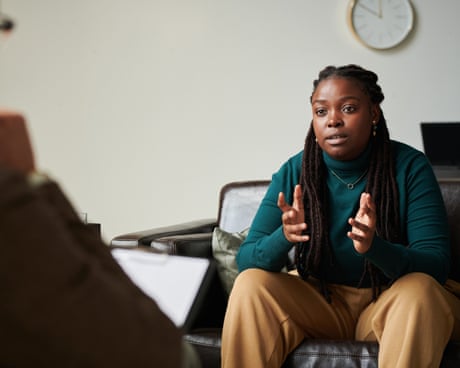
My patients use ChatGPT for therapy. Now I use it too | Sarah Dargouth

I can’t blame my patients for turning to its straightforward assessments. But it has real risks – and care may require human messiness

“Chat told me I should break up with him.”

I instructed my face to remain therapist-neutral, but I must have smirked. The truth is, I was annoyed. We had been discussing the viability of this relationship for weeks, and in an instant AI had brought the answer. “How do you feel about it?” She said this had been her gut feeling all along. The following session, her relationship was over.

Continue reading...

© Photograph: AnnaStills/Getty Images

© Photograph: AnnaStills/Getty Images

© Photograph: AnnaStills/Getty Images

  •  
❌