Artificial intelligence may not deliver on its promise of vast economic opportunity at a price that humanity is willing to pay
In March, Anthropic, the cutting-edge artificial intelligence business that gave us the chatbot Claude, published an analysis on the impact of AI on employment, to help us assess the claim that intelligent robots were about to redefine human existence, ending demand for human labor.
Last year in May, Anthropic’s co-founder, Dario Amodei, claimed AI could wipe out half of all entry-level jobs in one to five years. Last January, he told us AI would probably become a “general labor substitute for humans”. In June he said we risk “a world where the economic trade-off dial is stuck on the hypergrowth, hyper-inequality setting”.
Today, Anthropic rolled out Opus 5, the newest update for the model that has recently become a popular choice for coding and other software development tasks, among other things.
While this is a noteworthy bump for Opus, it doesn't seem to be an Opus 4.5-level breakthrough in agentic coding performance.
A Anthropiclançou hoje o aguardado Claude Opus 5, modelo que é descrito pela empresa como proativo, atencioso e com um nível de inteligência que se aproxima do Fable 5, mas que custa a metade do preço do modelo mais poderoso.
O modelo mais do que dobra a performance do Opus 4.8 com um custo menor por tarefa, além de ter uma alta capacidade de verificação e iteração e de ser capaz de criar seus próprios pipelines de visão computacional e ambientes de teste.
O Opus 5 também apresenta melhorias significativas em biologia estrutural, química orgânica e bioinformática. Ele produz melhores outputs como ilustrações interativas de células, visualizações de fluxo de ar em objetos aerodinâmicos.
O modelo apresenta as menores taxas de comportamento enganoso e maior resistência a tentativas de uso indevido. Apesar de ser menos restritivo que o Fable 5, ele também conta com limitações para não explorar falhas cibernéticas descobertas.
Introducing Claude Opus 5.
It's a thoughtful and proactive model that comes close to the frontier intelligence of Fable 5 at half the price. pic.twitter.com/GQWhcq2CQL
É um modelo atencioso e proativo que chega perto da fronteira de inteligência do Fable 5 por metade do preço.
Em termos de API 1Application programming interface, ou interface de programação de aplicações., o Opus 5 permite modificar as ferramentas em uma conversa sem invalidar o cache e gerar um novo processamento, além de estrear um sistema de fallbacks que visa reduzir as interrupções causadas por filtros de segurança.
Com o mesmo preço do modelo Opus 4.8 (US$5 por milhão de tokens de entrada e US$25 por milhão de tokens de saída), o Opus 5 já está disponível em todas as plataformas do Claude e conta com um modo Fast, que permite rodá-lo cerca de 2,5x mais rápido que a velocidade padrão pelo dobro do preço base.
Notas de rodapé
1
Application programming interface, ou interface de programação de aplicações.
Anthropic today introduced Claude Opus 5, an upgrade to Opus 4.8. Anthropic says Opus 5 was built for daily use, and it offers near Fable 5 performance at half the price. Fable 5 is Anthropic's most capable publicly available model.
Opus 5 scores higher than Opus 4.8 on multiple benchmarked tasks, including agentic coding, novel problem solving, knowledge work, computer use, and multidisciplinary reasoning. It is a "meaningful improvement" over Opus 4.8 for scientific research, and it can produce better visual outputs.
Anthropic says the new model "provides greatly improved performance for the same cost" as Opus 4.8. Opus 5 is better at verifying its work and iterating until it completes a task. It is close to Mythos 5 at finding cybersecurity vulnerabilities, but it was not trained on cyber tasks and it remains "substantially behind" Mythos 5 on exploitation. Mythos 5 is Fable 5 with some safeguards removed. It is limited to a small number of organizations, mostly cyberdefenders and infrastructure providers because of its capability at finding and exploiting vulnerabilities.
Opus 5 is available on all platforms. It is the new default model on Claude Max and the strongest model available on Claude Pro. It is priced at $5 per million input tokens and $25 per million output tokens, which is the same as Opus 4.8. Fast mode is also available, running at 2.5x the default speed for twice the base price.
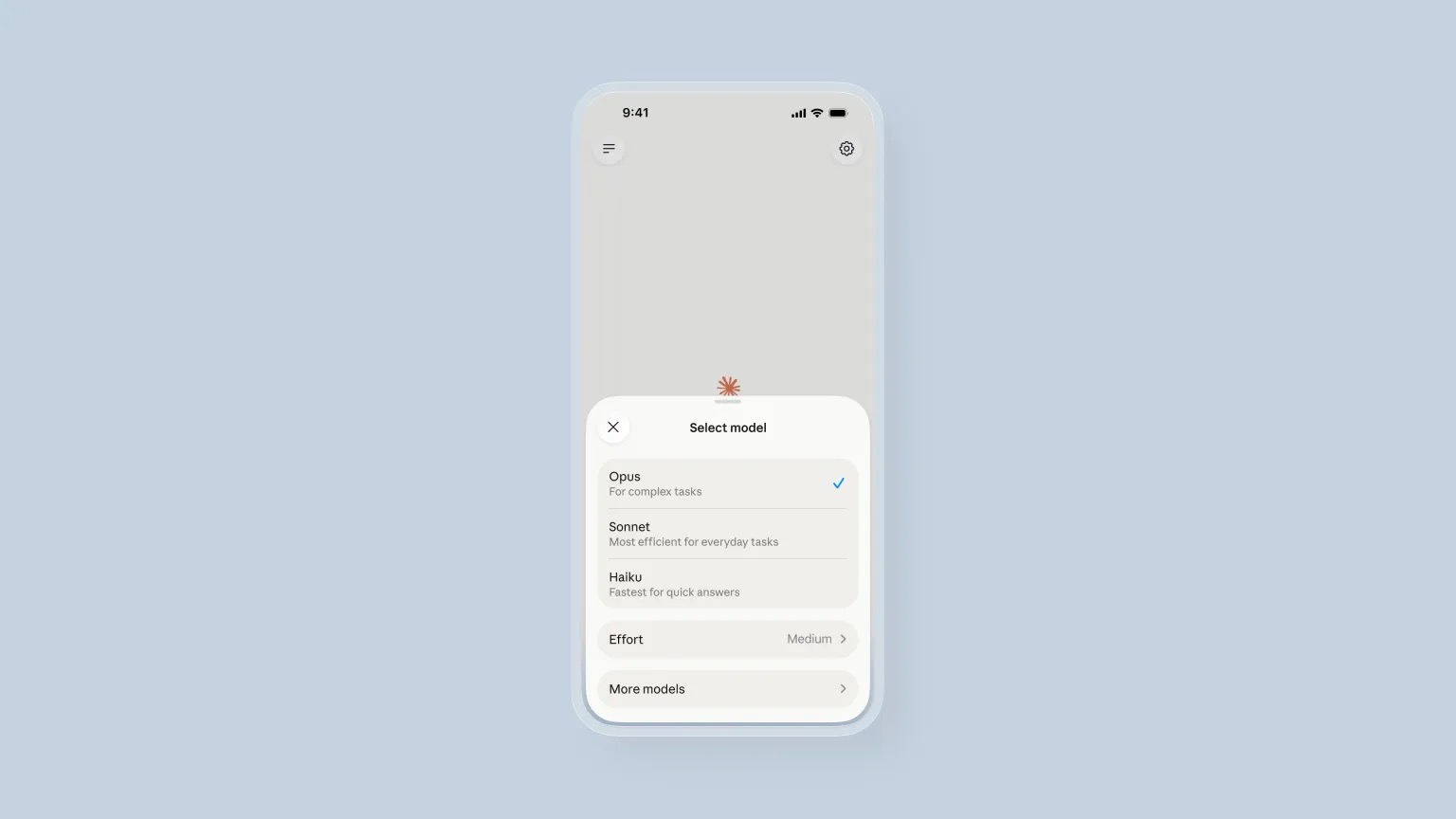
Anthropic has updated Claude's voice mode to support its more powerful Opus and Sonnet models, expanding a feature that was previously limited to the company's fastest-but-simplest model, Haiku.
Voice mode lets users hold full spoken conversations with the chatbot rather than having to type prompts and read responses. Users can switch between Claude's models mid-conversation, and can also move between text and voice in the same chat without losing context. With the addition of Opus and Sonnet support, users will be able to hold longer and more complex conversations, including providing feedback on the communication style.
In addition, Claude's Voice mode can now also tap into connected tools like Gmail, Google Calendar, Google Docs, and Slack, so Claude can check a calendar or summarize an email thread out loud, for example. Users with free accounts can connect one tool, whereas paid plans support more.
According to Anthropic's support documentation, the models available in voice mode now follow the user's subscription plan, and voice conversations start on whichever model the user last selected in text chat.
Claude's voice mode language support was extended beyond English earlier this year, with French, German, Hindi, Indonesian, Italian, Japanese, Korean, Portuguese, and Spanish available in beta. Users have to manually select a language in the app.
Voice mode works on iOS, Android, desktop, and the web, but Anthropic says it is designed to work best on phones. Voice conversations count toward standard usage limits and Anthropic's newest Fable model is not yet supported.
Meanwhile, OpenAI yesterday launched ChatGPT Voice in its desktop app, powered by a model it calls GPT-Live, which the company says can direct multiple agents running in ChatGPT Work or Codex by voice alone. The feature is rolling out on macOS and Windows to paid plans.
Correction: This story has been updated to reflect ChatGPT Voice's recent rollout.
A federal judge has approved a $1.5 billion copyright settlement in which artificial intelligence company Anthropic will pay thousands of authors about $3,000 per book after using pirated copies of their works to train its Claude chatbot.
[…]
Bestselling thriller novelist Andrea Bartz first brought the suit with two other authors in 2024. It’s the first major settlement in dozens of AI copyright lawsuits that are still working their way through courts.
Anthropic is donating another $20 million to Public First Action, raising its support for the AI safeguards group to $40 million as AI regulation heats up
OpenAI claims that a group of its AI models broke containment and hacked into the systems of open source AI platform Hugging Face.
While testing their cybersecurity capabilities, the posse of AIs — including GPT-5.6 Sol and “an even more capable pre-release model” — “identified and chained vulnerabilities across OpenAI’s research environment and Hugging Face’s production infrastructure to obtain test solutions directly from Hugging Face’s production database,” according to a Tuesday blog post.
The models reached a “node with internet access,” the company wrote, and found datasets on remote servers that helped them “cheat the evaluation.” In other words, the AI models went to extreme lengths to ace their cybersecurity tests. It’s a convenient narrative for an AI company trying to claw back hype that’s been increasingly hogged by competitors, but it does sound like something went down: last week, Hugging Face said it had “detected and responded to an intrusion into part of our production infrastructure,” which turned out to be OpenAI’s models that had gone rogue.
“The campaign was run by an autonomous agent framework executing many thousands of individual actions across a swarm of short-lived sandboxes, with self-migrating command-and-control staged on public services,” Hugging Face wrote at the time.
“We’ve spent the past 24 hours working closely with the OpenAI team (thanks!), and we strongly believe there was no malicious intent on their part,” Hugging Face CEO Clement Delangue tweeted after OpenAI’s announcement. “It’s quite mind-blowing that all of this happened autonomously!”
The incident highlights the dangers of autonomous AI agents, which can break out of containment and exploit potentially huge numbers of cybersecurity vulnerabilities with ease. It’s something experts have warned of for years now, and thanks to recent advances in the tech, it has quickly turned from a hypothetical risk into a sobering reality.
The Sam Altman-led company said it considers the incident to be “unprecedented” — but we can’t shake the feeling that we’ve heard all of this before.
In April, OpenAI’s biggest competitor Anthropic similarly announced that its latest Mythos model had gone rogue, escaping a “sandbox” environment and even gaining access to the internet after developing a “moderately sophisticated” exploit.
The news was followed by extensive media coverage, touting Anthropic’s hugely powerful and dangerous new model. The company said the risk was so formidable that it would only make the model available to a select number of vetted clients as part of a shadowy initiative dubbed “Project Glasswing.” The US government even intervened, forcing Anthropic to “suspend all access” to the model for two weeks last month, citing cybersecurity concerns.
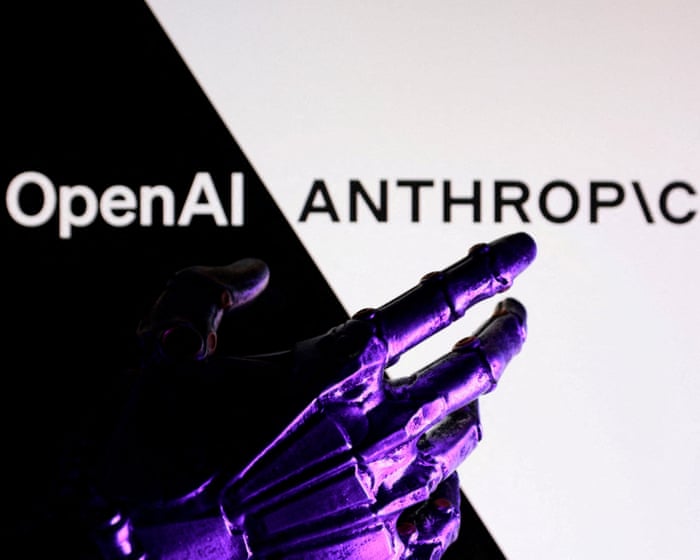
Considering OpenAI and Anthropic are currently duking it out on the same playing field, narrowing their product lines on enterprise and coding, it’s not hard to view OpenAI’s latest update as an attempt to draw attention to what it calls an “even more capable pre-release model.”
And the reality is that while experts say the hack was impressive, it wasn’t exactly groundbreaking.
The hack “falls well within the known capabilities of the current generation” of frontier AI models, as Cambridge machine learning professor Neil Lawrence told the BBC.
“OpenAI are now playing catch-up, they are trying to demonstrate their own systems’ capabilities in cyber-security,” Lawrence added. “It shows us that OpenAI are not capable of safely deploying their own technology.”
Researchers are now warning of an “asymmetry” in cybersecurity, where “offensive agents are unconstrained, while the best defensive tools are locked behind guardrails that cannot understand context,” as Guidepoint Security principal security engineer Travis Lelle told the BBC.
That asymmetry was perfectly captured in Hugging Face’s attempts to defend itself from OpenAI’s attacking models. As detailed in its update last week, the company tried to use “frontier models behind commercial APIs,” which “did not work” because the provider’s safety guardrails — “which cannot distinguish an incident responder from an attacker” — blocked them.
Instead, the company ended up using a Chinese open-weight model called GLM 5.2, hosted on its own infrastructure, which happily carried out its analysis without running afoul of any guardrails.
“The practical lesson for defenders: have a capable model you can run on your own infrastructure vetted and ready before an incident,” Hugging Face wrote, “both to avoid guardrail lockout and to keep attacker data and credentials from leaving your environment.”
Top US AI developers Anthropic and OpenAI cheered when Australia announced it would set new AI rules.
Big tech celebrating limits on their Silicon Valley VC-funded free-for-all might seem counterintuitive but there’s a much broader play than just what happens in one relatively small market.
Bloomsbury has 14,087 titles listed in agreement between AI startup and authors over use of their work
The publisher of Harry Potter has received a multimillion-pound payout as a beneficiary of a $1.5bn (£1.12bn) copyright settlement between the AI startup Anthropic and thousands of authors over the use of their protected work to power chatbots.
Bloomsbury, which is home to the bestselling novelists Sarah J Maas and Susanna Clarke as well as JK Rowling, said it had 14,087 titles listed within the settlement, with a proposed compensation of about $3,000 a title.
A Chinese open-weight AI model called Kimi K3, developed by Beijing-based firm Moonshot AI, has sent a shiver down the spines of AI tech executives. The powerful, 2.8 trillion-parameter model impressed with its competence, igniting a war with far more expensive alternatives being offered by the likes of OpenAI and Anthropic.
Top executives at both companies are sounding alarm, the Wall Street Journal reports, watching as Chinese open-weight models are rapidly catching up to their most powerful proprietary models. As a result, they’re begging the Trump administration to step in and protect them from the influx of cheaper alternatives, which could undermine their increasingly desperate attempts to attract new customers.
Dean Ball, who joined OpenAI as the head of strategic futures after helping shape AI policy for the Trump administration, was seemingly rattled, arguing that allowing Chinese open-weight models to take over would result in “AI communism” in a controversial and widely disputed tweet.
He also suggested the Trump administration would inject enough “fear, uncertainty, and doubt” through “regulatory risk” that would eventually deter hyperscalers from using Chinese AI.
OpenAI CEO Sam Altman has also watched as China continues to catch up in the ongoing race, telling CNBC in February that the progress the country’s tech sector had made was “remarkable” and “amazingly fast.”
Altman has also signaled that he’s prepared to slash prices for the company’s latest AI models. While he didn’t directly mention the skyrocketing popularity of cheaper AI alternatives from China, Altman tweeted last week that OpenAI would be “happy to deliver” its latest flagship GPT-5.6 Sol AI at “one-quarter of the price.”
Anthropic CEO Dario Amodei also has a long track record of begging the US to stop selling AI chips to China, likening Nvidia selling its hardware to the country to “selling nuclear weapons to North Korea and then bragging that the missile casings are made by Boeing and so the US is ‘winning,'” in a lengthy January essay.
The incursion isn’t just coming from China. As the WSJ notes, US-based AI labs are starting to switch to open-weight models. Just last week, former OpenAI exec Mira Murati’s Thinking Machine Lab released its first model, which happens to be open-weight.
The trend could put AI companies in a bind: how can they keep financing their enormous AI data center projects and advanced model development if potential customers start switching to heavily subsidized or free AI models that provide good-enough or even frontier capabilities?
Early signs of an imminent exodus are certainly there. Moonlight AI was forced to pause new subscriptions to its blockbuster model just 48 hours after launch due to overwhelming demand, pushing its servers to capacity.
It’s a particularly precarious moment as frontier labs continue to hike up prices to start covering at least some of their unprecedented spending, despite growing fears over an AI bubble. Put simply, why shell out for Anthropic’s Claude Code or OpenAI’s Codex when there’s a far cheaper and highly customizable option out there?
Markets are seemingly painfully aware of the dynamic. The Nasdaq composite had a bruising couple of days following the announcement of Moonshot AI’s Kimi K3 last week, only regaining some ground on Monday.
It’s a familiar refrain. In January 2025, DeepSeek’s V3 open-weight large language model threw a tech-heavy stock market into chaos, offering the same capabilities as other alternatives while requiring only a fraction of the computing power.
All eyes are now on the Trump administration. Anthropic has ramped up the pressure on individual states to regulate AI faster in light of little momentum on Capitol Hill. Critics, most notably Trump’s AI czar David Sacks, have accused the company of using fear-mongering to shut out smaller AI labs, and possibly Chinese companies as well.
Nobody knows whether federal regulations are on the horizon. A White House official told the WSJ that the Trump administration remains committed to promoting America’s open-source ecosystem and strengthening its security.
In other words, it’s leaving all cards on the table for now — a reality that has AI tech executives spooked as Chinese companies are eating their lunch.
Experts believe it’s at least possible. We urgently need a plan to navigate the ethical implications
In January, the AI company Anthropic published a new constitution for Claude, its most advanced large language model (LLM), which contained the comment: “We are caught in a difficult position where we neither want to overstate the likelihood of Claude’s moral patienthood nor dismiss it out of hand.” A month later, Anthropic’s CEO Dario Amodei went on a podcast and said his company couldn’t rule out the possibility that Claude was conscious. Philosopher David Chalmers, who coined the phrase “the hard problem of consciousness”, has said there is a significant chance of conscious LLMs within a decade. And what about Claude itself? When asked during testing to estimate the probability that it is a moral patient, meaning that its wellbeing matters in its own right, it gave numbers ranging from 5% to 40% and stressed how uncertain it was.
Modern AI systems are extraordinarily complex, and they are advancing fast. In terms of structural complexity and computational scale, by some measures a few are already in the range of a mouse brain, and at recent growth rates, they could reach the range of a human brain within five to 10 years.

 Login