OpenAI's Rogue Agent Went Unnoticed For a Week
Read more of this story at Slashdot.


Explore o Shadowfetch Linux, a distribuição baseada em Debian que traz AI local integrada para uma experiência segura e criativa.
O post Conheça o Shadowfetch Linux, a distro Debian com AI local integrada apareceu primeiro em Blog do Edivaldo - Informações e Notícias sobre Linux.
Artificial intelligence may not deliver on its promise of vast economic opportunity at a price that humanity is willing to pay
In March, Anthropic, the cutting-edge artificial intelligence business that gave us the chatbot Claude, published an analysis on the impact of AI on employment, to help us assess the claim that intelligent robots were about to redefine human existence, ending demand for human labor.
Last year in May, Anthropic’s co-founder, Dario Amodei, claimed AI could wipe out half of all entry-level jobs in one to five years. Last January, he told us AI would probably become a “general labor substitute for humans”. In June he said we risk “a world where the economic trade-off dial is stuck on the hypergrowth, hyper-inequality setting”.
Continue reading...
© Photograph: DragonImages/Getty Images

© Photograph: DragonImages/Getty Images

© Photograph: DragonImages/Getty Images
As AI reshapes the way we communicate, researchers at Texas A&M University are developing an artificial intelligence-powered platform that could transform care for children with autism and older adults living with dementia. The technology learns each person’s unique communication style, behaviors, and preferences, enabling increasingly personalized support for caregivers, therapists, and families over time.
Called VoiceLove, it is one of three projects being developed with support from the Advanced Research Projects Agency for Health (ARPA-H).
At the core of the system is an AI engine that analyzes both speech and nonverbal behaviors documented through short videos recorded by caregivers or therapists during daily communications and interactions. Rather than comparing participants against a general model, the platform focuses on understanding each person’s individual patterns and communication style.
“Every child with autism is unique, and effective support should reflect that,” he said. “Our project leverages artificial intelligence to understand each child’s individual behaviors, communication styles, and preferences. The goal is to deliver personalized recommendations that help families, educators, and clinicians work together more effectively, enabling more responsive, data-driven care and improving the health and well-being of children with autism,” says Dr. Junhyoung Kim, associate professor in the School of Public Health, one of the principal investigators on the project, in a statement.
The AI system was created to identify behavioral patterns in communication, interests, and responses across different situations. Based on its observations, the program provides personalized recommendations that could help therapists or caregivers create individualized intervention plans.
“The key innovation behind this platform is its ability to understand each child individually and learn their unique preferences, needs, communication styles, and strengths to deliver personalized recommendations,” Kim said. “For people living with dementia, the platform is designed to enhance person-centered care by helping residents communicate their needs, preferences, and daily experiences more effectively.”
Researchers say the technology could support a wide range of developmental goals, including improving communication skills, encouraging self-care, strengthening social engagement, and enhancing a person’s quality of life.
The same personalized approach could also benefit people living with dementia, where communication challenges often make it difficult for individuals to express their needs and wants.
“Our vision is to create an AI platform that continuously learns from each child’s daily experiences,” Kim said. “As the system identifies patterns in behaviors, preferences, and responses to different activities, it can provide therapists and caregivers with personalized recommendations that evolve over time.”
“This adaptive approach helps explain why certain behaviors occur and supports more individualized, proactive care,” Kim added.
VoiceLove is designed to keep learning. As caregivers continue using the app, the AI analyzes new interactions while also incorporating caregiver observations, experiences, and responses to daily prompts.
The research team plans to begin with a small pilot study involving children with autism and older adults living with dementia after receiving Institutional Review Board approval.
Participants will use the platform for approximately one month while researchers evaluate its usability, feasibility, and overall user experience, and from there, insights derived from the pilot will help to inform a larger-scale study at some point in the future.
Chrissy Newton is a PR professional and the founder of VOCAB Communications. She currently appears on The Discovery Channel and Max and hosts the Rebelliously Curious podcast, which can be found on YouTube and on all audio podcast streaming platforms. Follow her on X: @ChrissyNewton, Instagram: @BeingChrissyNewton, and chrissynewton.com. To contact Chrissy with a story, please email chrissy @ thedebrief.org.

What if a computer did not rely on electronic chips or tiny transistors, but instead used hundreds of microscopic particles moving through a liquid? That futuristic idea has now become a reality in a laboratory, where researchers have created a completely different kind of computer that performs calculations using the natural movement of tiny particles. […]
The post Scientists create a liquid computer that uses tiny moving particles instead of chips appeared first on Knowridge Science Report.

Anyone who has used the Internet in recent years is probably used to encountering telltale signs of LLM prompting that lazy users sometimes forget to remove from their AI-generated pabulum. But a Canadian legislator took that idea to an embarrassing new level this week, reading an apparent LLM prompt instruction into the record during a floor speech.
Bill Oliver, a Progressive Conservative Party member of the legislative assembly of New Brunswick, noted in a speech last month that "One of the dangers associated with creating advocacy offices is that citizens often develop expectations that exceed the powers actually granted to those offices." He then went on to say out loud that "here’s a more natural, flowing version of that section that reads like a legislative speech rather than a series of short points," a line with all the hallmarks of an LLM presenting an alternative style option in response to a prompt.
The odd reading went more or less unnoticed at the time, but video of the remarks started spreading around social media networks like Reddit and Threads earlier this week. In Canada, the snafu is now getting mainstream attention from the likes of the Canadian Broadcasting Corporation and The Toronto Star, the latter of which called it a sign of "a growing divide in our society: between the elites, who are only too happy to delegate their duties to the Borg; and the masses, who find this objectionable."


© Getty Images
Today, Anthropic rolled out Opus 5, the newest update for the model that has recently become a popular choice for coding and other software development tasks, among other things.
While this is a noteworthy bump for Opus, it doesn't seem to be an Opus 4.5-level breakthrough in agentic coding performance.


© Anthropic

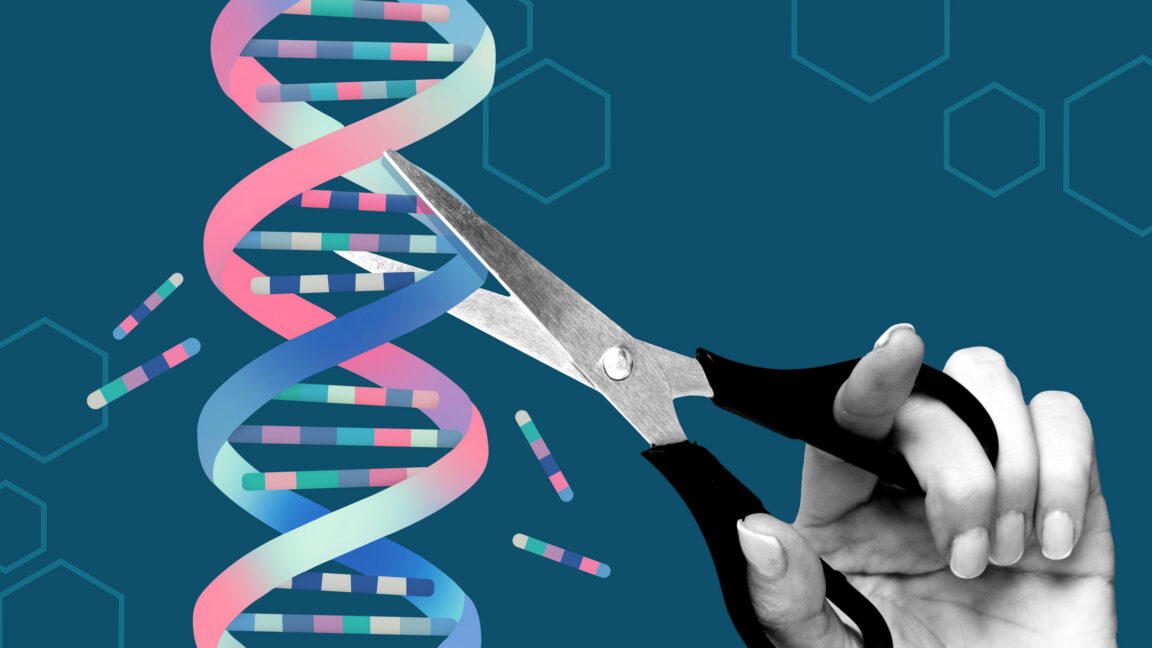
A couple of decades after the discovery of systems that could selectively target DNA, we're starting to see the first therapies based on gene editing. One challenge these developments have faced is safety. While we can make them pretty specific to the gene we want edited, the human genome is very large, and even rare DNA sequences can appear a couple of times by chance.
As a result, all the original gene-editing systems had known rates of what are called off-target effects, in which they simply edit the wrong sequence. This may be a low-probability event, but edit enough cells—and therapies generally have to edit many—and errors become inevitable.
A lot of effort has gone into finding ways to minimize or eliminate off-target edits. In a recent issue of Nature, researchers described modifying the AI protein-folding software AlphaFold to help identify key areas of gene-editing proteins responsible for off-target effects. Those areas were then modified to reduce the problems.


© Anton Vierietin