
❌

Reading view

South Korea was producing very little internationally recognised music in 1995 — within three decades it was topping the global album charts and had climbed into the world’s largest music markets, a rise seeded by a post-1997 government bet on culture as an export and built by the record labels that bet alongside it

In 1995, South Korea’s recorded music business was, commercially, a domestic one. Seo Taiji and Boys were selling in the millions at home and registering nowhere abroad. The country had no act on a major Western album chart and no meaningful export line for music.

Three decades on, the Korea Customs Service logged US$301.7 million in K-pop album exports for 2025, the first year the figure passed US$300 million. Japan took US$80.6 million of that, China US$69.7 million, the United States US$64 million. In the IFPI’s 2025 Global Music Report, covering 2024, South Korea ranked as the seventh largest recorded music market in the world.

Those are physical album shipments alone. Streaming, publishing, touring and merchandising sit outside that customs line.

What the 1999 statute created

What the law actually did is less sweeping than the retellings suggest. The Framework Act on the Promotion of Cultural Industries passed on 8 February 1999, and it named music and games as industries in their own right. That classification is what made them eligible for the tax breaks, cheap credit and government-built facilities the Act goes on to describe. Investment funds could now be set up specifically for cultural products. A guarantee scheme let producers borrow against work they had not yet finished, which is the ordinary difficulty in paying for an album or a film. Government money could go towards overseas marketing and towards co-productions with foreign partners. A state content agency was created under the Act, the body that after a 2009 merger became the Korea Creative Content Agency.

The ministry was already running a cultural industry bureau before the Act passed, which makes 1999 an escalation of an existing function rather than a founding. Kim Dae-jung took office in February 1998, the same month that ministry was renamed from Culture and Sports to Culture and Tourism in a broader government reorganisation.

On the strategic framing, the Victoria and Albert Museum’s account of hallyu’s origins describes the post-crisis gamble as a twin bet on information and communication technologies and on culture industries, with the stated aim of quadrupling cultural industry exports.

The sums were modest. The cultural industry budget rose from roughly US$14 million in 1998 to around US$84 million by 2001, a figure traced to the 2003 White Paper on Culture and Industry and cited in a 2025 piece on Korean cultural statecraft in the US Army War College’s War Room. Set beside the semiconductor build-out of the same years, that is a rounding error.

What the state did not do

No agency built the acts. That was done by privately held companies incorporated in the same window: SM Entertainment in 1995, YG Entertainment in 1996, JYP Entertainment in 1997. H.O.T. debuted in 1996 and set the template the sector still runs on, which is long-horizon trainee development, in-house production, and groups configured for a specific market rather than assembled around a single writer.

Financing is the part usually left out. SM Entertainment listed on the KOSDAQ exchange in 2000, meaning a pop label was raising public equity at a point when its overseas earnings came overwhelmingly from elsewhere in Asia. That structure, listed capital funding multi-year artist development, let firms absorb the cost of acts that would not return anything for five or six years.

The state bet on the category. Labels bet on individual careers, with shareholders carrying the risk.

The 2018 threshold

Commercial proof arrived twenty years after the statute. BTS’s Love Yourself: Tear, released by Big Hit Entertainment on 18 May 2018, entered the Billboard 200 at number one with 135,000 equivalent album units, 100,000 of them traditional album sales. It was the first Korean-language album to top the chart and the first predominantly non-English one since Il Divo’s Ancora in 2006.

That ratio matters more than the position. Streaming supplied a small share of the debut; most of it was people buying objects. Korean labels had spent a decade refining album packaging, version variants and pre-order mechanics for domestic and Japanese fan markets, and the same machinery worked in the United States unmodified.

The 2024 plateau

Growth was not continuous, and the middle of this decade complicates the arc considerably.

Exports came to US$291.8 million in 2024, up 0.55 per cent on 2023 by Korea Customs Service reckoning, which after nine years of compounding growth amounts to a standstill. Shipments to Japan fell 24.7 per cent that year. Korea’s own recorded music revenue declined 5.7 per cent in 2024, the only contraction among the IFPI’s top ten markets that year even as the country held seventh place. Circle Chart, run by the Korea Music Content Association, recorded a fall in album sales for the first time since 2014.

Sales kept sliding through 2025. Circle Chart put the combined domestic and overseas total at roughly 93.5 million copies, a second consecutive annual decline from about 120 million in 2023, with plastic CD waste and reduced fan-targeted marketing cited by analysts as contributors. Exports rose while units fell.

Where the money sits now

HYBE, the largest of the listed firms, reported record 2025 revenue of 2.65 trillion Korean won, roughly US$1.86 billion, up 17.5 per cent. Operating profit dropped 72.9 per cent to 49.9 billion won, taking the operating margin from 8.2 per cent to 1.9 per cent. Concert revenue climbed almost 70 per cent while recorded music fell 10.2 per cent. Net loss came to 256.7 billion won, widened by an impairment of about 200 billion won booked in the fourth quarter against the restructuring of the North American business, which the company describes as an accounting item with no cash outflow.

IFPI’s Global Music Report 2026 records physical formats returning to growth worldwide in 2025, up 8.0 per cent, which it attributes to fan demand for tangible releases and a 13.7 per cent rise in vinyl, vinyl’s nineteenth consecutive growth year. Japan, the second largest market, returned to growth at 8.9 per cent.

What the first half of 2026 answered

Two questions left open by the 2025 filings have since been settled, at least provisionally.

The first was whether a BTS return would lift recorded music or only touring. HYBE’s first-quarter 2026 results answer it plainly. Recorded music revenue nearly doubled to 271.5 billion won on the back of Arirang, released 20 March, a rise of 98.9 per cent. Concert revenue fell 42.8 per cent to 88.7 billion won, because the tour had barely begun. Total quarterly revenue of 698.3 billion won was its largest opening quarter to date. HYBE still posted a net loss of 156.7 billion won, driven by a one-off stock award expense of about 255 billion won; excluding it, adjusted operating profit was 58.5 billion won.

The second was the geography. K-pop album exports reached US$257.48 million in the January to June period, up 125 per cent year on year, with roughly 55 million units shipped. The United States took US$74.12 million, ahead of China at US$61.18 million and Japan at US$45.61 million. Japan has been the anchor of Korean physical sales abroad since the 2000s and is now third.

What remains unresolved is the domestic market and the margin. Album sales inside Korea have fallen two years running, and the concentration question sits underneath the 2026 numbers: a single comeback moved the national export total by 125 per cent. Whether the investment that flattened HYBE’s margins in 2025 produces a second tier of exportable acts is not something a strong first half can demonstrate.

The post South Korea was producing very little internationally recognised music in 1995 — within three decades it was topping the global album charts and had climbed into the world’s largest music markets, a rise seeded by a post-1997 government bet on culture as an export and built by the record labels that bet alongside it appeared first on Space Daily.

  •  

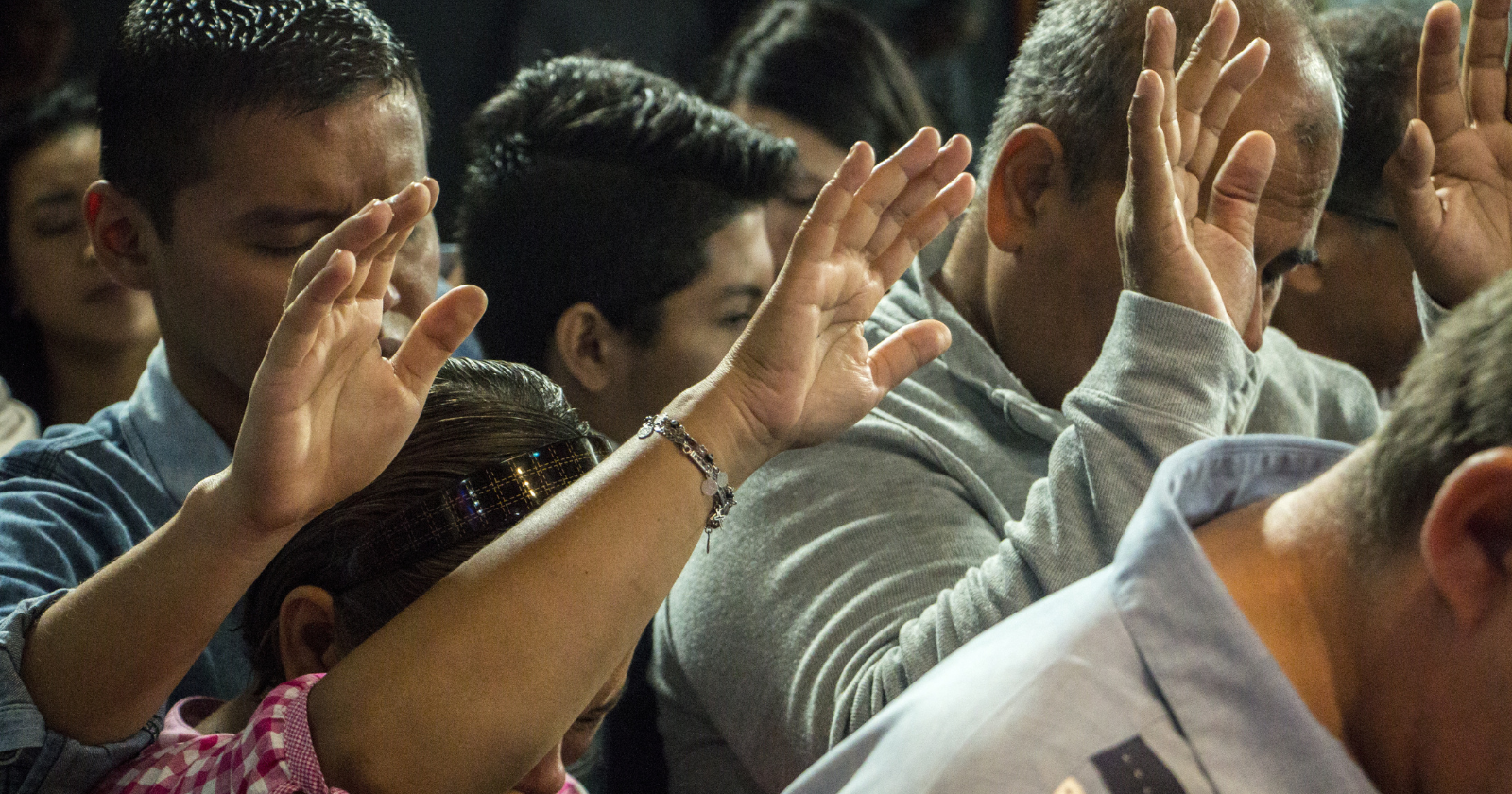
Researchers who study cults say the people most likely to join aren’t the gullible or the unstable: they’re often people in the middle of a life transition who met the group through someone they already liked

The research literature on why people join tightly bound religious groups is around sixty years old now, and it has been unusually consistent on a finding that never quite made it into general conversation. Those who join are rarely the credulous ones. They are frequently educated, sceptical about the society around them, and carrying a sense of obligation they had not yet found anywhere to put.

What the studies keep landing on instead is timing and company. Somebody meets the group during a stretch when the ordinary structures of a life have come loose, and meets it through a person they have already come to like.

The pattern appears across several independent studies of different movements, conducted by researchers who disagreed with each other about a great deal else. It is also a literature with real boundaries, which we take up further down.

What the 1965 model actually proposed

Most of this traces back to a paper by John Lofland and Rodney Stark, published in the American Sociological Review in December 1965 as “Becoming a World-Saver: A Theory of Conversion to a Deviant Perspective”. The group they observed was a small millenarian movement on the American west coast. It was later widely understood to have been the first American cell of the Unification Church.

Their model was sequential. Conversion required a person to be experiencing enduring and acutely felt tension, and to interpret that tension in religious rather than political or psychiatric terms. From there, the person had to come to see themselves as a seeker, and to encounter the group at what the authors called a turning point in life. An affective bond with a member then had to form, competing outside attachments had to weaken, and the recruit had to be drawn into sustained daily interaction.

Seven conditions, each necessary, none sufficient alone.

How far the scheme travelled was contested almost immediately. Lofland returned to the same movement in a 1977 article in American Behavioral Scientist, revising his account of how its conversion organisation had changed. Within a decade other researchers were putting the model to work on other groups, with mixed results.

The turning point does more work than the personality

Lofland and Stark meant something specific by a turning point: a stretch in which old lines of action had been completed, disrupted or broken off, and new ones had not yet formed. Graduation. A move to a city where nobody knows you. The end of a marriage. Recovery from a long illness. The month after the work you organised yourself around stops. Somebody in that position has more unassigned hours, fewer people who would notice a changed schedule, and no ready answer to the question of what they are doing with their life.

Later social movement research made a related structural argument. David Snow, Louis Zurcher and Sheldon Ekland-Olson, writing in the American Sociological Review in 1980, found that recruitment ran along existing social networks and worked most efficiently on people with few countervailing commitments holding them in place. That literature came to call the condition structural availability.

Friendship arrives before belief

Sturdiest of all is the finding about who does the recruiting. Rodney Stark and William Sims Bainbridge brought quantitative data from three quite different radical religious groups to the American Journal of Sociology in 1980, and made the case that interpersonal bonds were the essential mechanism. They treated the older deprivation-based explanations and the newer network-based ones as complementary rather than rival, and observed that social ties underpin commitment to conventional faiths as well.

On that account, doctrine comes second. People become close to members and take on the beliefs afterwards, as part of the cost and the pleasure of belonging. It accounts for the failures too. Recruitment stalls when the people already in somebody’s life stay close enough to keep asking questions.

Barker’s figures, and the part that gets left out

Eileen Barker, now emeritus professor of sociology at the London School of Economics, published The Making of a Moonie: Choice or Brainwashing? in 1984, after close to seven years of fieldwork. She attended workshops and communal centres, and put long interviews and questionnaires to four distinct populations: current members, ex-members, non-joiners who had been through the movement’s recruitment approach and declined it, and separate control groups of uninvolved people from comparable backgrounds. Parents, spouses and friends were surveyed too.

Her retention figures are the interesting part. Writing later in the Encyclopedia of Religion and Society, Barker put it plainly: the overwhelming majority of those exposed to the alleged brainwashing techniques did not join the movement. Most of those who did join left of their own accord within a couple of years. Enumerations in the 1984 book put the yield of the residential two-day workshop, described at the time as the movement’s most effective instrument of persuasion, at fewer than a quarter of attendees staying beyond a week.

Very little stuck.

In the same entry, Barker describes the intake of the early 1970s as disproportionately middle-class and well educated: young people giving up college and careers to work long hours on the street for the movement. She characterises the membership of that period as youthful idealists with few responsibilities.

The idealism and the availability arrive together.

How to read the psychiatric data

Marc Galanter, Richard Rabkin, Judith Rabkin and Alexander Deutsch published a study of 237 Unification Church members in the American Journal of Psychiatry in February 1979. Members completed a 216-item questionnaire. They scored below the mean of an age and sex matched comparison group on a general wellbeing scale, and reported significantly more distress in the period before conversion than after it.

Two cautions on that. The pre-conversion measure is retrospective self-report gathered from people currently inside the group, and a movement that teaches members to read their earlier life as empty has supplied both a reason and a vocabulary for describing it that way. Elevated distress before a transition also sits some way short of psychiatric instability, which a cross-sectional questionnaire was not designed to assess.

What survives is less comfortable than either misreading. Whatever else the organisation was doing to its members, they reported feeling better inside it than they remembered feeling outside.

What the literature does not settle

Nearly all of it describes one window: American and British new religious movements between the mid 1960s and the mid 1980s, examined by sociologists who were arguing, often explicitly, against the brainwashing accounts then running in the press. That argument shaped which questions got asked.

Within the model itself, the turning point element has had a harder time than the friendship element. David Snow and Cynthia Phillips tested the Lofland-Stark sequence against data on the Nichiren Shoshu Buddhist movement in America, writing in Social Problems in 1980, and found little empirical support for the model in its entirety. The tension, seekership and turning point conditions fared poorly in their data. Affective bonds and intensive interaction held, and the authors concluded that conversion was highly improbable in their absence. Any ordering inside the pattern belongs to those datasets and those groups.

How people get in also says almost nothing about what happens to them once they are inside, and the two questions have frequently been run together, including by critics who read this body of work as going easy on the groups it described. An entry route can be entirely ordinary while the organisation waiting on the other side of it does real damage.

Across these studies, what predicted joining was what else somebody had on that month, and who was already sitting beside them.

The post Researchers who study cults say the people most likely to join aren’t the gullible or the unstable: they’re often people in the middle of a life transition who met the group through someone they already liked appeared first on Space Daily.

  •  

At Kyoto University, dogs who saw a stranger snub their owner later took fewer treats from that stranger, and what’s hard to shake is how closely it mirrors us: keeping careful account of who let us down while barely noting who showed up

Published in Animal Behaviour in August 2015, the experiment was a small piece of domestic theatre staged in front of 54 dogs. The owner sat in the middle. A stranger sat on either side. For eight to ten seconds the owner struggled with the lid of a transparent container holding a roll of vinyl tape, then turned to one of the strangers and held the container out, asking for help.

In one version the stranger took the container in both hands, the lid came off, and the owner cheerfully showed the tape to the dog. In another, the stranger turned away and the owner kept failing. Afterwards both strangers held out an identical treat on an open palm at the same moment, neither of them looking at the dog.

The dog chose one.

Dogs who had watched the refusal took food from that person less often than from the stranger on the other side who had done nothing at all. Across the four trials each dog completed, choices of the refuser fell significantly below the chance level of two, at P = 0.023. Hitomi Chijiiwa, Hika Kuroshima, Yusuke Hori, James R. Anderson and Kazuo Fujita published it as “Dogs avoid people who behave negatively to their owner: third-party affective evaluation”.

This is one study, not settled consensus. None of us are comparative psychologists, and what follows is a reading of the paper, of the university’s own summary published on 24 June 2015, and of the research it sits beside.

What the dogs were actually watching

One obvious objection is that a person turning their body away is simply unpleasant to watch, and the design anticipates it. Dogs were assigned to one of three groups of eighteen. In the helper condition the owner asked and received help. In the nonhelper condition the owner asked and was refused. In the control condition the owner worked at the lid for the same interval, paused briefly, and the actor turned away without having been asked anything. In that condition too, the owner failed to open the container.

Dogs in the control condition showed no preference. Turning away, on its own, cost the actor nothing. What cost the actor something was turning away after being asked.

Smaller details make the result harder to explain away. Inside the container was a roll of tape, of no use to a dog, and the authors record that no dog tried to get it out at any point. The neutral person sat looking at the floor throughout, nobody made eye contact with the dog at the moment of choosing, positions were counterbalanced, and every dog got a treat whichever hand it went to.

The half of the result that goes missing

In the helper condition, the dogs’ choices were indistinguishable from chance. Watching a stranger step in and solve the owner’s problem did not make that stranger more attractive than a person who had spent the whole sequence studying the carpet. Reported effect sizes were r = 0.54 in the nonhelper condition, against 0.32 in the helper condition and 0.16 in the control, neither of the latter two reaching significance.

Chijiiwa and colleagues flagged the lopsidedness themselves, noting that the same one-sided pattern has turned up in three-year-old children and in the tufted capuchin monkeys their lab had tested earlier. Their reading was that negative evaluation comes first, with positive evaluation of helpful agents arriving later in human development. Whether dogs show the positive version under other conditions they left open, and put on their own list of things to test next.

Why the shape of it is familiar

Anyone who has spent time with the human negativity-bias literature will recognise the contour. Most of that work traces back to Roy Baumeister, Ellen Bratslavsky, Catrin Finkenauer and Kathleen Vohs, writing in Review of General Psychology in 2001. They worked through evidence across everyday events, close relationships, feedback, learning and impression formation, and found the same skew almost everywhere they looked. Bad impressions form faster than good ones and hold up better against later evidence that contradicts them.

That paper deserves the same scrutiny we are applying to everything else here. It is a narrative review rather than a meta-analysis, assembled a quarter of a century ago and before psychology’s replication reckoning, and its authority comes from breadth of convergence rather than from any single robust result.

Most people can audit the ordinary human version of this themselves. A colleague who did not back you in a meeting stays filed, retrievable years later, in some detail. The one who did back you is remembered as having been there. Help that arrives because it was requested tends to get absorbed into the expected, and things absorbed into the expected stop being events.

What the study does not establish

It does not show that dogs have a moral sense, and the authors do not claim it. Their framing in the university summary puts the weight on affective functions, not on language or on close evolutionary proximity to humans, and allows that the process may be automatic rather than conscious.

One alternative route stays open. That control condition rules out the turning-away gesture and holds the owner’s failure constant, which is careful work. What it cannot fully hold constant is the owner. A person who has been visibly refused may carry themselves differently in the seconds afterwards than a person who has simply paused, and a dog reading its owner’s bearing would produce the same result as a dog evaluating the actor. Separate work from the same lab that year, by Akiko Takaoka and colleagues, showed how finely dogs track human reliability when their own interests are at stake.

Eighteen dogs per condition and four trials each is a small foundation, and the adjacent human literature has become less tidy than it looked. A 2007 study by Kiley Hamlin, Karen Wynn and Paul Bloom reported that infants prefer a character who helps over one who hinders, and it became the anchor for the claim that social evaluation appears in the first year of life. A preregistered multi-laboratory replication run through the ManyBabies framework and published in Developmental Science targeted the video-stimulus version instead of the original live puppet show. Across 37 laboratories and 567 retained infants aged five and a half to ten and a half months, the preference did not differ from chance.

That has not settled the matter against Hamlin. Replication attempts have gone both ways over nearly two decades, and swapping live puppets for video is itself a candidate explanation for a null result. Contested is the accurate word.

Kyoto’s own follow-through is instructive. Running the identical procedure with cats, Chijiiwa and colleagues reported in Animal Behavior and Cognition in 2021 that cats showed no avoidance of the person who had refused their owner. They published the null result rather than leaving it in a drawer, which is more than the field always manages.

The bookkeeping

What the dog result suggests, if it holds, is how little machinery this kind of accounting requires. No language, no theory of anyone’s motives, nothing at stake, and the record still comes out one-sided. A mechanism that cheap is unlikely to be one that insight corrects, and whether knowing about the asymmetry does anything to interrupt it is not a question this literature has answered.

In their write-up, the Kyoto group listed what they wanted to test next. One was whether a helper would earn a positive evaluation if the help came unprompted. That idea is smaller and more testable than anything about moral sense: being asked may change what an act is worth to whoever is watching.

The post At Kyoto University, dogs who saw a stranger snub their owner later took fewer treats from that stranger, and what’s hard to shake is how closely it mirrors us: keeping careful account of who let us down while barely noting who showed up appeared first on Space Daily.

  •  

Trained dogs can sniff out certain cancers from a person’s breath or urine, with accuracies above 90 per cent in some studies. What scientists still can’t fully pin down is exactly which chemical compounds make up the scent a dog is locking onto

A dog can be trained to pick which of seven urine samples in a line-up came from a person with bladder cancer, and to do it more often than chance allows. That was the result of the proof of principle study by Carolyn Willis and colleagues at Amersham Hospital, published in the BMJ in 2004: six dogs, a mean success rate of 41 per cent against the 14 per cent expected from guessing, with a confidence interval running from 23 to 58 per cent. Two decades of follow-up work has produced accuracy figures that in several studies sit alongside the tests currently used in clinics. It has not produced an account of what the dogs are responding to.

What exists is not one paper, and not a consensus either. It runs from single-dog pilots with a few dozen samples to a prostate study of more than nine hundred participants, and the reported accuracy ranges from barely better than chance to almost perfect. Both ends of that range are real.

What the accuracy numbers cover

Prostate and colorectal research has produced the strongest results. Jean-Nicolas Cornu’s group at Tenon Hospital in Paris trained a single Belgian Malinois over twenty-four months, then tested it double-blind on urine from 33 biopsy-confirmed prostate cancer patients and 33 men whose biopsies came back clear. The dog found the cancer sample in 30 of 33 runs, giving sensitivity and specificity of 91 per cent in European Urology in 2011. One of the three men it called wrongly was re-biopsied and found to have cancer after all.

A larger Italian study led by Gianluigi Taverna used two German Shepherds from the Italian Ministry of Defence veterinary centre, testing 362 prostate cancer patients against 540 controls. Writing in the Journal of Urology in 2015, they reported sensitivity of 100 per cent and specificity of 98.7 for the first dog, 98.6 and 97.6 for the second. On the colorectal side, a Kyushu University team led by Hideto Sonoda worked with one eight-year-old black Labrador and reported in Gut in 2011 a breath-sample sensitivity of 0.91 and specificity of 0.99 measured against colonoscopy, with watery stool samples performing slightly better again. Their dog held up on early-stage disease and was not thrown off by smoking or benign bowel conditions.

Set against those, the lung cancer study by Rainer Ehmann and colleagues in Stuttgart, published in the European Respiratory Journal in 2012 under the title “Canine scent detection in the diagnosis of lung cancer: revisiting a puzzling phenomenon”, used four dogs and 220 volunteers including a group with chronic obstructive pulmonary disease. Sensitivity landed at 71 per cent, specificity at 93.

Same species, same broad method, materially different result.

Why the compounds have not been pinned down

The assumption running through most of these papers is that a tumour and the tissue around it release volatile organic compounds, that some of those reach breath or urine, and that a trained nose is picking up a subset of them. Thorsten Walles, the senior author on the Stuttgart paper, put the frustration plainly in the European Respiratory Society’s announcement of the work: It is unfortunate that dogs cannot communicate the biochemistry of the scent of cancer.

Fifteen years on, the chemistry has not converged.

The clearest window into why comes from a 2021 pilot in PLOS ONE led by Claire Guest of Medical Detection Dogs, with collaborators at Johns Hopkins, MIT and the University of Texas at El Paso. The team ran the same urine samples three ways: past two trained dogs, through gas chromatography-mass spectrometry, and through 16S sequencing of the urinary microbiota. The dogs, a Labrador called Florin and a wire-haired Hungarian Vizsla called Midas, each correctly indicated five of seven Gleason 9 samples, giving 71.4 per cent sensitivity with specificity between 70 and 76 per cent. Gas chromatography turned up more than 1,157 distinct compounds in the sample headspace. The handful that differed significantly between cancer and control were not the ones earlier urinary volatilome studies had flagged, and one of them was trimethyl silanol, a breakdown product of silicones rather than anything a prostate makes.

The case for a mixture rather than a marker

The Guest paper’s authors argue something more interesting than a failed search. Their position is that work across prostate, colorectal, liver and lung cancer has repeatedly found selection rules that separate positives from negatives inside a given dataset, without any of those rule sets generalising into a template that holds elsewhere. On their reading, what a dog responds to may be scent character rather than molecular composition, an emergent property of a mixture in which no single compound does the work.

This matters commercially as much as scientifically. A dog is not a scalable diagnostic, and every group in the field is ultimately aiming at a device. A device needs a target, and if the target is a pattern in perceptual space rather than a named compound at a measurable concentration, the engineering problem changes shape. Several groups have since shifted to training machine-learning models on the dogs’ calls instead of on chemical identifications.

What happens when the samples are unfamiliar

Kevin Elliker and colleagues at Cambridge and Nottingham set out to train ten dogs on prostate cancer urine. Three reached the second stage of training, and two of those learnt to pick the cancer sample out of a four-position array often enough to look convincing, one of them at around 76 per cent against a chance rate of 25. Then came three double-blind tests using donors the dogs had never met. The nine-year-old Labrador scored 2 of 15 and 2 of 16 arrays, a sensitivity of 0.13. The Border Collie managed 4 of 16, a sensitivity of 0.25. Neither beat chance, and given samples from the same donors the two showed no agreement with each other. Their conclusion, published in BMC Urology in 2014, was that the dogs had memorised the odour of individual training donors rather than generalised to anything shared by the disease.

The Guest pilot turned up a smaller version of the same difficulty. Both dogs independently flagged the same two cancer-free controls, in the same order, despite blinding and randomised positions. Sequencing later showed both had unusual bacterial profiles. Whether the urinary microbiota was contributing to the odour is unresolved, and the authors list it for larger studies.

Why these results are not a reason to skip standard screening

Nothing in this body of work supports substituting a dog, or a dog-derived test, for colonoscopy, mammography, low-dose CT or a PSA discussion with a doctor. Most of the studies above are case-control designs on selected patients, which is a different task from screening a general population. The largest recent trial, the 2024 Scientific Reports paper on the commercial SpotitEarly breath platform, tested 1,386 participants of whom 338 had cancer. Of those, 261 had one of the four cancer types the system was trained to detect, and for that subset the paper reports 93.9 per cent sensitivity and 94.3 per cent specificity. Two of the authors are SpotitEarly employees and two more were funded by the company, as the declarations state.

Run that same performance at a population prevalence of 1 per cent and, by our arithmetic, about one in seven positive results would be a true positive. The paper does not claim otherwise. Prevalence is what separates a case-control accuracy figure from a working screening test, and it is the first thing to check when a number like that reaches a headline.

What would change the picture is a compound set that can be named, measured and reproduced across laboratories with different sample handling and different patient groups. Sonoda’s team said as much in 2011, and it remains the stated goal of most of the groups working on breath volatilomics. Until someone gets there, each new accuracy figure adds to a pattern the field can demonstrate but cannot yet explain.

The post Trained dogs can sniff out certain cancers from a person’s breath or urine, with accuracies above 90 per cent in some studies. What scientists still can’t fully pin down is exactly which chemical compounds make up the scent a dog is locking onto appeared first on Space Daily.

  •  
❌