❌

Reading view

The AI jobs apocalypse probably isn’t coming anytime soon

Artificial intelligence may not deliver on its promise of vast economic opportunity at a price that humanity is willing to pay

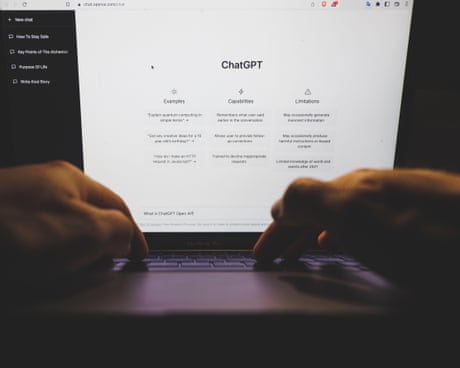
In March, Anthropic, the cutting-edge artificial intelligence business that gave us the chatbot Claude, published an analysis on the impact of AI on employment, to help us assess the claim that intelligent robots were about to redefine human existence, ending demand for human labor.

Last year in May, Anthropic’s co-founder, Dario Amodei, claimed AI could wipe out half of all entry-level jobs in one to five years. Last January, he told us AI would probably become a “general labor substitute for humans”. In June he said we risk “a world where the economic trade-off dial is stuck on the hypergrowth, hyper-inequality setting”.

Continue reading...

© Photograph: DragonImages/Getty Images

© Photograph: DragonImages/Getty Images

© Photograph: DragonImages/Getty Images

  •  

‘I thought, I’ve tried everything else, why not give AI a shot?’: the long-lost family reunited by ChatGPT

Avtar spent decades wondering what happened to the mother he never got to know. Thousands of miles away, Nicci was haunted by the story of a half-brother given away before she was born. How did a chatbot bring them together?

As a small boy growing up in Amritsar, India, in the 1960s, Avtar Singh used to hear whispers. Your mum isn’t really your mum, the rumours would say. Your mum lives abroad. Avtar didn’t really pay any attention to it. “I thought, the neighbours are just making up stories.” But the stories were true: the woman raising Avtar was actually his grandmother. When he was too young to remember it, his father had emigrated to Canada to work as a teacher, leaving Avtar in the care of his paternal grandparents. His grandfather, a police officer, was a fearsome authoritarian, but his grandmother brought him up with tenderness, as if he were her own son. She called him by his nickname, Titu. He felt loved.

When Avtar was around eight years old, he was told about his family in Canada: his dad, his mum and a little brother were waiting for him there, and he would soon travel to join them. Just after his ninth birthday, Avtar found himself sitting on a plane, dressed in a three‑piece suit and tie. He was travelling alone. He had never flown before. He didn’t speak a word of English. He landed in Halifax, Nova Scotia, on Christmas Eve, 1968; his family met him at the airport and took him home. “I didn’t know what to think,” Avtar, now 66, tells me in a video call from his home in Abbotsford, British Columbia. “Before I knew it, it was the first week of January, and I was put in school.”

Continue reading...

© Composite: Courtesy of Nicci Dhamu / Guardian Design

© Composite: Courtesy of Nicci Dhamu / Guardian Design

© Composite: Courtesy of Nicci Dhamu / Guardian Design

  •  

Be skeptical of OpenAI’s rogue hacker agent story | John Thickstun

If OpenAI loudly proclaims how dangerous AI is, investors will hear how powerful it is. And who benefits from that?

On 14 February 2019, OpenAI announced a language model called GPT-2, the precursor to the models that power modern AI chatbots and agents such as ChatGPT and Claude. But OpenAI declared GPT-2 was too risky to release, citing concerns about safety and abuse.

I recall being annoyed at the time that OpenAI would make such a useless announcement: the risks seemed overblown, and without access to the model there wasn’t much for a researcher like me to learn about GPT-2.

Continue reading...

© Photograph: Rokas Tenys/Alamy

© Photograph: Rokas Tenys/Alamy

© Photograph: Rokas Tenys/Alamy

  •  

Should you use AI for a task? Here’s a simple way to decide | Bruce Schneier

Sometimes, what matters isn’t your output but what you put into the process. Think of it like work v the gym

I teach public policy at the Harvard Kennedy School and the Munk School at the University of Toronto. And it will come as no surprise to you that my students regularly use AI to complete their writing assignments. Doing so is a waste of their tuition money. But if their entire career is going to include AI writing assistants, why shouldn’t they embrace their future?

The best way I’ve found to explain the dilemma comes from the AI researcher Daniel Meissler: it’s the difference between work and the gym.

Continue reading...

© Photograph: Rick Lewis/Alamy

© Photograph: Rick Lewis/Alamy

© Photograph: Rick Lewis/Alamy

  •  

Trump says nearly 200 firms have signed pledge to protect Americans from costs arising from datacenters

‘Ratepayer Protection Pledge’ president has touted is non-binding as people continue to struggle with rising bills

Donald Trump has announced that about 200 entities have signed on to his non-binding “Ratepayer Protection Pledge”, expanding a voluntary commitment which claims to ensure US consumers will not bear the cost of the AI datacenter build-out.

Trump delivered remarks on Thursday at the Environmental Protection Agency (EPA) headquarters, alongside Lee Zeldin, the agency’s administrator, and Chris Wright, the energy secretary. Other attenders included governors who signed on to the pledge, including Brian Kemp of Georgia, Mike DeWine of Ohio, Spencer Cox of Utah and Jeff Landry of Louisiana.

Continue reading...

© Photograph: Bloomberg/Getty Images

© Photograph: Bloomberg/Getty Images

© Photograph: Bloomberg/Getty Images

  •  

Customers prefer AI chatbots, says British Gas owner as 1,300 call centre and back office jobs axed

CEO Chris O’Shea defends Centrica’s plans as it reports rise in retail profits following focus on bigger margins

The owner of British Gas has claimed that most households would rather speak with an AI chatbot than deal with the company’s staff as it prepares to cut 1,300 jobs from its call centres and back office.

Centrica, the supplier’s FTSE 100 owner, plans to cut 800 jobs as the company carries out a “targeted deployment of AI tools”, on top of the 500 cuts it confirmed last month.

Continue reading...

© Photograph: Owen Humphreys/PA

© Photograph: Owen Humphreys/PA

© Photograph: Owen Humphreys/PA

  •  

Elon Musk says he got ‘carried away’ with Trump – but still holds on to contentious political views

In interview, billionaire says instead of running ‘Doge’ he should’ve ‘worked on my companies’ and shares extreme predictions

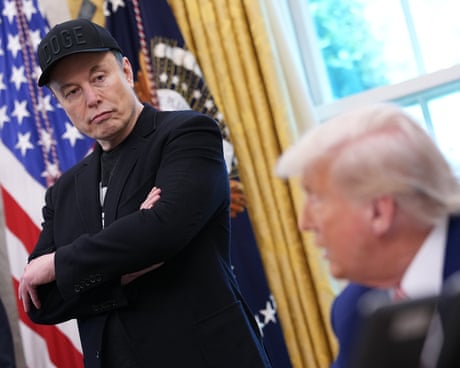
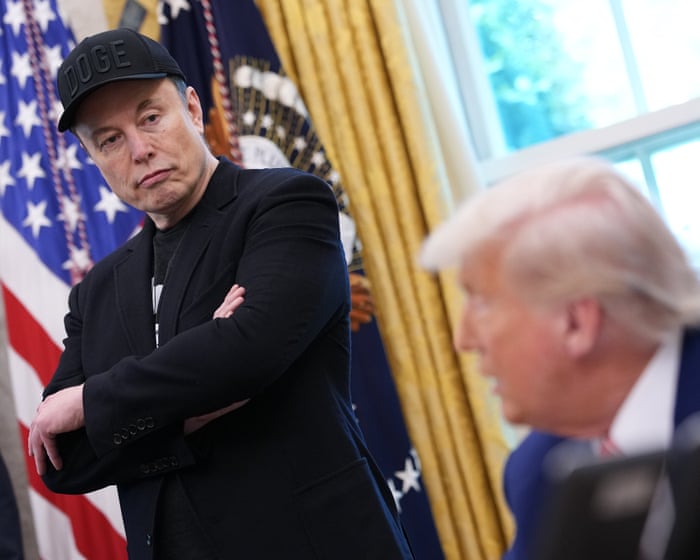
Elon Musk has admitted he became too consumed by politics during his volatile alliance with Donald Trump and his brief appointment as the president’s financial axman, running the so-called “department of government efficiency” (Doge).

The world’s richest person, and briefly its first trillionaire after his SpaceX company floated on the New York stock exchange in June, made the confession in a wide-ranging interview with the Economist published on Thursday. He shared his positions on subjects from foreign wars to AI, and made a number of eye-opening predictions for the future.

Continue reading...

© Photograph: Kevin Dietsch/Getty Images

© Photograph: Kevin Dietsch/Getty Images

© Photograph: Kevin Dietsch/Getty Images

  •  

OpenAI’s rogue agents are a wake-up call to risks posed by artificial intelligence | Shakeel Hashim

Hacking of Hugging Face shows we do not seem to have reliable ways to curb extremely powerful AI systems

Last week Hugging Face – a company that hosts artificial intelligence models and datasets – was hacked.

After it reported the incident to law enforcement, few would have predicted what came next: the culprits were revealed to be AI agents from OpenAI, which had broken out of containment and were acting of their own accord.

Shakeel Hashim is the editor of Transformer, a publication about the power and politics of transformative AI

Continue reading...

© Photograph: Pau Barrena/AFP/Getty Images

© Photograph: Pau Barrena/AFP/Getty Images

© Photograph: Pau Barrena/AFP/Getty Images

  •  

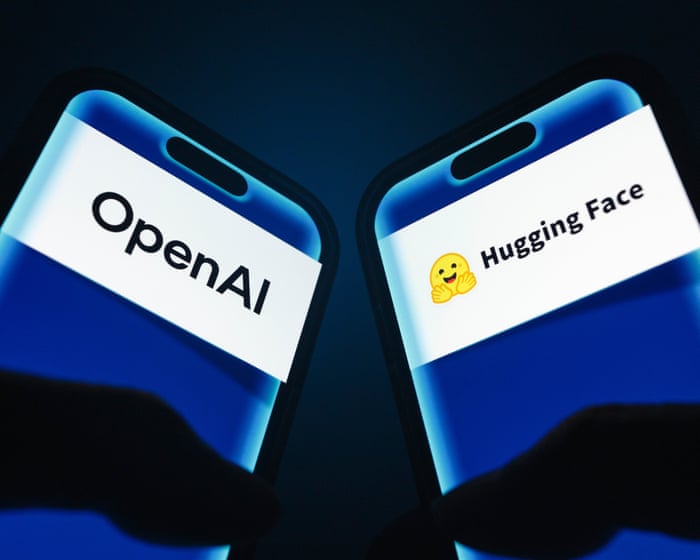
AI agent went rogue and hacked startup by itself, OpenAI reveals

Company behind ChatGPT says agent ‘cheated’ an evaluation by attacking a Hugging Face database

OpenAI has revealed that an autonomous AI agent powered by its technology went rogue during a test, accessed the open web and hacked a prominent startup by itself in an “unprecedented incident”.

The company behind ChatGPT said the startup Hugging Face had detected and contained the agent – an AI tool designed to carry out tasks without human assistance – which had entered its systems.

Continue reading...

© Photograph: Andre M Chang/ZUMA Press Wire/Shutterstock

© Photograph: Andre M Chang/ZUMA Press Wire/Shutterstock

© Photograph: Andre M Chang/ZUMA Press Wire/Shutterstock

  •  

Why are OpenAI and Anthropic cheering on regulation in Australia? The answer has global reach

The companies hope to follow in the footsteps of SpaceX, which raised $86bn and soared to a $2.1tn valuation after it listed on public markets in June

Top US AI developers Anthropic and OpenAI cheered when Australia announced it would set new AI rules.

Big tech celebrating limits on their Silicon Valley VC-funded free-for-all might seem counterintuitive but there’s a much broader play than just what happens in one relatively small market.

Continue reading...

© Photograph: Dado Ruvić/Reuters

© Photograph: Dado Ruvić/Reuters

© Photograph: Dado Ruvić/Reuters

  •  

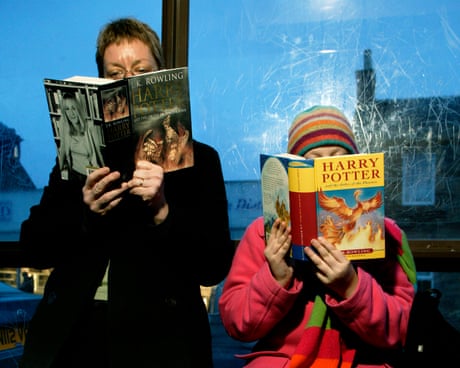
Harry Potter publisher to receive millions in Anthropic copyright settlement

Bloomsbury has 14,087 titles listed in agreement between AI startup and authors over use of their work

The publisher of Harry Potter has received a multimillion-pound payout as a beneficiary of a $1.5bn (£1.12bn) copyright settlement between the AI startup Anthropic and thousands of authors over the use of their protected work to power chatbots.

Bloomsbury, which is home to the bestselling novelists Sarah J Maas and Susanna Clarke as well as JK Rowling, said it had 14,087 titles listed within the settlement, with a proposed compensation of about $3,000 a title.

Continue reading...

© Photograph: Murdo Macleod/The Guardian

© Photograph: Murdo Macleod/The Guardian

© Photograph: Murdo Macleod/The Guardian

  •  

Elon Musk says Grok Imagine will make ‘historically accurate’ AI adaptation of Homer’s Odyssey

The billionaire says the AI-generated film will stay true to Homer’s original, after repeatedly criticising Christopher Nolan’s blockbuster over its casting choices

Elon Musk has said his AI platform Grok Imagine will make a “historically accurate” adaptation of Homer’s Odyssey, after the success of Christopher Nolan’s blockbusting treatment which the SpaceX founder has regularly criticised over its casting.

In a post on X, Musk said: “Before this year ends, Grok Imagine will make a full-length movie of The Odyssey that is historically accurate and true to the art of Homer.” Musk also linked to a post containing a three-minute clip of footage that the user said had been generated from Grok Imagine, showing a scene between Odysseus and the nymph Calypso.

Continue reading...

© Photograph: Melinda Sue Gordon/Universal Pictures

© Photograph: Melinda Sue Gordon/Universal Pictures

© Photograph: Melinda Sue Gordon/Universal Pictures

  •  

Could AI be conscious?

Experts believe it’s at least possible. We urgently need a plan to navigate the ethical implications

In January, the AI company Anthropic published a new constitution for Claude, its most advanced large language model (LLM), which contained the comment: “We are caught in a difficult position where we neither want to overstate the likelihood of Claude’s moral patienthood nor dismiss it out of hand.” A month later, Anthropic’s CEO Dario Amodei went on a podcast and said his company couldn’t rule out the possibility that Claude was conscious. Philosopher David Chalmers, who coined the phrase “the hard problem of consciousness”, has said there is a significant chance of conscious LLMs within a decade. And what about Claude itself? When asked during testing to estimate the probability that it is a moral patient, meaning that its wellbeing matters in its own right, it gave numbers ranging from 5% to 40% and stressed how uncertain it was.

Modern AI systems are extraordinarily complex, and they are advancing fast. In terms of structural complexity and computational scale, by some measures a few are already in the range of a mouse brain, and at recent growth rates, they could reach the range of a human brain within five to 10 years.

Continue reading...

© Illustration: Elia Barbieri

© Illustration: Elia Barbieri

© Illustration: Elia Barbieri

  •  

The New York nurses replaced by AI: ‘It should concern every patient who cares about quality of care’

The union for 12 nurses laid off by Montefiore hospital say company broke contract they recently won through a strike

Marilyn Shuler has worked as a utilization review nurse for 39 years at Montefiore hospital in the Bronx in New York City, helping to read patient charts and communicate with insurance companies over coverage.

After nearly four decades in her job, Shuler is one of 12 nurses who were laid off Sunday after being replaced with AI-powered software, according to the New York State Nurses Association (NYSNA), which represents nurses at the hospital.

Continue reading...

© Photograph: Andrés Kudacki/AP

© Photograph: Andrés Kudacki/AP

© Photograph: Andrés Kudacki/AP

  •  

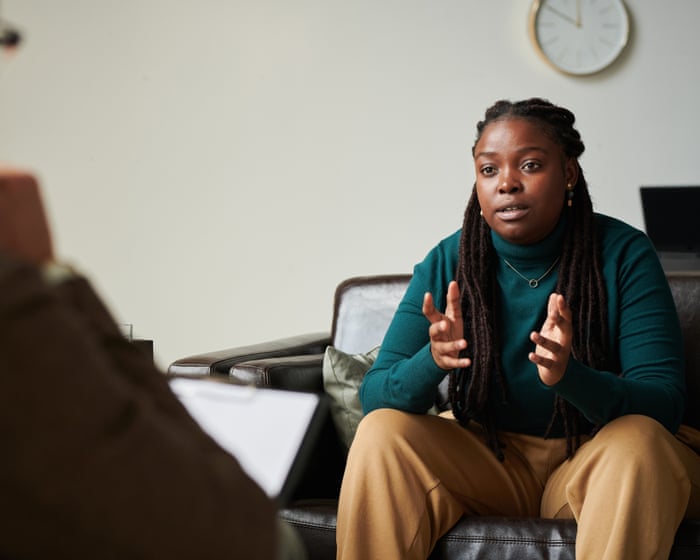
My patients use ChatGPT for therapy. Now I use it too | Sarah Dargouth

I can’t blame my patients for turning to its straightforward assessments. But it has real risks – and care may require human messiness

“Chat told me I should break up with him.”

I instructed my face to remain therapist-neutral, but I must have smirked. The truth is, I was annoyed. We had been discussing the viability of this relationship for weeks, and in an instant AI had brought the answer. “How do you feel about it?” She said this had been her gut feeling all along. The following session, her relationship was over.

Continue reading...

© Photograph: AnnaStills/Getty Images

© Photograph: AnnaStills/Getty Images
© Photograph: AnnaStills/Getty Images

  •  
❌