❌

Reading view

Daeduck Electronics Pursues Multiple LTAs With Global Tech Giants
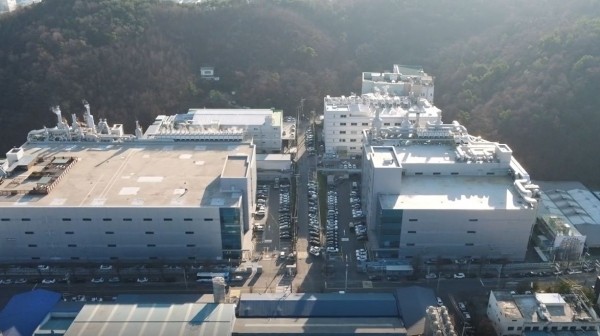
Daeduck Electronics' headquarters and FC-BGA manufacturing facility. (Photo: Daeduck Electronics)

Daeduck Electronics is negotiating long-term supply agreements (LTAs) with multiple global technology companies as customer demand for additional semiconductor substrate capacity continues to rise. The company expects the agreements to be finalized by the end of the year.

Daeduck Electronics said on July 22 that it is in discussions with several global technology companies on LTAs covering flip chip ball grid array (FC-BGA), flip chip chip scale package (FC-CSP) and memory substrates.

"We are in negotiations to conclude LTAs, and discussions are largely in the final stages," a Daeduck Electronics official said. "Customers are requesting both long-term supply agreements and capacity expansion backed by advance payments. We are reviewing the production volumes we can support based on our manufacturing capacity and investment plans." The company added that it is discussing multiple product categories simultaneously with some customers but is being selective because demand exceeds its available production capacity.

An LTA is a multi-year agreement under which customers commit to purchasing specified volumes over several years. The contracts typically establish purchase quantities and supply terms in advance through memorandums of understanding or definitive agreements. Such arrangements allow customers to secure stable supplies while enabling substrate manufacturers to expand production with greater demand visibility.

The use of customer advance payments to finance facility investments is also becoming more common. Under this model, customers provide a portion of future purchase payments upfront to help suppliers accelerate capacity expansion. Substrate manufacturers invest the funds in new production lines and gradually offset the advance payments through product shipments, reducing the financial burden associated with large-scale capital expenditures.

Daeduck Electronics is pursuing a major capacity expansion using both customer advance payments and its own financial resources. On July 20, the company announced a 497 billion won investment in manufacturing facilities. It also agreed to acquire Newflex's Ansan plant for 52.8 billion won to secure additional production space for future expansion. Including a previously announced 213 billion won investment in a new FC-CSP plant in May and the revival of a previously postponed 90 billion won to 100 billion won FC-BGA investment announced in 2022, Daeduck Electronics' total investment plan exceeds 850 billion won. The company expects to complete the investments by the end of 2027.

The newly announced 497 billion won investment will be directed toward high-value semiconductor substrate production, including FC-BGA, FC-CSP and memory substrates, excluding conventional multilayer boards (MLBs). At its B2 Center in Ansan, Daeduck Electronics will install additional FC-BGA production equipment. The facility currently houses four FC-BGA production buildings, and the company plans to utilize approximately 70% of the available space in one newly constructed building while continuing maintenance of existing production lines. At its B1 Center in Siheung, Daeduck Electronics is adding a third FC-CSP production building to its existing two-building complex. Part of the new investment will be allocated to equipment installation at the facility. The new FC-BGA production line is scheduled to begin operations in the second quarter of 2027, followed by the FC-CSP line in the third quarter.

The company's product portfolio has also shifted toward higher-value AI-related applications. Since the fourth quarter of 2025, FC-BGA products have expanded beyond automotive applications to include AI server controllers, networking equipment and optical modules. FC-CSP products are also becoming increasingly focused on controllers and automotive applications rather than smartphones. Its multilayer boards are primarily supplied for satellite communications and aerospace applications.

The trend toward customer-backed investment through LTAs is spreading beyond large corporations to mid-sized substrate manufacturers. Samsung Electro-Mechanics is expanding FC-BGA production at its Sejong facility and investing 1.8 trillion won in Vietnam at the request of North American technology customers. LG Innotek is also in discussions with multiple customers regarding FC-BGA capacity expansion at its Gumi and Vietnam facilities.

"As AI demand continues to drive shortages in semiconductor substrates, capacity expansion based on long-term supply agreements is becoming increasingly common," an industry official said. "In the past, substrate makers expanded capacity based on their own demand forecasts. Now, customers are initiating the investment requests. This represents a significant shift for an industry that has traditionally operated on a build-to-order basis."
  •  

Duksan Nepcores Wins Preliminary Approval for Kosdaq Listing

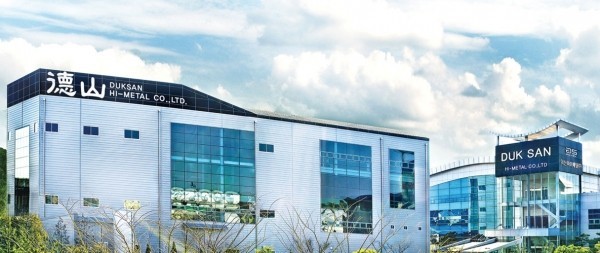
Duksan Hi-Metal headquarters.

Duksan Nepcores, a subsidiary of Duksan Hi-Metal, has received preliminary approval for a Kosdaq listing, becoming the first company to qualify for an exception under the Korea Exchange's tightened policy restricting parent-subsidiary dual listings.

The company announced on July 21 that the Korea Exchange (KRX) had approved its preliminary listing review, about eight months after it submitted its application on Nov. 11, 2025. Duksan Nepcores will now proceed with its initial public offering and listing process.

The company said it plans to use the proceeds from the IPO to expand production facilities and research and development, strengthen satellite navigation infrastructure and broaden its portfolio of dual-use products serving both civilian and defense markets.

Earlier, Duksan Nepcores received A/A ratings in Korea's technology evaluation process for a technology-special listing, demonstrating its technological capabilities and growth potential. The listing will also support the Duksan Group's efforts to diversify beyond semiconductor materials and components into the defense and aerospace sectors.

The listing review was delayed after the Korea Exchange strengthened its policy last year to generally prohibit separate listings of subsidiaries. In response, Duksan Nepcores introduced measures to obtain the consent of minority shareholders at its parent company and adopted shareholder return initiatives. The exchange has made the protection of parent company minority shareholders a key consideration in reviewing subsidiary listings.

To address those concerns, Duksan Hi-Metal amended its articles of incorporation to require shareholder approval before listing a subsidiary. The company also introduced shareholder return measures, including in-kind dividends for minority shareholders and a higher dividend payout ratio.

At an extraordinary shareholders' meeting in May, the proposal to pursue Duksan Nepcores' listing was approved with 92.7% support based on shares voted and 72.8% support based on total outstanding shares.

Duksan Hi-Metal emphasized that Duksan Nepcores operates independently, with separate business operations, customers, supply chains, manufacturing facilities and R&D organizations. Transactions between the two companies account for only 0.03% of the subsidiary's revenue, indicating virtually no operational dependence, the company said.

Founded in 2012, Duksan Nepcores provides end-to-end solutions covering the design, development, manufacturing and testing of navigation and anti-jamming technologies. The company serves the defense, aerospace and navigation infrastructure sectors and works with customers including Hanwha Aerospace, LIG Nex1, and Hyundai Rotem.

"This approval provides an opportunity to demonstrate more transparently the competitiveness of our navigation and anti-jamming technologies and our growth potential to the market," said Hwang Tae-ho, chief executive officer of Duksan Nepcores. "We will continue to do our best throughout the remaining listing process."

  •  

AI Data Center Boom Revives HDD Market as Japanese Suppliers Ramp Up Capacity

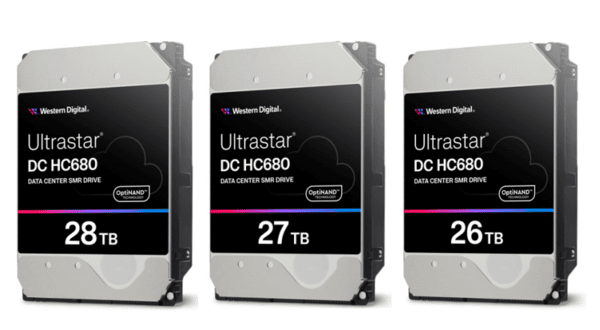
Western Digital hard disk drive. (Photo: Western Digital)

The rapid expansion of artificial intelligence data center investment, combined with surging semiconductor prices, is breathing new life into the hard disk drive (HDD) industry, prompting Japanese component manufacturers to launch major capacity expansion projects as demand shifts toward ultra-high-capacity enterprise storage.

According to industry sources, Japanese suppliers including TDK, JX Advanced Metals, Resonac, Nitto Denko, and HOYA are expanding production of key HDD components. Once the dominant storage medium for data centers, HDDs had gradually lost ground to solid-state drives (SSDs) as NAND flash prices fell and performance improved. The explosive growth of AI infrastructure, however, is reversing that trend.

Market research firm TrendForce forecasts that nearline HDD shipments for data centers will grow at a compound annual growth rate (CAGR) of 23% between 2025 and 2030. Nearline HDDs are enterprise-class drives designed to store large volumes of data that are accessed less frequently in data centers.

Race toward 100TB HDDs gains momentum

HDDs store data by magnetically recording information onto spinning disks known as platters. Although slower than SSDs, they offer significantly higher storage capacity and lower cost per terabyte, making them well suited for hyperscale AI data centers.

The emerging architecture for AI infrastructure typically relies on SSDs for high-speed data processing while using HDDs for large-scale storage and backup.

The global HDD market is dominated by three companies: Western Digital, Seagate Technology, and Toshiba. Western Digital and Seagate each hold more than 40% of the market, while Toshiba accounts for roughly 17%. All three are now competing to commercialize enterprise HDDs exceeding 40TB, with long-term roadmaps targeting 100TB products.

Western Digital is currently qualifying its 40TB-class HDDs with customers and plans to begin mass production in the second half of this year. The company is also conducting customer qualification with two hyperscale cloud providers for heat-assisted magnetic recording (HAMR) drives and has unveiled a roadmap to scale HDD capacity to 100TB by 2029.

Seagate is already shipping HAMR-based HDDs with capacities of up to 44TB to cloud service providers. The company aims to increase storage density from roughly 4TB per platter today to 10TB per platter, ultimately enabling 100TB HDDs. To strengthen production of HAMR recording media, Seagate acquired sputtering equipment manufacturer Intevac in 2025.

Toshiba is advancing its microwave-assisted magnetic recording (MAMR) technology and recently introduced 30TB to 34TB HDDs using the industry's first 12-platter architecture, exceeding the previous limit of ten platters. The company plans to launch 40TB-class drives in 2027, expand to 55TB and beyond, and eventually adopt HAMR technology.

Japanese component suppliers expand production

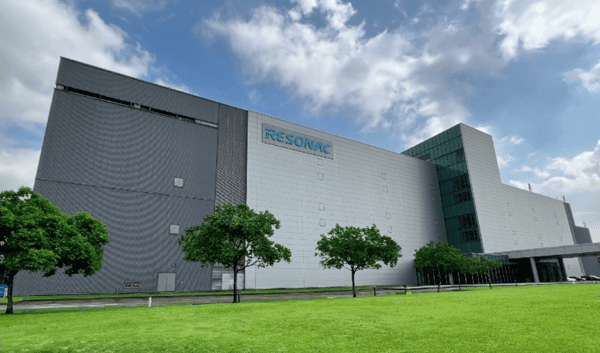
Resonac HD Singapore's new manufacturing facility. (Photo: Resonac)

Rising demand for ultra-high-capacity HDDs is driving investment throughout the supply chain, including magnetic heads, recording media, glass substrates, sputtering targets and flexible printed circuits.

In May 2026, TDK announced plans to expand production of HDD heads and suspensions in response to growing demand for nearline HDDs used in AI data centers. The company is also investing in research and development as well as manufacturing capacity for next-generation HAMR heads.

The HDD head performs data read and write operations on the platter, while the suspension supports the head and precisely maintains its position just nanometers above the disk surface.

TDK is placing particular emphasis on expanding production of Tri-SA (Triple Stage Actuator) suspensions for ultra-high-capacity HDDs. By adding an extra actuator stage, the technology enables more precise head positioning, improving recording density and reliability. The company expects HDD head production to increase by about 50% this year, while suspension output is projected to rise by 22%.

Resonac announced in May 2026 that it would expand production of magnetic recording media, or platters, which are among the most critical HDD components. The company is the world's largest supplier of recording media to the three leading HDD manufacturers.

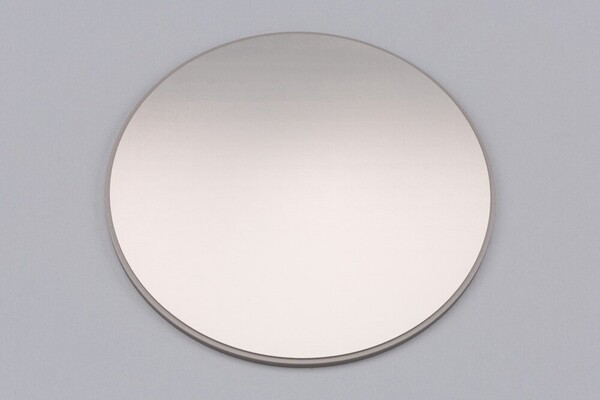
Recording media consists of aluminum or glass substrates coated with magnetic thin films and serves as the foundation for higher recording densities in next-generation HAMR and MAMR technologies.

Resonac is strengthening its Singapore subsidiary, Resonac HD Singapore (RHDS), as its primary production hub. Annual production capacity will increase from 160 million to 210 million disks, representing approximately 31% growth. The company will install additional manufacturing equipment in unused factory space while relocating idle equipment from its closed Taiwan facility. The expanded capacity is scheduled to begin operations in 2027.

HOYA announced in April 2026 that it would invest approximately 50 billion yen (approximately 450 billion won) to build a new HDD glass substrate plant in Vietnam. The company is the world's dominant supplier of glass substrates for HDDs.

Glass substrates offer superior flatness and rigidity compared with aluminum, making them increasingly important for ultra-high-capacity HDDs. As storage capacities continue to rise, adoption of glass substrates is expected to increase.

HOYA currently operates two HDD glass substrate plants in Vietnam and one in Laos. The new facility, targeted to begin operations in 2028, will increase its manufacturing footprint to four plants, with capacity expansion phased in according to market demand.

JX Advanced Metals has also announced plans to expand production of sputtering targets, a key material used to deposit magnetic thin films during HDD recording media manufacturing. Demand is expected to rise as HAMR technology increases recording density. New production lines at the company's Isohara plant in Japan will begin operating progressively in the second half of this year.

Sputtering target for magnetic devices. (Photo: JX Advanced Metals)

Meanwhile, Nitto Denko is expanding its business in flexible printed circuits for HDD suspensions. The company supplies CISFLEX, a thin-film metal substrate that integrates the suspension with electrical circuitry. CISFLEX transmits read and write signals to the magnetic head while supporting it at a flying height of approximately 10 nanometers above the platter surface.

Nitto Denko plans to invest 43 billion yen (approximately 390 billion won) in CISFLEX and other high-precision circuit technologies by 2028.

Although SSDs have rapidly displaced HDDs in PCs and notebooks, industry observers expect HDD demand to continue growing in data centers, where massive volumes of information must be stored economically over long periods. As adoption of ultra-high-capacity drives accelerates, demand for advanced HDD components is expected to expand alongside it.

  •  

Daeduck Electronics to Invest 497 Billion Won in Semiconductor Substrates

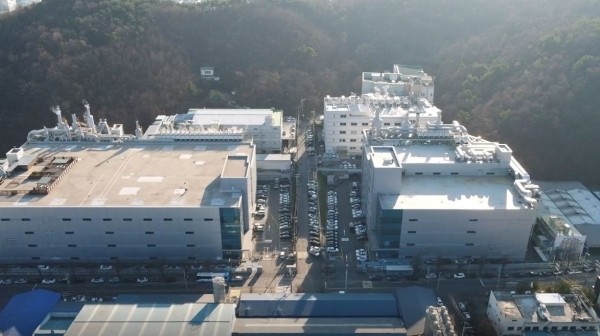
Daeduck Electronics headquarters and its flip-chip ball grid array (FC-BGA) manufacturing plant.

Daeduck Electronics will invest an additional 497 billion won to expand production facilities and supporting infrastructure, just two months after announcing a 213 billion won investment in May. The latest commitment brings the company's cumulative investment in semiconductor substrate production since 2020 to approximately 1.3 trillion won.

The company disclosed on July 20 that it will invest 497 billion won in manufacturing facilities and related infrastructure for semiconductor products. The investment will run through December 31, 2027, and is equivalent to 55.39% of shareholders' equity. Daeduck Electronics said the investment is intended to expand production capacity and supporting facilities in response to growing demand in the semiconductor market. Funding will come from internal cash and external borrowings.

Including the latest investment, Daeduck Electronics will have committed about 1.3 trillion won to its semiconductor substrate business since 2020. Between 2020 and 2022, the company invested approximately 270 billion won to establish production capacity for flip-chip ball grid array (FC-BGA) substrates. It subsequently approved another 270 billion won investment in FC-BGA production in 2022, with that expansion project currently scheduled for completion in 2027.

In 2025, the company invested approximately 50 billion won to expand production capacity for multilayer boards (MLBs) at its Ansan facility. In May this year, it announced a 213 billion won investment to build a new flip-chip chip-scale package (FC-CSP) manufacturing plant at its B1 Center in Siheung, Gyeonggi Province. That project is also scheduled for completion by the end of 2027.

Industry sources said Daeduck Electronics is accelerating long-term capacity expansion as demand for high-value semiconductor substrates continues to rise, driven by increasing investment in AI servers and data centers. FC-BGA substrates are used in high-performance packages for AI accelerators, central processing units (CPUs) and graphics processing units (GPUs). FC-CSP substrates are primarily used in mobile application processors (APs), communications chips and power semiconductors. MLBs are key components for AI servers and networking equipment.

Daeduck Electronics reported 346.3 billion won in consolidated revenue and 51.3 billion won in operating profit for the first quarter, with revenue increasing 60.8% from a year earlier. According to FnGuide, market consensus forecasts second-quarter consolidated revenue of 370 billion won and operating profit of 58.7 billion won. The company is expected to sustain its growth on the back of higher sales of AI server substrates and an improved product mix.

  •  
❌