❌

Reading view

NXP Launches SAF9800 Automotive Radio and Audio Processor With AI-Enhanced Audio Processing

NXP Semiconductors has introduced a new automotive radio and audio processor that significantly enhances artificial intelligence (AI)-based audio processing, targeting next-generation software-defined vehicles.

The company announced on July 21 that it has launched the SAF9800, an automotive radio and audio processor that integrates analog radio reception and AI/ML-enabled audio processing into a single chip.

The SAF9800 combines AM/FM radio reception with an integrated audio digital signal processor (DSP).

Its DSP supports AI-based sound separation, enabling the system to distinguish voice commands, emergency vehicle sirens and abnormal vehicle noises from surrounding background noise. The processor also provides real-time noise reduction and adaptive audio processing capabilities.

NXP said the chip integrates a neural network-enabled DSP and dedicated hardware accelerators, delivering more than 10 times the audio processing performance of the previous generation.

The processor also incorporates EVAM-lite, NXP's latest AM radio denoising technology. Electric vehicles often experience degraded AM radio reception because electromagnetic interference generated by electric motors and inverters affects AM frequencies. According to NXP, EVAM-lite helps mitigate this interference. The technology comes as US lawmakers continue to consider legislation requiring AM radio in new vehicles because of its role in delivering emergency alerts.

NXP said automakers using the SAF9800 will be able to configure and update radio and audio functions through software, responding to the shift toward software-defined vehicles (SDV).

The SAF9800 began supplying customers starting in May 2026.

"The automotive industry is transitioning from hardware-centric infotainment systems to integrated software-defined architectures," said John van den Braak, senior vice president of Infotainment Audio Systems at NXP. "With a flexible single-chip solution, we aim to simplify vehicle development while enabling automakers to scale their platforms."

  •  

Infineon Launches Radiation-Hardened GaN Gate Driver for Space Applications

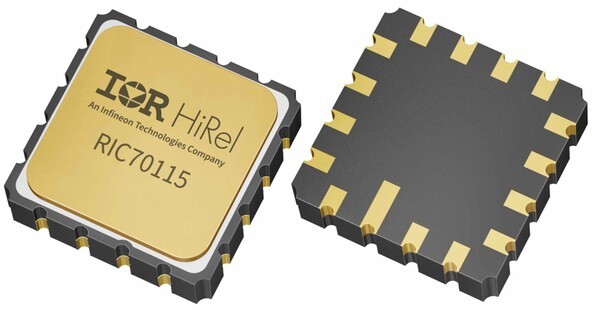
Infineon's radiation-hardened RIC70115 gate driver for space applications is designed to operate reliably in harsh radiation environments. (Photo: Infineon)

Infineon Technologies has introduced the RIC70115, a radiation-hardened gate driver designed to control gallium nitride (GaN) power semiconductors in space applications, the company announced on July 15.

A gate driver is a control IC that switches power semiconductors on and off. The RIC70115 supports both silicon and GaN power devices and is engineered to withstand radiation-induced performance degradation and malfunction, making it suitable for satellites and other space systems, according to the company.

Prolonged exposure to radiation in space can gradually degrade semiconductor performance, while high-energy particles may trigger transient circuit failures.

Infineon said the RIC70115 is qualified to withstand a total ionizing dose (TID) of up to 100 krad(Si) and has been verified to tolerate single-event effects up to a linear energy transfer (LET) level of 81.9 MeVΒ·cmΒ²/mg.

The company said these specifications provide sufficient radiation tolerance for low Earth orbit (LEO) satellites as well as more demanding space environments.

The RIC70115 incorporates a Miller clamp function that prevents unintended turn-on of power semiconductors caused by voltage transients. It also includes integrated noise reduction circuitry to minimize electromagnetic interference.

An integrated low-dropout (LDO) regulator generates a 4.8V gate drive supply from either a 5V or 12V input, reducing the number of required external components.

The device operates across a temperature range of -55Β°C to 125Β°C and complies with MIL-PRF-38535, the US military specification for high-reliability microelectronics used in defense and space applications.

"Adoption of GaN power solutions is accelerating rapidly," said Mike Mills, senior vice president of Infineon's High Reliability (HiRel) business. "The RIC70115 is designed to support the transition to GaN-based power systems for space applications."

The RIC70115 and its evaluation board, RIC70115EVAL1, are now commercially available.

  •  

Rapidus Integrates Cadence Agentic AI in Bid to Win 2nm Foundry Customers

Rapidus is bringing agentic artificial intelligence into its foundry platform as it seeks to attract customers for its upcoming 2-nanometer manufacturing process.

The Japanese foundry announced on July 16 that it is partnering with US electronic design automation (EDA) software provider Cadence Design Systems to advance AI-assisted chip design.

Under the collaboration, Cadence's InnoStack AI Super Agent will be integrated into RAADS (Rapidus AI-Agentic Design Solution), the company's chip design platform.

The partnership is believed to mark the first time a foundry has directly integrated an EDA vendor's agentic AI technology into its customer-facing design platform. Industry observers view the move as part of Rapidus' strategy to strengthen its competitiveness and attract customers as a late entrant to the global foundry market.

Unlike conventional AI tools that optimize individual design tasks, agentic AI can independently determine which design tools to use, execute them and decide the next steps without requiring engineers to issue commands for each stage. The technology is designed to orchestrate the entire chip design workflow rather than optimize isolated tasks.

Cadence's InnoStack automates the execution of conventional EDA tools used during the back-end stages of chip design, including placement and routing, timing analysis and power optimization. Instead of engineers repeatedly adjusting design parameters manually, the AI explores design alternatives and identifies optimized solutions.

Rapidus said the collaboration is expected to reduce the time required from initial chip design through final pre-manufacturing verification by as much as 50%.

Rapidus is backed by major Japanese companies including Toyota Motor, Sony Group, SoftBank, Kioxia, and Nippon Telegraph and Telephone (NTT), with substantial financial support from the Japanese government. The company is developing a 2nm process based on technology from IBM and aims to begin mass production in 2027.

"Advanced system-on-chip (SoC) design requires AI agents that coordinate the entire design flow, not AI that simply optimizes individual tasks," said Anirudh Devgan, president and chief executive officer of Cadence. "Our technology will help customers improve productivity and bring advanced chips to market more quickly."

Atsuyoshi Koike, representative director and chief executive officer of Rapidus, said combining RAADS with InnoStack will enable customers to design increasingly complex SoCs more efficiently.

"We expect the integration to significantly reduce design time while maximizing the value of Rapidus' advanced process technologies," Koike said.

  •  

Knowles Reinvents Itself as an Industrial Components Supplier

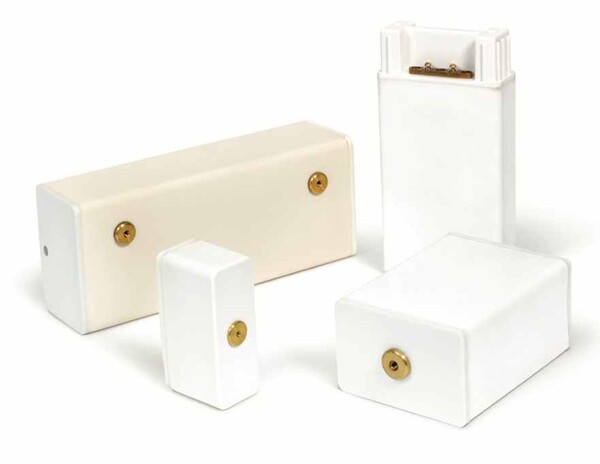
Knowles' pulse power film capacitor, used in CO2 lasers for semiconductor manufacturing as well as medical and defense equipment. (Photo: Knowles)

Knowles, the US company best known as a supplier of microelectromechanical systems (MEMS) microphones for Apple's iPhone, is expanding its business into aerospace, defense, industrial and medical applications as it completes its transition away from consumer electronics.

On July 17, the company announced that it is expanding its portfolio of high-performance pulse power capacitors. Pulse power technology stores electrical energy and releases it in a highly controlled burst over an extremely short period. Capacitors are key components that store electricity and discharge it precisely when needed.

The company's pulse power capacitors are designed for applications including defense radar and electronic warfare systems, CO2 lasers used in semiconductor manufacturing, drilling equipment for energy exploration and medical defibrillators. These systems require highly reliable capacitors capable of delivering precise amounts of energy repeatedly at exactly the right moment.

"Consistency is everything in pulse power," said Jeff Niew, president and chief executive officer of Knowles. "Once a system leaves the laboratory and enters real-world applications, components must do more than work onceβ€”they must deliver stable, repeatable performance under demanding operating conditions."

Founded in 1946, Knowles built its reputation as a supplier of miniature microphones and receivers for hearing aids before becoming a leading manufacturer of MEMS microphones for smartphones during the 2000s. The company was spun off from US industrial manufacturer Dover Corporation in 2014 and subsequently listed on the New York Stock Exchange.

Knowles began reshaping its business in 2023. In September of that year, it announced a strategic transformation into an industrial technology company and acquired US film capacitor manufacturer Cornell Dubilier for $263 million, expanding its portfolio beyond ceramic capacitors into high-power film capacitors for industrial applications. The newly introduced pulse power capacitor lineup is based on technologies acquired through that transaction.

In 2024, Knowles sold its consumer MEMS microphone business, which supplied components for smartphones and wireless earbuds, to US AI semiconductor company Syntiant for $150 million. The company said the divestiture reflected its strategy to reduce exposure to consumer electronics and concentrate on high-reliability components for defense, medical and industrial markets.

The restructuring has begun to improve financial performance. Knowles reported first-quarter revenue of $153.1 million, up 15.8% from a year earlier. Its Precision Devices segment, which includes capacitor and radio-frequency (RF) components, recorded new orders exceeding revenue by 19% during the quarter, marking the sixth consecutive quarter in which orders outpaced sales. The company subsequently raised its full-year financial guidance.

Today, Knowles operates two core businesses: medical acoustic components, including products for hearing aids, and precision capacitor and RF components.

  •  
❌