Una gamma cromatica senza pari, maggiore efficienza energetica e immagini più confortevoli sono tra i principali benefici della nuova tecnologia RGB MiniLED di Hisense: tre serie, per portare il massimo della tecnologia a tutti... Leggi tutto
The US military said it has launched its 10th consecutive round of strikes on Iran to force the reopening of the strait of Hormuz.
Earlier on Monday, Iran’s president said the country is in a “full-scale war” after the US expanded its aerial campaign and Tehran struck Washington’s Gulf allies, even as diplomats said talks to de-escalate were continuing.
Genetic prediction models are poised to revolutionize medicine. But because they have been trained on European DNA, they threaten to widen health care disparities.
Sviluppato in sei mesi, il nuovo robot combina Physical AI, percezione di tocco, forza, temperatura e prossimità. La prima applicazione industriale nascerà con Fincantieri per la saldatura nei cantieri navali... Leggi tutto
Un SSD capiente e veloce a un prezzo più conveniente: l'unità Lexar da 1TB è tra le offerte Amazon del momento. Approfitta subito dello sconto Amazon per portartelo a casa a 152 euro... Leggi tutto
La Commissione Europea ha contestato alla piattaforma controlli insufficienti su contraffazioni, giocattoli pericolosi e cosmetici non conformi. Entro il 20 ottobre dovrà presentare un piano di intervento
... Leggi tutto
Il passaggio ravvicinato ha permesso alla missione NASA di sfruttare la gravità del pianeta, correggere la traiettoria e verificare fotocamere, magnetometro e spettrometro in vista dell’incontro del 2029... Leggi tutto
The medium-sized monkey with an orange-colored patch around its nose and mouth, known locally as Likweli, joins a very short list of newly identified African monkey species.
Dalle lavatrici compatte ai modelli con ampia capacità di carico, Amazon sconta lavatrici e lavasciuga. Abbiamo raccolto le offerte più interessanti del momento per aiutarti a trovare il modello giusto ... Leggi tutto
This wooden mask, which is decorated with human hair and a textile headband, adorned an Andean mummy up to a millennium ago. Made by an artist of the Chancay people, the mask was also painted red with the mercury-containing pigment cinnabar.
The Chancay were a pre-Inca people who lived along the central coast of Peru in the Late Intermediate Period (1000 to 1450). A common tradition among the Chancay was the funerary bundle — the end result of wrapping their dead in layers of textiles, vegetal material and animal skin. The bundle was then buried in a pit along with grave goods such as tools, food and figurines. Because the bodies were usually wrapped in a fetal position, however, it was not always clear exactly where the head was located once the bundle was complete.
According to The Walters Art Museum in Baltimore, which has this mask in its collection, "false heads" made from textiles or wood were sometimes tied onto the Chancay funerary bundles to act as a focal point for venerating the ancestor.
The mask is roughly life-size, measuring 12 by 8 inches (30.5 by 20.3 centimeters). Chancay funeral masks were not meant to be realistic. Instead, they had simplified features, such as the diamond-shaped eyes; triangular nose; and tiny, U-shaped smile on this mask. The wig was almost certainly made from human hair, according to a microscopic analysis The Walters Art Museum undertook in 2017.
The Chancay artist who made the mask painted it red using cinnabar, a toxic substance that is the brick-red form of mercury sulfide. Cinnabar was frequently used in Andean funerary rituals, and the color was associated with purification and commemoration rituals. But the mask was likely not placed on the outside of the bundle burial, as a patterned impression has been left on the cinnabar of this mask, probably from being wrapped in even more textiles, according to The Walters Art Museum.
L’abbonamento ad Apple Music passa da 10,99 euro al mese a 11,99 euro. L’annuale a 119 euro. La causa addotta per l’aumento è l’aumento dei costi per le licenze dei contenuti... Leggi tutto
La società dovrà iniziare ad aprire l’accesso entro gennaio 2027. La Commissione Europea include tra i possibili beneficiari anche i chatbot che svolgono funzioni assimilabili a quelle di un motore di ricerca
... Leggi tutto
La nuova data per il tredicesimo volo di test di Starship è il 24 luglio. Il primo tentativo era stato interrotto a causa della mancata accensione di due motori Raptor che saranno sostituiti... Leggi tutto
Abbiamo testato il nuovo top di gamma di Sony, il primo TV con la tecnologia RGB mini LED “True RGB”. Oltre 4000 nit di luminanza di picco, circa il 90% dello spazio Rec.2020 e il migliore local dimming sulla piazza per un TV il cui obiettivo è far dimenticare l’OLED. Missione riuscita? ... Leggi tutto
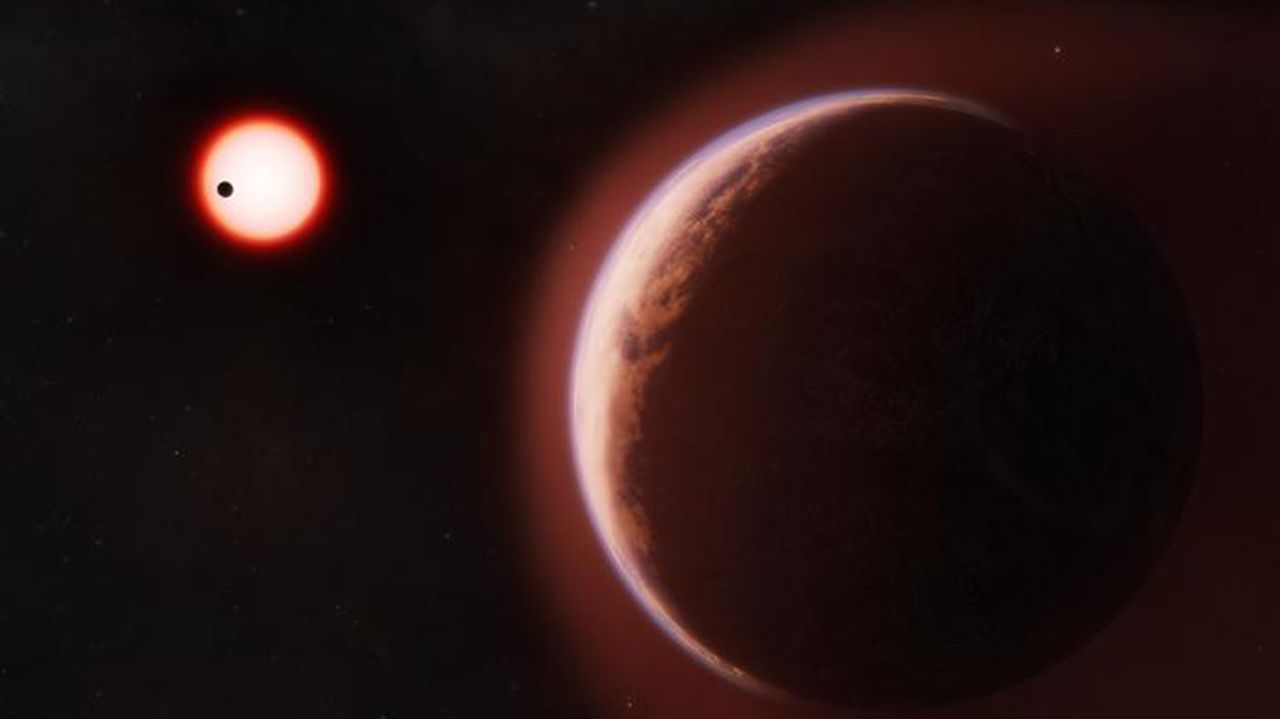
Astronomers have found the strongest evidence yet that a rocky planet beyond our solar system has managed to hold onto an atmosphere — a crucial ingredient for life as we know it.
The discovery marks the first time scientists have detected an atmosphere surrounding a rocky planet orbiting in the habitable zone of another star, the region around a star where temperatures could enable liquid water to exist on a planet's surface. The findings, published July 16 in the journal Science, could help astronomers narrow the search for potentially habitable worlds beyond our cosmic backyard.
"It's absolutely exciting," Edward Schwieterman, associate professor of astrobiology at the University of California, Riverside, who was not involved in the study, told Live Science in an email. "We are getting closer to studying the atmospheres of worlds that could plausibly harbor life, with evidence of that life embedded in their observable spectra."
The planet, known as LHS 1140 b, lies about 48 light-years away from Earth and orbits a small, cool red dwarf star. At roughly 5.6 times Earth's mass, the exoplanet is classified as a super-Earth: a rocky planet larger than our own but much smaller than gas giants like Neptune.
It receives less than half the sunlight Earth gets, giving it an estimated surface temperature of around minus 53 degrees Fahrenheit (minus 47 degrees Celsius), according to previous estimates not accounting for an atmosphere. That makes the planet cold, but in the range astronomers consider potentially habitable.
Cosmic gas leak
Scientists have discovered thousands of exoplanets over the past few decades, including many rocky worlds. But determining whether those planets have atmospheres has proven far more difficult, because atmospheres around rocky planets are incredibly thin compared with those of giant planets, making them much harder to detect across vast cosmic distances.
Instead of looking for the atmosphere directly, the researchers behind the new study searched for a subtle clue that one existed: helium gas leaking into space. Using the WINERED spectrograph on the Magellan Clay Telescope in Chile, the team watched LHS 1140 b cross in front of its star and let a sliver of starlight filter through the planet's atmosphere on its way to Earth. As it did, the team looked for a tiny dip in the star’s light at the exact wavelength of infrared light that helium blocks — a telltale sign that gas was streaming off the planet and into space.
The prediction rested entirely on a mathematical model that had never been confirmed for a rocky planet. However, in September 2024, the team caught LHS 1140 b and a smaller, hotter neighboring planet, LHS 1140 c, transiting their star on the same night, less than 40 minutes apart. The researchers detected a clear helium signal from LHS 1140 b, while LHS 1140 c showed nothing.
NASA concept art depicting LHS 1140 b as a rocky super-Earth — a type of potentially habitable planet most similar to our own. (Image credit: NASA)
The contrast matters: LHS 1140 c orbits much closer to its star than LHS 1140 b does and receives roughly five times the radiation, yet it's also smaller and less gravitationally bound — conditions that should make any escaping gas easier, not harder, to spot. Finding nothing there suggests LHS 1140 c's atmosphere was stripped away long ago, while LHS 1140 b, sitting farther out in cooler, calmer conditions, has managed to hold onto its own.
The discovery addresses a question astronomers have been working to answer for decades.
"Twenty years ago we wondered whether other terrestrial-type planets even existed," study co-author Robin Wordsworth, a professor of Earth and planetary sciences at Harvard, said in a statement. "Then we learned they're common, and found some in the habitable zone. The next question was whether any of them had managed to keep an atmosphere. Now we know at least one has."
A step forward in the hunt for life
The find is especially notable because red dwarf stars like LHS 1140 can bombard nearby planets with high-energy radiation capable of stripping atmospheres away over time. Based on the star's estimated age of at least 3.1 billion years, the researchers say LHS 1140 b's atmosphere has likely persisted despite that bombardment, suggesting some rocky planets around these common stars can hang onto their atmospheres for far longer than once assumed.
But the researchers caution that detecting helium does not mean the planet is inhabited — or even that it is habitable. The observations reveal only the planet's thin upper atmosphere, not its full composition. Scientists still don't know whether LHS 1140 b has oxygen, carbon dioxide, water vapor or other gases that could make its surface more Earth-like and hospitable to life.
Instead, the discovery opens a new way to study distant rocky worlds.
"The study demonstrates that, at least in some cases, we will be able to begin characterizing the atmospheres of potentially habitable planets," Schwieterman said. "If only rocky planets orbiting Sun-like stars retained atmospheres, we might have to wait one to two decades for the launch of the Habitable Worlds Observatory to search for biosignatures on rocky planets. I'm certainly excited about what comes next!"
Future observations will aim to determine what the rest of LHS 1140 b's atmosphere is made of and investigate whether it may harbor oceans or other features associated with habitability.
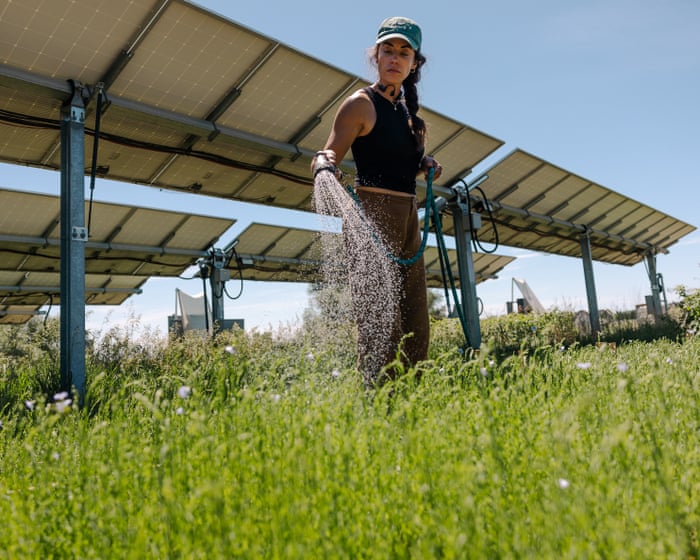
From Nevada to Manchester, developers are trialling innovative solutions to clean energy’s biggest challenge
In the deserts of the United Arab Emirates a sprawling clean energy project, stretching across an area roughly the size of 12,600 football fields, will play host to a breakthrough allowing solar energy to power the equivalent of half a million homes through the night.
The Gulf state has been steadily combining 5.2GW of solar power capacity with 19GWh of battery storage to create the largest battery scheme in the world.
Campaigners hope move will force commercial banks to rethink holding assets linked to the fossil fuel
Climate campaigners have declared a victory after the Bank of England said it would no longer accept bonds linked to one of the most polluting industries on the planet for key loan arrangements.
The ban, which comes into force in October, marks a fresh crackdown on thermal coal, which is burned in power plants to create electricity, and has long been a target of green policy activists.

 Login

 Una gamma cromatica senza pari, maggiore efficienza energetica e immagini più confortevoli sono tra i principali benefici della nuova tecnologia RGB MiniLED di Hisense: tre serie, per portare il massimo della tecnologia a tutti... Leggi tutto



 Se vuoi acquistare un monopattino elettrico spendendo meno di 189 euro, questa offerta Amazon fa il caso tuo. Approfittane subito...
 Sviluppato in sei mesi, il nuovo robot combina Physical AI, percezione di tocco, forza, temperatura e prossimità. La prima applicazione industriale nascerà con Fincantieri per la saldatura nei cantieri navali
 Un SSD capiente e veloce a un prezzo più conveniente: l'unità Lexar da 1TB è tra le offerte Amazon del momento. Approfitta subito dello sconto Amazon per portartelo a casa a 152 euro
 La Commissione Europea ha contestato alla piattaforma controlli insufficienti su contraffazioni, giocattoli pericolosi e cosmetici non conformi. Entro il 20 ottobre dovrà presentare un piano di intervento

 Il passaggio ravvicinato ha permesso alla missione NASA di sfruttare la gravità del pianeta, correggere la traiettoria e verificare fotocamere, magnetometro e spettrometro in vista dell’incontro del 2029
 Dalle lavatrici compatte ai modelli con ampia capacità di carico, Amazon sconta lavatrici e lavasciuga. Abbiamo raccolto le offerte più interessanti del momento per aiutarti a trovare il modello giusto



 L’abbonamento ad Apple Music passa da 10,99 euro al mese a 11,99 euro. L’annuale a 119 euro. La causa addotta per l’aumento è l’aumento dei costi per le licenze dei contenuti
 La società dovrà iniziare ad aprire l’accesso entro gennaio 2027. La Commissione Europea include tra i possibili beneficiari anche i chatbot che svolgono funzioni assimilabili a quelle di un motore di ricerca
 La nuova data per il tredicesimo volo di test di Starship è il 24 luglio. Il primo tentativo era stato interrotto a causa della mancata accensione di due motori Raptor che saranno sostituiti
 Abbiamo testato il nuovo top di gamma di Sony, il primo TV con la tecnologia RGB mini LED “True RGB”. Oltre 4000 nit di luminanza di picco, circa il 90% dello spazio Rec.2020 e il migliore local dimming sulla piazza per un TV il cui obiettivo è far dimenticare l’OLED. Missione riuscita?