❌

Reading view

The report oil companies are worried about: Climate attribution science

Climate change is being driven largely by the greenhouse gases we've pumped into the atmosphere, which trap more of the Sun's energy there. That added energy increases the odds of extreme events: longer, more intense heat waves and droughts, interspersed with excessive precipitation. But these sorts of events have happened in the pastβ€”how can we tell if any given weather disaster has been made more likely by the climate?

It's a question with implications for everything from building codes to disaster preparedness. And there's some good news: According to a report released by the US National Academies of Science on Thursday, the field of climate attribution is growing increasingly mature and can answer some questions for us with far greater confidence than it could just a decade ago. The report also notes that there are still important limits and suggests steps to address them.

Overall, this makes it clear that climate attribution is normal, mainstream science. And the fossil fuel industry views that as a problem, as it could make it easier to hold companies liable for damages. This has triggered a backlash that has Republicans in Congress and state governments threatening the National Academies' funding.


Read full article

Comments

Β© Zhen Li

  •  

The report oil companies are worried about: Climate attribution science

Climate change is being driven largely by the greenhouse gases we've pumped into the atmosphere, which trap more of the Sun's energy there. That added energy increases the odds of extreme events: longer, more intense heat waves and droughts, interspersed with excessive precipitation. But these sorts of events have happened in the pastβ€”how can we tell if any given weather disaster has been made more likely by the climate?

It's a question with implications for everything from building codes to disaster preparedness. And there's some good news: According to a report released by the US National Academies of Science on Thursday, the field of climate attribution is growing increasingly mature and can answer some questions for us with far greater confidence than it could just a decade ago. The report also notes that there are still important limits and suggests steps to address them.

Overall, this makes it clear that climate attribution is normal, mainstream science. And the fossil fuel industry views that as a problem, as it could make it easier to hold companies liable for damages. This has triggered a backlash that has Republicans in Congress and state governments threatening the National Academies' funding.

Read full article

Comments

Β© Zhen Li

  •  

We've seen helium baked off a rocky exoplanet's atmosphere

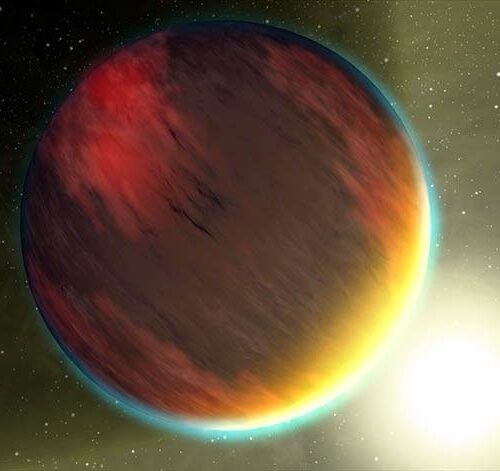
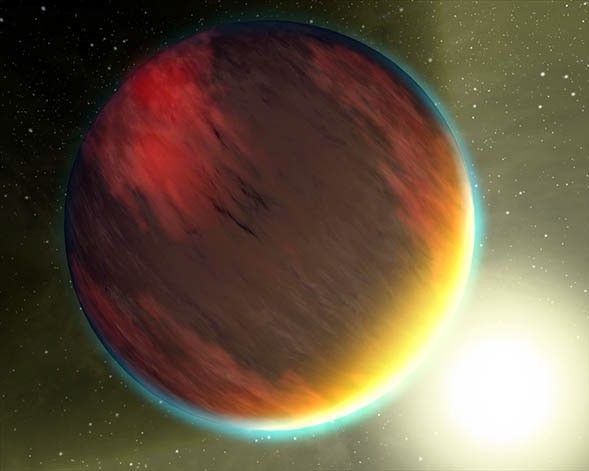
Most of the gas in the Universe is a mixture of hydrogen and helium. It's thought that the initial atmospheres of most planets also start out that way. However, over billions of years, as planets evolve, the composition of their atmospheres may shift. Hydrogen can react with other chemicals, and both it and helium can be lost to space. Venus, Earth, and Mars are thought to have second atmospheres, with their original hydrogen/helium envelopes having been lost and/or transformed.

The dynamics of loss are complicated. Lighter elements are lost more easily, but hydrogen can be protected by being incorporated into molecules like methane and ammonia. The gravity of the body can help retain some molecules, and a magnetic field can limit radiation's ability to blast material out of the atmosphere. Proximity to a star will matter too, both because of the radiation it produces and because it can heat the atmosphere and expand it to where gravity's influence is less substantial.

Given all these complications, it can be difficult to know what to expect to find on exoplanets. But a study in Wednesday's issue of Nature describes observations of helium being lost from the atmosphere of an exoplanet orbiting the star LHS 1140, about 50 light-years away. Based on the rate at which the helium is being lost, we can infer something about the remaining atmosphere.

Read full article

Comments

Β© NASA/JPL-Caltech/T. Pyle (SSC)

  •  
❌