❌

Reading view

Chinese startup introduces next-gen optical links to connect thousands of high performing chips

As AI models continue to grow in size and complexity, chipmakers are shifting their focus from individual processor performance to the ability to efficiently connect thousands of accelerators into a single computing system. 

These highly interconnected server architectures have become a key competitive area for AI infrastructure companies, which are racing to deliver the computing scale needed for models with trillions of parameters and the growing adoption of AI agents.

According to Ding Yunfan, vice president of AI framework architecture at Biren, improvements in the performance of a single graphics processing unit (GPU) are no longer enough to meet these demands. Instead, the industry’s biggest challenge is turning vast GPU clusters into unified, seamless computing platforms capable of operating as a single system.

Architecture designed to break GPU cluster limits

Biren believes the future of large-scale AI computing depends on replacing conventional electrical interconnects with optical technology. According to Ding, traditional copper-based connections are approaching their physical limits, effectively capping today’s server architectures at around 128 GPUs, the South China Morning Post reports.

To overcome that bottleneck, the company has developed a distributed, decoupled supernode architecture built around near-packaged optics (NPO), which positions optical fibres closer to the chips to increase bandwidth and improve data transmission. Biren said the approach could enable clusters with up to 1,024 AI accelerator cards, significantly expanding the scale of computing systems needed to support increasingly demanding AI workloads.

Ding said optical interconnects are becoming essential for overcoming the scalability limits of conventional server architectures. Shanghai-based Biren is among a growing number of Chinese companies tackling these infrastructure challenges. Rivals including MetaX, Enflame and Alibaba are also developing supernode architectures to compete with Nvidia’s NVL72 and next-generation NVL144 AI platforms.

Biren’s Shanghai-based rival MetaX has introduced its Xijing S600 AI supernode, featuring a single rack that connects 64 GPUs. The company said its design reduces signal loss by removing external cabling between compute nodes, switch nodes and interconnect systems, improving efficiency for large-scale AI workloads.

Looking beyond electrical links to build larger AI supernodes

Biren is also working on new approaches to expand the scale of its AI computing systems. The company’s orthogonal hardware architecture, co-developed with telecommunications giant ZTE, uses traditional electrical connections, while Biren is simultaneously testing a prototype near-packaged optics (NPO) interconnect system. 

The chipmaker said the optical approach could eventually support supernodes with more than 512 accelerator cards, helping address the growing demand for larger and more efficient AI infrastructure.

Despite growing interest in optical networking for AI infrastructure, Ding said the semiconductor industry is still in the early stages of developing and testing optical interconnect technologies. He noted that widespread adoption will require further advances before these systems can be deployed at scale.

Furthermore, Ding emphasized that the technology still requires real-world validation before it can be widely adopted. He projected that NPO optical systems could reach mass commercial deployment around 2028, as the industry continues refining the technology and addressing remaining engineering challenges.

💾

Chinese chip startup Biren has introduced a new optical supernode architecture designed to connect thousands of AI chips in a single cluster.
  •  

US Air Force crews drop 36 practice bombs to validate F-15EX strike capability

The US Air Force’s 142nd Wing has completed its first live bomb-dropping exercise with the F-15EX Eagle II, marking a key milestone in expanding the aircraft’s operational capabilities. In early May, pilots, maintainers, and munitions specialists traveled to Mountain Home Air Force Base in Idaho to carry out the training mission.

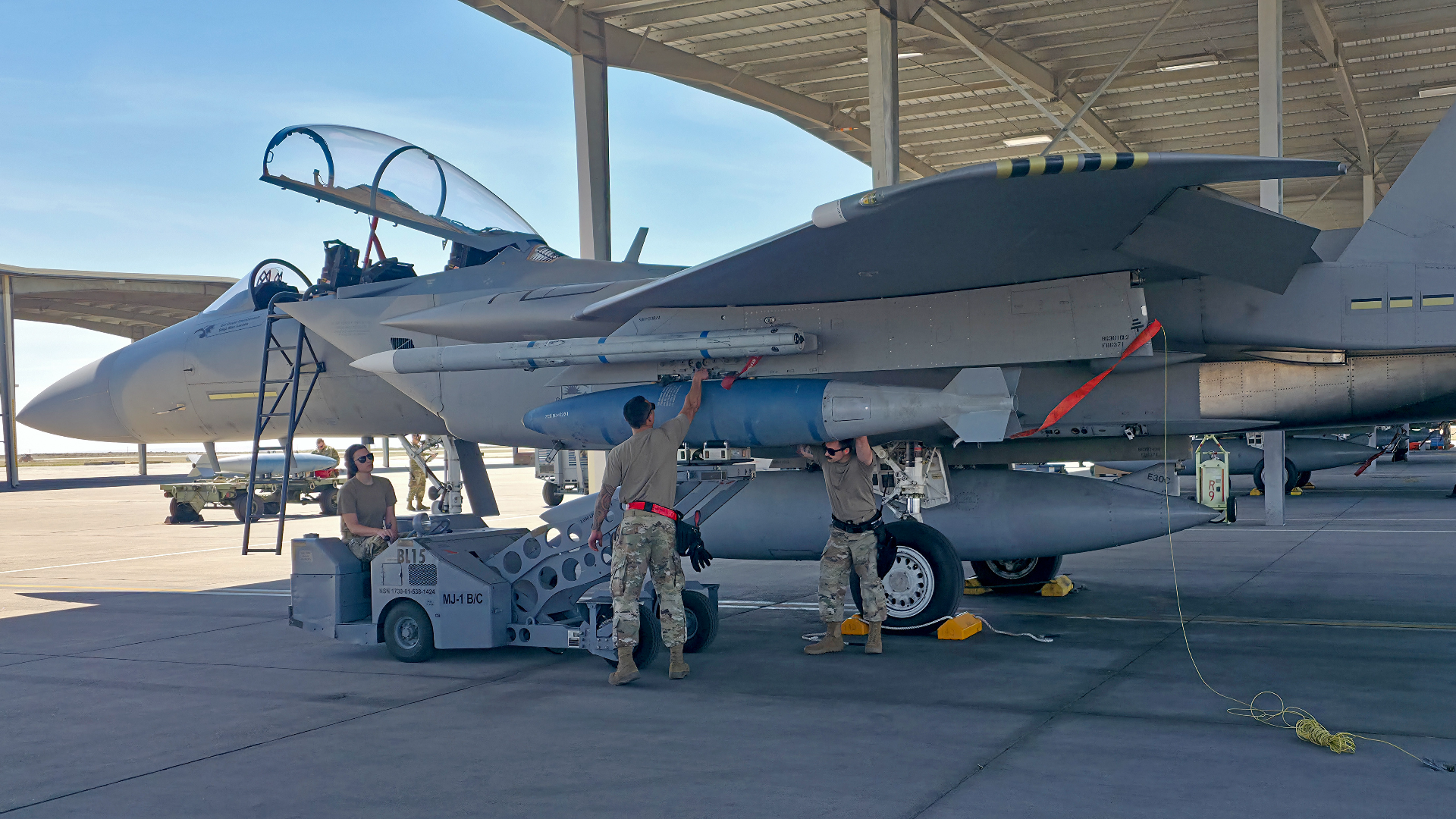
During the exercise, crews loaded 500-pound BDU-50 and 2,000-pound BDU-56 practice bombs onto the aircraft before releasing them over the Mountain Home bombing range. Although these training munitions closely resemble live bombs, they are filled with concrete instead of explosives, allowing crews to safely practice real-world weapons employment.

While the F-15EX has previously undergone weapons testing with the 85th Test and Evaluation Squadron at Eglin Air Force Base in Florida, this marks the first time an operational F-15EX unit has successfully loaded and dropped bombs as part of its mission readiness training.

F-15EX’s new combat role required months of pilot training

The F-15EX Eagle II is designed to do far more than its predecessor. Although it closely resembles the aging F-15C, the newer aircraft is built as a multirole fighter, capable of carrying out both air-to-air and air-to-ground missions. Unlocking that expanded capability, however, required months of preparation and specialized training across the 142nd Wing.

A key part of that effort was led by Maj. Jesse Loya, one of only three pilots in the wing with prior experience in air-to-ground operations. Together, the three completed a nine-month training program focused on the tactics and technical aspects of delivering precision-guided munitions. They then developed a training curriculum to teach the rest of the wing’s pilots the fundamentals of air-to-ground operations, laying the foundation for the unit’s first operational bomb-dropping mission.

According to Loya, the training at Mountain Home Air Force Base served as a stepping stone toward preparing pilots to safely employ air-to-ground weapons. The program focused on building the skills needed to handle ordnance while following a much shorter timeline than the traditional nine-month qualification course. 

He said the ability to complete the training so quickly reflected the experience and capabilities the pilots had developed throughout their careers, allowing the wing to accelerate the F-15EX’s transition into a multirole combat aircraft.

Weapons loaders play key role in prepping F-15EX

Preparing the F-15EX Eagle II for its first bomb-dropping mission required extensive training from weapons crews as well as pilots. Tech. Sgt. Tyler Phelps, one of the 142nd Wing’s experienced weapons loaders, traveled to Nellis Air Force Base in Nevada earlier this year to train with F-15E aircraft and earn certification to load bombs.

After returning to Oregon, Phelps and other certified Airmen trained the rest of the weapons team ahead of the Mountain Home mission. Seeing the bombs loaded onto the F-15EX marked the culmination of months of preparation and a major milestone for the 142nd Wing.

The training mission involved 10 sorties, during which crews dropped a total of 24 BDU-50 and 12 BDU-56 practice bombs. The operation was completed without any safety incidents, and all missions received satisfactory evaluations, marking a major step forward in the wing’s transition to the multirole capabilities of the F-15EX.

The next phase in the F-15EX’s air-to-ground certification process will involve loading and dropping live munitions. The crew is scheduled to conduct that mission at Nellis Air Force Base at the end of August, bringing the wing one step closer to full air-to-ground operational capability.

💾

The Oregon Air National Guard's 142nd Wing has completed its first live bomb drop with the F-15EX Eagle II.
  •  

Electric aircraft advance as Vertical Aerospace plans first public eVTOL flight demonstration

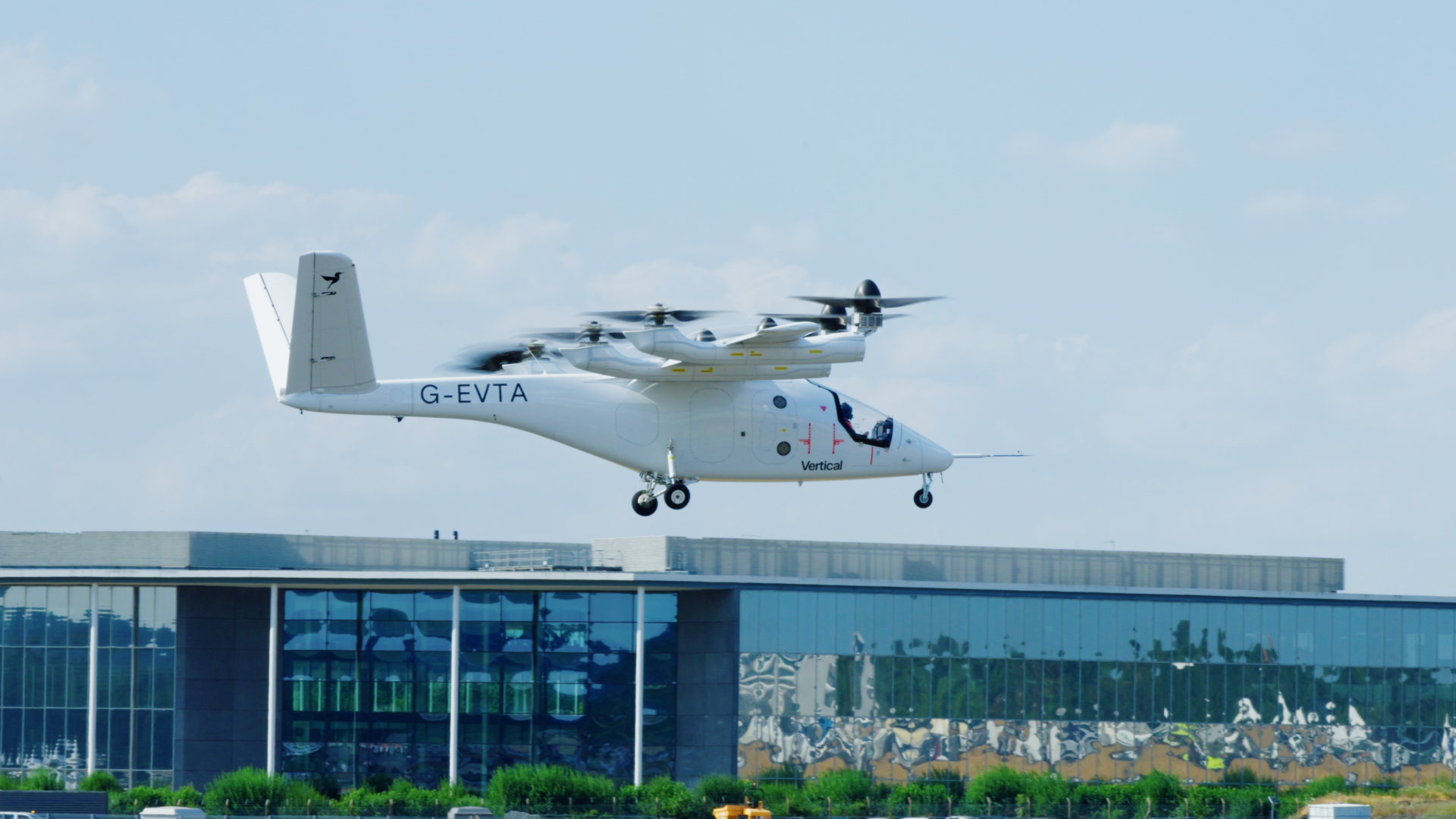
British aerospace company Vertical Aerospace is set to conduct the first public electric vertical take-off and landing (eVTOL) demonstration flights at the upcoming Farnborough International Airshow. 

The event represents another milestone in the company’s journey toward certification and the eventual launch of commercial electric aircraft services.

The demonstrations come at a key stage in the company’s development, Vertical Aerospace noted. In recent months, the company has unveiled its Valo aircraft, completed successful piloted transition flights, strengthened its financial position, expanded its global technology partnerships, progressed its hybrid-electric defense strategy, and continued advancing its certification program.

Valo eVTOL moves closer to commercial operations

Following successful demonstrations of the aircraft’s core capabilities, Vertical Aerospace is now shifting its focus toward the next stage of development, with efforts centered on certification, industrialization and preparing for commercial operations.

Alongside public piloted flight demonstrations of its full-scale prototype, the company will also showcase its full-scale commercial Valo aircraft model, offering visitors a closer look at the technology behind its next-generation electric aircraft.

According to Stuart Simpson, CEO of Vertical Aerospace, the company arrives at Farnborough with the key building blocks for its next phase already in place. He said Vertical has transformed over the past year by launching its Valo aircraft, achieving piloted transition flights, strengthening its financial position and expanding its industrial ecosystem, while continuing to prove the technology.

“Every milestone we deliver reduces risk, strengthens our competitive position and brings us closer to building one of the world’s leading electric aerospace companies,” Simpson noted. A major highlight of Vertical Aerospace’s presence at the Farnborough International Airshow will be its planned flight demonstrations, which are set to mark the first public eVTOL aircraft demonstrations at the event.

Company targets key certification and production milestones after expanding flight tests

The company intends to conduct demonstration flights throughout the show, subject to approved flight conditions. The planned flights follow the UK Civil Aviation Authority’s recent expansion of Vertical’s Permit to Fly, allowing the company to carry out public demonstrations beyond its Flight Test Centre at Cotswold Airport for the first time.

Following the expanded flight approval, Vertical’s test pilots have successfully operated the aircraft across multiple locations, including RAF Brize Norton, RAF Benson, Blackbushe Airport and Farnborough Airport. These flights have expanded the company’s test program, providing valuable experience across different operating environments.

The company is also targeting several important program milestones that will support the development, production, and commercial rollout of its aircraft. These include completing the Critical Design Review (CDR) by the end of 2026, which will establish the certifiable design baseline for the aircraft and enable the production and testing of certification-conforming models. 

Furthermore, the UK firm plans to bring its early production aircraft assembly facility online in Q3 2026 and expand the Vertical Energy Centre in Q4 2026 as part of its industrialization efforts. In addition, Vertical expects to select a long-term turbogenerator supplier during 2026, ahead of beginning hybrid-electric flight testing in the first half of 2027.

💾

UK-based Vertical Aerospace will conduct public demonstration flights of its Valo eVTOL aircraft at the Farnborough International Airshow.
  •  
❌