Dos usuários que adquiriram um novo modelo da Apple, 12% eram donos de um smartphone com Android no momento da compra, enquanto 1% possuía um telefone convencional e 87% (a famosa taxa de lealdade) já tinham um iPhone.
No mesmo trimestre do ano passado, 14% dos donos de novos iPhones saíram do Android, 2% dos aparelhos convencionais e 84% já eram usuários da Maçã — o que significa que a taxa de migração do Android para o iPhone caiu em relação ao ano anterior.
A CIRP destaca que, nos últimos anos, a taxa de mudança do Android para o iPhone tem oscilado entre 11% e 15%. Ela já foi bem maior no passado, quando a Apple passou a suportar outras operadoras de telefonia americanas para além da AT&T.
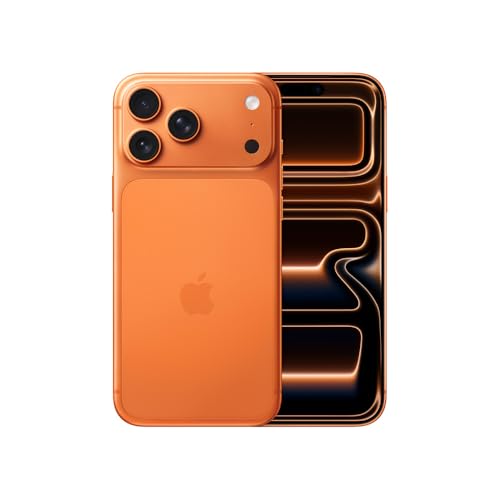
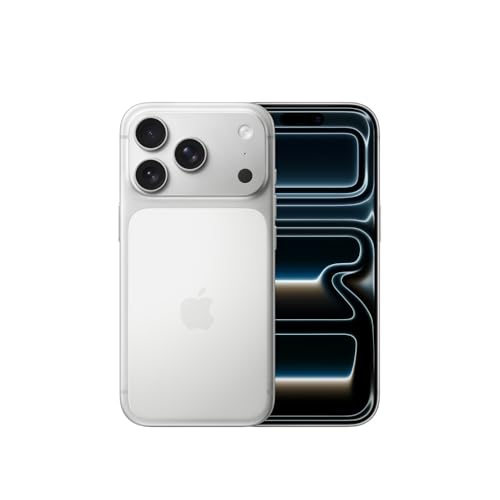
iPhone 17 Pro Max
Cores: prateado, laranja-cósmico ou azul-intenso Armazenamento: 256GB, 512GB, 1TB ou 2TB
NOTA DE TRANSPARÊNCIA: O MacMagazine recebe uma pequena comissão sobre vendas concluídas por meio de links deste post, mas você, como consumidor, não paga nada mais pelos produtos/serviços usando os nossos links de afiliado.
Cristiano Ronaldo e Lionel Messi são a inspiração para a mais recente coleção da Caviar. A marca criou versões de luxo do iPhone 17 Pro e daquele que deverá ser o próximo smartphone dobrável da Samsung, produzidas numa edição limitada com preços que começam nos 11.410 dólares.
After months of speculation, it's official: parent company Oppo is pulling OnePlus devices out of US and European markets. While existing customers are still going to get after-sales support and software updates from OnePlus, we're not going to see any more new phones, tablets, or smartwatches in these regions in the future.
Oppo is branding this as a "strategic" move, but the decision is based on simple economics. OnePlus has always struggled to maintain the all-important carrier relationships in the US, and is being squeezed by Samsung, Apple, Google, and Chinese manufacturers in terms of sales.
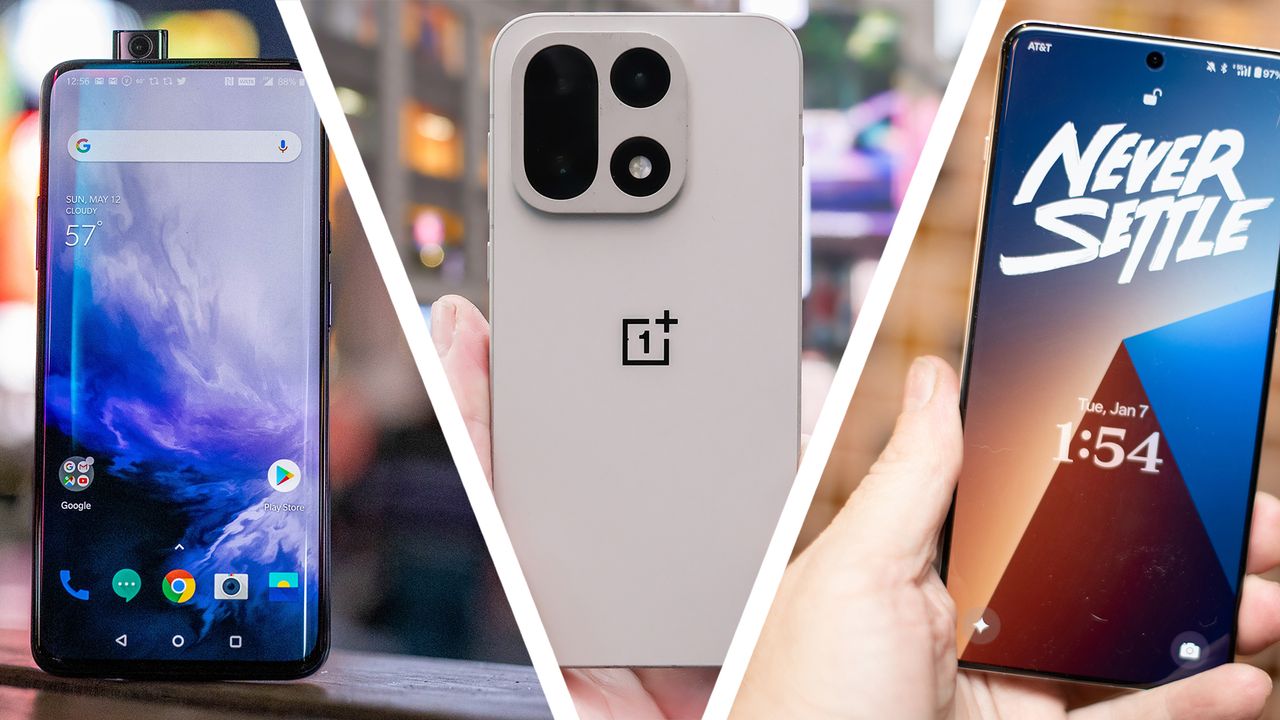
We're not here to dissect what went wrong in this particular article though — we're here to celebrate some of the fantastic smartphones that OnePlus has made down the years, since the company was founded back in 2013. There have been dozens of OnePlus handsets launched since then, but these are our five favorites (in order of release).
1. OnePlus One (2014)
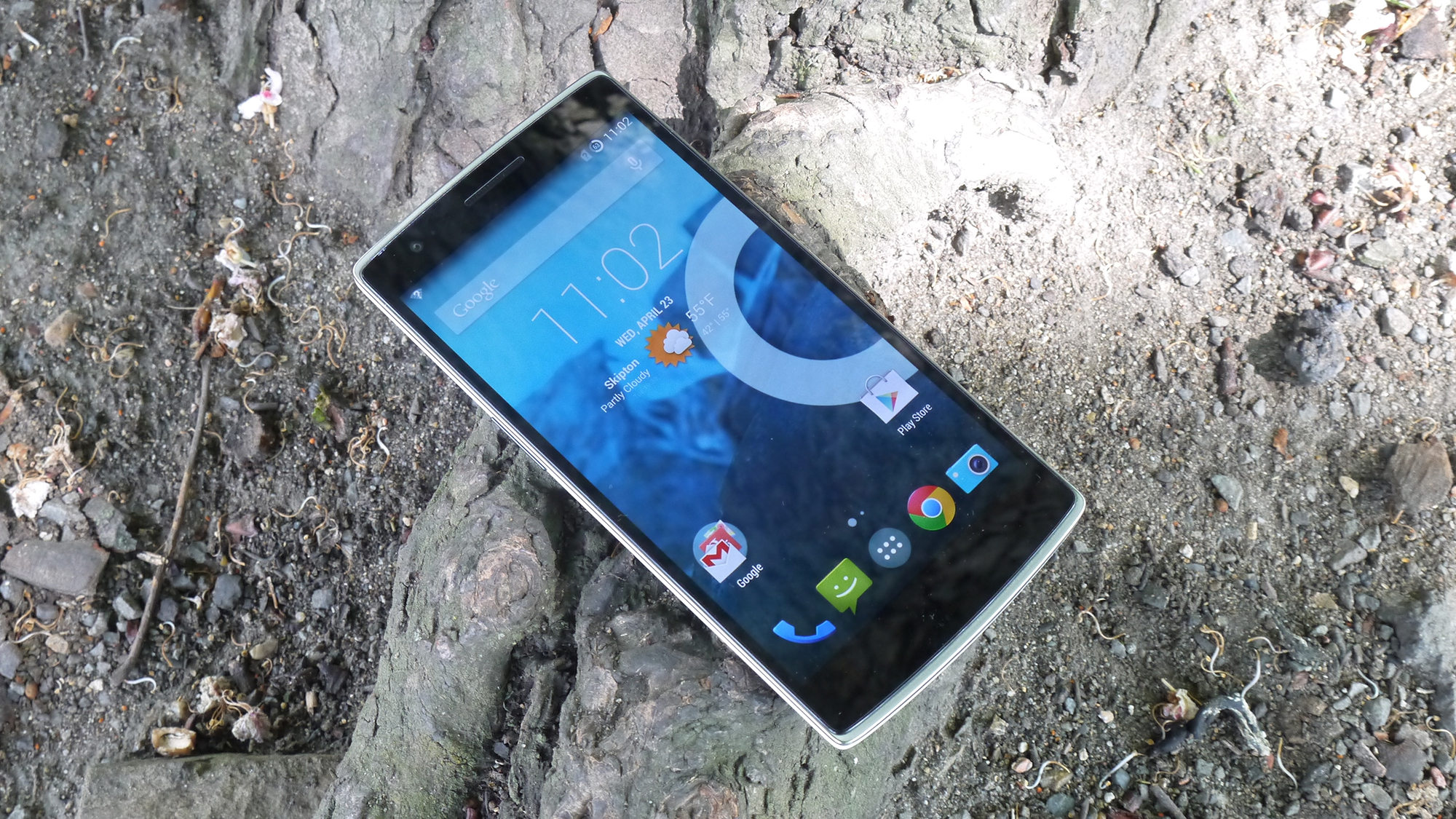
The debut OnePlus phone (Image credit: Future)
We had to start with the OnePlus One really, as it set the tone for OnePlus, and epitomized everything the fledgling company was about. Boldly marketed as a "flagship killer" and with the tagline "never settle" — as in, never settle for a poor compromise between price and performance — it really did shake up the market in a significant way.
Our review praises the value-for-money proposition — it was less than half the price of the flagship Samsung Galaxy, at the time — as well as the top-notch specs (a Snapdragon 801 and 3GB of RAM) and the customization features available in CyanogenMod, which is the operating system that the first OnePlus phone came running.
It almost defied belief that a phone this well made, with such good internal specs, could cost this little — and from nowhere, OnePlus was suddenly on the scene in a big way. As a historical note, it's also funny looking back to see the 5.5-inch screen described as being relatively big, in 2014 terms.
2. OnePlus 7 Pro (2019)
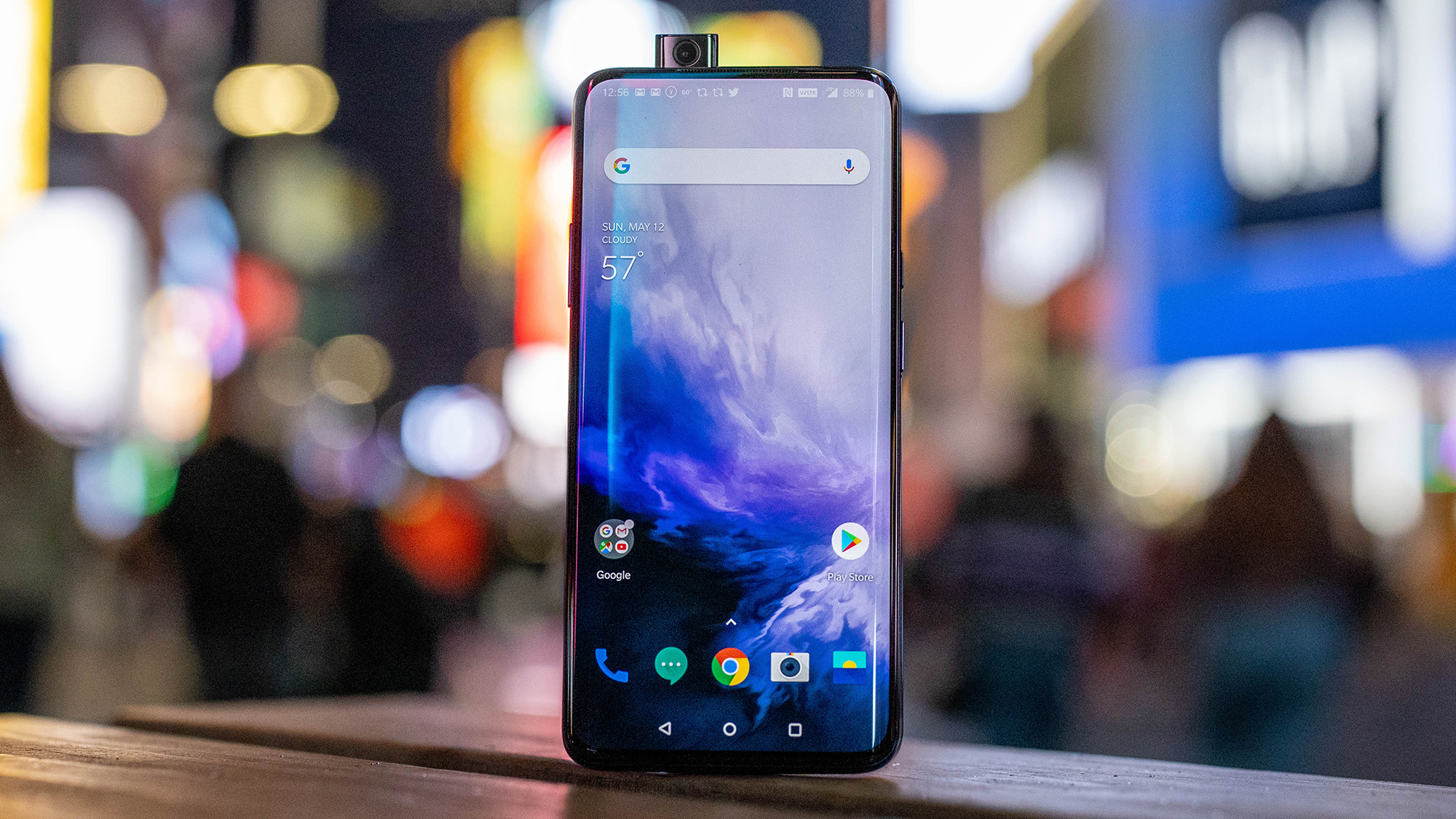
Spot the pop-up selfie camera (Image credit: Future)
There were some excellent handsets between the debut phone from OnePlus and the OnePlus 7 Pro in 2019 — it was hardly a fallow time for the company — but this was the first handset to really wow us since the OnePlus One. That was partly down to its great party trick: a pop-up selfie camera.
Thanks to that pop-up camera, there was no need for a notch or cut-out on the front screen, and it looked gorgeous from the front (and the back, as it happens). It was a phone that genuinely turned heads when you took it out of your pocket, and our review waxed lyrical about the performance levels and charging speeds, too.
By this stage, OnePlus wasn't quite giving us the same jaw-dropping value for money with its flagship phones as it did with the OnePlus One, but this phone still held its own in terms of pricing with the best flagships on the market in 2019. The screen had been upped to 6.67 inches in size, and — notably — boasted a 90 Hz refresh rate too.
3. OnePlus Open (2023)
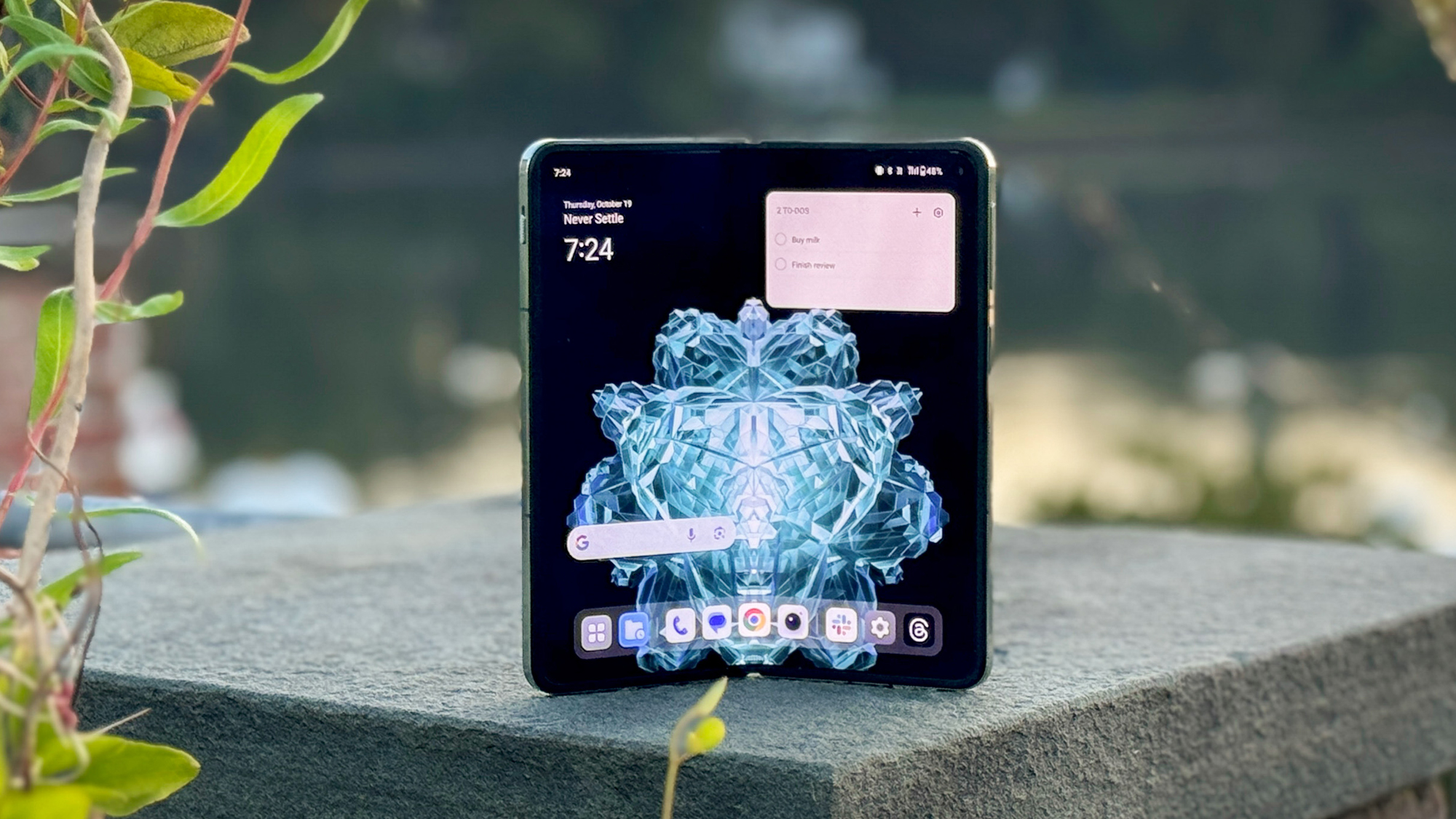
A foldable phone done right (Image credit: Future)
You could make a strong argument that despite the best efforts of Samsung and Google, OnePlus was the first phone maker to get a foldable phone right in every department: the OnePlus Open was awarded 4.5 stars out of 5 in its TechRadar review, with the biggest pros listed as the displays, the cameras, and the thin and light build.
As we put it at the time: "The OnePlus Open is the only big foldable phone that doesn’t feel like a compromise. It looks and feels like a normal phone, and the camera is the best you'll find on any foldable." Of course, it was still expensive (what book-style foldable isn't), but this was finally a folding phone that could justify the cost.
OnePlus was able to improve on what had gone before in this form factor in multiple areas, including the foldable's hinge and crease, and it still managed to score highly in all the categories that matter on any type of smartphone. Meanwhile, the OxygenOS software responded nimbly and seamlessly to the folding design too.
4. OnePlus 13 (2024)
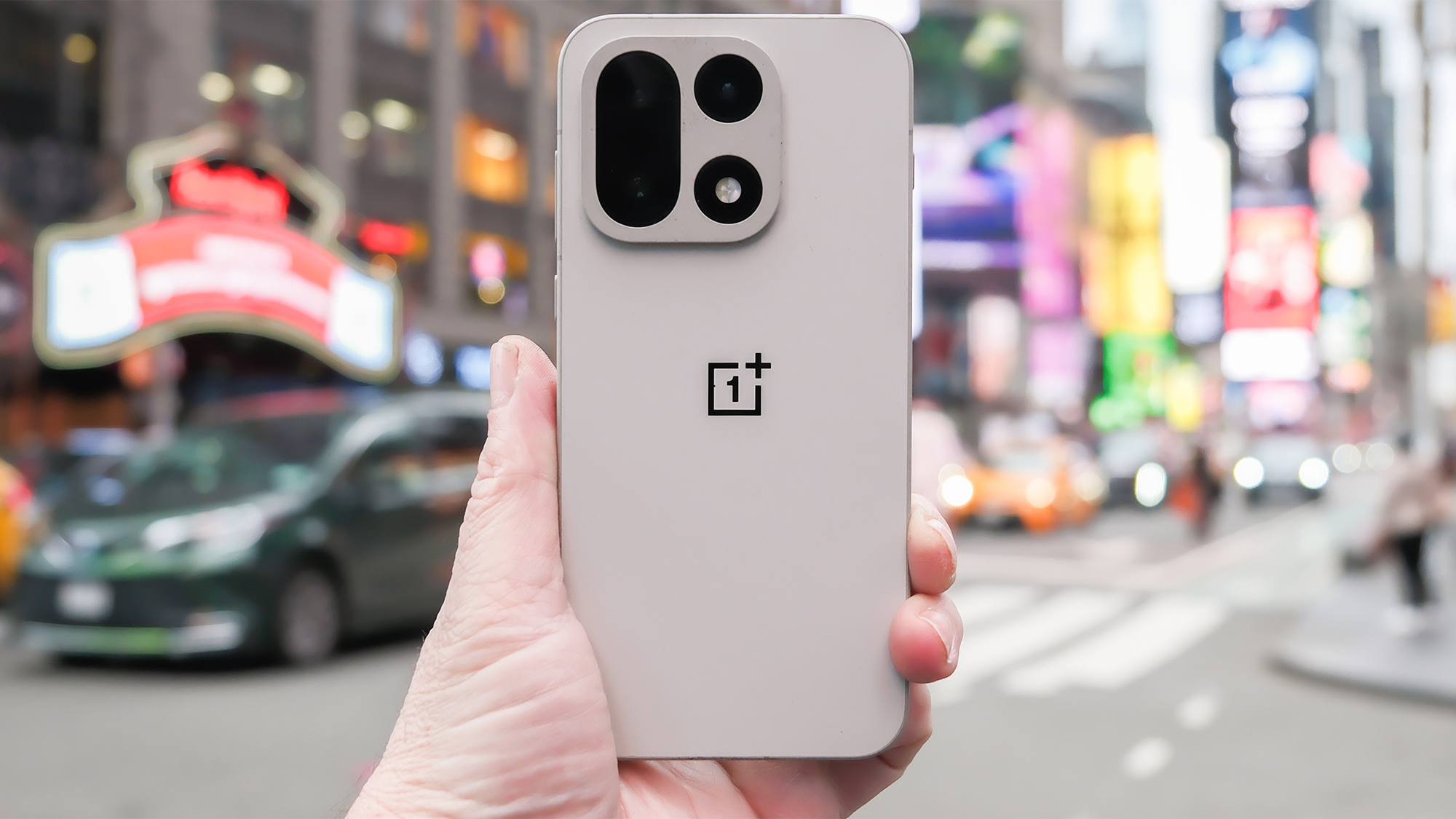
The excellent OnePlus 13 (Image credit: Future)
Admittedly our list is a little biased towards later models: that's no criticism of the many fantastic earlier handsets, but OnePlus really has been hitting it out of the park in the last couple of years. As our reviewer for the OnePlus 13 put it: "I'm dumbfounded, I can't find anything wrong with this phone."
It had a huge 6,000 mAh battery, it ran super-smooth thanks to its Snapdragon 8 Elite processor, and it had an IP69 rating — a first for a OnePlus phone. The handset also boasted a gorgeous 6.82-inch display, and powerful triple-lens rear cameras. This handset was a real return to top-tier OnePlus.
You can probably guess what the main downside was for customers in the US — it wasn't possible to buy the OnePlus 13 in local carrier stores, which didn't help with brand awareness and recognition. Looking back, this may be one of the phones that made up Oppo's mind about exiting international markets: it was a device that deserved to sell in much higher numbers than it actually did.
5. OnePlus 15 (2025)
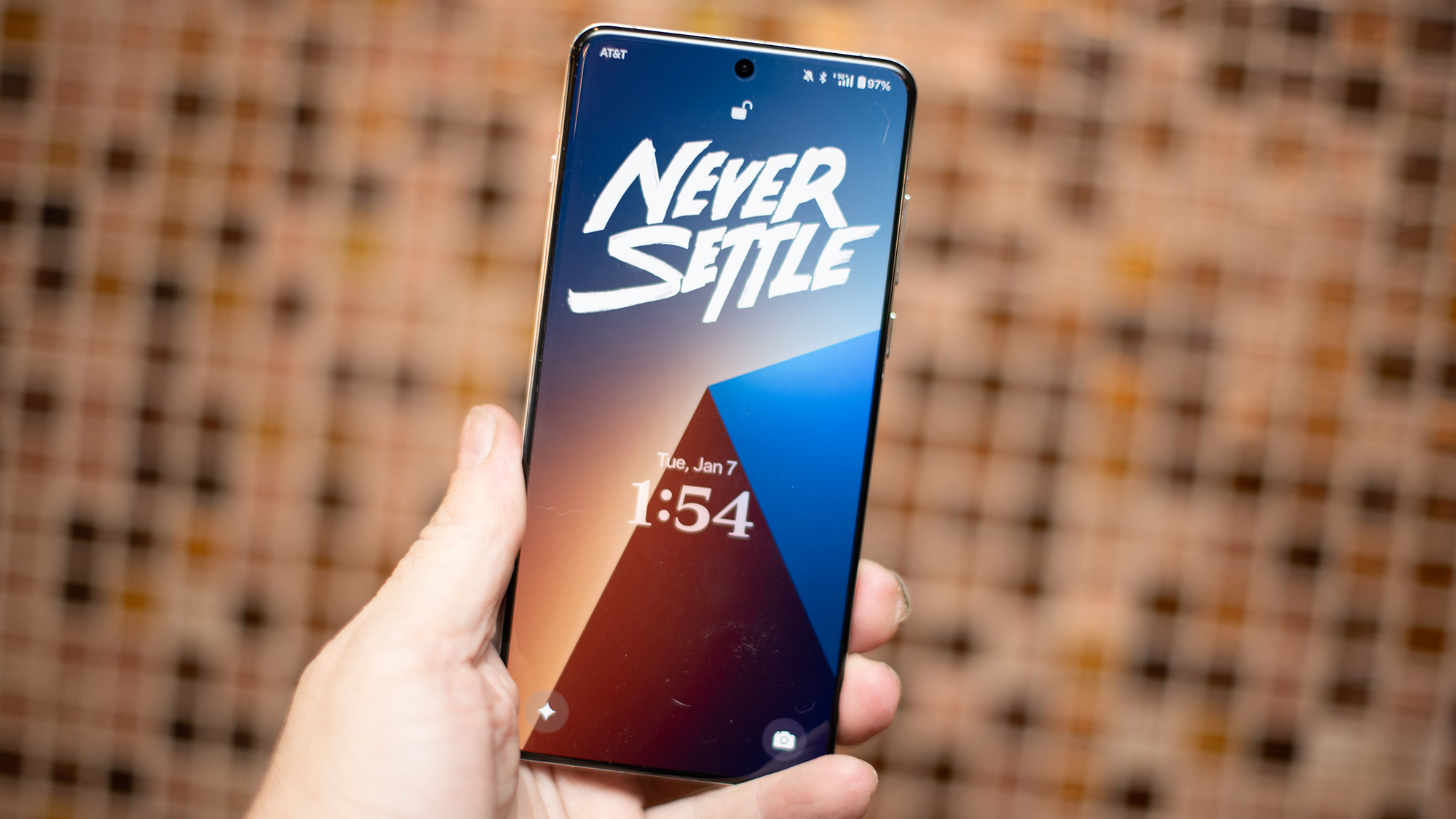
The OnePlus 15 really impressed us (Image credit: Future)
We'll close out this list with last year's OnePlus 15, which earned a rare 5-stars-out-of-5 ranking in its TechRadar review. There was so much to love about this phone: the battery life, the performance, the design, the software, the durability... it basically checked all of the boxes you would want, and there was really nothing bad to say about it.
The phone also shows that OnePlus was making great handsets right up until the end (in the US and Europe). It was other issues that were the problem — again, the OnePlus 15 couldn't be found inside carrier stores in the United States, which meant it wasn't as visible to consumers, and you had to pay more up front to get it.
While this wasn't quite the last OnePlus phone to launch internationally, it still stands as a testament to the quality of the handsets the company has put out down the years. It more than holds its own against anything Apple, Google, and Samsung have ever made, and it's a shame that most of the world won't see these handsets any more.
Audio engineer Cameron Oatley is better-known as 'GoldenSound'
He's teamed up with Status to add a special tuning profile to its Pro X buds
The result is Pro X GoldenSound; the fruit of impressively extensive labor
Sometimes in this job (as TechRadar's Audio Editor), I just get sent a set of earbuds and a press release. Sometimes, I'm invited to an online briefing so that a marketing rep can explain key terminology before I start my review process.
Rarely am I invited to a lovely pub in London, lulled into a false sense of security with a drink and a comfy chair and then taken through a brief but intense Doctorate in audio engineering.
I jest, of course. But if you've ever come into contact with either Status Audio (see the Status Audio Between 3ANC or Status Audio Pro X for previous examples of greatness) or Cameron Oatley, aka GoldenSound, you'll know that things are about to get decidedly audiophile. And given that this is a collab between the two, it's doubly so.
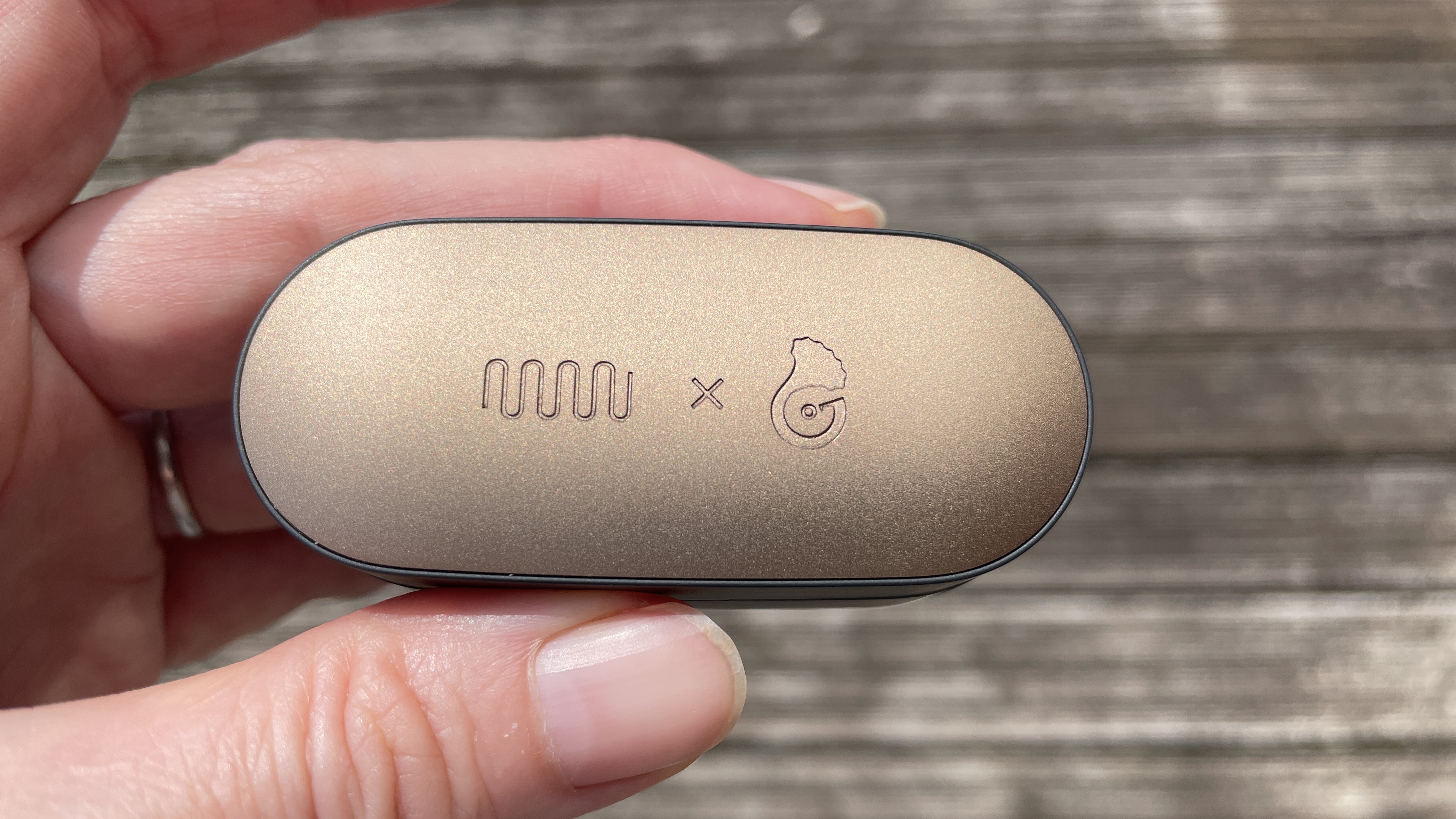
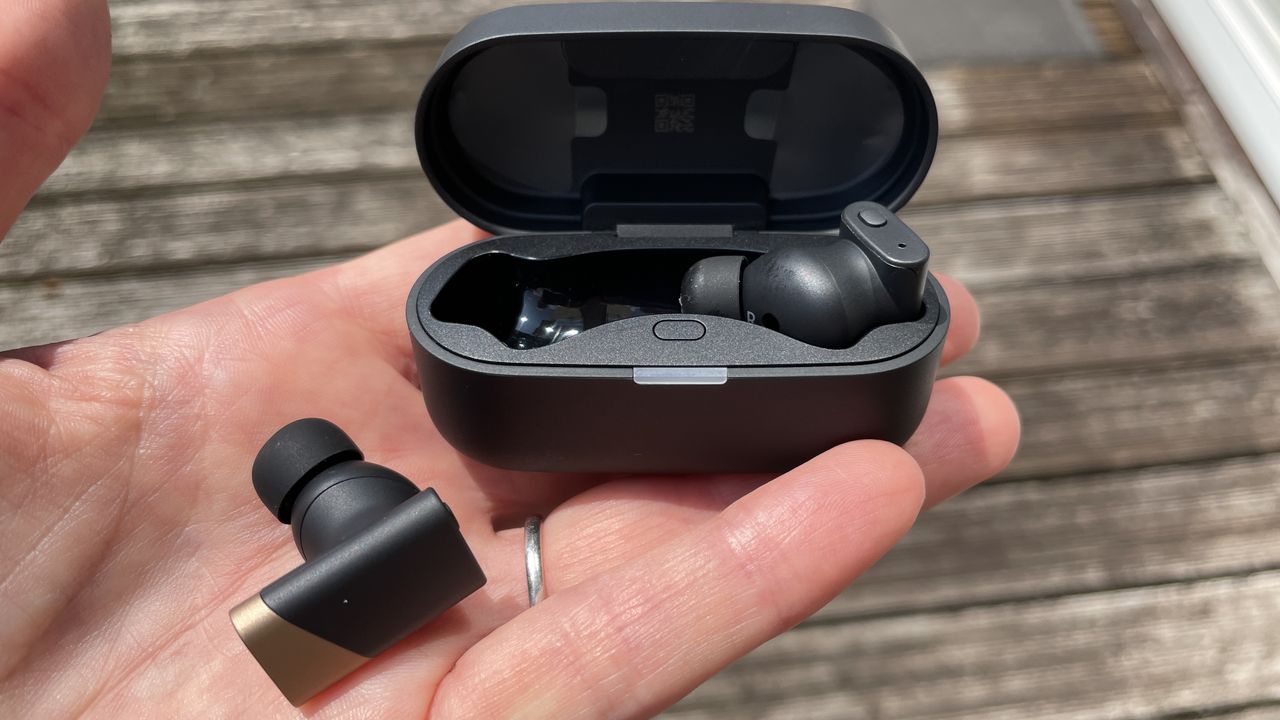
What you're looking at is the Status Pro X GoldenSound Edition. Yes, it's gold-tone on the top of the case and on the accents of the stems — but that's not all. Inbuilt here (and definitely not available in the non-GoldenSound variant) is a special new piece of software that Oatley thinks is the "most accurate tuning that a TWS product has ever had" and a "faithful recreation of real-world sound".
And this version will be $279 when it hits shelves in August (so $30 more than the current price of the Pro X, at $249) or around £209 / AU$400, give or take.
(Image credit: Future)
Status Audio Pro X GoldenSound: are listeners up for a Harmon Curve rewrite?
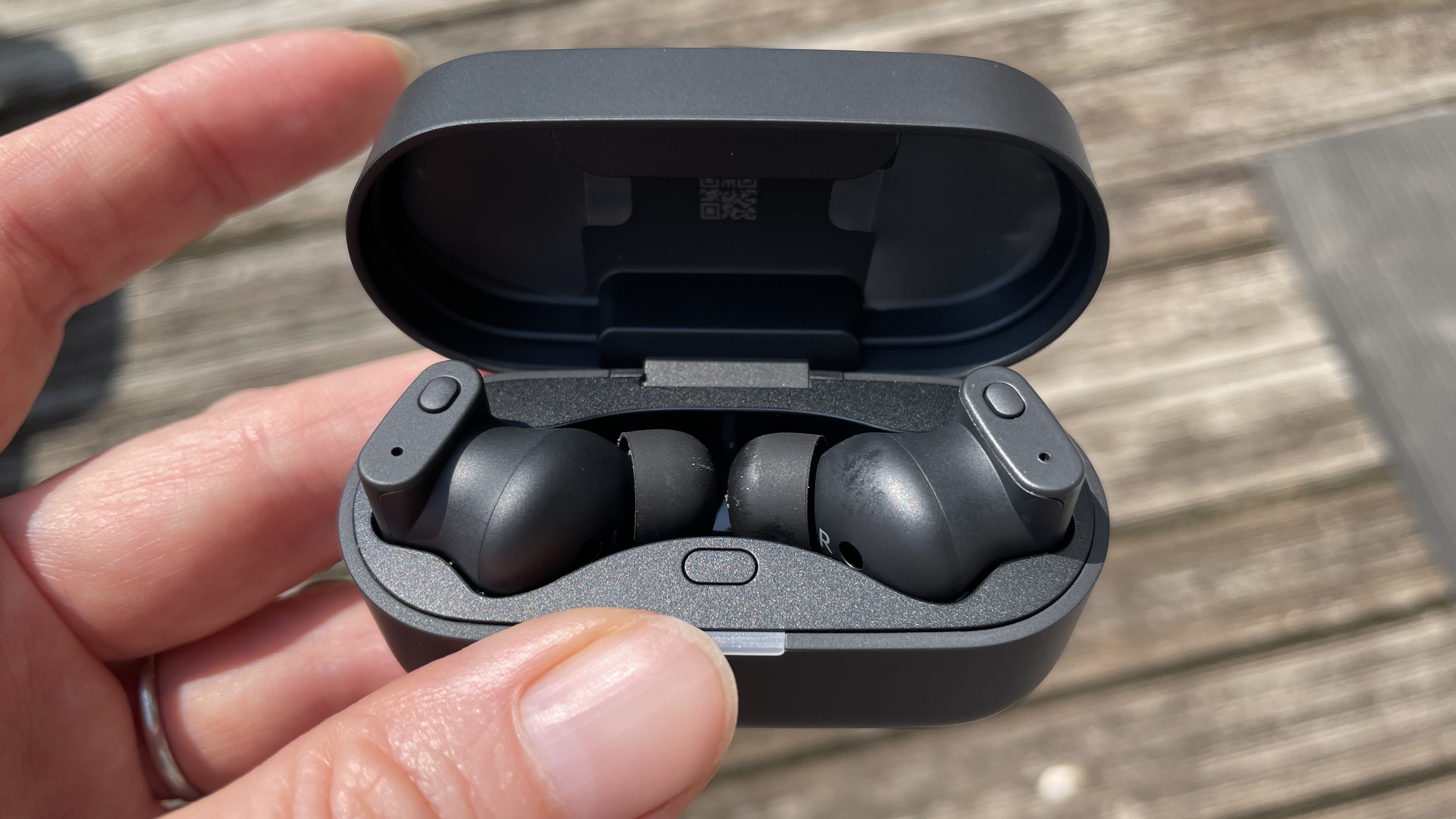
In terms of hardware, you're looking at everything built into the Status Audio Pro X, so two balanced armatures and a dynamic driver — something Status has been working with for some time and with no dearth of success.
But this time around, Oatley describes his granular approach to tuning thus: "What you measure is the IEM plus the impact of the rig" ie. your inner ear — albeit a metal tube to represent it with a mic at the end, for the purposes of his testing.
Oatley explains that the Harman Curve is often implemented incorrectly by audio engineers, because when it was developed in 2012 (and subsequently published in 2013, quickly becoming a trusted reference), true wireless earbuds hadn't yet been invented.
Because of this, the Harman Curve uses the pinna, or outer ear, as the reference point — ie. part of the "rig". But when developing in-ear products, from a purely sonic perspective (not including the creation of ANC antiphases) you can ignore the outer ear because the product starts within your ear canal. I know! Contrary to what we were taught as kids, the answer to 'My, what big ears you have!' isn't actually 'All the better to hear you with'…
(Image credit: Future)
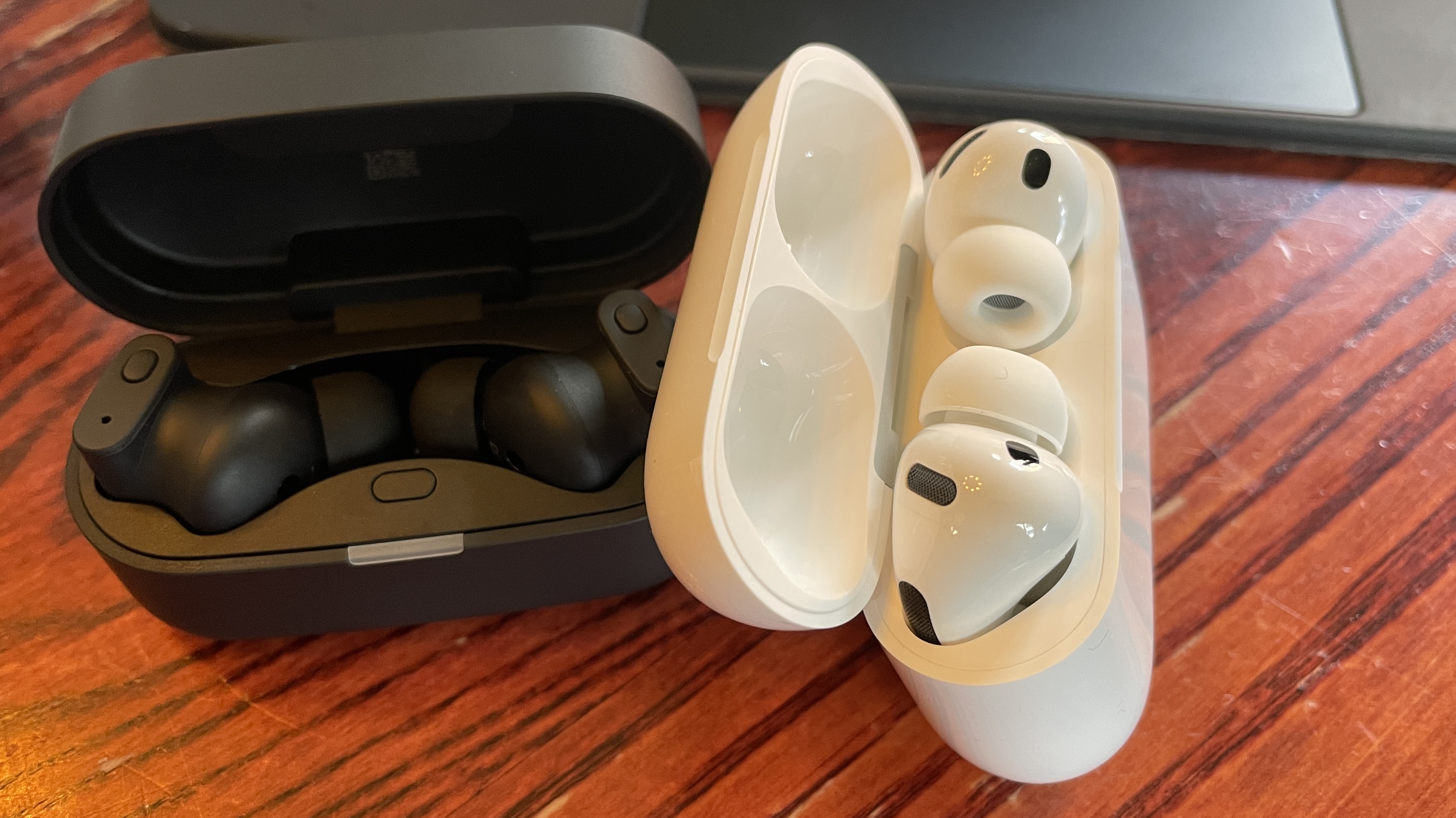
How does all of this stack up against AirPods Pro 3?
I ask Oatley what he's most proud of with this project and he's surprisingly open: "Look, for ANC I think AirPods will always be tough to beat. But a lot of work has been done to make these sound better. These are for the user who wants the best possible sound in a true wireless design. I hope I've achieved that".
He then points me to a graph that's like the Harman Curve, but different. It's what he was able to achieve with the GoldenSound Edition. He's particularly proud of the graceful line between 80Hz and 100Hz, juicy bass frequencies he feels are more accurately relayed in the Pro X GoldenSound Edition. And I have to agree: in this area, these earbuds glitter like gold.
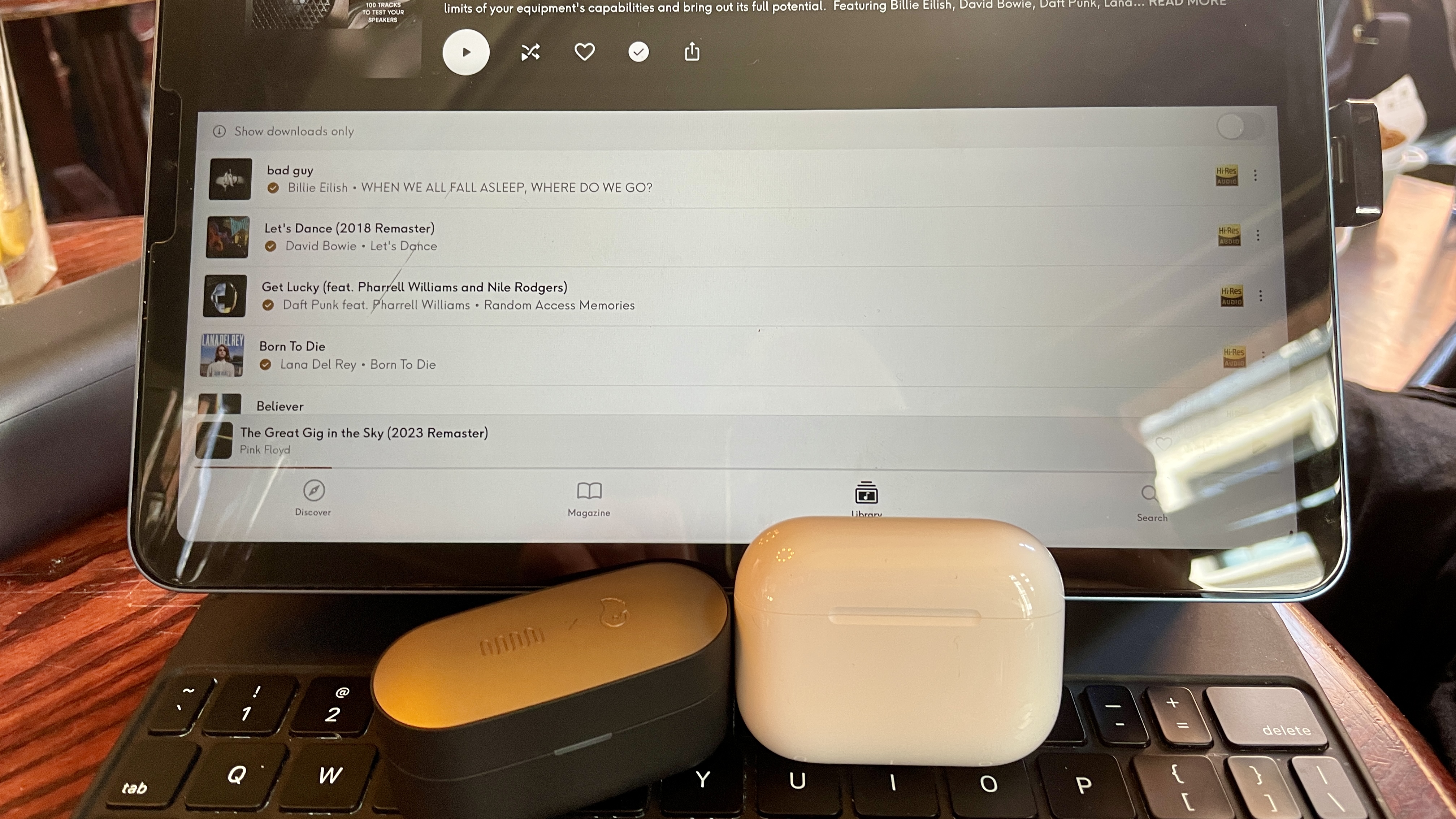
Let's get to the meat of the thing: listening. Both Status and GoldenSound actively encourage me to do this, and even set me up with a Qobuz screen, an LDAC source device and some AirPods Pro 3 for comparison. Oatley adds, "something tuned perfectly on a low codec is still better than something tuned badly on a higher codec", and while we all know you won't get LDAC out of AirPods, it's a very valid point.
Billie Eilish's Bad Guy is expansive and clean, with a snappy, impactful low end. Dire Straits' Money for Nothing is as brooding, snaking and exciting at the outset as you'd ever want it to be. ACDC's Back in Black? A head-nodding and beautifully regimented, cohesive mix.
What's gone are the… I hesitate to call them 'parlor tricks', but that typical V-shaped augmented treble one so often hears in designs of this type feels eased. And know this: the sound is altogether more open as a result.
(Image credit: Future)
It's not all glowing praise: during my limited time for an initial listen, you understand, I found Apple AirPods Pro 3's audio just marginally more woolly overall in direct comparison. That said, AirPods Pro 3 do have a slightly more soaring treble from the box. As such, some tracks sound more fun, forthright and zealous using the Apple product. It's the age old debate, isn't it: integrated hi-fi sound or fun, V-shaped in-ear mix?
I know my ear is keenly tuned to treble sounds (I've done the tests) but some listeners will love what's been achieved here. I spy an industry disruptor and no mistake. It's nothing if not interesting — and I'd say the industry standard was due a shake up.
I often find listeners might think they enjoy a certain tuning (typically, wearers might augment bass frequencies straight away) when in fact, if we play with their EQ settings, they actually prefer something quite different.
Here, Oatley hasn't given users the option to tweak his proprietary GoldenSound profile within the EQ settings, although you can select from 'Status Signature', 'Status Audiophile', 'Knowles Preferred' or 'Vocal Enhance' presets, or create your own using an 8-band tab set at neutral from the Status Hub app. Sadly, there's no similar visual for the presets so you really need to trust GoldenSound has done it right here. And given the extensive amount of work that's gone into them, I think your trust is well-placed.
This is not to be considered a full review, you understand. For that, I need more time. But what I can tell you right now is that the process won't be a hardship.
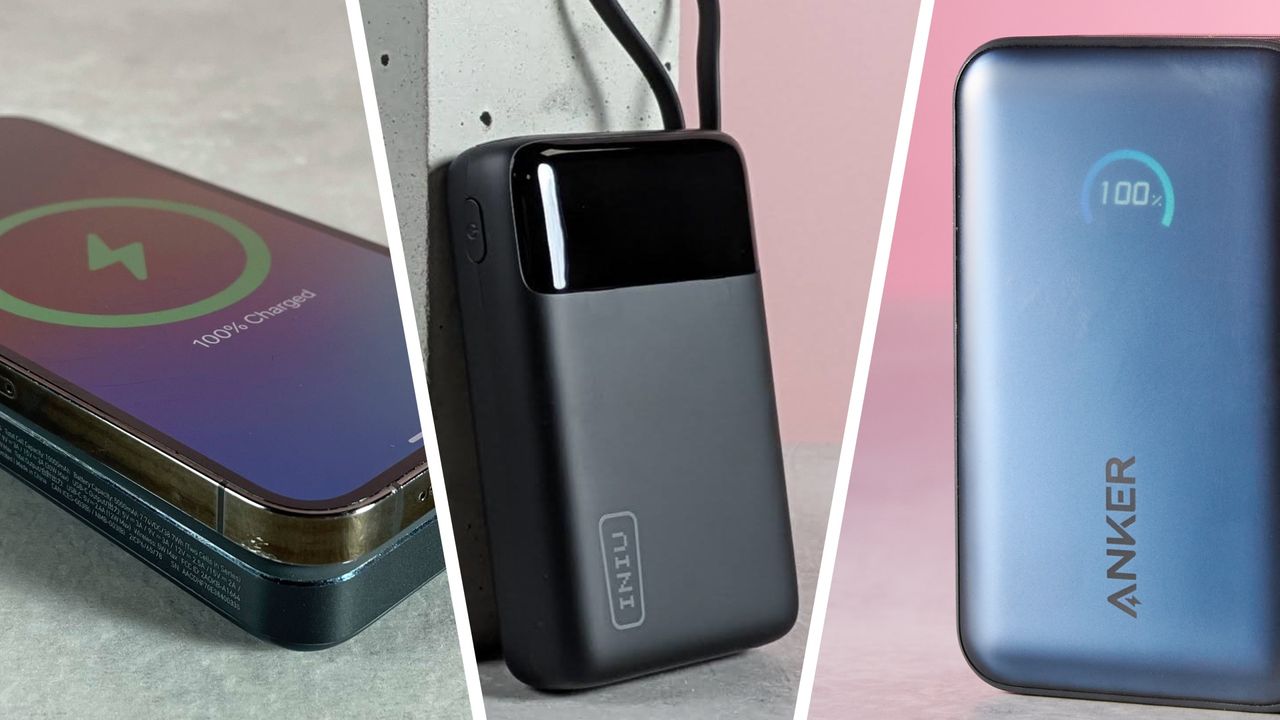
Festivals pose a bit of a conundrum when it comes to charging. It's really useful to have a phone — for checking programs, finding friends, and snapping photos — but the days are long, and there's minimal access to power points. A power pack is your best friend, and below I've rounded up the best models for festival-goers.
I've included a mix of options. There are compact, lightweight power banks that won't weigh your bag down and can charge your phone while you're using it. These can generally only manage two charges at the absolute maximum, so they're best suited to one- or two-day festivals, or festivals where you'll have overnight access to power. There are also larger power packs that offer multiple recharges, but which are generally too bulky and heavy to carry around all day.
Our seasoned reviewers have tested all of these power banks personally, and given them their stamp of approval. You can hit the 'More details' button to find out more about each one, and for a link to the full review, and there's also a handy specs table at the bottom of the page so you can see how the different options match up. Can't find what you're looking for? Our general best power bank guide has a wider range of options.
Power up
Iniu
P50-E1
Why's it good for a festival? We were impressed with this power pack's "strong blend of portability, speed, and value". The capacity is impressive given the pocketable size — you should be able to use it for multiple recharges before you need to plug it in again.
Nano Power Bank 10K 45W Built-In Retractable USB-C Cable
Why's it good for a festival? A compact, reliable power pack with a helpful cord and integrated cable. You won't get many charges out of it, but it's a great one for popping into your bag while you're out and about at the festival.
Why's it good for a festival? It supports MagSafe charging, and snaps onto your phone with enough force you won't have to worry about losing it. The slimline design is perfect if you want to keep using your phone while it powers up.
Why's it good for a festival? This model has enough oomph to juice up not just phones but things like laptops and tablets, if they're part of your festival plan. It feels solidly constructed and durable.
Why's it good for a festival? It's small enough to fit into a pocket, and comes with a handy lanyard for looping it onto a bag. There are three ports and it works quickly, although don't expect multiple charges out of it.
Note: the cards above will only show if the product is available in your region — that means there may be products featured in this table that you can't see above.
Depois de meses de rumores e de uma negação que durou pouco, a OnePlus confirmou hoje o abandono dos mercados ocidentais como parte de uma reestruturação profunda da empresa-mãe, a OPPO. O inventário existente continuará à venda até esgotar.

 Login