❌

Reading view

Another reusable rocket? Japan launches, lands RV-X prototype (video)

Japan has succeeded in the first-ever flight test of its RV-X experimental reusable rocket prototype.

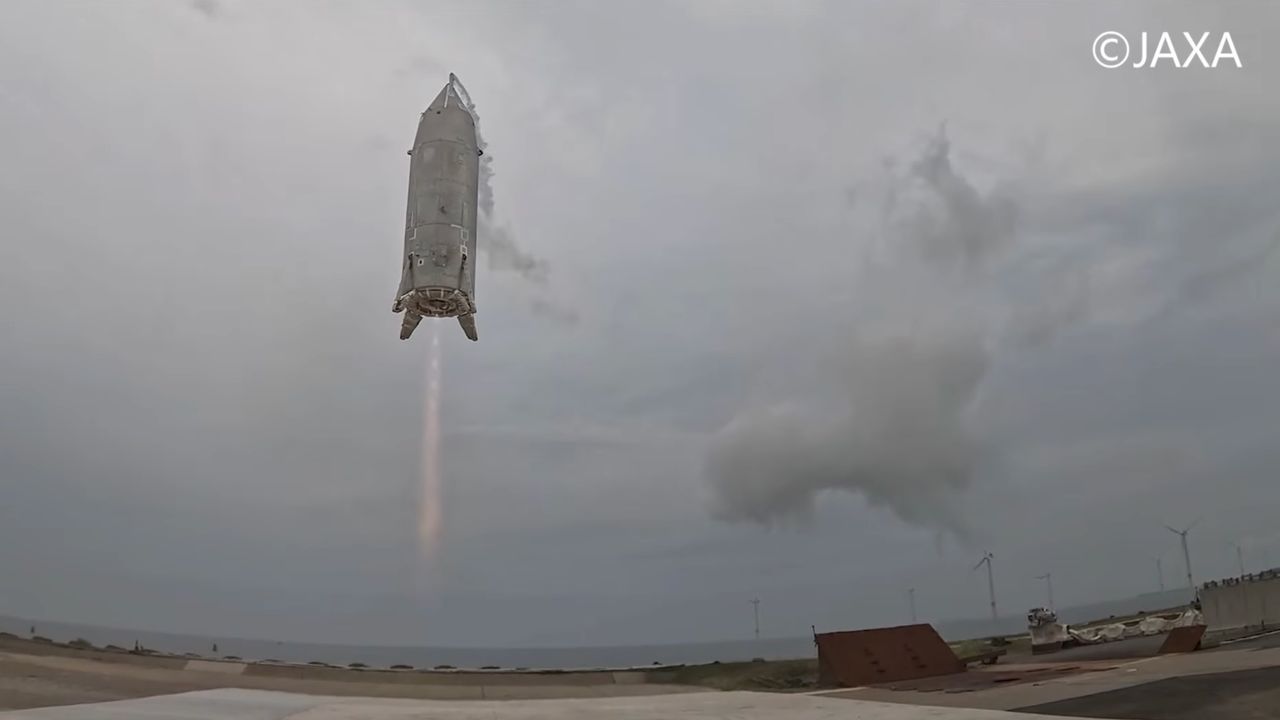
The launch β€” or hop, considering its duration and distance β€” took place at the Japan Aerospace Exploration Agency's (JAXA) Noshiro test facility on July 11 and lasted about 40 seconds. The 24-foot-tall (7.3 meters) test vehicle, powered by a single engine, rose just over 33 feet (10 m) in the air and traveled a horizontal distance of approximately 50 feet (15 m) across the site's concrete pad before touching down softly on the side opposite its liftoff point.

The short test flight went exactly as planned and puts JAXA and its partners one step closer to the development of a technological spaceflight achievement only ever accomplished by a small handful of orbital rockets β€” SpaceX's Falcon 9, Falcon Heavy and Starship, Blue Origin's New Glenn and, most recently, China's Long March 10B.
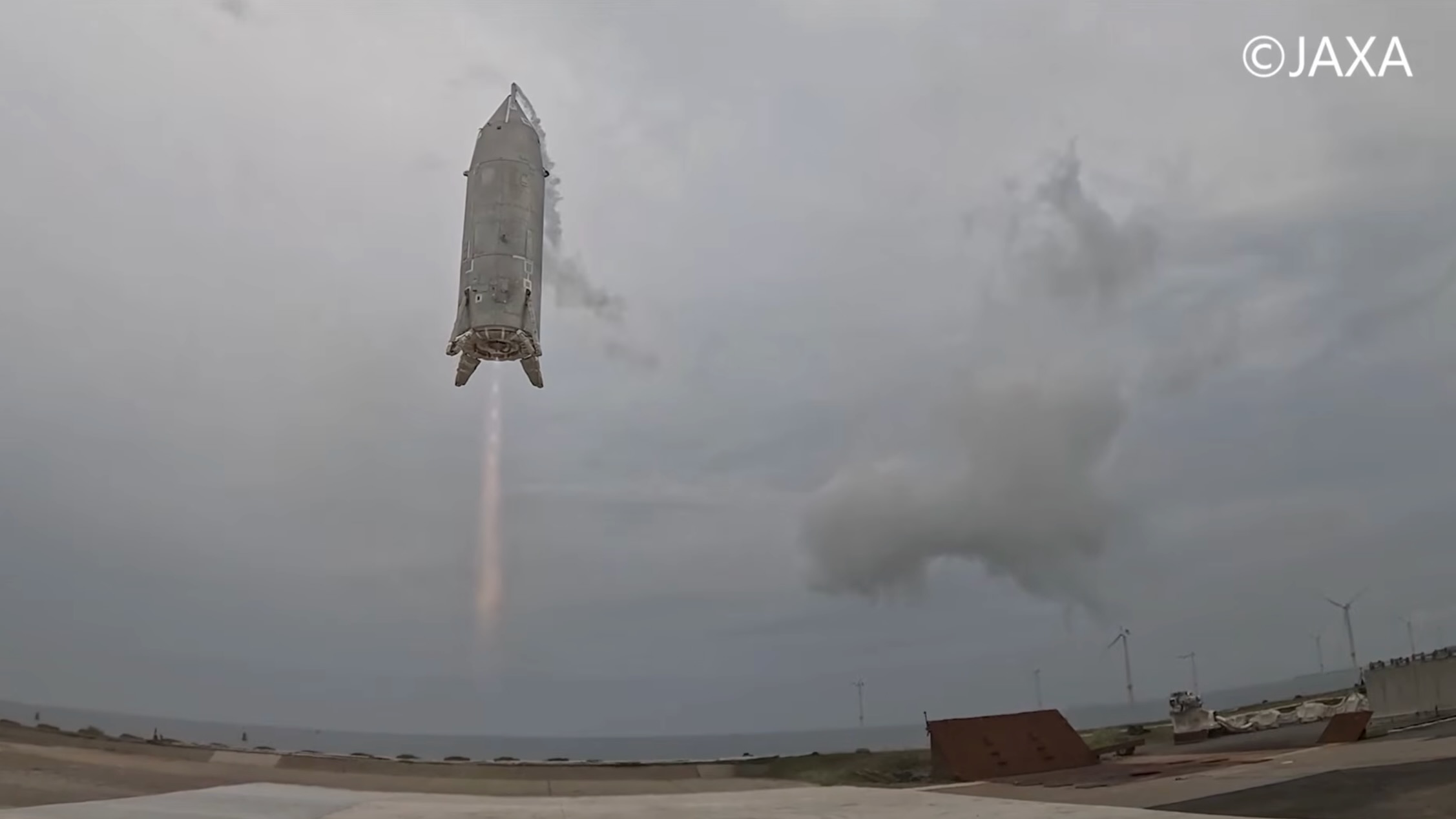
a conical silver rocket hovers about 15 feet above the ground in a cloudy sky

Japan's RV-X reusable rocket prototype takes its first hop, on July 11, 2026. (Image credit: JAXA)

JAXA's RV-X is being developed and operated in conjunction with Japan's Mitsubishi Heavy Industries and is a precursor vehicle to a single-stage reusable flight experiment project called CALLISTO. CALLISTO is a joint venture involving JAXA, France's space agency CNES and the German Aerospace Center (DLR) to design and build a single-stage rocket capable of vertical launch, landing, refurbishment and reuse. That vehicle will itself be a pathfinder rocket as JAXA seeks its own entry into the cost-saving playing field of reusable launch services.

Japan's most advanced rocket in operation, the H3, was introduced in 2023 but wasn't designed for reusability. The H3 is more efficient and cost-effective than its H-2A predecessor, which was retired last year. But two of the new rocket's eight launches have not been fully successful, and it falls short in its cost-effectiveness compared to more advanced reusable rocket stages. So JAXA is hard at work on the H3's future replacement.

"Reusable rockets require consideration of operational feasibility," JAXA's website says. "By repeatedly verifying maintenance, operation, vehicle movement and launch pad setup using an actual experimental vehicle in preparation for flight tests, we were able to establish operational procedures that will contribute to the repeated operation of future rockets."

The test, and the RV-X vehicle itself, slightly resemble a similar flight article from SpaceX's early Starship development days. The "Starhopper" Starship prototype was compared to a water tower during its first "hopper" test in 2019. The first time the stumpy, three-legged, steel Starhopper jumped off the ground at SpaceX's Starbase facility in South Texas, it flew about 65 feet (20 m) straight up and back down.

Starhopper's success paved the way for higher jumps for longer durations as SpaceX honed Starship's early design, and the same is planned for RV-X. Now that JAXA's test rocket has completed its first 33-foot (10 m) hop, Japan's space agency is looking higher, too. RV-X's next launch is expected to fly as high as 330 feet (100 m), with another lateral crossover and hover included in its flight before landing.
  •  

'The dawn of a new space era': Vikram-1, India's 1st private orbital rocket, aces debut launch

An Indian company just made spaceflight history.

Skyroot Aerospace successfully launched its Vikram-1 rocket to low Earth orbit (LEO) early Saturday morning (July 18), making India just the third country with a private orbital launch capability. The other two are established space powers β€” the U.S. and China.

"It is the dawn of a new space era," one of Skyroot's commentators said during the company's launch webcast on Saturday.

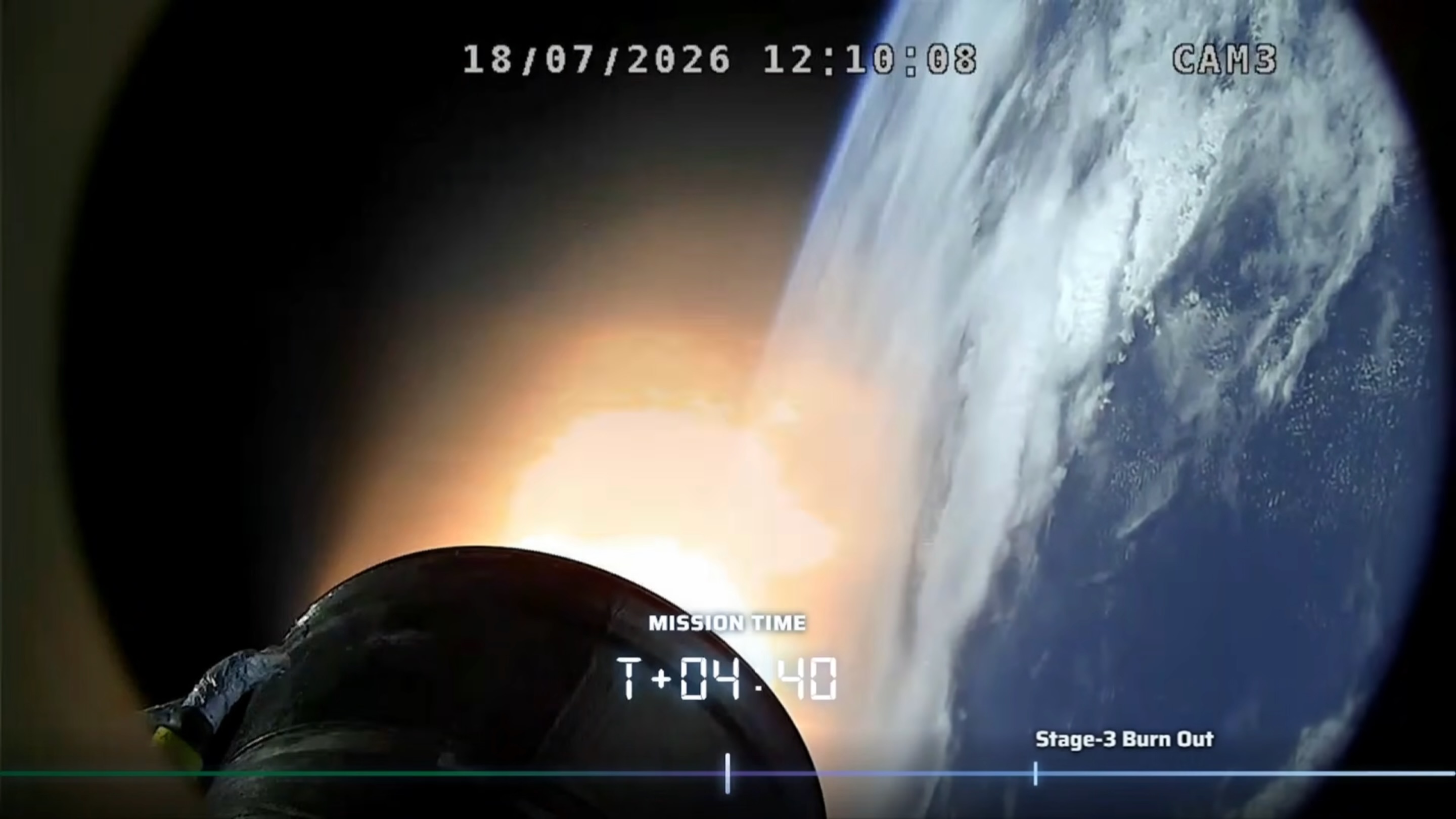
The view from the third stage of a rocket in earth orbit, with our planet in the background

The view from the third stage of Skyroot Aerospace's Vikram-1 rocket during its debut launch on July 18, 2026. (Image credit: Skyroot Aerospace)

Skyroot Aerospace is based in the central Indian city of Hyderabad and was founded in 2018. The company made history for the first time four years later with its Vikram-S suborbital rocket, becoming the first private Indian outfit ever to reach space.

Vikram-1 is the next step for Skyroot: an orbital vehicle. The four-stage, seven-story-tall rocket is a small-satellite launcher; it can haul about 770 pounds (350 kilograms) of payload to LEO, according to the company.

"The small satellite launch market is deeply constrained on the supply side," Skyroot co-founder and CEO Pawan Kumar Chandana said in an emailed statement on Thursday (July 16).

"At the same time, the demand for services enabled by satellites in space will only continue to grow, and that is where Skyroot's opportunity lies," added Chandana, who, like company co-founder Naga Bharath Daka, used to work for the Indian Space Research Organisation.

The company began exploiting that opportunity on Saturday morning, with a test flight called Aagaman (Sanskrit for "Arrival"). The main goal was to see how Vikram-1 and its various systems performed during flight. But the rocket also carried some customer payloads, which were scheduled to be deployed at an altitude of 280 miles (450 kilometers).

Those payloads included a technology demonstration from the German company DCUBED; the Solaras S3 nanosatellite pathfinder from Indian startup Grahaa Space; and Embrace, a robotic arm built by the Indian company Cosmoserve Space that's designed to capture space debris.

Vikram-1 also carried Skyroot's SCOPE satellite, which collected a variety of data to help the company assess the rocket's performance during flight. There were two symbolic payloads on board as well β€” a small, 18-karat gold rocket from the artist Ajay Kumar Mattewada and "Cosmic Bloom," which was designed by Cosmos Diamonds, a company that makes jewelry using lab-grown gems.

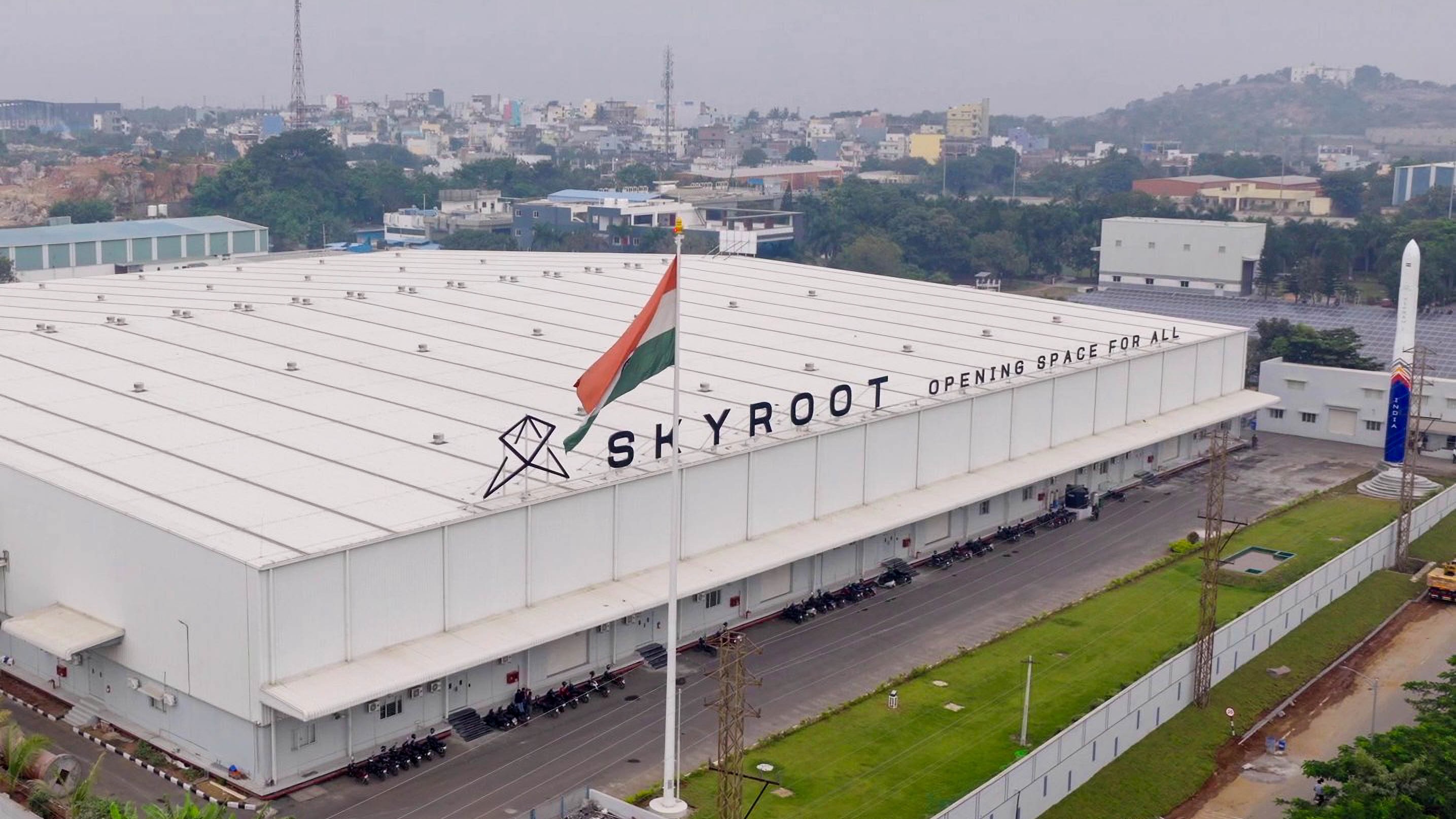
Aerial view of a large, low-slung warehouse-like building with a rocket standing outside it

Aerial view of Skyroot Aerospace's Infinity Campus in Hyderabad, India, showing a life-size model of the company's Vikram-1 rocket outside. (Image credit: Sumil Sudhakaran/Skyroot Aerospace)

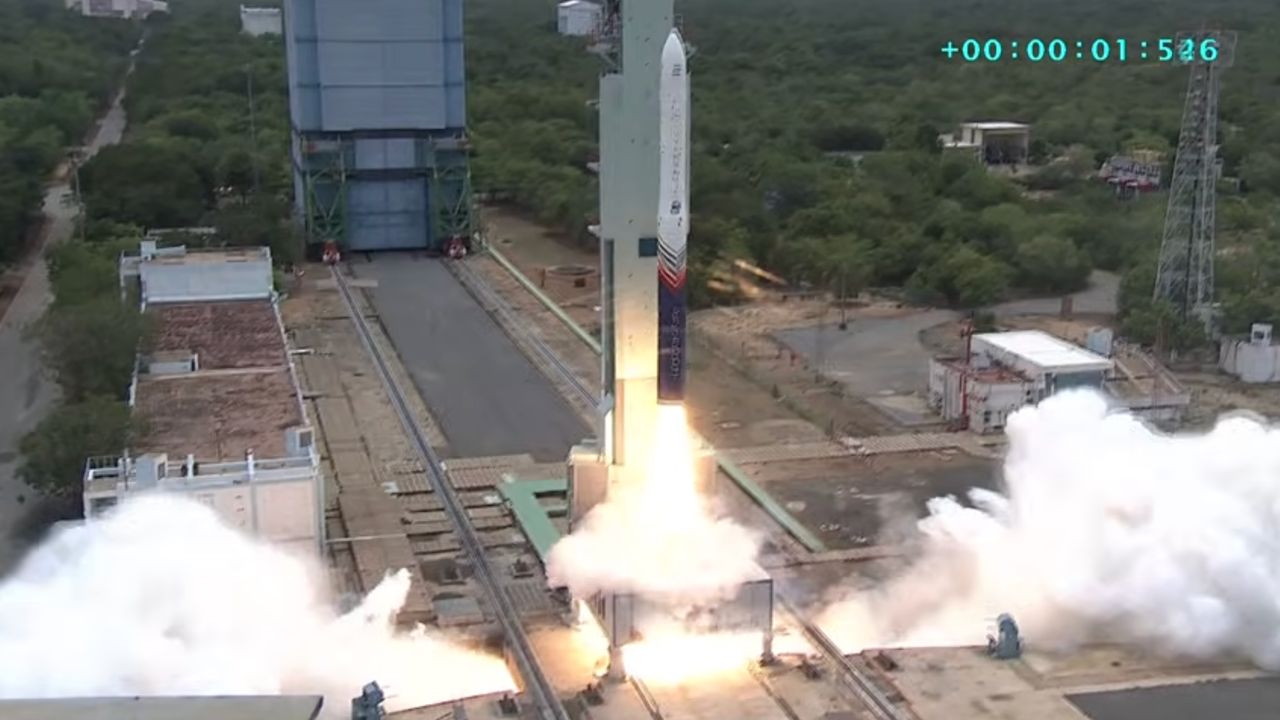
All of them made it to space safe and sound. Vikram-1 lifted off from the Satish Dhawan Space Centre, on the Indian barrier island of Sriharikota, on Saturday at 2:35 a.m. EDT (0635 GMT; 12:05 p.m. India Standard Time), roaring off the pad in a flash thanks to its first-stage solid rocket motor.

The rocket performed as planned, sticking to a nominal trajectory and deploying the payloads right on schedule. Vikram-1 had ticked all of its boxes by just 17 minutes after liftoff, leading to a pronouncement from mission control.

"The Vikram-1 Aagaman mission is a grand success," the mission director said, eliciting cheers from the folks in the room.

It was a big moment for Skyroot and for India, and it augurs big things to come, according to Lt. Gen. AK Bhatt (retired), Director General of the Indian Space Association.

"The successful orbital launch of Skyroot Aerospace’s Vikram-1 (Mission Aagaman) is a defining milestone for India’s space journey," Bhatt said in an emailed statement shortly after the mission wrapped up. "By executing the nation's first fully private orbital flight, Skyroot has shattered legacy boundaries, demonstrating that our domestic industry is primed to handle end-to-end space missions."

Editor's note: This story was updated at 3:25 a.m. ET on July 18 with news of successful launch and satellite deployment.

  •  

Astronauts just launched on a Soyuz rocket with an energy-drink ad on it, continuing a Russian tradition

Astronauts just flew to Earth orbit space atop a rocket emblazoned with an energy-drink ad.

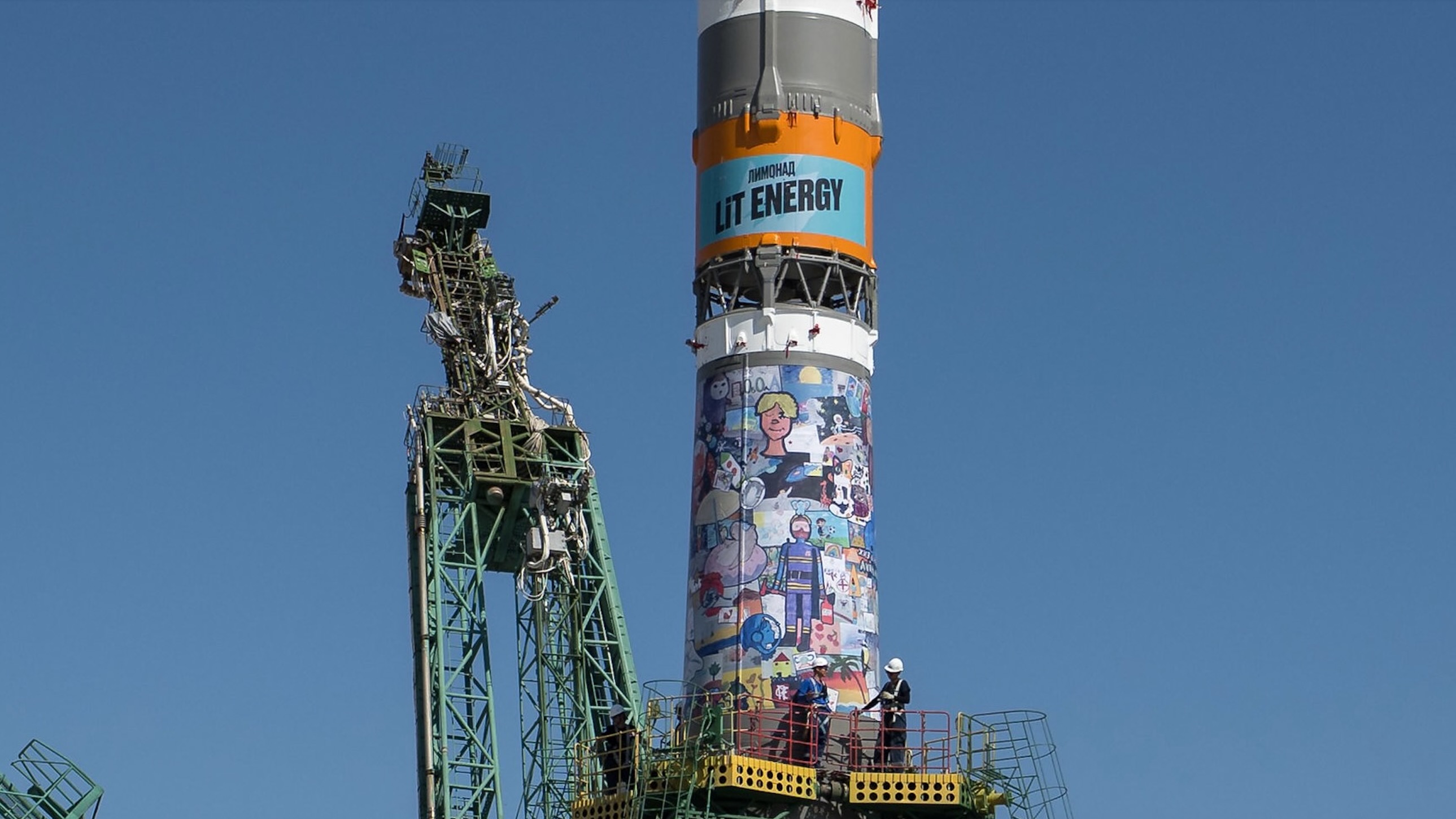
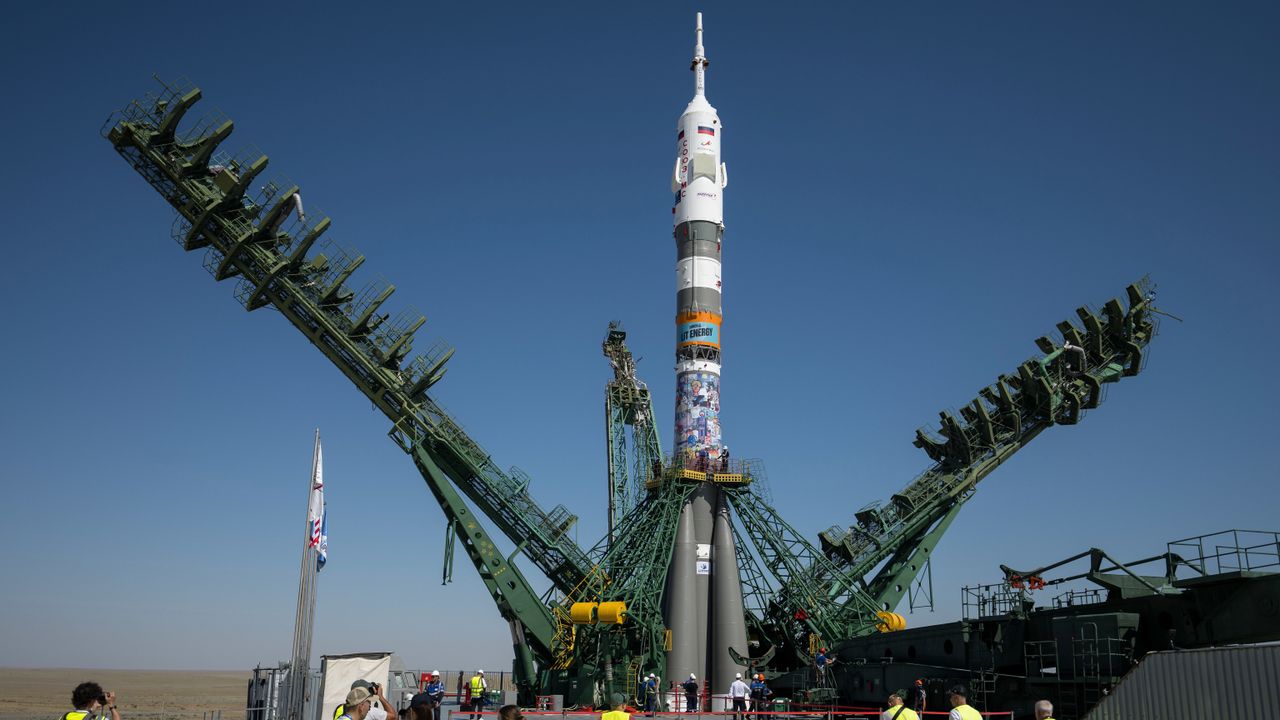
The Soyuz MS-29 launch to the International Space Station on Tuesday (July 14), from the Russian-run Baikonur Cosmodrome in Kazakhstan, used a Soyuz rocket festooned with ads for Π›ΠΈΠΌΠΎΠ½Π°Π΄ ("Lemonade") LIT ENERGY. The ads are visible in shots of the rocket's rollout on July 11, published here and here via NASA's Flickr account.

The Soyuz used for the launch also featured drawings from children with cancer β€” as well as the phrase "Life has no end" β€” to advertise the Unity Charitable Foundation, according to a Russian-language state media report machine-translated into English. The campaign is part of a series in support of the foundation that began in November 2025, the media report added.

Zoomed-in view of the Soyuz rocket that launched NASA astronaut Anil Menon and two cosmonauts to the ISS on July 14, 2026. This shot shows the ad for Lit Energy.

Zoomed-in view of the above photo, highlighting the ad for Lit Energy. (Image credit: NASA/Bill Ingalls)

To be sure, the Russian space agency Roscosmos (like other space agencies) often adorns its rockets with colorful artwork and logos that may not necessarily result in payment. In June 2018, for example, a Soyuz launched with a FIFA World Cup logo that may have been a publicity campaign to advertise the soccer competition, which was occurring that month in Russia.

While there have been some experiments by other space agencies regarding advertising β€” anyone remember the space cola wars? β€” here are a few notable examples from Russia and its predecessor state, the Soviet Union.

  • A 1990 cosmonaut launch, partly for the Tokyo Broadcasting Service, carried a Japanese journalist from TBS β€” as well as advertisements on the side of the Soviet Soyuz rocket. Sony, Unicharm and Pocari Sweat patches were also reportedly flown on the mission.
  • After the breakup of the Soviet Union, the Mir space station featured advertisements for companies like RadioShack, Pepsi and Israel's Tnuva Milk.
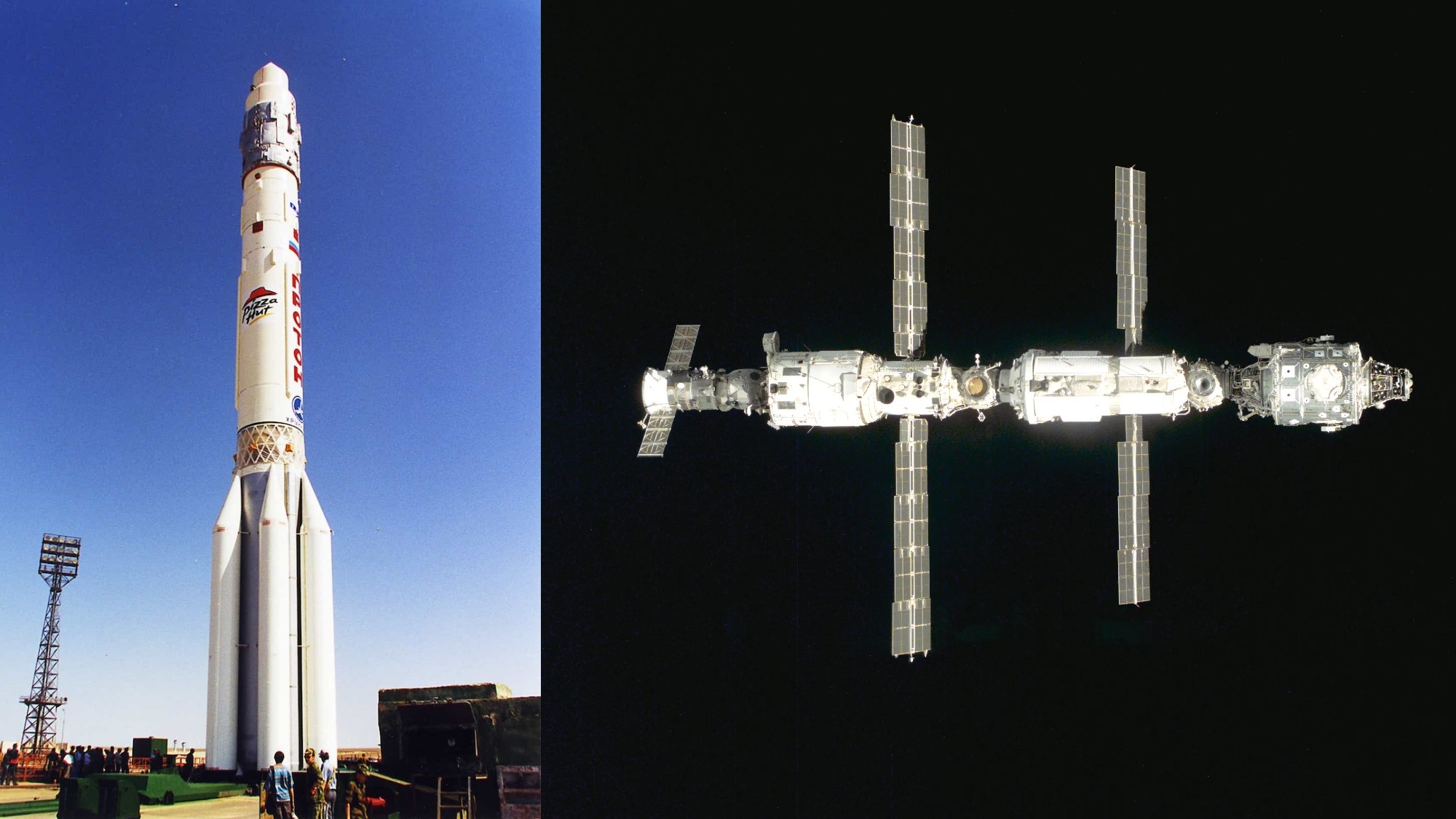
  • A Pizza Hut ad flew on a Russian Proton rocket in 2000 for roughly $1.25 million (nearly $3 million in today's dollars). The restaurant chain then followed up in 2001 with a special space pizza delivery β€” but using salami, as it is more shelf-stable than pepperoni.

a white rocket on a launchpad with a pizza hut logo on it

A Pizza Hut ad on a Russian Proton rocket that launched the Zvezda service module to the International Space Station (seen on far left in the above ISS photo). (Image credit: Khrunichev State Research and Production Space Center/NASA)

So Russia's practice of launching ads into space is not new. However, Ars Technica has suggested that contractions in the Russian economy led to very recent changes in the country's laws for space advertising that could lead to more examples like this.

Russia's unsanctioned invasion of Ukraine in February 2022 caused many international partnerships in space (and other projects) to fall apart, which Ars believes may have led to Russian President Vladimir Putin's authorization for recurring space ads. The new legislation was cited on Roscosmos' Telegram account in October 2025, the Ars report added.

"According to the amendments, Roscosmos has been granted the right, effective January 1, 2026, to place advertising on space objects owned by both the state corporation itself and federally," said the Roscosmos statement, according to Ars. "The amendments will create a mechanism for attracting private investment in Russian space exploration, and reduce the burden on the state budget."

Roscosmos and NASA continue to work together on the ISS despite sanctions imposed after the invasion of Ukraine, which is ongoing. And Tuesday's launch marked a milestone in that cooperation, as NASA Administrator Jared Isaacman became the first with his title to attend a Soyuz launch in eight years.

SpaceNews noted that Isaacman and Roscosmos Director General Dmitry Bakanov had the first reported face-to-face meeting between the agency heads since the last in-person NASA chief visit, for an October 2018 launch. After the meeting between Isaacman and Bakanov, Russia announced a two-year extension of its ISS commitment, to 2030, as well as an agreement in principle to continue offering NASA astronauts seats on the Soyuz in exchange for seats on commercial U.S. vehicles, among other developments.

  •  

SpaceX's Starship Flight 13 test launch aborts at last second (video)

Update for 1:15 p.m. ET on July 17: SpaceX is now targeting Monday (July 20) for the launch of Starship Flight 13, during a 90-minute window that opens at 6:45 p.m. EDT (2245 GMT).

Starship wasn't quite ready to fly today (July 16).

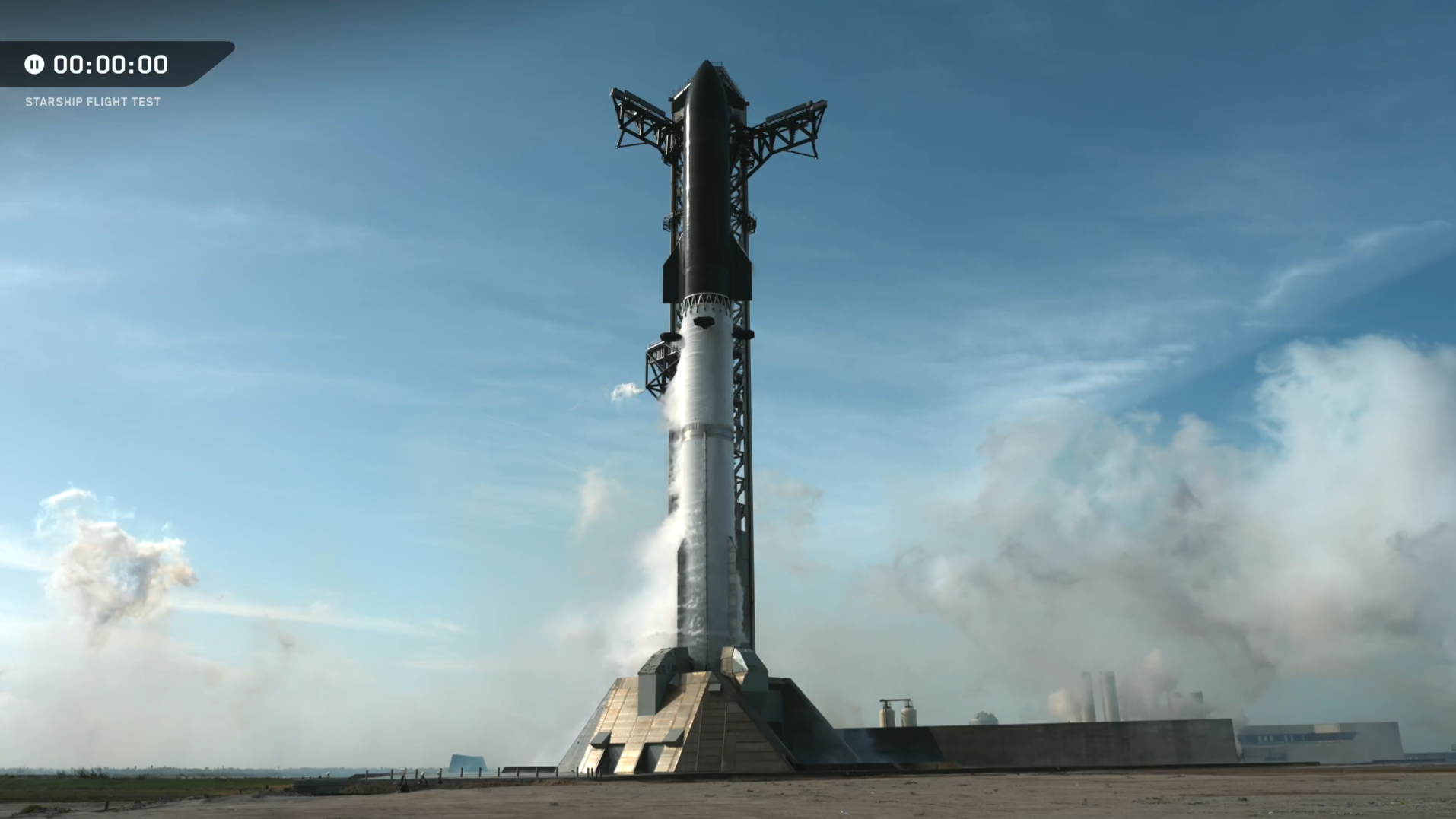
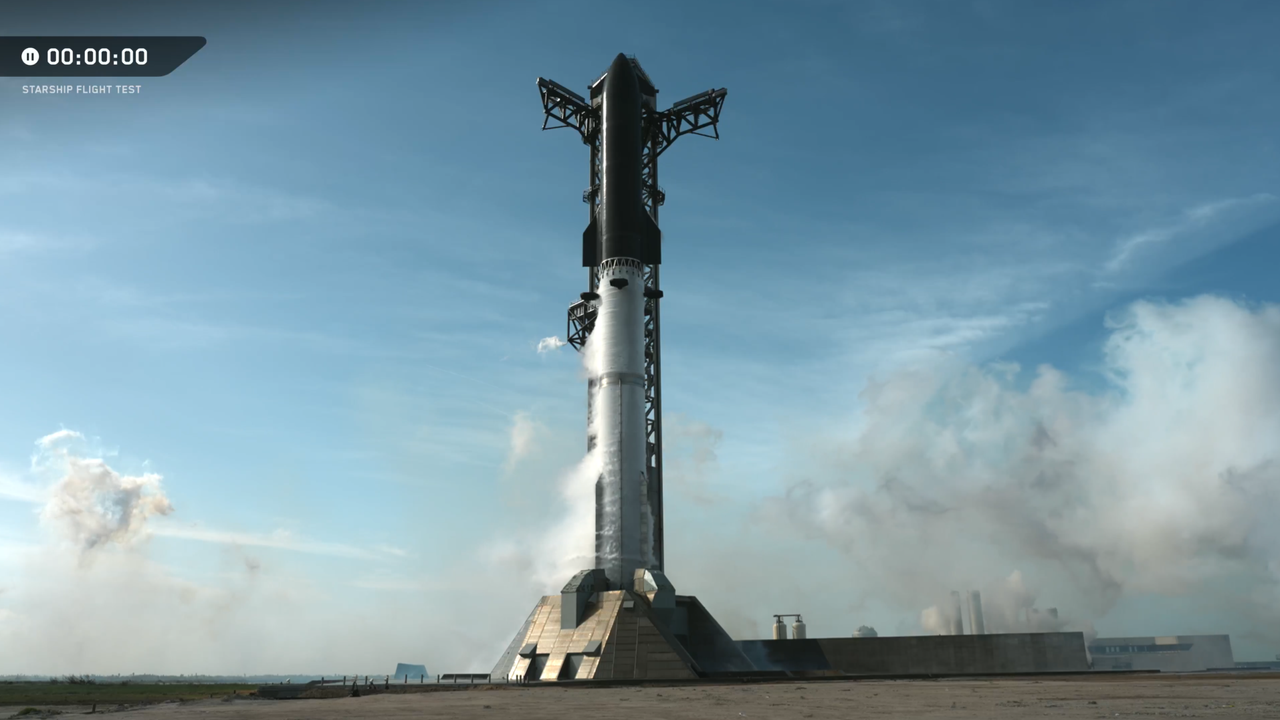
SpaceX tried to launch the Starship megarocket on its 13th test flight today but couldn't quite pull it off. Something went wrong just as the giant vehicle's 33 first-stage Raptor engines started to fire up, and an abort was triggered.

"We'll take some time, dig into what triggered that abort once the booster was igniting to launch, and then we'll figure out what our path forward is going to be," SpaceX's Dan Huot said during the company's launch webcast today.

Tall rocket blue sky

SpaceX's second V3 Starship vehicle tries to launch on July 16, 2026. The attempt was aborted at the last second. (Image credit: SpaceX)

It didn't take long for SpaceX to narrow in on the root cause and address it.

"To be confident of a good flight, 2 Raptors will be removed & replaced. Most probable launch timing is early next week," company founder and CEO Elon Musk said this evening via X, the social media platform he owns.

Starship Flight 13 will fly from SpaceX's Starbase site in South Texas. Today's attempt occurred at 6:45 p.m. EDT (2245 GMT; 5:45 p.m. local time), right at the beginning of a 90-minute launch window.

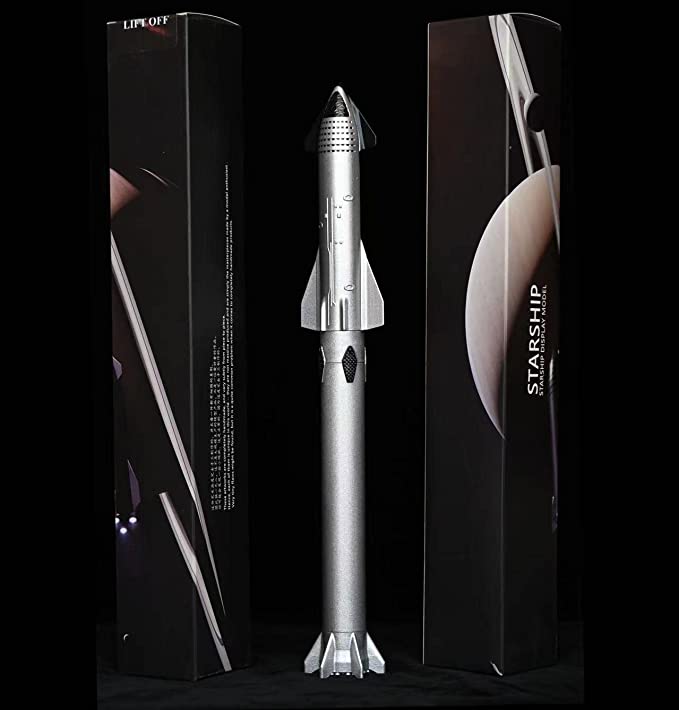
Starship Die Cast Rocket Model Was $47.99 Now $39.99 on Amazon.

Even if you can't see SpaceX's Starship in person, you can score a model of your own. Standing at 13.77 inches (35 cm), this is a 1:375 ratio of SpaceX's Starship as a desktop model. The materials here are alloy steel and it weighs just 225g.View Deal

Flight 13 will be the second test launch of Starship Version 3 (V3), an upgraded variant of the megarocket designed to get it up to operational status.

V3's first jaunt, Flight 12 on May 22, was mostly successful, but there were a few issues. For example, Starship's Super Heavy first stage didn't steer itself back for a controlled splashdown in the Gulf of Mexico as planned, and the Ship upper stage wasn't able to relight one of its Raptor engines in space.

Starship V3 will get a second chance on Flight 13, whose goals are similar to those of Flight 12: Get Super Heavy down on target in the Gulf and send Ship most of the way around the world, for a controlled splashdown of its own off the coast of Western Australia. (Ship pulled that off on Flight 12.)

There are a few new objectives, however.

The most notable is the payload suite flying on Flight 13 β€” 20 of SpaceX's next-gen Starlink V3 internet satellites. The company wants to build a constellation of 100,000 Starlink V3 spacecraft in low Earth orbit using Starship, and Flight 13 will mark the satellites' first-ever trip to space.

They won't stay up there, however; the spacecraft will be deployed on Ship's suborbital trajectory and will crash back to Earth after about 20 minutes, according to SpaceX.

Six of the 20 Starlinks going up on Flight 13 will be equipped with cameras, to image Ship's heat shield. SpaceX did this with a couple of V2 Starlinks on Flight 12 as well.

Editor's note: This story was updated at 9:38 p.m. ET on July 16 with information from an Elon Musk X post.

  •  

SpaceX stacks massive Starship rocket ahead of July 20's Flight 13 test launch (video)

Starship is about to take to the skies on a bold new test flight of the world's most powerful rocket.

After several days of testing, SpaceX has stacked and readied its massive Starship rocket for its 13th test flight. The company tried to launch on Thursday, but that attempt was aborted at the last second. SpaceX is now targeting Monday (July 20), during a 90-minute launch window that opens at 6:45 p.m. EDT (2245 GMT), from pad 2 at SpaceX's facility in Starbase, Texas.

Both stages had been in their respective Starbase hangars for final checkouts following successful engine tests. Booster 40, the Super Heavy first stage launching on Starship Flight 13, was returned to the pad on Wednesday (July 15). Ship 40, the mission's upper-stage spacecraft, was rolled from the hangar beginning on Wednesday evening. The rocket was stacked overnight, according to a SpaceX post on X, and now awaits prelaunch procedures ahead of the beginning of Flight 13's launch countdown.

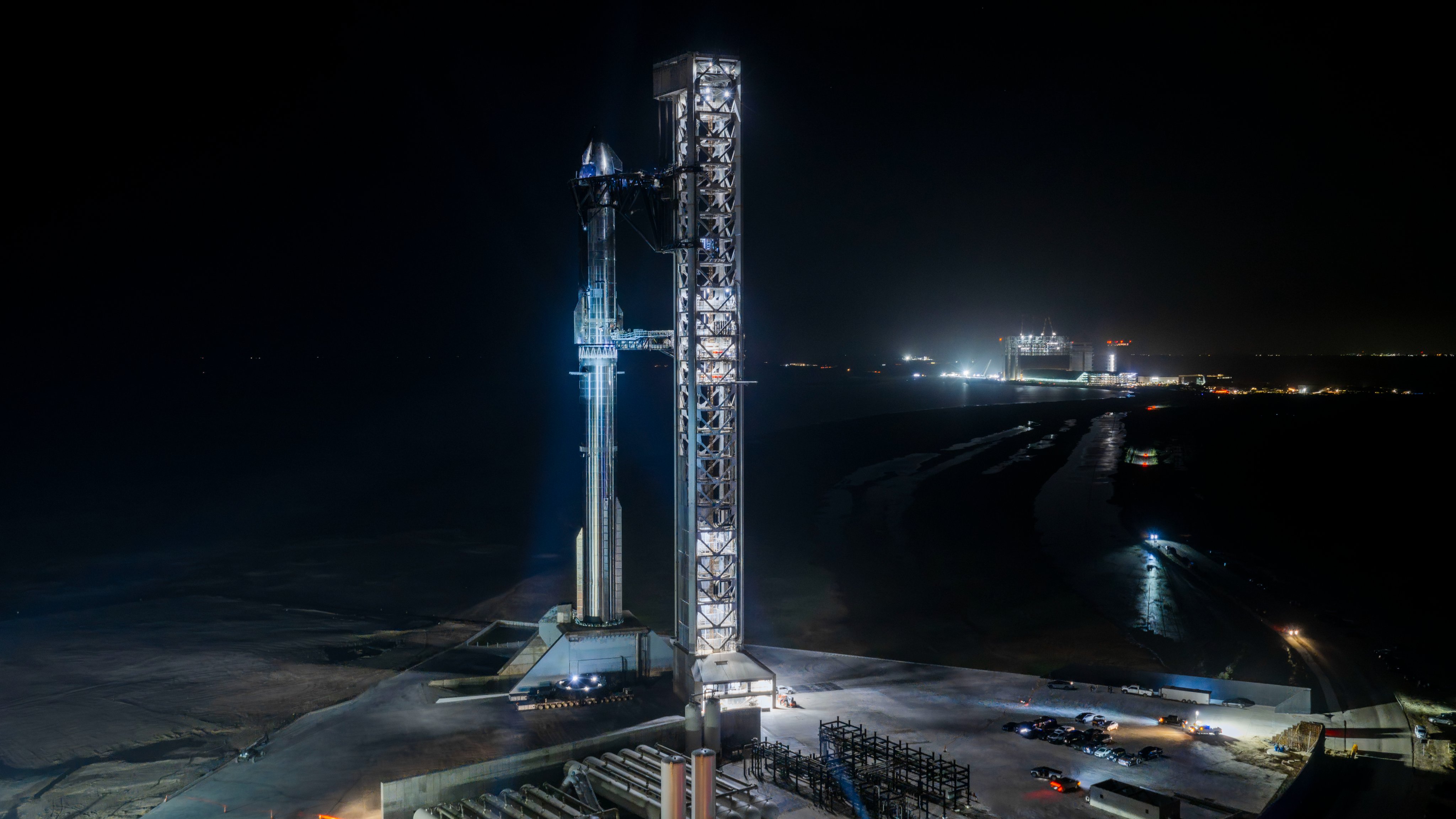
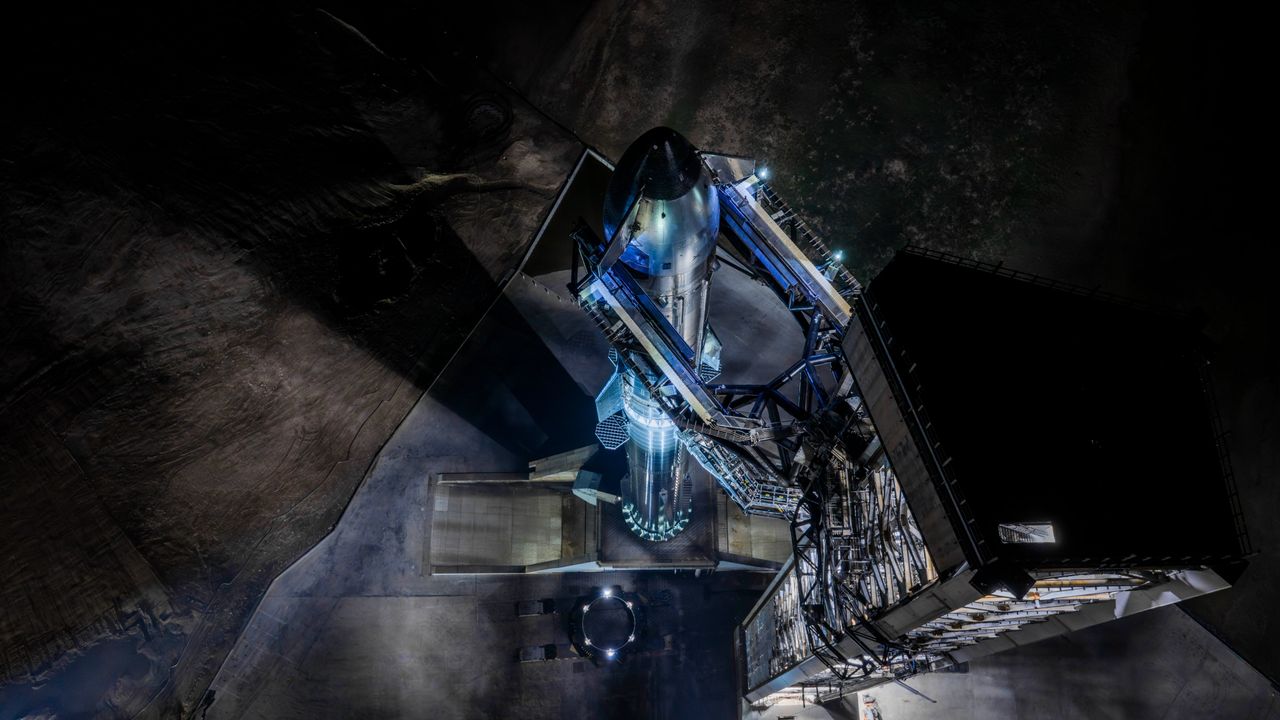
A giant steel rocket stands next to a launch tower lit by spotlights in the dark of night.

Starship is stacked at Starbase, Texas, ahead of its planned 13th test launch on July 16, 2026. That attempt was aborted; SapceX is now targeting July 20. (Image credit: SpaceX)

Flight 13 will launch the second "Version 3" (V3) Starship, a new iteration featuring extensive design upgrades to help mature the rocket toward clearing the vehicle for official operation. Compared to its Version 2 predecessor, V3 is taller, carries more propellant, and has lost significant mass around its engine section due to upgraded avionics systems. V3 is also equipped with 33 of SpaceX's upgraded Raptor 3 engines on Super Heavy, and another six (three sea-level, three vacuum-optimized) Raptor 3s on Ship.

Starship is designed for full reusability, with both Super Heavy and Ship capable of returning to their launch site for landing and refurbishment, which means making sure there's enough fuel in the tank to make the journey back. One critical upgrade for Starship V3 involves the propellant transfer docking ports that have been added to Ship's dorsal side (opposite the heat-shield tiles on its belly, or ventral side). Ship uses the majority of its fuel getting to space and will therefore require propellant transfers from various refueling flights in order to fly beyond low Earth orbit.

NASA is eyeing the development progress of Starship very closely, with a vested interest in the spacecraft's yet-unproven ability to transfer and maintain the types of cryogenic fuels that power its Raptor 3s. NASA has contracted SpaceX to design a lunar lander version of Starship to return astronauts to the moon as a part of the agency's Artemis program, and effectively managing its onboard propellants is one of the requirements on NASA's checklist to certify the vehicle to fly with crews.

Starship Die Cast Rocket Model Was $47.99 Now $39.99 on Amazon.

Even if you can't see SpaceX's Starship in person, you can score a model of your own. Standing at 13.77 inches (35 cm), this is a 1:375 ratio of SpaceX's Starship as a desktop model. The materials here are alloy steel and it weighs just 225g.View Deal

SpaceX plans to complete such a demonstration later this year in preparation for Artemis III, targeted for mid-to-late 2027, which will fly a crew of four aboard NASA's Orion spacecraft to dock with Ship in Earth orbit ahead of the program's first moon landing mission on Artemis IV in 2028. NASA contracted Blue Origin's Blue Moon spacecraft as an additional Artemis lander, which will also launch to Earth orbit for docking operations with Orion during Artemis III.

Starship's readiness to fly those future missions will largely be determined by the rocket's performance on Flight 13, and its subsequent test launches in the coming months. The launch aims to smooth over a few rough patches that the vehicle ran into during V3's debut on the mostly successful Flight 12, which occurred on May 22. Those hiccups included Super Heavy failing to steer itself back to Earth for a controlled splashdown and Ship not relighting one of its Raptor engines in space as planned.

Stacking Starship for Flight 13 pic.twitter.com/L4XN6gqgRtJuly 16, 2026

If all goes according to plan on Flight 13, Super Heavy will perform a boostback burn and soft splashdown in the Gulf of Mexico. Ship will carry on with a suborbital trajectory, and is expected to release 20 Starlink V3 satellites β€” the first of the upgraded Starlinks to fly to space. Six of those spacecraft are equipped with cameras to inspect Ship's heat-shield tiles during flight. The satellites, though, will be on the same suborbital trajectory as Ship, and are expected to burn up during reentry through Earth's atmosphere. Ship is scheduled to perform a landing burn and soft splashdown of its own a little more than an hour after liftoff, and will meet a watery demise in the Indian Ocean.

Live coverage of Starship Flight 13 will begin about 30 minutes prior to liftoff, and can be streamed here on Space.com or directly on SpaceX's website and social media channels.

Editor's note: This story was updated at 1:15 p.m. ET on July 17 with the new target launch date of July 20.

  •  
❌