❌

Reading view

SpaceX Investors Are Lamenting All the Money They’ve Lost

Shares of Elon Musk’s SpaceX are scraping by at record low levels this week, struggling to find any renewed enthusiasm from wary investors.

The stock is hovering just below $136, a hair above its original IPO price of $135, and well below its opening price of $150 on the day it went public last month. Shares are down almost nine percent over the last five days alone, and are just shy of 40 percent down compared to their all-time high of $225.

The slumping value of Musk’s rocket company has been a brutal wake-up call for some particularly daring investors, who went all in on what many have started to refer to as a “meme stock.” One Reddit user, who leveraged their own Roth IRA by making major calls on SpaceX, wiped out several hundred thousand dollars from their retirement.

The user made several SPCX calls at $160 and $145, decisions that ultimately came back to haunt them.

“So my Roth IRA is down 25 percent, I went and made a few options trades in Robinhood that also went the other way,” the user lamented in the infamous Wall Street Bets subreddit.

The warning signs of a steep market correction were all there. SpaceX went public with an astronomical, multitrillion dollar valuation despite losing billions of dollars a quarter, effectively guaranteeing major volatility. Even members of the Wall Street Bets community, which has a long history of advocating for aggressive trading strategies, were shaking their heads.

“No one could have seen this coming,” one user wrote facetiously.

“Crazy that people knew the insanely bloated valuation but still went long,” another added.

“Musk companies aren’t rational, Tesla has an insanely bloated valuation and is still way too high,” one user argued. “The only winning move is not to play.”

Analysts have long warned that investing in SpaceX is a bet on Musk himself. To make sense of its enormous valuation requires buying into his lofty vision of establishing AI data centers in space and constructing a city on Mars.

As Reuters puts it, SpaceX’s listing has turned into a “confidence test.” Now that shares have plunged below its IPO price, the scales could already be falling from investors’ eyes.

“It raises the narrative that the stock is up on fluff, on speculation, on froth, and not on real fundamentals,” Miller Tabak chief market strategist Matthew Maley told Reuters.

Anybody who bought in early “hoping to ‘make a killing’ will be disappointed,” Carnegie Investment Counsel director of research Greg Halter added.

More on SpaceX shares: SpaceX Stock Plunges to All-Time Low After Competitor Makes Major Leap

The post SpaceX Investors Are Lamenting All the Money They’ve Lost appeared first on Futurism.

  •  

Grok’s Foul-Mouthed AI “Translation” Feature Puts Unspeakably Ghoulish Words Into Users’ Mouths

Elon Musk’s AI chatbot Grok has long garnered a reputation for experiencing horrifically racist meltdowns, enabling child abuse, and doxxing users’ home addresses.

It should come as no surprise, then, that its supposed “translation” is a piece of work, too. In April, the almost-trillionaire’s social media platform X instated automatic AI translations for all of its users — and the results certainly speak for themselves.

As writer and author Parker Molloy pointed out in a recent post on Bluesky, the Grok feature is “taking some interesting liberties” with people’s otherwise sincere posts.

Screenshots show how Grok completely botched translations by coming up with shocking and decidedly NSFW AI hallucinations.

One South Korean user, for instance, posted an otherwise tame video of two video game characters, only for the auto-translate feature to allege that it was a “c**shot video with my stepmom.”

“I am not sure it is the right translation,” a taken-aback user replied.

“It isn’t correct at all!” the original poster lamented.

Another post by Portuguese account POPTime shows a video of a man making an elaborate cup of coffee during a flight.

But a purported translation “from Portuguese by Grok” claimed that the video shows a man who is pleasuring himself in public.

“Grok auto translate is inaccurate, text actually translates to ‘Man grinds and brews his own coffee during a commercial flight,’ not ‘Man masturbates and jerks off to his own coffee during commercial flight,'” an appended community note reads.

Another Turkish user, who posted an innocent picture of their young kitten, was horrified after Grok’s translation suggested that they were looking to “f*** our baby.”

“Uhhh the automatic translation makes it alarming,” another user replied.

To the X community, which has already seen its fair share of Grok’s foul-mouthed shenanigans, the AI’s profanity-laden translations were just another bemusing distraction.

But to anybody looking to meaningfully post on social media, the bizarre liberties the chatbot is taking perfectly highlight the sorry state of the microblogging platform. Ever since Musk took over in 2022, users have noted a major uptick in the proliferation of hate speech and disinformation. Researchers have found that X’s AI models are driving online racist abuse.

Grok’s ability to come up with AI images, in particular, has been mired in controversy, from being used to generate nonconsensual nudes of women to a single account that was recently found to have posted thousands of explicit images of an 11-year-old girl.

Musk’s prodigal chatbot, in other words, has been guilty of crimes far worse than expletive-laden translations.

More on Grok: Grok Linked to Sickening Crime in Lawsuit That Puts SpaceX in Crosshairs

The post Grok’s Foul-Mouthed AI “Translation” Feature Puts Unspeakably Ghoulish Words Into Users’ Mouths appeared first on Futurism.

  •  

SpaceX Stock Plunges to All-Time Low After Competitor Makes Major Leap

Shares of Elon Musk’s SpaceX took another beating when trading resumed on Monday, sliding to an all-time low of just under $139, well below its IPO opening price of $150.

It’s now over 38 percent down from its all-time high of $225 three weeks ago, illustrating how rapidly the hype has inverted into widespread skepticism over Musk’s vision.

Following a blockbuster Wall Street debut, the space company has struggled to maintain any degree of momentum as investors continue to ask some very hard questions, including over its major pivot to orbital data centers and its near-term profitability. Despite being valued at almost two trillion dollars, the company lost nearly $5 billion last year.

Shares have hovered below the company’s opening price for weeks now, despite plenty of bullishness among analysts.

The news comes just days after Chinese state-run media showed a Long March 10B rocket booster being caught by an offshore recovery platform, indicating the country was making major strides in catching up with SpaceX’s reusable rocket tech. Over the weekend, an experimental Japanese reusable rocket safely took off and landed, suggesting the nation may be right behind China as well.

Beyond some steepening international space launch competition, experts believe SpaceX’s transformation into an “AI play” may be closely related to its Wall Street woes, as the BBC reports.

“Everyone saw SpaceX as an AI story,” CFRA investment research analyst Keith Snyder told the broadcaster.

“With Elon Musk, any company he touches gets people excited,” he added. “But this was also the first time people felt like they were able to invest in something that was being marketed as an AI play.”

How SpaceX will cover its enormous losses and start actually making some money — not to mention, prove that orbital data centers don’t just make sense but are even feasible to begin with — remains a major point of contention.

In short, the initial enthusiasm surrounding SpaceX’s IPO is firmly behind us.

“If you bought around the first tick you’re definitely underwater,” Snyder told the BBC. “It started to look a lot like a meme stock.”

“If you’re an IPO investor, you’re ok,” Mergermarket analyst Samuel Kerr added. “If you bought in the first few days, you’re not very happy right now.”

Investors remain sharply divided on where SpaceX shares are headed next. Many analysts from major investment banks remain bullish, expecting the stock to make massive gains. Case in point, Morgan Stanley believes the company will reach a price tag of $300 — far more than double its current stock price.

Snyder has a far more muted outlook, expecting SpaceX to fall down to just $115 a share.

Meanwhile, Musk has said he thinks “SpaceX will be worth more than the rest of Earth if we accomplish our goals,” a characteristically ambitious and perhaps delusional argument that assumes a lot of things will go right for the company.

Whether investors will buy into this lofty vision remains to be seen. Given its recent stock performance, it’s far from a guarantee.

“If SpaceX can do all the things it says it will do, yes, investors are sitting on the most valuable company ever,” Kerr told the BBC. “But it’s got a lot of work to do to get there.”

More on SpaceX: Elon Musk Says His Goal Is for SpaceX to Be Worth More than the Entire Earth

The post SpaceX Stock Plunges to All-Time Low After Competitor Makes Major Leap appeared first on Futurism.

  •  

Meta Caught Running Ads for Child Abuse

For many years now, child sexual abuse material (CSAM) has run rampant on Meta’s platforms. The Mark Zuckerberg-led company has been accused of trying to underplay the severity of the issue and even purposefully dismantle child safety guidelines.

And the situation is only getting worse. According to a shocking new BBC investigation, Instagram has been profiting off paid adverts that promote CSAM in India, a shocking revelation that highlights glaring holes in Meta’s efforts to get ahead of the problem.

Earlier this year, Meta announced it was trying to reduce its reliance on third party human moderators by — you guessed it — switching to AI. But considering the latest news, these systems are seemingly inadequate to stem a tidal wave of deeply disturbing content on its platforms.

Some of the incriminating ads reviewed by the BBC include terms like “rape video” and “child video” and link the platform’s users to shadowy Telegram channels, where the material can be bought for as little as $1.

The shocking revelation has sent shockwaves through the country’s government. Over the weekend, Ministry of Electronics and Information Technology issued a notice to Meta, calling it to immediately disable all ads and content that promote the sale of CSAM. According to Indian broadcaster DD News, the ministry is giving Meta until July 11 to provide a “detailed explanation.”

After the BBC reached out to Meta for comment, the company claimed to have disabled several adverts and suspended any associated accounts for violating its policies. A Meta spokesperson argued that “no system is perfect, and our review process may not detect all policy violations.”

“We continue to run proactive detection technology on ads once they’re live, and anyone can report an ad to us that they think breaks our rules,” the spokesperson told the BBC.

Telegram also told the British broadcaster it had removed “more than 274,000 groups and channels related to child sexual abuse material in 2026.”

Former Facebook vice president Brian Boland argued that Instagram’s algorithms were designed to maximize profit.

“I think what’s sad and tragic is over time, the trade-off of revenue and user experience became a more core part of the conversation,” he told the BBC.

Boland testified against Meta in a trial that saw a New Mexico jury find the company guilty of misleading users over the safety of its platforms for children. The jury concluded in March that Meta had allowed the proliferation of CSAM, turning its platforms into marketplaces for child sex trafficking.

“Meta executives knew their products harmed children, disregarded warnings from their own employees, and lied to the public about what they knew,” said New Mexico’s attorney general Raúl Torrez in a statement at the time. “Today the jury joined families, educators, and child safety experts in saying enough is enough.”

With 1.9 million reports of CSAM on a leading tipline, India is only second to the United States. And children’s rights advocacy groups warn that plenty of crime is still falling through the cracks.

More on CSAM: While Meta Stuffs AI Into All Its Products, It’s Apparently Helpless to Stop Perverts on Instagram From Publicly Lusting Over Sexualized AI-Generated Children

The post Meta Caught Running Ads for Child Abuse appeared first on Futurism.

  •  

OpenAI Is Shutting Down Its Browser That Was Supposed to Change Everything

In October, OpenAI unveiled an AI browser dubbed Atlas, purportedly designed to help you “understand your world” and “achieve your goals” by putting ChatGPT front and center.

A special “agent mode” was meant to book flights or buy groceries online on your behalf without you ever having to lift your finger.

“The browser just changed,” OpenAI’s head of ChatGPT boasted at the time, calling it a major step in ChatGPT evolving into an entire AI operating system.

But the cracks started to show almost immediately. There were glaring cybersecurity concerns, including a major vulnerability to prompt injection attacks. Its agent worked at a frustratingly glacial pace — it took the browser ten full minutes to add three items to an Amazon shopping cart, as The Verge found out the hard way. It even ignored huge portions of the internet like the plague, highlighting ongoing legal battles over copyright.

And now OpenAI is pulling the plug on the nonstarter browser, a mere nine months after launching it.

In an announcement, the company said it was updating browser extensions designed for Google Chrome — which still dominates the global web browser market — by building on “what we learned from Atlas.”

“Atlas is scheduled to stop working on August 9, 2026,” the company wrote in separate ChatGPT release notes.

Atlas joins a growing graveyard of OpenAI products — distracting “side quests,” according to OpenAI CEO of applications Fidji Simo, herself now leaving the company — that failed to take off.

The latest news highlights how the Sam Altman-led company and the AI industry as a whole is seriously struggling to come up with meaningful products based on the tech. Case in point, OpenAI’s catastrophic text-to-video AI app Sora didn’t even make it to five months of being online. The feature became ground-zero for flagrantly copyright-infringing footage, opening the company up to major legal drama.

As it abandons its efforts to build its own AI-powered browser, OpenAI is launching a new platform, called ChatGPT Work, a software suite designed for office work.

“It can gather information across your apps and workflows to create finished materials like sheets, slides, docs, and web apps, and stay with complex projects for hours by breaking them into smaller steps and completing them independently,” the company said in an announcement.

Whether the new app will fare any better than its ill-fated browser is anything but certain, especially considering the major cybersecurity implications of giving AI agents such extensive access to potentially sensitive data.

More on OpenAI: Simple Prompt Turns ChatGPT Into a Sociopath That Ignores Safety Guardrails

The post OpenAI Is Shutting Down Its Browser That Was Supposed to Change Everything appeared first on Futurism.

  •  

Scientists Propose Dimming Sun to Combat El Niño

Last month, the United Nations warned that this year’s El Niño, a naturally occurring climate pattern characterized by unusually warm ocean surface temperatures throughout the Pacific, would be particularly extreme.

“The world must treat it as the urgent climate warning it is,” the World Metereological Organization cautioned at the time. “El Niño conditions will pour fuel on the fire of a warming world.”

Indeed, the National Oceanic and Atmospheric Administration (NOAA) confirmed that there was a rising chance of a “very strong” El Niño, triggering drastic temperature swings and more frequent extreme weather events, from severe storms to major flooding. Meanwhile, human-driven climate change will only amplify these effects, making this summer particularly precarious.

But scientists say we’re not entirely helpless. According to a new study published in the journal Science Advances on Wednesday by researchers at UC San Diego, weather-altering interventions — including the radical proposition of dimming the Sun — could tamp down El Niño’s impacts.

The concept, broadly referred to as geoengineering, is deceptively simple. By injecting special particles into the Earth’s stratosphere, more of the Sun’s rays are reflected back into space, allowing the surface below to cool. It’s the same basic principle as a volcanic eruption injecting chemicals that cause global temperatures to drop, like with the Krakatau blast in 1883.

In their study, the researchers argued that “marine cloud brightening,” a solar geongeering concept that involves using aerosols to make clouds over the sea brighter and therefore reflect more sunlight, could “theoretically mitigate extremes” of seasonal phenomena, including El Niño.

“As long-term anthropogenic warming and short-term natural variability often compound to produce extreme weather events, our findings suggest it may be worth considering interventions which target natural variability, rather than the forced response to greenhouse gases,” the paper reads. “Such an approach could result in similar physical risk reduction with shorter duration interventions that carry less sociotechnical risk than a sustained deployment.”

Geoengineering has proven highly controversial in the past, creating a major rift among climate scientists and public outcry that’s halted experiments before they even started. Critics argue it’s a distraction from more important solutions, like reducing the burning of fossil fuels, and that we still don’t have a full picture of possible knock-on environmental effects. There are also major questions of governance — who gets to decide where these aerosols are released and when?

While coauthor and UC San Diego climate scientist Kate Ricke would normally fall into this camp of scientists urging for more research to understand the risks, she and her colleagues argued that extreme but temporary events like El Niños could serve as the perfect testing ground for strategic marine cloud brightening.

“One of the biggest social concerns around geoengineering is the fact that if we use it to reduce long-term climate risks, we have to deploy it continuously for an indefinite period of time,” said coauthor and University of Chicago postdoctoral researcher Jessica Wan, who was a graduate student at Ricke’s lab, in a statement. “If we could target natural variability, we could get some of the benefits of geoengineering without having to employ it indefinitely.”

For their latest paper, Ricke and her team built on a 2023 study which found that bushfire smoke over the Pacific Ocean had emitted major amounts of aerosols, which brightened clouds and caused more solar radiation to reflect back into space.

The team simulated what would happen if cloud brightening chemicals would’ve been deployed intentionally during previous El Niños and found that it would indeed weaken the weather pattern’s effects.

Other experts were left unconvinced.

“These models are imperfect, and there’s the possibility that you’ll create an unpredicted problem that is worse than the problem you’re trying to solve,” Texas A&M University professor of atmospheric science Andrew Dessler, who was not involved in the research, told Wired. “I think this is a really interesting paper, and I learned a few things reading it, but I certainly would not say that this is a great idea and we should implement it.”

As such, considering the many unknowns, there still aren’t any concrete plans to test the idea out in the real world. But the authors argue it’s worth a shot nonetheless.

“It’s a different way of thinking about geoengineering,” said Ricke in the statement. “We need to understand a lot more, but if there is a way to use this in addition to the risk-reduction tools to mitigate El Niños, why wouldn’t we consider it?”

More on geoengineering: Research Paper Warns That There’s a Massive Experiment at Work to Geoengineer the Earth’s Climate

The post Scientists Propose Dimming Sun to Combat El Niño appeared first on Futurism.

  •  

The AI Industry Has Finally Found the Perfect Customer: Bloodthirsty Terrorists

AI chatbots has been a dream come true for criminals.

The tech has been a boon for scammers. Hackers are using the tools to infiltrate networks and steal sensitive data. Art forgers are even generating fake invoices to certify the authenticity of dupes.

In a perhaps-inevitable escalation, chatbots are even giving a major leg up to terrorist groups. As detailed in a new paper by University of Cambridge international security expert Antonia Juelich, former Boko Haram members recounted using frontier AI model chatbots to “assist in combat and day-today operations.”

The research highlights how easy it still is to circumvent AI chatbot guardrails, making them an excellent resource not just for average users doing work tasks or planning a weekend getaway — but for bloodthirsty terrorists as well.

“It has aided in attack planning, weapons troubleshooting, and the design of explosive devices, as users have successfully circumvented some safeguards,” Juelich wrote in her paper.

Put simply, the creators of AI tech have some serious blood on their hands. And it’s not just in Nigeria; Juelich’s research also highlights how the use of AI among extremist groups, including militant organization the Islamic State, has turned from generating propaganda and recruitment materials to providing tactical advice on how to maintain an on-the-ground edge.

“Islamic State operatives have provided in-person AI training and remote assistance, and both factions of Boko Haram have set up dedicated AI units,” Juelich wrote. “Former members described strong enthusiasm for AI within the group, and some expressed openness to mass-casualty weapons, though the group’s use of AI remains conventional.”

Juelich’s research is based on 57 in-person interview with 27 former Boko Haram members, including commanders and technical specialists. Some of them were taken aback at how easy it was to plan their next attack.

“You type in the question or use your voice and it [AI] gives you a detailed answer, like ‘How can I build a bomb?’ and then it tells you how,” one member said in an interview. “It is like a human robot! We used it a lot.”

“Before, the bomb explosion was not that big, but then they studied it,” they added. “AI told us what chemicals to put in that made the explosion heavier.”

Another member recalled how young recruits easily circumvented safety guardrails by telling the chatbots that “they need it for a movie or something like that.”

AI companies have been caught in a yearslong game of cat-and-mouse, struggling to implement changes that bar users from obtaining dangerous informationor guidance. But despite their best efforts, it remains trivially easy to get around these protections. Case in point, during a recent investigation, the Financial Times and AI safety group Alice easily tricked Google and Meta AI models into divulging how to carry out chlorine gas attacks, steal credit information, and describe stories of child sexual abuse.

In other words, it shouldn’t come as a surprise that the tools have turned out to be a big hit among terrorists.

“The terrorists are not waiting for us to make AI safe,” Juelich told the NYT. “They are able to use them now and train them to cause harm.”

Spokespeople for both Anthropic and Google failed to take accountability when asked for comment by the newspaper, saying only that they had strict and effective guardrails in place.

“We know that bad actors will never stop trying to misuse our tools, and we’ll continue strengthening our defenses in response,” OpenAI spokesman Drew Pusateri said.

More on AI: Character.AI Still Hasn’t Fixed Its School Shooter Problem We Identified in 2024

The post The AI Industry Has Finally Found the Perfect Customer: Bloodthirsty Terrorists appeared first on Futurism.

  •  

Climate Scientists Aghast at How Bad Things Are Getting, and So Fast

The July 4 holiday weekend wasn’t just a scorcher — it was so hot it disrupted public events and strained power grids as temperatures soared into the triple digits.

Across the pond, Europe is bracing for yet another devastating, record-breaking heatwave. And it’s barely out of the last one, which was responsible for at least 1,300 excess deaths.

Even climate scientists, who have long watched as global warming rears its ugly head, are astonished at the accelerating trend. As Bloomberg reports, their models have long predicted rising temperatures due to human activity and the burning of fossil fuels. Yet the trend is speeding up to a degree that has caught even experts off guard.

The year 2023, in particular, was so far off the charts that researchers are still trying to make sense of what exactly happened. Even when adjusting for extra water vapor from volcanic eruptions, or natural climate variability, the month of September of that year was such a spike, it bored a hole through even the most pessimistic climate models.

“We could call them super-extremes or mega-extremes,” University of Exeter climate change and Earth system science chair Tim Lenton told Bloomberg. “We’re starting to see extremes on a spatial scale and a magnitude that’s really surprising.”

“Extreme events are so far outside anything we have expected,” Imperial College London climate scientist Friederike Otto added. “It’s not so important whether it’s what we expected as experts. It’s whether it’s what we expect as people on the ground.”

If there’s one certainty, it’s that it’s bound to get worse. A slowing of the Atlantic Meridional Overturning Circulation, a system that circulates warm ocean water northward, where it cools back down, could mean even more extreme heat for Europe. Scientists fear that a collapse of the AMOC is no longer a matter of if, but when.

Meanwhile, despite a global shift to renewable energy and major growth in solar electricity generation, much of the world is still moving in the wrong direction. Major corporations are abandoning their climate pledges thanks to the current obsession with AI.

Even the World Bank is giving up on its climate targets as it comes under pressure from the Trump administration, which has been hellbent on dismantling climate initiatives and atmospheric science funding while going all-in on the burning of fossil fuels.

More on climate science: Scientists Horrified by Record-Breaking Ocean Temperatures

The post Climate Scientists Aghast at How Bad Things Are Getting, and So Fast appeared first on Futurism.
  •  

FanDuel Is Using Personal Messages From Sports Stars to Keep Gambling Addicts Hooked

The soaring popularity of sports betting apps and prediction markets has alarmed researchers, who’ve observed a spike in risky gambling behavior and addiction. It’s practically impossible to watch a game of any sport without being bombarded with ads for the controversial services — in large part thanks to a major regulatory vacuum following a 2018 Supreme Court ruling — making it a thorny and pervasive social issue.

And sports betting companies are going to extreme lengths to keep addicts hooked. While they’ve long attempted to distance themselves from traditional gambling, the similarities are overwhelming and impossible to ignore.

As the Philadelphia Inquirer reports, NFL fan Terry Thompson, who became hopelessly addicted to sports gambling, received a personalized video message from Philadelphia Phillies star player Bryce Harper in late 2024. While Harper wasn’t wearing any FanDuel merchandise in the video, the message was sent through the gambling company. Harper said he was reaching out to Thompson — a so-called VIP FanDuel user — on behalf of “your host Bryttanni at FanDuel” to ensure the fan had an “extra special Thanksgiving.”

Thompson ultimately underwent treatment for addiction at a psychiatric facility after racking up huge amounts of debt.

Besides the concerning implications of having a star player effectively encourage an addict to keep betting, the incident also highlights an already uncomfortable relationship between the gambling world and professional players, which could undermine the integrity of entire leagues.

Experts were taken aback by the incident.

“I’ve never heard of an active player, let alone a former MVP, doing something like this,” sports gambling expert and author Danny Funt told the Inquirer.

“It’s not good for your brand,” lawyer Leigh Steinberg, who has represented several MLB all-star players, added. “It’s exploitative and it’s not the sort of activity you want to be associated with.”

Thompson is part of a lawsuit filed by the nonprofit Public Health Advocacy Institute in a Philadelphia court in March. The suit accuses both FanDuel and competitor DraftKings of using their products to get and keep users addicted.

The statistics paint a sobering picture. According to a recent survey of adult Americans, more than half of men aged 18 to 49 said they had an active account with at least one online sports betting service. A whopping 42 percent of active bettors said they felt like they were spending more than they should, suggesting a growing personal finance crisis.

Prediction markets like Kalshi and Polymarket are also exacerbating the crisis, employing a wildly addictive formula that sets bettors against each other instead of the house. However, the vast majority of users are left holding the bag for a tiny proportion of accounts being run by pros, insiders, and trading firms.

The trend could place renewed strain on sports leagues, which already have a studied history of sports betting scandals.

Meanwhile, more and more young impressionable minds are getting sucked into the betting world, a dangerous public health threat from which companies like FanDuel and DraftKings are reaping enormous profits.

Leveraging major star players is just the tip of the iceberg.

“Getting a phone call or a zoom or a Cameo from a highly placed player is so flattering,” Steinberg told the Inquirer. “It’s stacking the deck unfairly in favor of continuing addicting behavior.”

More on sports betting: More Than Half of Men Aged 18 to 49 Have Already Fallen Into Online Sports Betting

The post FanDuel Is Using Personal Messages From Sports Stars to Keep Gambling Addicts Hooked appeared first on Futurism.

  •  

Elon Musk Says His Goal Is for SpaceX to Be Worth More than the Entire Earth

SpaceX CEO Elon Musk has long heavily relied on selling science fiction to investors.

He wants to pollute our planet’s orbit — already brimming with junk — with gigantic orbital data centers. Then, he wants to settle on the surface of the Moon. Ultimately, he wants to make humanity an interplanetary species by building a city on Mars with the help of an enormous fleet of Starship spacecraft, leaving a planet reeling from a climate crisis behind.

It’s the kind of lofty — and, according to his many critics, delusional — thinking that turned him into an (almost) trillionaire. And, as SpaceX continues to struggle selling investors on Musk’s lofty imagination, the mercurial CEO is already conjuring new visions to keep the hype train chugging. According to a recent tweet, he believes that “SpaceX will be worth more than the rest of Earth if we accomplish our goals.”

Musk was responding to one of his supporters questioning SpaceX’s recent AI compute deal with Anthropic, arguing that it was giving too much money to a competitor.

To Musk, it all comes down to our ability to fully harness the power of the Sun. As illustrated by the Kardashev scale — a method devised by Soviet astronomer Nikolai Kardashev that measures a civilization’s level of technological advancement based on the amount of energy it can channel — Musk believes we’re not even close to unlocking our full potential as a species.

By utilizing all that untapped solar energy, Musk thinks SpaceX could eclipse the Earth’s entire GDP of around 100 trillion dollars — if you’re willing to entertain his outrageously lofty vision, that is.

Back in January, Musk argued that “space-based industries will vastly exceed the value of all of Earth, given that you could harness roughly 100,000 times more energy than Earth and still be using less than a millionth of the Sun’s energy!”

Skeptics will differ. He also claimed that “due to autonomy, Tesla is worth more than the rest of the auto industry,” while his EV maker’s struggling Optimus robot will increase “Earth GDP by an order of magnitude.”

It’s the kind of wishful thinking his entire business empire is teetering on top of lately. For years now, tech leaders have been trying to sell us on a utopian “age of abundance,” in which manual labor is a thing of the past and everybody enjoys a high standard of living.

However, reality tells a dramatically different story. Despite Musk’s repeated promises for over a decade, in one telling example, Tesla vehicles are still far from reliably driving themselves without constant oversight.

Even investors are having trouble buying into his dreams of training AI models from space. SpaceX’s shares initially rallied following a blockbuster IPO last month, but have been in decline ever since. The muted enthusiasm highlights persistent doubts over a multitrillion dollar valuation for a company that lost a staggering $5 billion last year.

In short, his claim that SpaceX will somehow become worth more than the entire global economy should be taken with an astronomical amount of salt.

It also assumes that SpaceX is operating within a vacuum. Considering the major strides China’s space program is making as of late, that’s far from a given.

More on SpaceX: If You Thought SpaceX Stock Was Doing Badly Before, Now It’s Really Tanking

The post Elon Musk Says His Goal Is for SpaceX to Be Worth More than the Entire Earth appeared first on Futurism.

  •  

China Is Catching Up With SpaceX Fast, Landing First Reusable Rocket Booster on Offshore Platform

SpaceX has radically reduced the cost of reaching space thanks to its reusable rockets, a revolutionary capability that has greatly set it apart from its competitors.

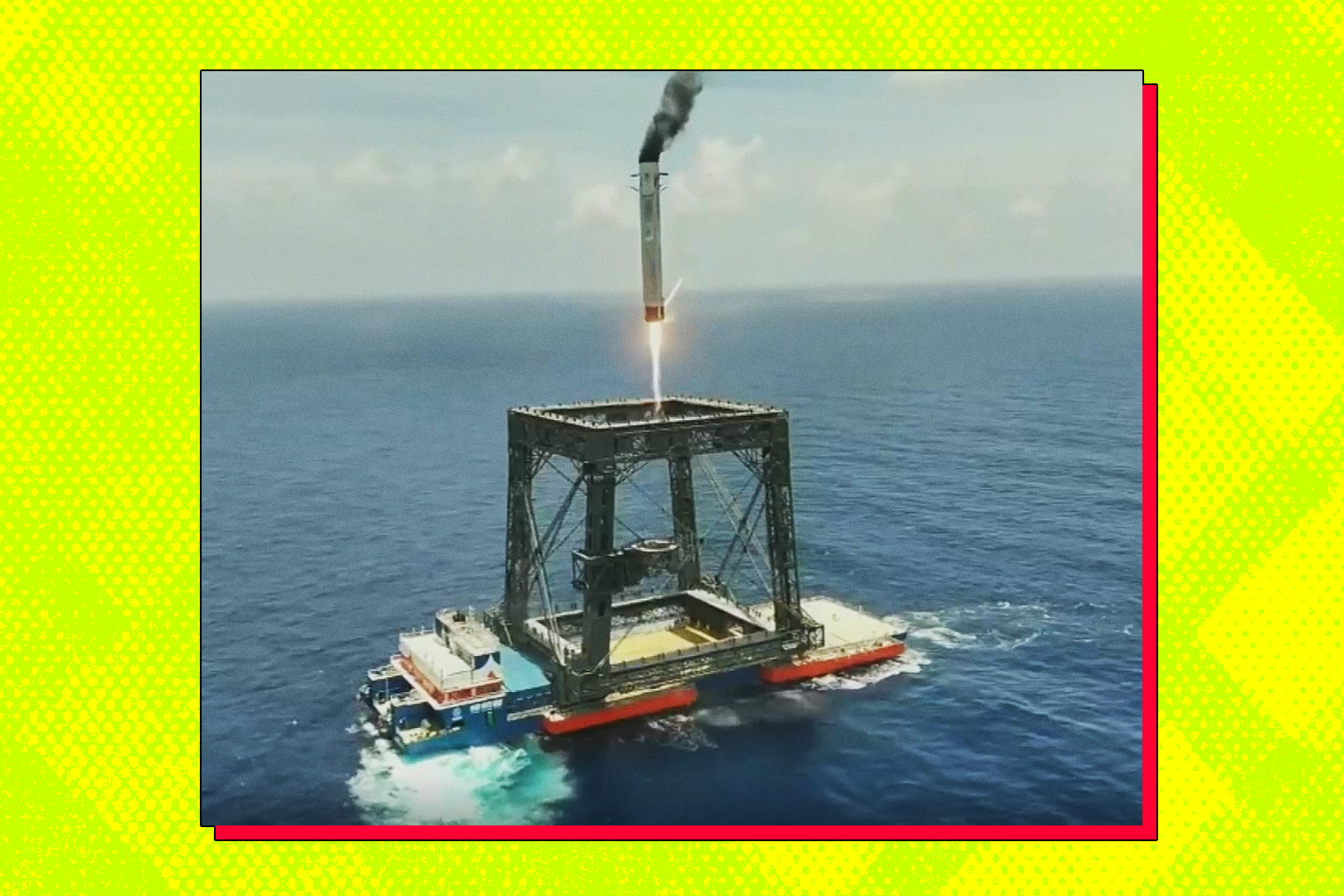
But its dominance in the domain is seriously being challenged by China. Footage shared by the Chinese state-run CCTV shows a Long March 10B rocket booster being caught by an offshore recovery platform. Engineers can be heard cheering on the slowly descending rocket as it confidently sets down.

As Engadget reports, that makes China only the second country to have pulled off such a feat, following the United States — a “historic breakthrough” that could have major implications not just for SpaceX, but for the space industry as a whole.

The rocket was developed by the China Academy of Launch Vehicle Technology (CALT), a subsidiary of the state-owned Chinese space program contractor China Aerospace Science and Technology Corporation (CASC).

The rocket has a payload capacity of 16 tons to low-Earth orbit, not far off from SpaceX’s workhorse Falcon 9, which can carry 22 tons. However, unlike the Falcon 9, which lands autonomously with the help of four deployable landing legs, CALT’s recovery platform picks the descending rocket out of the air with “landing hooks.”

Previous attempts have resulted in descending rockets missing the launch pad. Chinese competitor LandSpace is trying an even more SpaceX-like approach using a leg system. In December, the company successfully sent its Zhuque-3 rocket into orbit, but it ended up blowing up in a fireball while trying to land.

CALT is envisioning it as a new platform to launch Starlink-like internet broadband satellites and other larger commercial satellites.

By reusing the first stage, the company is hoping to dramatically reduce launch costs, much like SpaceX.

The Elon Musk-led company first successfully landed a Falcon 9 rocket following orbital flight in December 2015. Jeff Bezos’ Blue Origin became the second company to have pulled off such a feat in November, with its New Glenn booster gently touching back down in November, just under a decade later.

While CALT’s latest feat is undoubtedly a major sign of progress, China has its work cut out to reach SpaceX’s unparalleled launch cadence. The rocket company came close to launching a rocket every other day in 2025, completing an astonishing 165 orbital flights — almost twice as many as China’s entire space program.

More on China’s space program: New Report Finds That China’s Space Program Is Rapidly Outstripping NASA

The post China Is Catching Up With SpaceX Fast, Landing First Reusable Rocket Booster on Offshore Platform appeared first on Futurism.

  •  

“You Are a Parasite”: Elon Musk Humiliated for Criticizing Zohran Mamdani

During a speech commemorating the 250th anniversary of American independence last week, New York City mayor Zohran Mamdani took aim at the richest person in the world to make a salient point about growing inequality.

“We see the wealthiest country in the history of the world, one where children go to sleep hungry, while the world’s first trillionaire hungers for more,” he said.

Elon Musk, who temporarily became a trillionaire following his company SpaceX’s IPO last month, didn’t take kindly to the slight.

“Mamdani has built nothing,” he tweeted angrily in response. “He is a taker, never a maker.”

But his knee-jerk retort didn’t exactly land. The most-liked reply pointed out that Musk’s empire had been built on tens of billions of dollars of government handouts. One user called him out for being the “biggest single recipient of US taxpayer dollars of all time.”

One particularly scorching takedown came from grassroots political organizer Jay Ponti, who pointed out that many of Musk’s business successes were built on the shoulders of others.

“[Martin] Eberhard and [Marc] Tarpenning founded Tesla,” he wrote, referring to the EV maker’s original CEO and CFO before Musk joined in 2004. “You didn’t invent eBay or Twitter.”

“Your wealth is from acquisitions, hostile takeovers, and stealing credit,” Ponti added. “Everything you have was built by workers and you fight to keep from unionizing while you receive [government] welfare.”

“You are a parasite,” the political organizer concluded.

The scathing remarks highlight Musk’s more-than-rocky rise to fame and how his companies, Tesla and SpaceX in particular, have massively benefited from government contracts over the years. According to an eye-opening Washington Post investigation last year, Musk’s businesses have sucked up at least $38 billion in government contracts, loans, subsidies, and tax credits.

If Musk himself hadn’t been a “taker,” his companies could’ve easily flatlined without regular taxpayer-funded cash infusions.

Meanwhile, Mamdani has done little to earn such a title. On the contrary, his administration has been built on giving — from plans to expand low-cost childcare, fighting wage theft affecting gig workers, setting up city-run grocery stores, and adding a second homes tax for wealthy New York City residents.

After SpaceX’s blockbuster IPO last month made Musk the world’s first trillionaire, Mamdani had some choice words.

“Reason #1,000,000,000,000 why we should tax the rich,” he tweeted at the time.

There’s at least one subject where both Mamdani and Musk do see eye to eye: eliminating waste and pushing for efficiency. In a jab at the billionaire’s ill-fated and enormously wasteful Department of Government Efficiency, Mamdani recently launched what he calls the Commission on Government Efficiency.

However, instead of cutting foreign aid and condemning thousands to die around the world, Mamdani is using the group to make it easier for NYC residents to access affordable city services.

More on Musk: Elon Musk Has Sucked Up $38 Billion in Aid From the Federal Government, and Now He’s Slashing That Help for Others

The post “You Are a Parasite”: Elon Musk Humiliated for Criticizing Zohran Mamdani appeared first on Futurism.

  •  

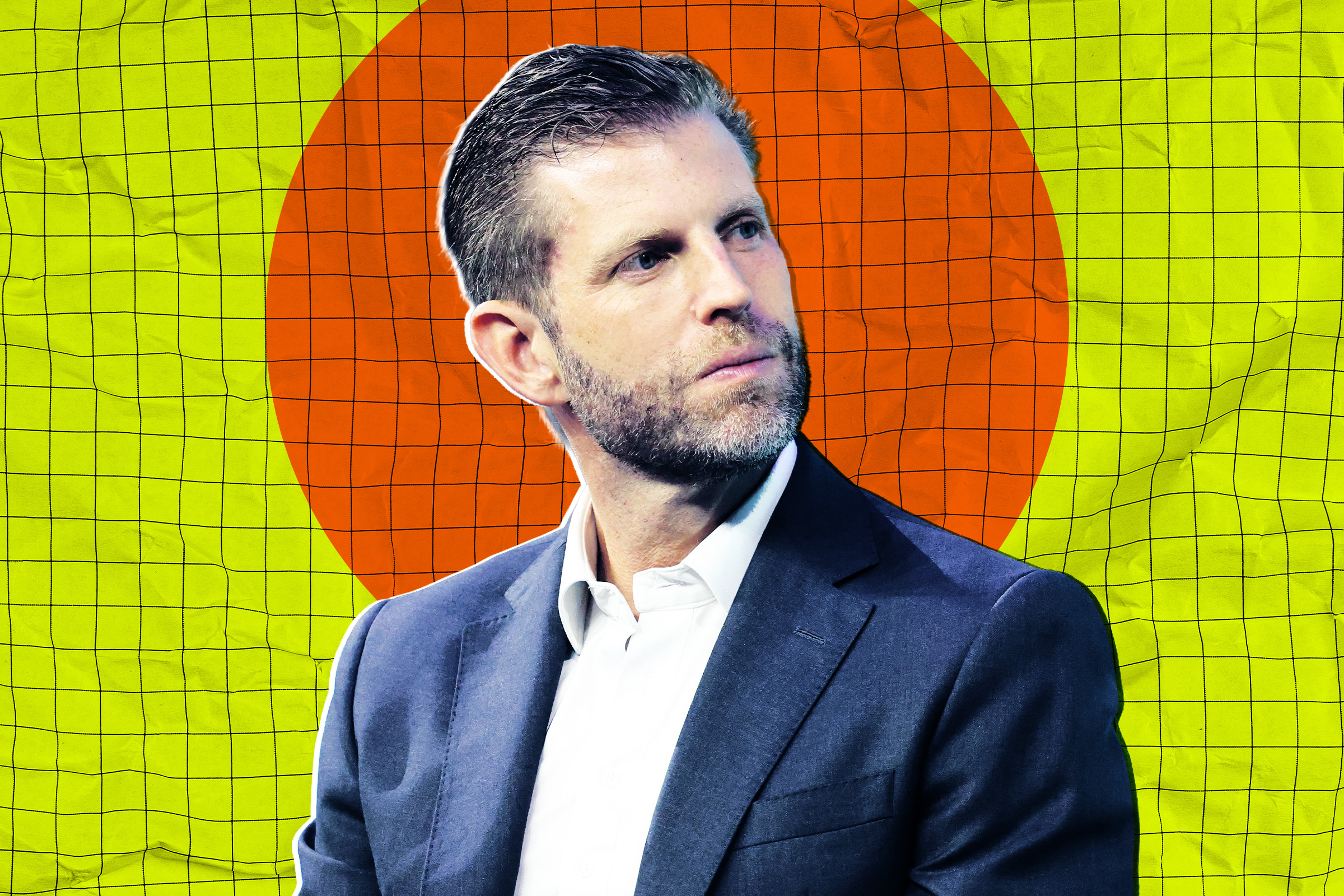
Eric Trump Has Lost $600 Million of Daddy’s Money Betting on Crypto

President Donald Trump’s son, Eric Trump, cofounded a crypto mining venture called American Bitcoin Corp last year — and it’s already in deep trouble.

As the Bitcoin community reels from a major downturn — the digital currency has plummeted by over 40 percent year to date — the company’s shares have plummeted right along with it, crashing over a whopping 95 percent compared to their peak.

On Wednesday, its stock price hit an all-time low of well under $6, down from a high of $140 last autumn.

That means Eric Trump’s six percent stake in the company has lost more than $600 million in market value, per Bloomberg‘s calculations, a bruising crypto play that perfectly illustrates the enormous risks of going all-in on extremely volatile digital assets.

After merging with an existing mining company, the company made the questionable decision last year to pivot from building data centers — an extremely lucrative industry that has seen massive interest as of late — to crypto mining, a gambling-like practice that’s far from guaranteed to make a profit.

Since then, the crypto world has had a rude awakening. As prices plunged, the industry made a sharp turn towards leasing all of that hardware to AI companies instead of mining Bitcoin.

However, American Bitcoin stuck to its guns, ultimately going down with the ship. Most of its assets are tied up in crypto-mining hardware and Bitcoin holdings, meaning it didn’t really have anywhere to run.

Eric Trump, meanwhile, is doubling down.

“Thrilled to announce American Bitcoin crossing the 8,000 BTC mark!” he gloated in a July 7 tweet. “The stacking continues.”

He also argued that it would be “beyond catastrophic” to sell its holdings during a recent podcast episode.

Despite Trump’s enthusiasm, American Bitcoin lost well over $100 million in the first quarter of this year. Whether the tide will turn and crypto will see another rise in value is ultimately a question of belief.

“Just hold on guys, just hold,” Eric Trump warned during this year’s Bitcoin Conference in Las Vegas.

The elder Trump appears to have fared far better, reporting last week that he had made more than $1.4 billion in income from his family’s crypto ventures in 2025 — an astronomical conflict of interest, considering we’re talking about the president of the United States.

More on Trump and crypto: Trump Fans Confused by How Their Investments in His Crypto and Stock Are Now Worth a Tiny Fraction While He’s Getting Richer

The post Eric Trump Has Lost $600 Million of Daddy’s Money Betting on Crypto appeared first on Futurism.

  •  

The Pollution Being Churned Out by AI Data Centers Is So Severe That It’s Almost Incomprehensible

The massive surge of fossil fuel-powered data centers cropping up across the country are emitting an enormous amount of pollution, a pulsing indication that we’re headed in the wrong direction in the midst of a climate crisis.

The extent of the this polluting activity is confounding. As climate action group Floodlight found in a recent investigation spotted by Wired, Texas has become the epicenter of the United States’ current obsession with constructing AI data centers. Companies are exploiting regulatory loopholes as they construct new facilities powered by pollutant-spewing onsite gas plants.

The rate of growth of this “shadow grid” of custom power plants, some of which are big enough to fuel entire cities, is so enormous that the only global entity installing more gigawatts of gas plants than Texas is China, according to environmental group Global Energy Monitor.

On a national scale, scientists are still racing to wrap their heads around the environmental footprint of our new AI obsession. Cornell researchers found that at the current rate of AI growth, the burgeoning industry could represent 24 to 44 million metric tons of carbon dioxide emissions by 2030, the equivalent of adding five to ten million cars to US roadways.

Meanwhile, ongoing projects like the one in Abilene, Texas, the starting point of president Donald Trump’s flagship $500 billion Stargate project, are obtaining environmental permits that are usually reserved for small businesses like gas stations or dry cleaners, as Wired reports. The project’s facilities feature a whopping 62 diesel backup generators, making it orders of magnitude bigger than smaller ventures that use just one or two.

According to Floodlight, at least 38 data centers in Texas are using such regulatory loopholes to gain permits for onsite power sources, representing northward of 2,100 backup diesel generators, and yearly emissions of 2,500 tons of nitrogen oxides, which are highly toxic gases.

One common tactic for operators in Texas, according to Floodlight, is to announce a small data center development that would come in under pollution thresholds, only to suddenly expand once established.

Worse yet, for residents, it’s already likely too late to do anything against the data center expansion.

“The only chance to stop something like this is to do it at the very, very, very beginning of the process — before the permit is issued — through the public participation process,” former Texas Commission on Environmental Quality (TCEQ) staffer James Doty told Wired.

More on data center pollution: Amazon Is Spewing a Record Breaking Amount of Pollution to Power Its AI Data Centers

The post The Pollution Being Churned Out by AI Data Centers Is So Severe That It’s Almost Incomprehensible appeared first on Futurism.

  •  

Scientists Test New Spacecraft Thruster That Uses No Fuel, Just Earth’s Magnetic Field, in Orbit

Satellites perform a delicate dance to maintain their orbit, by locking themselves to a speed just fast enough to counteract the downward pull of gravity.

To stop their orbit from decaying too much, satellites use small in-space thrusters, which broadly speaking, fall into two categories: chemical or electric. The former uses a combustible fuel source that gets accelerated through a nozzle, while the latter uses electrical energy to convert propellant into kinetic energy.

Now, New Zealand space startup Zenno Astronautics says it’s tested an entirely new type of thruster that, unlike either of those conventional technologies, uses superconducting magnets to maintain a satellite’s orbit and orientation. As Space.com reports, the magnets convert solar energy directly into momentum, effectively harnessing the Earth’s magnetic field itself.

“Energy is the one thing that is abundant in space, and you can use it to energize the magnet to create a magnetic acceleration device,” Zenno Astronautics CEO and founder Max Arshavsky told the site. “It gives you acceleration without fuel.”

The company’s “Supertorquer” system, attached to a Mira satellite developed by Impulse Space, was launched into space as part of a SpaceX rideshare mission in November.

“It’s a technology that allows a spacecraft to not tumble violently in space and point in the right direction,” Arshavsky told Space.com.

When the spacecraft needs to move, superconducting coils draw energy from a solar powered battery.

“The unit has multiple superconducting magnets that are positioned in different axes,” Arshavsky added. “When we power up the magnets, they generate a magnetic field, which interacts with Earth’s magnetic field, and because we can control the magnetic field on the satellite, we can control the way in which it turns with respect to Earth.”

During its test last fall, the Supertorquer successfully altered the Mira satellite’s orientation on command, just as designed.

For superconducting magnets to work, they have to be cooled to extremely low temperatures. On Earth, that requires cryogenic liquids, which are ill-suited for a satellite. Even in space, the satellite is warmed up to around 68 degrees Fahrenheit by the Sun’s rays, which meant that Zenno had to get creative.

Using a heat pump, the extensively insulated magnet system expels heat to allow the coils to power up at temperatures as low as 77 kelvin, or -321 degrees Fahrenheit. Zenno claims its cooling system is highly efficient, drawing only up to 48 watts at peak.

The startup has some ambitious plans and is hoping to scale up the system to enable future spacecraft to perform docking maneuvers or even help propel them to the Moon or Mars by exclusively relying on solar power. How feasible those lofty plans will turn out to be remains to be seen, but the startup is optimistic.

Arshavsky even suggested that superconducting magnets could create “umbrellas of magnetic fields” that could “shield people in space” from harmful levels of radiation.

More on satellite thrusters: NASA Fires Up Futuristic Plasma Thruster Designed to Take Us to Mars

The post Scientists Test New Spacecraft Thruster That Uses No Fuel, Just Earth’s Magnetic Field, in Orbit appeared first on Futurism.
  •  

New Jersey Poised to Ban Self-Driving Tesla Robotaxis

For many years, Tesla CEO Elon Musk has sworn up and down that the use of radar and lidar sensors for autonomous driving is a waste of time.

His counterargument has been that cameras and powerful AI-powered hardware are all you need for safe self-driving, despite plenty of evidence to the contrary.

That decision is now risking a major roadblocks for the company in New Jersey. As The Verge reports, a bill that’s coming up for a vote this year would require fully autonomous vehicles to use both cameras and at least two other sensing technologies — in most cases, lidar and radar.

If the bill were enacted, it would effectively banning Tesla’s fully autonomous fleet of Robotaxis. Other states could soon follow — including New York, which is pondering a similar bill — in a domino effect that could completely derail the automaker’s current trajectory.

“This is not anti-Tesla,” bill sponsor and senator Andrew Zwicker (D-NJ) told The Verge. “I’m pro-New Jersey safety.”

Zwicker argued that there isn’t enough evidence to suggest that a single sensor, plus software “can handle situations that humans can.”

“Can we get there? Maybe,” he told the publication. “But we’re not there yet.”

Relying entirely on cameras that can be blinded by the Sun, fog, or heavy rain is part of Musk’s major bet on AI. He has argued that adding extra sensors may end up being less safe thanks to what he called “sensor contention” in a tweet last year.

“We turned off the radars in Teslas to increase safety,” he wrote. “Cameras [for the win].”

However, Musk is largely alone in that belief. Competitors, most notably Waymo, have made major headway by relying on both cameras and other sensor tech, such as lidar and radar, which perform far better in inclement weather and the dark.

“To run 24/7 across the majority of public roads in New Jersey today, it needs lidar,” Carnegie Mellon professor and autonomous vehicle expert Philip Koopman told The Verge. “It’s pretty clear that today camera-only technology is not up to the challenge.”

Tesla’s current fleet of 42 fully autonomous Robotaxis on public Texas roads is still dwarfed by Waymo’s, which has 577 authorized robotaxis in the state, in addition to several thousand more spread across ten US metropolitan areas.

That’s despite Musk promising Tesla’s fleet would grow to hundreds of thousands by the end of this year, a characteristically brazen prediction with little bearing on reality.

The company’s slow rollout has been mired by setbacks, which Musk has rationalized is the result of Tesla being “paranoid about safety.” The EV maker has gone to great lengths to censor the circumstances surrounding the Robotaxi crashes it has reported to regulators so far.

Unsurprisingly, Tesla is already lobbying to fight the New Jersey bill. Zwicker told The Verge that company representatives are discussing the subject with lawmakers.

The EV maker has also turned to New Jersey residents, telling its customers in the state in a message that they should “contact members of the New Jersey legislature” to oppose the bill.

It’s a precarious situation, especially considering the complete lack of comprehensive federal laws providing oversight over the rollout of autonomous vehicles. Each state has been left to fend for itself, a legal patchwork that’s allowing Tesla to push forward despite safety concerns.

More on Tesla’s robotaxis: Tesla’s Robotaxis Are a Complete Disaster

The post New Jersey Poised to Ban Self-Driving Tesla Robotaxis appeared first on Futurism.
  •  

Coinbase AI Sends Mass “Breaking News” Alert That’s Completely Hallucinated

Crypto marketplace Coinbase is under fire after sending out an AI-generated breaking news alert that Norway’s national men’s soccer team had clinched a spot in the quarter finals of the ongoing FIFA World Cup by beating Brazil 3-2 — before the game even started.

While Norway did eventually beat Brazil — with a final score of 2-1, contrary to what Coinbase’s AI claimed — the glaring error didn’t sit well with netizens, particularly considering Coinbase had struck a partnership with prediction markets app Kalshi. A hallucinated news alert could’ve caused bettors to lose out, a panic triggered by an entirely made-up World Cup match outcome.

It’s also baffling considering how long companies have been dealing with this exact problem. Since the dawn of large language model-based tools like ChatGPT, the bots have been confidently telling lies and fabricating facts. That’s despite hundreds of billions of dollars being spent on the tech’s development.

Combined with a growing obsession over prediction markets like Kalshi and Polymarket, it’s a fatal mix that could trigger plenty of chaos, as experts warn of a surge in gambling addiction.

Puzzled users on social media noticed Coinbase’s AI hallucination, calling out the company for the “dangerous and irresponsible” flub.

“Taking a look with the team,” Coinbase CEO Brian Armstrong tweeted in response to the embarrassing slip up. “Thanks for reporting it.”

The company’s head of consumer products, Max Branzburg, claimed hours later that “we fixed the incorrect story and made some updates to avoid these types of inaccuracies in the future.”

Despite the significant humiliation, Branzburg gloated about the “power of AI-enabled 24/7 insights for trading,” while conceding that Coinbase “obviously” still needs to “tune it to address these types of issues.”

The executive even had the gall to take credit for getting certain things right, arguing that “Norway did win and [star player Erling] Haaland did score 2 goals, so maybe the AI knew something we didn’t!”

Needless to say, it’s a bizarre argument, considering the AI was completely wrong about the outcome of the game before it even started.

The crypto firm is far from the last to have sent out entirely incorrect new alerts. In perhaps the worst error, Apple was forced to pull an AI feature that consistently delivered bogus news alerts to iPhone users in January of last year. The BBC had filed a formal complaint after the AI falsely told users that Luigi Mangione, who stands accused of killing UnitedHealthcare CEO Brian Thompson, had shot himself.

Mangione is very much alive to this day and awaiting his federal trial, which was recently postponed to January 2027.

Norway’s soccer team is set to take on England on Saturday, July 11, in Miami.

More on Coinbase: Coinbase CEO Pulls Up Predictions Market During Earnings Call and Rattles Off Words People Were Betting He’d Say

The post Coinbase AI Sends Mass “Breaking News” Alert That’s Completely Hallucinated appeared first on Futurism.
  •  
❌