
❌

Reading view

Evidence Grows That Taco Bell Infected Massive Number of Customers With Explosive Diarrhea

Apocryphal tales of its meals causing the runs have plagued Taco Bell since time immemorial. But this latest parasitic outbreak is something else entirely.

As the Washington Post reports, federal and state authorities are investigating whether the fast food chain is behind the outbreak of explosive diarrhea cases across the country — further cementing its scatological legacy.

The illness, caused by the cyclosporiasis parasite, has sickened as many as 5,100 people across the country, according to the Centers for Disease Control and Prevention. In Michigan, which appears to be the epicenter of the outbreak, over 3,700 people have been infected, state authorities said.

Taco Bell’s suspected role in the outbreak comes after reports that the chain’s Michigan locations began pulling some of its ingredients. Signs in front of the restaurants stated that they were no longer serving lettuce, cilantro, onion, pico de gallo, and guacamole due to a “nationwide recall,” though what recall they were referring to is unclear.

Health officials have so far struggled to narrow down how the parasite is spreading. While usually found on fresh produce, symptoms can take weeks to manifest, making it difficult to trace back to the source.

Lettuce has emerged as one of the likeliest culprits. In an update this week, Michigan’s chief medical executive Natasha Bagdasarian said that “early information has shown lettuce as a common product that regularly comes up during the investigation.”

“Although we do not have a definite product identified as the source of the outbreak, we want to let Michiganders know what we have learned so far so they can take steps to protect their families,” Bagdasarian added.

Federal authorities haven’t singled out any veggies yet, though acting Food and Drug Administration director Don Prater acknowledged Michigan’s fixation on lettuce.

“What I can say at this point is that we’re continuing our traceback investigation on multiple produce items, including the lettuce,” he said, per WaPo.

So far, no nationwide recalls have been made related to the outbreak. One person familiar with the federal investigation, however, praised Taco Bell’s response. 

“It’s good the chain has already voluntarily stopped serving a number of items,” they told the newspaper. They added that some who became sick said they didn’t eat at the chain, suggesting that it’s not the only one responsible.

More on parasites: If You’ve Been Having Explosive Diarrhea, You May Want to Read This

The post Evidence Grows That Taco Bell Infected Massive Number of Customers With Explosive Diarrhea appeared first on Futurism.

  •  

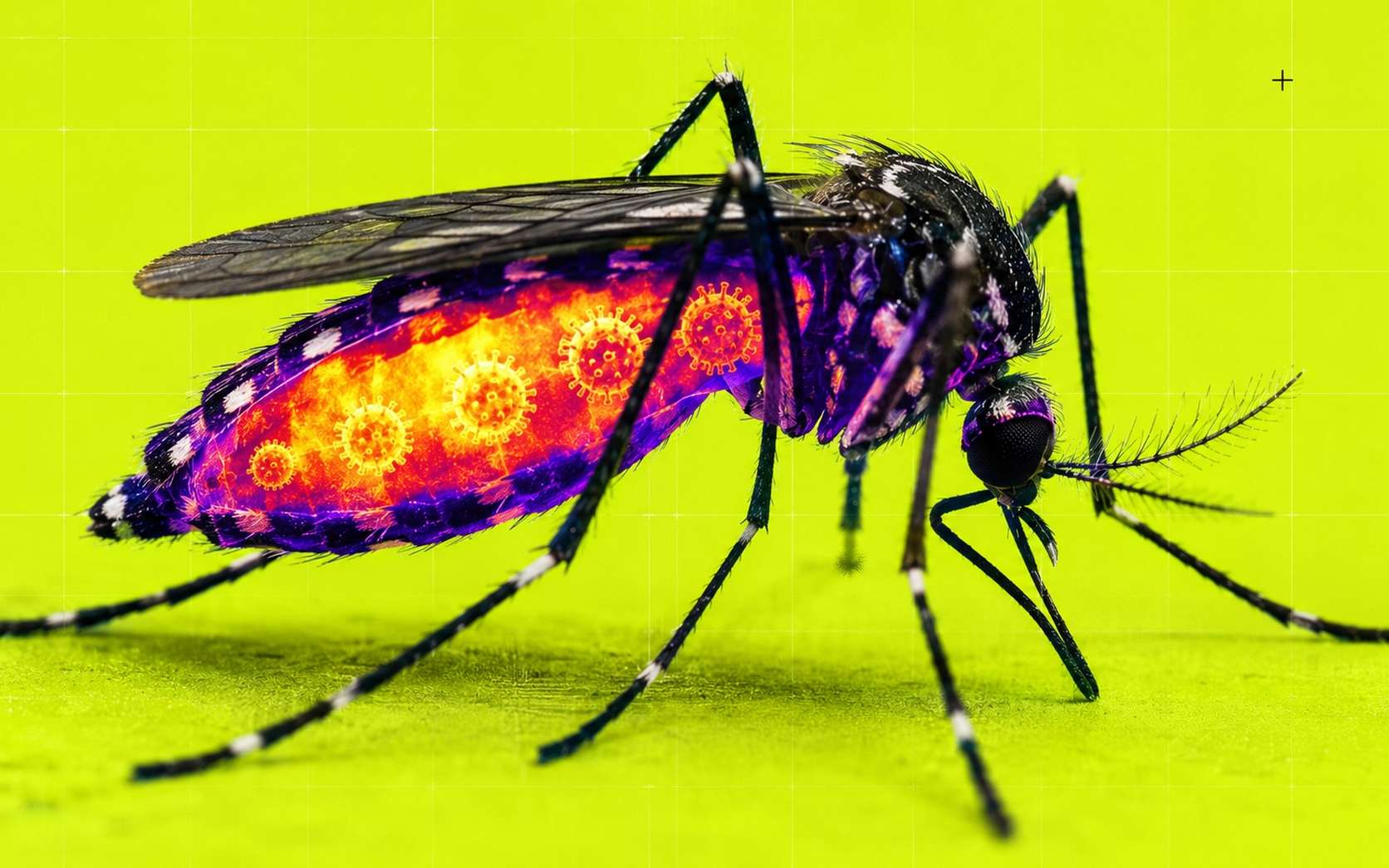
Dengue, chikungunya, Zika : voici ce qui se passe dans un moustique avant qu’il puisse vous infecter

Une piqûre et tout bascule. À l’échelle microscopique, une véritable opération d’infiltration est déjà en cours : des virus — mais pas que… — exploitent le moustique pour nous atteindre. Pour ce troisième épisode de notre série de l’été consacrée aux secrets des moustiques, Futura vous embarque...

  •  

Taco Bells Makes Urgent Changes After Outbreak of Explosive Diarrhea

As an explosive diarrhea outbreak splatters across the country, Taco Bell is preparing for the worst.

This week, the fast food chain — or at least its locations in Michigan — began temporarily pulling some of its staple ingredients to help stop the spread of cyclosporiasis, a foodborne parasite that causes sufferers to go running to the toilet even more often than a standard Taco Bell meal might.

Many of your favorite menu items, like the Crunchwrap Supreme and the Cantina Chicken bowl, may be imperiled.

“We are currently unable to sell Lettuce, Cilantro Onion, Pico de Gallo, and Guacamole due to a nationwide recall,” a notice posted at locations in Metro Detroit reads, Michigan outlet WWJ reported. “Any items ordered that normally come with these items WILL NOT contain them,” it stressed.

It doesn’t sound like any cases of cyclosporiasis-related explosive diarrhea have been linked to Taco Bell yet, so the fast food chain is probably just trying to err on the side of caution.

So far, nearly 3,000 people have been infected with the foodborne parasite, with around 86 hospitalized, NBC News reported, citing data from the Centers for Disease Control and Prevention. Michigan appears to be one of the epicenters, accounting for over half the reported cases so far.

Cyclosporiasis symptoms are pretty gnarly, but usually not life threatening. It can cause stomach cramps and a lengthy bout of explosive diarrhea. The intensifier is warranted: one sufferer who spoke to the New York Post was in awe of the “amount of pressure when it comes out,” adding that the “force is crazy.”

No food items have been recalled yet related to the outbreak. The virus is usually found on fresh produce, but we don’t know what specific food items are spreading it or the supplier they come from. Cyclosporiasis is notoriously hard to track because the symptoms usually don’t present until at least a week after the contaminated food is ingested.

They may not all come from the same source, the CDC cautioned, and what we’re seeing could be a cluster of unrelated outbreaks.

To protect yourself, the best thing to do is thoroughly wash and cook your veggies, which you should still eat. And maybe skip on the fast food.

More on Taco Bell: Taco Bell’s Attempt to Replace Drive-Thru Employees With AI Is Not Going Well

The post Taco Bells Makes Urgent Changes After Outbreak of Explosive Diarrhea appeared first on Futurism.

  •  

A parasite that numbs your pain

Schistosoma mansoni is a parasitic worm that infects millions of people worldwide, entering the body through the skin. Unlike bacterial infections that often cause pain and inflammation, S. mansoni usually slips in unnoticed, rarely causing discomfort. Scientists have long wondered why our skin’s defenses don’t react more strongly to this invader.

Researchers from the University of Pennsylvania and Tulane University explored whether a specialized group of pain-sensing neurons, called TRPV1+, plays a role in detecting and fighting off S. mansoni during its invasion. TRPV1+ neurons are nerve cells in the skin that respond to heat, spicy foods, and certain bacteria and fungi. When activated, they can trigger pain and release molecules that alert the immune system. Previous researchers have shown that these neurons help defend against bacterial and fungal skin infections, but their role in fighting off parasites was unclear. 

To examine how S. mansoni infects its hosts, the team conducted experiments using groups of 4 to 8 mice, matched for age and sex. They repeated each experiment 2 to 3 times to ensure their data was reproducible. They anesthetized the mice, exposed their ears to a solution containing 100 to 150 live S. mansoni larvae, and covered the area with vaseline to keep the solution in place. After 20 to 30 minutes, they counted the number of larvae remaining in the mice’s ears to assess how many had successfully penetrated their skin. 

Next, the team measured pain sensitivity in the mice exposed to the parasite by placing them in chambers and applying an infrared heat source to their paws. They recorded how long it took each mouse to withdraw its paw as a sign of pain. They repeated this test 3 times per paw on each mouse, waited at least 5 minutes between each measurement, and calculated an average withdrawal time. They found that mice infected with S. mansoni were approximately half as sensitive to heat-induced pain as an uninfected control group, suggesting that the parasite could be suppressing the mice’s TRPV1+ neurons.

To investigate this further, the team isolated nerve cells that transmit sensory signals from the mice’s skin, known as dorsal root ganglia, and grew them in the lab. They stimulated these neurons by adding a spicy compound in chili peppers, known as capsaicin. Then they measured calcium influx, a sign the neurons were active, using a special dye that glows differently under a microscope depending on calcium levels. This allowed them to see how active the neurons were and how many molecules they released in response to infection and stimulation. They found that 68% of neurons from uninfected mice responded to capsaicin, but only 26% of neurons from infected mice did so, confirming that the parasite dampened their sensory neuron responses.

To test whether restoring the mice’s neuron activity could help their bodies resist parasite invasion, the researchers genetically engineered the mice to produce a light-sensitive protein in their TRPV1+ neurons, called channelrhodopsin. They “turned on” these neurons by stimulating them with blue light for 30 minutes every day for 5 days before infecting the mice with parasites. Six days later, they assessed the mice’s immune response by using a laser to count immune cells in samples of ear tissue. They also determined how far the parasites had spread by counting larvae in lung samples. They saw that mice with the artificially activated TRPV1+ neurons had nearly double the immune response, blocked roughly twice as many larvae at the skin, and had about 20% fewer parasites in their lungs.

Next, the researchers selectively destroyed TRPV1+ neurons in a new set of mice using a compound known as resiniferatoxin. Three weeks later, they confirmed the treatment had worked by testing the mice’s pain sensitivity using the same heat assay as before. After confirming the mice had lost their pain sensitivity, the team exposed the mice to the parasites. They found that the reinfected mice had 1% to 3% weaker skin immune responses and approximately 25% to 30% more parasites in their lungs than a control group, further confirming that TRPV1+ neurons play a protective role during early infection.

The team concluded that S. mansoni has evolved ways to silence pain-sensing neurons, like TRPV1+. Their discovery suggests that future scientists could boost skin immunity against parasites by targeting sensory neurons. For example, they could develop topical creams or therapies that activate these neurons to help our bodies fight off S. mansoni and similar parasitic invaders.

The post A parasite that numbs your pain appeared first on Sciworthy.

  •  
❌