Scientists achieve all-electrical control of single-molecule quantum states
In a major new confirmation of Einstein’s Theory of Relativity, the LARES-2 (Laser Relativity Satellite 2) has measured frame dragging around Earth with unprecedented precision.
Ignazio Ciufolini of China’s Wuhan Institute of Physics and Mathematics led the team behind a new paper published in Nature reporting the most precise measurement of the effect to date. The researchers reduced the uncertainty to just 0.2 percent, compared with several percent—and in some cases as much as 10 percent—in previous measurements.
Also known as the Lense-Thirring effect, named for the physicists who modeled it in 1918, frame dragging is the pull of a rotating mass on spacetime. The phenomenon was first predicted in Einstein’s Theory of Relativity.
Frame dragging becomes more pronounced around faster-spinning and more massive objects. For this reason, its effects are far stronger around black holes than around comparatively small bodies such as Earth. Some black holes possess millions or even billions of times the Sun’s mass, producing an immense distortion of the surrounding spacetime.
LARES-2, a satellite developed by the Italian Space Agency, made the new measurement possible. Its appearance has been compared to a golf ball or a disco ball, with its 303 corner-cube retroreflectors creating golf-ball-like divots on its surface, which is composed of a nickel-chromium alloy called Inconel 718.
The spacecraft is remarkably simple, with no thrusters, solar panels, or onboard electronics cluttering its compact, 16-inch-wide frame. Despite its small size, LARES-2 weighs roughly 650 pounds. This combination gives it the lowest area-to-mass ratio of any satellite in medium Earth orbit, minimizing the influence of nongravitational forces on its motion.
The effect of gravitation on the object was then measured by bombarding it with ground-based lasers, which the retroreflectors bounce back to the surface. Ciufolini’s team collected roughly 200,000 of these observations between July 2022 and June 2025, with one-millimeter precision, forming the dataset from which they calculated the frame-dragging effect.
The method presents a significant challenge, however. Earth is an oblate spheroid, with bulging sides created by centrifugal force, rather than a perfect sphere, which produces Newtonian forces that interfere with the frame-dragging signal. To mitigate this issue, the researchers used another satellite in a supplementary orbit, canceling out the effect of the opposing Newtonian forces.
That second satellite was NASA’s LAGEOS, launched in 1976. The orbital planes of LAGEOS and LARES-2 differ by 180.01 degrees—remarkably close to the ideal separation of 180 degrees.
One additional complication remained: the K1 lunisolar tide, a variation in Earth’s gravitational field produced by the combined influence of the Moon and Sun. Time provided the solution. Over the tide’s 1,050-day precession cycle, its effects average out and can be removed from the data.
After accounting for these sources of interference, the researchers measured a drift of 61.3 milliarcseconds per year in the satellites’ orbits caused by Earth’s frame dragging. The result closely matches the value predicted by general relativity, with only a narrow margin of uncertainty.
The researchers say the true value of their finding lies not just in confirming general relativity, but also in limiting the scope of the Chern-Simons theory, which seeks to reconcile general relativity with quantum mechanics for a Theory of Everything. Of more limited concern, the work also provided the most precise K1 tide measurement ever recorded, which could prove important to future Earth science research.
The paper, “LARES-2 Satellite Measures Frame-Dragging Effect Around the Earth,” appeared in Nature on July 8, 2026.
Ryan Whalen covers science and technology for The Debrief. He holds an MA in History and a Master of Library and Information Science with a certificate in Data Science. He can be contacted at ryan@thedebrief.org, and follow him on Twitter @mdntwvlf.
New research is revealing possible links between one of the most enduring cosmic mysteries—dark matter—and the existence of a “hidden” fifth dimension.
Dark matter is widely believed to exist according to several leading cosmological theories, although this nonluminous material remains invisible through direct detection. However, its presence can be inferred through the gravitational influence this mysterious form of matter has on the surrounding universe.
Now, according to researchers at the University of Sheffield, one reason dark matter may have remained so elusive involves the possibility that it exists within a “hidden” dimension—a concept that has gained traction in past research.
The Sheffield team’s recent look at this possibility, detailed in a study published in Physical Review D, takes the concept one step further by introducing a new potential framework that could help reveal clues to the behavior of dark matter, as well as why astronomers have had such a hard time detecting it.
In their new research, the Sheffield team says that dark matter may be lurking within a hidden dimension accompanied by dark photons, a variety of particles among those which physicists call “hidden sector particles,” and which are believed to represent potential force carriers for dark matter.
Due to the specific geometry present within this hidden dimension, a phenomenon known as dark matter resonance may occur, where dark photons align in specific arrangements.
“Dark matter resonance is already known to be a powerful idea,” according to Yu-Dai Tsai, Ph.D., a Royal Society Dorothy Hodgkin Senior Research Fellow at the University of Sheffield and one of the new paper’s coauthors.
Tsai adds that the concept has “the potential to change our understanding of how dark matter was produced in the early universe and how we search for it today,” although reconciling it with our current understanding of dark matter has presented issues for researchers in the past, which include questions about its specific origins.
“Many previous resonant dark matter models have treated the resonance as an assumption,” Tsai recently said in a statement. “[Our team’s] work gives a possible deeper origin for it: The resonance may come directly from the geometry of hidden dimensions.”
According to Tsai and his co-author, Taegyu Lee, understanding dark matter resonance more fully could hold significant implications for unlocking new clues about how matter behaved at early stages in our universe, and why that may differ significantly from what astrophysicists see occurring right now.
“This resonance can make dark matter interactions much stronger at crucial epochs in cosmic history,” Tsai says. “Crucially, the model allows for these strong interactions in the past while still explaining why dark matter appears so inert and hard to detect today.”
Although Tsai concedes that the concept of dark matter resonance has been explored in the past, unlike previous studies, the Sheffield duo’s new work suggests that dark matter may essentially be “in tune” with conditions in a hidden fifth dimension already, arising naturally from its innate mathematical structure.
Tsai says this approach toward understanding dark matter, if correct, “would represent a profound advance in humanity’s knowledge of the cosmos and what it is made of.”
Fundamentally, the team’s findings point to promising new ways physicists may be able to explore the underlying mysteries of both dark matter and the possibility of additional dimensions in which it may operate.
“Our research gives physicists clear new targets in the search for dark matter,” Tsai says, “while connecting two of the biggest ideas in fundamental physics: the mystery of dark matter and the existence of hidden dimensions.”
The recent study, “Naturally resonant dark matter from extra dimensions,” by Yu-Dai Tsai and Taegyu Lee, appeared in Physical Review D on July 8, 2026.
Micah Hanks is the Editor-in-Chief and Co-Founder of The Debrief. A longtime reporter on science, defense, and technology with a focus on space and astronomy, he can be reached at micah@thedebrief.org. Follow him on X @MicahHanks, and at micahhanks.com.
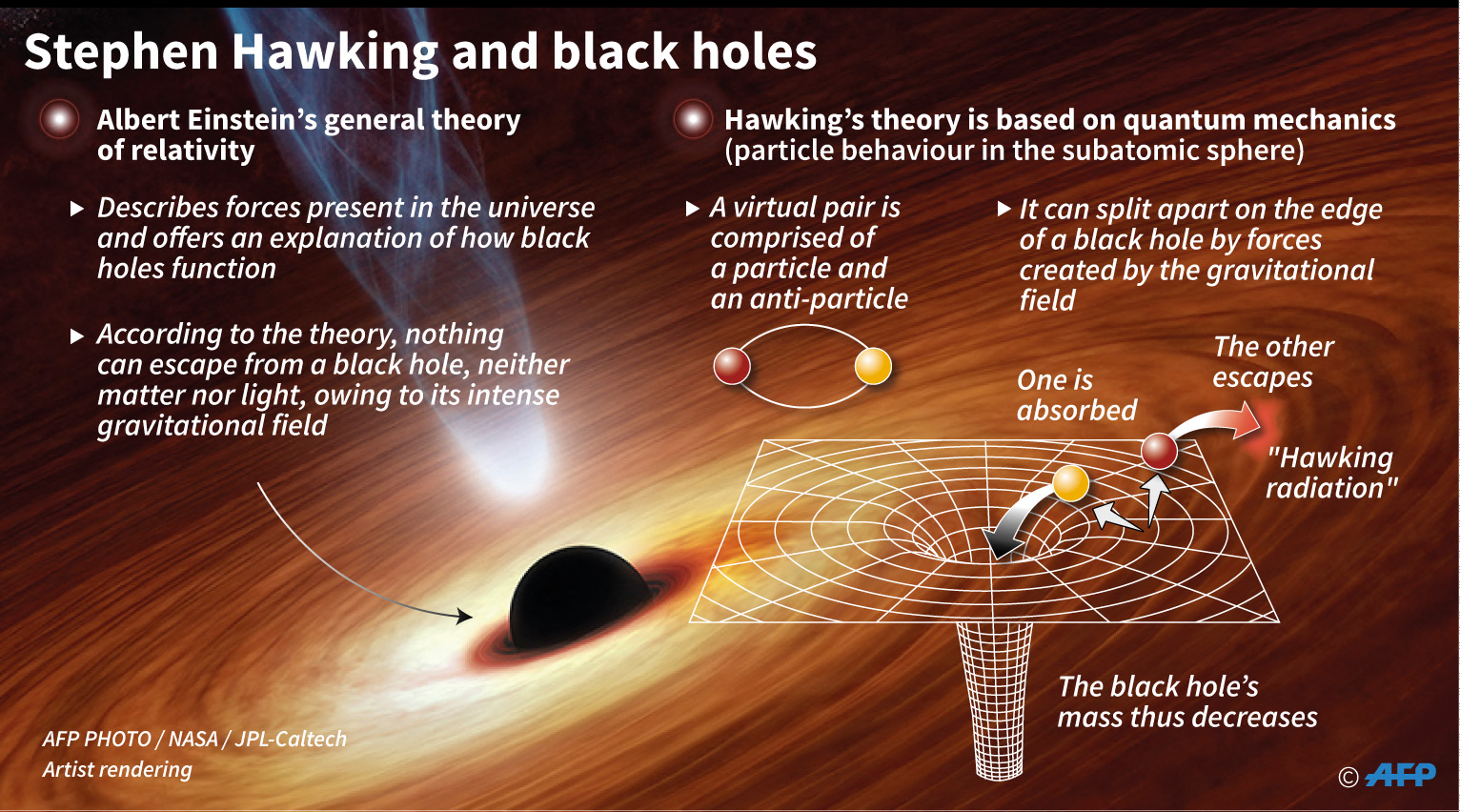
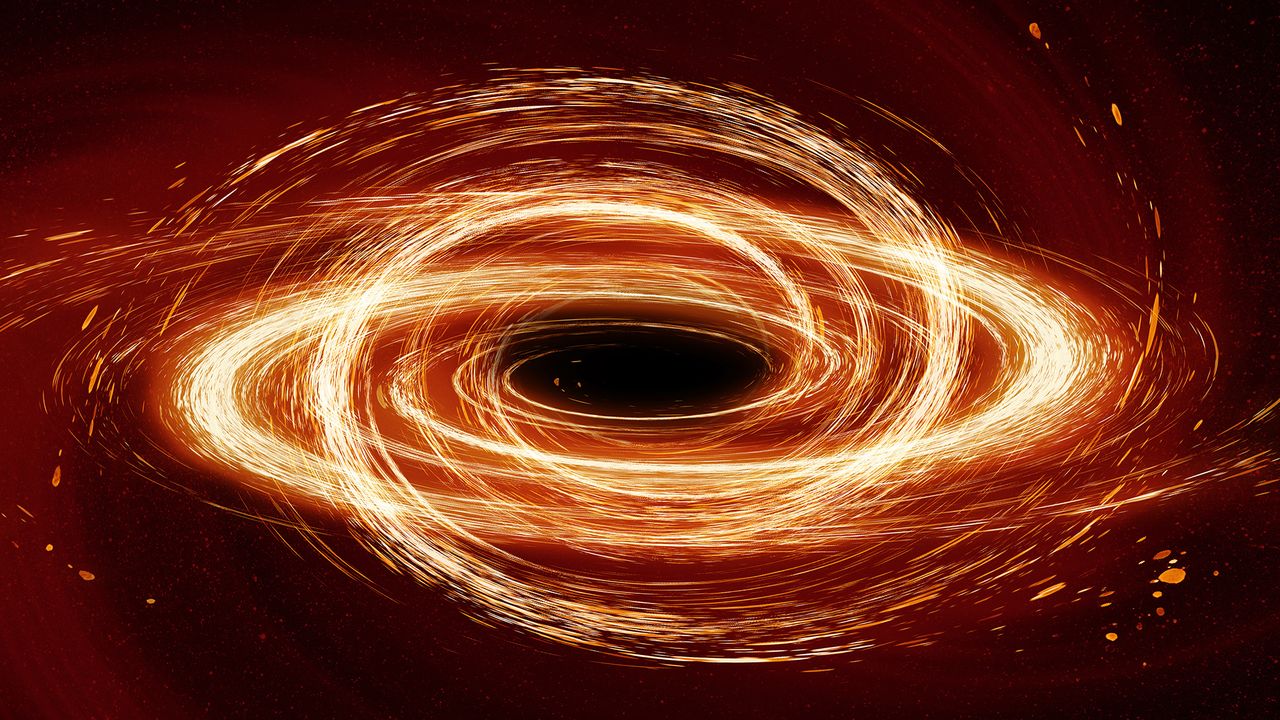
Physicists have coaxed a black hole's most famous glow out of a strand of optical fiber and, for the first time, watched that light react back on the simulated black hole that produced it.
The result gives researchers a rare, hands-on look at Hawking radiation — the faint thermal emission that Stephen Hawking predicted should leak out of black holes — and offers a first clue about the tiny push that could, in principle, make a real black hole slowly evaporate, the research team said in a new study.
Working with a tabletop experiment in optical fibers, the international team detected both the radiation and its long-sought "back reaction" — the way the radiation feeds energy back and reshapes the object that created it.
According to the new study, published July 1 in the journal Nature, the light behaved exactly as Hawking predicted it should: like the glow of a warm object, with a definite temperature and a spectrum that fades away steadily toward higher frequencies. It did so even in a regime where the usual textbook description of a black hole should break down.
Hawking radiation is famous because it sits at the crossroads of physics' biggest ideas.
"Jacob Bekenstein predicted that black holes have an entropy and a temperature, and Hawking calculated the thermal radiation of the black hole," study co-author Ulf Leonhardt, a physicist at the Weizmann Institute of Science in Israel, told Live Science via email. "In Hawking-Bekenstein radiation, quantum physics, general relativity and thermodynamics come together — subjects that are normally in conflict with each other."
The conflict runs deep: General relativity pictures space and time as smooth and continuous, while quantum mechanics describes a world of discrete, unpredictable jumps — and no one has managed to fully reconcile the two.
That combination is exactly what makes Hawking radiation so hard to study. Astronomers have never seen Hawking radiation from a real black hole and probably never will; the glow is far too faint to pick out across the cosmos. So physicists have turned to laboratory stand-ins that obey the same equations, building black hole analogues out of flowing water, ultracold atoms and, as in this study, light.
The trick behind every black hole analogue is a moving medium. "Imagine a swimmer in the sea with a current faster than he can swim," Leonhardt explained. "He is swept away. This is what happens beyond the [event] horizon, and this is why normally nothing can escape the black hole."
A black hole's event horizon is the boundary where that current — space itself, in real life — starts moving faster than anything can travel. To recreate it, the team needed a material that appears to rush along at the speed of light. Their solution was elegant: use light to make the "material."
"In optics we need a material that appears to move at the speed of light," Leonhardt said. "For this we use light itself — in nonlinear optics, light acts like a material."
In practice, the researchers fired an intense, ultrashort "pump" pulse into a thin photonic-crystal fiber — a strand of glass threaded with a pattern of tiny air channels running along its length, which lets researchers fine-tune how light moves through it. As it traveled, the pulse slightly changed how the glass bent light, creating a moving speed bump that raced along with it. A second, much weaker "probe" pulse then ran into this moving front. Where the probe could no longer keep up, an artificial horizon formed — and the black hole analogue was born.
The payoff came in the ultraviolet. According to theory, Hawking radiation is created in pairs: One partner escapes, while the other, carrying "negative" energy, is the mirror image that would fall into a real black hole. In the fiber, that partner showed up as ultraviolet light.
"We counted photons in the ultraviolet that correspond to the Hawking partners beyond the horizon," Leonhardt explained. "They have a wavelength around 233 nanometers. This was our signal."
Just as important as seeing the glow was understanding how it was made. For years, researchers assumed the fiber built up its Hawking radiation through a cascade — a chain of separate steps in which the light is converted first into one intermediate form, and then another, each feeding the next before the radiation finally emerges. The team found that, instead, a single, direct interaction does the job, with the pump and probe light producing the Hawking pair in one clean step. It is a much simpler picture that the researchers said may carry over to other analogues and perhaps even to real black holes.
Because energy has to come from somewhere, making Hawking radiation should nudge the source that created it. For a real black hole, that nudge is how it loses mass and, over unimaginable timescales, evaporates entirely — the process Hawking described in his landmark 1974 paper. No experiment had ever captured that recoil.
Here, the team saw it. Producing the radiation shifted a small fraction of the pump pulse's own light to a slightly different color, leaving a telltale lopsided pattern in the spectrum. That asymmetry, absent in earlier experiments, is the fingerprint of the back reaction, or recoil — the black hole analogue quietly paying the energetic price for its own glow.
The result also speaks to one of the thorniest puzzles in black hole physics: the trans-Planckian problem. Trace Hawking's radiation back to where it was born and the calculation runs into territory no physicist can vouch for — the Planck scale, the vanishingly small size at which space and time are thought to lose their familiar meaning and all known physics gives out. Hawking's prediction, in other words, appears to rest on a foundation that may not exist.
"Any light getting away from the horizon is stretched out enormously," Leonhardt said. "So it must come from waves smaller than the tiniest scale in nature, where the physics is unknown. Would that still give Hawking radiation? That was the question, and we have answered it in our experiment." Remarkably, the glow stayed perfectly thermal even in this extreme regime.
The team's next step is concrete. So far, they have used ordinary laser light, which reproduces the spectrum of Hawking radiation but not its deepest quantum weirdness. Next, the team plans to "go quantum," Leonhardt said. "We will explore how to get into the quantum regime and observe quantum features such as entanglement" — the ghostly link that should tie each escaping Hawking particle to its lost partner.
See how much you know about black holes with our black hole quiz!
In the quest to make computers accurate and reliable, noise is the enemy. The thermal jiggling of atoms is a constant threat to the precision needed for detailed calculations. Whether we’re dealing with familiar classical devices like the laptops or supercomputers that we use today, or fancy quantum devices that promise us faster computation tomorrow, we don’t want some haphazard heat fluctuation…

Scientists from the Norwegian University of Science and Technology have unveiled a method for tracking silently moving underwater and surface objects by using existing fiber-optic cables to measure water displacement.
The scientists behind the novel detection approach, which was designed to detect whales even when they aren’t vocalizing, also demonstrated the method’s ability to track surface ships and potentially underwater vessels, such as submarines, that traditionally rely on silence for stealth.
In the research team’s study, the authors explain that it is already possible to record and reconstruct marine mammal vocalizations, including those of whales, using seabed fiber-optic cables. They note that the current method, called distributed acoustic sensing (DAS), allows scientists to passively monitor whale behavior, “enabling both the detection of vocalizations and the simultaneous tracking of multiple individuals.”
However, they add, although this data can prove valuable in tracking these increasingly endangered animals, “it has not been possible to track marine mammals when they are silent.”
“A fundamental limitation of passive acoustic monitoring is that most methods rely on acoustic data, which is only available when whales vocalize,” the study authors explain, adding that this limitation “clearly demonstrates the need for new sensing methods that can detect silent whales.”
Although the researchers propose several methods, including combining DAS data with satellite and observational data to paint a more complete picture, they also note a “second path” that involves exploring current datasets to discover new, valuable acoustic signatures even when the animals are silent.
When exploring new ways to interpret DAS data collected by seabed fiber-optic cables, the team explained how low-frequency strain variations may arise from “a range of physical mechanisms.” These include hydrodynamic processes “associated with moving objects.”
For example, the authors explain, when a ship moves across the ocean surface, it pushes water ahead of it and draws water along in its wake. This motion through the water medium generates a strain on the surrounding water described as a hydrodynamic pressure field. According to the team, this motion-induced pressure field “extends downward through the water column.”
“The displacement of water generated by moving whales and ships induces a moving hydrodynamic pressure field that extends through the water column, dynamically loading and unloading the seafloor,” they explain.
Changes in this pressure field caused by moving objects cause sediments on the ocean floor to deform laterally and vertically. In areas of the seafloor with fiberoptic cables buried underneath, the DAS system records this “lateral deformation” of the sediments, which “translates into strain that can be observed in the DAS data.”
“This means that no acoustic signal is involved, and we can ‘listen’ to silent whales,” they write.
To calibrate their approach, the team used surface ships as “proxies” in a series of field experiments. According to their study, the four interrogator units (IU) were installed “during the DAS experiment on Svalbard in 2022.” Then, another unit was installed in Longyearbyen in March 2025. Although the study focuses on the newer IUs, the team notes that all the experimental data “was used to analyze how coupling affects the detectability of hydrodynamic pressure field signatures and how the signal characteristics change with increasing source-receiver distance.”
In those experiments, the team investigated four ships of different sizes. Notably, all ships were observed at a depth of 70 to 80 meters and were traveling at roughly the same speed. Critically, ship size, speed, and route data can be verified externally, providing a check on the study’s results.
“Ships are observed in the DAS data year-round, and the AIS is available to confirm which ship is sailing above the fiber and at what time,” they explain.
As expected, they found that the DAS signal amplitude “scales with the size of the ship.” For example, the smallest ship they observed barely registered above the background noise, making it the hardest to track. Conversely, the largest vessel tracked by the team, an icebreaker, left the clearest signal.
The researchers also demonstrated the ability to observe hydrodynamic pressure and velocity signals from a cruise ship at a water depth of 413 m, “and up to 550 m from the fiber cable.” However, when the team searched for whales, the range was much more limited.
“The smaller blue whales can be observed when diving within 40 m of the fiber-optical cable,” they explain.
During a dedicated test segment, the team monitored what they interpreted as several silently moving whales traversing through the detection zone. Although they were unable to independently confirm they were whales in the same way they could confirm the ships, the team notes that “multiple lines of analysis support the interpretation that whales are responsible for the observed signals.”
The team also notes that AIS data confirmed that no acoustic ship signatures were present “in the time window studied.” They add that this result “reduces the likelihood that the observed low-frequency signals originate from vessels.”
When discussing the implications of their findings, the team said their data shows that the observed low-frequency response captured by the fiber-optic cables “is consistent with translating hydrodynamic pressure fields generated by the displacement of water by moving ships and other large bodies such as whales.”
“This sensing method enables an approach to monitoring one of the world’s most endangered species,” they explain, adding that it is even more effective at detecting submerged objects than at detecting surface ships.
“A fully submerged object generates a more symmetric pressure field, while a surface-bound ship produces a truncated field due to the air–water interface, which limits the downward extent of the pressure field,” the study authors write.
When discussing the limitations of their innovative, silent, object-tracking approach, the team notes that it is only effective for tracking smaller ships and whales at close range.
“Kvitungen is the smallest ship investigated in this work and is barely observed above the noise floor for a water depth of ∼75 m,” they write. “Blue whales are even smaller and are unlikely to be detected at distances greater than approximately 30 to 40 m from the fiber.”
The team also notes that although larger ships generate stronger signals than smaller ones, “the signal amplitude decreases with increasing distance from the fiber.”
Other limitations involved data returns suggesting whales that were either “abnormally long or surprisingly small.” The team said this seemingly impossible result “underlines that our simple model needs further development to obtain more precise results.”
The study “Detecting silent whales using seabed fiber-optic cables” was published in the Proceedings of the National Academy of Sciences (PNAS).
Christopher Plain is a Science Fiction and Fantasy novelist and Head Science Writer at The Debrief. Follow and connect with him on X, learn about his books at plainfiction.com, or email him directly at christopher@thedebrief.org.

The School of Science has announced the winners of its 2025 Awards for Excellence in Teaching and Mentoring. This year, the Teaching Prizes were restructured to acknowledge early- and mid-career teaching excellence, in addition to an overall prize for teaching excellence that includes instructors and non-tenured instructors or lecturers.
Olivia Corradin, assistant professor of biology and a member of the Whitehead Institute for Biomedical Research, received an Award for Teaching Excellence. Corradin’s nominators emphasized that she is an exceptionally clear and engaging educator.
Julien Tailleur, associate professor of physics, received an Award for Excellence in Mentoring and Advising in recognition of his dedication to mentorship. Nominators describe Tailleur as an outstanding research supervisor and group leader who cultivates an open and respectful environment.
John Urschel, Class of 1956 Career Development Assistant Professor of Mathematics, received an Award for Teaching Excellence. Many students call Urschel the best instructor they have had and their favorite professor at MIT, noting that he cares greatly about his students’ success and shows them why linear algebra is “so cool.”
Recipients of the School of Science Awards for Excellence in Teaching and Mentoring were honored alongside School of Science Infinite Expansion and Mile Award winners at a celebratory luncheon.
The School of Science welcomes nominations for the teaching prize at the end of each semester. Nominations can be submitted to the School.
The post Three win School of Science Awards for Excellence in Teaching and Mentoring appeared first on MIT School of Science.
Researchers have uncovered compelling evidence about the elusive structure of a high-pressure phase of solid nitrogen. Nitrogen makes up most of Earth’s atmosphere, but under intense pressure and low temperatures, it can form solid phases with unexpectedly complex structures. One of these phases, γ-N2, remained poorly understood for more than 50 years despite repeated experimental [...]

This week in science and technology news we’re covering at The Debrief: For decades, physicists have argued about Richard Feynman’s Sprinkler Problem, involving the question of how a reverse sprinkler would operate. Now we may finally know the answer… elsewhere, new studies reveal how breathwork may trigger psychedelic-like states, emotional breakthroughs, and psychological insights without drugs. Meanwhile, a stone sphere unearthed at an archaeological site in Azerbaijan is reportedly unlike anything previously documented in the South Caucasus.
Also, in an exclusive feature, University of Toronto bioethicist KM Bowman, Ph.D., writes for The Debrief about his firsthand experience with uncontacted indigenous tribes: “Through the haze stood a man. Barely clothed, carrying what appeared to be a weapon of some form, he remained motionless for only a few seconds before silently disappearing back into the forest.” In his essay, Bowman shares his experience and asks whether governments can protect “the uncontacted.”
Finally, here’s a look at more stories The Debrief is tracking right now…
For decades, physicists have debated Richard Feynman’s famous Sprinkler Problem—the question of how a reverse sprinkler would behave—and now researchers may have finally found the answer.
Made famous in Feynman’s 1985 memoir, Surely You’re Joking, Mr. Feynman!, the problem concerns the spin direction of a sprinkler-like device inside a pool that draws water inward instead of spreading it out. The researchers revealed their experimental results, based on tests with a variety of custom sprinklers, in a recent paper published in the Proceedings of the National Academy of Sciences, adding new life to the long-standing physics debate.
“This work provides the experimental answer for Feynman’s Sprinkler Problem by showing, across several sprinkler types, how the angular momentum of water flows drives sprinklers’ rotation,” said senior author Leif Ristroph, an associate professor at New York University’s Courant Institute School of Mathematics, Computing, and Data Science.
The significance of the work extends well beyond an esoteric question about a hypothetical device, providing new insights into the physics of fluid dynamics. Feynman famously attempted to investigate the problem experimentally during the 1940s, though his apparatus reportedly failed dramatically before producing a definitive result. During his lifetime, Feynman discouraged naming the problem after himself, noting that it built upon ideas first explored by physicist Ernst Mach in the 1880s.
“Our findings provide a firmer understanding of how components respond to fluid flows—knowledge that can guide future engineering and technological advances for devices, such as turbines, that convert these flows into energy,” said co-author Brennan Sprinkle, an assistant professor at Colorado School of Mines.

This isn’t the team’s first work on Feynman’s Sprinkler Problem, as it builds on what they reported in an earlier 2024 paper. Unlike Feynman himself, the researchers managed to make their reverse sprinkler rotate, leading to intriguing new physics discoveries. In that work, they discovered that a reverse sprinkler would operate much like a conventional one, though at about 50 times the slower rate.
While traditional sprinklers act like a rocket of water, the Feynman sprinkler is comparable to an inside-out rocket, shooting towards the junction of the arms at the device’s center. Inside that central chamber, the team discovered something interesting: the water jets do not collide head-on, which produces the sprinkler’s reverse rotation, in what the researchers dubbed the momentum flux theory.
That 2024 study was limited to traditional sprinklers with S-shaped arms, leaving the researchers to ponder how alternate shapes would impact the water flow. After fabricating their own series of sprinkler designs, the researchers tested water flow in both forward and reverse directions, measuring torque, flow rate, and rotational motion.
One of the theories they tested was Ernest Mach’s 1883 theory that the fluid and sprinkler would swirl in opposite directions, but they found it did not align with the reverse rotations and torques observed in their experiments. They also tested a theory originally attributed to Feynman and later refined by others, which suggested that water flow at the outer edges of the sprinkler arms drove rotation; however, the team’s observations showed this is not the case.
Their observations supported the team’s existing momentum flux theory in both the forward and reverse directions, across all sprinkler shapes. According to their work, the shape of the sprinkler arms controls the flow of the water jet.
“By showing that momentum flux is the answer to Feynman’s Sprinkler Problem,” Ristroph concluded, “our findings address a long-standing open problem in flow physics and provide useful knowledge about how these devices work and their effectiveness.
The paper, “Geometry Controls Momentum Flux in the Sprinkler Problem,” appeared in the Proceedings of the National Academy of Sciences on July 13, 2026.
Ryan Whalen covers science and technology for The Debrief. He holds an MA in History and a Master of Library and Information Science with a certificate in Data Science. He can be contacted at ryan@thedebrief.org, and follow him on Twitter @mdntwvlf.
Steel rusts over time. Copper turns green. But gold stays shiny, seemingly forever. Scientists have now discovered a property that explains why gold stays spotless.
Oxidation is a type of chemical reaction that can cause a metal to rust or tarnish when it meets oxygen. Atoms on gold’s surface, new data show, rearrange into a geometry that hinders that oxidation. If they didn’t, gold would begin to oxidize in seconds.
Santu Biswas and Matthew Montemore shared their new finding May 21 in Physical Review Letters. These researchers work at Tulane University in New Orleans, La.
In air, oxygen is bundled into molecules, each consisting of two oxygen atoms. For a metal to oxidize, it first has to split those oxygen pairings. Then the single oxygen atoms can form compounds that stick to the surface of a metal. The researchers calculated how well gold’s surfaces could split oxygen. They found that it depends on what happens on gold’s surface.
Imagine cutting a piece of gold in two. That would create a new surface that was once in the center of the gold hunk. Atoms on the newly exposed surface then shift from their original locations in the metal.
There are a few different possible arrangements those atoms can take. The researchers studied two common ones. In both, atoms that had been laid out in squares rearranged into hexagons.
The researchers did calculations to understand the effect of such shapeshifting. The hexagonal arrangement, they found, was much worse at splitting oxygen than the square one. To split oxygen, the hexagonal structure would first need to distort back into the original square shape. That’s a hurdle that stalls oxidation. (A third common surface structure of gold was already known to be bad at oxidizing. It’s hexagonal from the start.)
But there’s more to the story. Under certain conditions, gold can react with oxygen. When it does, it forms gold oxide. That’s unstable. So even if gold were able to split oxygen, the material would form only a thin layer of oxide, notes Montemore, a chemical engineer. His team’s new findings, he says, could help scientists understand how to design better catalysts. Those are materials that speed up chemical reactions.
Just how much slower the rearranged gold atoms oxidize was “definitely a surprise,” Montemore says. The tiny position shifts made a huge difference. “It’s something like a billion to a trillion times slower oxidation once you rearrange.”
Watering your lawn in the summer can be both pragmatic and fun with so-called "silly sprinklers," designed to create amusing loops and spirals of water jets. And there's some fascinating physics at work to boot. Researchers at New York University's Courant Institute conducted a series of experiments with different silly sprinkler designs to find the answer to a longstanding problem in fluid dynamics, according to a new paper published in the Proceedings of the National Academy of Sciences.
As previously reported, the reverse sprinkler problem is associated with physicist Richard Feynman because he popularized the concept, but it actually dates back to a chapter in Ernst Mach’s 1883 textbook The Science of Mechanics (Die Mechanik in Ihrer Entwicklung Historisch-Kritisch Dargerstellt). Mach’s thought experiment languished in relative obscurity until a group of Princeton University physicists began debating the issue in the 1940s.
Feynman was a graduate student there at the time and threw himself into the debate with gusto, even devising an experiment in the cyclotron laboratory to test his hypothesis. One might intuit that a reverse sprinkler would work just like a regular sprinkler, merely played backward, so to speak. But the physics turns out to be more complicated. “The answer is perfectly clear at first sight,” Feynman wrote in Surely You’re Joking, Mr. Feynman (1985). “The trouble was, some guy would think it was perfectly clear [that the rotation would be] one way, and another guy would think it was perfectly clear the other way.”


© NYU's Applied Mathematics Laboratory
The properties of water are unusual among liquids—it expands when it freezes, reaches its highest density just above freezing, and does not behave like the simple liquids chemists often use to understand matter.
Now, a new study in Communications Chemistry uses artificial intelligence to compare competing methods for measuring water’s hidden molecular order and determine which are truly effective.
Researchers at the University of Osaka developed a neural network to test 16 different ‘structural descriptors,’ which are mathematical tools for measuring how ordered or disordered water molecules are at the microscopic scale. Over the past 30 years, scientists have independently developed these descriptors, each with its own approach and scale, all aimed at explaining the same underlying puzzle.
Until now, researchers lacked a standard method for comparing them directly—a gap this study fills.
To establish a common standard, the Osaka team trained a neural network using molecular dynamics simulations of water at temperatures from 200 to 300 Kelvin. Using only the values from a single structural descriptor, it had to predict the temperature at which each molecular configuration was generated. If a descriptor captured meaningful structural information, the network could easily distinguish hot from cold.
“Past studies have shown that using machine learning to classify and understand structural data is effective,” says corresponding author Kang Kim. “We specifically wanted to incorporate a neural network model into this study to evaluate how accurate the descriptors were at capturing key structural information, in a way that is like human cognition.”
The network assessed each descriptor using a standard classification measure. To deepen their analysis, the team used an explainable AI technique called LIME. This method looks at how the model makes its decisions and checks whether its reasoning matches established physical principles, instead of relying only on statistical patterns.
Out of the 16 descriptors tested, two stood out. The Local Structure Index (LSI) and another, referred to as zeta (ζ), both of which measure the distance between the first and second layers of neighboring molecules, achieved nearly perfect accuracy across the tested temperatures. Another group, based on how hydrogen bonds connect, also scored well but was not as accurate as the others. Older descriptors that rely on tetrahedral angles or interaction energies became less accurate at higher temperatures, where molecules move more, and the differences blur.
“The network used what it had learned to compare how 16 descriptors differentiated between LDL and HDL structures at different temperatures,” says senior author Nobuyuki Matubayasi. “In this way, we determined the most efficient descriptors.”
The LIME analysis backed up the network’s results with evidence consistent with scientists’ expectations. Molecules with high Local Structure Index and zeta values led the model to predict lower temperatures, which is consistent with the idea that more ordered, LDL-like structures appear as water cools. This suggests that the network captured more than just statistical correlations.
With a common framework for comparing descriptors in place, researchers could attempt to develop descriptors that directly identify HDL and LDL environments rather than infer them indirectly. Whether these new tools will finally solve one of water’s biggest mysteries, the point where its two proposed liquid forms fully separate, is something scientists are just starting to investigate.
Austin Burgess is a writer and researcher with a background in sales, marketing, and data analytics. He holds an MBA, a Bachelor of Science in Business Administration, and a data analytics certification. His work focuses on breaking scientific developments, with an emphasis on emerging biology, cognitive neuroscience, and archaeological discoveries.