 Login

The Quest for ‘Technological Sovereignty’ in Europe (and Why It’s So Hard)
France and Germany want to quit relying on America and China for key technology like artificial intelligence, but they’re having to choose where to do it.

UK regulator Ofcom launched an investigation into TikTok to assess whether the platform is meeting its obligations under the country’s Online Safety Act to protect children from harmful digital content.
The probe will assess whether the ByteDance-owned platform has implemented effective age assurance systems to determine if a user is underage and prevent children from encountering harmful material online.
Ofcom’s Age Assurance report, published today, suggested that some age inference models including those used by TikTok “may have failed to correctly identify a significant proportion of children”, potentially exposing them to harmful content.
If compliance failures are identified, the watchdog could impose fines of up to £18 million or 10% of the company’s global revenue, whichever is greater. In serious cases, it can also order third parties, including payment providers, advertising services or internet service providers, to withdraw services or block access to the platform in the UK.
A TikTok spokesperson told Reuters the platform “strictly enforces age-appropriate experiences through expert-informed platform rules and advanced age inference technologies, in line with major industry peers”, adding, “we are confident that we meet our Online Safety Act obligations and will work with Ofcom to demonstrate this”.
The probe follows initial findings published by Ofcom in May, which revealed TikTok was the service most frequently cited by children as a source of harmful content. More than half of underage users who recalled seeing harmful content identified TikTok as the source, ahead of YouTube, Instagram, Snapchat and Facebook.
At the time, the regulator found personalised, algorithm-driven content feeds were a key route through which children encountered harmful material online. It added TikTok was “particularly concerning” as it was one of the platforms that had “not committed to any significant changes in response to our specific demands”.
Last month, the UK government laid out plans to impose a sweeping ban on social media access for under-16 users, alongside restrictions on gaming and live-streaming platforms.
The post TikTok in Ofcom crosshairs over child safety appeared first on Mobile World Live.
France’s competition authority assumed control of investigating a proposed purchase and subsequent carve-up of SFR by Iliad Group, Bouygues Telecom and Orange, after the European Commission (EC) referred the element falling under its remit.
In a statement, Autorite de la Concurrence estimated its probe into the three related transactions would take at least 18-months due to the complexity of the cases and markets involved.
When the parties announced the agreement in June, they estimated completion in H2 2027.
Because Orange and Bouygues Telecom generate more than two-thirds of their European Union-wide turnover in France, their agreements automatically fell under the remit of the national authority, but the EC could have looked directly into Iliad’s involvement because it did not meet the same criteria.
However, following an application from the company, the European regulator referred that part to France as well.
Autorite de la Concurrence noted the EC had considered it is “best placed to examine the transaction, in particular in view of its impact on the French market, the experience of the Autorite in the sector concerned and the fact the transaction is linked to two transactions with a national dimension”.
It plans to co-operate with the EC during the review.
The French regulator is already in discussions with Orange and Bouygues Telecom ahead of the pair making formal submissions and is now set to undertake a process with Iliad.
Its probe is set to include stakeholder consultation including consumer protection organisations and other regulators.
The post EC hands SFR deal probe to France appeared first on Mobile World Live.

Swissto12 said it has raised $70 million in fresh funding to keep up with growing demand for its small geostationary satellite manufacturing business.
The post Swissto12 raises $70 million to accelerate small GEO satellite production appeared first on SpaceNews.
Uncrewed systems are the future for armed forces and the Netherlands is leading the way ‘to keep people out of danger zones’
On each side of the target ship, a black vessel keeps a watchful distance. Defender 1 and Defender 2 are the eyes and ears of the navy – but they have nobody onboard, and their paths are controlled by a computer system.
This is the future of the Royal Netherlands Navy, according to Capt Sjoerd Feenstra, head of the expertise centre for unmanned systems. He is leading a five-week mission, off the coast of Den Helder in the north of the country, to test the limits of systems that operate without the human touch.
Continue reading...
© Photograph: John van Helvert/Media Centrum Defensie

© Photograph: John van Helvert/Media Centrum Defensie

© Photograph: John van Helvert/Media Centrum Defensie
The European Commission (EC) approved €659 million in German state aid to finance four new semiconductor facilities, in line with the bloc’s Chips 2.0 Act.
Europe’s executive arm stated the measures would contribute to strengthening the European Union’s (EU) position and autonomy in the semiconductor value chain by supporting “the construction of first-of-a-kind facilities”.
Germany will provide direct grants of €353 million, €214 million, €74.4 million and €17.9 million, respectively, to build the four semiconductor facilities.
The biggest sum will be invested in Baesweiler in North Rhine-Westphalia, on a site to manufacture silicon carbide epi-wafers. The EC explained this new type of semiconductor is expected to be used in various sectors including automotive, industrial, telecoms and energy, enabling improvements in the manufacturing process.
Positive effect
All beneficiaries of the investments have agreed to ensure the broader impact of the projects have positive effects on the EU semiconductor value chain, and strengthens collaboration with universities and research institutions. They also pledged to fulfil orders on a priority basis, develop specialised training programmes and share project-related profits with Germany.
The EC explained an assessment of the plan indicated the measures would promote development of economic activities by creating capacity in Europe, had limited impact on competition and trade in the EU, and had a positive effect on the region’s semiconductor sector.
It stated the awards are the 15th to 18th under its Chips Act 2.0 adopted last month and the original Chips Act.
Under the initiatives, it has provided cumulative aid of around €14.2 billion.
The post EC approves €660M German chip investment plan appeared first on Mobile World Live.
Research commissioned by the Department for Science, Innovation and Technology (DSIT) found UK teenagers participating in a social media restriction trial reported improvements in sleep, concentration and family life.
The study conducted by market research consultancy Savanta tracked 309 households through a one month pilot testing three approaches to social media restrictions on those aged 13- to 17-years old: a 15-minute daily limit per app, a 9pm to 7am overnight curfew and complete removal of selected social media apps.
Participants across all three groups reported better sleep, improved concentration, more time for studying and increased interaction with family members. However, the impact varied depending on the level of restriction.
The overnight curfew delivered the most consistent sleep benefits and was the easiest restriction for families to maintain, with many continuing it after the trial ended.
A complete ban on social media apps produced the strongest reported gains in focus and reduced distraction, but also caused the greatest disruption to teenagers’ social lives. Many participants argued platforms including Snapchat were central to maintaining friendships, organising plans and staying connected with peers.
Meanwhile, the 15-minute daily limit encouraged more deliberate use but remained the least popular approach, with many finding the limit too short to maintain meaningful online interactions.
However, the study found teenagers often dodged restrictions by accessing social media platforms through other devices, downloading virtual private networks (VPNs) and making false age declarations. “There’s no point in banning it because we’re going to find a way to bypass it anyway,” said one 14-year-old on the overnight curfew.
Social norm
The trial was commissioned before outgoing UK Prime Minister Keir Starmer announced plans to ban social media platforms including Snapchat, TikTok, Instagram, YouTube, Facebook and X, for under-16s across the country. Starmer said the move would “give kids their childhood back”, joining a wave of governments across the world imposing social media restrictions for underage users.
Participants broadly backed some form of restriction but preferred rules to scale with age, paired with parental guidance, involvement from young people in designing policies and investment in education, practical support and offline alternatives. The report warned that without substitutes, digital curbs risk pushing teens to other screens, including streaming, television and gaming. “You can’t take something away and not have something to replace it,” one parent said.
The post UK teens report wellbeing gains from social media curbs appeared first on Mobile World Live.
Intel outlined a €5 billion capital investment in its Republic of Ireland campus to expand European output to meet the increased demand for AI and high-performance computing.
The chipmaker stated the expansion at its facility in Leixlip, County Kildare, began earlier in the year and involves upgrading fabrication facilities and installing leading-edge manufacturing equipment to boost production of its Intel Xeon 6 and next-generation Xeon processors built on the advanced Intel 3 process node.
Intel stated the chips are increasingly critical to power AI factories.
As part of the infrastructure overhaul, Intel is expanding its “automated track system to integrate disparate campus modules” into a single, “high-velocity production environment”.
Intel explained the investment programme would create permanent high-tech jobs alongside engaging specialised building and equipment installation tradespeople.
Naga Chandrasekaran, EVP and GM of Intel Foundry, said the investment is a “definitive commitment to maximising capacity” for foundry customers.
Upgrading the site “with state-of-the-art technology and installing cutting-edge tools” would help keep the Republic of Ireland “at the forefront of the world’s most advance manufacturing ecosystems while strengthening” Europe’s position in “the global technology landscape”, he said.
The move aligns with broader European Union tech-sovereignty goals to establish a resilient, domestic supply chain for leading-edge processors.
Intel invested more than €30 billion in the Republic of Ireland since establishing operations in 1989. The Leixlip site currently employs 4,900 people.
The company is trying to revitalise its chip manufacturing business and become a serious player in the booming foundry industry.
In April, it signed up to Elon Musk’s Terafab AI chip project to create processors for orbital data centres and robots.
The post Intel pumps €5B into EU AI fab capacity appeared first on Mobile World Live.

European government space spending jumped 12% to about $15.4 billion in 2025, according to a July 13 European Space Agency report, bucking a 3% global decline on the back of rising national defense budgets.
The post Defense spending lifts Europe’s space economy appeared first on SpaceNews.

WARSAW, Poland — Poland will host the first European Space Agency (ESA) center located in an eastern flank member state, one that will be focused on civil security and resilience. […]
The post Poland to host new ESA center as government boosts investments in space appeared first on SpaceNews.

For as long as readers have pored over Homer’s Odyssey they have pictured Ithaca, the homeland Odysseus fights for ten years to reach, as an island unto itself.
The post Was Odysseus’ Ithaca Never an Island? Scholars Challenge Centuries-Old Assumption appeared first on Sci.News: Breaking Science News.
If you're reading this while the blinds are drawn against yet another heat wave and wondering whether it’s finally time to buy an air conditioner, you're far from alone. At the end of June, as temperatures climbed well above 40° Celsius across Europe, shoppers in France literally forced their way into stores to snatch up portable fans and ACs before they sold out. Such scenes are likely to become more common. As the planet warms, the demand for cooling is rising worldwide. The International Energy Agency (IEA) predicts two-thirds of households could own an AC by 2050.
Politicians are, of course, turning ACs into a weapon in their broader culture wars. Far-right figure Marine Le Pen pledged to roll out air-conditioning across France if her party comes to power, while the British Conservatives vowed to overturn net-zero rules that restrict AC installation in new builds. On the left, the argument runs that air-conditioning would mainly benefit the rich and not those who need it most. It would also lock Europe into the same high-energy cooling spiral seen in the US and Asia. To date, only around 20 percent of Europeans have AC at home (and a mere 4 percent in the UK), compared with roughly 90 percent in the US, where electricity is considerably cheaper.
In Europe, air-conditioning is no longer just about comfort. It helps adults stay productive through extreme heat, and children concentrate in poorly ventilated schools. It helps people nod off when the air is still stiflingly warm long after sunset. It can even save lives. One research group estimated that air-conditioning prevented nearly 200,000 premature deaths among people over 65 in 2019 alone.


© Pablo Blazquez Dominguez/Getty Images
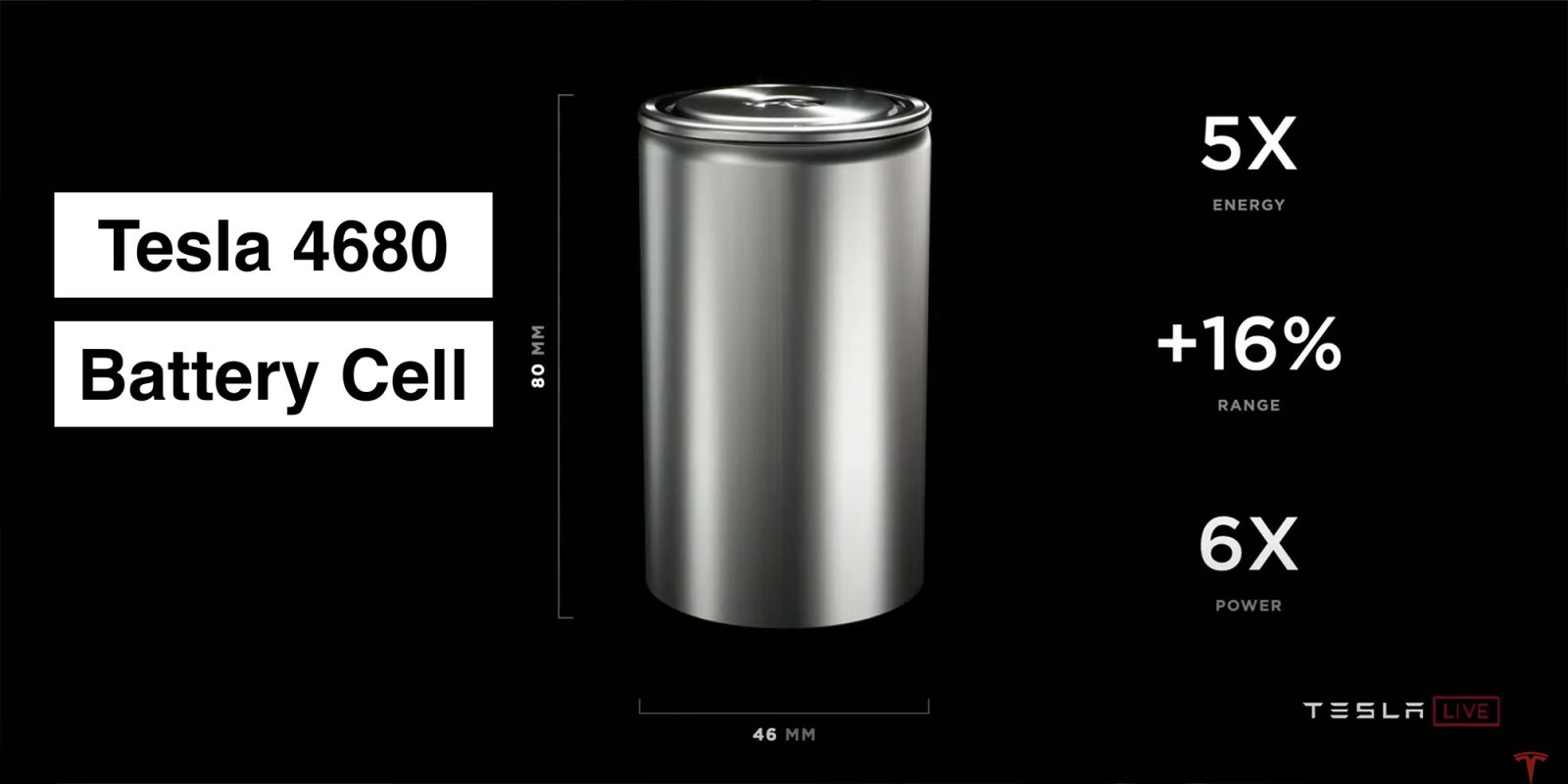
Tesla is opening the doors of its Gigafactory Berlin-Brandenburg to outside startups through a new “Cell Giga Challenge,” inviting them to pilot technologies inside its live battery cell production line.
The program comes as Tesla ramps 4680 cell output at Grünheide toward a planned 18 GWh of annual capacity, one of the largest cell operations in Europe.
Back in 2018, Google was handed a record-setting 4.34 billion-euro ($4.9 billion) fine in Europe for abusing its monopoly on Android. The company has spent the intervening years challenging that decision, but the continent's highest court has put a stop to that. The Court of Justice of the European Union has affirmed the penalty, meaning Google is out of options.
Google's fight may not have turned out the way the company wanted, but it wasn't for nothing. The initial amount was trimmed slightly by a lower court in 2022, bringing the total to a still record-setting 4.1 billion euros ($4.7 billion). And that looks like the amount Google will have to pay since there are no further avenues for appeal.
The fine stems from the way Google bundles apps and services with Android phones. The EU took issue with Google search and Chrome being the default options on Android. Even devices made by other companies, such as Samsung and Xiaomi, include Google apps as the default per the Android licensing agreement, giving Google an unfair advantage, according to European antitrust regulators. This is not to be confused with a 2.95 billion euro ($3.45 billion) fine against Google's advertising monopoly issued by the European Union last year.


© Getty Images / SOPA Images
