Microsoft sees itself as cheaper and more effective at bundling the full stack
The company is clearly pushing its own internal models
Claude also slated for being slower and less accurate
Microsoft is reportedly teaching sales workers how to compare the company's AI offerings to rival companies like OpenAI and Anthropic.
Per Bloombergreporting, the company's sales staff are being told to emphasize benefits like efficiency and cost advantages when using Microsoft's offerings, which offer a much fuller picture than just the models and tools, extending to compute and other workflow tools.
"Everyone else is selling parts – we’re selling the full end-to-end system," EVP Jay Parikh reportedly told workers. "That’s the story that we all need to get out there and tell in FY27."
Microsoft sales teams up the ante against OpenAI, Anthropic
Clearly, the company wants customers to see the combination of its own models and third-party models, cloud infrastructure, applications and security as better value compared with having to piece these elements together separately.
Copilot EVP Jacob Andreou also reportedly compared Copilot to Claude, accusing Claude of being slower, less accurate and missing certain security integrations.
The sales push comes at a time of change for the company, which has started to push more of its own internal models across different apps and workflows to replace OpenAI and Anthropic models. It's also a marked shift from the company's earlier AI strategy, which leaned heavily on its multibillion-dollar partnership with OpenAI.
Company CEO Satya Nadella also pointed at a major customer, Unilever, which recently switched form an unnamed frontier model to one of Microsoft's own cheaper models to make significant savings.
In April, the company announced that its AI business is now worth around $37 billion annually, marking a 123% year-over-year increase.
New blood vessels flood the developing brain, then must be sculpted into a functional network. In the cortex, this pruning depends on selective elimination of redundant connections, but the cellular command center behind vascular refinement has remained only partly understood. A new study now points to microglia—the brain’s immune sentinels—as active architects of cerebrovascular pruning during postnatal development.
Using live visualization in the frontal cortex of postnatal day 11 mice, researchers tracked how microglia behave around forming blood vessels. They observed that microglia do not merely associate with vasculature; instead, they progressively migrate toward vessels as development proceeds. As vessel remodeling advances, microglia become enriched at sites where pruning occurs, suggesting a causal role rather than passive surveillance.
To test function, the team manipulated microglia–vessel interactions and assessed vascular outcomes. Intervening in microglial activity altered the extent of vessel elimination, consistent with the idea that microglia mediate pruning to refine the emerging vascular map. The results connect microglial behavior directly to the efficiency and organization of the developing cortical circulation.
Central to the mechanism is an immune signaling pathway previously linked to neuronal synaptic refinement: PD-L1 and its receptor PD-1. The study identifies PD-L1–PD-1 signaling as a regulator of microglia-driven vascular pruning. When this axis was disrupted, pruning was impaired, indicating that immune checkpoint-like communication can shape vascular architecture in the developing brain.
The authors further implicate a specific molecular source from microglia. They report that microglial CD5L secretion promotes the PD-1–dependent pruning program. In other words, microglia release CD5L, engage PD-1 signaling through PD-L1 interactions, and thereby influence which vessels persist and which are eliminated.
Collectively, the work reframes cerebrovascular pruning as a neuroimmune-guided developmental process. By showing that microglia actively target redundant vasculature and by defining a PD-L1–PD-1/CD5L pathway, the study provides mechanistic evidence for how immune cells can tune vascular networks to match developing brain circuitry.
Beyond development, the findings raise broader questions about whether similar immune checkpoint signaling contributes to abnormal vascular remodeling in disease, where pruning can be either excessive or insufficient. For now, the study delivers a clear developmental role: microglia help determine what the brain keeps growing and what it discards.
A study suggests that severe pollinator losses may have sharply slowed plant adaptation. A morning glory facing a warmer climate may benefit from blooming earlier. But if pollinators are becoming harder to attract, producing larger flowers may matter more. New research suggests that these competing pressures have become linked in a way that sharply limits [...]
Report finds 38% of employees consider themselves self-taught in AI, just 23% have received formal training
Nearly half believe it's the employer's responsibility to provide upskilling opportunities
88% of workers are Level 1-2 on the readiness scale, only 12% are Level 3-4
New research from TrustedTech has warned of an "AI underclass," whereby uneven access to AI training and support could end up creating a two-tier workforce.
The data claims around three in four (74%) UK decision-makers feel confident using AI at work, and yet only 44% of junior workers feel the same way.
The report also reveals that formal AI training is pretty uneven, with around two in five (38%) employees describing themselves as self-taught in AI.
Insufficient AI training is creating an emerging divide
Additionally, fewer than one-quarter (23%) say they've received AI training from their employer, with 41% criticizing their workplace for not providing enough safety and security training. But despite widespread self-learning, nearly half (47%) believe it's the employer's responsibility to support training and upskilling efforts.
"Employees are being told AI will transform the way they work, yet many have received little training on how to use it effectively, securely or confidently," TrustedTech Chief Visionary Officer Julian Hamood warned.
"The people who are most confident with AI will continue to build skills and productivity, while others risk being left behind through no fault of their own."
All of this is set against a backdrop of rising AI investments and ongoing deployments. Separate Notion data found that 60% of AI decision-makers believe their organization is ready to deploy next-generation agentic AI, but only 36% of employees would agree.
According to Notion's reporting, 88% of workers are at Levels 1 and 2 of AI readiness, seeing the tech as a brainstorming tool or an assistant, leaving only 12% at Levels 3 (team mate) and 4 (system workflows).
One of the biggest differentiators setting advanced organizations apart, Notion says, is effective governance and oversight, which aligns with TrustedTech's findings that workers lack sufficient guidance.
"The leaders pulling ahead are the ones doing it thoughtfully: integrating AI into how work runs, building trust across teams, and measuring real business impact," EMEA GM Andrew McCarthy wrote.
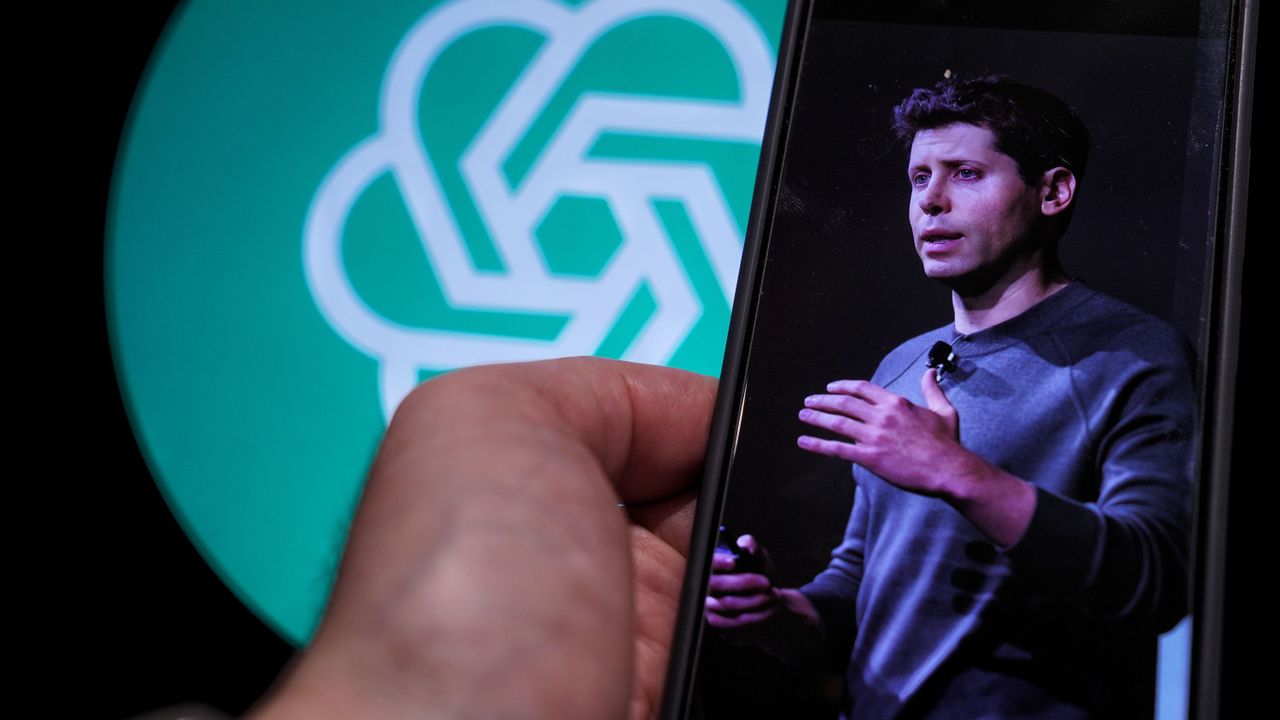
OpenAI's debut of the new GPT-5.6 model prompted the usual ritual of benchmark charts and arguments over whether it is really smarter than the last version, but CEO Sam Altman asked for a little more this time. He publicly asked to see what people actually built with it.
i'd love to see interesting things people have built with 5.6 sol.i will send the person who made the coolest thing a special gift from the openai archives.July 12, 2026
That led to a much more interesting showcase. Developers responded with all kinds of ideas, pilot projects, and even complete services. It makes sense, since OpenAI claims GPT-5.6 is better at coding and more reliable for long tasks. Seeing them turn into real software says much more than a release blog ever could. Here are five that stood out among the deluge.
ChatGPT coworker
A new way to interface with AI pic.twitter.com/7ip7JPijLOJuly 12, 2026
The demo from Kitsune Agent Lab almost makes the chat window feel old-fashioned. The AI agent is given a goal and gets on with the job, moving between different tools, making decisions, and keeping track of what it has already done.
The interesting part is how motivated the AI agent appears to keep going and how good it is at remembering what it's done before. Developers have been asking for something like this for a while. AI is far more useful when it can finish the work instead of simply suggesting how you might do it yourself.
Financial chatter
Hi @sama I built a gameboy emulator for NYC that streams real-time city data (subways, weather, ferries, etc) all layered on a 3d map of NYC! All data exists in a spatial intelligence layer that agents can use to experience your fav places in the city!Should I do SF next? pic.twitter.com/uo0niBRvR5July 13, 2026
One of the most charming projects makes New York City look like it belonged inside an original Game Boy. It comes complete with chunky pixel graphics but runs on a live digital map of New York that pulls in real-time information, including subway trains, weather conditions, and ferry movements. Instead of wandering through a fictional RPG world, you're exploring a tiny, pixelated version of the city.
A project like this requires far more than generating a few lines of code. It brings together live data feeds, mapping, interface design, and plenty of problem-solving into something that feels polished rather than experimental. It's one reason developers are feeling excited about GPT-5.6
Wardrobe AI
i gave 5.6 sol access to my camera roll and had it extract pictures of every piece of clothing i own from my photosthen, told it to find new outfits for me and render them on me with gpt-image!its kinda cool to see your entire wardrobe in a collection like this https://t.co/pkLTjtn7xL pic.twitter.com/SV796uScrBJuly 13, 2026
This project uses GPT-5.6 to create a polished AI wardrobe assistant that organizes clothing, suggests outfits, and presents everything through an interface that feels more like a premium consumer app than an experimental AI demo.
It's an impressively complete experience. The application gives users a visual, interactive way to browse their clothes and receive recommendations based on what they already own. The demo also highlights GPT-5.6's strength in developers building entire applications instead of isolated features. It brings together interface design, image generation, organization, and intelligent recommendations that would normally require stitching together several complex systems. GPT-5.6 appears to handle much of that heavy lifting.
Pokémon Go, but for neighborhood cats
I made a mobile game https://t.co/J1xWyutGk4 🐱July 13, 2026
One developer made a whole real-world-based game called CatchCat. It's like a digital expansion to a scavenger hunt for cats. Point your phone at a real cat, let the app verify the sighting with its camera, and turn that encounter into a collectible digital cat card with its own personality, rarity, and place in your growing album. It is essentially a creature-collecting game in which the creatures are the neighborhood cats you meet.
Players can build collections, explore community sightings, compete with friends, and gradually fill a living scrapbook of feline encounters, all wrapped in a polished interface that would not look out of place on the App Store or Google Play. Building something like CatchCat means juggling computer vision, mobile development, backend services, and game design.
Tasteful travel
Built Atlas Mode for Pearl, an interactive globe that integrates data on the world’s best places + your taste profile to discover and book restaurants, hotels, bars, wineries, and flights. Used 5.6 Sol Ultra + GPT Voice 2.1 pic.twitter.com/b4LlPC7BZRJuly 13, 2026
One of the most ambitious projects, Atlas Mode for Pearl, is an interactive globe that turns travel planning into something closer to exploring a living map. Instead of typing destination names into a search box, users can spin the globe, discover places visually, and receive recommendations for restaurants, hotels, and more matched to their personal tastes.
It has an impressive number of moving parts running behind the scenes. The app combines geographic data with an individual taste profile, then layers AI recommendations directly onto an interactive globe. It even has an audio aspect thanks to GPT Voice 2.1. You can talk through vacation ideas instead of endlessly tweaking search filters.
That is a recurring theme among the projects developers rushed to show Sam Altman. The AI is no longer the product itself. Increasingly, it is the engine quietly powering products that people might actually want to use.
The AI buildout is well and truly underway with OpenAI CEO Sam Altman leading the charge, having made various deals with companies including Oracle and Nvidia to guarantee the infrastructure needed to train future AI models is installed. But as this ensues, the spotlight has been thrown on how much energy these models will need.
Eating machines
Altman was speaking during an AI summit in India earlier this year when making the remarks to The Indian Express.
Quote of the day
This article is part of TechRadar Pro's QOTD project to provide an insight into the minds of the brightest and most recognized figures in the technology industry today and in years gone by. Read the full series here.
The OpenAI chief was being questioned about the substantial amount of energy that AI has already been consuming – and will be projected to continue consuming – for both training and inference. Bringing these models online, after all, and keeping them running require a huge amount of resources, not only in terms of the energy to power the data centers, but the water for cooling, and the components and resources in building the hardware.
Altman's defence hinged on the idea that people, too, require plenty of energy in order to reach utility — while AI can be trained much quicker. This view, in essence, frames machine intelligence as a like-for-like competitor with human intelligence.
Energy efficiency
Altman argued that humans are deeply inefficient, and that you should compare the total energy spent to create a human expert versus a machine expert. There's also an argument that energy efficiency of AI could improve over time.
But detractors were scathing in their criticism of this entire point of view – saying this framing doesn't take into account the fact that the human brain operates on roughly 20 watts of power. This isn't to mention the ethically gray and dehumanizing nature of the remarks.
OpenAI is building an AI-powered smart speaker nobody wants. That is, if you believe the Bloomberg report from Mark Gurman and you've read his description of said rumored device.
According to the report:
"OpenAI believes the product’s defining feature will be its personality and ability to connect on a humanlike level with users. The speaker incorporates mechanical elements that can move on their own, creating a sense that it is alive and not just an object responding to commands. The machine also will draw on personal information such as emails to better understand its owner."
The news sources, it appears, come from an insider who decided to spill all the juicy details mere hours after Apple dropped a blockbuster trade-secrets lawsuit on OpenAI's head. OpenAI claims it's done nothing of the sort, and recent reports say that Apple's claim that the AI giant has not even responded to Apple's earliest concerns was based on it potentially incorrectly identifying the former Apple employees who left to join OpenAI (allegedly with Apple trade secrets in tow).
Apple's concerns here are twofold: First, these former employees had access to many of Apple's secretive product development details and may even have asked recruits to share fresh details when they approached them to interview for jobs at OpenAI. The other concern is that Apple is already far behind in the AI race, and if Apple's plans for Siri, AI, and a potential robotic desktop home assistant were also leaked, it could harm its ability to catch up in multiple market sectors.
This latest news, which may or may not be accurate, should put Apple's fears to rest.
OpenAI is apparently not building something that could ably compete with any of Apple's key hardware or future hardware initiatives.
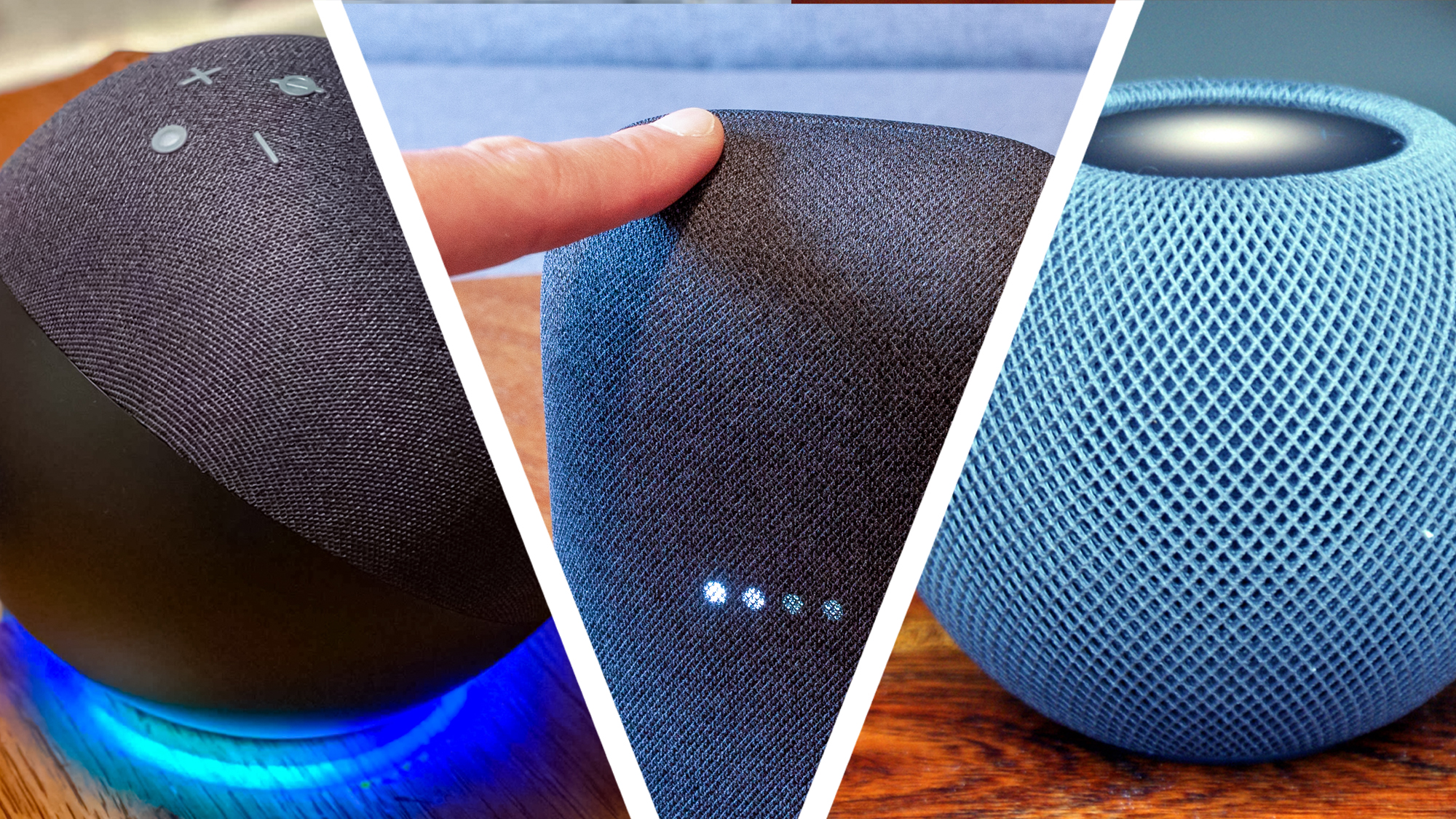
First of all, there's the smart-speaker-ness of the whole rumored OpenAI concept. There are already too many smart speakers on the market, many of them with their own smart assistants. Amazon, for instance, is smack in the middle of trying to convince millions of customers that not only do they need Echo devices throughout the home, but they need the AI-powered Alexa+ to guide them through their smart home experiences and, to some extent, their lives.
Apple has its own HomePod, Siri-infused speakers, which may get considerably more powerful with the Gemini foundation model-backed version arriving this Fall.
Put another way, smart speakers are a known quantity in the home consumer electronics space, and I think what most tech companies are realizing is that people like and use them, but mostly in limited ways: they want music, occasional answers to simple questions, and voice control of their smart home devices. That's it.
Why does my speaker think it's alive?
(Image credit: Future)
OpenAI appears to be prepared to offer something different: a personality-filled speaker that can watch you, move to engage, seem alive, and generally make you feel uncomfortable.
Obviously, that would not be the objective, but it could be the result. Who needs a speaker that quietly watches you as you walk from your kitchen to the den, waiting and hoping for you to say, "hey ChatGPT, what's up with the Strait of Hormuz today?"
In my home, we have a Psync smart security webcam with one oddball feature: it has a motorized body that can turn almost 360 degrees on its base and lift its thin, rectangular face and camera to keep track of people and alert me to intruders. However, most of the time, it's just watching us move around the house, and I can tell you that my family hates it. Sometimes I come home and find its face forced down so it can't pop up and track anything.
Now, imagine a larger and far smarter OpenAI AI smart speaker in your home, watching, waiting, chiming in when you don't want it to, and generally making people feel uncomfortable.
This will not be the breakout hardware hit OpenAI is hoping for.
Look, I was under the impression that OpenAI (really Jony Ive and Sam Altman) were working on an AI wearable. I didn't love that idea either, but it was a lot less creepy than this.
So, Apple, chill out. OpenAI's plans are no threat to you, even if they do allegedly have a bunch of insidery Apple information.
AI hallucination can be weaponized, new report warns
HalluSquatting is short for “adversarial hallucination squatting”
GitHub Copilot, Gemini CLI, and OpenClaw are all affected
Your favorite AI service could be subverted to deploy code that turns your phone or PC into a botnet, according to researchers at Intuit, Technion, and Tel Aviv University.
The technique has been given the name HalluSquatting, a portmanteau of adversarial hallucination squatting, and is similar to typosquatting in that it relies on a mistake in order to distribute malicious code. While typosquatting might occur with the incorrect input of a website URL, HalluSquatting pivots on an LLM being unable to identify a resource or repository with 100% accuracy.
Relying on an LLM’s tendency to hallucinate repository resource identifiers, this weakness could be scaled up to conduct massive ransomware campaigns, botnets, and more.
Push-me-pull-you
Previous LLM-based malware operations have relied on pull-based attacks. In this scenario, a prompt designed to jailbreak or otherwise subvert the AI is (for example) placed on a website and the LLM encouraged to gather the information, thereby reducing its internal security.
What the researchers have shared in their paper, is that pull techniques are being combined with push attacks, which are traditionally executed as code injection.
The paper’s introduction summary states: “By preemptively registering hallucinated resources—a technique we call adversarial hallucination squatting (HalluSquatting)—we demonstrate remote tool execution and remote code execution at scale across a range of popular agentic LLM applications, which could be exploited to the establishment of a botnet.”
Once an attacker has identified the resource likely to be misnamed by an LLM, and squatted on it (to embed adversarial prompts), the work is done. All that remains is for a user to trigger the resource, the AI chatbot or agent to initiate the response, and the squatted resource will be accessed.
Promptware attack
Following this, the adversarial content held within the squatted resource is activated, triggering the tool invocation stage. This is the promptware attack, where attacker-controlled instructions are executed, with results potentially including turning the device you’re using into a botnet zombie.
LLMs such as the Cursor, Cursor CLI, Windsurf, GitHub Copilot, Cline coding assistants have been used in the testing of this avenue of attack along with Gemini CLI, and the OpenClaw, ZeroClaw, and NanoClaw AI assistants. The researchers successfully achieved remote tool execution (essentially remotely accessing and controlling the LLMs) and remote code execution (RCE, where malicious code is executed remotely).
Some mitigation is available, including LLM developers blocking fetch operations in favor of a search tool, and resource owners enforcing strict naming, perhaps in favor of globally unique resource names. However, these are will require collaboration by disparate parties, and may take a while to implement.
The risk of LLM-based malware is increasing, and some has already been spotted in the wild. Of these, the JADEPUFFER attack is perhaps the most notable, as it isn’t simply AI-based malware – it is a full ransomware attack run entirely by an LLM.
It claims to be able to reduce AI generated codebases by up to 65% in size
They aim to "refactor vibecoded codebases back to maintainability"
Vibecoding has a lot to answer for, not least some excessively large codebases. A new team of software engineers are collaborating to reduce the size of these cumbersome projects… with a $10,000 per week bill.
Slopfix is the name of the team (comprising a trio: Maciej, Kuba, and Krzysztof), but its aim is efficiency and functionality, rather than code golf, where code is reduced to the shortest possible length.
However, while this might seem like a noble task and a service worth paying for, Slopfix isn’t taking a stand against the use of AI. In fact, it is employing AI tools to detect the AI flab in your codebases.
Use an AI to catch an AI
Challenges around vibecoded projects have increased in recent months, as the limitations of the technology become apparent.
While using an AI to program based on your prompts and requirements is straightforward, agents habitually begin to lose context and logic once the project reaches a certain size or age. Once that happens, you’re looking at duplication, features breaking, and of course, the dreaded hallucination.
Slopfix is targeting companies that have adopted vibecoding, built huge codebases, and found that they’re running into issues. To find the problematic AI code, however, Slopfix is employing AI.
They state that a full “screen by screen, endpoint by endpoint” evaluation of the vibecoded app is made, which aims to find the duplicated functions, broken logic, and other issues. There’s also the promise of a two-week warranty for anything they break.
All of this is aided by Claude Code “on a very short leash” which Slopfix uses find problems. They clearly state that “the agent doesn’t get a vote.” Instead, they’re relying on their experience as developers to improve your code.
$10,000 seem a bit steep?
While the price might seem high, $10,000 for one successful week’s work for three seasoned developers shouldn’t really be a budget breaker.
The fee covers successful work only, and as the Slopfix website states, payment is in proportion to how much of the reduction target the team hits, with $10,000 being the price for hitting the target – it’s not the default fee.
However, there is a lot of preparation involved, and the analysis of your codebase is conducted free of charge. If they can't fix your project's issues, they'll let you know and refuse the contract.
As software consultancies go, Slopfix is an unusual case. But as the problems with vibecoded projects begin to become apparent, competing consultancies may begin offering similar services.
Elles sont souvent présentées comme des alliées naturelles capables de purifier l'air de nos intérieurs. Pourtant, derrière cette réputation largement relayée depuis des décennies, les preuves scientifiques racontent une histoire bien différente.
Nitrogen is an essential building block of proteins, amino acids, and DNA. Without nitrogen, cells can’t function or reproduce. Nitrogen is abundant in the atmosphere as dinitrogen gas, but plants and animals can’t access atmospheric nitrogen. Instead, we rely on biologically available forms like ammonia and nitrate.
Specialized microbes can transform atmospheric nitrogen into ammonia via a process called biological nitrogen fixation. Nitrogen-fixing soil bacteria have a unique protein complex, the nitrogenase complex, that facilitates this nitrogen transformation. The nitrogenase complex is activated by a group of genes known as nif genes.
Legume plants like peanuts, peas, and beans have nitrogen-fixing bacteria in the soil zone around their roots, called the rhizosphere. The symbiotic relationship between nitrogen-fixing soil bacteria and legume plants supplies most of the biologically available nitrogen to life on Earth.
Bacteria attached to plant roots “feed” nitrogen to plants through the soil, and in turn receive organic acids for energy from plants performing photosynthesis. Source: Wikimedia Commons
However, one piece of the puzzle remains unexplored: the role of soil viruses in these nitrogen transformations, referred to as the nitrogen cycle. Viruses are microscopic particles made up of genetic material and proteins, but they can’t reproduce without a host cell. Scientists consider viruses to be biological entities that are halfway between living and non-living.
To reproduce, viruses contact a host cell and inject their genetic material into it. The virus’s genetic material takes over the host cell’s genome and forces the cell to produce proteins that assemble into new viruses. As new viruses are created, they can incorporate genes from the host cell into their own genetic material. Genes that are transferred from a host cell to a virus are known as auxiliary metabolic genes (AMGs). Viruses can carry AMGs and pass them to other hosts or use them to increase their own ecological fitness.
Scientists from China, Spain, and the Czech Republic set out to investigate whether viruses from legume roots could increase local soil nitrogen fixation by expressing nif AMGs or by transferring nif genes to other bacteria. First, they determined the global distribution of viral nitrogen-fixing genes by analyzing about 8.6 million viral genomes from the Integrated Microbial Genomes/Virus database. They looked for the DNA sequences of known nitrogen-fixing genes and the locations where the viruses were sampled. They found that only 0.003% of the viruses in the database had at least 1 nitrogen-fixing gene, but they clustered in the same locations as nitrogen-fixing bacteria.
The team also found 3 types of viruses that most commonly carried nitrogen-fixing genes: Kyanoviridae, Nudiviridae, and Bronfenbrennervirinae. Kyanoviridae viruses carried a nif gene called nifU. The researchers used a computer program called DRAM-v to confirm that nifU was a fully functional gene and a real tool that viruses could use.
Next, the team collected soil samples from a cowpea field in Nanjing, China, to test whether the cowpea roots influenced the abundance of viruses using nitrogen-fixing genes. They collected soil from the cowpea rhizospheres and soil away from the plants. They analyzed both viral and bacterial RNA in the soil samples to identify active genes, using a sequencing process called metatranscriptomics. They found that the viral nifU gene was actively expressed in the cowpea rhizosphere samples more than in the non-crop soil. Although about 96% of nifU genes were being expressed by bacteria, viruses contributed about 4%.
The researchers then assessed whether rhizospheric viruses changed the amount of nitrogen being fixed in these soils. They set up small, enclosed containers of sterile soil and added either bacteria or a mixture of bacteria and viruses extracted from the cowpea rhizospheres. They found that soil with viruses had higher total nitrogen (36 milligrams per kilogram, or mg/kg) than soil without viruses (17 mg/kg).
Finally, they adjusted the air in each container to have a different form of dinitrogen gas. Atoms of the same element that have different atomic masses are known as isotopes. Nitrogen has 2 stable isotopes: lighter nitrogen-14 and heavier nitrogen-15. Bacteria or viruses that fix nitrogen at natural isotope abundances will take up nitrogen-14. But scientists can track who in the population fixes nitrogen by adding nitrogen-15 to the air, a process called nitrogen-15 stable isotope probing. Nitrogen-fixers will incorporate the heavy nitrogen-15 into their biomass over time and increase their weight, allowing researchers to separate and identify them.
The team grew the bacteria and viruses with nitrogen-15 for 35 days, then used stable isotope probing to separate the nitrogen fixers. They detected viral nifU AMGs among the heavier biomass, confirming that rhizospheric viruses were fixing nitrogen.
The team concluded that rhizospheric viruses and the viral nifU AMG can increase nitrogen fixation in cowpea soils. The team suggested that although viruses with nitrogen-fixing genes are rare, they can influence the soil nitrogen cycle. They recommended that future researchers further test the contribution of viral nifU genes to plant nitrogen fixation with controlled infection experiments.
For decades, cities have been designed around "gray infrastructure." Roads move people. Bridges connect communities. Water systems protect public health. These systems are governed by engineering standards because society recognizes that safety cannot depend on good intentions alone.
Urban nature deserves the same recognition.
In June, a heat wave gripped Europe, breaking temperature records across the continent. In France, officials reported over 2,000 excess deaths. In the U.K., hospitals declared critical incidents and machinery and IT systems failed. In the U.S., a heat dome over the Midwest and East Coast disrupted Fourth of July celebrations, with at least 25 heat-related deaths over Independence Day weekend.
Cities are being tested by a warming climate. Yet one of our most effective forms of climate infrastructure is being lost — not because it does not work but because we still do not treat it as infrastructure.
My view is simple: Urban nature — including street trees, parks, wetlands and other urban green spaces — should be categorized and managed as essential infrastructure, with minimum standards for its protection, quality and long-term maintenance. Just as we regulate roads, bridges and drinking water, we need standards that ensure all urban residents benefit from healthy and thriving urban nature. Without such standards, cities will become hotter, less resilient and increasingly unequal as climate change accelerates.
A cafe in the city of Nice during the heat wave that saw temperatures in France reach a record-breaking average of 98.4 degrees Fahrenheit (36.9 degrees Celsius). (Image credit: Valery Hache/Getty Images)
Scientific research shows that urban trees and green spacescool cities during heat waves, reduce flooding by absorbing stormwater, improve air quality, store carbon, support biodiversity, and improve both physical and mental health. During extreme heat, neighborhoods with mature tree canopies can be several degrees cooler than nearby streets dominated by concrete and asphalt. Those few degrees can mean the difference between manageable discomfort and dangerous heat exposure, particularly for older adults, children and people with existing health conditions.
But while the science is strong, our governance is not.
Cities enthusiastically announce ambitious tree-planting campaigns, biodiversity strategies and new greening targets. These initiatives are valuable, but they often focus on what is easy to count rather than what truly matters. Planting a tree is not the same as growing a healthy urban forest. Creating a park does not guarantee biodiversity. A green roof delivers little value if it fails during drought.
The real measure of success is whether urban nature continues providing benefits decades after trees are planted and established.
This is where cities are still falling short.
That is not simply an environmental issue. It is a public health issue, a climate adaptation issue, and an issue of social equity.
Unlike buildings or transport systems, urban nature rarely operates under consistent minimum standards. Many cities have no requirements for minimum tree canopy cover, adequate rooting space, soil quality, biodiversity targets, long-term maintenance or even whether newly planted trees survive. As a result, access to nature depends heavily on where people live. Wealthier neighborhoods often enjoy mature tree canopy and high-quality parks, while disadvantaged communities experience hotter streets, fewer green spaces and greater exposure to climate risks.
That is not simply an environmental issue. It is a public health issue, a climate adaptation issue, and an issue of social equity.
The solution is not simply to plant more trees. It is to establish urban nature standards that recognize nature as essential infrastructure.
These standards would not prescribe the same solution for every city. Instead, they would establish minimum expectations based on scientific evidence. They could include targets for accessible green space, minimum tree canopy cover, sufficient soil volume for healthy tree growth, biodiversity outcomes, long-term maintenance funding and routine monitoring to ensure that urban nature continues delivering benefits to communities.
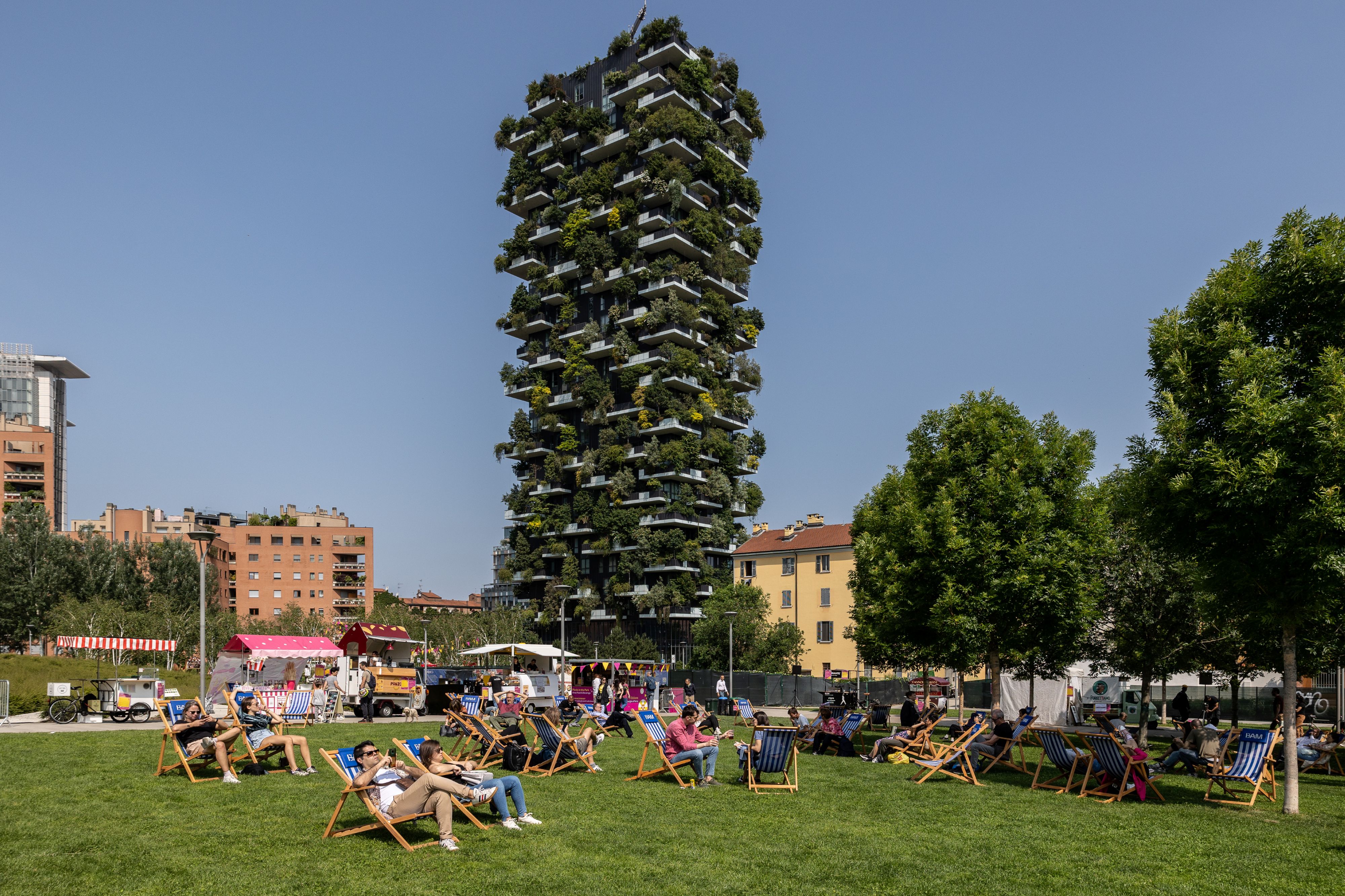
The Bosco Verticale in Milan house around 800 trees and 20,000 plants. City officials have been expanding the green infrastructure with multiple high impact projects to address climate change. (Image credit: Emanuele Cremaschi/Getty Images)
Importantly, these standards should focus on outcomes rather than simple planting targets. Counting how many trees are planted tells us little about whether cities are becoming more resilient. Measuring survival, canopy development, ecosystem health and equitable access provides a much better picture of whether investments in urban nature are actually returning dividends.
Some critics argue that cities cannot afford stronger standards for urban nature. Municipal budgets are already stretched by housing, transport and aging infrastructure. But this argument overlooks a fundamental reality: We already spend enormous sums responding to the consequences of extreme heat, flooding, poor air quality and declining public health. Healthy urban ecosystems help reduce these costs while delivering multiple benefits simultaneously.
As climate change accelerates, the distinction between gray and green infrastructure becomes increasingly blurred. Trees cool buildings and reduce energy demand. Wetlands decrease flood damage. Parks improve public health and strengthen communities. These are not optional amenities. They are functioning components of urban infrastructure that deserve the same level of planning, investment and accountability as any engineered system.
Building codes transformed the safety of our cities because they established minimum standards that every development had to meet. Climate resilience now demands a similar transformation for urban nature.
The next generation of resilient cities will not be defined simply by how many trees they plant but by the standards they adopt to protect, restore and sustain the living infrastructure urban life depends on.
The real question is not whether cities can afford to invest in urban nature; it is whether they can afford not to.
Opinion on Live Science gives you insight on the most important issues in science that affect you and the world around you today, written by experts and leading scientists in their field.
More than 85% of land plants form relationships with fungi that exchange soil nutrients for sugars, and approximately 75% of these plants specifically associate with arbuscular mycorrhizal fungi, or AMF, which require a host to survive. Moss was considered the exception. All 10,000 known species were believed to exist without such fungal partnerships.
“That’s been the model,” said Jason Stajich, a UCR professor of microbiology and plant pathology and co-author of the study, published in New Phytologist. Mosses, he explained, simply didn’t need fungi. Recent findings now challenge that assumption.
Chasing Moss Through 100-Degree Heat
To investigate this, UCR doctoral researcher Kian Kelly collected samples from the Mojave and Sonoran deserts, focusing on biological soil crusts. These crusts contain complex communities of fungi, bacteria, algae, moss, and microscopic animals that stabilize desert soils. The team wanted to know whether desert mosses host different fungal communities than mosses in milder environments. “Sometimes I couldn’t find the same species of moss,” Kelly said of the search.
The team then processed moss samples and sequenced their DNA in the laboratory. They identified fungal genetic material, including AMF, which are typically unable to survive without a host plant. Furthermore, the fungal species present in desert moss differed from those found in moss from less extreme climates and from fungi in the surrounding soil. “We suspect that certain fungi are more helpful for surviving hotter, drier climates,” Kelly noted.
This mismatch made simpler explanations, such as contamination or fungi decomposing dead tissue, less likely. The evidence suggested a more specific association.
Unexpected Structures Inside Moss
Since DNA evidence alone could not confirm that fungi were living within moss tissue, Kelly stained samples with a dye that binds specifically to fungal cells and examined them under a microscope. He observed branching structures located inside the moss. “As soon as I saw that, I knew we had something really interesting,” Kelly said.
The structures resembled arbuscules, small, tree-shaped structures that fungi typically form within plant roots to facilitate nutrient exchange. Since moss lacks traditional roots, these structures were observed in the moss leaves. The researchers therefore refer to them as “arbuscule-like” rather than identifying them as true arbuscules. Whether nutrient exchange actually occurs between fungus and moss remains unconfirmed and will be the subject of future investigation.
Potential Implications
If this relationship is confirmed, its significance extends beyond desert ecology. Mosses belong to one of the oldest surviving lineages of land plants, which first colonized terrestrial environments approximately 470 million years ago. A fungal partnership present in moss tissue today could represent a remnant of the original alliance that enabled plants to adapt to life on land.
There are also more immediate implications. Biological soil crusts are fragile, and even small disturbances can take decades to heal. These ecosystems are increasingly threatened by rising temperatures and human activity. If fungi help desert moss survive heat and drought, understanding this relationship could guide future efforts to restore degraded soil crusts rather than merely documenting their decline. For now, the main conclusion is that moss, once thought to be independent of fungal associations, may have been getting help the entire time.
“The desert is full of things people overlook. Sometimes, the biggest surprises are the ones growing quietly beneath our feet,” Kelly concludes.
Austin Burgess is a writer and researcher with a background in sales, marketing, and data analytics. He holds an MBA, a Bachelor of Science in Business Administration, and a data analytics certification. His work focuses on breaking scientific developments, with an emphasis on emerging biology, cognitive neuroscience, and archaeological discoveries.

 Login