 Login

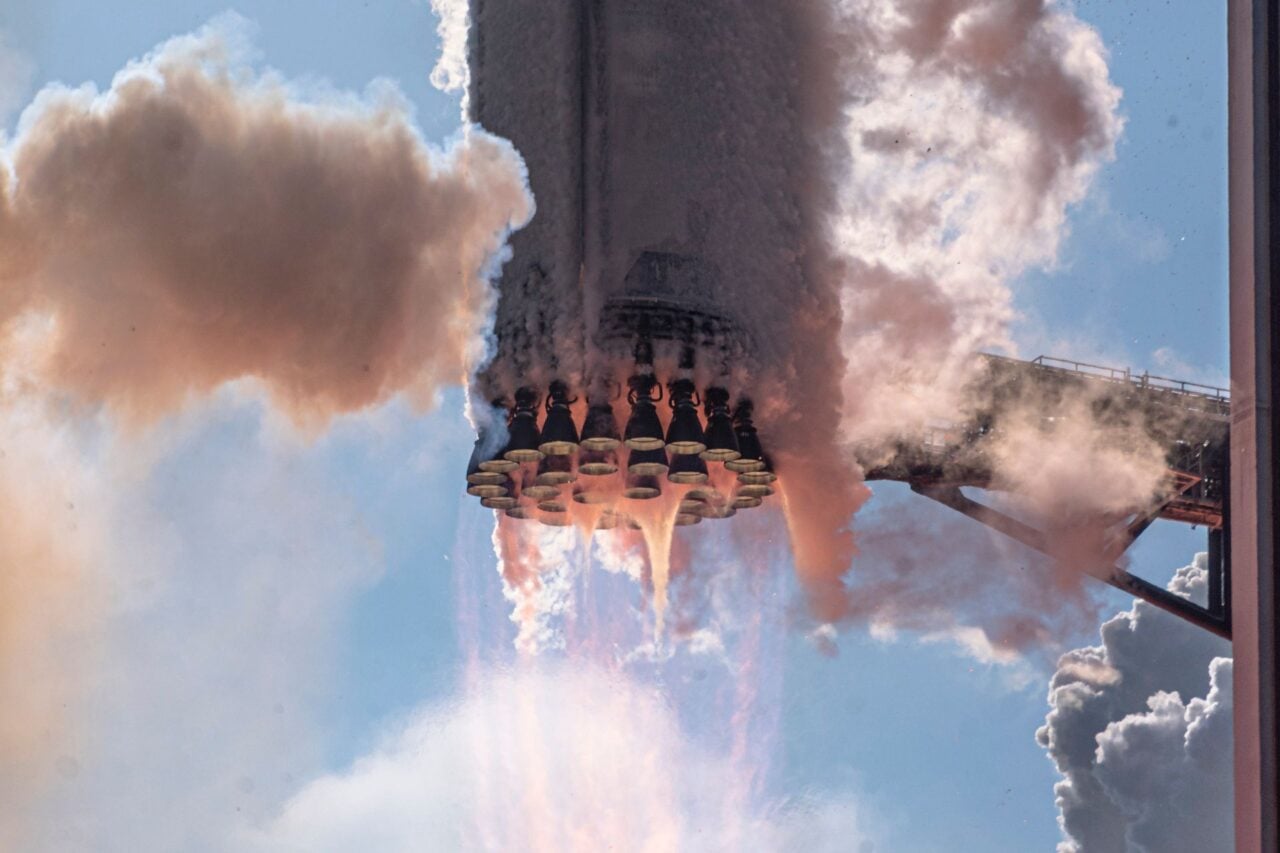
Will SpaceX’s 13th Test Flight of Starship Be Lucky?
The 33 engines of the rocket’s booster stage had begun to ignite during Thursday’s launch attempt, but were then shut down. SpaceX will try again on another day.

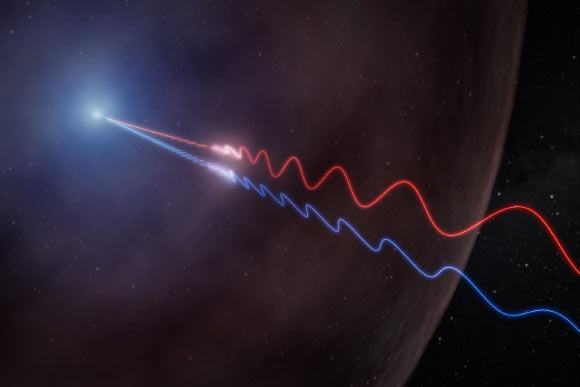
Using NSF’s Very Large Array (VLA), astronomers made the first radio detection of polarized light and Faraday rotation from a gamma-ray burst afterglow, offering an unprecedented glimpse of the magnetic fields surrounding one of the Universe’s most powerful explosions.
The post Astronomers Detect Gamma-Ray Burst’s Magnetic Fingerprint appeared first on Sci.News: Breaking Science News.
Nearly 400 days and a billion kilometers after leaving Earth, China’s Tianwen-2 spacecraft has arrived at its target: the near-Earth asteroid 469219 Kamoʻoalewa, also known as 2016 HO3. And the mission’s first photo of the rock has already had scientific impact, reopening an ongoing investigation over whether Kamoʻoalewa began as a chunk of the Moon.Continue reading "Tianwen-2 arrives at target asteroid Kamoʻoalewa"
The post Tianwen-2 arrives at target asteroid Kamoʻoalewa appeared first on Astronomy Magazine.
Let the science begin: The world’s first commercial space telescope is up and running. On July 6, Blue Skies Space delivered data from its Mauve satellite to the international roster of universities enrolled in the Mauve Science Program, shifting the mission into full scientific operations. It’s the next step for a mission that reached orbitContinue reading "The first commercial space telescope delivers"
The post The first commercial space telescope delivers appeared first on Astronomy Magazine.
 A startup’s orbital test could illuminate Earth — and darken astronomy’s future.
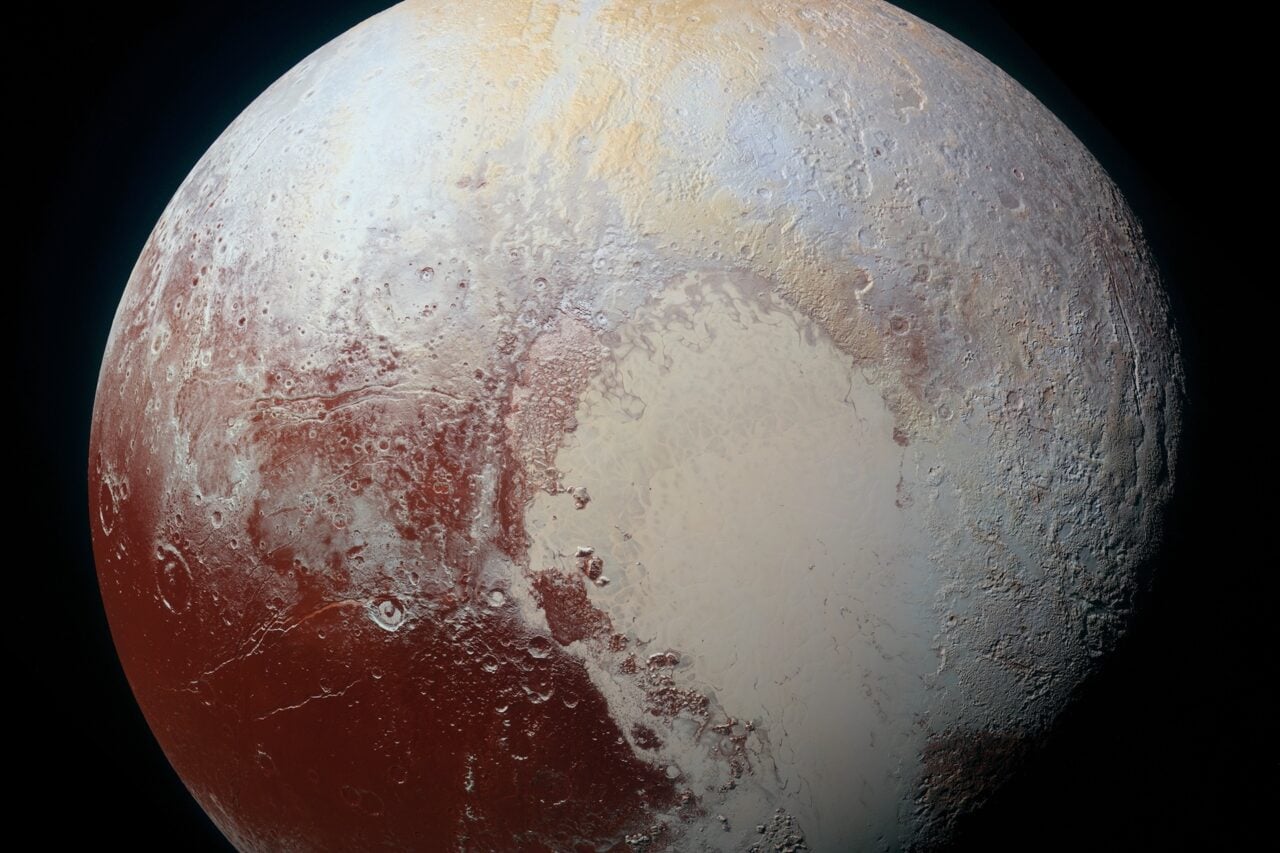
New Horizons launched in January 2006, and by July 14, 2015, it had reached its primary goal: Pluto. The first spacecraft to study Pluto up close, it conducted measurements of Pluto’s atmosphere, mapped the surface geology, observed Pluto’s moons. New Horizons also investigated the dwarf planet’s interior structure, adding support to the theory that PlutoContinue reading "July 14, 2015: New Horizon arrives at Pluto"
The post July 14, 2015: New Horizon arrives at Pluto appeared first on Astronomy Magazine.
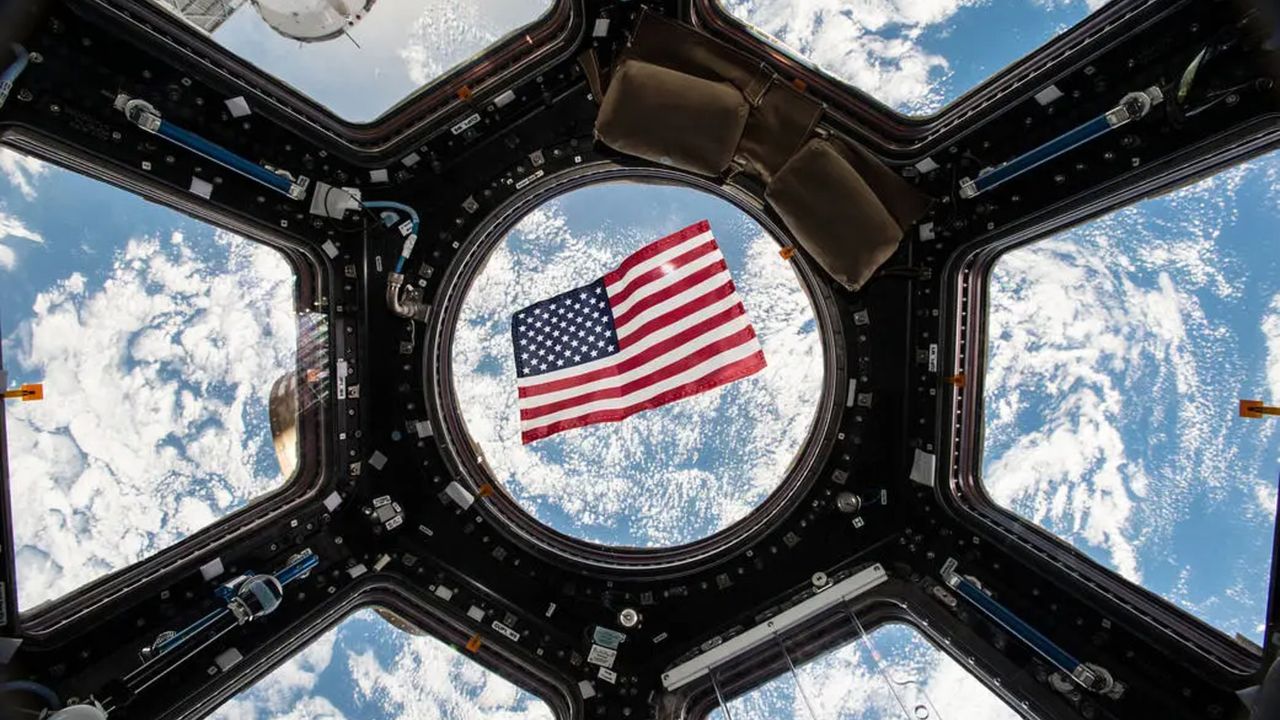
A new ruling by the U.S. Supreme Court protecting voter rights could extend to astronauts living and working in space and training internationally, their families, and the multitude of NASA workers who travel to support their missions.
On Monday (June 29), the Supreme Court ruled that mail-in ballots can be counted toward a total vote even if they arrive after election day, as long as they are postmarked by election day. The ruling followed efforts by the Trump Administration to place restrictions on mail-in voting. In a new statement, the nonpartisan activist organization Astronauts for America spoke out in support of the Supreme Court's decision, which supports absentee voting.
"We don't want to see barriers put in place [that] make it more challenging for somebody to exercise their constitutional right of voting," retired NASA astronaut Wendy Lawrence told Space.com. Lawrence is a member of Astronauts for America, as well as a veteran of the U.S. Navy, where she served as a captain, engineer and helicopter pilot.
An executive order issued by President Trump in March 2026 attempted to place a number of restrictions on voting in the country, including limitations on mail-in or absentee voting. The order directed the United States Postal Service to only transmit ballots for states that compile and submit lists of eligible mail-in voters 60 days before elections, added requirements and complications to mail-in ballots and attempted to limit who receives a ballot in the mail.
This order not only added layers to limit voting access, but it conflicted with existing procedures set by states for absentee voting. Additionally, the U.S. Constitution places the authority to change election rules and processes with Congress, not the president, though this was not the first executive order put out by Trump to attempt to change election rules, CNN has reported.
In a 5-4 ruling, the Supreme Court blocked the U.S. Postal Service from carrying out this executive order, declaring that mail-in ballots may be counted if they arrive up to five days after election day, as long as they are postmarked by election day.
"This is key to making sure we have free and fair elections, that people have the ability to cast their vote, and it's not an overwhelming burden for them to do that again," said Lawrence.
In a statement shared on social media, Astronauts for America commented on the recent ruling.
"We at Astronauts for America are pleased to see the justices take this critical step toward safeguarding free and fair elections, and ensuring that every eligible voter has their ballot counted," the statement reads. "As astronauts, some of us cast our votes from space. As military veterans, many of us relied on voting by mail. Upholding this grace period ensures that astronauts and other Americans are able to exercise their civil rights."
"Voting is the cornerstone of our American democracy, and this is an important step forward in our battle to ensure everyone has the right to vote," the statement continued. "While the Supreme Court ruling should be celebrated, we must continue standing up for our democracy and constitutional principles."
Astronauts have used absentee voting systems for decades, and they do so regularly: Astronauts have been living in orbit on board the International Space Station continuously since November 2000. When astronauts are going to be in space during an election, NASA has a digital system that allows them to submit absentee votes. But as the statement above suggests, astronauts don't just need absentee voting during their space missions.
Astronaut training can take place all around the world, especially if there is a mission with international collaboration. Lawrence shared that, during her tenure with NASA's space shuttle program, there was a 16-month period when she had to live and train full-time in Russia. And, astronauts don't prepare for space in a vacuum. Family members like spouses might travel with them for long-term training, and there are a wide variety of mission managers and support staff for crewed missions (and their families) who might have to be on long-term travel as well.
Additionally, many astronauts like Lawrence are also military veterans who, during their service, are only able to vote through absentee voting, sometimes for years on end. While this ruling extends far past astronauts, even within the space sector, absentee voting has protected the constitutional rights of many.



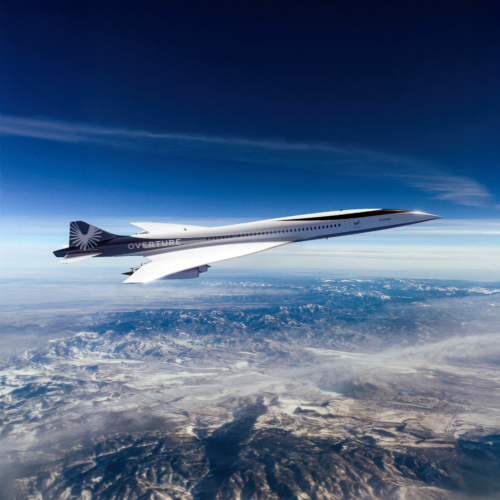
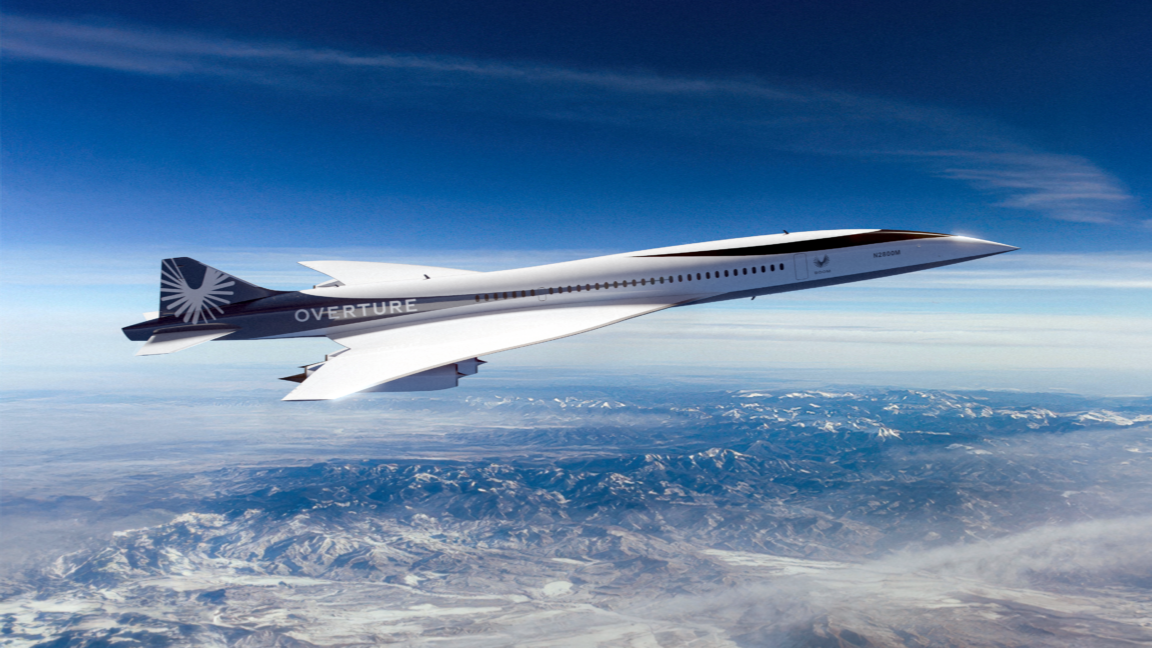
A long-standing ban on commercial supersonic flights over the United States would be overturned in a new rule proposed by the US Federal Aviation Administration. That could pave the way for the possible return of commercial supersonic airliners—as long as such aircraft can reduce the ground-level impacts of their sonic booms.
The FAA originally banned overland supersonic flights by civil aircraft in 1973, following US military tests involving supersonic flights over US cities such as Oklahoma City, Chicago, and St. Louis in the 1960s. But the Trump administration has championed the repeal of the ban to pave the way for supersonic airliners that could operate without disruptive sonic booms. So the FAA’s new rulemaking action on June 30, 2026, follows the direction of an executive order issued by President Trump on June 6, 2025.
The newly proposed rule would replace the 53-year prohibition with an interim “noise-based” certification standard requiring any sonic boom overpressure at the surface to be kept below 0.11 pounds per square foot. That proposed standard is based on the Colorado-based startup Boom Supersonic having demonstrated quiet Mach cutoff flights with its XB-1 aircraft—harnessing specific atmospheric conditions while flying just beyond supersonic speeds at higher altitudes so that the aircraft’s shockwaves are refracted upward into the atmosphere rather than traveling to the ground.
© Boom Supersonic


In a major advancement for UV energy research, scientists at Kyushu University have developed a solid material that converts visible light into high-energy UV light with 1.9% efficiency, eliminating the need for hazardous solvents.
Revealed in a recent paper published in Nature Communications, the Kyushu team created precisely controlled gaps between molecules in a solid material by attaching alkyl chains to the sp³ carbon atoms of an organic molecule.
Unlike at the macro scale, where adding two separate cups of warm water together doesn’t combine their energy levels to produce a boil, at the quantum scale, combining low-energy photons can result in a single, higher-energy photon, which is essential to the new energy conversion process.
UV light may be harsh on human skin, but its high energy density makes it valuable for a variety of applications, including air purification and resin curing in 3D printing. Although ultraviolet radiation accounts for only about 6% of the sunlight that reaches Earth’s surface, only a fraction of that can be effectively harnessed. The new material developed at Kyushu University converts ordinary visible light into ultraviolet light, potentially increasing the availability of this valuable energy source.
“What we do here is ‘add together’ the energy from two visible light photons to make one ultraviolet photon. It’s a fascinating process called photo upconversion,” explained co-author Yoichi Sasaki, Associate Professor at Kyushu University’s Faculty of Engineering.
Triplet-triplet annihilation is a key mechanism behind photo upconversion, a process in which two excited molecules interact to produce a single higher-energy UV photon. It begins when a donor molecule absorbs light, exciting its electrons into a high-energy triplet state. That energy is then transferred to a neighboring molecule, after which the two excited states interact and combine to generate a new ultraviolet photon.
Although scientists have understood this process for years, practical limitations have hindered its widespread use. Traditionally, triplet-triplet annihilation occurs in liquids that can evaporate and often require toxic solvents, prompting the Kyushu team to search for a solid-state alternative.
“In solids, molecules are packed tightly, and the π electron clouds—regions of high electron density hovering above and below each molecular plane—can overlap,” says Sasaki. “When that happens, triplets easily fizzle out before they ever meet. Molecules must be close enough for energy to transfer but separated enough to prevent quenching of excitons.”
The researchers found their answer in dihydroindenoindenedene (DHI), an organic semiconductor. By attaching alkyl chains, they were able to precisely control the spacing between molecules, creating an arrangement that allowed efficient energy transfer while minimizing unwanted electronic interactions.
The resulting alkyl-optimized DHI demonstrated efficient energy transfer, long-lived excited states, and strong light emission, achieving an upconversion efficiency of 1.9%.
“This means roughly two UV photons are produced for every hundred visible-light photons absorbed,” Sasaki adds. “It may sound low, but it runs on natural sunlight alone. Most solid-state materials cannot realize this even at much higher light intensity.”
With its relatively easy synthesis and low material cost, the team says their work provides a crucial new solution for harnessing UV light. A patent for the material is currently pending.
The work was the culmination of the career of pioneering upconversion researcher Nobuo Kimizuka, now Professor Emeritus at Kyushu University’s Research Center for Negative Emissions Technologies, who retired 11 days after the paper was completed.
“This discovery is the culmination of over 14 years of our research,” Kimizuka said, adding that it “marks a major milestone in photon-upconversion and molecular self-assembly research.”
The paper, “Sterically Protected π-Electron Systems for Efficient Solid-State Photon Upconversion,” appeared in Nature Communications on June 23, 2026.
Ryan Whalen covers science and technology for The Debrief. He holds an MA in History and a Master of Library and Information Science with a certificate in Data Science. He can be contacted at ryan@thedebrief.org, and follow him on Twitter @mdntwvlf.

