 Login

Google Rolls Out Gemini in Chrome to Millions of UK Users
Google is rolling out Gemini in Chrome to UK users, adding cross-tab summaries, Google service integrations, image tools, and new privacy questions.

 A deep ocean whale graveyard is revealing new clues about whale evolution and the ecosystems that form around their remains. When a whale dies, its body can become the beginning of an entire deep ocean ecosystem. For a time, the carcass may drift at the surface, drawing sharks and other predators. Eventually, after weathering and [...]
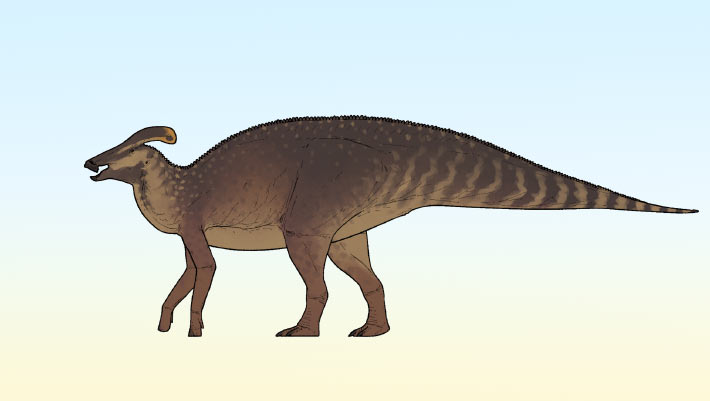
A new genus and species of lambeosaurine hadrosaurid dinosaur has been identified in southern Alberta, Canada, dating back 77 million years to the Campanian age of the Cretaceous period.
The post New Crested Dinosaur Species Identified in Canada appeared first on Sci.News: Breaking Science News.

A new analysis of data from the Western Australian-based Raine Study suggests that two humble vegetable groups -- legumes and cruciferous vegetables -- may play an outsize role in protecting young adults from early cardiometabolic risk, though the benefits appear to diverge sharply between men and women.
The post Beans and Broccoli Linked to Lower Heart Risk in Young Adults appeared first on Sci.News: Breaking Science News.
Engineers have developed a new robot that can swim underwater, then rise to the surface and take flight, in an aerial-aquatic feat that mimics some of nature’s most formidable fliers and swimmers.
Developed by researchers at the Massachusetts Institute of Technology (MIT) and the Swiss Federal Institute of Technology Lausanne (EPFL), the new robot’s capabilities could help launch a new generation of aerial-aquatic exploration vehicles.
Dubbed the “Flapping-Wing Aerial-Aquatic Vehicle” (FAAV), this lightweight robotic platform weighs less than 300 grams and can transition seamlessly between water and air with its very flexible flapping wings. Now, the team’s findings, published in the journal Science, could help scientists better understand how diving birds, which include puffins, petrels, loons, and gulls, are so adept at navigating two vastly different environments.
Such capabilities, the team says, could also pave the way toward advanced drones in the coming years that could transform ocean research.
Departing from conventional modern designs employed for aircraft or underwater vehicles, the team based their design on diving birds, which evolved to fly over water, then plunge beneath the waves to hunt for food, before surfacing and resuming flight.

One problem when it comes to replicating these abilities in robots involves the density of water, which is around 1,000 times denser than air. Because of this, the engineering team had to carefully balance the flexibility of the robotic wings in their design, along with flapping frequency, tail angle, and other factors that allowed the robot to move efficiently through both environments without requiring propellers or separate propulsion systems.
Experiments were undertaken by the team in the lab and in Switzerland’s Lake Geneva, and helped the team determine that the robot achieved best performance with medium-sized wings that flap at approximately five times per second. Under such conditions, the robot was able to swim one meter per second, then by pitching upward at a 70-degree angle, it could break through the surface, and continue this same movement to propel itself through the air.
Although the robot still has some limitations compared to the avian examples that inspired it, interestingly, it does appear to have one advantage: unlike diving birds, which paddle using their feet to achieve aquatic launches into the air, the new robot has no such requirement, and can transition from water to air relying only on its wings and adjustable tail.
In the future, drones equipped with such capabilities could be leveraged to monitor marine ecosystems in a variety of ways. The team also says it could help to observe environmental concerns, such as water near glaciers or offshore infrastructure, or even collect data from hazardous locations that are either too difficult or simply too costly for ships to reach.
“Our dream vision is for oceanographers, marine biologists, and members of coastal communities to launch this robot from a boat, or from shore, and it would fly close to the area of interest, such as an iceberg or a port facility, or over a pod of whales,” according to Raphael Zufferey, assistant professor of mechanical engineering at MIT.
“It would dive into the water to take a measurement or collect a sample, and fly back to deliver the data at a fraction of the cost of traditional methods. Then it could go back out to dive for more,” Zufferey recently told MIT News.
Drawing from movements in nature influenced by evolution, the researchers hope their bird-inspired design may eventually help scientists by introducing cost-effective, but formidable new tools to help obtain information from some of the most challenging environments, all with help from robots that can do what only nature’s diving birds could once achieve.
The achievement is detailed in a new paper, “Leaping out of the water: aerial-aquatic locomotion with flapping wings,” which appeared in the journal Science.
Micah Hanks is the Editor-in-Chief and Co-Founder of The Debrief. A longtime reporter on science, defense, and technology with a focus on space and astronomy, he can be reached at micah@thedebrief.org. Follow him on X @MicahHanks, and at micahhanks.com.
Neuroscientists have long believed that language processing was only found in regions of the brain’s left hemisphere, including the well-known Broca’s area. However, new evidence suggests the brain’s language network is far more widespread than previously thought.
Researchers at the Massachusetts Institute of Technology (MIT) analyzed functional magnetic resonance imaging (fMRI) scans from 772 participants and identified 17 additional brain regions involved in language comprehension. These newly discovered areas are distributed across the brain, including the cerebellum, hippocampus, amygdala, and several regions of the cerebral cortex. In total, this accounts for five percent of the adult brain volume (roughly the size of a large strawberry).
“Even though there are all these distant components, it’s pretty restricted in terms of volume. You don’t need that much of the brain to do language,” says senior author Evelina Fedorenko, an MIT associate professor of brain and cognitive sciences and a member of MIT’s McGovern Institute for Brain Research, in a statement.
To find these hidden language-related regions in the brain, the researchers revisited years of brain imaging data collected since 2013. Additionally, participants completed a standard “language localizer” task, during which they read or listened to meaningful sentences and sequences of meaningless nonwords. By comparing brain activity between these two conditions, the research team identified regions that responded more strongly to language.
“When we initially started looking at language, in the first couple of papers, I tried to be comprehensive and include anything that seemed consistent across participants, and there was a huge amount of resistance,” said Fedorenko. “People would say things like, ‘Well, we know those are not language areas, so please focus on the language areas.’”
The team decided to adopt a more flexible statistical approach to detect weaker signals and identify previously overlooked language-sensitive regions beyond the classical language areas. They then compared these regions’ responses during a spatial working memory task to distinguish language-specific areas from those involved in what would be considered general cognitive functions.
Interestingly, five of the newly identified language regions are located in the cerebellum, a structure traditionally associated with movement and coordination. Some of these cerebellar regions were also active during non-language tasks, suggesting they may help integrate information across different brain systems rather than process language alone.
“It’s a very simple paradigm that lets you identify this core language system in individual brains,” says MIT postdoc Agata Wolna, the lead author of the paper.
Additional language-sensitive regions were identified in the hippocampus and amygdala, areas better known for their roles in memory and emotion. Their involvement suggests that understanding language may rely more on integrating memory, emotional context, and higher-order cognitive functions than previously understood in science.
“We always see this frontal temporal network, but there’s quite a lot of evidence that there are other regions that are also critical for language processing,” said Wolna. “By using a laxer threshold and zooming in on areas with weak MRI signal, we tried to maximize the chances of finding small and weakly responsive regions outside of this left frontal temporal system.”
The findings challenge long-held assumptions about the brain’s organization and can open new avenues for research into how language processing is understood in neuroscience.
The recent study was published in the Journal of Neuroscience.
Chrissy Newton is a PR professional and the founder of VOCAB Communications. She currently appears on The Discovery Channel and Max and hosts the Rebelliously Curious podcast, which can be found on YouTube and on all audio podcast streaming platforms. Follow her on X: @ChrissyNewton, Instagram: @BeingChrissyNewton, and chrissynewton.com. To contact Chrissy with a story, please email chrissy @ thedebrief.org.
More than two decades have passed since geologists first identified an unusual circular structure buried beneath the North Sea, and now scientists say new evidence could finally solve the mystery.
New research has confirmed that the feature, known as the Silverpit Crater, was likely formed by an asteroid impact as much as 46 million years ago. The discovery ends years of speculation about the mysterious feature’s origins, much of which debated whether the circular structure had been caused by volcanic activity or shifting underground salt deposits.
The research was led by researchers at Heriot-Watt University in Edinburgh and published in Nature Communications.
Combining high-resolution seismic imaging, microscopic analysis of rock samples, and computer simulations, the team behind the new study says their assessment offers the strongest evidence yet that Silverpit represents one of Earth’s relatively rare ancient impact features that have survived throughout time.
The three-kilometer feature, which lies approximately 700 meters (2,300 feet) beneath the floor of the southern North Sea, and close to 80 miles off the Yorkshire coast, has long perplexed geologists. Several larger concentric ringlike structures encircle the primary feature, comprising about 12 miles, and since its discovery in 2002, geologists have remained divided over what might have caused it.
Some argued that the weird feature possesses the unmistakable hallmarks of a hypervelocity impact; others maintained that more conventional geological explanations could better account for the circular structure.
Now, after nearly a quarter of a century of debate, the new research appears to finally put the debate over this North Sea enigma to rest.
“New seismic imaging has given us an unprecedented look at the crater,” said lead author Dr. Uisdean Nicholson, a seismologist with Heriot-Watt University. Of even greater intrigue, the researchers identified microscopic “shocked” quartz and feldspar crystals recovered from an oil exploration well at the same depth as the crater floor.
“We were exceptionally lucky to find these,” according to Nicholson, who called the team’s work “a real ‘needle-in-a-haystack’ effort.”
“These prove the impact crater hypothesis beyond doubt, because they have a fabric that can only be created by extreme shock pressures,” Nicholson said, making them among the strongest lines of evidence available to researchers for confirming ancient impact sites.
By reconstructing the ancient impact event that shaped the Silverpit feature, the team now believes that an asteroid roughly 160 meters wide struck the North Sea at a low angle after approaching from the west. The resulting collision produced the main crater, while launching massive volumes of stone and seawater to levels of up to 1.5 kilometers—the resulting tsunami would have exceeded 100 meters in height.
This ancient impact is still dwarfed when compared to the likes of Mexico’s Chicxulub Crater, which was created by an asteroid that struck our planet 66 million years ago, now widely believed to be responsible for the extinction of the dinosaurs. While smaller by comparison, the Silverpit impact would still have unleashed enormous destructive energy across the surrounding region.
The team’s work also adds to the accumulation of impact features known to scientists, which are relatively rare, despite thousands of asteroids reaching the surface of our world over the last several billion years. However, over such long periods, other geological processes such as erosion, plate tectonics, and volcanic activity have erased most of the remaining evidence of these collisions.
Presently, there are only around 200 impact craters that are known to exist on land, and another few dozen that have been detected beneath Earth’s oceans.
Altogether, while the mystery of Silverpit has now been solved, the new research does more than merely settle a debate: it allows seismologists a deeper look at how asteroid impacts reshape planetary surfaces.
Such knowledge, while improving scientists’ understanding of Earth’s past, could also help provide potentially crucial data for future planetary defense efforts by helping scientists refine models of future impact hazards.
The team’s recent study, “Multiple lines of evidence for a hypervelocity impact origin for the Silverpit Crater,” appeared in Nature Communications.
Micah Hanks is the Editor-in-Chief and Co-Founder of The Debrief. A longtime reporter on science, defense, and technology with a focus on space and astronomy, he can be reached at micah@thedebrief.org. Follow him on X @MicahHanks, and at micahhanks.com.
For many centuries, the ancient Lighthouse of Alexandria, also known as the Pharos, stood among the tallest constructions on Earth, garnering recognition as one of the famous Seven Wonders of the Ancient World.
That all changed beginning in AD 956, and again in 1303, when a series of earthquakes damaged the legendary Pharos, plunging the massive stone used in its construction into the depths of the Mediterranean Sea.
Now, after more than seven centuries, the third-longest-surviving of the seven ancient wonders is rising again, offering archaeologists clues to the appearance and construction of this historic marvel.
Archaeologists with the PHAROS Project report the recovery of 22 massive blocks from the ancient lighthouse, which have remained at the bottom of the Mediterranean Sea off Egypt’s coast since the monument’s destruction 723 years ago. The international research initiative aims to use its studies of the recovered materials to digitally rebuild the structure, revealing its appearance to the modern world for the first time in centuries.

Originally constructed in the third century BC, the ancient structure stood more than 330 feet tall before the trio of earthquakes that ultimately destroyed it. Before its destruction, the lighthouse guided ships sailing the Mediterranean for more than 1,600 years. At the modern site where the Pharos once stood, the Citadel of Quitbay, which was originally constructed beginning in 1477, features some of the original blocks from the lighthouse.
The remains of the lighthouse have been known to archaeologists for more than a century. First described in 1916 by Gaston Jondet and Raymond Weill, and again in 1940 by Sir Leopold Saville, the lighthouse was officially rediscovered as part of a UNESCO-sponsored expedition in 1968, where archaeologist Honor Frost confirmed the ruins had indeed belonged to the Pharos.
However, political tensions at that time prevented further exploration, and the site remained unexplored for several decades. Then in 1994, imagery was obtained by archaeologist Jean-Yves Empereur and cinemaphotographer Asma el-Bakri, which finally offered the world a first look at the massive ancient structure’s remains.

Today, the PHAROS Project, led by Isabelle Hairy, an archaeologist with Egypt’s Ministry of Tourism and Antiquities, and working in cooperation with the Dassault Systèmes Foundation, has successfully retrieved 22 of the massive stone blocks that once composed the entrance to the lighthouse.
Additional recoveries include portions of doorways, lintels, paving slabs, and other portions of the ancient construction. Retrieving these sunken monoliths has been no small task, as some of the paving slabs alone weigh as much as 88 tons.
Although the recovery of the ancient slabs of stone that once comprised the famous monument is a promising archaeological endeavor, the PHAROS Project’s primary aim is to use knowledge gained from their study to digitally reconstruct the lighthouse.
To achieve this, Hairy and the team plan to scan each of the huge stone blocks using modern cutting-edge photogrammetry, which will be used to create 3D models of the structure’s components. Then these will be studied and assembled digitally, providing one of the clearest views of one of the ancient world’s most imposing structures.

The research builds on close to a decade of previous work that includes the digitization of more than 100 of the lighthouse’s features that remain underwater. Altogether, the digital reassembly of the Pharos will complement existing imagery from the ancient world that depicts the lighthouse, which includes its appearance in ancient artwork, currency from the time when the Pharos was still in use, and mosaics.
Additionally, historical accounts that preserve written descriptions, like those of Abou Haggag Youssef Ibn Mohammed el-Balawi el-Andaloussi, an Arab traveler who visited Alexandria in 1166 and produced one of the most complete descriptions of the structure, will be used as part of the reconstruction effort.
Together, these combined sources of information will allow Hairy and the PHAROS Project team to reconstruct the most complete and accurate depiction of this ancient wonder, long believed to be lost to history with all the other Wonders of the Ancient World, save only for the Great Pyramid at Giza.
With its digital reconstruction, soon another of these enigmatic Seven Wonders will be available for observation and study, bringing to life another long-lost marvel of antiquity for modern eyes.
Additional details about the PHAROS Project can be found on its official website.
Micah Hanks is the Editor-in-Chief and Co-Founder of The Debrief. A longtime reporter on science, defense, and technology with a focus on space and astronomy, he can be reached at micah@thedebrief.org. Follow him on X @MicahHanks, and at micahhanks.com.
NASA recently captured a summertime spectacle in orbital imagery of the Black Sea, as eerie-looking swirls of turquoise could be seen swarming in its waters.
The curious curling features were observed by astronauts aboard the International Space Station in May, and more recently by the Ocean Color Instrument (OCI) on NASA’s Plankton, Aerosol, Cloud, Ocean Ecosystem (PACE) satellite on June 22, 2026, as it passed over the body of water that marks the boundary between Europe and Asia.
The vibrant oceanic display is believed to be the result of summertime blooms of coccolithophores, which begin surging in ocean waters near the shoreline in warmer weather months.
These phytoplankton are armored in plates composed of calcium carbonate, which can often cause discoloration in ocean waters as the blooms occur, which are driven by nutrients entering ocean waters that are often carried from inland sources.

Earlier this year, a similar turquoise spectacle occurred in Atlantic waters along the eastern United States, as coccolithophores surged in numbers as temperatures rose, and meltwater in mountainous regions made its way downstream, carrying vital nutrients which were deposited in coastal waters after they made their way downstream.
Unlike coccolithophores, which generally brighten the color of ocean water in the spring and early summer, later in the year another kind of microscopic organism, known as diatoms, can darken the water due to the silica shells that encase their microscopic bodies.
Similar orbital color shows were observed in recent weeks within the narrow waters of the Bosporus Strait, which separates Turkey as it parts Asia Minor and Thrace. In the recent photos obtained from the ISS, the entire Bosporus can be seen illuminated in turquoise as its waters have been flooded with coccolithophores.

Apart from the odd but beautiful swirling patterns they produce as these phytoplankton are carried by ocean currents, these colorful creatures also provide a more practical benefit, since they can be leveraged by remote sensing technologies to help study the dynamics of these blooms when they occur.
Additionally, these microscopic creatures can also make significant contributions to oceanic carbon cycles, since the creatures sink to the seafloor at the end of their life cycles, carrying carbon they’ve absorbed with them. Once deposited on the ocean floor, this carbon can be maintained at such depths for long periods.
Additional information about the recent coccolithophore blooms in the Black Sea, along with other imagery of our planet as seen from space, can be found at NASA’s Earth Observatory page.
Micah Hanks is the Editor-in-Chief and Co-Founder of The Debrief. A longtime reporter on science, defense, and technology with a focus on space and astronomy, he can be reached at micah@thedebrief.org. Follow him on X @MicahHanks, and at micahhanks.com.
