❌

Reading view

India to pump $20B into chip, phone manufacturing

India committed to spend an additional INR1.9 trillion ($19.7 billion) on boosting chip and smartphone production in the country, accelerating an initiative first laid out five years ago.

Prime Minister Narendra Modi’s government has allocated around INR1.3 trillion to provide state aid for semiconductors and a INR625 billion outlay on smartphones.

The latest investment builds on the Semicon 1.0 initiative outlined in 2021 to invest around INR1 trillion on starting and establishing the country’s semiconductor sector.

In a statement, Ashwini Vaishnaw, minister for Electronics and Information Technology, explained under the refreshed Semicon 2.0, the nation would focus on ensuring chips are being designed in India that can meet all its needs, and by the end of the programme, “we will be 100% self-reliant”.

He added every major industry leader wants to establish a presence in the country “given the growing interest in India’s semiconductor programme”, pointing to partnerships already established with the US, Japan, the European Union (EU), Netherlands, Singapore and Germany.

The minister added the investment and incentives will be aimed at projects around chip design, fabrication of machinery, R&D and talent creation.

Under the Mobile Phone Manufacturing Scheme, Vaishnaw said it would create around 60,000 direct jobs, while it will look to incentivise domestic companies with Chinese suppliers currently dominating the market.

India’s semiconductor advancement adds to similar moves in the US, which has a funding programme in place worth $52 billion. The EU recently unveiled a revamp to its own Chips Act.

The post India to pump $20B into chip, phone manufacturing appeared first on Mobile World Live.

  •  

South Korea looks to AI-RAN, 5G to fuel future industry

Authorities in South Korea kicked-off a project led by SK Telecom (SKT) and KT to pilot the use of advanced networks to support robots and other physical AI applications in industrial sites including shipyards and manufacturing facilities.

The Hyper AI Network Infrastructure Development project is being overseen by South Korea’s National Information Society Agency (NIA) and carries a total budget of KRW17.2 billion ($11.6 million).

Launching the project, the NIA revealed it selected two consortia to create the networks for industrial sites and hold the demonstrations.

One group is led by SKT and the other by its rival KT. Other organisations involved comprise AI companies, network vendors, universities, enterprises and certification bodies.

The project involves networks using standalone 5G and AI-RAN to provide the testing ground for a range of industrial applications under the broad umbrellas of physical and operational AI.

Equipment from various vendors and chipmakers is set to be used, with SKT identifying Samsung Networks, Nokia, Ericsson and HFR among its suppliers in its statement on the project.

Initial applications to be tested are “AI-based” welding, painting and patrol robots. From 2027 onwards, the infrastructure is expected to host demonstrations of humanoid robots.

Abilities of the AI-toting machines set to be verified include recognition, judgement and control performance in what the NIA described as high-risk and -difficulty working environments.

Swarm collaboration performance for multiple robots is one specific ability set to be looked at, a feature the agency highlighted as being “difficult to implement with on-device AI alone”.

The NIA expects the project to lay the groundwork for commercialisation of the technologies being assessed.

In a translated statement, the agency’s director Kim Hyung-chul noted “for physical AI to be safely and stably implemented in industrial settings, Hyper-AI networks that support ultra-low latency, high-reliability communication and large-capacity uplink are essential”.

“Through this project, we will verify the field applicability of next-generation AI network technologies such as AI-RAN, discover and spread physical AI service models optimised for industrial sites, and accelerate AX across the entire national industry.”

The post South Korea looks to AI-RAN, 5G to fuel future industry appeared first on Mobile World Live.
  •  

Nokia bags Taiwan Mobile remit for AI network push

Taiwan Mobile and Nokia expanded a contract for 5G kit with a view to pushing the operator’s move towards AI-native mobile network architecture.

The deal involves the supply of products from Nokia’s AirScale portfolio including next-generation baseband and radio systems, alongside software providing the operator’s network with an AI boost.

Nokia highlighted the radios and baseband units support improvements in throughput, spectrum efficiency and delivery of premium user experiences. On the software side, it pointed to an opportunity for real-time automation and predictive analysis to bolster operational efficiency.

The boost in network capacity and uplink delivered by the upgrade is also promoted as meeting the specific needs of AI applications.

Other benefits noted include use of AI for power management to cut energy consumption and traffic steering capabilities to up resilience.

Taiwan Mobile president Jamie Lin explained its collaboration with Nokia is key in a “strategy to build a high-performance, resilient and sustainable network”, which is the basis for a “Telco and Tech” push by the company.

Nokia head of RAN Mark Atkinson added the deal would help accelerate Taiwan Mobile’s “journey toward AI-native networks”, noting the equipment being supplied would set “the foundation for 5G-Advanced and beyond”.

The post Nokia bags Taiwan Mobile remit for AI network push appeared first on Mobile World Live.

  •  

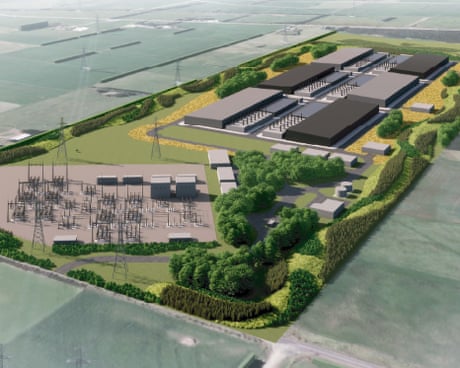
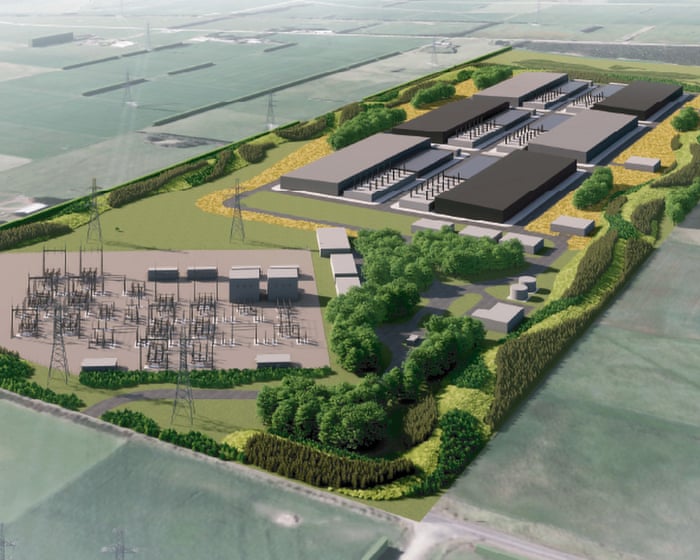
‘A lot of red flags’: plans for New Zealand’s first AI datacentre spark concern as locals demand greater transparency

Plans to build a NZ$3.5bn datacentre in Makarewa in the country’s south has drawn concern about electricity and water use, and potential noise pollution

People living near the site of New Zealand’s first planned AI datacentre are calling for more transparency about the project, especially about how the centre’s huge electricity and water use and potential noise pollution could affect them.

Singapore-based company Datagrid has secured approval to build a NZ$3.5bn (US$2bn) AI datacentre on a 49-hectare site in Makarewa, just north of New Zealand’s southern-most city, Invercargill. Construction is due to begin this year, with the centre becoming operational by 2028.

Continue reading...

© Composite: Datagrid NZ

© Composite: Datagrid NZ

© Composite: Datagrid NZ

  •  
❌