❌

Reading view

OU Researchers Enhance Imaging Technology for Better Donor Liver Assessment

A groundbreaking imaging technology developed by researchers at the University of Oklahoma promises to revolutionize liver transplant evaluations by enabling more comprehensive and rapid assessments of donor organ health. With thousands of patients awaiting liver transplants nationwide, transplant teams urgently need tools that can deliver swift, accurate insights without invasive procedures. The team, led by Dr. Qinggong Tang, has adapted polarization-sensitive optical coherence tomography (PS-OCT)—an advanced imaging modality originally utilized in retinal scans—to noninvasively evaluate donor livers at high resolution.

Traditional liver assessments rely heavily on biopsies, where small tissue samples are extracted and examined for signs of disease or damage. While considered the gold standard, biopsies are inherently limited, providing only a microscopic snapshot of a vast organ that may vary in condition. This narrow sampling can cause uncertainty, sometimes leading to the discard of viable organs. The OU team sought to overcome these limitations by employing PS-OCT, which not only captures detailed cross-sectional images of liver tissue but also measures its polarization properties, revealing subtle structural and biochemical features linked to liver health.

The engineers designed a portable PS-OCT system optimized for clinical and operating room environments, allowing transplant teams to scan liver surfaces quickly and noninvasively. The imaging data are then analyzed using advanced artificial intelligence algorithms, co-developed with Dr. Chongle Pan’s computer science lab. These AI tools quantify critical parameters indicative of hepatic steatosis (fat accumulation) and inflammation, two primary factors influencing liver viability. By training their models on datasets from over thirty clinical cases—comparing PS-OCT results with biopsy outcomes and post-transplant organ function—the researchers demonstrated strong correlations between imaging biomarkers and actual clinical metrics.

Beyond providing a more holistic view of donor liver condition, PS-OCT could enhance decision-making speed, potentially expanding the pool of organs deemed suitable for transplantation by identifying healthy tissue regions missed by biopsy. Such improvements may reduce organ discard rates and improve transplant success. Encouraged by initial findings, the OU team plans a large multisite clinical trial involving institutions like UT Southwestern and the Cleveland Clinic to validate and refine this approach across diverse patient populations.

This work exemplifies OU’s interdisciplinary innovation platform that integrates optical bioimaging, machine learning, pathology, and organ perfusion technology to translate engineering advances directly into clinical practice. The researchers also intend to extend PS-OCT evaluation methods to other organs, including kidneys and lungs, widening the impact of this technology.

Supported by National Science Foundation grants and institutional partnerships, the team’s efforts mark a significant step toward redefining how transplanted organs are assessed. Dr. Tang emphasizes that this is just the beginning, envisioning a future where noninvasive, AI-enhanced imaging facilitates safer, faster, and more effective organ transplantation worldwide.


Subject of Research: Donor liver evaluation using advanced imaging techniques
Article Title: Human donor liver viability evaluation with polarization-sensitive optical coherence tomography
News Publication Date: 24-Jun-2026
Web References: http://dx.doi.org/10.1126/scitranslmed.adv7124
Image Credits: University of Oklahoma / Ellie Pinter

Keywords

Organ transplantation, Optical coherence tomography, Polarization-sensitive imaging, Liver viability, Artificial intelligence, Biomedical imaging, Noninvasive diagnostics, Medical innovation

  •  

Datacentres are a ticking timebomb. We must make sure AI’s benefits outweigh the costs | Nicki Hutley

They suck up energy and water, and blast out heat. Just who is better off from all this investment – aside from tech bros?

The two great existential threats of our time – the climate crisis and AI – come hurtling together in the explosion of datacentres across Australia and around the world.

You can hardly avoid hearing about them these days, either with awed reverence of the promised benefits to humankind or with fear and anger given the implications for the climate, inflation, jobs and even housing affordability.

Continue reading...

© Photograph: Jono Searle/AAP

© Photograph: Jono Searle/AAP

© Photograph: Jono Searle/AAP

  •  

Stymied datacentre projects threaten global AI revolution

Large-scale datacentre projects around the world are being challenged or cancelled, as infrastructure’s energy demands ramp up

Datacentre planning proposals face all kinds of hurdles, from securing energy supply to high construction costs. But the 2,000 acre Prince William Digital Gateway site in the US state of Virginia had another problem: its proximity to a Civil War battlefield.

“If the development is allowed to proceed, the solemn nature of this historic site would become marred by sitting in the shadow of the monstrous datacentres, along with their associated electrical infrastructure,” said one legal brief against the plans.

Continue reading...

© Photograph: Horst Friedrichs/Alamy

© Photograph: Horst Friedrichs/Alamy

© Photograph: Horst Friedrichs/Alamy

  •  

Scotland could freeze datacentre projects in challenge to UK’s AI strategy

Scottish government to consider SNP national council motion for moratorium on all new datacentres

The Scottish government is about to consider a sweeping moratorium on building new datacentres, putting a key plank of the UK’s AI strategy at risk.

Last Sunday the Scottish National party (SNP)’s national council passed a motion to freeze all new datacentres in Scotland. That motion has been sent to the Scottish government to consider.

Continue reading...

© Photograph: Ken Jack/Getty Images

© Photograph: Ken Jack/Getty Images

© Photograph: Ken Jack/Getty Images

  •  

‘It’s smoke and mirrors’: hope turns to fear in Scottish village chosen for AI datacentre

Suspicions grow in Lanarkshire that local people have been misled on supposed benefits of the huge development

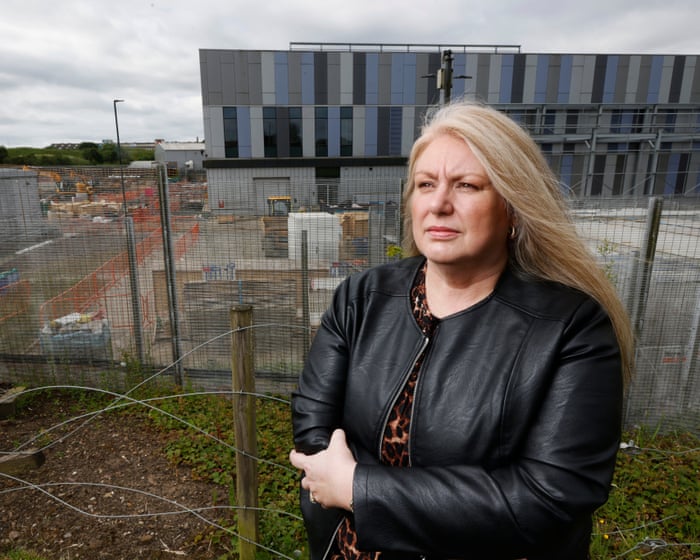
The promise was that a Scottish community would be transformed by massive investment and empowered to chase “the jobs of the future”. Instead, local people in Lanarkshire fear they may have to sell their properties and lose green belt land because of the errors of a badly planned AI datacentre complex, even as those jobs and investments never arrive.

Late last year, representatives of Oakes Energy Services began to knock on doors in Newarthill, a village east of Glasgow. In letters reviewed by the Guardian, they invited residents to individual meetings. They told them about plans for a solar farm, say local people, and made offers: free solar panels, tree planting, or even cash for their properties.

Continue reading...

© Photograph: Murdo MacLeod/The Guardian

© Photograph: Murdo MacLeod/The Guardian

© Photograph: Murdo MacLeod/The Guardian

  •  

Revealed: landmark Scottish AI project has no prospect of meeting renewables promise

Exclusive: Government and developers privately acknowledged Lanarkshire datacentre site had power provision ‘issue’

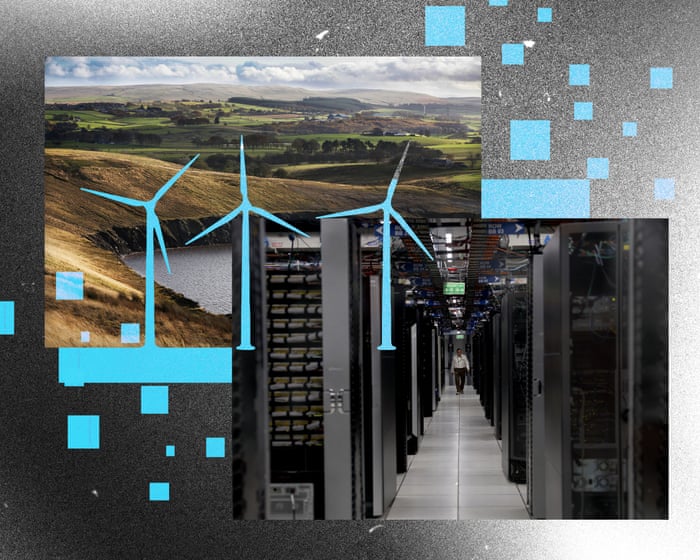
A landmark AI development billed as delivering jobs and prosperity has misrepresented its plans to channel a nuclear reactor’s worth of power to a site in rural Scotland, a Guardian investigation has found.

When it was announced in January, the government promised that an £8.2bn AI datacentre complex in Lanarkshire – built by the US firm CoreWeave and the Scottish company DataVita – would be powered entirely from on-site renewables and built by 2030.

Continue reading...

© Composite: Guardian Design/Reuters

© Composite: Guardian Design/Reuters

© Composite: Guardian Design/Reuters

  •  

What are Britain’s AI growth zones and are the plans feasible or ‘complete bunk’?

Lanarkshire datacentre run by renewables and creating thousands of jobs not achievable by 2030, Guardian investigation finds

The Guardian has examined government plans to build Britain’s AI infrastructure for the future, finding some of these to be, in the words of one source, at best unclear and at worst “complete bunk”.

The plans in question are for AI growth zones, which are supposed to be regions where the government supports companies to build massive AI datacentre complexes, of 500MW or greater. These could be bigger than any now operating in the UK.

Continue reading...

© Photograph: Sergio Azenha/Alamy

© Photograph: Sergio Azenha/Alamy

© Photograph: Sergio Azenha/Alamy

  •  

We can live without AI, but can we live without clean water? | Letters

Readers respond to an article about Erin Brockovich’s battle against datacentres and voice their fears for the environment

What are the benefits obtained from AI’s massive use of electricity and water (‘We’re up against forces that have all the money in the world’: Erin Brockovich on her battle against AI datacentres, 29 June)? Analysis shows that the top four uses of AI are “therapy/companionship”, “technical assistance and troubleshooting”, “fun and nonsense”, and “fan fiction and storytelling”.

AI use for therapy, and due to loneliness, appears not to reduce loneliness. AI provides affirmation, but at the expense of reducing the social skills needed to interact in the real world. Teachers report that students’ use of AI reduces their capacity for critical thinking.

Continue reading...

© Photograph: Canadian Press/Shutterstock

© Photograph: Canadian Press/Shutterstock

© Photograph: Canadian Press/Shutterstock

  •  
❌