Approfitta dell'offerta speciale sulla mini pompa per bici AIRBANK : compatta, potente e facile da trasportare: la pressione perfetta sempre a portata di mano... Leggi tutto
Abbiamo provato una delle versioni più complete del robot tagliarba Navimow: niente antenna esterna, niente filo perimetrale, precisione al centimetro e non sbaglia mai. Plug & play come un robot lavapavimenti, ma questo taglia l'erba. E la taglia anche bene... Leggi tutto
The CEO of Flock Safety made a comment that may have revealed more about America's growing surveillance industry than he intended. In this investigation, Lau...
A team of conservationists has discovered and restored the tombstone of Sebastian, a formerly enslaved man who died free in 1729.
"That discovery is likely one of the oldest gravestones of a free Black person in America," Michelle Wu, the mayor of Boston, said in a July 4 speech. "It's been there all along. We just had to go look and share the story."
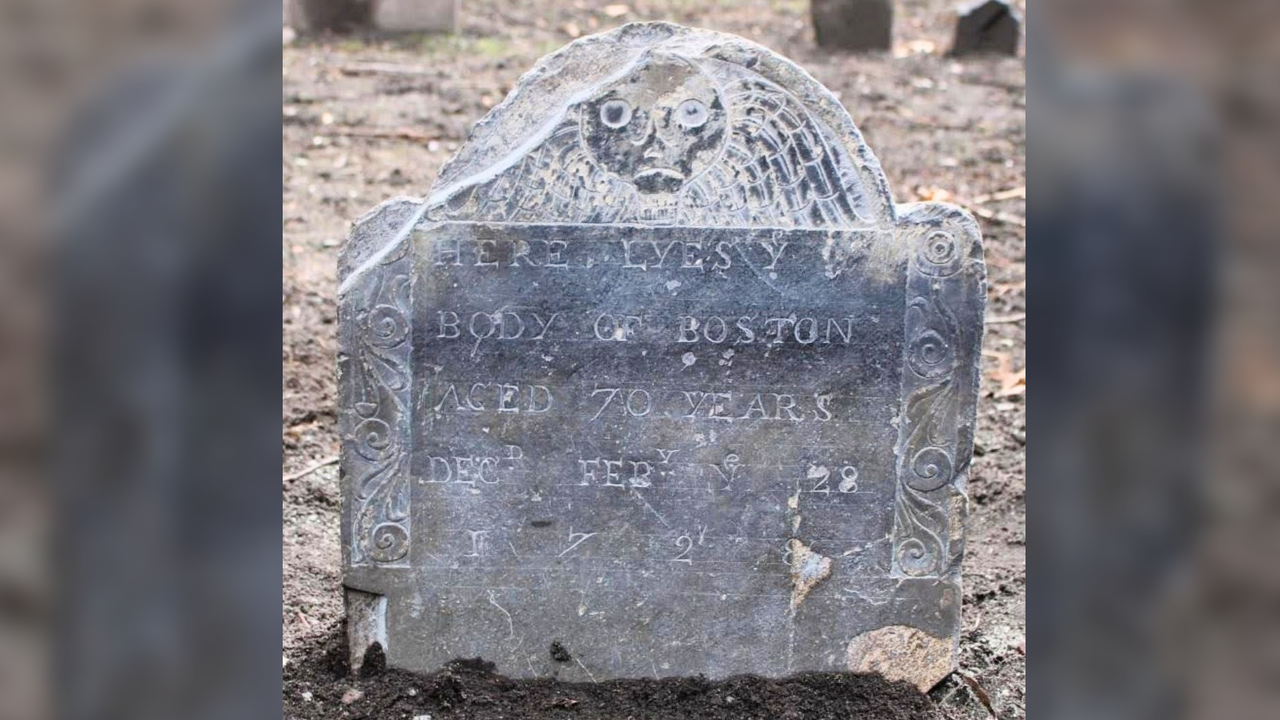
The stone marker is inscribed with Sebastian's chosen name, Boston, and features an image common in 17th- and early 18th-century tombstones in New England: the death's head. The symbol includes a stylized skull flanked by wings, which were possibly intended to symbolize spiritual resurrection.
On the tombstone, a simple, five-line inscription reads:
Original Inscription
HERE LYES Ye
BODY OF BOSTON
AGED 70 YEARS
DECD FEBY Ye 28
1728
Modern English
HERE LIES THE BODY OF BOSTON AGED 70 YEARS DECEASED FEBRUARY THE 28 1728
In 18th-century American writing, the word "the" was often abbreviated with a Y-shaped letter form called a "thorn" representing the "th" sound. Tombstones also frequently abbreviated "deceased" and the month. Somewhat confusingly, before 1752, the American colonies regularly used the Julian calendar, as did Britain, in which the new year started on March 25. Boston's year of death is listed on the tombstone as 1728, but his February 28 death was actually in 1729 in our modern Gregorian calendar.
Kelly Thomas, the director of the Historic Burying Grounds Initiative for the Boston Parks and Recreation Department, told WBZ News Radio that she identified the gravestone during a restoration project at the Granary Burying Ground, the city's third-oldest cemetery. Established in 1660, the cemetery includes over 5,000 graves, including the final resting places of Declaration of Independence signers Samuel Adams and John Hancock; the U.S. Revolutionary War officer Paul Revere; and Crispus Attucks, a sailor of mixed African and Indigenous ancestry who is thought to be the first American killed in the Boston Massacre.
"I was reviewing the photos of headstones, and then I noticed that the stone only had one name," rather than a first and last name, Thomas told WBZ News Radio, suggesting that Boston was either enslaved or free when he died. Based on a search of historical records, Thomas determined that Boston's enslaved name was Sebastian and that he also went by Bastian.
A surprising amount of information was recorded about Boston and his wife, Jane Lake. In 1701, they had their daughter, also named Jane, baptized at First Church in Boston, where they regularly attended worship services. But while the two were married with children, they were also both enslaved and lived in different households, historian Gloria Whiting wrote in a 2016 study.
Boston was likely freed in the early 18th century, some time after the 1702 death of John Waite, who had held him in slavery. By 1708, a list of free Black people included the name Boston, and he had gained a reputation in the city as a hardworking handyman, according to Whiting's study. He had been freed for roughly 30 years when he died in 1729 and was well-known enough to have an obituary published for him in the New-England Weekly Journal, a rare occurrence for enslaved or freed Black people in colonial America.
Wu also said that, in recent weeks, archaeologists in Boston had discovered musket balls and gun flints from the infamous Battle of Bunker Hill that took place on June 17, 1775. The battle was fought by British Crown forces and New England troops in the first stage of the American Revolutionary War.
The fragile and battered remains of an infant who lived about 6,000 years in Mesopotamia may be the oldest documented case of child abuse from the Middle East and one of the oldest known cases of its kind in the world, a new study finds.
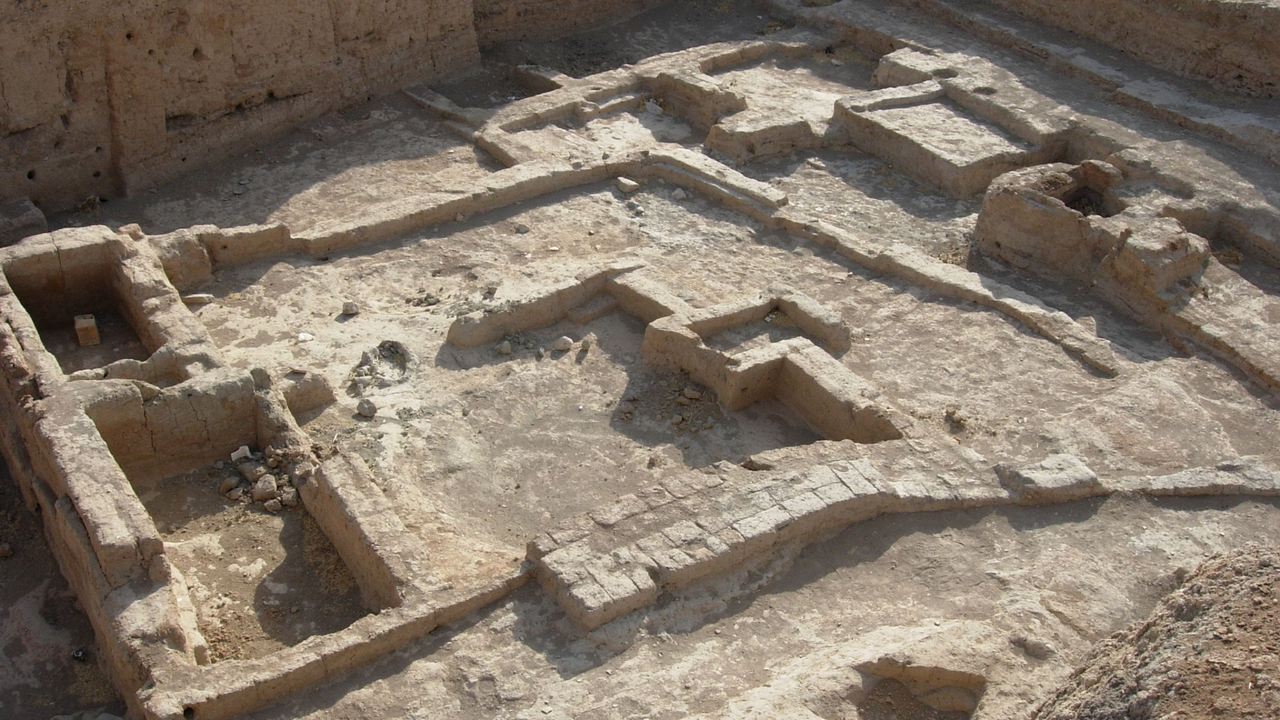
Researchers unearthed the infant's remains in Syria, but at the time the infant died, sometime between 4200 and 3900 B.C., it was buried in Tell Brak, one of the world's earliest cities. It's possible that the difficulties associated with early urbanization played a role in the child's abuse, the researchers noted.
The team determined that, based on the infant's tooth development, the child was 6 to 9 months old at death. An analysis of the remains, which were interred in a children's burial ground within a Late Copper Age workshop district, revealed that the infant had four fractured ribs near the breastbone. The right thigh bone had abnormal growth, while both sides of the skull bore active, porous lesions. These injuries point to the bones being subject to intense and repetitive external forces, and the nature of the lesions don't fit easily with an accidental fall, the researchers said.
"Ribs shouldn't break" in such a small child, study co-author Aleksandra Grzegorska, a bioarchaeologist at the University of Warsaw, told Live Science. Although rib fractures are relatively common in adults, they suggest child abuse in young infants, she said.
In the study, published May 21 in the International Journal of Osteoarchaeology, Grzegorska and her colleagues systematically ruled out other explanations for the injuries, including rickets, scurvy, birth trauma and violent coughing from illnesses such as tuberculosis. Vitamin deficiencies were unlikely, the researchers noted, given that ancient Mesopotamia had ample sunlight and fresh produce due to the fertile land between the two rivers. Birth-related fractures typically heal within weeks in infants, and bone density and growth measurements for the baby matched those of its peers from that time, indicating that the child didn't have an underlying skeletal condition.
To gauge how unusual the injuries were, the team compared the infant to other children excavated from the same burial area. None of the other youngsters with substantial rib preservation showed similar fractures, making the infant's injuries an outlier in the local population.
It appears that the infant likely experienced "caregiver-induced violence," Grzegorska said. This term is used because the evidence can't identify who caused the harm or confirm intent, Grzegorska said. "We don't want to point fingers at any specific individual," she said, noting that in many ancient cultures, multiple family members, not just parents, helped raise children.
Other clues that might shed light on the infant's injuries are missing from this case, she added. Unlike modern clinicians, bioarchaeologists can't interview a living patient or bystander, or examine soft tissue that might reveal more about the abuse. The partially healed state of the fractures suggest the infant survived for some time after the injuries were inflicted, Grzegorska found — an indication that the trauma was not immediately fatal.
Around the time the infant died, Tell Brak was transforming into a city, so the authors suggested that the stresses of early urbanization and possibly less support from extended kin could have contributed to the violence. Centuries after the infant died, upheavals related to city building appear to have led to mass deaths that were likely caused by violent conflict, Grzegorska noted.
Documented cases of child abuse remain exceptionally rare in the archaeological record, with only a handful previously identified in places such as Egypt, France and Lithuania.
 Login





 Approfitta dell'offerta speciale sulla mini pompa per bici AIRBANK : compatta, potente e facile da trasportare: la pressione perfetta sempre a portata di mano... Leggi tutto

 Abbiamo provato una delle versioni più complete del robot tagliarba Navimow: niente antenna esterna, niente filo perimetrale, precisione al centimetro e non sbaglia mai. Plug & play come un robot lavapavimenti, ma questo taglia l'erba. E la taglia anche bene... Leggi tutto