❌

Reading view

MIT’s 6 mW chip lets tiny drones see and map their surroundings in real time

MIT researchers have developed a low-power chip that enables tiny drones and robots to build detailed 3D maps of their surroundings in real time while consuming only about 6 milliwatts of power. The system-on-a-chip, called Gleanmer, could help battery-powered autonomous machines navigate cluttered environments such as industrial ventilation systems, warehouses, tunnels, and other confined spaces where obstacle avoidance is critical.

The technology may also find applications in lightweight augmented reality headsets, allowing them to map indoor environments without draining batteries. The chip combines specialized hardware with a compact mapping algorithm that dramatically reduces the memory and energy needed to create 3D representations of the world around a robot.

Mapping without burden

Building detailed 3D maps typically requires robots to process large volumes of image data and store complex representations of their surroundings. These tasks often demand significant memory and power, making them difficult to deploy on small battery-powered devices.

Instead of relying on conventional voxel-based maps, which represent environments using millions of tiny cubes, the MIT team uses flexible ellipsoid shapes known as Gaussians. These shapes can more efficiently represent curved objects and open spaces while requiring far less memory.

The researchers paired the chip with a mapping algorithm called GMMap, which creates 3D maps from depth images in a single pass. This allows the system to discard image data almost immediately instead of repeatedly storing and processing it.

β€œAt any point in time, we only need to store a few pixels in memory, which significantly reduces the memory footprint our algorithm requires,” said Peter Zhi Xuan Li, one of the study’s co-lead authors.

The system also avoids another common challenge in mapping. As a robot moves, it often observes the same object from multiple angles, creating overlapping representations that increase map size. The MIT team developed a method to merge overlapping Gaussians directly without returning to the original image data.

Tiny chip, big reach

This approach allowed the researchers to keep much of the active data in fast on-chip memory rather than relying on power-hungry external storage. β€œBy having a dedicated memory that just stores the objects you’ve seen in the previous few frames, you can access the data much more efficiently,” said co-lead author Zih-Sing Fu.

In tests involving a variety of previously recorded environments, Gleanmer generated detailed 3D maps in real time while consuming about 6 milliwatts of power. According to the researchers, this is roughly 2.5% of the energy required by the best existing chip designed for map construction.

The chip can also reconstruct obstacles and free space directly from live data streamed from an iPhone camera. By reusing compact Gaussian representations during path planning, the system enables robots to calculate collision-free routes using about 20% of the energy typically required.

β€œThis paper showcases a key example of how you can leverage co-design of the algorithm and hardware to really push energy efficiency,” said Vivienne Sze, professor of electrical engineering and computer science at MIT and senior author of the study.

The researchers believe future versions could become even more efficient by placing computing resources closer to onboard sensors. Beyond robotics, the team is also exploring whether Gaussian-based representations could help computing systems process technical drawings and complex schematics more efficiently.

The research was presented at the IEEE Very Large-Scale Integrated Circuits Symposium.

  •  

US backs $17.5B package to jump-start construction of 10 AP1000 nuclear reactors

The U.S. Department of Energy has conditionally committed up to $17.5 billion in loan facilities to support the construction of as many as 10 AP1000 nuclear reactors in the United States, Brookfield Asset Management announced.

The financing package is aimed at funding long-lead equipment required for reactor construction, a step that could significantly shorten project timelines and strengthen the domestic nuclear supply chain.

The loans would support projects using Westinghouse’s AP1000 reactor technology. Westinghouse is jointly owned by Brookfield and its institutional partners, which hold a 51% stake, and Cameco, which owns the remaining 49%. According to Brookfield, the funding could accelerate construction and commercial operation schedules by as much as three years, with a goal of having 10 reactors under construction by 2030.

Fast-tracking reactor projects

The Department of Energy’s Office of Energy Dominance Financing is expected to provide as many as five separate loans, with each loan supporting two reactors.

Rather than financing completed projects, the funding is intended to help utilities and energy companies secure critical equipment early in the development process. Long-lead components are often among the biggest bottlenecks in nuclear construction because manufacturing and delivery can take several years.

Brookfield said the financing would provide project developers with greater certainty while supporting efforts to expand domestic manufacturing capacity for nuclear equipment. The announcement comes as the United States seeks additional sources of reliable electricity to meet growing demand from industry, data centers, and electrification initiatives.

Nuclear power has regained attention in recent years because reactors can provide continuous carbon-free electricity regardless of weather conditions. β€œWestinghouse continues to be at the forefront of major public and private partnerships that will materially accelerate the build-out of large-scale nuclear power generation, help meet growing energy demand, and support energy security in the U.S.,” said Connor Teskey, Chief Executive Officer of Brookfield Asset Management.

Supply chain gets boost

The proposed funding is tied to Westinghouse’s AP1000 reactor design, one of the few advanced large-scale reactor technologies currently licensed and operating commercially in the United States. Brookfield said the loans are expected to act as a catalyst for new nuclear development by helping project owners secure equipment orders earlier than would otherwise be possible.

Teskey added: β€œThe loan facilities help advance President Trump’s Executive Order and serves as a catalyst for nuclear, providing the certainty needed to enhance the domestic nuclear supply chain and accelerate construction of nuclear projects that will deliver reliable baseload power around the country for decades to come.”

The funding package remains conditional. Before any money is disbursed, Westinghouse, project partners, and potential reactor owners must satisfy technical, legal, environmental, and financial requirements set by the Department of Energy.

If finalized, the loans would represent one of the largest federal financing efforts aimed at accelerating new nuclear reactor deployment in the United States in recent years.

  •  

SIGINT: New RF platform achieves 85% real-time signal accuracy under one watt

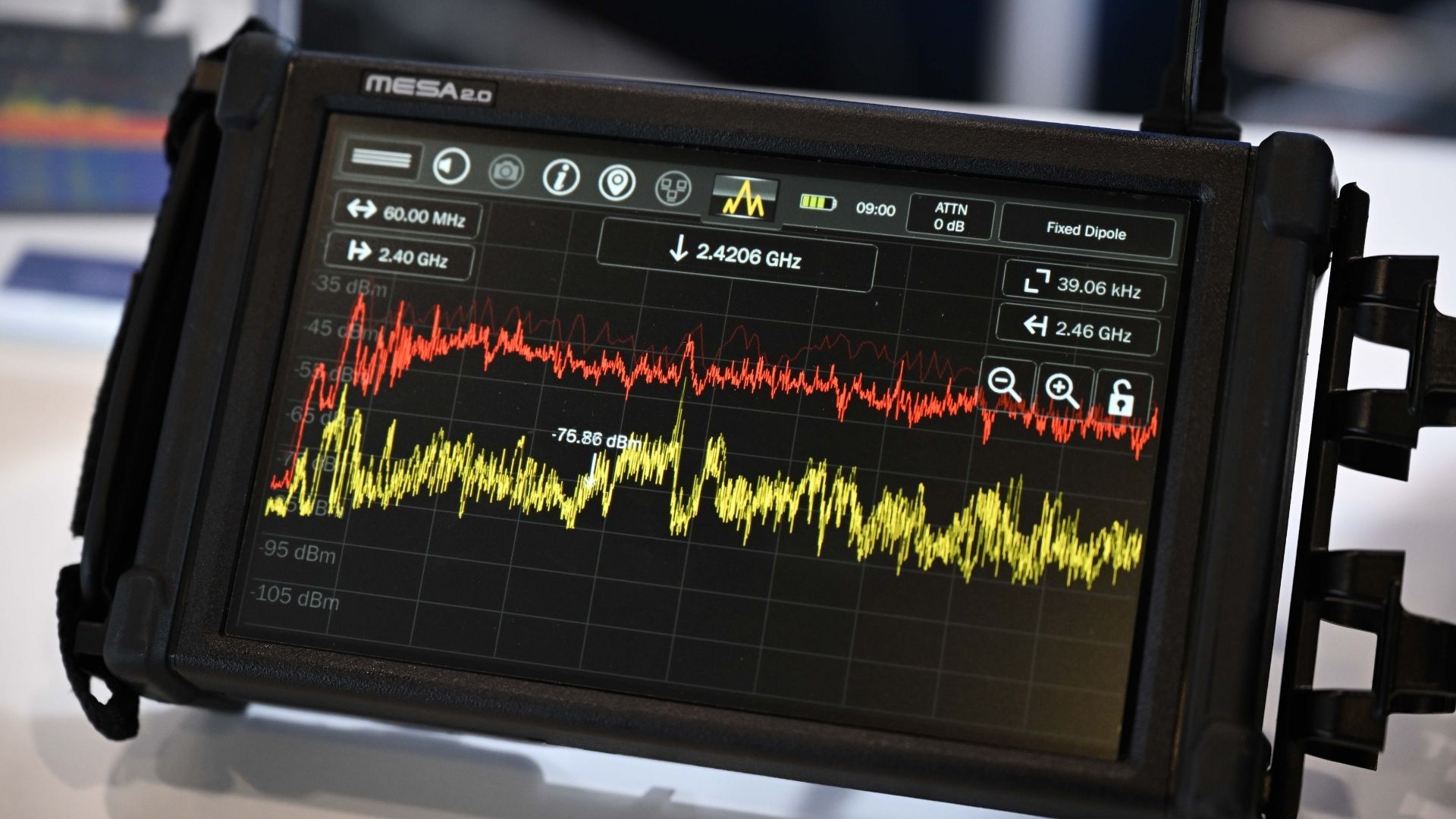
Australia-based technology company BrainChip has launched a new hardware platform designed to classify radio frequency (RF) signals in real time while operating on less than a watt of power, targeting defense and intelligence applications that require processing at the edge.

Called the Akida Communication Reference Platform, the system is built around the company’s Akida AKD1500 neuromorphic processor and is intended for defense contractors, government agencies, software-defined radio vendors and edge AI developers.

The platform performs RF signal classification directly on-device, eliminating the need for cloud connectivity or large computing hardware. BrainChip said the system is designed for environments where power availability, thermal constraints and size limitations make conventional GPU- or FPGA-based solutions difficult to deploy.

Potential applications include handheld signal intelligence systems, unmanned aerial vehicles, satellite communications terminals and other portable defense technologies.

AI tackles RF threats

According to BrainChip, the platform can identify more than 20 signal modulation types in real time while maintaining greater than 85% accuracy at a signal-to-noise ratio of 30 decibels.

Traditional digital signal processing systems typically rely on rule-based approaches that can struggle to identify new or intentionally modified signals. BrainChip says its neuromorphic AI approach allows the system to capture unknown waveforms and use them for future model retraining, enabling adaptation to emerging wireless threats.

The company argues that this flexibility addresses a key limitation of existing RF classification systems, which often require significant computational resources and can be difficult to update for changing operational conditions.

The platform is also designed to support battery-powered deployments where continuous operation is required without access to external infrastructure.

β€œBrainChip’s Akida Communication Reference Platform proves that real-time signal intelligence can be condensed into a portable battery powered solution to extend the range of deployment options,” said Sean Hehir, BrainChip’s CEO.

Built for edge deployment

The platform is available for evaluation and partner integration as a reference design kit. It supports integration with software-defined radio front ends such as the USRP B205mini and EPIQ Sidekiq.

A host system, including devices like the Raspberry Pi 5, can be used to manage data flow and application development. BrainChip said engineering teams can use the platform to prototype intelligence, surveillance and reconnaissance capabilities, as well as broader signal intelligence applications.

The launch expands the company’s portfolio of edge AI reference platforms beyond radar and sensor-fusion systems. BrainChip says the new offering demonstrates how neuromorphic computing can be applied to RF processing workloads that traditionally require larger and more power-hungry hardware.

The release comes as defense agencies and communications providers increasingly explore AI-powered spectrum monitoring tools capable of operating in remote and contested environments. By reducing power consumption and hardware requirements, such systems could enable RF awareness capabilities in smaller platforms that previously lacked sufficient computing resources.

As military and commercial users continue pushing AI capabilities closer to sensors and data sources, low-power processors capable of running advanced inference at the edge are becoming increasingly important for real-time decision-making in disconnected environments.

  •  
❌