❌

Reading view

You don't need to skimp with a cheap action cam — DJI's discounted Action 4 is better quality — and much better value at its lowest-ever price

The Amazon Prime Day deals are well and truly up and running — and if you're looking for an action camera, I've found a genuinely fantastic deal.

Cheap action cameras are all over the market these days, and having used and reviewed a few of them, I'm somewhat wary — the image quality just tends to be so poor that they aren't even worth their two-digit price. When it comes to cameras, you're almost always better off going for an older model from a well-regarded name than a newer one from a budget line — and that's why I think this massive deal on the DJI Osmo Action 4 is one to snap up.

First reviewed by our Cameras Editor Timothy Coleman back in 2023, the Osmo Action 4 takes the classic GoPro-style form actor and crams in a 1/1.3-inch sensor that delivers excellent video quality. With comprehensive waterproofing to depths of 18m (no case needed), highly effective RockSteady image stabilization, and a brilliant magnetic mounting system for accessories, it's a comprehensively equipped action cam for capturing dynamic footage of your adventures — and it's able to go places you wouldn't dream of taking your phone or 'proper' camera.

Sure, it's not the best action cam on the market anymore — not while the DJI Osmo Action 6 and GoPro Hero 13 Black exist. But the price! The Prime Day savings on the DJI Osmo Action 4 put it at $169 in the US and £199 in the UK. To put this in context, when Tim first reviewed it, the Osmo Action 4 cost $399 / £379!

Today's best DJI Osmo Action 4 deals (US)

It's two generations old now, with the Action 5 Pro and Action 6 having arrived since, but the DJI Osmo Action 4 still shoots crisp 4K video and has excellent waterproofing. The real appeal to this 2023 model is its low price, which with Prime Day savings is down to less than half of its original asking price.View Deal

Today's best DJI Osmo Action 4 deals (UK)
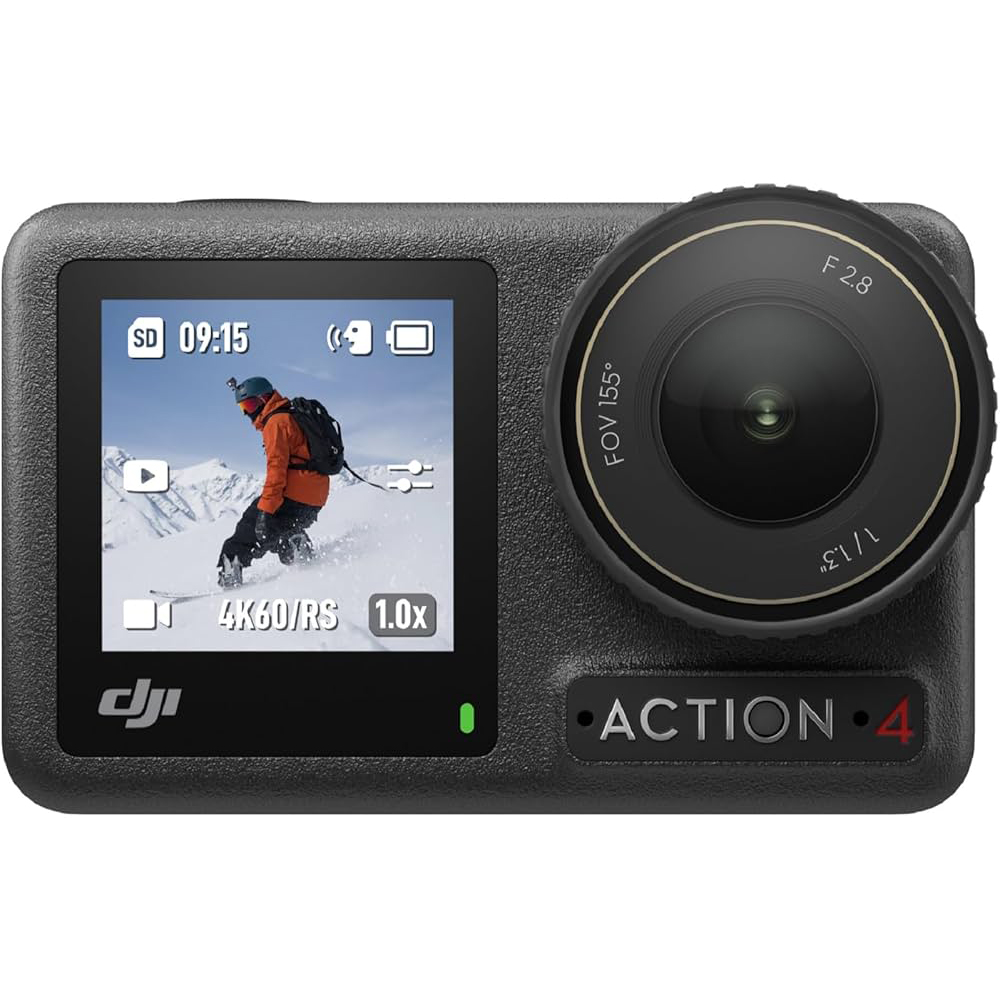
Savings are also excellent in the UK, with the Osmo Action 4 available for less than £160. This combo also includes a quick-release adapter mount, a charging cable, a lens hood and a protective frame.View Deal

DJI Osmo Action 4 camera in the hand with swimming pool background

Tim found the DJI Osmo Action 4 to be an ideal family holiday camera — it caused his mirrorless to stay in the bag! (Image credit: Future)

A complete package for content creators

Despite being a few years old, the Osmo Action 4 is still more than capable of producing imagery to the standard demanded by content creators in 2026. With a topline video resolution of 10-bit 4K video, it produces crisp and punchy footage, and offers a number of slow-mo options, as well as the option to shoot in the D-Log color profile to maximize dynamic range. This is everything a content creator could want, especially when you also factor in the punchy 10MP stills.

The later, pricier cameras are better in some areas — I've used the Osmo Action 6, and its low-light abilities are absolutely unreal. But most action camera footage is shot in bright daylight; they tend to be used for capturing POV footage of activities like surfing, cycling, snorkeling or skiing, and if you're not planning to do much shooting at night, you won't have a problem. And besides, as Tim found, the Osmo Action 4 isn't actually all that bad in low light — it's just not a patch on the cameras that have come along since.

The Osmo Action 4's simple UI means kids can use it without too much of a problem, making it a brilliant option for family holidays — this is a camera that won't mind being dropped, splashed, knocked or bumped.

DJI Osmo Action 4 camera on a stony beach

The X4 Air is slightly lighter than the X5, which will feel like a benefit on a long day of shooting. (Image credit: Future)

It's also worth mentioning that if you're in the US, ongoing trade restrictions mean it can be difficult to get hold of newer DJI cameras like the Osmo Action 6, meaning an older model like the Action 4 could well be your best option.

But even if that's not an issue, at this price, I'd recommend the Osmo Action 4 to most people over the Osmo Action 6 — and I loved the Osmo Action 6. I took one on holiday to New York, and have it in a drawer beside me right now!

But this is just such good value for the level of functionality and image quality on offer. It's the perfect gateway for anyone thinking about dipping a toe into the world of action cameras — and it's a much, much better buy than a cheap-and-nasty action camera from a brand you've never heard of.

More of today's best DJI deals

More Prime Day deals in the US

More Prime Day deals in the UK

  •  

Polaroid vs Instax? I’m an instant camera addict and I’m team Polaroid all the way — here’s why

If you’re looking to buy an instant film camera, there are only two serious names in the game: Polaroid, and Fujifilm Instax. While some manufacturers like Canon and Kodak offer digital instant-print cameras that use techniques like dye-sublimation to create instant prints of digital images on specialist paper, it’s not the same. For the true alchemical magic of instant film, you Polaroid and Instax are the big hitters.

Polaroid is undoubtedly the better-known brand name due to its long history, dating back to the 1940s (though hitting major popularity in the 70s). It spent a few years in the wilderness following a bankruptcy in the early 2000s, before being purchased and revitalised in 2017 by an analog film collective called The Impossible Project. All the proper Polaroid cameras you can buy new today have been released since this renaissance.

Instax cameras may not have the historical cachet of Polaroids, but they are massively popular — Fujifilm reported last year that its Instax line has sold more than 100 million units since its inception in 1998. I don’t have similar sales data on post-revival Polaroid, but frankly, I don’t think it’s anywhere close.

Ultimately, there are compelling reasons to choose either brand. The Instax mini 12 is TR's pick as the best instant camera, and I can see why — it's a great option for the majority of users. But for me personally, it’s Polaroid all the way.

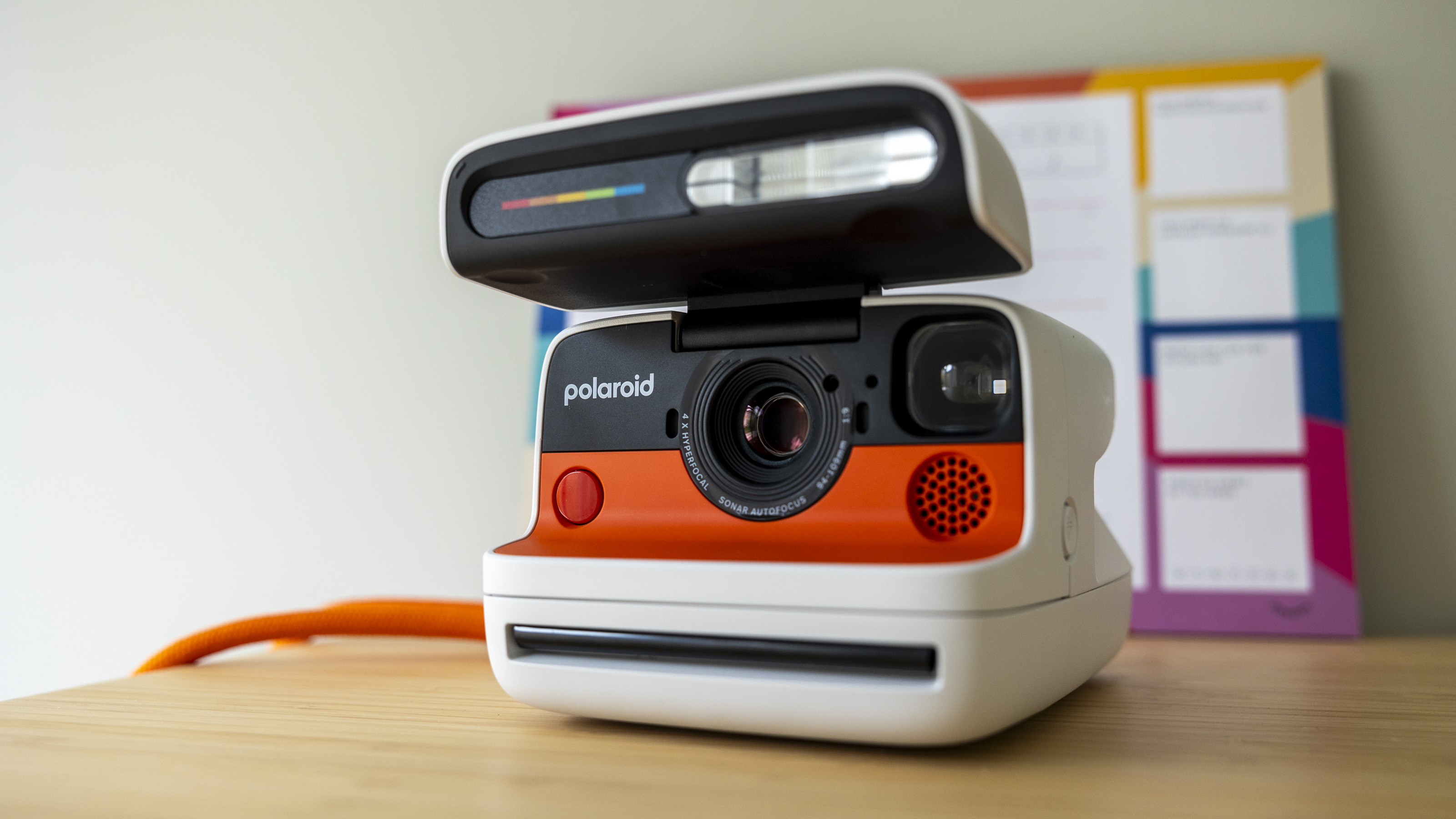
A white Polaroid Flip camera sits on a wooden desk

(Image credit: Lauren Scott)

Why I’ll pick Polaroid every time

It’s not a question of print size, as both brands have similar offerings. Fujifilm Instax Wide film is about the same size as a Polaroid I-Type (or SX-70) print, just rectangular rather than square. Polaroid’s smaller ‘Go’ film produces prints of comparable dimensions to Instax mini.

What it’s all about is vibe. Scoff if you want, but come on — you’re shooting instant film. You’re not here for accurate colors or pitch-perfect sharpness, you’re here because you love the tangibility of holding a print in your hands, the transportative lo-fi look of a format that’s been around for half a century. It’s all vibe.

I’ve shot Polaroid and Instax prints side by side before for comparison. Once, while I was viewing them, my partner made an astute observation that I have since stolen and made my own: the Instax catches your eye first, but you end up liking the Polaroid more. Instax prints are bright and vivid, with naturalistic colors and a decent level of detail, especially the Wide format. They’re fun and kitschy.

But Polaroid images just have that inimitable retro glow that instantly transports me back in time. The softer, more muted color palette makes images less immediately striking, but more satisfying the longer I look at them. There’s a richness to them, a greater sense of depth and subtle tonality. If I were embarking on an artistic project with instant film, there’s no question which format I’d choose. It wouldn’t even be a decision.

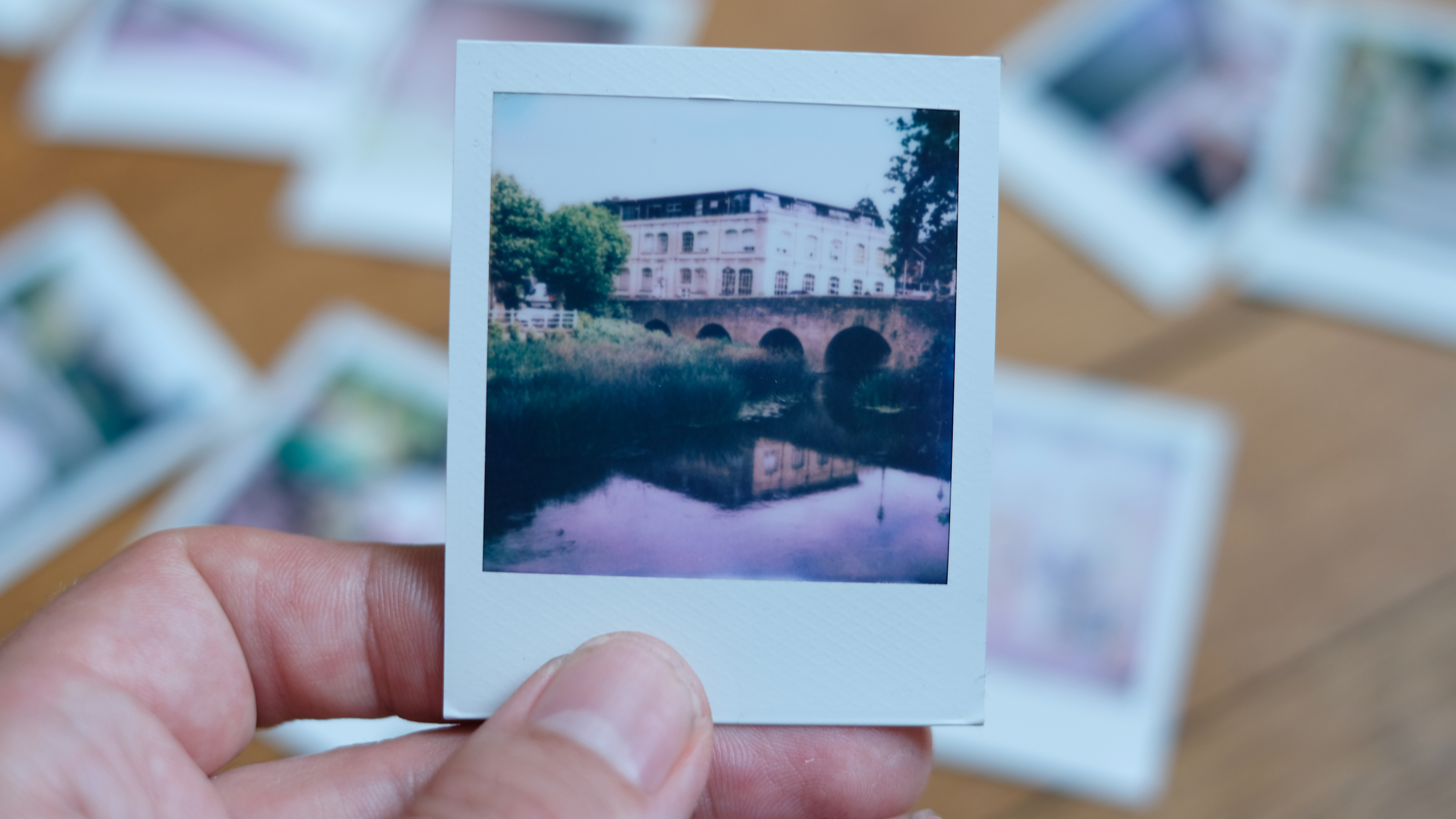
Hand holding Instax and Polaroid images showing the same building, the Instax is brighter and more dramatic, but the Polaroid has better detail and subtler tonal gradations

This isn't an entirely fair comparison, as full-size I-Type is always going to beat Instax mini. But for me, while the sky in the Instax looks truer to life, that stylized retro glow on the Polaroid is just so appealing. (Image credit: Jon Stapley)

Instax cameras are easier to use for sure — most are just point and shoot. If I were recommending an instant camera for a family, or for someone who isn’t an experienced photographer, I’d go with Instax. But for me, as someone who knows my way around a camera, the depth of control offered by the top-end Polaroid cameras leaves Instax in the dust.

Connect to the Polaroid app, which works very smoothly and is highly intuitive, and you can completely program in your settings, taking total control over your images. Want to try your hand at creating long exposures on instant film? It’s straightforward on a Polaroid Flip or Polaroid I-2, and impossible on an Instax Mini 99.

Sure, Polaroids aren’t perfect. The ongoing cost of I-Type film is a sore point, with packs of eight shots costing the same as a pack of 20 shots of Instax Wide or Mini. This sucks. No way to pretend it doesn’t. Buying in bulk can help a little, though honestly not a lot. At least the smaller Polaroid Go film is much cheaper, and I prefer it to Instax Mini. Again, its subtler look is less striking, but richer.

Photograph of prints made with Polaroid Go Gen 3

I really enjoyed shooting with the Go Gen 3. My shots weren't all hits, but there were some that I loved. Again, it's not quite true to life, but it has distinctive character. (Image credit: Jon Stapley)

Do you agree? Let me know which is your preferred instant-film format in the poll above. And if you’re looking for an instant-film camera to buy, see my explainer on why the Polaroid Go Gen 2 is the best buy you can make this Prime Day and click on today's best deals where you live using the links below.

  •  

I just took a Fujifilm instant camera on my Euro summer trip, and it transformed my whole approach to holiday snaps — for the better

Instant photography takes on a very different form these days. It used to (and ultimately still does) mean a photo you take that’s instantly printed out on paper. Realistically, it means a photo you take on your smartphone in seconds — and it’s something we all take for granted. Just open the camera on a smartphone, point, shoot, done.

However, in many ways, the instant nature of smartphone photography afforded by the best camera phones can remove any creative nature of framing the perfect shot.

This is a thought I had recently at least when heading over to Europe on holiday, and one I wanted to amend by taking a Fujifilm Instax mini 11 in my carry on. In my mind I couldn’t have made a better choice.

Fortunately, the updated model, the mini 13, is on sale at Amazon for just AU$119 at Amazon for EOFY.

The very epitome of point-and-shoot photography, the Instax mini 13 couldn’t be easier to master. Press a button to pop out the lens barrel, frame your subject in the viewfinder and hit the shutter button. A couple of seconds later, your photo is printed on photo paper to hold onto forever. Best of all, this latest model features a self-timer for those all-important selfies.View Deal

I’ve long been on the fence about instant cameras and a separate camera from my phone in general. I’ve made the trip to Europe several times before to visit my family, and in the past I’ve taken my OM System OM-D E-M10 MKIV.

However, the last time I took it, I never used it (as much as I told myself I would), as the added bulk of carrying around lenses and the camera body itself just proved too much of an inconvenience for me. Considering my iPhone 15 Pro could take decent pictures within seconds, I didn’t feel the need to keep it close by.

This year that all changed. While my iPhone was still an undeniably useful companion on my recent trip — I took well over 1,000 photos — I knew this time that I wanted to capture more memorable pics that would actually get looked at again (this is a safe space; we can all admit we never actually look back at photos we take).

I’d never used an instant camera such as the Instax mini before, and I have to admit there was a very slight learning curve to adjust to a new way of taking photos. And that was half of the fun for me — because I knew I only had a finite number of sheets to print on. I had to make my pictures count!

Using the Instax mini meant I had to be more considerate when framing a shot, which fortunately was super simple using the viewfinder. It might look like a tiny window (because it is), but whatever I saw through it is what came out on paper.

And hey, there really was something magical and special about waiting for the image to develop — how would it look? Did the colours come out ok? Did anyone walk into the shot as I pressed the shutter?

When my partner and I returned home, we made a much more conscious effort to look at the pictures I’d taken to determine what we’d keep and what we’d get rid of. Of the photos we kept, we’re going to frame them at some point at home. We haven’t quite decided how just yet, but we know we will.

Considering I’ve only ever printed a handful of photos from my iPhone, I’d call that a win for Fujifilm. And at AU$119 for the mini 13, it’s a small price to pay for photos you’ll actually come back to.

  •  
❌