In a groundbreaking development poised to redefine waste management and sustainable energy production, researchers have unveiled a revolutionary method for photoreforming solid waste on an unprecedented 1-square-meter scale. This innovative advance, detailed in the latest issue of Nature Chemical Engineering, leverages single-source precursor-derived co-catalyst films to convert ubiquitous solid waste into valuable chemical fuels, heralding a new era in environmental remediation coupled with renewable energy generation.
At the heart of this innovation lies the principle of photoreforming, a process by which sunlight catalyzes the chemical transformation of organic materials into hydrogen and other energy-rich molecules. Historically limited to small-scale demonstrations and powdered catalysts, this method struggled with scalability and practical application outside controlled laboratory settings. The reported technique shatters these limitations by fabricating robust co-catalyst films derived from a unified precursor source, enabling efficient photoconversion across large surface areas with enhanced stability and performance.
The researchers crafted these functional films through an ingenious synthesis route, where a single molecular precursor simultaneously yields both the active catalytic sites and the supporting matrix. This contrasts with conventional multi-step fabrication approaches that often result in inconsistent catalyst dispersion and energy losses. By integrating the catalyst components at the molecular level, the team ensured homogeneity, maximized photon absorption, and optimized charge separation dynamics, all critical parameters for sustained photocatalytic activity.
Transforming real-world solid waste – encompassing plastics, biomass residues, and mixed refuse – into clean fuels presents a formidable challenge due to their complex chemical compositions and structural heterogeneity. The co-catalyst films demonstrated remarkable versatility and adaptability, efficiently processing these diverse substrates under simulated sunlight without requiring extensive pre-treatment. This robustness signals a significant leap toward practical deployment in municipal waste processing facilities and industrial settings.
The experimental setup encompassed a square meter of coated substrate exposed to controlled illumination, mirroring natural sunlight intensity conditions. Over extended operation, the system consistently yielded high rates of hydrogen and other value-added chemicals, outperforming benchmark photocatalysts by a considerable margin. Importantly, the films manifested remarkable photostability and mechanical adhesion, demonstrating resilience against degradation mechanisms like photo-corrosion and mechanical abrasion that typically afflict photocatalytic layers.
At the nanoscale, characterization techniques revealed uniform distribution of nanosized catalytic domains embedded within a conductive, photoactive matrix. This architecture ensures rapid electron-hole separation and transport, minimizing recombination losses which commonly plague photocatalytic systems and limit hydrogen evolution rates. Spectroscopic analyses corroborated enhanced visible-light absorption, attributed to tailored bandgap engineering achieved during precursor design, broadening the usable solar spectrum beyond ultraviolet wavelengths.
The process design also embraced mass transport optimization, incorporating porous film structures that facilitated effective diffusion of reactants and removal of gaseous products. This morphologic control prevented stagnation zones and concentration gradients, enhancing catalytic turnover and ensuring stable long-term performance. Additionally, the modular film fabrication approach promises scalability and integration into various reactor geometries without compromising catalytic efficiency.
Beyond hydrogen generation, the system also showcased the capacity to produce liquid fuels and chemical feedstocks, capitalizing on selective reaction pathways induced by co-catalyst composition tuning. This selectivity allows tailored conversion routes matching industrial chemical demands, moving beyond mere waste disposal toward circular chemical economies. The dual benefit of environmental waste mitigation coupled with clean energy and chemical synthesis embodies transformative potential for sustainable industrial practices.
Critically, the team emphasized the environmental and economic implications of adopting such technology at scale. By converting problematic solid waste streams into valuable resources using sunlight – a free and abundant energy source – this approach diminishes reliance on fossil fuels and reduces landfill burden. Cost analyses suggested that, once scaled, the technique could rival established catalytic processes in operational expenditure, thus offering an attractive proposition for policymakers and industry leaders aiming to meet stringent environmental targets.
The interdisciplinary collaboration instrumental in achieving this advance integrated expertise across materials chemistry, photophysics, environmental engineering, and nanofabrication. Such synthesis of disciplines underscored the inherent complexity of developing scalable photocatalytic platforms capable of handling real-world waste complexities while maintaining high efficiency and durability.
Looking ahead, the researchers are exploring further enhancements including tandem catalyst layers, optimized co-catalyst configurations, and hybrid photochemical-electrochemical systems to elevate the energy conversion efficiency and broaden substrate compatibility. In parallel, pilot-scale demonstrations are underway to validate system performance in outdoor environments subject to variable weather conditions, pivotal for transitioning laboratory innovation into field applications.
This pioneering work sets a new benchmark in photoreforming science, illustrating how precise molecular engineering and thoughtful system design can transform a pressing global challenge—solid waste accumulation—into a renewable energy opportunity. Its implications resonate strongly with global sustainability aspirations, promising an economically feasible and environmentally benign pathway to simultaneously address climate change mitigation, waste reduction, and clean energy production.
As society grapples with mounting waste generation paired with escalating energy demands, innovations such as these underscore the invaluable role of scientific ingenuity in crafting solutions that are as elegant as they are practical. By harnessing the synergy of sunlight and advanced material chemistry, the future of waste management is illuminated—not as a burden, but as a wellspring of renewable chemical energy.
In summary, this major scientific milestone demonstrates that photoreforming solid waste at a 1 m² scale using single-source precursor-derived co-catalyst films is no longer a theoretical possibility but a tangible technological reality. It unequivocally paves the way for deploying solar-driven catalytic systems in addressing environmental and energy crises through smart design and scalable engineering.
Subject of Research:
Photoreforming of solid waste using single-source precursor-derived co-catalyst films.
Article Title:
Photoreforming of solid waste on 1 m² scale using single-source precursor-derived co-catalyst films.
Article References:
Bin Mohamad Annuar, A., Liu, Y., Bhattacharjee, S. et al. Photoreforming of solid waste on 1 m² scale using single-source precursor-derived co-catalyst films. Nat Chem Eng 3, 351–362 (2026). https://doi.org/10.1038/s44286-026-00406-y
Researchers have uncovered a molecular pathway that appears to block kidney regeneration after injury. The body’s ability to repair damaged organs is surprisingly limited, especially after serious injuries to the heart or kidneys. Now, UCLA researchers have found that a drug originally developed to help heart tissue regenerate after a heart attack may also accelerate [...]
Electrostatic forces enable low-voltage actuation without relying on rare earth materials. Nearly every electric motor in modern life, from the fan on your desk to the motor in an electric vehicle, relies on magnetism. For more than a century, magnetic fields have dominated motor design because electrostatic forces were considered too weak for practical machines. [...]
The National Oceanic and Atmospheric Administration headquarters in Silver Spring, Md. The new site is an effort to preserve NOAA work previously available at climate.gov.
From government surveillance programs to microchips in vaccines, technology-centric conspiracy theories have exploded in the digital age, adding to some of the best conspiracy theories already in existence.
While most probably seem laughable to the technically literate, some of these theories have spread like wildfire and had significant real-world impacts. And although most are complete fabrications, some do contain a kernel of truth — and others have turned out to be eerily accurate. Here's a rundown of some of the most pernicious technology conspiracy theories.
The Large Hadron Collider is opening a portal to hell
Verdict: Not True
The Large Hadron Collider, operated by the European Organization for Nuclear Research (CERN) in Switzerland, has been an obsession with conspiracy theorists almost since its opening in 2008. The organization has even seen it necessary to have a dedicated page on its website responding to some of the more outlandish claims.
Unsurprisingly, physicists swiftly debunked these ideas. The collider uses magnetic fields to accelerate protons to extremely high speeds before smashing them together to create smaller particles. The goal is to discover new elementary particles that could help test theories about how the Universe works.
Creating even a microscopic black hole or wormhole would require an accelerator the size of the whole universe, say researchers. It would also decay in a fraction of a second thanks to Hawking radiation, which causes black holes to lose mass and eventually evaporate. Even if such a black hole was stable, which current physics suggests is impossible, it would take three trillion years to consume just one kilogram of matter.
Tracking microchips in COVID-19 vaccines
Verdict: Not True
When the COVID-19 pandemic hit in early 2020, governments took unprecedented steps to control its spread, including lockdowns and vaccine mandates. That proved fertile breeding ground for novel conspiracy theories, including the bizarre claim that authorities were sneaking microchips into vaccines so they could track people.
The theory’s origins can be traced to March 2020, when Bill Gates participated in a Reddit discussion about digital health passports. A Swedish website dedicated to biohacking misinterpreted his comments and published an article saying the billionaire wanted to use microchip implants to fight the pandemic.
Via a paranoid game of Telephone, this slowly morphed into the idea that the government was using the vaccine to implant tracking chips in citizens. Needless to say, the theory is nonsense. There is no evidence that any of the billions of people vaccinated against COVID-19 have been implanted with tracking hardware.
But by January 2021, one in 10 American adults believed the theory. More worryingly, a poll found that one in four Americans said they were uncertain whether vaccines contained microchips. The conspiracy was built on years of anti-vaccine disinformation, and further fuelled the vaccine hesitancy that made it so hard to control the pandemic.
5G networks spread COVID-19
One of the prominent conspiracy theories during the COVID-19 pandemic was that 5G networks spread the virus. (Image credit: AerialPerspective Images/Getty Images)
Verdict: Not True
Another COVID-19 related conspiracy theory that gained significant traction claimed that the disease was being spread by newly installed 5G cellular networks. The theory became so widespread that cell towers were set on fire in several countries, and social media platforms were forced to actively combat its spread.
The idea is firmly contradicted by the overwhelming evidence that COVID-19 is caused by a contagious virus. And crucially, the virus spread rapidly in areas with no 5G coverage whatsoever. Nonetheless, the U.S. Federal Emergency Management Agency felt compelled to issue a statement clarifying that 5G technology does not cause coronavirus, while U.K. government officials dismissed it as a "crackpot conspiracy.”
The fears likely built on top of existing concerns about the health impacts of radiation from cellphone towers. But there is no credible evidence that existing technology causes health problems, and 5G should raise even fewer concerns. The radio frequency waves used by these networks are forms of non-ionizing radiation, meaning they lack the energy to damage DNA or cells in ways that could cause disease. High-band 5G uses millimetre wave frequencies that cannot even penetrate human skin.
The dead internet theory
Verdict: Partially True
The dead internet theory proposes that the web is now dominated by bots interacting with each other with minimal human involvement. The idea has been around for several years, but has been further fuelled by the recent rise of artificial intelligence (AI) chatbots and agents.
The conspiracy first surfaced in 2021 on the Agora Road's Macintosh Cafe forum, in a thread titled "Dead Internet Theory: Most Of The Internet Is Fake." The idea is that automated systems are being used to craft content designed to draw engagement and generate ad revenue. But the theory suggests that those interacting with this content are also bots.
While the extent to which this is true is debatable, there is an element of truth to the theory. Studies show bot traffic was responsible for 51% of all internet activity in 2024 — the first time bots surpassed humans. And since ChatGPT's launch, AI-generated content has exploded, with another study finding that 13.1% of websites now host such material.
This is leading to fears that the internet is being rapidly flooded with low-quality "AI slop" that could degrade its usefulness over time. Given that OpenAI CEO Sam Altman recently gave credence to the theory, this might be one to start taking more seriously. The evolution of this idea, fueled by AI, might permanently change how we use the internet in the years to come.
Governments can control the weather
Verdict: Partially True
Following the highly destructive hurricanes Helene and Milton in 2024, rumours swirled that they were the result of government weather control programs. One of the most prominent boosters of the theory was U.S. Congresswoman Marjorie Taylor Greene, who tweeted “Yes they can control the weather” to her 1.2 million followers shortly before Hurricane Milton hit.
While these specific claims are patently false, like many good conspiracy theories, they contain a kernel of truth. The U.S. government had been interested in weather control as far back as 1891 and had a serious "weather weapons" program in the form of Operation Popeye between 1967 and 1972 during the Vietnam War. Such practices were banned by the Environmental Modification Treaty in 1977.
Basic forms of weather modification also exist today, in particular cloud seeding. This involves dispersing materials like silver iodide into clouds, which can marginally enhance rainfall. Countries like China and Saudi Arabia use the approach to assist in agriculture. China harnessed this technology to ensure clear skies for the 2008 Olympics.
Proposals to fight climate change via solar geoengineering have also further fuelled conspiracy theories. This would involve spreading tiny particles in the upper atmosphere to reflect sunlight. But these approaches are a long way from the kind of weaponized weather control conspiracists dream of.
Phones eavesdrop on you for ad targeting
Could smartphones be spying on us? (Image credit: tim scott via Getty Images)
Verdict: Partially True
Many people have had the eerie experience of seeing ads for products appearing on their phone shortly after discussing them offline. This has led to a persistent belief that smartphones secretly listen to our conversations for advertising purposes.
The rumour has been around for decades, but Instagram head Adam Mosseri recently felt compelled to address it directly, stating the company doesn't use microphones this way and calling it a "gross violation of privacy." Multiple studies have also found no evidence of covert audio recording, and there are several reasons why it would be impractical.
For a start, constant audio recording would rapidly drain phone batteries and trigger visible indicators on phone displays. More importantly, unauthorized recording would create enormous legal liability for those who engaged in it.
But there is something potentially more unsettling behind the phenomenon. Online platforms, advertisers and data brokers are constantly collecting, curating and reselling every tiny piece of information they can glean from our online and offline behaviour. This allows them to develop incredibly accurate profiles of people to provide spookily appropriate, and timely, product suggestions.
Planned obsolescence
Verdict: Partially True
From clothes to consumer electronics and even cars, people increasingly complain that products don’t last as long as they used to. The theory of Planned Obsolescence suggests that this is no accident, and companies deliberately design products with short lifespans to force repeat purchases.
The idea has circulated for a long time and has some truth to it. There is historical evidence that companies have pursued obsolescence as a strategy — in the 1920s, for instance, major light bulb manufacturers came together to form the "Phoebus cartel," which colluded to reduce bulb lifespans to just 1,000 hours. General Motors also pioneered annual model changes to entice customers to buy newer vehicles, creating a template that other industries copied. Technology vendors are particularly guilty — think smartphones with batteries that degrade in just a few years, or no longer support software updates.
But the practice isn't necessarily aimed at tricking us into buying more than we need. Rapid product turnover makes things cheaper to manufacture and with technology in particular, consumers prefer paying less upfront for devices they'll replace soon to access new features. Durability comes at a price too, so customers are often happy to have cheaper products that may not last as long — for instance, clothes that children will grow out of.
Government-sponsored mind control programs
Verdict: True
There is a whole menagerie of conspiracy theories speculating that the government uses technology and drugs for mind control. One prominent recent example is the claim that the U.S. military’s High-frequency Active Auroral Research Program (HAARP) is secretly using radio waves to manipulate people’s thoughts.
While that specific claim has been firmly debunked, the idea that the U.S. government is attempting to control people’s minds is not so outlandish. In 1953, CIA director Allen Dulles launched a top secret program called MKUltra aimed at developing exactly those kinds of capabilities. The agency covertly contracted out 162 projects to various universities, research foundations and institutions to study how psychoactive drugs, hypnosis, electroshock therapy, sensory deprivation and various forms of torture could be used to manipulate people’s mental states.
Experiments were carried out on both volunteers and unwitting subjects, including prisoners, sex workers, soldiers and children. By the mid-1960s, the project’s backers concluded that while it was easy to dismantle a human mind, subsequently seizing control of it was beyond them, and they wound down research in 1964.
Investigative reporting by the New York Times uncovered the project in 1974 and led to a series of congressional hearings. But the bulk of documents related to the project had been destroyed the year before, meaning the true extent of the program remains a mystery.
Widespread digital surveillance
Verdict: True
Paranoia around the government’s ability to listen in on our phone calls or online communications is a defining feature of many conspiracy theories. But in June 2013, former CIA contractor Edward Snowden leaked a treasure trove of classified documents to journalists that validated many of these fears.
The revelations uncovered a mass surveillance network operated by U.S. intelligence agencies and their foreign allies to collect phone records and monitor internet activity across the globe. Most prominently, it uncovered the PRISM program, operated by the U.S. National Security Agency (NSA), which used secret court orders to demand internet communication data from technology companies.
The U.K.'s Government Communications Headquarters (GCHQ) was also revealed to be tapping into 200 fiber-optic cables around the world, allowing it to monitor up to 600 million communications daily.
The reports lead to widespread outrage because the surveillance targeted not only suspected terrorists and criminals but also ordinary citizens, journalists, corporations and 35 foreign leaders – most notably the phone of the German chancellor at the time, Angela Merkel. But despite an initial public outcry, Congress renewed many of these surveillance programs in 2018 with little debate, suggesting that widespread government surveillance remains alive and well.
Test your knowledge of unfounded beliefs, from flat Earth to lizard people with our conspiracy theory quiz!
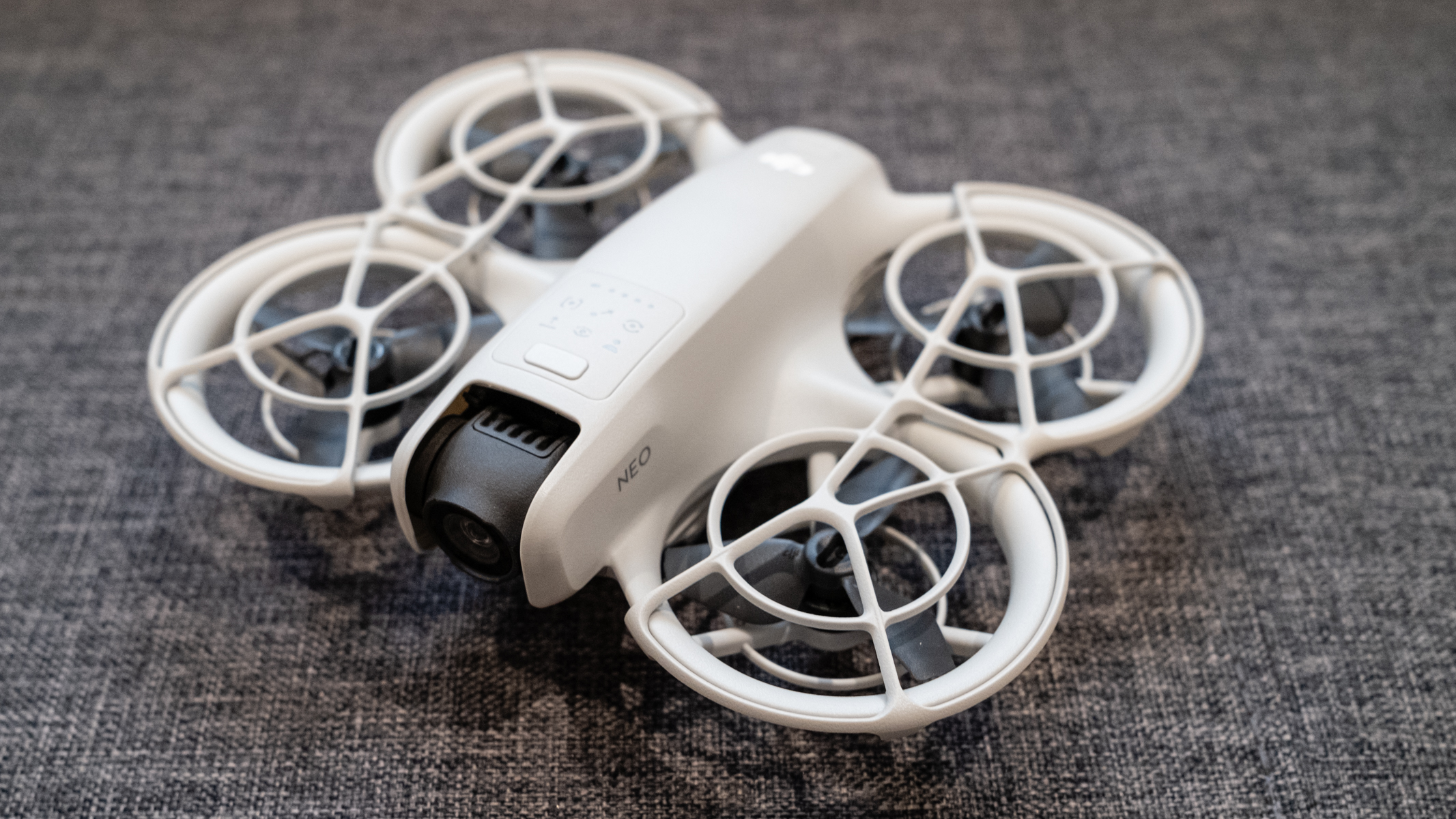
Looking for a superb Prime Day Deal? This DJI Neo drone was a good deal at $30 off, but now you can now save $60 on this beginner-friendly drone. That's double the discount!
It's easy to transport and, thanks to its sub-250g, you don't have to worry about registering it under the current drone regulations.
In our DJI Neo review, our expert James Abbott awarded it four stars, calling it "incredibly easy to use and fun." And, prior to the release of the DJI Neo 2, we ranked it as the best DJI drone for simplicity. At this price, you can't go wrong!
Save $60 on this superb, lightweight drone, which is super easy to use and capable of capturing 4K as it flies, either under your direct control (via app) or independently. View Deal
Check out our Amazon Prime Day hub, where we bring you the best deals of Prime Day 2026, including early Prime Day deals.
This DJI Neo is an excellent entry-level drone, and is a joy to fly. James AbbottJames AbbottJames AbbottJames AbbottJames Abbott
If you're a beginner, you'll be in high-flying heaven with the DJI Neo. For $170, you get nearly everything you need to get flying: a charger, a screwdriver and spare propellers.
You fly it via the DJI Fly app on your mobile phone, though you don't have to be super-attentive for fear of losing it; aside from its return to home facility, you can instruct it to fly in patterns or even track you (not as sinister as it sounds, I promise).
With an 18-minute flight time, it can capture 4K video in 30PS and a 12MP 1/2-inch sensor will capture snaps of whatever you see from above.
DJI is one of the leading names in the drone industry, and its products appear regularly in our best drone guide. At $169 from Amazon, this drone is a steal considering its capabilities and overall ease of use. This deal is already live ahead of Amazon Prime Day 2026, which starts tomorrow and runs until June 26. We have all the best deals across drones, technology and skywatching gear on our Prime Day hub, so stay tuned there for low prices.
Key features: Up to 18 minutes flight time, 4.76 oz / 135 g weight, video capture up to 4K 30FPS / FHD 60FPS, 117.6-degree FOV
Product launched: Sept 2024
Price history: We saw the DJI Neo drop to $159, but this is still an excellent deal. And, given the Neo 2 is out, when it's gone, it's gone.
Reviews consensus: In our DJI Neo review, our expert awarded it four stars, singling out its ease of use as a major plus. Its Amazon reviews are even more positive, with purchasers praising its sheer value.
What if your daily coffee routine could help power the world around you?
Scientists are exploring ways to transform everyday waste, like spent coffee grounds, into materials for greener energy production. One promising method, called triboelectrification, uses electricity generated from motion. With this approach, materials that gain positive and negative charges are rubbed together to generate an electrical charge that can be harnessed by devices called triboelectric nanogenerators, or TENGs. TENGs are a greener alternative to fossil fuels because they generate electricity from everyday movement, such as pedestrian or vehicle motion.
However, many negatively charged materials used in these devices are made from nonbiodegradable plastics, like PTFE, that persist as long-term waste in the environment. Over time, TENGs are also easily damaged by environmental conditions outside the laboratory. To create sustainable TENGs for real-world applications, scientists need to develop biodegradable and durable designs.
To address this problem, researchers from Guangxi University in China developed a TENG that uses coffee grounds as its negatively charged material. Their design repurposes coffee waste to create a robust, low-cost device that can harvest energy.
To create the coffee-based material, the researchers mixed coffee grounds with a biodegradable glue-like plastic called polycaprolactone (PCL). They heated this mixture to 80°C (176°F) and molded it into cylindrical pellets. Then, they used a biodegradable plastic called polylactic acid (PLA) to 3D-print a fully enclosed box-like TENG containing vertical channels arranged like the parallel slots of a file organizer to house the pellets.
Their TENG worked by shaking the coffee ground pellets within the channels, causing them to repeatedly rub against the PLA surfaces. Because coffee grounds strongly attract electrons, the pellets become negatively charged while the PLA surfaces become positively charged. This repeated pellet movement drove the electrons back and forth, generating electricity that was harvested through the TENG’s external circuit.
To evaluate their TENG’s electrical performance, the researchers used an instrument that measures small amounts of electricity, called an electrometer. The electrometer measures electrical output based on how strongly the device pushes electrons through a circuit, called its voltage, how quickly electrons flow through it, called its current, and how many electrons flow through it, called its transferred charge.
The researchers verified that coffee ground pellets could serve as a viable TENG material by comparing their performance with commercial plastic pellets. The coffee ground pellet system produced a voltage of 0.6 Volts (V), a current of 18 nanoamperes (nA), and a charge transfer of 0.25 nanocoulombs (nC). This output was more than twice that of pure PCL pellets and over half that of nonbiodegradable PTFE. The researchers suggested that the negatively charged components of the coffee grounds altered the surface of the PCL to increase its charge generation and transfer.
To optimize the TENG, the researchers experimented with different coffee grounds to PCL mass ratios, pellet lengths, and device vibrational frequencies. They found that their device achieved the best electrical performance at a 3:1 ratio of coffee grounds to PCL, with 8 millimeter long pellets, at a vibrational frequency of 2.6 Hertz. These conditions boosted the device’s electrical output to 4.7 V, 75 nA, and 1.3 nC, high enough to power tiny environmental sensors.
The team also tested their device’s long-term durability by comparing its electrical performance before and after 6 months of storage. They observed only a 6% drop in voltage after storage, demonstrating that it could maintain stable long-term electrical performance for at least 6 months.
Finally, to explore real-world applications, the researchers integrated 4 TENGs into a wind-energy harvesting system designed for remote island settings. The system used a wheel of rotating cups to capture wind energy and a sliding mechanism to convert it into repeated shaking of the TENGs. As the TENGs shook, the moving pellets inside generated enough electricity to power an LED light and a small weather-monitoring device.
The researchers concluded that spent coffee grounds can function as biodegradable TENG materials while reducing dependence on fossil fuel-derived materials. By combining coffee waste with biodegradable plastics, the researchers created a TENG with good electrical performance, sustainability, and long-term stability. They suggested that with further development, the device could someday power road warning lights and provide sound-based alerts in remote areas.
For the past few years, the most visible corner of the AI market has been easy to caricature: OpenAI gets the consumer attention, Anthropic gets the developer love, Google gets the benefit of the doubt with increasingly capable models and a complementary product suite, and everyone else gets to explain why they’re not dead yet.
That’s unfair, of course, but not completely wrong. In AI, attention compounds and it’s leading to outsized revenue, with both OpenAI and Anthropic reportedly rushing toward trillion-dollar-sized IPOs on the backs of billions in revenue.
So it’s easy to underrate Mistral AI.
Honestly, I hadn’t thought of the Paris-based company for a year. Maybe longer. But then Brian Hall announced he’s joining Mistral as CMO, and I had an Arrested Development “Her?” moment. Hall, a longtime Microsoft exec, hired me at AWS and went on to run product marketing at Google Cloud. His move prompted curiosity because Mistral doesn’t dominate developer chatter in the United States or boast the same seemingly endless compute budgets as Anthropic or OpenAI. If the AI market is simply a race to build the biggest, most magical, most general-purpose model, Mistral isn’t the company to bet on.
But that’s the wrong question, and likely the wrong bet.
The more interesting question is when the enterprise AI market will revert to type and demand that AI deliver the same security, predictability, and control we’re used to from other IT investments. Here Mistral has a real story. As Hall notes, Mistral’s approach is to “prioritize AI for mission-critical environments that need the confidence and self-control to bet for the long term (with open weights and real sovereign capabilities).”
While this might have sounded like an overly hopeful talking point, it became real in June when the US government ordered Anthropic to suspend access for foreign nationals to its most advanced Fable 5 and Mythos 5 models. Anthropic said it would disable the models for all users because of the export-control directive. “Can this vendor be forced to turn us off?” is no longer a theoretical question.
That’s why Mistral’s quiet focus on enterprise control just might work.
The wrong race
The enterprise control story is much more compelling than the narrative I used to hear. You know, the “Europe needs its own OpenAI” schtick. There is a market for “patriotic AI,” but it’s relatively small. The far bigger market is comprised of enterprises that just want AI that works, costs less (or delivers more) than expected, and can be customized while fitting their compliance requirements.
Though the company’s initial launch page went out of its way to mention that the company was operating out of Europe and headquartered in Paris, since at least October 2023 Mistral’s product posture has centered on enterprise control. Scattered throughout its current (and past) website are words like “customize,” “fine-tune,” “open source,” and “complete control.” Mistral pitches Studio for building and running AI apps, Forge for custom model training and alignment, Vibe for agentic work, Vibe for Code for coding workflows, and Compute for training and inference infrastructure. The company talks about observability, evals, guardrails, deployment portability, and running production AI “from edge to cloud.”
In other words, it sounds less like a chatbot company and more like an infrastructure company.
That positioning becomes clearer when you look underneath the product names. Mistral AI Studio includes an AI Registry that acts as a system of record for agents, models, data sets, judges, tools, and workflows. It tracks lineage, ownership, and versioning. It enforces access controls and promotion gates before deployment. That’s boring governance plumbing (and “boring” is good in enterprise IT, as I’ve written).
Forge may be even more important. Mistral describes it as a way for enterprises to train frontier-grade models on proprietary enterprise data. Rather than training on others’ copyrighted information strewn across the web or on a mountain of Reddit posts, Forge goes well beyond retrieval-augmented generation (RAG) to not simply “read in” proprietary docs/info/etc., but rather to give an enterprise its own private OpenAI, as it were.
That’s super interesting.
But is it different? I mean, OpenAI and Anthropic can do plenty of this, with greater scale and the benefit of leading frontier models. Both have enterprise products, cloud partnerships, evals, agents, governance tools, and varying forms of model customization. Mistral’s bet with Forge isn’t that the big labs can’t customize models. It’s that some enterprises aren’t interested in customization as a side feature bolted onto a frontier API. It is the product. OpenAI and Anthropic can build everything around Forge but not Forge itself, because the one thing they almost certainly aren’t interested in selling is independence from them.
This is where Mistral may have found a useful seam, one that allows it to ask a different set of questions. What if the best enterprise model isn’t the smartest general-purpose model? What if the best model is the one that’s small enough to run where the customer needs it, open enough to inspect and adapt, cheap enough to use broadly, and specialized enough to do the job? What if “good enough, governable, and your own” beats “slightly smarter, mostly opaque, and rented”?
This won’t matter for every use case, of course. If I’m asking AI to reason through a spreadsheet or write code, I probably want the best model I can get. But for banks, defense agencies, manufacturers, utilities, telcos, and governments, “best” is multidimensional and includes questions like latency, auditability, etc. It’s why banks, for example, still run so many workloads on premises: They want control.
What about compute?
None of this makes compute irrelevant. But it may change how compute matters.
If Mistral is trying to be a French version of OpenAI, its lack of hyperscale compute is a fatal weakness. It won’t outspend OpenAI, Oracle, Microsoft, Google, Amazon, SpaceX, or Anthropic. It probably won’t out-recruit them across every frontier research area, either. The AI market is already littered with companies that underestimated how quickly “good model” became “not good enough.”
But if Mistral is trying to become the enterprise-controlled AI layer for organizations that don’t want all intelligence to live behind someone else’s API, compute becomes a more nuanced issue. It still needs infrastructure, and Mistral seems to know it. After all, Mistral raised $830 million in debt to buy 13,800 Nvidia chips for a data center near Paris. That’s a rounding error compared to OpenAI and Anthropic, of course, but the real question is whether Mistral can turn relative compute scarcity into a virtue, like Amazon’s Leadership Principle “Frugality” on steroids. If lower compute capacity leads Mistral to deliver smaller, more efficient, and more specialized models, which in turn helps enterprises maintain more control of their data at lower cost, then less really does become more.
Mistral’s compute challenge, then, is not to try and have as much compute as OpenAI. It’s to make customers care less about raw compute scale and more about deployment flexibility, specialization, and control.
That’s a hard sell. But it’s not a dumb one.
What Mistral must prove
The bear case remains obvious. OpenAI has consumer distribution, developer mindshare, capital, and a brand that has basically become synonymous with AI. Anthropic has become the developer darling and has an unusually strong enterprise story of its own. Google has the models, the infrastructure, the data, and a bevy of complementary services. AWS, Microsoft, and Oracle have customer relationships and infrastructure.
Mistral has to prove that there’s room for another center of gravity. More specifically, it must prove three things.
First, it has to show that open-weight and controllable AI matter enough to influence buying decisions, not just conference panels. Everyone says they want control, just as most like the idea of open source. But proprietary software and cloud services still dominate the market. Mistral must make control feel like the easy button.
Second, it must prove that specialization beats generality in enough high-value markets. “Our model is almost as good” is not a strategy. “Our model is better for your bank, your government agency, or your retailer” just might be.
Third, it needs to establish a beachhead within enterprise IT before OpenAI and Anthropic become “boring” enough to satisfy the same buyers. This is the real race. The biggest AI companies are hiring enterprise sales teams, building admin controls, and cutting deals with every major cloud. Mistral’s window exists because the market is still young, but that window won’t stay open much longer.
If AI remains a model benchmark race, Mistral likely loses. But if AI keeps evolving to become grown-up enterprise infrastructure, Mistral has a real chance.
 Login



 Researchers have uncovered a molecular pathway that appears to block kidney regeneration after injury. The body’s ability to repair damaged organs is surprisingly limited, especially after serious injuries to the heart or kidneys. Now, UCLA researchers have found that a drug originally developed to help heart tissue regenerate after a heart attack may also accelerate [...]

 Electrostatic forces enable low-voltage actuation without relying on rare earth materials. Nearly every electric motor in modern life, from the fan on your desk to the motor in an electric vehicle, relies on magnetism. For more than a century, magnetic fields have dominated motor design because electrostatic forces were considered too weak for practical machines. [...]