In a groundbreaking study challenging prevailing assumptions about climate policy, German politicians appear to underestimate public support for climate action, suggesting a disconnect that could shape future legislative efforts. This research, recently published in Communications Earth & Environment, involved a comprehensive survey of over 6,000 German political figures combined with two robust population samples, shedding new light on the perceptions of climate-related public opinion within political domains.
The study’s core methodology involved contacting 6,074 German politicians via official email addresses between September and November 2024. These emails invited recipients to participate in a concise, five-minute online survey on “Trends in German Society,” deliberately omitting any direct reference to climate change in an effort to reduce bias. Despite the considerable size of the outreach, the overall final completion rate after stringent data cleaning—including a threshold where respondents completing less than half of the survey were excluded—yielded 1,599 high-quality responses. This cohort formed the backbone of the political sample for in-depth analysis.
Respondents were first provided a clear, scientific definition of global warming to ensure a consistent understanding across participants. This standardization was essential for eliciting valid attitudes relating to perceived problem awareness, policy acceptance, and willingness to engage in financial contributions toward climate mitigation efforts. The survey asked about politicians’ perceptions of how problematic the average German citizen finds climate-damaging behaviors and the corresponding desire for government intervention to reduce such actions. This dual focus aimed to assess both the perceived societal concern and the appetite for political support in addressing climate issues.
One of the critical findings centers on the perceived public acceptance of climate policies. Politicians were queried about communication and informational initiatives, the imposition of taxes on environmentally harmful products and behaviors, as well as stricter laws and regulations. Results indicated that politicians systematically underestimated the level of public support for each type of intervention, revealing a sizable perception gap that may influence hesitancy or delay in implementing ambitious policies.
Additional layers of the survey explored perceived willingness among citizens to contribute financially to climate action. Two specific metrics were used: the number of people believed to be willing to donate 1% of their household income monthly toward climate causes, and the expected amount of microdonations from a hypothetical €1 earned by survey participation. The politicians’ conservative estimates in these financial willingness measures contrasted with actual data derived from representative surveys of the German population, underscoring a potential underappreciation of public commitment.
Complementing the political survey, two population samples were simultaneously analyzed. The first was a nationally representative online cohort of 1,034 German residents aged 16 and older, recruited through the professional survey company Kantar. This sample’s data helped benchmark real public attitudes toward climate problem awareness, governmental support desires, and acceptance of policy measures. The second incorporated 1,000 participants from the global Gallup World Poll, representing a broad cross-section of the German populace, further reinforcing the validity of the findings.
The population samples consistently demonstrated higher levels of problem recognition and stronger endorsement for governmental action on climate change than the political respondents presumed. Notably, willingness to financially support climate initiatives was markedly higher among the general public than politicians estimated. This disparity points toward a systemic underestimation within the political elite regarding their constituents’ readiness for meaningful climate policies.
Such findings hold significant implications for political decision-making. By misjudging the public’s attitudes, legislators and party leaders may refrain from advancing or supporting robust climate legislation for fear of voter backlash or electoral risk. This dynamic could partly explain the sluggish pace of climate policy adoption in Germany despite mounting scientific urgency and popular concern.
The study also incorporates demographic variables from the political cohort—party membership, mandate level, government versus opposition status—but the perception gap in climate support appears pervasive across these strata. The researchers carefully mitigated selection biases by anonymizing survey topics and limiting survey length to encourage participation, thus strengthening the generalizability of their conclusions.
Moreover, the research underscores a broader phenomenon in democratic governance: the critical importance of accurate awareness of public opinion among policymakers. Misperceptions can skew policy priorities and stall necessary systemic transformation, especially in deeply divisive or complex issues such as climate change. This study contributes empirical evidence to the discourse, advocating for enhanced communication channels and feedback mechanisms between citizens and their elected representatives.
The implications extend beyond Germany, serving as a cautionary tale for democracies worldwide. As climate crises accelerate, aligning political perceptions with grassroots realities is paramount to fostering effective, timely policy responses. Future research might explore interventions that improve politicians’ insight into public sentiment or measure the impacts of corrected perceptions on policy enactment.
Researchers also highlight the need for continuous, high-resolution public opinion tracking using varied methodologies, including direct surveys with policymakers and general population samples. This multi-angle approach ensures robust cross-validation and prevents siloed misunderstandings from dampening political momentum on urgent environmental challenges.
By revealing that German politicians substantially undervalue public backing for climate action, this study challenges political assumptions and calls for strategic reforms in policymaker engagement with constituents. Increased awareness of genuine public support could embolden policymakers to champion ambitious climate initiatives, potentially reshaping Germany’s environmental trajectory.
The convergence of rigorous survey methods, large sample sizes, and thorough demographic controls lends significant credibility to these revelations. Ultimately, bridging the gap between political perception and public reality represents a critical step to unlocking proactive climate governance capable of meeting the demands of planetary stewardship.
As Germany positions itself as a leader in climate policy, this study’s insights serve as a powerful reminder that public opinion is not only a metric but a dynamic resource to be understood and harnessed. Greater transparency and dialogue between politicians and citizens might unlock untapped political will, enhancing collective climate action efficacy.
In conclusion, the evidence points to a pervasive issue: political misjudgment of climate support that risks impeding crucial policy advancements. Addressing this perceptual shortfall may catalyze transformative environmental legislation, aligning political action with the robust enthusiasm evident among the German populace.
Subject of Research: Public perceptions of climate action support among German politicians compared to the general population
Article Title: Public support for climate action is underestimated in the German political domain
Article References:
Sevincer, A.T., Hostlowsky, L., Styhler, F. et al. Public support for climate action is underestimated in the German political domain. Commun Earth Environ 7, 543 (2026). https://doi.org/10.1038/s43247-026-03721-7
Amazon and several other non-geostationary satellite operators have formed a trade association to represent their fast-growing market, with SpaceX notably absent despite having by far the largest NGSO constellation.
The energy policies pursued by the British government were described as a “tragic mistake” by Trump’s energy secretary, one of a number of officials from the US administration attending the event.
Mitchell Institute workshop participants found little consensus on where competition ends and conflict begins as China expands counterspace capabilities
Energy secretary hails £100bn milestone in this parliament and says it is ‘only the start of what we want to achieve’
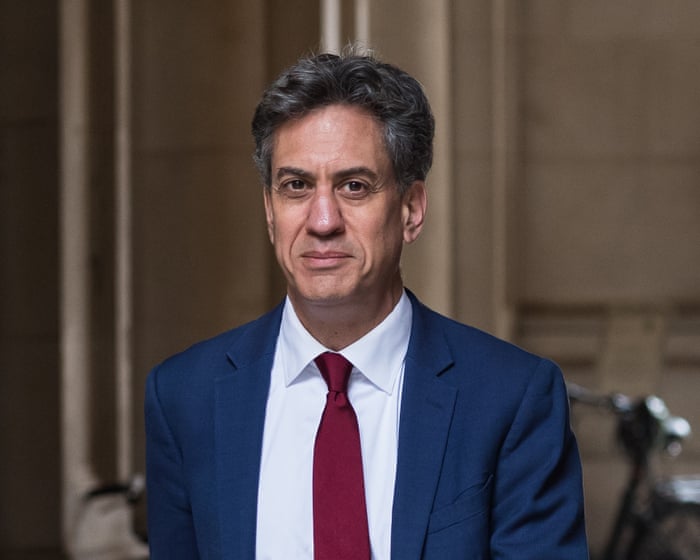
Ed Miliband has hailed a boost to UK jobs and growth as government data reveals that private sector companies have pledged more than £100bn in investment into the green economy so far in this parliament.
Offshore wind, solar power and the electricity grid make up the bulk of the planned investment, most of it between 2024 and 2031, which will go to all regions of the UK and comes from a mixture of UK companies and overseas sources including the EU and Japan.
The White House has issued an executive order aiming to unify and accelerate U.S. development of quantum technologies, including space systems that could enable next-generation navigation, sensing and secure communications.
If the Trump administration is serious about executing its “America First in Africa” policy and transforming American engagement on the continent, it needs to focus on sectors where it still […]
Prime minister was forced to row back on some policies despite strong support among voters for climate action
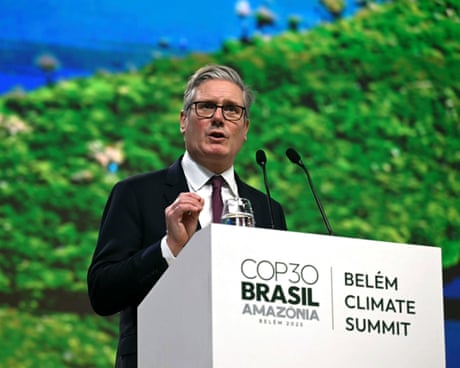
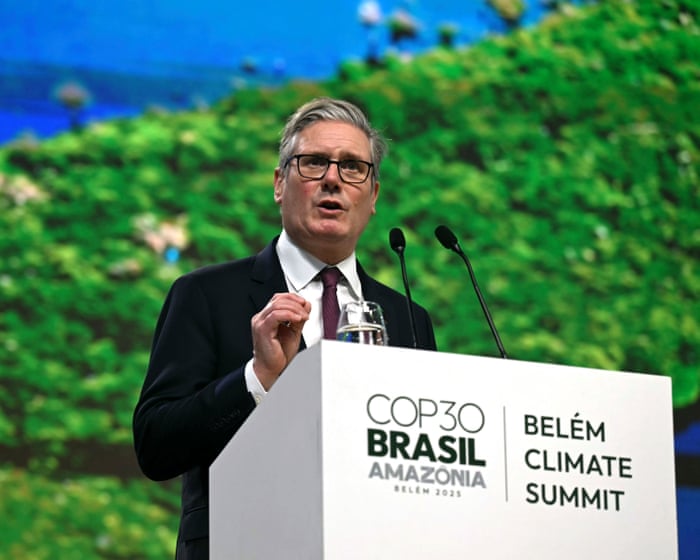
Keir Starmer has faced a problem no Labour government has needed to deal with before. His energy and climate policies – core to solving the cost of living crisis – have come under attack from opposition parties, which have made dismantling the agenda one of their top priorities, second only to immigration, in their pitch to voters.
This is new in British politics, where a cross-party consensus on the climate and environment has held at least since the days of Margaret Thatcher. She warned the UN of the climate crisis in 1988; David Cameron in 2006 urged voters to “vote blue, go green”; Theresa May enshrined in law the requirement to reach net zero greenhouse gas emissions by 2050; Boris Johnson championed the Cop26 UN climate summit in Glasgow in 2021; even Rishi Sunak only tried a partial rollback of green policies as a last desperate throw before calling an election.
 Login




 With the World Cup in full swing, the debate is as relevant as ever.