❌

Reading view

87% of cybersecurity managers say quick compliance programs are actually increasing risk and making businesses less resilient

  • IO research shows 87% of UK cybersecurity managers doubt the credibility of speed‑focused certification programs
  • Rapid, automated compliance creates a false sense of security, with certifications like ISO 27001 not guaranteeing resilience
  • Experts stress continuous monitoring and human oversight, as automated recommendations and evidence still need validation and interpretation

Speed-focused compliance programs could help businesses get cybersecurity certifications quicker, but security professionals are skeptical if the speed comes at the expense of actual business resilience.

This is according to new research from resilience specialists IO, which claims that 87% of senior cybersecurity managers in the UK believe the speed at which certification is achieved affects its credibility.

According to the report, compliance initiatives that are either heavily automated or compressed into short timeframes are creating a false sense of security. Certifications like ISO 27001 might help companies win contracts and maintain an image, but researchers are warning that certification alone does not guarantee actual operational resilience.

Gaps in security posture

“Organizations that focus on achieving certification as quickly as possible are at risk of leaving gaps in their security posture,” says Chris Newton-Smith, CEO of IO. “Certification can open doors to new contracts and demonstrate commitment to recognised standards but treating certification as the end goal rather than the outcome of establishing and embedding effective compliance is more often than not at the expense of long-term resilience. Businesses must treat compliance not as a tick-box exercise but an evolving, iterative, and business critical project.”

Polling 251 cybersecurity managers in the UK, IO found that 31% consider continuous controls monitoring as the strongest indicator of compliance resilience. At the same time, a fifth (21%) said certifications could reflect security controls at the time of an audit, but could soon after become obsolete.

IO also stressed the importance of human expertise in these programs. Almost half (45%) of the respondents said human involvement is still essential when evaluating if automated compliance recommendations are still relevant and accurate, and another third (33%) said complex regulations still need human interpretation.

Finally, 32% stressed the importance of human in validating compliance evidence generated by automated systems.
  •  

'Organised crime operating like a tech startup': EvilToken PHaaS group ramp up AI-enabled attacks by 1,380% in 2026

  • Huntress report highlights “EvilTokens” PhaaS scaling phishing attacks 1,380% in early 2026 compared to last year
  • AI integration enables per‑victim personalization at scale, bypassing MFA, with subscription tiers from $600 to $1,500
  • Service sold openly on Telegram, showing how PhaaS now operates like a startup with cheap, powerful attack capabilities

Cybercriminals offering phishing-as-a-service (PhaaS) are increasingly operating like a tech startup, and a good one, at that. They are also using Artificial Intelligence (AI), which helped them scale significantly. This is according to a new report from cybersecurity researchers Huntress, called “EvilTokens and the Rise of AI-Powered Phishing”.

In the report, Huntress claims that this particular PhaaS operation, called EvilTokens, was used to run 1,380% more phishing attacks in early 2026 compared to the same period last year.

“We’re seeing a clear maturation of the phishing-as-a-service (PhaaS) market as threat actors increasingly integrate AI workflows into their product offerings,” the report reads. “The result is directly observable in our telemetry: a 1,380% increase in device code phishing attacks detected between July–December 2025 and January–April 2026, with over 50% of those incidents linked to two major waves of correlated incidents.”

A cheap service

“Furthermore, across hundreds of incidents associated with EvilTokens, no two phishing lures were identical. This level of per-victim personalization was previously limited to targeted, manually crafted campaigns. Now, it’s achievable at scale by any threat actor at the price of a subscription service”

So, AI is not only used to scale the operation, but it is also used for personalization at an unprecedented level. At the same time, the service is relatively cheap to use: it is being sold on Telegram for as little as $600.

If this sounds like a lot, keep in mind that a single successful phishing attack is enough to steal data worth hundreds of thousands on the black market, or even millions - in ransom negotiations.

EvilTokens’ service is tiered, too. The cheapest package costs $600, while two more expensive ones cost $1,000 and $1,500, respectively. For criminals, it is likely worth the investment, since this PhaaS is capable of bypassing multi-factor authentication, as well.

  •  

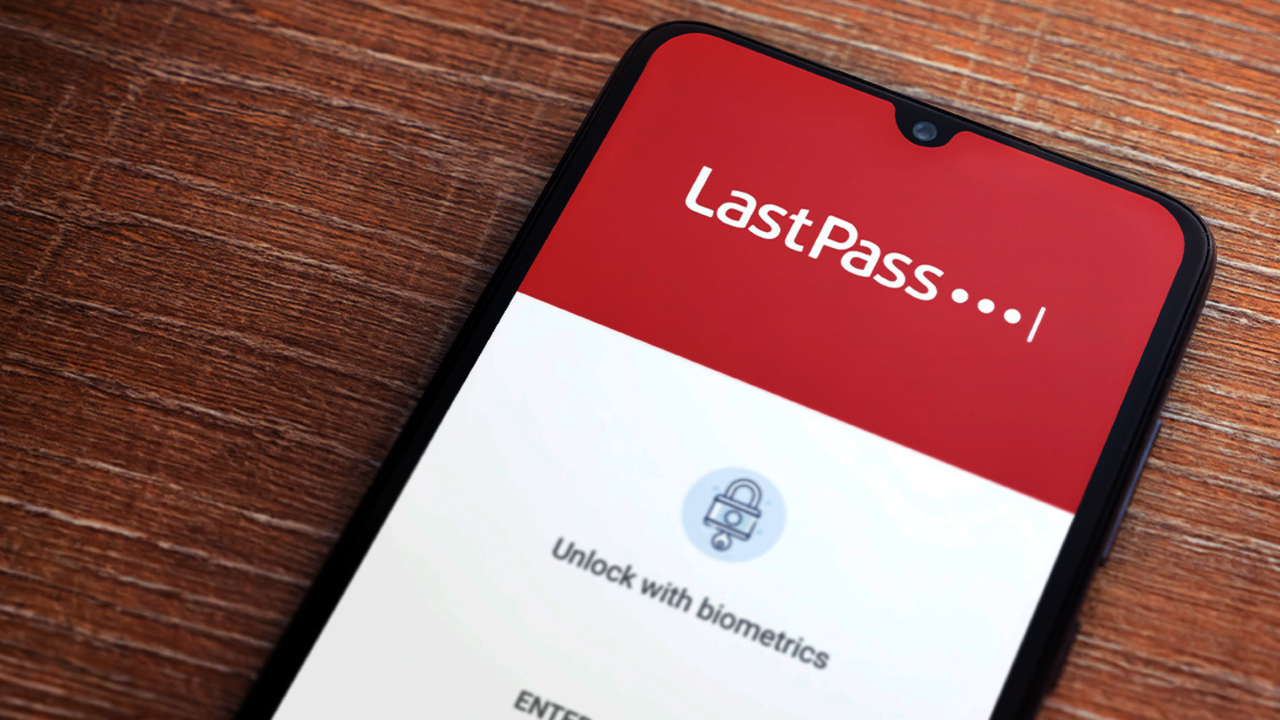
LastPass confirms data breach after hacker compromises supply chain — here's what we know

  • LastPass confirmed a supply chain breach via Klue, where stolen OAuth tokens let attackers access its Salesforce environment
  • Customer names, contact details, and CRM data were exposed, but master passwords were not; phishing risk remains high
  • Threat actor Icarus claimed responsibility; other firms including Recorded Future, Tanium, Jamf, Sprout Social, Gong, and Insurity also impacted

Password manager LastPass confirmed that it lost sensitive customer data in a supply chain attack that struck a third party.

As LastPass explained in a newly released incident report, unnamed threat actors first targeted Klue, a third-party market intelligence platform that integrates with its Salesforce and Gong systems. After obtaining its OAuth tokens, the attackers were able to access LastPass’ Salesforce environment and exfiltrate sensitive data stored there.

“On June 12th, LastPass was made aware of an incident that occurred at Klue (klue.com), a third-party market intelligence platform utilized by our go-to-market teams, which integrates with our Salesforce and Gong systems,” LastPass said.

Compromising names and emails

"We immediately launched an investigation and learned that, as part of this incident, an unauthorized actor was able to obtain OAuth tokens Klue held for many of its customers, including LastPass.”

“The threat actor then used these credentials to access LastPass customer data within our Salesforce environment.”

Further in the report, the password manager said the attackers most likely accessed customer names, phone numbers, email addresses, postal addresses, support case information, and sales/CRM-related data.

Passwords, including the master password, were most likely not exposed. However, criminals can use the data they obtained to launch phishing attacks, through which they might trick the victims into sharing those secrets, as well.

LastPass is now urging customers to remain vigilant and be careful with incoming messages, particularly those claiming to come from the company.

According to BleepingComputer, the Klue supply chain attack was claimed by a threat actor called Icarus, which apparently used compromised legacy credentials for an integration service to breach the intelligence platform.

Besides LastPass, a number of other organizations are affected as well, the publication further reported, including Recorded Future, Tanium, Jamf, Sprout Social, Gong, and Insurity. LastPass has now disabled employee access to Klue.

Via BleepingComputer

  •  

‘Travelers are getting better at spotting obvious scams' — but experts warn Airbnb scams are on the rise as summer arrives

  • Airbnb scams have surged 30x since 2023, including a sharp rise this year
  • Criminals hijack legitimate host accounts to to trick holidaymakers
  • Staying safe isn't so straightforward as threats evolve

Airbnb-related scam activity has increased 30x since the first half of 2023, according to new research from Saily and NordStellar, confirming that cybercriminals continue to go after holidaymakers seeking the best deals amid rising prices.

The report ultimately concludes that attackers are now targeting the trust built by larger platforms, saving them from having to build new identities from scratch.

And to top it all off, the nature of scams is also changing, as instead of using suspicious websites to obtain victim payments or information, criminals are now targeting legitimate Airbnb host accounts which have spent years amassing positive reviews and high ratings.

Exploiting legitimate accounts and hijacking trust

While the end goal remains high volumes of vulnerable consumers, scammers have added an extra layer of victim in their pipeline. Verified Airbnb hosts are now valuable assets for criminals because they already have identity verifications, positive reviews, booking histories, years of activity and established credibility.

Once the verified account is compromised, attackers can then go on to scam higher volumes of unsuspecting victims by posting – and charging for – fake property listings.

“Travelers are getting better at spotting obvious scams,” Saily Head of Product Matas Cenys said. “Criminals know this, so they are increasingly trying to steal trust instead of building fake trust from scratch.”

Where this type of attack differs from others, though, is that the victims never leave the platform. Rather than falling victim to phishing attacks and being redirected to malicious external sites, they interact fully with supposed legitimate hosts on the Airbnb platform.

While Airbnb attacks have seen a 30x increase in around three years and a sharp rise in the last year alone, they reflect a much broader trend of attackers compromising existing trusted accounts.

The recent ramp-up in attacks could also be tied to the summer season, with holidaymakers looking to book last-minute deals in the run-up to the summer season. Urgency and pressure to keep costs low also adds to criminals’ success.

“Everything looks normal until they arrive at their destination and discover the accommodation never existed," Cenys added.

How to protect yourself from booking scams

Saily is recommending that all communication stays within the booking platform and that customers avoid payment methods suggested outside of official channels. Unusually attractive listings in high-demand destinations could also be taken with a pinch of salt, and savvy shoppers may choose to reverse image search a property to double check its authenticity.

“As travel booking becomes increasingly digital, trust becomes one of the most valuable currencies in the travel ecosystem,” Cenys warned.

As for abusing victim trust, researchers also argue that AI has aided attacks by allowing criminals to produce better fake listings more quickly.

More generally, Airbnb revealed that two in five Americans have fallen victim for an online scam, with the average loss totalling nearly $2,000. The company has introduced measures to remind its users how to avoid scams, including introducing identity verification and reminders not to leave the platform, but account takeovers can still slip under the radar.

Airbnb also holds guest payments until 24 hours after check-in to ensure that everything is as described. Anti-fraud tech also prevented around 265,000 suspicious listings from appearing on the platform in 2025, the company boasted.

The company posted a comprehensive eight-step list of how to avoid scams on its platform online, calling out pressure tactics and unusual deals.

Google logo on a black background next to text reading 'Click to follow TechRadar'

  •  
❌