❌

Reading view

Our galaxy and its neighbours are racing through space at more than two million kilometres an hour, caught in a tug-of-war between the gravity of distant superclusters ahead and a vast, near-empty void shoving us from behind

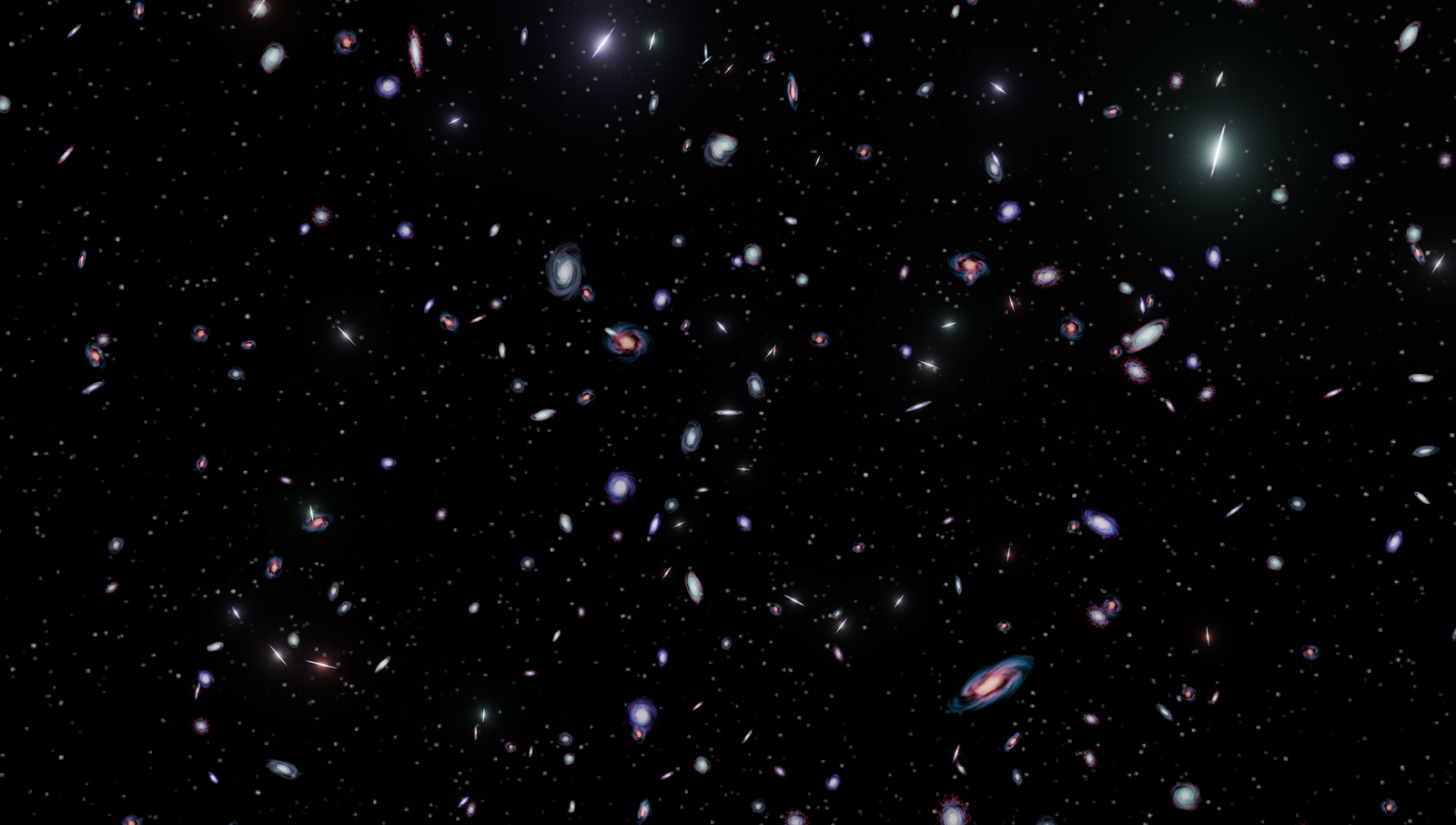
Numerous galaxies scattered across deep space.

You are sitting still, more or less, but the galaxy beneath you is not. The Milky Way and its neighbours are tearing through space at more than two million kilometres an hour, and that motion is not random. It is the result of a tug-of-war: distant concentrations of mass pulling us forward, and a vast, near-empty region of space effectively shoving us from behind.

The speed is real and measured. The direction tells a story about how matter is spread across the universe.

How we know we are moving

The yardstick is the cosmic microwave background, the faint afterglow of the early universe that fills the sky in every direction. If we were truly at rest, it would look the same temperature all around us. It does not. It reads very slightly hotter in one direction and cooler in the opposite one, a pattern called the dipole, and that asymmetry is a Doppler effect caused by our own movement into it, much as the pitch of a siren rises as it races toward you.

Read off that dipole, the Local Group of galaxies is moving at about 631 kilometres a second relative to the background, which works out to roughly 2.3 million kilometres an hour. We are not drifting. We are racing.

The pull ahead

Some of that motion has a long-known cause. In the direction we are heading lies the Great Attractor, a concentration of mass partly hidden behind the dust of our own galactic disc, which is why it took so long to make sense of. Beyond it sits something larger still, the Shapley Concentration, the densest collection of galaxy clusters in our part of the universe.

These overdense regions do what mass does. They pull, and the Local Group is being drawn toward them across hundreds of millions of light-years.

The push behind

The pull was only half the picture, and the other half is stranger. In 2017, a team led by Yehuda Hoffman mapped the local flow of galaxies and found that the motion is also being driven by a huge, sparsely populated region on the opposite side, which they named the Dipole Repeller.

A void cannot literally push anything. But gravity is a competition between directions, and a region with very little matter exerts very little pull. With density on one side and near-emptiness on the other, the net effect is that we drift away from the emptiness as surely as if it were pushing, falling toward the fuller side of the sky. The 2017 work found that this push and the pull ahead are of roughly equal importance.

What it actually means

None of this is the galaxy falling toward a single dramatic point. It is the Local Group riding the large-scale lumpiness of the cosmos, sliding down the gentle gradient from where matter is thin toward where it is thick.

The map is still being sharpened. The Great Attractor lies in the so-called Zone of Avoidance, the band of sky our own galaxy blocks from view, so it is awkward to study, and the Dipole Repeller is inferred from models of how thousands of galaxies are flowing rather than from a clear photograph of nothing. The broad conclusion, that we are caught between a distant abundance of mass and a distant absence of it, is well supported. The fine detail is still being filled in.

It is a strange thing to sit with. The ground feels still, the sky looks fixed, and all the while the entire galaxy is being carried across the universe at a speed no human machine has ever approached, pulled by what is out there and pushed by what is not.

The post Our galaxy and its neighbours are racing through space at more than two million kilometres an hour, caught in a tug-of-war between the gravity of distant superclusters ahead and a vast, near-empty void shoving us from behind appeared first on Space Daily.

  •  

The notebooks Marie Curie used in her research remain radioactively contaminated more than a hundred years later. Some Curie papers have been found contaminated with radium-226, an isotope with a half-life of about 1,600 years, and original volumes are kept under strict radiation-protection controls before anyone can handle them.

An open vintage notebook with handwritten notes and diagrams on aged paper.

The notebooks Marie Curie filled with her research are still dangerous to touch. More than a century after she wrote in them, the pages remain radioactively contaminated, mostly with radium-226, and the original volumes are kept under strict radiation controls. To read them at the Bibliothèque nationale de France in Paris, where they are stored in lead-lined boxes, you sign a liability waiver and put on protective clothing first.

This is not a curiosity of preservation. It is a direct consequence of the physics Curie helped uncover.

Why a notebook stays dangerous

The contamination is dominated by radium-226, and the key number is its half-life: about 1,600 years. A half-life is the time it takes for half of a radioactive substance to decay away. After a hundred years, radium-226 has barely begun, only a few per cent of it is gone, which is why a century has done almost nothing to make these pages safer. It also decays into a chain of further radioactive products, including radon gas, so the contamination is not one substance sitting quietly but a small, self-renewing source.

On that timescale, estimates suggest the notebooks will stay hazardous to handle freely until around the year 3500. The ink and paper are ordinary. What soaked into them is not.

How a notebook gets contaminated

Curie worked with radium and polonium by hand, every day, at a time when no one understood what that exposure did. She and her husband Pierre had isolated the two elements in 1898, and she coined the term radioactivity itself, but the harm in what they were handling was simply not yet known. She stirred glowing solutions, carried test tubes of radioactive material in her pockets, and is said to have kept a sample by her bed because she liked its glow.

In a laboratory like that, radioactive dust gets onto everything: the bench, the door handles, the pages of the notebook open beside the work. It was not just her papers. Her furniture, her cookbook, and her clothing carry the same contamination, and her old laboratory in Paris was not fully decontaminated until 1991, nearly sixty years after her death.

The controls around them

So the library treats them as what they are, low-level radioactive objects of immense historical value. They sit in boxes lined with lead, because radium-226 and its decay products emit gamma radiation that ordinary materials do not stop. A researcher who wants to consult an original signs an acknowledgement of the risk and works under protection. The notebooks form part of a wider Curie collection the library holds, available to scholars only on those terms.

The hazard is real but modest if handled correctly, which is the point of the controls. The waiver is less about a single dangerous afternoon than about making sure no one treats a radioactive artefact as if it were just an old book.

A record of what was not yet known

There is something fitting, and sad, in all of this. The notebooks are the working record of the woman who gave us the word radioactivity, and they are radioactive because she did the work before anyone, including her, grasped the cost.

Curie died in 1934 of a blood disorder widely linked to her years of exposure. Her pages will go on quietly emitting radiation for another fifteen centuries, long after the science they describe became common knowledge, a physical reminder of how new and how dangerous that knowledge once was. By the time the pages can finally be handled bare-handed, they will have outlasted her by the better part of two thousand years.

The post The notebooks Marie Curie used in her research remain radioactively contaminated more than a hundred years later. Some Curie papers have been found contaminated with radium-226, an isotope with a half-life of about 1,600 years, and original volumes are kept under strict radiation-protection controls before anyone can handle them. appeared first on Space Daily.

  •  

In the weightlessness of orbit, an astronaut’s heart can become more spherical as it no longer works against gravity in the usual way, while their spine stretches enough to make them measurably taller before they return to Earth.

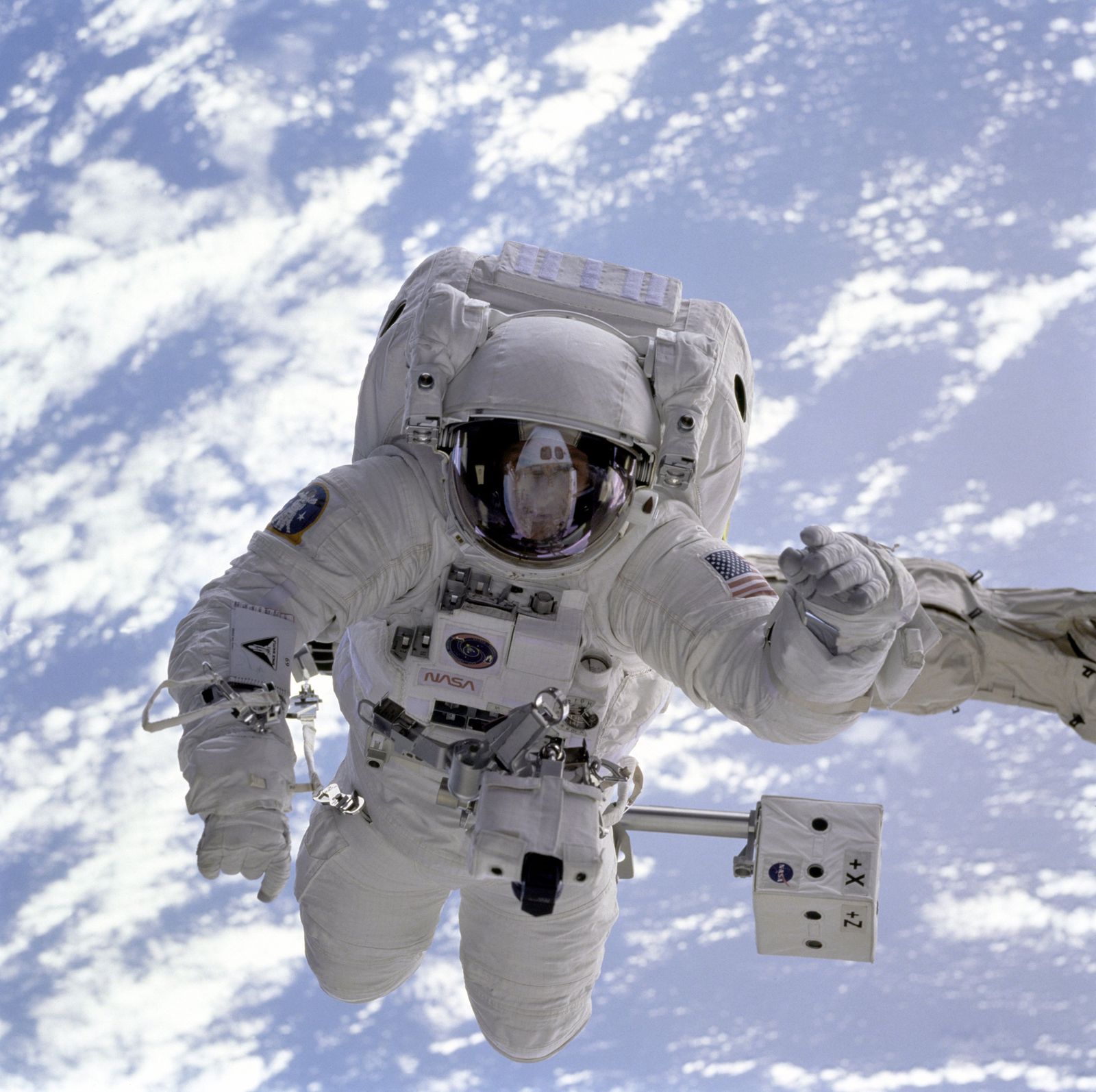
An astronaut floating during a spacewalk with Earth in the background.

Spend long enough in orbit and your own body starts to change shape. With gravity no longer pulling on it in the usual way, an astronaut’s heart can grow slightly more spherical, and their spine can stretch enough that they return to Earth measurably taller than when they left. Both changes are real, both are temporary, and both come down to the same thing: a body built for gravity, briefly relieved of it.

Neither is dramatic on its own. Together they are a useful illustration of how much of our shape is simply the body bracing against a force we never notice.

The rounder heart

On Earth, the heart is a slightly elongated organ, its shape maintained in part by the constant work of pumping blood against gravity. Take that load away and it relaxes toward a rounder form.

A study presented at the American College of Cardiology in 2014, based on ultrasound images from 12 astronauts, found that the heart became more spherical by about 9.4 per cent during long spells in microgravity. The reading worth keeping is what that rounding signals rather than the shape itself. A heart that does less work tends to lose muscle, and the change is one visible sign of the cardiac deconditioning that comes with weightlessness.

It is a small study, and a preliminary one, and the effect reverses once an astronaut is back under gravity. What it points to is a longer question: what sustained low effort does to the heart over the length of a mission to somewhere like Mars.

The taller astronaut

The height change is more straightforward and, for a while, more noticeable. Astronauts can gain up to around three per cent in height in orbit, which for a tall person can mean a couple of extra centimetres.

This is not bone growth. The spine is a stack of vertebrae cushioned by soft discs, and on Earth gravity keeps those discs gently compressed all day, which is why people are fractionally taller in the morning than at night. In orbit there is nothing pressing down at all, so the discs expand and rehydrate and the whole column lengthens. The astronaut does measure taller, just not permanently.

The stretch comes at a price. Lengthened spines are linked to back pain in flight and to a raised risk of herniated discs after landing, as the spine recompresses. Height returns to normal over the weeks and months that follow.

A body unloaded

The two changes share a cause. Almost everything about the human body, from the thickness of bones to the tone of muscles to the set of the spine, is shaped by a lifetime of resisting gravity. Remove that resistance and tissues drift toward shapes and lengths the constant downward pull normally prevents.

The heart and the spine are only the most easily pictured examples. Weightlessness also sends fluid toward the head, thins the bones, and wastes the muscles, which is why astronauts on the International Space Station spend hours a day exercising to hold the worst of it off.

Why it is worth tracking

These effects are reversible on the timescales of current missions, but they stop being a curiosity the moment journeys get longer. A crew bound for Mars would spend months in this state on the way out, arrive with deconditioned hearts and altered spines, and then have to function on landing.

Understanding exactly how the body reshapes itself without gravity, and how to counter it, is part of the unglamorous groundwork of going anywhere far. It also runs the other way: the spherical-heart finding drew interest precisely because the shape resembles changes seen in certain heart conditions on Earth, which makes the orbiting body a strange but useful place to study the one down here.

The post In the weightlessness of orbit, an astronaut’s heart can become more spherical as it no longer works against gravity in the usual way, while their spine stretches enough to make them measurably taller before they return to Earth. appeared first on Space Daily.

  •  

In the far future the expansion of space will carry every other galaxy beyond the reach of our telescopes, leaving the astronomers of that era with an empty sky and no way to ever discover that the Big Bang happened

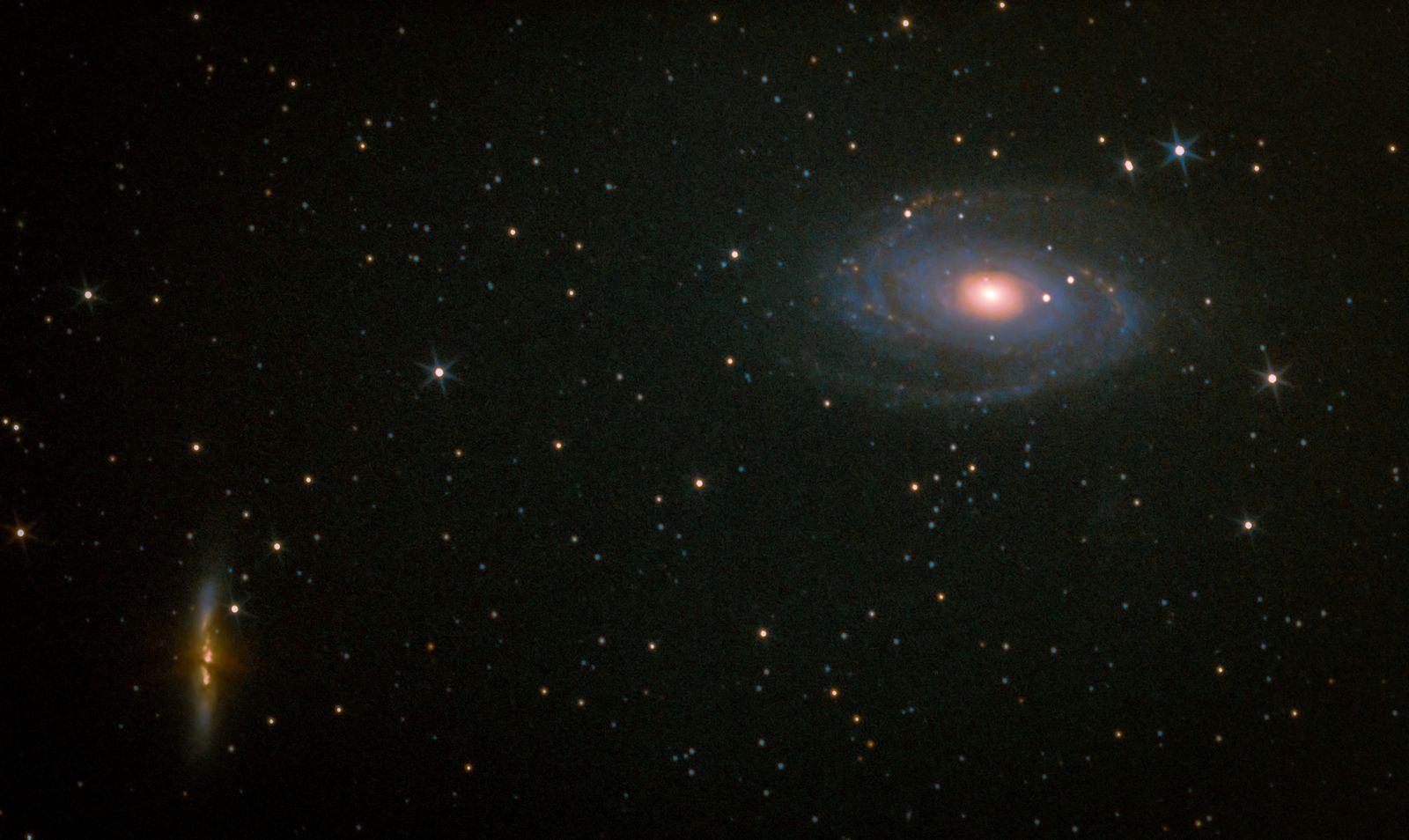
A spiral galaxy alone against deep dark space.

The universe is expanding, and the expansion is speeding up. Run that forward far enough and the consequence is bleak: one by one, every galaxy beyond our own immediate neighbourhood will be carried so far away that its light can no longer reach us. The astronomers of that distant era would look up at an almost empty sky, and they would have no way, from observation alone, to ever discover that the Big Bang happened.

This is not idle speculation. It is the conclusion of a serious cosmological argument, and it says something uncomfortable about the limits of what any observer can know.

How the sky empties

Dark energy is pushing the universe apart at an accelerating rate. The more distant a galaxy, the faster the expanding space between us carries it away, and beyond a certain distance, the cosmic horizon, that recession is effectively faster than light can close the gap. Light leaving such a galaxy now will never arrive.

As the acceleration continues, that horizon draws inward. Over roughly the next hundred billion years, and decisively over trillions, the galaxies we currently see will redshift, dim, and slip past it for good. What stays behind is our Local Group, the Milky Way and its gravitationally bound neighbours, which are held together tightly enough to resist the expansion. In time they will merge into a single galaxy, sitting alone in a black and apparently endless void.

Why they could not find the Big Bang

Our confidence that the universe began in a hot, dense state rests mainly on three pillars of evidence. The far future erases all three.

The first is the redshift of distant galaxies, the observation that they are all rushing apart, which is the direct fingerprint of an expanding universe. With every other galaxy gone from view, there is nothing left to measure that motion against. The second is the cosmic microwave background, the faint afterglow of the early universe; by then it will have been stretched and diluted so far that it falls below any hope of detection. The third is the precise ratio of light elements like hydrogen and helium left over from the first minutes, and after countless generations of stars have processed that material, the primordial signal will be buried.

The physicists Lawrence Krauss and Robert Scherrer worked this through in a 2007 paper bluntly titled The Return of a Static Universe and the End of Cosmology. Their conclusion is that a future astronomer, doing careful and honest science with everything still visible, would reasonably decide they lived in a single, eternal, static galaxy. The evidence for anything more would simply be gone.

The part that should unsettle us now

The argument is not really about the far future. It is about the reliability of observation itself.

If a whole era of intelligent observers could be doomed to a confident, well-reasoned, and completely wrong picture of the universe, then the obvious question is what we have already lost. Information from the earliest universe has been crossing our own horizon throughout cosmic history. We may be living in a privileged window, late enough that intelligence exists, early enough that the evidence of our origins is still in the sky, without any way to know how much has already gone dark.

One caveat worth keeping

This rests on an assumption: that dark energy goes on behaving as it does now, as a steady cosmological constant. If it weakens or changes character, the timeline shifts, and the story could be different. The scenario is the careful extrapolation of current physics, not a certainty.

It is also worth saying that the future astronomers would only be blind if their knowledge had to be rebuilt from scratch. A civilisation that kept good records could still know about the Big Bang the way we know about events we cannot witness, on the strength of evidence gathered while it lasted. That, in the end, is the quiet lesson. We happen to live at a moment when the universe will still tell us where it came from, and that will not always be true.

The post In the far future the expansion of space will carry every other galaxy beyond the reach of our telescopes, leaving the astronomers of that era with an empty sky and no way to ever discover that the Big Bang happened appeared first on Space Daily.

  •  

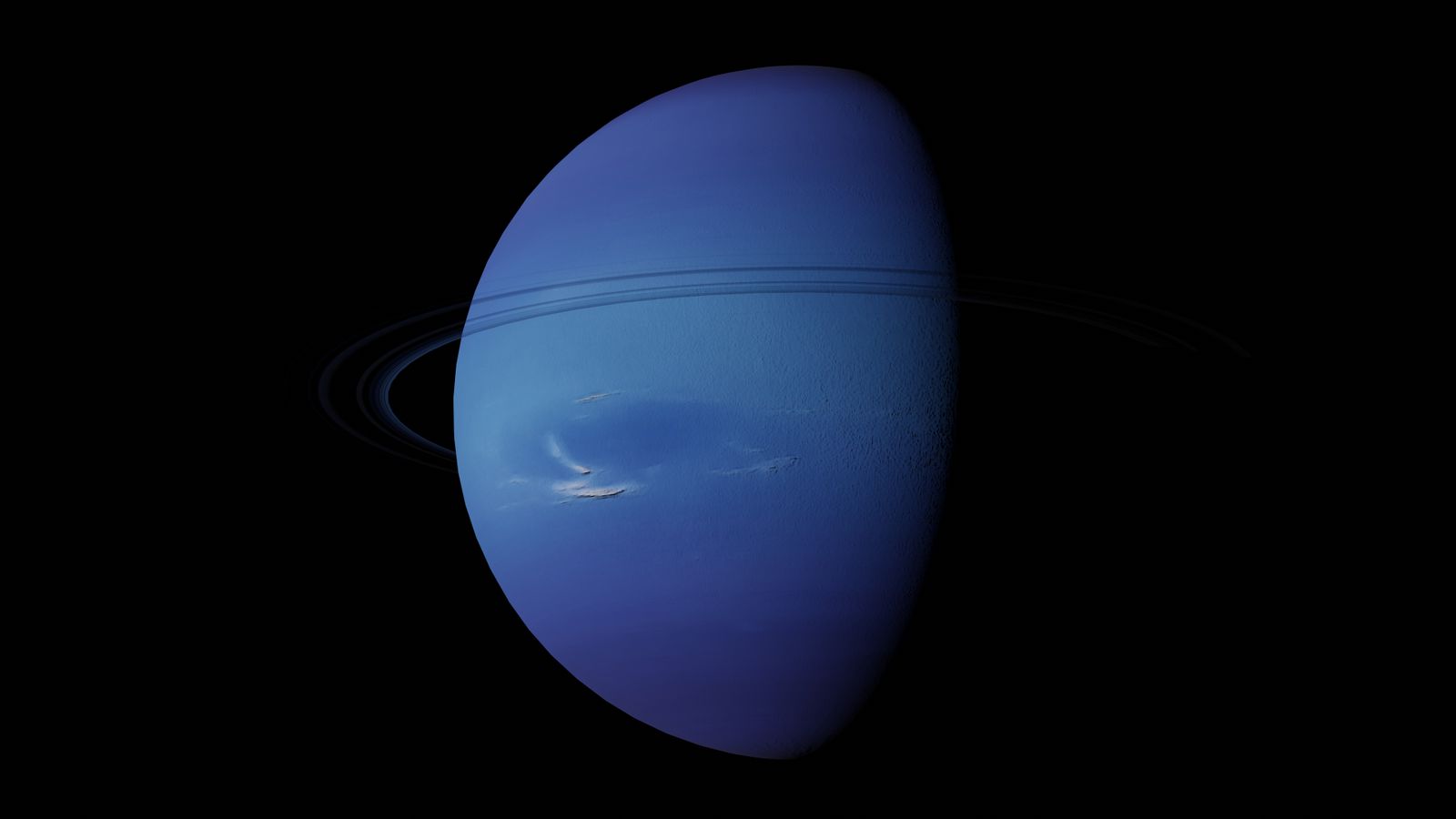
Deep inside Neptune and Uranus the pressure is thought to crush carbon into diamonds, which then sink slowly through the planet as a glittering rain

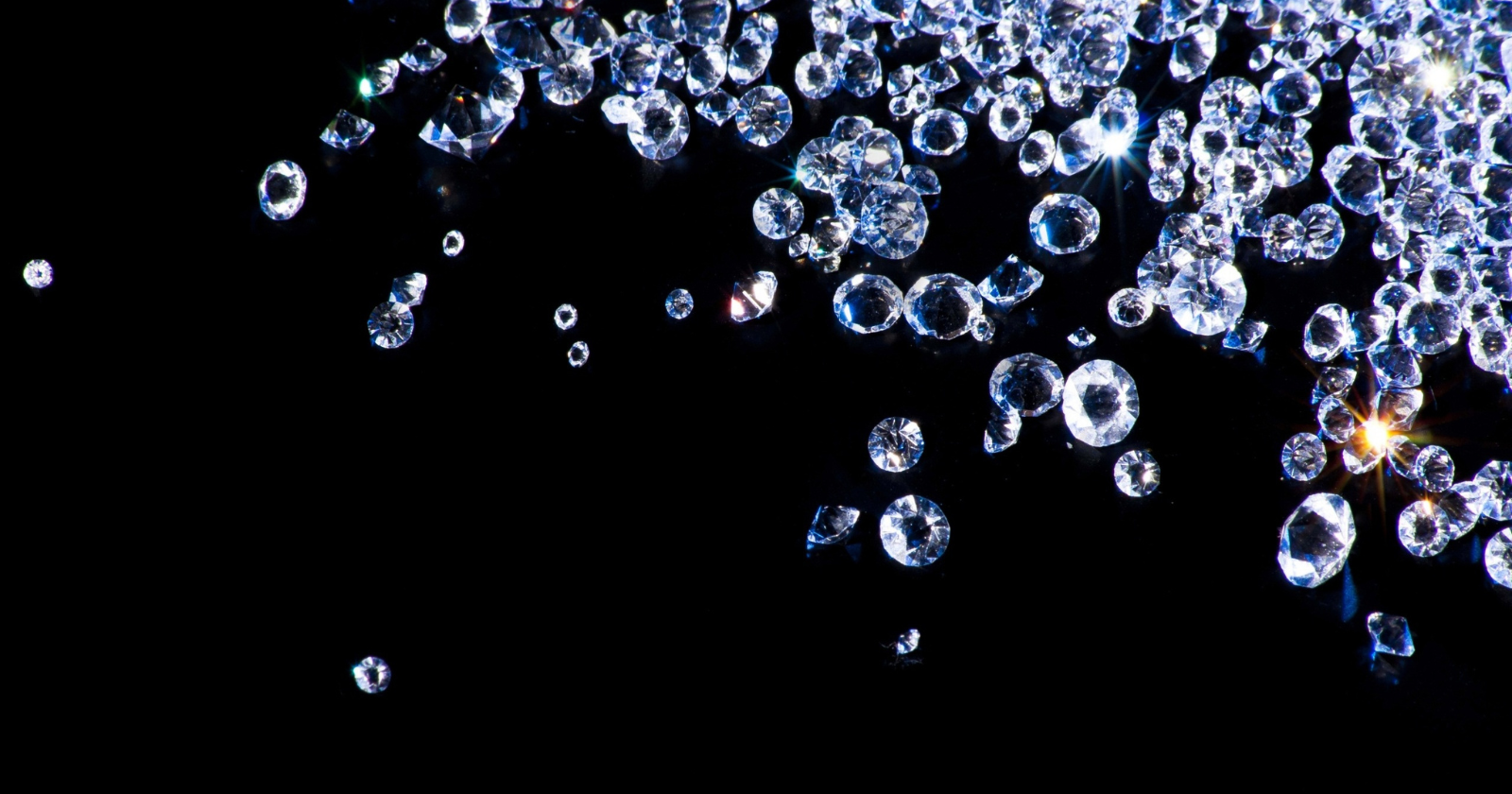
Thousands of kilometres beneath the cloud tops of Neptune and Uranus, the pressure is thought to do something extraordinary to carbon. It crushes it into diamond. Those diamonds, denser than the material around them, then sink slowly toward the planet’s core, a steady glittering rain falling through the dark interior of an ice giant.

It is a striking image, and unlike many striking images about distant planets, a version of it has been produced in a laboratory.

Where the idea comes from

Neptune and Uranus are not the gas giants Jupiter and Saturn. Beneath their atmospheres lies a deep, hot, dense layer rich in water, ammonia and methane, the reason they are called ice giants, though little of it is ice in any familiar sense.

Methane is the key. Its molecule is one carbon atom bound to four of hydrogen, and deep inside these planets, at pressures of millions of times Earth’s atmosphere and temperatures of thousands of degrees, that bond does not hold. The molecules are torn apart, the freed carbon is squeezed together, and under those conditions carbon’s stable form is diamond. Being heavier than its surroundings, the diamond settles downward. Repeat that across a planet, and you have diamond rain.

Recreated in a laboratory

For a long time this was a prediction on paper. In 2017 a team led by the physicist Dominik Kraus, in a collaboration that included the Lawrence Livermore National Laboratory, made it happen and watched it occur.

Working at the SLAC National Accelerator Laboratory in California, the researchers took a thin sheet of polystyrene, the everyday plastic of disposable cups, chosen because it is built from the same carbon and hydrogen as the hydrocarbons inside the planets. They hit it with an intense optical laser to generate the crushing shock conditions of an ice giant’s interior, then used SLAC’s X-ray laser to see what formed. In the instant the shock passed, almost every carbon atom snapped into the ordered lattice of diamond. The work was published in Nature Astronomy, and described by SLAC as recreating the diamond rain of icy planets.

The diamonds in the experiment were nanometres across and lasted moments. The point was not their size but their existence: the precise chemical step at the heart of the theory, hydrocarbons splitting and the carbon crystallising into diamond, really does happen, and happens readily, under the right conditions.

Why it is more than a curiosity

Diamond rain would do real work inside a planet. As each diamond sinks, it releases gravitational energy, the way anything falling does, and across an entire mantle that adds up.

Researchers have suggested this could help explain a long-standing puzzle: Neptune radiates noticeably more heat than it receives from the distant Sun, and the slow settling of dense material is one candidate source of that extra warmth. It may also bear on the planets’ strangely tilted, off-centre magnetic fields. The rain, if it falls, is part of the machinery of these worlds, not just decoration.

What we actually know

It is worth being clear about the limits. No instrument has ever been inside Neptune or Uranus, and no one has seen a diamond form there. The case rests on three things that agree: the known physics of carbon under pressure, laboratory experiments that reproduce the key step with stand-in materials, and the otherwise puzzling behaviour of the planets themselves.

That is a strong case, not a photograph. Settling it properly would take a dedicated mission to the ice giants, the kind long proposed and not yet flown. Until then, diamond rain remains one of the best-supported things we cannot actually see.

The post Deep inside Neptune and Uranus the pressure is thought to crush carbon into diamonds, which then sink slowly through the planet as a glittering rain appeared first on Space Daily.

  •  

About 66 million years ago an asteroid roughly 10-15 km wide struck off Mexico’s Yucatan, gouging a crater some 180 km across — and the extinction that followed wiped out the non-avian dinosaurs and around 75% of all species

Roughly five billion. That is the number of Hiroshima-sized bombs it would take to match the energy of a single morning 66 million years ago.

Yes, according to a Physics Today summary of recent impact modelling, “The collision energy was 3 × 10²³ J, which is equivalent to about 5 billion Hiroshima-sized atomic bomb explosions.” The figure is a model-derived estimate, and the Hiroshima comparison is illustrative rather than exact but it still does the work of making an unimaginable event somewhat graspable.

The asteroid was about 10 to 15 kilometres in diamater. It struck the northern Yucatán Peninsula and left the Chicxulub crater, a buried scar some 180 kilometres wide. What followed was not a single catastrophic instant but a chain of consequences that played out over hours, months, and years. The story worth telling is less about the strike itself than about how a brief collision became a planetary reset.

The first hours

The immediate physics were brutal. Simulations summarised in the same Physics Today piece indicate that “Within seconds, the impact excavated a hole more than 20 km deep into Earth’s surface and threw bedrock and sediment into the upper atmosphere.” Again, that depth is a simulation result, not a measurement, but it captures the scale of the excavation.

Material did not just fall back where it came from. A 2022 review in Nature Reviews Earth & Environment, led by researchers at Imperial College London, synthesised the modelling this way: “Several thousand gigatonnes of asteroidal and target material were ejected at velocities exceeding 5 kilometres per second, forming a fast-moving cloud that transported dust, soot and sulfate aerosols around the Earth within hours.” A regional event became a global one before the day was out.

The long winter that did the killing

The strike was survivable for a great many organisms. The aftermath was not. The Nature Reviews synthesis frames the central mechanism plainly: “These impact ejecta and soot from global wildfires blocked sunlight and caused global cooling, thus explaining the severity and abruptness of the mass extinction.” That cooling likely explains why the extinction was so sharp, though the relative contributions of dust, soot, and sulfate aerosols remain debated.

How long the dark lasted is genuinely unsettled. The same review notes carefully that “it remains uncertain whether this impact winter lasted for many months or for more than a decade.” That uncertainty matters, because the duration is the difference between a lean season and the collapse of nearly every food web on the planet.

The debate over what drove the cooling is still live. A 2016 study in Scientific Reports proposed that soot ejected from the oil-rich rock at the impact site, spread globally through the stratosphere, drove much of the cooling and darkening, placing soot from the impact site itself, not just wildfires, near the front of the killing sequence. More recently, a 2025 Nature Communications paper by Katerina Rodiouchkina and colleagues revised the sulfur estimate sharply downward, suggesting a less prominent role for sulfur emission and a milder impact winter, with implications for which species pulled through the first years after the strike. It is one study, and it conflicts with other modelling that treats sulfur as the main early driver. The precise recipe of the winter is still being worked out.

Who slipped through

The pattern of survival is the part that tends to surprise people. Size was close to a death sentence. The Scientific Reports analysis notes that only about 12% of land-dwelling forms survived, with large-bodied land animals probably almost entirely wiped out. The contrast with the water is striking: around 90% of species in the freshwater assemblage survived, buffered because they relied on detritus rather than the living plants and plankton that the darkness destroyed much of. 

Finding the crater, decades later

For years the impact was a hypothesis without a smoking gun. The crater was first detected in the late 1970s by petroleum geophysicists Glen Penfield and Antonio Camargo, but its connection to the extinction was only confirmed around 1990 and 1991, after Alan Hildebrand tied iridium-rich boundary deposits to the buried structure beneath the Yucatán. 

The rock record has since been read directly. In 2016, an international drilling project bored into the crater’s peak ring, recovering shocked minerals and impact rocks that confirmed long-modelled details of the collision. As a summary of that work records, the drilling confirmed the peak ring was built from granite ejected within minutes from deep in the Earth. 

What the record shows, followed to the end, is quietly disorienting. The event erased three-quarters of life on Earth. 

The post About 66 million years ago an asteroid roughly 10-15 km wide struck off Mexico’s Yucatan, gouging a crater some 180 km across — and the extinction that followed wiped out the non-avian dinosaurs and around 75% of all species appeared first on Space Daily.

  •  

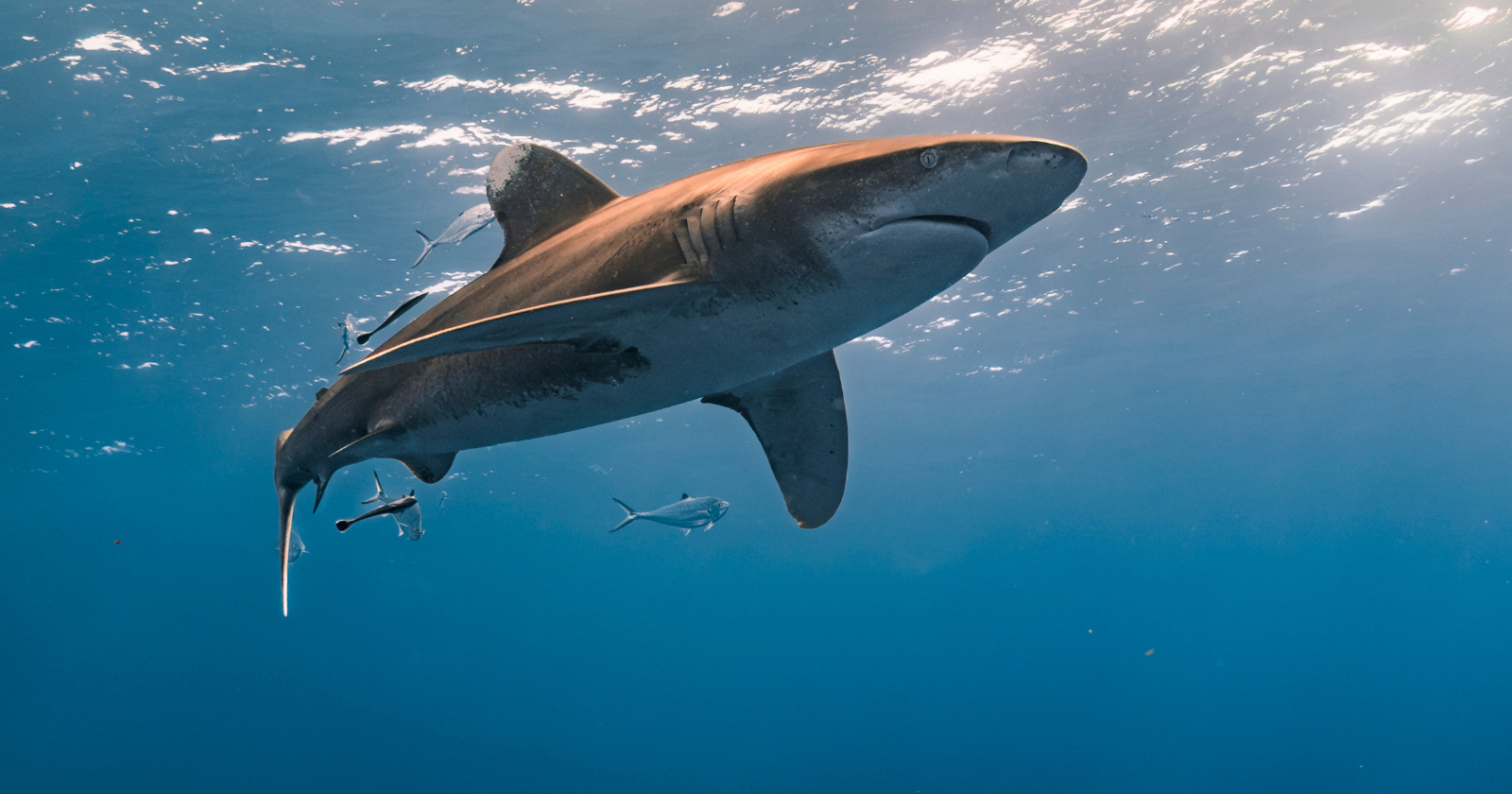
A Greenland shark studied in 2016 was estimated to be nearly 400 years old, meaning it may have been born around the time Shakespeare’s era was ending — and, astonishingly, would not have reached sexual maturity for more than another century.

In 2016, researchers put an age to a Greenland shark that is hard to take in. The largest animal in their study was estimated at nearly 400 years old, which would place its birth around the time Shakespeare’s era was drawing to a close. Stranger still, by the same research a shark like that would not have reached sexual maturity until it was around 150, more than a century into a life most creatures never get a fraction of.

The figure is astonishing, and it also comes with a wide margin of error worth stating plainly.

How you age a shark with no birth certificate

Greenland sharks leave no growth rings to count, so the team needed another clock. They found one in the eye.

The nucleus at the centre of a shark’s eye lens forms before birth and is not replaced over its life, so the carbon locked inside it is a chemical snapshot of the moment the animal began. By radiocarbon dating that tissue, and using the spike of carbon-14 that nuclear weapons tests left in the oceans in the 1950s as a time stamp for the younger sharks, the researchers could estimate how long each had been alive. The work, led by Julius Nielsen and published in the journal Science, covered 28 female sharks, ranging from under a metre to just over five metres in length.

Nearly four centuries, give or take

The headline number needs its uncertainty attached. The largest shark, around five metres long, came out at roughly 392 years old, but the method carries a margin of about 120 years either way. The honest statement is that this animal was at least 272 years old and possibly more than 500.

Even the low end of that range is extraordinary. It makes the Greenland shark the longest-lived vertebrate known, outlasting the bowhead whale and everything else with a backbone. At the central estimate, the shark was swimming the cold North Atlantic before the first telescopes were turned on the night sky.

A childhood longer than a human lifetime

The detail that lingers is not the death but the slowness of the life.

The same research put sexual maturity at something like 150 years of age. A Greenland shark spends longer reaching adulthood than any human being has ever lived, drifting through the deep, cold dark and growing at perhaps a centimetre a year. By the time it can reproduce, generations of faster animals have come and gone many times over.

That pace is tied to the cold. These sharks live in near-freezing water, their metabolism turned right down, and a body that does everything slowly tends to do it for a very long time. It is a life lived almost in slow motion, paced to water that barely climbs above freezing from one century to the next.

Why the longevity is also a liability

There is a sting in the story. A species that takes 150 years to breed cannot replace its numbers quickly, which makes it badly exposed to anything that kills adults faster than the slow trickle of new ones can keep up.

Greenland sharks are caught as bycatch and were once hunted in large numbers for the oil in their livers, and a population that recovers on a timescale of centuries has little room to absorb that. Slow to mature and slower to rebuild, they are guarded by little except the cold and the depth that hide them. The same biology that produced a nearly four-century-old animal is what makes the species so hard to protect: by the time a shark born today is old enough to matter to the population, every person reading this will be long gone.

The post A Greenland shark studied in 2016 was estimated to be nearly 400 years old, meaning it may have been born around the time Shakespeare’s era was ending — and, astonishingly, would not have reached sexual maturity for more than another century. appeared first on Space Daily.

  •  

HD 189733b looks deep blue from space, almost Earth-like at first glance — but its colour comes not from oceans, but from silicate particles in a scorching atmosphere where glass may rain sideways through winds of thousands of kilometres an hour.

A deep blue gas-giant planet against black space.

From a distance, the exoplanet HD 189733b looks like the most reassuring thing in the sky: a deep blue world, the same cobalt as Earth seen from orbit. The resemblance ends there, and it ends hard. The blue does not come from oceans. It comes from a scorching atmosphere hazed with silicate particles, the raw material of glass, in a place where that glass may fall sideways on winds of thousands of kilometres an hour.

It is, in other words, an Earth-coloured planet that is about as far from Earth-like as a planet can get.

A blue that was actually measured

The colour is not an artist’s guess. In 2013, astronomers using the Hubble Space Telescope measured it directly, by watching the planet’s light as it slipped behind its star and noting how the colour of the combined light changed. The dip told them what the planet alone was reflecting. The answer was a deep azure blue, and it was the first time the visible colour of a planet beyond our solar system had been pinned down.

HD 189733b sits about 63 light-years away and is what astronomers call a hot Jupiter: a gas giant the size of our own, but orbiting so close to its star that it laps it in roughly two days.

Why it is blue, and why that misleads

On Earth, blue is the work of water and air, sunlight scattering through the atmosphere and bouncing off oceans. It is tempting to read the same story onto any blue dot.

HD 189733b has neither ocean nor surface to speak of. It is a ball of gas, and its blue comes from high hazes laced with silicate grains that happen to scatter blue light while absorbing other colours. The outcome looks identical to Earth from far enough away. The cause could hardly be more different. Same colour, opposite reason.

Glass rain, sideways

The conditions that make those silicate hazes are brutal. The daytime atmosphere runs to more than 1,000 degrees Celsius, hot enough that silicates exist as vapour and then condense into tiny molten droplets of glass as they cool.

Add the wind.

Models of the planet put its atmospheric winds at around 7,000 kilometres an hour, something like seven times the speed of sound, which would drive those glass droplets horizontally rather than letting them fall in any gentle way. By one description, at that velocity a single droplet would strike with something like the energy of a small artillery shell. Hence the striking image that has stuck to this planet: rain made of glass, blowing sideways.

Two honest caveats belong with that picture. Because HD 189733b is a gas giant, there is no ground for rain to land on in the way it does on Earth; the droplets form and move within the atmosphere itself. And the sideways-glass description is an inference drawn from the silicate clouds and the modelled winds, not something anyone has photographed. It is a reasonable reading of harsh data, not a postcard.

What the colour really tells you

The useful lesson here is about how much a colour can hide. A blue planet is not a watery one by default, and the most Earth-looking dot in a telescope can turn out to be a furnace where the weather is made of glass.

HD 189733b is one of the most closely studied planets outside our system precisely because it is near enough and crosses its star often enough to interrogate. The more we learn about it, the clearer the warning becomes: at interstellar distances, appearances are a starting point for questions, not an answer to them.

The post HD 189733b looks deep blue from space, almost Earth-like at first glance — but its colour comes not from oceans, but from silicate particles in a scorching atmosphere where glass may rain sideways through winds of thousands of kilometres an hour. appeared first on Space Daily.

  •  

The 1815 eruption of Mount Tambora in Indonesia, the largest documented volcanic eruption in human history, killed approximately 90,000 people directly and produced the year without a summer in 1816, a climate disruption that caused famine across the Northern Hemisphere, may have triggered the first global cholera pandemic, and produced the cold dark summer at Lake Geneva during which Mary Shelley wrote Frankenstein

On the evening of 5 April 1815, the residents of Java and surrounding Indonesian islands heard what they believed were cannon shots in the distance. British colonial administrators dispatched troops to investigate, assuming a naval engagement was underway somewhere offshore. The sounds were heard as far away as Sumatra, more than 2,000 kilometres from their source, and continued intermittently for five days.

They were not cannon shots. They were the opening sounds of the largest volcanic eruption in modern human history.

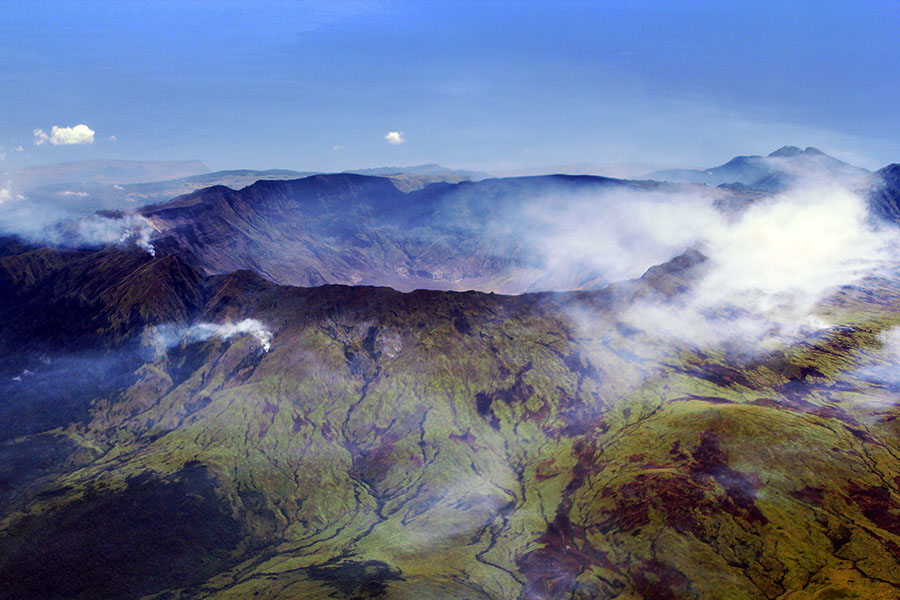
On the evening of 10 April 1815, Mount Tambora on the small Indonesian island of Sumbawa entered its climactic phase. The volcano ejected approximately 160 cubic kilometres of pulverised rock, ash, and pumice into the atmosphere over the following 24 hours, sent a column of ash and sulphur dioxide approximately 43 kilometres into the stratosphere, and reduced its own mountain in height from approximately 4,300 metres to approximately 2,850 metres. The pyroclastic flows that descended the mountain’s flanks killed approximately 11,000 people in the surrounding region directly, in the first day of the event. The famines and disease that followed across the Indonesian archipelago over the next several months killed approximately 60,000 to 80,000 more.

The eruption was, by the available geological measurements, a Volcanic Explosivity Index 7 event, the highest VEI rating documented in modern human historical records since the eruption of Mount Samalas in Indonesia in 1257. The sulphur dioxide injected into the stratosphere spread around the planet over the following months, where it converted to sulphate aerosol and reflected solar radiation back into space. The consequences of that radiative shift, on the available climate evidence, were felt across every continent in the Northern Hemisphere over the subsequent two years.

The mechanism

A peer-reviewed climate model reconstruction of the Tambora eruption, published in 2017 in Nature Communications by John Fasullo and colleagues at the National Center for Atmospheric Research, established the basic physical pathway through which a single volcanic eruption on a small Indonesian island could disrupt the climate of the entire Northern Hemisphere. The eruption injected approximately 60 million tonnes of sulphur dioxide into the stratosphere, which is the upper layer of the atmosphere above approximately 10 kilometres altitude where there is no weather to wash particles back to the surface. The sulphur dioxide converted to sulphate aerosol over the following weeks and months, forming a thin reflective layer that spread around the planet on the prevailing stratospheric circulation.

The sulphate aerosol layer reflected approximately 6 watts per square metre of incoming solar radiation back into space at its peak, on the Fasullo team’s modelling. The result was a measurable cooling of the planet’s surface by approximately 0.4 to 0.7 degrees Celsius averaged across 1816, with substantially larger regional anomalies in the Northern Hemisphere where the cooling concentrated in the summer growing season. The cooling was not uniform. It was unusually severe in northeastern North America, in western and central Europe, and in scattered parts of Asia, where the combination of stratospheric aerosol cover and disrupted atmospheric circulation produced the coldest summer recorded in approximately two centuries.

The Fasullo team’s analysis also identified secondary effects in the ocean and the cryosphere. The sea surface in the North Atlantic cooled measurably, the Arctic sea ice extended further south than the modern average, and the changes in surface temperature gradients altered the prevailing wind patterns over Europe and North America. The 1816 climate disruption was, on the available evidence, not simply a cold year. It was a fundamental reorganisation of atmospheric and oceanic circulation that took approximately two years to dissipate.

The year without a summer

The summer of 1816 was, in the lived experience of people in the affected regions, unlike anything they had ever encountered. In New England, frost fell every month of the year. Crops planted in the spring froze in June and again in July and again in August. The harvest of 1816 across northern New England was substantially less than half of normal, and in many communities was almost entirely lost. The price of wheat in the region more than doubled. The price of oats, used to feed horses on which all overland transport then depended, increased by approximately 800 per cent over the following winter.

In western and central Europe, the same pattern unfolded with similar severity. The 1816 harvest in France, Switzerland, the German states, and the United Kingdom failed across most major crops. Bread prices in some affected regions doubled within months. Riots over food broke out in Ireland, Wales, England, France, and Switzerland during the autumn and winter of 1816 and into 1817. The Swiss government declared a national emergency. The British government dispatched soldiers to suppress food riots in the manufacturing towns of the Midlands.

The death toll in Europe and North America during 1816 and 1817 from famine and the diseases that followed it was substantial but is difficult to determine precisely from the surviving records. Historical demographic studies have estimated approximately 100,000 to 200,000 excess deaths in Europe alone from famine, typhus, and other epidemic diseases in the two years following the eruption. The combined death toll from the direct eruption and the subsequent climate-driven famine and disease was, on the available estimates, well in excess of the 90,000 figure most commonly cited for the eruption itself.

The cholera connection

In 1817, in the Bengal region of British India, an outbreak of a previously regional disease began to spread along trade routes in a pattern that had not been observed before. The disease was Vibrio cholerae infection, which had been endemic in the Ganges Delta for centuries without major geographic expansion. In 1817 and 1818, it spread for the first time outside South Asia, reaching Southeast Asia, the Middle East, East Africa, and southern Europe through maritime trade routes and pilgrim caravans. The first global cholera pandemic, which would kill millions of people across Asia, Europe, and the Americas over the following decades, had begun.

The causal connection between the Tambora climate disruption and the emergence of the first cholera pandemic is suggestive rather than definitively established. The peer-reviewed epidemiological evidence, however, points to several plausible pathways. The climate disruption in South Asia in 1816 and 1817 included anomalous monsoon patterns that altered the salinity and temperature of estuarine waters in the Ganges Delta where Vibrio cholerae lives in its environmental reservoir. The disruption may have produced a strain variant with enhanced epidemic potential, or may have altered human population movements and water supplies in ways that facilitated the disease’s geographic expansion. The precise mechanism is contested in the peer-reviewed literature, but the temporal coincidence between the Tambora climate disruption and the emergence of cholera as a global disease is striking enough that the connection is treated as plausible in the standard epidemiological histories.

Frankenstein at Lake Geneva

In May 1816, a small group of British travellers arrived at the Villa Diodati on the shores of Lake Geneva in Switzerland. The group included the poet Percy Bysshe Shelley, his 18-year-old companion Mary Wollstonecraft Godwin, her stepsister Claire Clairmont, the poet Lord Byron, and Byron’s personal physician John Polidori. The plan had been to spend the summer of 1816 in the mountains, walking, sailing, and writing.

The summer at Lake Geneva did not unfold according to plan. The weather throughout June and July 1816 was, in Mary Godwin’s own description, “ungenial.” Cold rain fell for weeks at a time. Storms produced lightning across the lake almost nightly. The group was confined to the villa for days at a stretch by weather conditions that prevented outdoor activity of any kind. Lord Byron proposed, during one of these confinements, that each member of the group should write a ghost story to pass the time.

Mary Godwin, who would marry Percy Shelley later that year and become Mary Shelley, began work on a story about a scientist who reanimates dead tissue to create a living human being. The story expanded into a full novel over the following twelve months. Frankenstein, or The Modern Prometheus was published anonymously in 1818. Byron’s contribution to the same evening’s competition expanded into “Darkness,” one of the most haunting poems in the Romantic tradition, which begins with the line “I had a dream, which was not all a dream” and proceeds to describe a world in which the sun has been extinguished and the surviving humans are reduced to scavenging among the ruins. Polidori’s contribution became “The Vampyre,” the foundational text of modern vampire fiction.

The literary record of the summer of 1816, on the strongest available reading of the contemporary correspondence and diaries, was substantially shaped by the weather the visitors at the Villa Diodati were experiencing. The unending storms, the failed harvests, the death of livestock in nearby fields, and the visible distress of the local population would all have been part of the daily atmosphere in which Frankenstein, “Darkness,” and “The Vampyre” were composed. The works are not literal descriptions of the climate of 1816, but they were written by people inhabiting a world that had been visibly disrupted by something none of them yet understood.

The island record

A 2023 peer-reviewed study by Nick Wilson at the University of Otago and colleagues, published in Scientific Reports, examined the impact of the Tambora eruption on a global sample of 31 large populated islands. The team analysed contemporary climate records, historical demographic data, and modern climate model reconstructions to test the breadth of the eruption’s effects. The result was that 29 of the 29 islands with sufficient surviving data showed measurable weather and climate anomalies in the 1815 to 1817 period. The disruption was not regional. It was global, and it touched every populated region of the Northern Hemisphere for which records survive, with substantial measurable effects in parts of the Southern Hemisphere as well.

The Wilson team’s secondary purpose was to use the Tambora event as a case study for what a comparable future eruption might do to modern global civilisation. Their analysis suggests that island nations may have some long-term survival value during sun-blocking catastrophes of this kind, because the moderating influence of surrounding ocean reduces the severity of local cooling compared with continental interiors. The Fasullo 2017 modelling, however, suggested the opposite outcome for a future analogous eruption occurring under conditions of contemporary global warming. The increased ocean stratification produced by anthropogenic warming, on the Fasullo modelling, would amplify rather than dampen the surface cooling response to a major volcanic event.

The honest limitations

Several methodological caveats apply to the literature described above.

The exact death toll of the Tambora eruption is genuinely uncertain. The 90,000 figure most commonly cited is the sum of approximately 11,000 direct pyroclastic-flow deaths and approximately 80,000 deaths from famine and disease across the Indonesian archipelago in the months following the eruption. The figure is based on incomplete colonial-era population estimates and may be substantially understated. Death tolls from the European and North American famine of 1816 and 1817 are also approximate and depend on assumptions about background mortality rates that vary across the affected regions.

The causal connection between the Tambora climate disruption and the first global cholera pandemic is plausible but not definitively established. Cholera could have emerged as a global pandemic for reasons unrelated to the volcanic climate disruption, and the temporal coincidence between the two events does not by itself prove a causal relationship. The peer-reviewed epidemiological literature treats the connection as suggestive rather than confirmed.

The literary record of the summer of 1816 at Lake Geneva is contemporaneous and well-documented, but the causal claim that Frankenstein would not have been written without the Tambora eruption is unprovable. Mary Shelley was a writer of extraordinary capability working in a Romantic literary tradition that had been engaging with themes of nature, reanimation, and human limits for decades before 1816. What can be said with confidence is that the specific conditions under which she began Frankenstein were produced by the Tambora climate disruption, and that the atmosphere of the novel reflects the atmosphere of the summer in which it was conceived.

What it means

Several things follow from the Tambora evidence that are worth saying clearly.

The first is that a single volcanic eruption on a small Indonesian island can, under the right conditions, disrupt the climate of the entire Northern Hemisphere for more than a year, kill substantially more than 100,000 people across multiple continents through cascading consequences, and reshape the political, economic, and literary history of the early nineteenth century. The Tambora event is not a hypothetical or a model. It is a documented historical case of how a relatively brief geological event can produce sustained global human consequences on a scale that the popular framing of volcanic eruptions does not typically include.

The second is that the population of the world in 1815 was approximately 1 billion people. The population of the world in 2026 is approximately 8.2 billion. The agricultural systems on which modern populations depend are, on most relevant measures, more efficient and more productive than those of the early nineteenth century. They are also more centralised, more dependent on global trade networks, and more vulnerable to simultaneous disruption in multiple regions than the agricultural systems of 1815. A Tambora-magnitude eruption occurring under modern conditions would, on the Fasullo 2017 modelling, produce a substantially larger surface cooling than the 1815 event produced, in part because of ocean stratification changes driven by anthropogenic warming.

The third is that VEI 7 eruptions occur, on the available geological record, approximately once every several hundred to one thousand years. The Samalas eruption of 1257 was VEI 7. The Tambora eruption of 1815 was VEI 7. The next VEI 7 eruption, on the available statistical evidence, is more likely than not to occur within the next several centuries. The geological systems involved are not predictable on human time scales, and the next event could occur tomorrow, or could occur in 800 years. What is clear from the peer-reviewed record is that the next event will produce consequences comparable to the 1815 Tambora eruption, on a planet substantially less prepared for them than the world of 1815 was.

The fourth, on the strongest current reading of approximately two centuries of geological, climatological, demographic, and literary evidence, is that the most consequential single event in the early nineteenth century may have been a geological one in a place that almost no one in Europe or North America had ever heard of, and the most enduring literary record of that event is a novel about a scientist who creates a living being out of dead matter and then cannot bring himself to recognise it as his own.

Mary Shelley was eighteen years old when she began writing Frankenstein.

The volcano had erupted the previous April.

The summer at Lake Geneva was the coldest in living memory, and nothing in the world that summer was behaving as anyone had expected it to.

The post The 1815 eruption of Mount Tambora in Indonesia, the largest documented volcanic eruption in human history, killed approximately 90,000 people directly and produced the year without a summer in 1816, a climate disruption that caused famine across the Northern Hemisphere, may have triggered the first global cholera pandemic, and produced the cold dark summer at Lake Geneva during which Mary Shelley wrote Frankenstein appeared first on Space Daily.

  •  
❌