❌

Reading view

Our galaxy and its neighbours are racing through space at more than two million kilometres an hour, caught in a tug-of-war between the gravity of distant superclusters ahead and a vast, near-empty void shoving us from behind
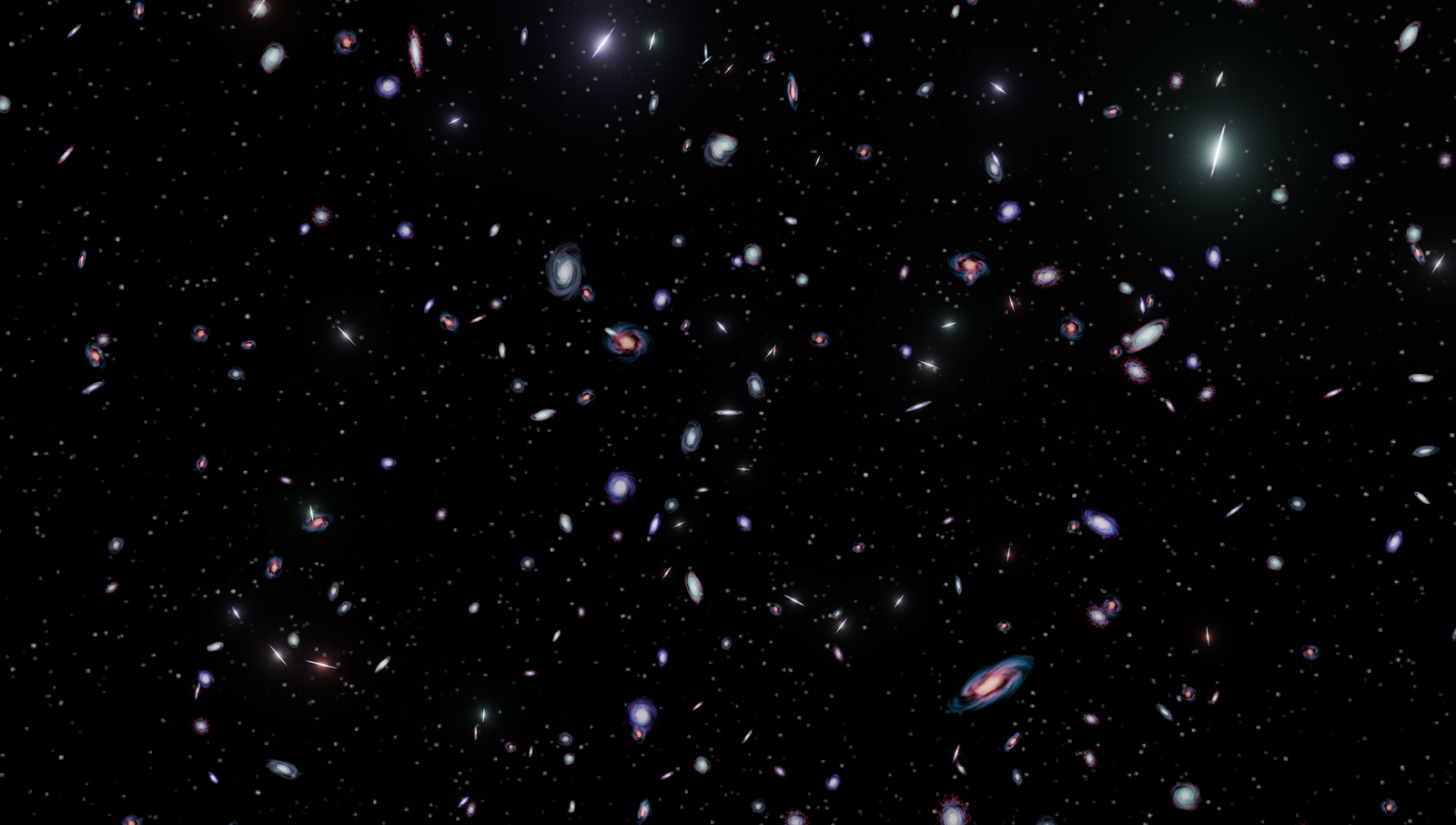
Numerous galaxies scattered across deep space.

You are sitting still, more or less, but the galaxy beneath you is not. The Milky Way and its neighbours are tearing through space at more than two million kilometres an hour, and that motion is not random. It is the result of a tug-of-war: distant concentrations of mass pulling us forward, and a vast, near-empty region of space effectively shoving us from behind.

The speed is real and measured. The direction tells a story about how matter is spread across the universe.

How we know we are moving

The yardstick is the cosmic microwave background, the faint afterglow of the early universe that fills the sky in every direction. If we were truly at rest, it would look the same temperature all around us. It does not. It reads very slightly hotter in one direction and cooler in the opposite one, a pattern called the dipole, and that asymmetry is a Doppler effect caused by our own movement into it, much as the pitch of a siren rises as it races toward you.

Read off that dipole, the Local Group of galaxies is moving at about 631 kilometres a second relative to the background, which works out to roughly 2.3 million kilometres an hour. We are not drifting. We are racing.

The pull ahead

Some of that motion has a long-known cause. In the direction we are heading lies the Great Attractor, a concentration of mass partly hidden behind the dust of our own galactic disc, which is why it took so long to make sense of. Beyond it sits something larger still, the Shapley Concentration, the densest collection of galaxy clusters in our part of the universe.

These overdense regions do what mass does. They pull, and the Local Group is being drawn toward them across hundreds of millions of light-years.

The push behind

The pull was only half the picture, and the other half is stranger. In 2017, a team led by Yehuda Hoffman mapped the local flow of galaxies and found that the motion is also being driven by a huge, sparsely populated region on the opposite side, which they named the Dipole Repeller.

A void cannot literally push anything. But gravity is a competition between directions, and a region with very little matter exerts very little pull. With density on one side and near-emptiness on the other, the net effect is that we drift away from the emptiness as surely as if it were pushing, falling toward the fuller side of the sky. The 2017 work found that this push and the pull ahead are of roughly equal importance.

What it actually means

None of this is the galaxy falling toward a single dramatic point. It is the Local Group riding the large-scale lumpiness of the cosmos, sliding down the gentle gradient from where matter is thin toward where it is thick.

The map is still being sharpened. The Great Attractor lies in the so-called Zone of Avoidance, the band of sky our own galaxy blocks from view, so it is awkward to study, and the Dipole Repeller is inferred from models of how thousands of galaxies are flowing rather than from a clear photograph of nothing. The broad conclusion, that we are caught between a distant abundance of mass and a distant absence of it, is well supported. The fine detail is still being filled in.

It is a strange thing to sit with. The ground feels still, the sky looks fixed, and all the while the entire galaxy is being carried across the universe at a speed no human machine has ever approached, pulled by what is out there and pushed by what is not.

The post Our galaxy and its neighbours are racing through space at more than two million kilometres an hour, caught in a tug-of-war between the gravity of distant superclusters ahead and a vast, near-empty void shoving us from behind appeared first on Space Daily.
  •  

In the far future the expansion of space will carry every other galaxy beyond the reach of our telescopes, leaving the astronomers of that era with an empty sky and no way to ever discover that the Big Bang happened

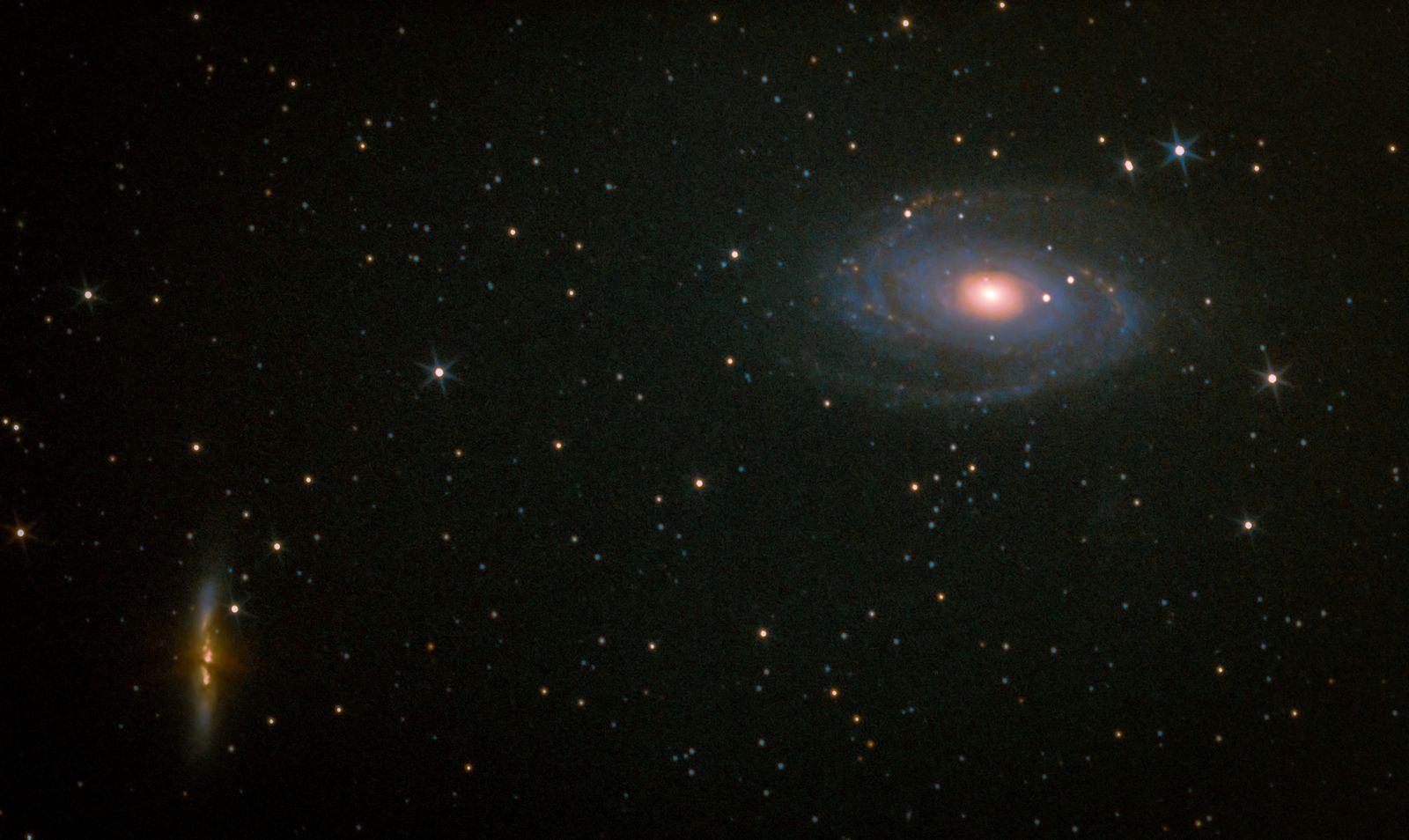
A spiral galaxy alone against deep dark space.

The universe is expanding, and the expansion is speeding up. Run that forward far enough and the consequence is bleak: one by one, every galaxy beyond our own immediate neighbourhood will be carried so far away that its light can no longer reach us. The astronomers of that distant era would look up at an almost empty sky, and they would have no way, from observation alone, to ever discover that the Big Bang happened.

This is not idle speculation. It is the conclusion of a serious cosmological argument, and it says something uncomfortable about the limits of what any observer can know.

How the sky empties

Dark energy is pushing the universe apart at an accelerating rate. The more distant a galaxy, the faster the expanding space between us carries it away, and beyond a certain distance, the cosmic horizon, that recession is effectively faster than light can close the gap. Light leaving such a galaxy now will never arrive.

As the acceleration continues, that horizon draws inward. Over roughly the next hundred billion years, and decisively over trillions, the galaxies we currently see will redshift, dim, and slip past it for good. What stays behind is our Local Group, the Milky Way and its gravitationally bound neighbours, which are held together tightly enough to resist the expansion. In time they will merge into a single galaxy, sitting alone in a black and apparently endless void.

Why they could not find the Big Bang

Our confidence that the universe began in a hot, dense state rests mainly on three pillars of evidence. The far future erases all three.

The first is the redshift of distant galaxies, the observation that they are all rushing apart, which is the direct fingerprint of an expanding universe. With every other galaxy gone from view, there is nothing left to measure that motion against. The second is the cosmic microwave background, the faint afterglow of the early universe; by then it will have been stretched and diluted so far that it falls below any hope of detection. The third is the precise ratio of light elements like hydrogen and helium left over from the first minutes, and after countless generations of stars have processed that material, the primordial signal will be buried.

The physicists Lawrence Krauss and Robert Scherrer worked this through in a 2007 paper bluntly titled The Return of a Static Universe and the End of Cosmology. Their conclusion is that a future astronomer, doing careful and honest science with everything still visible, would reasonably decide they lived in a single, eternal, static galaxy. The evidence for anything more would simply be gone.

The part that should unsettle us now

The argument is not really about the far future. It is about the reliability of observation itself.

If a whole era of intelligent observers could be doomed to a confident, well-reasoned, and completely wrong picture of the universe, then the obvious question is what we have already lost. Information from the earliest universe has been crossing our own horizon throughout cosmic history. We may be living in a privileged window, late enough that intelligence exists, early enough that the evidence of our origins is still in the sky, without any way to know how much has already gone dark.

One caveat worth keeping

This rests on an assumption: that dark energy goes on behaving as it does now, as a steady cosmological constant. If it weakens or changes character, the timeline shifts, and the story could be different. The scenario is the careful extrapolation of current physics, not a certainty.

It is also worth saying that the future astronomers would only be blind if their knowledge had to be rebuilt from scratch. A civilisation that kept good records could still know about the Big Bang the way we know about events we cannot witness, on the strength of evidence gathered while it lasted. That, in the end, is the quiet lesson. We happen to live at a moment when the universe will still tell us where it came from, and that will not always be true.

The post In the far future the expansion of space will carry every other galaxy beyond the reach of our telescopes, leaving the astronomers of that era with an empty sky and no way to ever discover that the Big Bang happened appeared first on Space Daily.

  •  

Deep inside Neptune and Uranus the pressure is thought to crush carbon into diamonds, which then sink slowly through the planet as a glittering rain

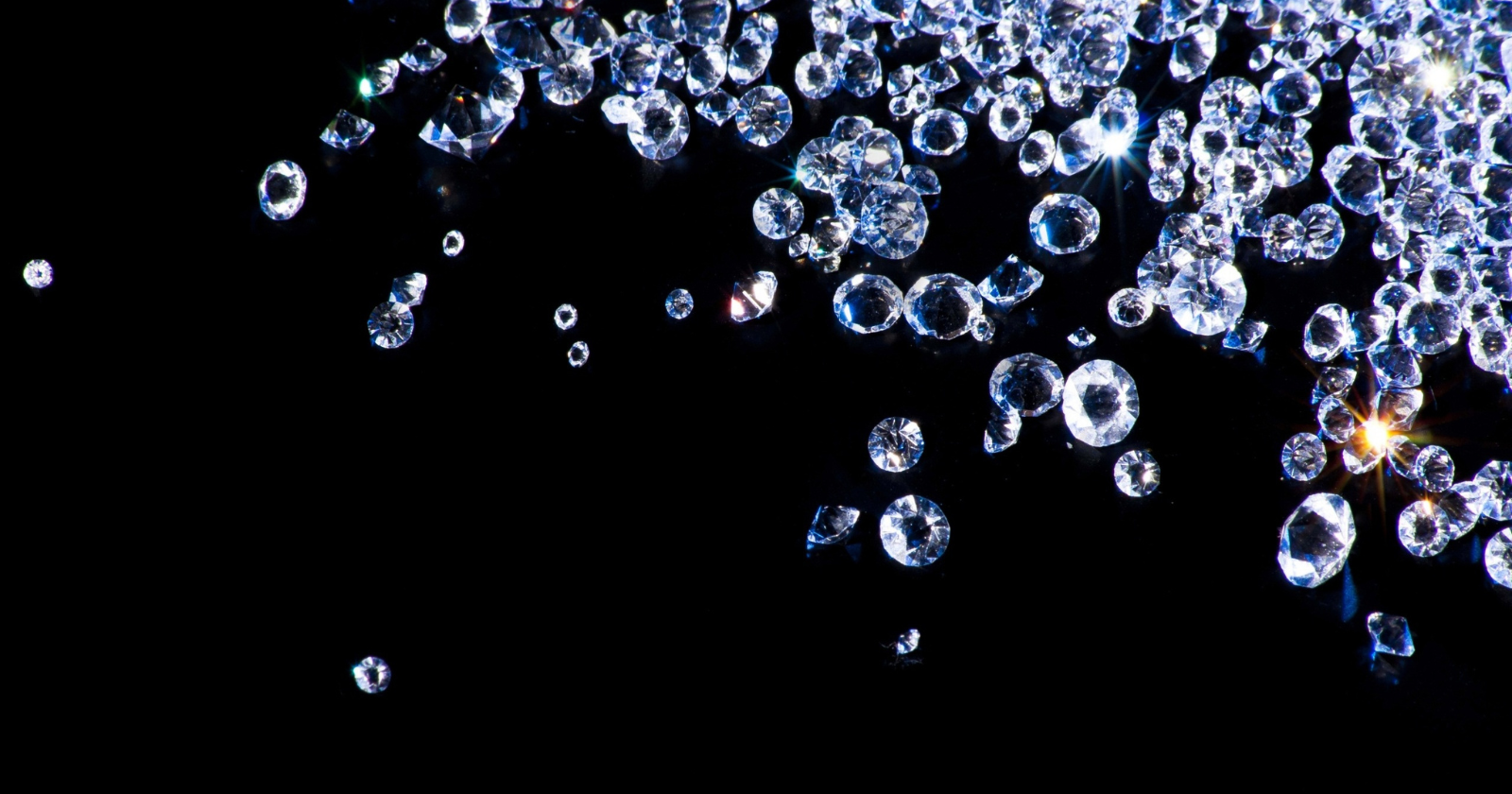
Thousands of kilometres beneath the cloud tops of Neptune and Uranus, the pressure is thought to do something extraordinary to carbon. It crushes it into diamond. Those diamonds, denser than the material around them, then sink slowly toward the planet’s core, a steady glittering rain falling through the dark interior of an ice giant.

It is a striking image, and unlike many striking images about distant planets, a version of it has been produced in a laboratory.

Where the idea comes from

Neptune and Uranus are not the gas giants Jupiter and Saturn. Beneath their atmospheres lies a deep, hot, dense layer rich in water, ammonia and methane, the reason they are called ice giants, though little of it is ice in any familiar sense.

Methane is the key. Its molecule is one carbon atom bound to four of hydrogen, and deep inside these planets, at pressures of millions of times Earth’s atmosphere and temperatures of thousands of degrees, that bond does not hold. The molecules are torn apart, the freed carbon is squeezed together, and under those conditions carbon’s stable form is diamond. Being heavier than its surroundings, the diamond settles downward. Repeat that across a planet, and you have diamond rain.

Recreated in a laboratory

For a long time this was a prediction on paper. In 2017 a team led by the physicist Dominik Kraus, in a collaboration that included the Lawrence Livermore National Laboratory, made it happen and watched it occur.

Working at the SLAC National Accelerator Laboratory in California, the researchers took a thin sheet of polystyrene, the everyday plastic of disposable cups, chosen because it is built from the same carbon and hydrogen as the hydrocarbons inside the planets. They hit it with an intense optical laser to generate the crushing shock conditions of an ice giant’s interior, then used SLAC’s X-ray laser to see what formed. In the instant the shock passed, almost every carbon atom snapped into the ordered lattice of diamond. The work was published in Nature Astronomy, and described by SLAC as recreating the diamond rain of icy planets.

The diamonds in the experiment were nanometres across and lasted moments. The point was not their size but their existence: the precise chemical step at the heart of the theory, hydrocarbons splitting and the carbon crystallising into diamond, really does happen, and happens readily, under the right conditions.

Why it is more than a curiosity

Diamond rain would do real work inside a planet. As each diamond sinks, it releases gravitational energy, the way anything falling does, and across an entire mantle that adds up.

Researchers have suggested this could help explain a long-standing puzzle: Neptune radiates noticeably more heat than it receives from the distant Sun, and the slow settling of dense material is one candidate source of that extra warmth. It may also bear on the planets’ strangely tilted, off-centre magnetic fields. The rain, if it falls, is part of the machinery of these worlds, not just decoration.

What we actually know

It is worth being clear about the limits. No instrument has ever been inside Neptune or Uranus, and no one has seen a diamond form there. The case rests on three things that agree: the known physics of carbon under pressure, laboratory experiments that reproduce the key step with stand-in materials, and the otherwise puzzling behaviour of the planets themselves.

That is a strong case, not a photograph. Settling it properly would take a dedicated mission to the ice giants, the kind long proposed and not yet flown. Until then, diamond rain remains one of the best-supported things we cannot actually see.

The post Deep inside Neptune and Uranus the pressure is thought to crush carbon into diamonds, which then sink slowly through the planet as a glittering rain appeared first on Space Daily.

  •  

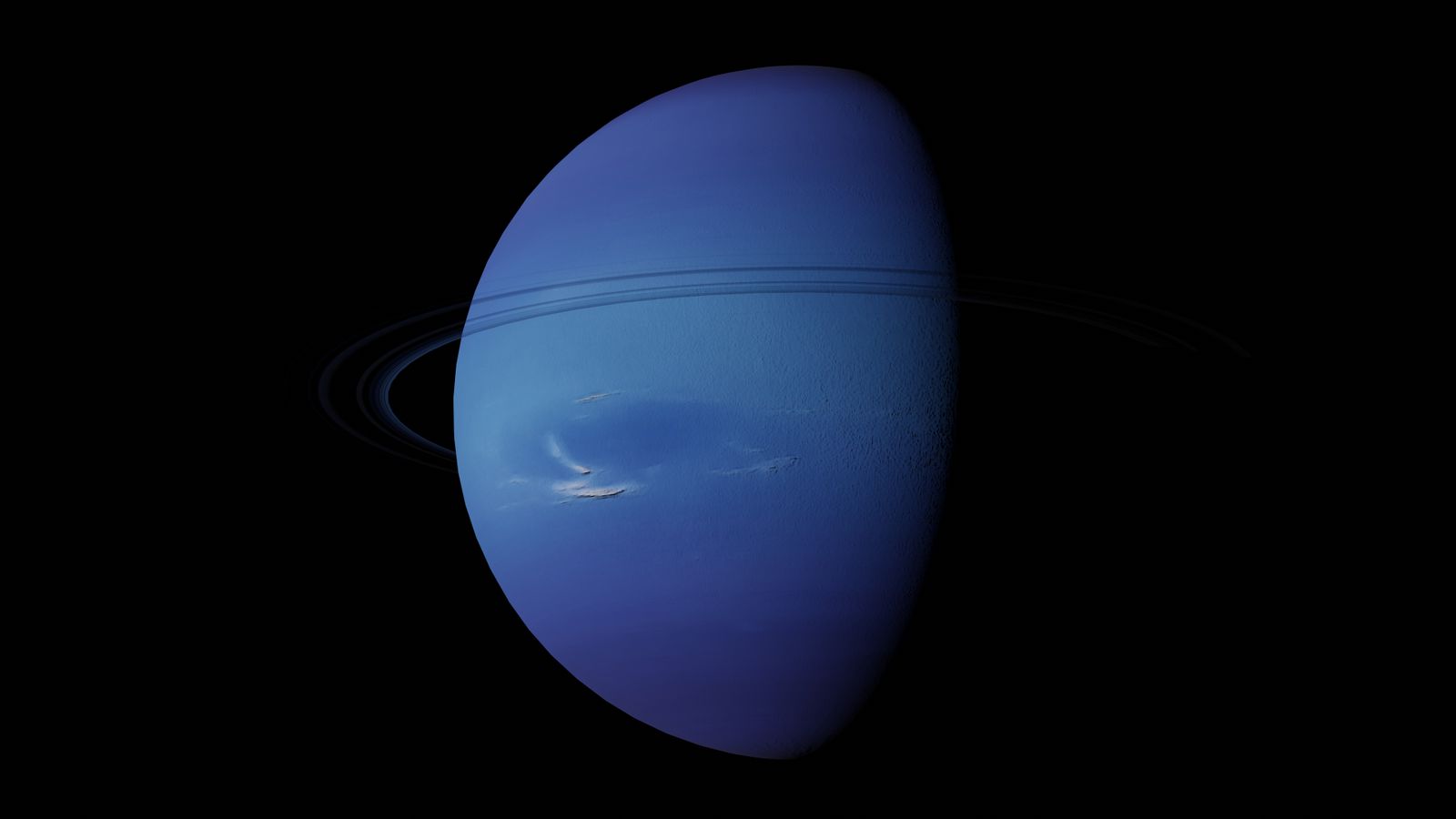
HD 189733b looks deep blue from space, almost Earth-like at first glance β€” but its colour comes not from oceans, but from silicate particles in a scorching atmosphere where glass may rain sideways through winds of thousands of kilometres an hour.

A deep blue gas-giant planet against black space.

From a distance, the exoplanet HD 189733b looks like the most reassuring thing in the sky: a deep blue world, the same cobalt as Earth seen from orbit. The resemblance ends there, and it ends hard. The blue does not come from oceans. It comes from a scorching atmosphere hazed with silicate particles, the raw material of glass, in a place where that glass may fall sideways on winds of thousands of kilometres an hour.

It is, in other words, an Earth-coloured planet that is about as far from Earth-like as a planet can get.

A blue that was actually measured

The colour is not an artist’s guess. In 2013, astronomers using the Hubble Space Telescope measured it directly, by watching the planet’s light as it slipped behind its star and noting how the colour of the combined light changed. The dip told them what the planet alone was reflecting. The answer was a deep azure blue, and it was the first time the visible colour of a planet beyond our solar system had been pinned down.

HD 189733b sits about 63 light-years away and is what astronomers call a hot Jupiter: a gas giant the size of our own, but orbiting so close to its star that it laps it in roughly two days.

Why it is blue, and why that misleads

On Earth, blue is the work of water and air, sunlight scattering through the atmosphere and bouncing off oceans. It is tempting to read the same story onto any blue dot.

HD 189733b has neither ocean nor surface to speak of. It is a ball of gas, and its blue comes from high hazes laced with silicate grains that happen to scatter blue light while absorbing other colours. The outcome looks identical to Earth from far enough away. The cause could hardly be more different. Same colour, opposite reason.

Glass rain, sideways

The conditions that make those silicate hazes are brutal. The daytime atmosphere runs to more than 1,000 degrees Celsius, hot enough that silicates exist as vapour and then condense into tiny molten droplets of glass as they cool.

Add the wind.

Models of the planet put its atmospheric winds at around 7,000 kilometres an hour, something like seven times the speed of sound, which would drive those glass droplets horizontally rather than letting them fall in any gentle way. By one description, at that velocity a single droplet would strike with something like the energy of a small artillery shell. Hence the striking image that has stuck to this planet: rain made of glass, blowing sideways.

Two honest caveats belong with that picture. Because HD 189733b is a gas giant, there is no ground for rain to land on in the way it does on Earth; the droplets form and move within the atmosphere itself. And the sideways-glass description is an inference drawn from the silicate clouds and the modelled winds, not something anyone has photographed. It is a reasonable reading of harsh data, not a postcard.

What the colour really tells you

The useful lesson here is about how much a colour can hide. A blue planet is not a watery one by default, and the most Earth-looking dot in a telescope can turn out to be a furnace where the weather is made of glass.

HD 189733b is one of the most closely studied planets outside our system precisely because it is near enough and crosses its star often enough to interrogate. The more we learn about it, the clearer the warning becomes: at interstellar distances, appearances are a starting point for questions, not an answer to them.

The post HD 189733b looks deep blue from space, almost Earth-like at first glance β€” but its colour comes not from oceans, but from silicate particles in a scorching atmosphere where glass may rain sideways through winds of thousands of kilometres an hour. appeared first on Space Daily.

  •  
❌