Login

Scientists decode how birds, fish, insects, and mammals communicate to work together
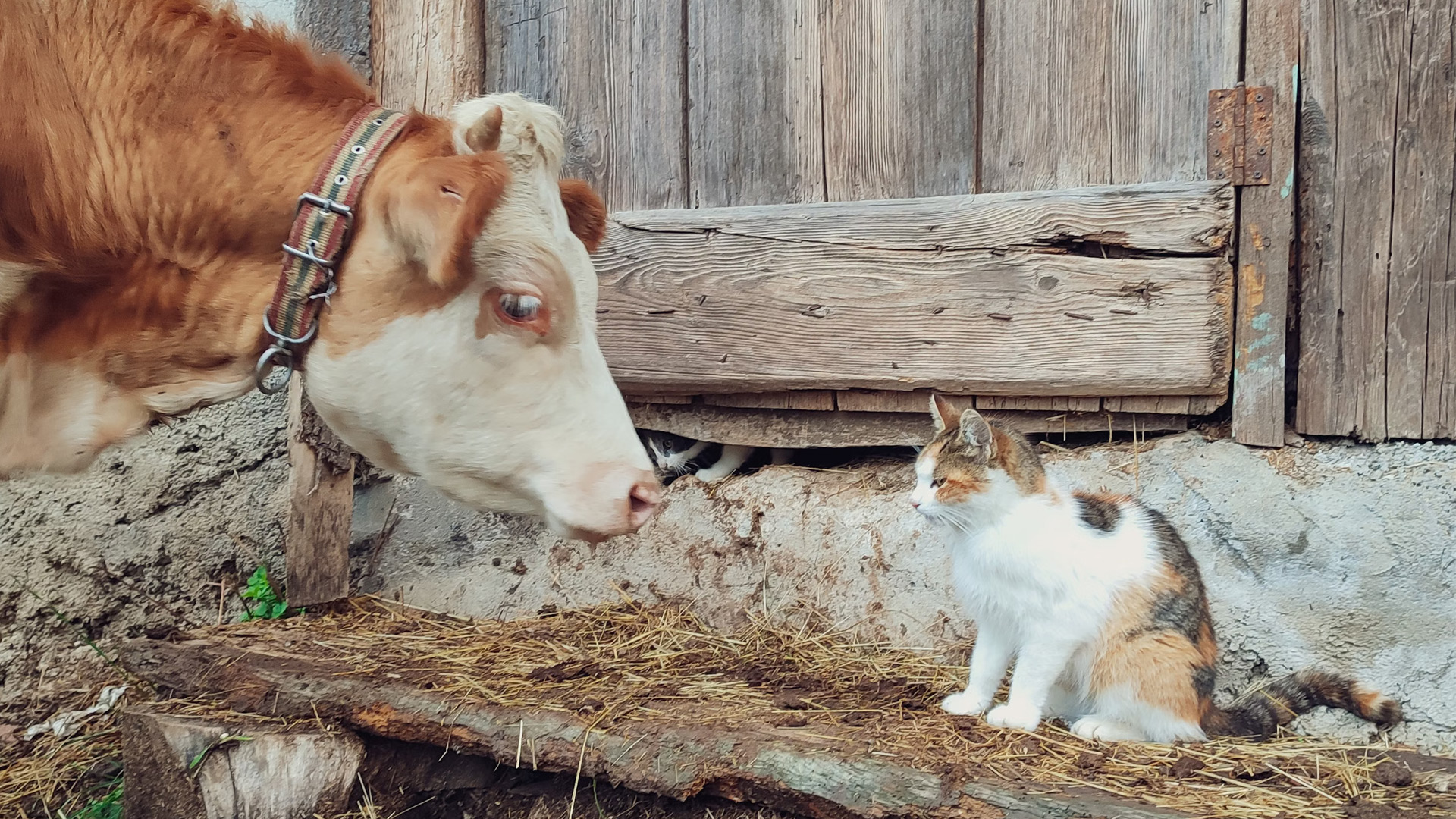
Nature is often portrayed as a battlefield where every species competes for food, territory, and survival. Yet some of the most successful relationships in the natural world are built on cooperation.
Across oceans, forests, and deserts, animals regularly interact with members of other species in ways that benefit both sides. Interestingly, from an evolutionary perspective, this cooperation should be difficult. This is because animals belonging to different species do not share the same instincts, sensory abilities, or interests.
One animal may communicate through scent, another through movement, and a third through sound. Also, misunderstandings can be dangerous. A potential partner might instead become a competitor, a parasite, or even a predator.
“This gap in our understanding is noteworthy because animal interspecies cooperation combines features of multiple interaction types, sharing some challenges with broader mutualisms, such as cross-species communication and increased risk of harm or exploitation,” the authors of a new study note.
A new study examines how species overcome these obstacles through the exchange of information. The study authors argue that cues and signals help animals identify potential partners, assess their motivation to cooperate, and judge how reliable they are likely to be.
“Cues and signals are likely to be particularly crucial in animal interspecies cooperation, a specific form of mutualism that depends on real-time, interactive behavioural coordination to secure mutual benefit,” the study authors added.
By bringing together evidence from many forms of interspecies cooperation, the study provides a framework for understanding how communication helps make these unlikely partnerships possible.
Reducing risk and uncertainty in animal cooperation
The study emerged from a large interdisciplinary effort involving 58 researchers working across fields including animal behavior, ecology, evolution, anthropology, and linguistics.
Rather than focusing on a single species or ecosystem, the team examined evidence from a broad range of cooperative relationships to understand the common principles that allow different species to coordinate their actions.
What interested the researchers was not the details of any one partnership but a challenge common to all of them, which was uncertainty. Whenever individuals from different species interact, they must somehow determine whether cooperation is worth the risk.
The researchers found that many cooperative systems contain mechanisms that reduce this uncertainty. These can include visual displays, sounds, chemical compounds, body postures, or repeated behavioral patterns.
Regardless of the form they take, their purpose is similar—they provide information that allows one species to anticipate the actions of another.
Seen this way, communication functions less like a conversation and more like a mechanism for reducing uncertainty. Signals can reveal who a partner is, whether it intends to cooperate, and how predictable its behavior is likely to be. By making behavior more predictable, they reduce the risks that would otherwise discourage cooperation.
One example comes from the partnership between greater honeyguide birds and humans in parts of Africa. The birds use calls and behaviors that help direct people toward wild bees’ nests, while humans respond with their own vocal signals during the search. As a result, both sides gain access to resources they would struggle to obtain as efficiently on their own.
From accidental clues to biological languages
The study also explores how communication systems may evolve over time. The researchers distinguish between cues and signals. A cue provides information to another species but did not evolve specifically for communication.
A signal, in contrast, has been shaped by evolution because it influences how another organism responds. However, the study authors note, “signals can evolve from cues.”
The study points to interactions involving brightly colored cleaner fish on coral reefs as an example of how information can facilitate cooperation. Their distinctive appearance and behavior help client fish recognize them as cleaning partners rather than prey.
According to the researchers, characteristics that reliably convey useful information can become increasingly important if other species benefit from responding to them. Over time, natural selection may strengthen these interactions.
Individuals who provide clearer information gain more cooperative opportunities, while those who interpret the information more accurately gain greater benefits. The authors suggest that this process can lead to coevolution, with one species becoming better at providing information and the other becoming better at interpreting it.
In this way, what begins as an incidental cue can gradually develop into a more specialized signal that helps coordinate cooperation between species. The researchers also found that these communication systems are not always fixed. Some appear remarkably consistent, while others vary across environments and populations.
This flexibility suggests that communication between species can be shaped not only by evolution but also by local ecological conditions and, in some cases, learning.
The hidden rules of cooperation
According to the study authors, “animal interspecies cooperation provides a powerful opportunity to investigate the evolution of communication.”
By examining how species exchange information to coordinate their actions, the researchers argue that communication may be one of the hidden foundations of cooperation in nature.
By comparing interspecies cooperation with communication systems found within species and in other mutualistic relationships, the authors provide a broader framework for understanding how cooperation emerges and persists.
At the same time, the researchers emphasize that many forms of interspecies communication remain poorly understood. This is because most studies have focused on a relatively small number of well-known examples, leaving many species and ecosystems unexplored.
Future work will investigate how signals originate, how they vary across populations, and how communication systems can evolve between cooperating species.
For now, the study’s message is simple. Cooperation does not require animals to share a common language. It requires enough information for each partner to recognize, interpret, and respond to the other. In nature, this ability may be what transforms a risky encounter into a lasting partnership.
The study is published in the journal Animal Behavior.