Login

New Franco-German armored tank incorporates unmanned turret and drone systems
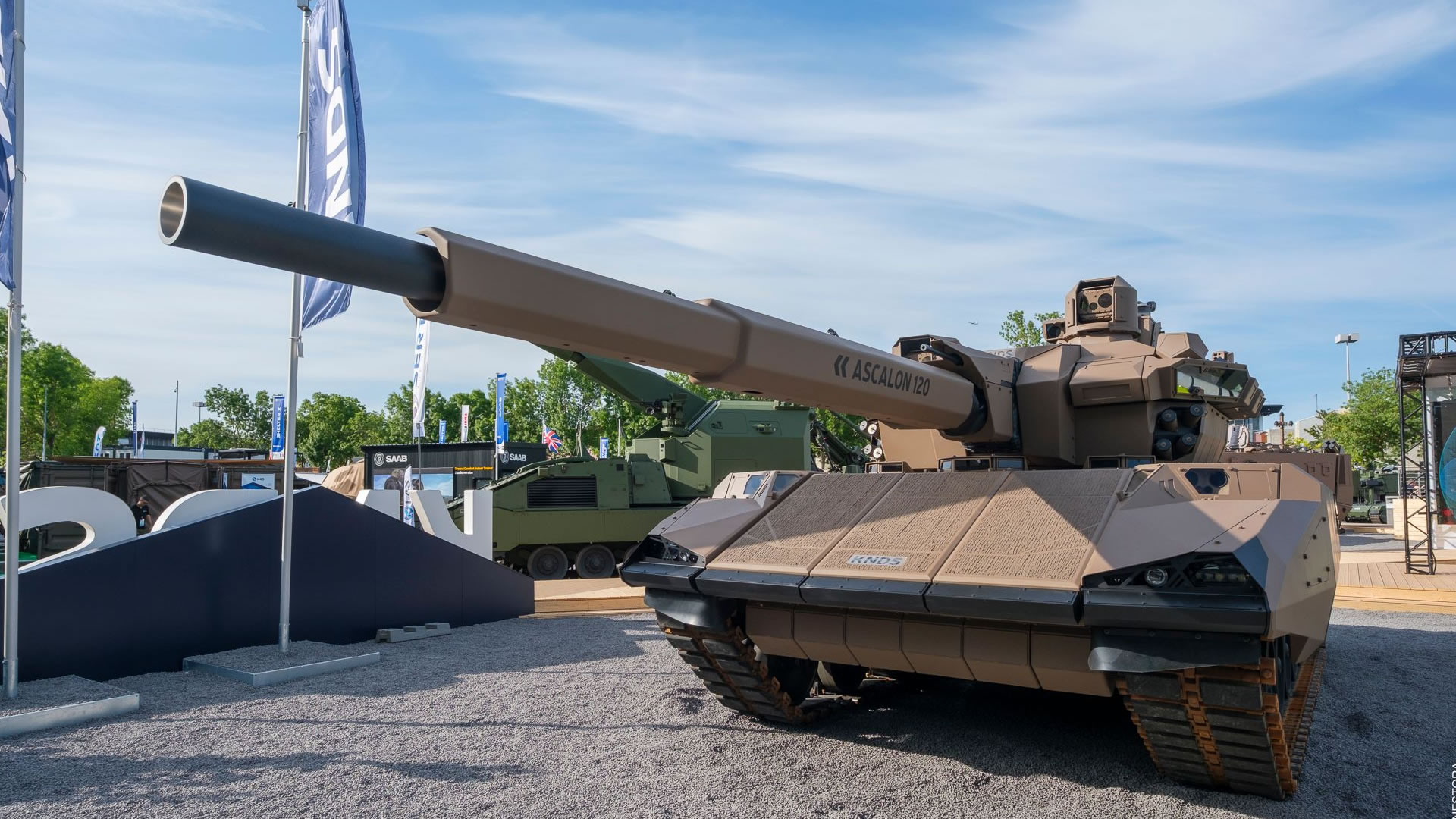
Franco-German defense giant Krauss-Maffei Wegmann and Nexter (KNDS) have unveiled a new main battle tank for European customers at the 2026 Eurosatory trade show.
KNDS, in case you are unaware, is a conglomeration of the companies behind the German Leopard 2 and French Leclerc main battle tanks (MBTs). Today, they are a “pan-European land defense company, uniting over 11,000 employees with a €4.4 billion in revenue and a backlog of €33.1 billion in 2025.”
The new tank, called the CAPINT (“Intermediate Capability”), is effectively a Leopard 2A8 hull with a futuristic unmanned turret, integration with robotic vehicles, and drones.
According to KNDS, this will be something of a stopgap for France’s planned Main Ground Combat System (MGCS), which is taking a long time to arrive. So, the idea goes, instead of waiting until 2040, this new tank should be deployable during the 2030s.
Its chassis, reportedly, offers the new tank proven mobility and armor, while also benefiting from the existing logistics chain and lower development risk. It also provides the tank with a 1,500 hp (1,119 kW) diesel engine, which is the same power class as current Western MBTs.
The power plant might also be supplemented with battery packs (to enhance the onboard energy storage) along with an associated electric drive train to reduce the infrared and acoustic signatures.
KNDS’ new toys for Europe
The most interesting part is the crewless turret. Unlike conventional MBT turrets, no crew sits inside the turret itself. Instead, it is remotely operated, allowing the crew to remain protected within the hull.
As no crew needs to be present, this enables the turret to be smaller and lighter. But this doesn’t mean the tank will be without serious firepower.
According to reports, the tank will come with a KNDS ASCALON 120 mm smoothbore gun with an autoloader. This makes it compatible with the current NATO standard ammunition stockpiles.
KNDS does note, however, that this can be upgraded to larger calibers in the future without the need to redesign the entire turret. The scalable design also gives KNDS room to introduce larger calibers in the future, should battlefield requirements change.
All fairly standard so far, but an interesting wrinkle in the design is plans to give it some drone buddies. Robotic vehicles and drones will fight alongside the tank, forming a manned-unmanned team. In this configuration, the tank will act as an armored command platform.
Few concrete details have been released, but this will likely include reconnaissance drones to scout ahead and counter-drone systems for protection. The counter drone systems are likely to employ a mix of hard kill and soft kill means. These might include active protection systems and tube-launched interceptor drones.
Next iteration of Leopard 2 A-RC 3.0 study
Separately, KNDS also presented a further development of its fully self-financed study on Leopard 2 A-RC 3.0. It features a remote-controlled turret and a three-man crew.
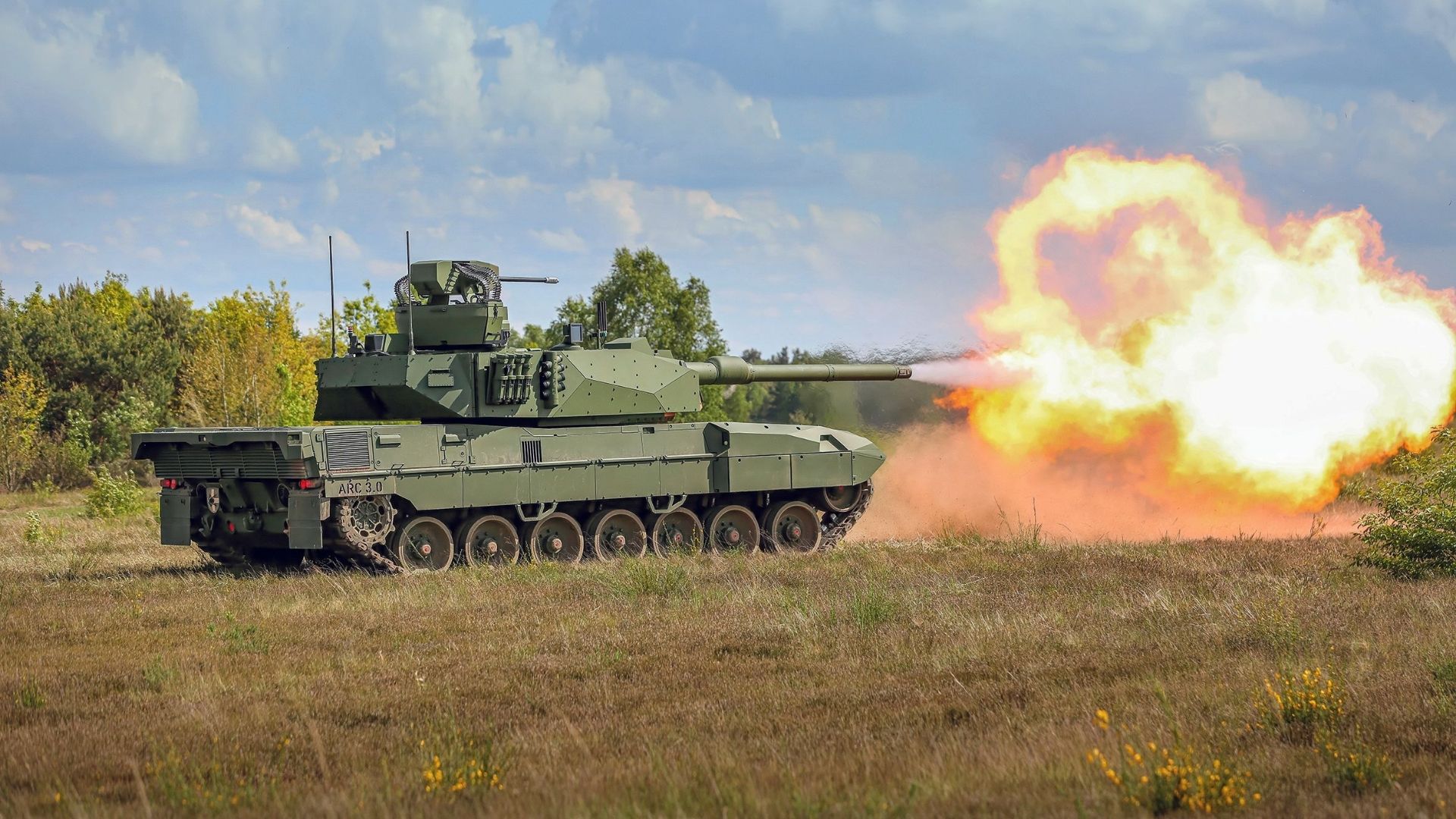
The concept revolves around an innovative, unmanned turret with its unique weapon mounting, this prevents the weapon from dipping into the vehicle, thus creating a possibility of freeing up space inside the hull.
The compact crew arrangement also reduces the armor protection volume, leading to weight reduction. This results in an improved power-to-weight ratio, which in-turn increases tactical mobility.
The Leopard 2 A-RC 3.0 can integrate different gun calibers from 120 mm, 130 mm, to 140 mm. It also incorporates an advanced secondary armament to counter the persistent threat of drone swarms.