❌

Reading view

The reason no human being has walked on the Moon in more than half a century is not that humanity lost the capability to get there — it is that humanity lost the reason, in the moment the Cold War goal of beating the Soviet Union to the lunar surface had finally been accomplished and the political momentum behind Apollo evaporated
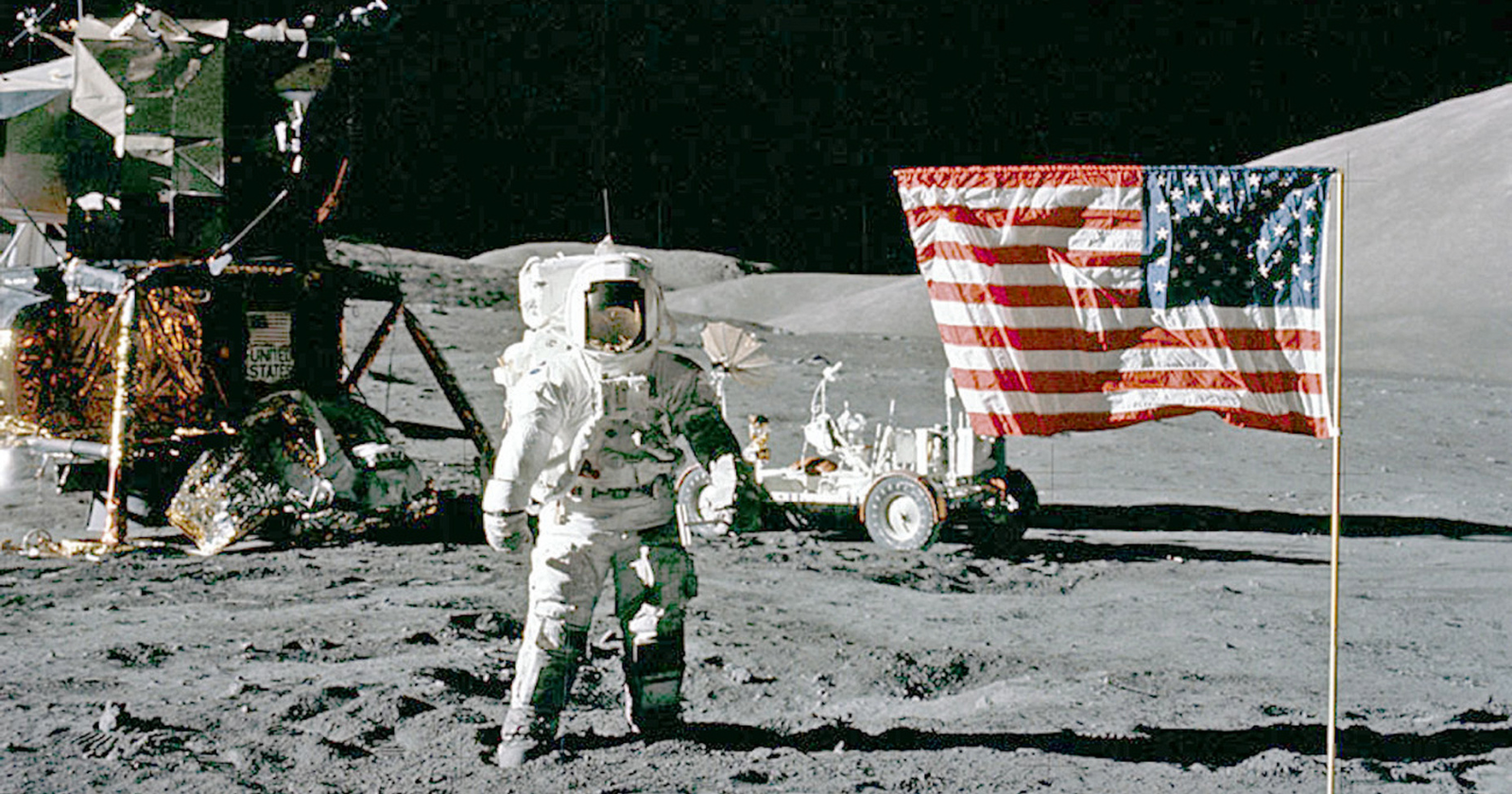
The popular framing of the question — why has no human walked on the Moon since 1972? — usually proceeds as though there is some technical answer to be found. The rockets must have stopped working. The engineering must have been forgotten. The expertise must have been lost in the half-century since Apollo 17 splashed down. The actual answer is substantially simpler and substantially less satisfying. The Apollo programme was not cancelled because it stopped being possible. It was cancelled because it stopped being useful for what it had been built to accomplish. The capability question is a downstream consequence of a political question that was settled in the early 1970s, when the American government decided that the goal of beating the Soviet Union to the Moon — having been achieved on 20 July 1969 with Apollo 11 — was no longer worth paying for, and that the remaining momentum of the Apollo programme should be redirected toward other priorities.

According to the Smithsonian National Air and Space Museum’s editorial reconstruction of the Apollo cancellations, the decisions to end the lunar programme were made in a sequence that began almost immediately after Apollo 11’s success. By December 1969 — five months after Neil Armstrong’s first footstep — one of President Richard Nixon’s top aides told NASA that “the President says that he doesn’t have enough money within the next couple of years and must accept limitation of [space] activity” and that Nixon “did not see the need to go to the moon six more times.” On 4 January 1970, the Apollo 20 mission was formally cancelled. In September 1970, Apollos 18 and 19 followed. The remaining missions — Apollos 14 through 17, the latter three already in advanced preparation — were allowed to proceed and were completed by December 1972. The Saturn V production line was shut down in 1970. The remaining unflown Saturn Vs were sent to museums, where they remain as the largest functional rockets ever built, permanently grounded.

Why the political momentum collapsed

The Kennedy speech of 25 May 1961 — “I believe that this nation should commit itself to achieving the goal, before this decade is out, of landing a man on the moon and returning him safely to the earth” — was framed in terms of national capability and human aspiration, but the actual policy logic that funded it was strategic competition with the Soviet Union. The Soviets had launched Sputnik in 1957, put Yuri Gagarin into orbit in April 1961 (six weeks before Kennedy’s speech), and were widely perceived to be ahead of the United States in space capability. The Apollo programme was, in essential terms, a national project to recover technological prestige from a position of perceived inferiority. It was funded at scales that no comparable peacetime project before or since has matched — peaking at approximately 4.4 percent of the entire US federal budget in 1966.

The strategic logic for that funding evaporated essentially the moment Armstrong stepped off the lunar module ladder in July 1969. The Soviets, by 1969, had already effectively conceded the lunar race — their N1 super-heavy rocket failed in four successive test launches between 1969 and 1972, and the Soviet crewed lunar programme was wound down quietly. There was no longer any external competitor to beat. There was no longer any strategic prestige to be gained from continued lunar landings. And the public, which had supported Apollo as a Cold War project, had never developed the underlying enthusiasm for lunar exploration as a scientific or exploratory enterprise that would have been required to sustain funding in the absence of the Cold War rationale. Polls throughout the late 1960s consistently showed that a majority of Americans thought Apollo was not worth the cost, even at the peak of the programme’s popularity.

The internal NASA decisions

Per The Planetary Society’s analysis of how Nixon shaped the post-Apollo NASA, the popular blame placed on Nixon for ending Apollo is partially deserved but oversimplifies the institutional dynamics. NASA itself, under Administrator Thomas Paine, agreed to terminate Saturn V production and cancel later Apollo missions in order to free up budget for the post-Apollo programmes the agency wanted to pursue — an experimental space station that would become Skylab, and a reusable spacecraft that would become the Space Shuttle. The choice was framed within NASA as a redirection of resources from the now-completed lunar landing programme toward new objectives, rather than as an abandonment of human spaceflight. The institutional case for shutting down the Saturn V line was that it was no longer needed for the missions the agency intended to pursue, and that maintaining a manufacturing line for a rocket the agency was not going to use would have consumed budget that could be spent on the Shuttle.

That decision turned out to be one of the more consequential institutional choices of the post-Apollo era. The Shuttle programme that NASA selected as its successor to Apollo was, by every available assessment, a substantially less ambitious vehicle than what the Saturn V could have supported, while also being substantially more expensive per launch than Apollo had been. The Shuttle operated from 1981 to 2011, completed 135 missions, lost two crews and 14 astronauts in catastrophic accidents, and never carried humans beyond low Earth orbit. The capability that had allowed twelve men to walk on the Moon between 1969 and 1972 was, by the time the last Saturn V was sent to a museum in the mid-1970s, no longer institutionally sustainable. Restarting it would require essentially rebuilding the entire programme from scratch — which is what NASA’s Artemis programme has, in fact, been attempting to do for the past several years, at substantial cost and with substantial delays.

What “lost capability” actually means

As covered by AmericaSpace’s detailed history of the Apollo cancellations, the popular claim that humanity “lost the capability” to return to the Moon is partially true and partially misleading. The engineering knowledge from Apollo was documented and survives in archives, technical reports, and the institutional memory of the relatively small number of engineers from the era who are still alive. The capability that was lost is not the knowledge itself but the institutional infrastructure that supported it: the Saturn V manufacturing line, the supplier networks, the specialised workforce, the test facilities, and the political-economic configuration that allowed roughly 400,000 people working across NASA and its contractor network to be mobilised on a single objective with a national-priority budget. None of these things are recoverable in their original form. They have to be rebuilt, which is essentially what the Artemis programme is now doing, and which is partly why the rebuild has taken decades and substantially exceeded its original budget.

The deeper point is that the question “why has no one been back to the Moon in fifty-three years?” has the same answer as the question “why was anyone there in the first place?” The Apollo programme was a Cold War project that happened to produce, as a byproduct, the most ambitious feat of exploration in human history. When the Cold War rationale for the project ended, the project ended. The capability that had been built for the project was allowed to decay because the institutional reasons for maintaining it had decayed first. The current revival of crewed lunar exploration — through Artemis, through China’s parallel programme, through the commercial-spaceflight ecosystem that has emerged over the past decade — is taking place because new institutional reasons have emerged: geopolitical competition with China, commercial interest in lunar resources, scientific interest in the lunar south pole, and a renewed sense in several capitals that human presence beyond Earth orbit is strategically valuable. Whether the new reasons will sustain a sustained human presence on the Moon, or whether the next round of lunar landings will be followed by another half-century pause, depends on whether the institutional infrastructure being built now is durable enough to survive the eventual evaporation of whatever specific political momentum is currently funding it. The Apollo experience suggests that this is not a question to be answered with technological optimism.

The post The reason no human being has walked on the Moon in more than half a century is not that humanity lost the capability to get there — it is that humanity lost the reason, in the moment the Cold War goal of beating the Soviet Union to the lunar surface had finally been accomplished and the political momentum behind Apollo evaporated appeared first on Space Daily.
  •  

Approximately 120 private civilians have now flown to space aboard commercial rockets — roughly one-sixth of all the human beings who have ever left Earth — and the rate at which citizens are reaching space is now accelerating faster than the rate at which national space programs are sending professional astronauts

For the first forty years of human spaceflight, getting into space required being a professional astronaut or cosmonaut. The selection processes were intensely competitive, the training programmes took years, the candidates were chosen from elite military pilot or scientific backgrounds, and the small number of people who eventually made it through the filtering and onto a launch vehicle were essentially all employees of the few national space agencies that operated launch programmes. From 1961 through 2001, approximately 400 individuals went to space, every one of them a professional. The first paying civilian, the American businessman Dennis Tito, finally reached the International Space Station in April 2001 by purchasing a seat on a Russian Soyuz for approximately $20 million. Six more spaceflight participants followed over the next eight years, all via the same Russian-operated route. Then the door closed. From 2009 to 2021, no private citizen reached space at all. The institutional pipeline that had briefly opened during the Russian post-Soviet financial squeeze closed again as the ISS partnership stabilised.

According to a detailed industry flight log of every commercial space tourism mission to date, the reopening of that door in 2021 was not gradual but discontinuous. Within a single ten-week period — Richard Branson on Virgin Galactic’s VSS Unity on 11 July 2021, Jeff Bezos on Blue Origin’s New Shepard on 20 July 2021, and Jared Isaacman’s all-civilian Inspiration4 mission on SpaceX’s Crew Dragon in September 2021 — three different commercial providers began operating crewed flights for paying customers. The civilian-to-space pipeline that had been closed for twelve years suddenly had three independent operational paths. The cumulative number of private civilians flown to space, which had been seven for over a decade, began to climb rapidly. By the end of 2022 it had passed twenty. By the end of 2024 it had passed eighty. By early 2026 the figure had reached approximately 120, and despite Blue Origin’s January 2026 decision to pause New Shepard flights to focus on lunar missions, the underlying trajectory has continued.

The arithmetic of the shift

The total number of human beings who have left Earth’s atmosphere across the entire history of spaceflight is, by current estimates, approximately 700. NASA has contributed roughly 360 of these. The Soviet and subsequent Russian programmes have contributed approximately 135. The European Space Agency, JAXA in Japan, the Canadian Space Agency, the Chinese taikonaut programme, and several smaller national programmes account for most of the rest. The 120 commercial civilians who have flown since 2021 represent approximately 17 percent of this cumulative total — roughly one in six of every person who has ever crossed into space, all of them in the past five years, almost none of them with the professional training that defined every previous generation of spacefarer.

The rate dynamics are the more striking part. Per CBS News’s coverage of the broader commercial spaceflight phenomenon, the major national astronaut corps have been operating at roughly stable launch cadences for the past decade — NASA sends approximately 8 to 12 astronauts to the ISS per year, Roscosmos sends roughly 4 to 6 cosmonauts, the Chinese taikonaut programme launches a similar number to its Tiangong space station, and ESA contributes a handful through its partnership arrangements. The total professional astronaut launch rate sits at roughly 25 to 30 humans per year, and has been at this level for most of the post-Shuttle era. The commercial civilian launch rate, by contrast, was effectively zero from 2009 to 2021 and has been climbing rapidly since. Blue Origin’s New Shepard alone flew approximately 30 civilians across multiple missions in 2024-2025. Virgin Galactic flew another seven commercial missions before pausing operations in 2024 for an upgraded vehicle. SpaceX flew the Polaris Dawn mission (four civilians) in September 2024 and continues operating crewed Crew Dragon flights for paying customers. Multiple Axiom Space missions have carried paying civilians to the ISS. The total commercial civilian launch rate for 2024-2025 substantially exceeded the professional astronaut rate.

What civilian flights actually involve

The two halves of the commercial spaceflight industry — suborbital and orbital — are different enough that they are essentially separate products. Suborbital flights, operated by Blue Origin (New Shepard) and Virgin Galactic, briefly cross the boundary of space (the internationally recognised Kármán line at 100 kilometres altitude, or the US-recognised 80 kilometres) and return immediately. The full flight, from launch to landing, typically lasts about 10 to 12 minutes. Passengers experience approximately 3 to 6 minutes of weightlessness at apogee, see the curvature of Earth and the blackness of space through windows, and then re-enter and land. Ticket prices range from approximately $200,000 to $600,000 depending on operator. As reported by Mexico Business News’s industry overview, suborbital flights account for the substantial majority of commercial civilian spaceflights to date by passenger count.

Orbital flights are an entirely different proposition. SpaceX’s Crew Dragon and Axiom Space’s missions to the International Space Station place passengers into sustained low Earth orbit, with mission durations typically ranging from several days to several weeks. Ticket prices for orbital missions start at approximately $55 million and can exceed $200 million for chartered Crew Dragon flights. The 2024 Polaris Dawn mission, funded by Jared Isaacman and operated by SpaceX, reached an altitude of 1,400 kilometres — the highest crewed Earth orbit since the Apollo programme — and included the first commercial spacewalk in history. The orbital civilian flights are substantially rarer than suborbital ones (fewer than 20 total individuals to date) but represent the more technologically ambitious frontier of the commercial spaceflight industry.

What the trend means

As covered by a March 2026 Yahoo News analysis of Blue Origin’s decision to pause New Shepard operations, the commercial spaceflight industry is now mature enough that operational decisions by individual providers (Virgin Galactic pausing for vehicle upgrades, Blue Origin pausing to redirect engineering resources to lunar missions) substantially affect industry-wide launch cadence but do not threaten the basic existence of the category. Multiple additional providers are at various stages of operational development: Vast’s Haven-1, a single-module commercial space station, is targeted for launch on a SpaceX Falcon 9 in May 2026, with the company aiming to become the world’s first standalone commercial space station operator; Sierra Space’s Dream Chaser spaceplane is in late-stage development; and Axiom Space’s commercial space station is intended to begin operations and eventually replace the ISS by 2030. Virgin Galactic’s Delta-class vehicle, designed for monthly commercial flights, is targeted to enter operations in late 2026.

The structural shift that the cumulative 120 commercial civilians represent is not yet visible at the level of cultural recognition. Most people, asked how many private citizens have been to space, would probably guess a number an order of magnitude lower. The transition from spaceflight as an exclusively professional activity to spaceflight as a commercial product purchasable by paying customers has, by every available indication, now happened — quietly, gradually, and faster than most observers anticipated. The next question is whether the trajectory continues. If the rate-acceleration of the past five years extends through the rest of the decade, the cumulative number of private civilians in space will, by 2030, substantially exceed the cumulative number of professional astronauts who flew across the entire 60-year history of spaceflight before commercial operations began. Whether that crossing point gets noticed at the time, or whether it gets registered only in retrospect like most of the structural shifts of the past several years, is a separate question. The numbers themselves are no longer particularly contestable.

The post Approximately 120 private civilians have now flown to space aboard commercial rockets — roughly one-sixth of all the human beings who have ever left Earth — and the rate at which citizens are reaching space is now accelerating faster than the rate at which national space programs are sending professional astronauts appeared first on Space Daily.

  •  

An eight-day mission to the International Space Station ended 286 days later in March 2025, when NASA astronauts Suni Williams and Butch Wilmore finally returned aboard a SpaceX capsule — abandoning the Boeing Starliner they had arrived in after it developed thruster problems too serious to fly them home

When Suni Williams and Butch Wilmore packed for their trip to the International Space Station in early June 2024, they packed for approximately a week. The mission profile was eight to ten days. The clothes they brought, the personal items they brought, the level of mental preparation they brought were all calibrated to a trip about the length of a tropical vacation. Two hundred and eighty-six days later — having lived aboard the ISS for the better part of a year, having become full members of two consecutive Expedition crews, having watched their original spacecraft return to Earth without them in September because NASA had concluded it was no longer safe to ride home in — they finally landed in the Gulf of Mexico aboard a SpaceX capsule on 18 March 2025. The eight-day mission had, by then, become the longest single accidental extension of a human spaceflight in NASA history, and the most public engineering crisis the Boeing Commercial Crew Program had yet encountered.

According to Space.com’s coverage of the Starliner thruster crisis, the immediate problems began as Starliner approached the ISS for docking on 6 June 2024. Five of the capsule’s 28 maneuvering thrusters, mounted on the service module, began misfiring or shutting down entirely. Helium leaks were detected in the propulsion system manifolds. The docking was eventually completed, but the underlying questions about the vehicle’s ability to safely undock from the station and execute the precise series of deorbit burns required to bring the astronauts home became, in subsequent weeks, increasingly serious. The original plan had assumed Starliner would carry Williams and Wilmore back to Earth within ten days of arrival. By late July 2024, NASA and Boeing engineers were still trying to determine whether the propulsion problems could be safely characterised, much less corrected. The astronauts remained aboard the ISS while ground engineers ran simulations.

The decision

The formal decision came on 24 August 2024. Per NASA’s official announcement of the uncrewed-return decision, the agency concluded that bringing Williams and Wilmore home aboard Starliner posed risks it was not willing to accept. The specific failure mode that worried engineers most concerned Teflon seals inside the thrusters that appeared to be degrading and bulging when the thrusters fired at high temperatures — a problem that could not be fully characterised because the service module containing the affected thrusters was scheduled to burn up during atmospheric reentry, eliminating the possibility of post-flight inspection. The agency’s administrator at the time, Bill Nelson, summarised the rationale: “Spaceflight is risky, even at its safest and most routine. A test flight, by nature, is neither safe, nor routine.” Starliner would return to Earth uncrewed. Williams and Wilmore would be folded into the ISS’s regular crew rotation and would eventually come home aboard a SpaceX vehicle.

Starliner undocked from the ISS on 6 September 2024, executed its deorbit burn successfully, and landed at White Sands, New Mexico — without crew, without serious incident, and without resolving any of the underlying engineering questions about whether it could have safely brought Williams and Wilmore home if it had been required to. Three weeks later, on 28 September 2024, a SpaceX Crew Dragon capsule launched to the ISS carrying NASA astronaut Nick Hague and Russian cosmonaut Aleksandr Gorbunov. Two of the four seats were left intentionally empty, reserved for Williams and Wilmore’s eventual return. That return would not happen for another six months.

What the 286 days actually involved

The “stranded” framing that dominated media coverage of the situation became, over the subsequent months, a source of mild frustration for the astronauts themselves. Williams and Wilmore were not stranded in the literal sense. They were absorbed into the ISS’s standard crew rotation as members of Expedition 71 and then Expedition 72. They conducted scientific research. They performed maintenance on station systems. Williams became ISS commander in September 2024 and completed multiple spacewalks during her extended mission, including one that pushed her cumulative spacewalk time to a record for a female astronaut. Both Williams and Wilmore have repeatedly described their extended stay in terms that emphasise their professional engagement with the work rather than any sense of isolation or distress.

Williams’s total accumulated spaceflight time across her career, by the time of her March 2025 return, reached 608 days — the fourth-highest cumulative total of any NASA astronaut and the highest of any NASA woman. The 286-day mission itself sits comfortably within the range of routine modern ISS expeditions; Scott Kelly’s 340-day mission in 2015-2016 was longer, and Frank Rubio’s 371-day mission in 2022-2023 was longer still. The physiological recovery required upon return was substantial but within standard parameters for long-duration ISS missions. Bone density loss, muscle atrophy, cardiovascular deconditioning, and the cluster of vision-related changes documented in long-duration spaceflight all applied to both astronauts, but the rehabilitation protocols were well-established and the recovery proceeded along expected lines.

What the mission means for Boeing

The Starliner programme, by every available measure, is in substantial trouble. As reported by CNBC’s coverage of the March 2025 return, Boeing’s $4.2 billion Commercial Crew Program contract with NASA — signed in 2014, alongside a smaller $2.6 billion contract awarded to SpaceX — has now produced exactly one crewed flight that failed to return its crew aboard its own vehicle, after more than a decade of development delays, two uncrewed test flights (one of which also failed to reach the ISS), and multiple billion-dollar cost overruns absorbed by Boeing itself. SpaceX’s competing Crew Dragon, by contrast, has completed eleven operational crewed missions to the ISS since its first crewed flight in May 2020, has carried more than fifty astronauts safely to and from the station, and has now also rescued the two astronauts that Boeing’s vehicle was unable to return.

Whether Starliner ever flies humans again remains, as of mid-2026, an open question. As documented in NASA’s official return-announcement statement, the agency has not committed to a specific date for the next Starliner mission, crewed or uncrewed. The engineering questions about the service-module thrusters remain partially unresolved because the affected hardware no longer exists. Boeing has indicated that it intends to address the propulsion issues in subsequent vehicles and that it remains committed to the Commercial Crew Program. NASA, for its part, has indicated that it still wants a second commercial crew provider as a backup to SpaceX. Whether the second provider continues to be Boeing, and whether the next Starliner flight occurs in 2026, 2027, or later, will depend on technical, financial, and political decisions that the agency has not yet made publicly. The 286 days that Williams and Wilmore spent in orbit after their eight-day mission ended are, in this respect, a piece of operational evidence whose institutional consequences are still in the process of being worked out.

The post An eight-day mission to the International Space Station ended 286 days later in March 2025, when NASA astronauts Suni Williams and Butch Wilmore finally returned aboard a SpaceX capsule — abandoning the Boeing Starliner they had arrived in after it developed thruster problems too serious to fly them home appeared first on Space Daily.

  •  

The longest continuous spaceflight in history — 437 days aboard the Russian Mir space station, completed by cosmonaut Valeri Polyakov in 1995 — was specifically conducted to prove that a human being could survive a round-trip mission to Mars, in a piece of human endurance that has been waiting unused on a shelf for three decades

The record sits at the top of every list of human spaceflight endurance achievements, has been there since 1995, and is currently held by a man who has been dead for three years. Valeri Polyakov, born in Tula, Russia in 1942, trained as a medical doctor specialising in space medicine before joining the Soviet cosmonaut corps in 1972, and spent the better part of his subsequent career attempting to answer a single question with his own body: whether a human being could survive, biologically and psychologically, the round-trip duration of a flight to Mars. His first flight, in 1988-1989, lasted 240 days — at the time among the longest space missions ever attempted. His second flight, launched on 8 January 1994 aboard Soyuz TM-18, was specifically planned to extend beyond the projected duration of a Mars mission. He stayed in space for 437 days. He returned on 22 March 1995. No human being has stayed in space continuously for longer since.

According to Astronomy.com’s 2022 obituary of Polyakov following his death at age 80, the specific scientific purpose of the 437-day mission was Mars-mission validation. The transit time to Mars on a standard low-energy trajectory is approximately 7 to 9 months in each direction; combined with a surface stay of approximately 1 year (the typical “long-stay” mission profile), the total mission duration for a crewed Mars expedition would be approximately 14 to 18 months. Polyakov’s 437 days — slightly over 14 and a half months — covers the round-trip duration of the shortest plausible Mars mission profile. The Soviet (later Russian) space medicine community had been planning a Mars mission, in some form, since the 1960s; Polyakov’s flight was the medical proof-of-concept that the human body could endure the required time in microgravity.

What the mission actually required

Polyakov’s working environment for those 437 days was the Mir space station — a Soviet-era orbital outpost launched in 1986, roughly the size of a school bus, with a total internal working volume of approximately 350 cubic metres distributed across multiple modules connected by narrow passageways. By 1994, Mir was already eight years old and showing signs of wear. The cooling system was unreliable. The toilet had recurring problems. The communications systems were limited by the standards even of the time. Polyakov’s living conditions were substantially harsher than the conditions available to modern astronauts on the International Space Station, which has approximately three times the pressurised volume of Mir and substantially more comfortable accommodations across essentially every dimension. Polyakov adapted by establishing a strict daily routine: approximately two hours of mandatory exercise (a mix of treadmill running and resistance training), scientific work, medical self-experimentation, communications with ground controllers, and disciplined sleep schedules.

As reported by RocketSTEM’s coverage of the mission, Polyakov’s medical training proved decisive. He was, in essential respects, both the experimental subject and the experimenter. He documented in detail the physiological changes his body underwent over the 14-and-a-half months: bone density loss in weight-bearing skeletal regions at approximately 1 to 2 percent per month, muscle atrophy despite his exercise protocol, cardiovascular changes including some loss of cardiac muscle mass, and the cluster of vision-related changes that have since been named Spaceflight-Associated Neuro-ocular Syndrome. He tested countermeasures against these changes, refined the exercise protocols in real time, and produced the medical baseline against which all subsequent long-duration spaceflight has been measured.

The landing

The moment that became the iconic image of the mission was not the launch, not any specific event during the 14 months in orbit, but the landing itself. As described in Britannica’s biographical entry on Polyakov, when the Soyuz TM-20 capsule containing Polyakov touched down on the steppes of Kazakhstan on 22 March 1995, ground crews approached with stretchers, fully expecting that a man who had spent 14.5 months in microgravity would be unable to support his own weight. Polyakov refused the stretcher. He climbed out of the capsule on his own, walked the short distance to a nearby lawn chair, and sat down. The gesture was deliberate. He had spent the entire mission, and arguably his entire career, attempting to demonstrate that long-duration spaceflight did not necessarily produce a human being too physiologically broken to function on arrival. Walking himself from the capsule to the chair was the visible answer.

His first words to the assembled press, in Russian, translated to the equivalent of: “We can fly to Mars.” The statement was not a metaphor or an aspirational quote. It was a clinical assessment from a doctor who had just personally completed the experiment.

Why the record still stands

Per Space.com’s history of ultra-long-duration spaceflight, no human being has stayed in space continuously for as long as Polyakov did in any of the 31 years since his return. NASA’s Scott Kelly came within approximately three months, completing 340 days aboard the ISS in 2015-2016 as part of the agency’s “Year in Space” study. NASA’s Christina Koch reached 328 days in 2019-2020. NASA astronaut Frank Rubio set the American single-mission record at 371 days during an unplanned mission extension in 2022-2023. The current cumulative space-time record is held by the Russian cosmonaut Oleg Kononenko, who has accumulated approximately 1,110 days across five separate missions — but no individual mission of his, or any other cosmonaut’s, has exceeded Polyakov’s 437 consecutive days.

The reason the record has not been broken is not that humans cannot endure longer missions — Polyakov demonstrated that they can. It is that the modern crewed-spaceflight programmes have, for various operational, political, and risk-management reasons, settled on six-month rotations as the standard ISS expedition duration, with occasional yearlong missions conducted as specific scientific experiments. The radiation exposure accumulated during longer missions, in low Earth orbit, is substantial; over the full lifetime of a cosmonaut or astronaut, multiple yearlong missions are generally not considered medically advisable. Polyakov accepted this risk in 1994 because the mission was designed to deliver a specific scientific result that no shorter flight could provide. The result was delivered. The result has not been substantially improved upon since.

The peculiar feature of the current moment is that Polyakov’s mission was conducted to validate human Mars exploration, and 31 years later, no human being has yet flown to Mars. The medical baseline is in place. The proof of biological feasibility is on the books. The next step — actually sending a crew to Mars — has been planned, replanned, postponed, and refigured by multiple space agencies across three decades, with the leading current candidate (SpaceX’s Starship-based architecture) targeting the early 2030s. Whether the eventual crew on the first Mars mission will benefit directly from the data Polyakov collected, or whether the record-holder will quietly remain the holder of a piece of human endurance that was waiting for a use case that never materialised, is one of the open questions of the next decade. The 437 days are sitting on a shelf. The doctor who walked himself off the Soyuz in March 1995 is no longer alive to see whether they get used.

The post The longest continuous spaceflight in history — 437 days aboard the Russian Mir space station, completed by cosmonaut Valeri Polyakov in 1995 — was specifically conducted to prove that a human being could survive a round-trip mission to Mars, in a piece of human endurance that has been waiting unused on a shelf for three decades appeared first on Space Daily.

  •  
❌