❌

Reading view

In September 1969, a 100-kilogram space rock exploded in the sky above Murchison, Australia — and 50 years later, scientists analyzing dust grains buried inside the meteorite found particles between 5 and 7 billion years old, formed in the dying outer layers of stars that lived and died long before our Sun was born, in what remains the oldest solid material ever identified on the surface of the Earth
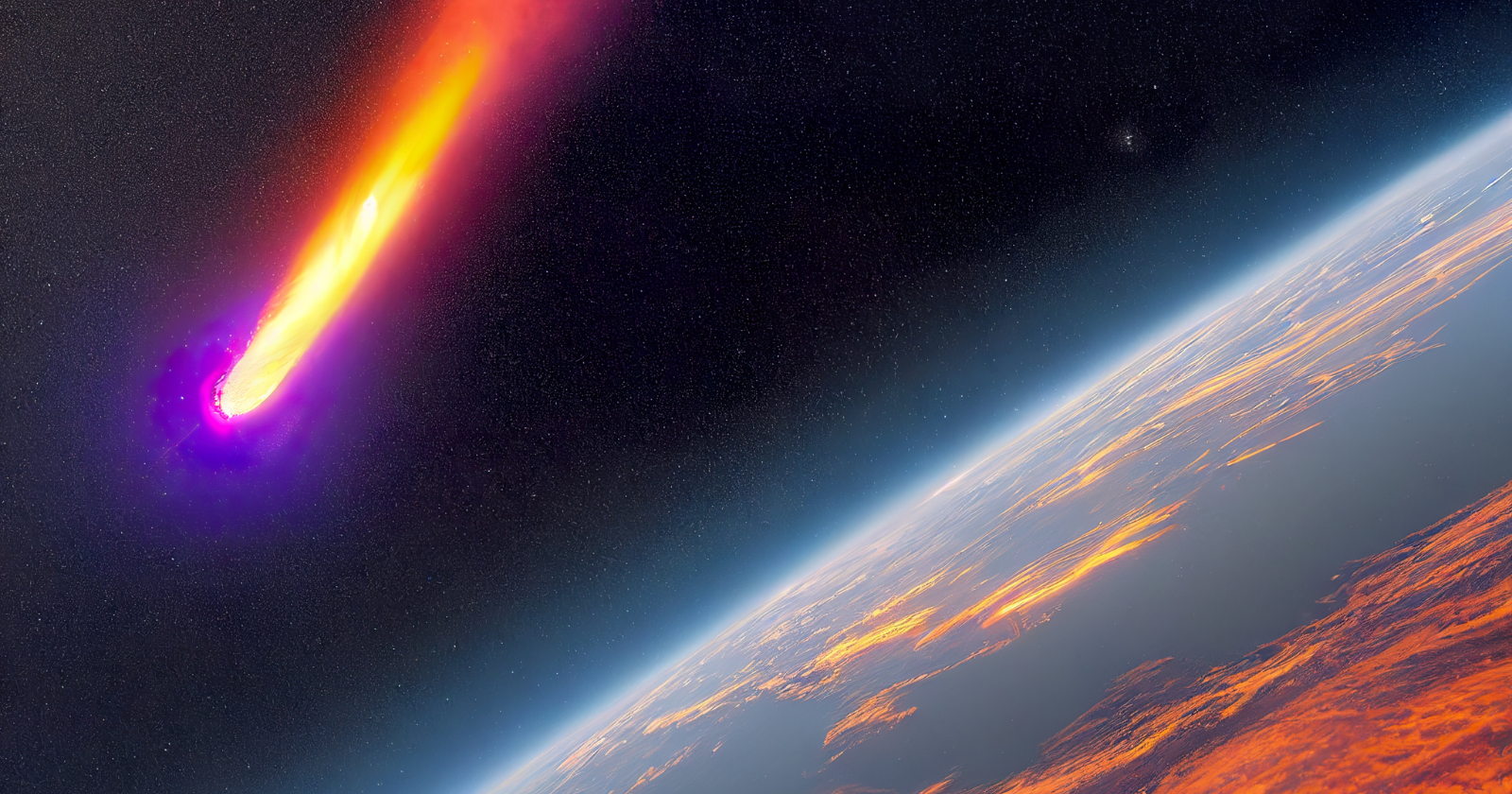
The Murchison meteorite is, by every available measure, one of the more scientifically valuable single rocks ever to fall on the planet. The fireball that delivered it streaked across the sky above the Goulburn Valley in southeastern Australia on a Sunday morning in September 1969, broke apart at high altitude, and scattered fragments across a roughly 35-square-kilometre area of farmland. One piece punched through the roof of a hay shed. The local dairy farmers who recovered most of the fragments over the following weeks sold the bulk of them to museums and universities, with the largest single collection now held by the Field Museum of Natural History in Chicago. Approximately 80 kilograms of the original 100-kilogram fall is currently held in scientific collections around the world. Over the subsequent five decades, Murchison has been examined more intensively than almost any other meteorite — yielding more than 70 distinct amino acids (including some that do not occur in any known terrestrial biology), sugars including ribose (the backbone of RNA), and several of the nucleobases that make up the building blocks of DNA. The rock has been at the centre of multiple revisions to scientific understanding of how organic chemistry distributes itself through the early solar system.

According to NBC News’s coverage of the 2020 Heck et al. paper on presolar grains in Murchison, the team published its dating results in the Proceedings of the National Academy of Sciences in January 2020. The analysis used a technique called cosmic-ray exposure dating, which Heck described with an unusually accessible analogy: cosmic rays — high-energy particles that constantly stream through the galaxy — interact with solid matter and produce new elements at a roughly constant rate. The longer a particle of matter has been drifting through space exposed to cosmic rays, the more of these new elements accumulate inside it. “I compare this with putting out a bucket in a rainstorm,” Heck told reporters at the time. “Assuming the rainfall is constant, the amount of water that accumulates in the bucket tells you how long it was exposed.” Applying this method to 40 large silicon-carbide grains extracted from the Murchison fragments, the Heck team was able to estimate how long each individual grain had been drifting through interstellar space before being incorporated into the asteroid that eventually fell to Earth.

What presolar grains actually are

The grains the Heck team dated are called presolar grains — solid particles that formed in the atmospheres of dying stars before the solar system existed, drifted through the interstellar medium for hundreds of millions or billions of years, and were then incorporated into the molecular cloud from which the Sun and planets eventually condensed. As reported in Sci.News’s coverage of the same paper, the typical formation environment for the silicon-carbide grains examined by the Heck team was the slowly-expanding atmosphere of an asymptotic giant branch (AGB) star — a red giant in the late stages of its evolution, shedding its outer layers into space at a rate of roughly one solar mass every hundred thousand years. The carbon, silicon, and other elements in the stellar atmosphere condense as the gas cools and expands, forming microscopic dust grains that are then carried outward by the stellar wind into the surrounding interstellar medium.

Most of these grains, once released into space, are eventually destroyed by some combination of supernova shock waves, radiation, and chemical reprocessing within the molecular clouds where new stars form. A small fraction survive intact for billions of years, drifting through the galaxy as part of the general inventory of interstellar dust. When a new solar system begins to form by gravitational collapse of a dense region of interstellar gas, this dust is incorporated into the early protoplanetary disc — and the heat and chemistry of solar system formation typically destroys or substantially alters most of it. The grains that survive intact through the entire formation process do so because they are extraordinarily durable (silicon carbide is one of the hardest materials in nature) and because they are quickly incorporated into the deep interiors of primitive asteroids that never undergo significant thermal processing. Murchison’s parent body was one such asteroid. The grains inside the Murchison fragments are, in a literal sense, time capsules from before the solar system existed.

The age distribution

The headline figure from the Heck team’s analysis — that the oldest grains are approximately 7 billion years old, predating the solar system by approximately 2.5 billion years — captures the extreme of the distribution rather than the average. Per ScienceDaily’s coverage of the Field Museum announcement, the full age distribution of the 40 grains was substantially more informative than the single extreme number suggests. Approximately 60 percent of the grains formed between 4.6 and 4.9 billion years ago — in the few hundred million years immediately preceding the formation of the solar system. Approximately 10 percent formed more than 5.6 billion years ago. A small number formed at the extreme end, around 7 billion years ago. Every grain examined was, by the cosmic-ray exposure dating, older than the 4.6-billion-year-old Sun. This is what made them presolar.

The distribution itself carries scientific weight beyond the individual grain ages. The clustering of a substantial fraction of grains in a narrow age band suggests that an unusual number of stars in the Milky Way galaxy formed, lived their full life cycles, and died during a specific epoch several billion years before the Sun ignited — a “burst” of star formation that produced an unusually large population of dying stars whose outflows seeded the surrounding interstellar medium with the dust that would later contribute to the formation of the solar system. The Heck team’s interpretation, drawing on the age distribution, is that this burst occurred approximately 7 billion years ago. The implication is that the Sun and the planets formed, several billion years later, from a galactic environment that had been substantially enriched with material from this earlier generation of stars.

Why no comparable material exists on Earth

As reported by Malay Mail’s coverage of the age distribution, the broader reason presolar grains can only be found in meteorites — never in any rock of terrestrial origin — is that every piece of solid material that contributed to Earth’s formation has subsequently been heated, melted, recrystallised, or otherwise reprocessed by the geological activity of the planet itself. Plate tectonics has churned the entire crust through the mantle and back at least once. Volcanism has melted and re-erupted vast quantities of material. Even the oldest rocks on Earth, found in places like the Acasta Gneiss Complex in northern Canada, are at most 4.0 to 4.2 billion years old — substantially younger than the planet itself, and far younger than the presolar grains preserved inside primitive meteorites.

The Murchison meteorite, in this respect, occupies a peculiar epistemological position. It is the closest available physical sample of the early solar system, but it is also a sample of the pre-solar-system galaxy that produced the early solar system. The grains inside it are older than anything that can be found by digging downward through the rocks of Earth, by any depth or any drilling technology. They are, in essence, a sample of the chemistry of the Milky Way at a moment several billion years before any of the familiar features of the current solar system existed. The fragments collected by Australian dairy farmers in 1969 and sent to museums in Chicago and elsewhere have turned out to contain, embedded in their carbonaceous matrix, a small but real sample of stardust from stars that finished burning before the Sun began.

The post In September 1969, a 100-kilogram space rock exploded in the sky above Murchison, Australia — and 50 years later, scientists analyzing dust grains buried inside the meteorite found particles between 5 and 7 billion years old, formed in the dying outer layers of stars that lived and died long before our Sun was born, in what remains the oldest solid material ever identified on the surface of the Earth appeared first on Space Daily.


  •  

By the end of this century, the United States is projected to have more than one million centenarians — people aged 100 or older — for the first time in human history, in a demographic shift driven by sharply falling mortality among nonagenarians, and some demographers now believe that a majority of children born today in low-mortality countries can reasonably expect to reach their hundredth birthday

In 1950, the United States Census Bureau estimated that approximately 2,300 Americans were aged 100 or older. The total population of the country at the time was approximately 152 million, which made centenarians one of the rarest possible demographic categories — approximately one in every 66,000 Americans had reached the age. By 1990, the centenarian count had risen to approximately 37,000. By 2020, it had reached approximately 92,000. By 2024, it had passed 101,000. The trajectory has been steep and accelerating, and the demographic shift now visible in the centenarian numbers is one of the larger long-term changes in the structure of the American population — a category that was statistically negligible at the end of World War II is now projected to become, within the lifetimes of most people reading this, a substantial demographic constituency in its own right.

According to the Pew Research Center’s January 2024 analysis of Census Bureau projections, the US centenarian population is projected to more than quadruple from approximately 101,000 in 2024 to approximately 422,000 by 2054 — meaning that within the next 30 years, the proportion of Americans aged 100 or older will rise from approximately 0.03 percent of the population to approximately 0.1 percent. This is the official Census base-case projection. Higher-end estimates developed by demographic researchers — including the MacArthur Foundation Research Network on an Aging Society — have projected substantially higher numbers under more optimistic mortality-improvement scenarios, with some estimates exceeding 1.8 million US centenarians by mid-century and substantially larger numbers by 2100. The range between the Census base case and the higher-end projections is large, and the actual outcome will depend on whether mortality improvements at older ages continue at recent rates, accelerate, or plateau.

What is driving the projected growth

The proximate driver of centenarian growth is not improving mortality among the young or middle-aged — those mortality rates are already very low and have only modest room to fall. The driver is sharply declining mortality among nonagenarians: people aged 90 to 99 who, in previous generations, would typically have died before reaching 100. The mortality rate among 90-year-olds has been falling steadily across developed countries for decades, with each successive cohort of nonagenarians surviving slightly longer than the previous one. The result is that the share of any given birth cohort that eventually reaches 100 has been rising, and the absolute number of centenarians is rising even faster because the population at risk (the 90-year-olds in the country) has also been growing rapidly.

Per a CEOWORLD analysis of the global centenarian surge, the same pattern is visible internationally. The United Nations estimated approximately 722,000 centenarians worldwide in 2024 and projects that the number will rise to approximately 4 million by 2054 — a nearly six-fold global increase in 30 years. By mid-century, the largest national centenarian populations are projected to be China (approximately 767,000), the United States (approximately 422,000), India, Japan, and Thailand, with several Southeast Asian countries and parts of southern Europe showing particularly rapid centenarian growth on a per-capita basis. Japan, currently the country with the world’s highest median age, is projected to have approximately 40 centenarians per 10,000 people by 2054 — meaning that roughly one in every 250 Japanese residents will be aged 100 or older. Thailand is projected to have an even higher ratio, at approximately 49 per 10,000.

The contested longer-term projections

The substantive disagreement among demographers is not about whether centenarian numbers will rise — that is now essentially settled — but about how far they will rise, and how soon a majority of births in low-mortality countries will produce people who eventually reach 100. The optimistic position, associated with the demographer James Vaupel and colleagues at the Max Planck Institute for Demographic Research, holds that life expectancy in the most advanced countries has been increasing by approximately three months per year for the past 150 years and shows no clear sign of slowing — and that this trajectory implies that the majority of children born in low-mortality countries today will live to see their hundredth birthday. The skeptical position, associated most prominently with the American demographer S. Jay Olshansky and his collaborators, holds that life expectancy gains are now slowing substantially in the United States and other developed countries, that the easy mortality reductions from infectious disease control, smoking declines, and cardiovascular medicine have largely been achieved, and that further gains will be substantially harder to obtain.

The empirical evidence for the slowdown position has become more visible in recent years. US life expectancy peaked at approximately 78.9 years in 2014 and then declined — partly because of the opioid crisis, partly because of rising obesity-related mortality, partly because of COVID-19 mortality during the pandemic, and partly because of slowing gains in cardiovascular medicine. The current US life expectancy of approximately 76 years is substantially below the trajectory that the Vaupel projections would have predicted. As covered by a foundational MacArthur Foundation Research Network paper on demographic forecasts for the United States in the 21st century, the higher-end centenarian projections depend on assuming that the recent slowdown is temporary and that the longer-run Vaupel-style trajectory will resume. Whether it does is one of the central empirical questions in contemporary demography, and the answer will substantially affect both the centenarian counts in 2054 and the much larger projections for 2100.

The maximum lifespan question

As reported by a 2021 Bayesian analysis published in Demographic Research by Michael Pearce and Adrian Raftery at the University of Washington, the related question of what the maximum human lifespan will reach by 2100 is approachable with statistical methods even where the underlying biology is uncertain. The Pearce-Raftery analysis modelled the existing distribution of supercentenarians (people aged 110 or older) and the projected growth of that population through the rest of the century, and estimated that there is greater than 99 percent probability that the current record human lifespan — Jeanne Calment of France, who died in 1997 at 122 years and 164 days — will be broken before 2100. They estimate an 89 percent probability that someone will reach age 126, a 44 percent probability that someone will reach 128, and a 13 percent probability that someone will reach 130. These projections are not predictions about the typical lifespan but about the extreme tail of the survival distribution, which depends on the same nonagenarian mortality declines that drive the centenarian numbers.

The deeper question that the centenarian projections raise is the relationship between living longer and living well. The available evidence on healthspan — the proportion of life spent in good health, rather than in disability or substantial decline — suggests that healthspan has been increasing more slowly than lifespan. The result is that the gap between the two has been widening: people are living longer, but with more years of substantial disability, more years of cognitive decline, and more years of dependence on caregivers and the healthcare system. The economic implications are substantial. The current pension systems, healthcare systems, and family structures of most developed countries were built around assumptions about average lifespan and the typical duration of post-retirement life that no longer hold. The institutional response, across most of the developed world, has been slower than the underlying demographic shift. Whether the eventual centenarians — including, possibly, a substantial fraction of the children born this year — will arrive at their hundredth birthdays in good health, in supported decline, or somewhere in between will depend on whether the gains of the coming decades are made primarily in extending lifespan or primarily in extending healthspan. The two trajectories produce very different futures.

The post By the end of this century, the United States is projected to have more than one million centenarians — people aged 100 or older — for the first time in human history, in a demographic shift driven by sharply falling mortality among nonagenarians, and some demographers now believe that a majority of children born today in low-mortality countries can reasonably expect to reach their hundredth birthday appeared first on Space Daily.

  •  

Thought of the day from Stoic philosopher Epictetus: “Some things are in our control and others not. Things in our control are opinion, pursuit, desire, aversion, and, in a word, whatever are our own actions. Things not in our control are body, property, reputation, command, and, in one word, whatever are not our own actions”

Imagine your flight is delayed three hours. Or someone leaves you a bad review that you think is unfair. Or a person you live with wakes up in a foul mood and you can feel it filling the kitchen.

The first reflex, at least mine, is to push back against the thing. To argue with the airline, draft the reply, try to fix the mood. To treat the situation as a problem I can solve if I just apply enough force.

I started reading Stoicism in earnest during a period of failure and a general search for meaning. Seneca’s line about how we waste time stayed with me as a durable impression from that whole reading rabbit-hole.

But the idea I keep coming back to, the one that has been most useful, is the one Epictetus opens his Enchiridion with:

“Some things are in our control and others not. Things in our control are opinion, pursuit, desire, aversion, and, in a word, whatever are our own actions. Things not in our control are body, property, reputation, command, and, in one word, whatever are not our own actions”. 

The handbook was compiled by his pupil Arrian from Epictetus’s teaching, but the thought is his, and modern readers tend to call it the dichotomy of control.

A note before I go further. I’m not a psychologist or a philosopher by training, just a reader who came to the Stoics during a rough stretch and kept reading. What follows is reflection on old ideas and a little modern research, not advice, and the psychology I mention is observational, drawn from particular groups of people rather than rules about you.

The easy misreading is to hear “big things versus small things,” as if Epictetus is telling you to sweat the little stuff and let the big stuff go. I don’t think that is the cut he’s making. The cut is between what is your own doing and what is not. Your judgments, your choices, your effort, your intentions sit on one side. Your body, your property, your reputation, your job title, the outcome of almost anything — all of that sits on the other.

The slightly uncomfortable part is how short the first list turns out to be once you’re strict about it. Almost everything I would naturally call “mine,” the result of my work, what people think of me, whether a plan succeeds, is not actually in my power. As the professor of philosophy, Massimo Pigliucci puts it, the idea “basically reminds us that our agency, our ability to change things, is far more limited than we normally think.” 

Years ago I tried to build a coffee business. It failed. And the part I didn’t understand until afterward was that the outcome was never really mine to control. Whether the business survived depended on the market, on timing, on a hundred things I couldn’t move no matter how hard I pushed. What was actually mine was the effort, the decisions, the work I put in each day. Those I could give fully.

The first time around I got this exactly backwards. I poured my anxiety into the outcome, the part I couldn’t touch, and the fear of failing followed me everywhere. When the thing I’d been dreading finally happened, the strange discovery was that the reality was lighter than the fear had been. Fearing it was worse than living it. I’m not romanticizing this, and I’m certainly not recommending failure as a teacher. But the dichotomy was sitting right there in the experience. The effort was mine. The result never was. Carrying the result as though it were mine just doubled the weight.

None of this is permission to stop caring or go limp. That’s the version of Stoicism that gets it wrong, the one that treats “let it go” as an excuse to do nothing. Epictetus is not saying don’t try. He’s saying try completely on the part that is yours, then release your grip on the part that isn’t. You act fully, then you stop demanding a particular result from the universe as the price of your peace.

So the freedom here is not the obvious kind. It isn’t getting more control over outcomes, more grip on the delayed flight or the bad review or the mood in the next room. It’s noticing, in the moment, which part of the thing is actually your own doing, giving that part everything, and setting down the rest.

These days, when a result I wanted slips away from me, I try to ask one plain question before I start fighting it: was this ever mine to decide? Often the answer is no. And there’s a real lightness in putting down a thing you were never holding up in the first place.

If any of this is landing closer to home than it is interesting, a good therapist or counsellor is worth far more than any old book or article, mine included.

The post Thought of the day from Stoic philosopher Epictetus: “Some things are in our control and others not. Things in our control are opinion, pursuit, desire, aversion, and, in a word, whatever are our own actions. Things not in our control are body, property, reputation, command, and, in one word, whatever are not our own actions” appeared first on Space Daily.

  •  

Quote by Neil deGrasse Tyson: “For me, I am driven by two main philosophies: know more today about the world than I knew yesterday and lessen the suffering of others. You’d be surprised how far that gets you.”

The self-help shelf in any bookshop is a monument to overcomplication. Forty-seven habits, twelve rules, seven levels, a morning routine that begins at half past four and involves cold water and a gratitude journal. I have read a depressing number of these, mostly in airports, and retained almost none of it past the departure gate.

Then Neil deGrasse Tyson, the astrophysicist, was asked on a Reddit thread in 2012 what drives him, and he gave an answer short enough to fit on the back of a receipt. Two philosophies, he said. Know more today about the world than you knew yesterday, and lessen the suffering of others. You would be surprised how far that gets you.

My first reaction was the one you are probably having. Lovely. Goes nicely on a mug. My second reaction, a few years later, was that the man had calmly described the only two things that have ever worked for me, and that the second one once stopped me making the stupidest decision of my career.

Know more today than you knew yesterday

The first one is the scientific method pointed at your own life, and it is far more modest than it sounds.

It does not ask you to be a genius, or to ever finish. It asks you to be slightly less wrong tonight than you were this morning. That is more or less the whole engine of science. Nobody in a serious lab is trying to be right in some final, permanent way. They are trying to be marginally less mistaken than the last person, write it down, and let someone else chip a bit further along.

The humility runs deeper than people outside science tend to assume, too. We have been studying gravity for three centuries and still only know Newton’s constant to three significant figures. Around ninety-five percent of the universe is made of things we have politely named dark matter and dark energy, mostly so we do not have to say out loud that we have very little idea what they are. The best-informed species on the only planet known to carry one spends most of its day confidently not knowing things.

I got this wrong for years in a particular way. I thought “know more” meant collect facts and deploy them to win. I was the man at the table with the correction loaded and ready. What I was doing was the precise opposite of the rule, because a person busy being right learns nothing. The truer version is duller and harder. Assume, every single day, that there is a fact you do not yet have. Above all about a person.

The cook I nearly sacked

That stops being abstract very quickly in a kitchen.

Years ago I had a line cook, a quiet lad called Tomas, who started arriving late. Ten minutes, then twenty, then a morning he missed altogether. In the economy of a busy kitchen that is close to a capital offence. The prep does not do itself, and one slow start poisons the entire service behind it. I had the conversation drafted in my head, the regretful, businesslike one that ends with a final pay packet. By the cold numbers, he had to go.

What stopped me was a flat, almost accidental question. I asked him, with no great warmth, what was actually going on. And it came out that his mother had been taken into a hospital on the far side of the city, that he was sitting with her until the small hours, and then walking ninety minutes to my door because the night buses did not connect and the fare, on a cook’s wages, was a genuine decision every morning.

None of that was visible from where I stood, which was the whole point. I had a full and confident model of Tomas, the unreliable cook, and it was missing the single fact that explained all of it. I knew less than I believed I did, which is the standard human condition and the exact thing the first rule is trying to beat out of you.

So I did something small. I shifted his start to the evening, which suited the kitchen anyway, and stopped docking him for the lost mornings. It cost me close to nothing. He stayed four years, became the steadiest pair of hands in the building, and covered for me more times than I can count when my own life later fell apart. You would be surprised, as the man said, how far that got me.

Lessen the suffering of others

People hear the second philosophy as the soft one. The charity bit, bolted on after the clever bit, to make the clever bit look kind. I think that is exactly the wrong way round.

They are the same engine. Knowing more about Tomas was worthless as trivia. Its only value was that it let me take a little weight off him at almost no cost to me. And easing what he carried was not me playing the saint. It was the most clear-headed thing I did that year, because it kept a good cook and bought a loyalty that no bonus on earth would have. Knowledge without the second philosophy is just cleverness, which is cold and gets you avoided at parties. Kindness without the first is good intentions fired blindfold, which mostly miss the target. You need the two of them aimed together.

That is what Tyson tucks into that last offhand line. He does not promise you enlightenment, or wealth, or a flat stomach by June. He promises only that two ordinary habits will carry you “surprisingly far,” which may be the single most honest sentence in the entire self-improvement trade. Nobody can tell you how far. You would be surprised. That is the whole claim, and it happens to be true.

I walked away from the restaurants a few years after Tomas, and I have since forgotten most of what I once knew about margins and stock rotation and the correct way to close down a kitchen at midnight. What stayed was the picture of a tired young man crossing a sleeping city on foot to stand at my stove, and the small, unheroic discovery that the cheapest thing I ever did, ask one question and move one shift, turned out to be the cleverest entry in the books. Two rules, typed into a website by a stargazer at his keyboard. They really will carry a person an absurd distance, though their author had the good manners not to say how far. He left you to walk it and find out.

The post Quote by Neil deGrasse Tyson: “For me, I am driven by two main philosophies: know more today about the world than I knew yesterday and lessen the suffering of others. You’d be surprised how far that gets you.” appeared first on Space Daily.

  •  

In 2026, wellbeing researchers suggested that simply asking people one question about how good their life is overall may be the clearest and most comparable way to measure wellbeing around the world

Can one question really tell you how a whole life is going? It sounds too simple. A life has work in it, and health, and the people you love, and the quiet sense of whether any of it means anything. Reducing all of that to a single number on a scale feels like measuring an ocean with a teaspoon.

And yet that is more or less what a group of wellbeing researchers argued in earlier this year. In a short reply published in Nature Human Behaviour, the editors of the World Happiness Report made the case that individual wellbeing is best captured “by single self-reports of one’s overall quality of life.” One question, asked directly. That’s the whole proposal.

A quick note before going further. I am not a psychologist, an economist, or a wellbeing researcher of any kind, so take what follows as one curious reader’s reading of a scholarly debate, not advice. The work here is observational social science, and a population-level pattern is never a verdict on how your own life is going.

The case for measuring everything

The argument the 2026 reply is pushing back against has obvious appeal. In 2025, Harvard’s Tyler J. VanderWeele and Baylor’s Byron R. Johnson published early results from the Global Flourishing Study, a survey of more than 200,000 people across 22 countries. Rather than asking one question, they built a composite index across five domains: happiness and life satisfaction, physical and mental health, meaning and purpose, character and virtue, and close social relationships.

You can see why. A person could be financially comfortable and lonely, or healthy and adrift. Stitch the domains together and you get a fuller picture. VanderWeele draws a distinction here between two ideas, and he is careful to hedge it. Wellbeing, he suggests, “might be viewed as all aspects of a person’s life are good as they pertain to that individual, whereas flourishing is all aspects of a person’s life are good, including the context and communities and environments in which that person lives.”

The composite view runs into a problem, though, and I have felt it personally. Ticking the boxes does not reliably move the overall sense of how life is going. 

What the single-item camp actually argues

So the counter-argument is not “wellbeing is simple.” It is closer to this: most of what gets bundled into a flourishing index is not wellbeing, it is the stuff that produces wellbeing. The 2026 authors put it carefully, with the hedge intact. In their view, “most of the individual factors that get combined in such an index are causes of wellbeing and not wellbeing itself.”

Health, money, relationships: on this reading, those are inputs. Ask about them and you are measuring the recipe, not the meal. Ask a person to rate their overall life, and the editors argue, “the resulting product is wellbeing, in other words, the quality of life as we experience it.” The person has already done the weighting in their head. They know how much the lonely-but-comfortable trade actually costs them, in a way no fixed formula across 200,000 strangers can.

This is not a fringe idea dreamed up to win an argument. It is how the global rankings already work. The World Happiness Report’s country ordering rests on a single life evaluation question, the Cantril ladder, which asks people to place their life on a 0 to 10 ladder. Gallup asks it of people in more than 140 countries.

Here is that question: 

“Please imagine a ladder with steps numbered from 0 at the bottom to 10 at the top. The top of the ladder represents the best possible life for you and the bottom of the ladder represents the worst possible life for you. On which step of the ladder would you say you personally feel you stand at this time?”

Closing thoughts

The single question dares to remove almost everything and trust the person to have done the math. There is something honest in that, and something that could go wrong.

But a tidy number can flatter or deceive. A bad week can drag it down; a sunny afternoon can lift it past what you’d say on reflection.

One ordinary evening I tried it on myself. Zero to ten, how good is your life, overall. I landed on a number quickly, which surprised me, and then immediately distrusted it, which surprised me less. The honest answer wasn’t the number. It was the half-minute of weighing that produced it, the things I added in and the things I quietly let go. The number was just where the weighing stopped. Maybe that is the whole point, and maybe it is the catch: the single question doesn’t simplify the life, it just forces you to do the arithmetic.

If any of this is landing closer to home than it is interesting, talking to a good therapist is worth far more than reading this article.

The post In 2026, wellbeing researchers suggested that simply asking people one question about how good their life is overall may be the clearest and most comparable way to measure wellbeing around the world appeared first on Space Daily.

  •  

Thought of the day from Taoist philosopher Lao Tzu: “To understand others is to have knowledge; to understand oneself is to be illumined.”

The line turns on a single word, and the word is doing more work than it first appears. To understand others is knowledge, something gathered and held. To understand oneself is something else, a state the original Chinese marks with the character ming (明). As Sandra Hill writes for Monkey Press, the character “can be translated as brightness, clarity, illumination, enlightenment.” It is built, fittingly, from the characters for sun (日) and moon (月). Knowledge of others is an accumulation. Self-knowledge, in this reading, is a light.

That distinction is the whole of the verse. Why has it survived twenty-five centuries, and does the gap it names between knowing others and knowing oneself hold up when modern researchers go looking for it?

The verse comes from Chapter 33 of the Tao Te Ching, the principal Taoist text traditionally attributed to Lao Tzu, the “Old Master” usually placed in the sixth century BC. Modern scholarship tends to treat the figure as semi-legendary and the authorship as uncertain, but the text itself, eighty-one chapters, has outlasted every argument about who wrote it.

Part of why the line travels so well is that it survives translation with its core intact. The Chinese reads 知人者智,自知者明. In the Gia-fu Feng and Jane English rendering, it becomes “Knowing others is wisdom; Knowing the self is enlightenment.”

Dwight Goddard, working in 1919, put it as “He who knows others is intelligent; he who understands himself is enlightened.” Stephen Mitchell’s 1995 version, a loose interpretive rendering rather than a literal translation, reads “Knowing others is intelligence; knowing yourself is true wisdom.” The vocabulary shifts across translations, but the underlying structure does not. Every version keeps the same two-part contrast: one kind of knowing pointed outward, a different kind pointed in.

Before going further, a note on register. We are writers reading across philosophy and psychology, not clinicians or credentialed researchers, and the studies below describe patterns across groups of people rather than verdicts about any individual reader.

The psychologist Tasha Eurich has spent years probing the kind of gap Lao Tzu names. In her account on the Blanchard LeaderChat podcast, “Our data reveals that 95 percent of people believe they are self-aware, but the real number is 12 to 15 percent.” Those figures come from her own studies rather than a settled cross-field consensus, so they are best read as one researcher’s finding, not a fixed law. The direction is the interesting part: most people are confident they see themselves clearly, and far fewer actually do.

There is an obvious objection to Lao Tzu’s hierarchy. Surely we have privileged access to our own minds. We can hear our own thoughts; we cannot hear anyone else’s. Shouldn’t self-knowledge be the easy half?

Well, some research suggests the privilege backfires. Psychologist Emily Pronin and Matthew Kugler studied what they call the introspection illusion. When assessing their own bias, participants weighed their introspective sense over the evidence of what they actually did, a generosity they did not extend to others. 

That is perhaps the obstacle the verse quietly implies. Knowing others, you have only their actions to go on, and actions are honest in a way intentions often are not. Knowing yourself, you have access to the running commentary, the reasons, the good intentions, and that flood of inside information is exactly what makes the view unreliable.

If any of this lands close to home, a qualified counsellor or therapist is a good person to talk it through with.

The post Thought of the day from Taoist philosopher Lao Tzu: “To understand others is to have knowledge; to understand oneself is to be illumined.” appeared first on Space Daily.

  •  
❌