
❌

Reading view

Waste oils and fats to be turned into low-emission jet fuel with new modular tech

Honeywell has announced that its modular refining technology and automation systems will be used in a major renewable fuels project by Acelen Renewables in Bahia, Brazil.

The project is a new development focused on producing sustainable aviation fuel (SAF) and renewable diesel. Honeywell said its modular Ecofining process technology, along with specialized pumps, compressors, and integrated control and safety systems, will help Acelen Renewables make construction and operations at the site more efficient.

Industry forecasts show that demand for SAF could reach almost 500,000 barrels per day in the next ten years. As airlines and governments work to cut emissions, fuel producers are looking for ways to boost output while keeping costs and project schedules under control.

Modular approach aims to speed deployment

A main feature of Honeywell’s role is its modular delivery model. Rather than relying solely only traditional site-built infrastructure, modular units can be assembled and installed more efficiently, helping shorten construction time and lower project costs.

The company said this method lets renewable fuel facilities start production sooner than with traditional methods. Getting facilities up and running faster is becoming more important as aviation companies look for more low-emission fuel to meet future sustainability goals.

The Bahia project is expected to help grow Brazil’s renewable fuel industry. With its rich agricultural resources, the country is aiming to become a leader in producing next-generation biofuels.

“Brazil is set to produce the fuel of the future through a project that is sustainable—economically, socially, and environmentally,” said Marcelo Cordaro, COO of Acelen Renewables. “The Bahia facility project supports biodiversity and fosters an economy based on sustainability. Honeywell’s process technology and automation expertise will help maximize the production of lower-emission fuels at our facility, supporting the growing global demand for renewable fuels.”

Converting waste into aviation fuel

Honeywell UOP’s Ecofining technology, developed with Eni SpA, is central to the project. This process turns waste fats, oils, and greases into renewable diesel and sustainable aviation fuel.

According to the company, the SAF produced can cut greenhouse gas emissions by up to 80 percent when mixed with regular jet fuel. The technology enables producers to use a wide range of waste-based feedstocks that might otherwise have little value.

Automation designed for efficient operations

In addition to fuel processing technology, Honeywell will supply integrated automation and safety systems for the facility. These systems bring together process controls and operational know-how to help manage plant performance and lower project risks.

The company’s technology is built into its Experion PKS platform, which supports monitoring, safety management, and operational decision-making. It said the platform also offers digital tools and data insights that can boost plant efficiency over time.

Biofuel facilities are increasingly using automation to improve production rates, maintain reliable operations, and support long-term success.

Growing focus on lower-cost renewable fuels

The company believes that new technology will be key to making renewable fuels more competitive worldwide. Lowering production costs is seen as essential for wider use in aviation and transportation.

“Honeywell’s low-carbon process technologies are enabling companies like Acelen to address the growing demand for renewable fuels by using a variety of feedstocks,” said Ken West, president and CEO of Honeywell Process Technology. “Technology and integrated automation play a pivotal role in reducing the cost of renewable fuels, which is essential for broad adoption. Advances in Honeywell’s technology have reduced the cost to produce SAF, and the use of novel, low-cost feedstocks will help further reduce production costs.”

It also noted that it has delivered over 1,500 modular process units worldwide using different technologies. 
  •  

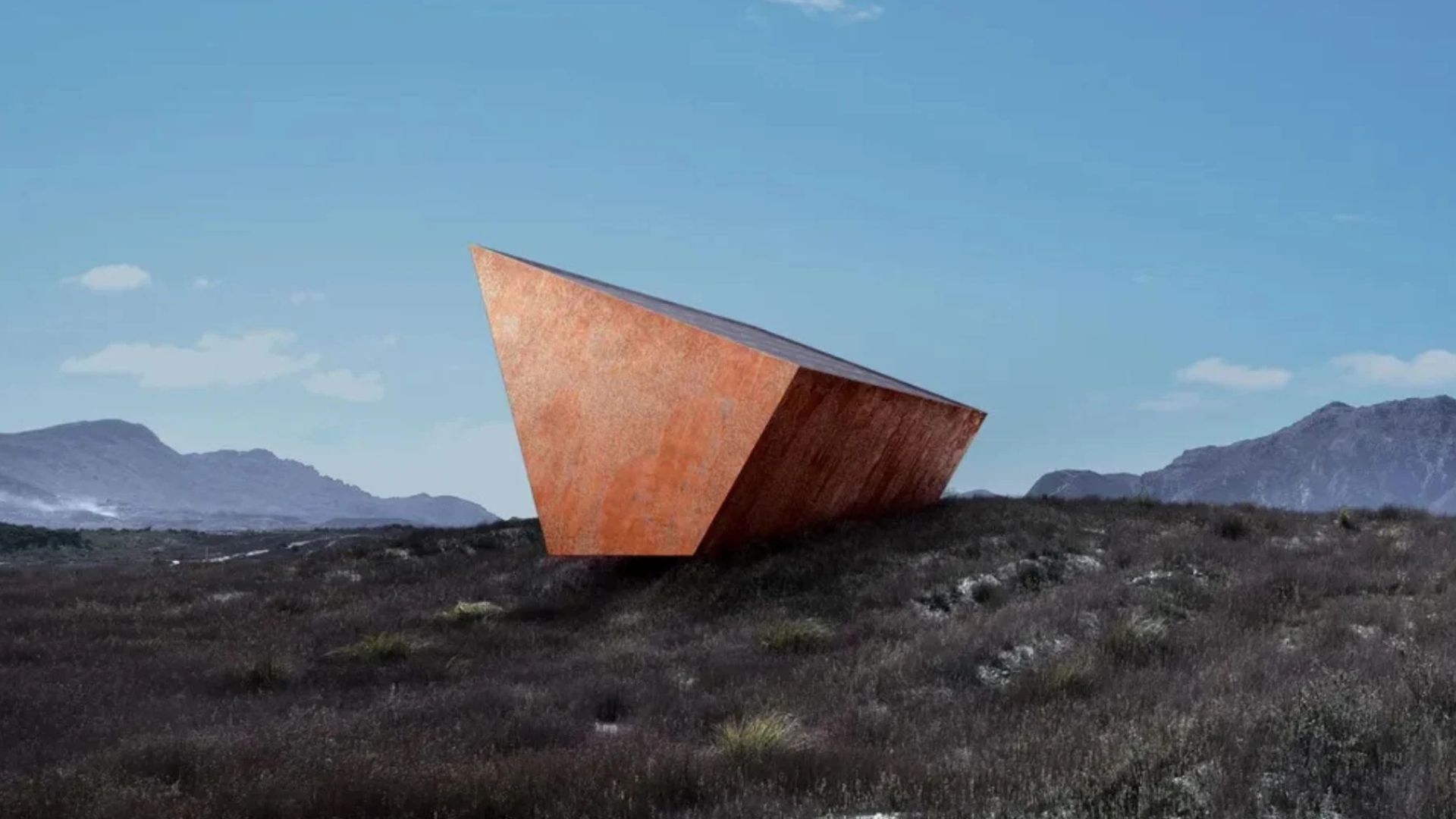
52-foot long Doomsday climate recorder nears launch as Earth’s Black Box takes shape

After nearly five years of development, the team behind Earth’s Black Box has confirmed that the massive climate-recording structure will be set up in Tasmania by December 2026.

Launched by the Australian non-profit Rouser Lab in 2021, the project’s goal is to create a permanent archive of environmental data that will document humanity’s response to the climate crisis for future generations.

According to a report by The Guardian, key parts are already being assembled. The structure will be set up near a remote airfield in Tasmania, where it will run nonstop and collect data about the planet’s health.

Massive structure designed to survive disasters

Earth’s Black Box is often compared to the flight data recorders found in airplanes, but it is much bigger. The structure will be 52 feet (16 meters) long and 13 feet (4 meters) high, made from reinforced steel and concrete.

Rouser Lab says the structure is being built to handle extreme conditions. The project website states it is “designed to withstand every possible threat including cyclone, earthquake, fire, flood or attack.”

The aim is to build an archive strong enough to survive major disasters that could impact modern society. Tasmania’s remote location was chosen partly because the island is relatively stable both geologically and politically.

The facility will run on its own using a solar power system on the roof. Thirty-six solar panels, covered with toughened glass, will provide electricity for the storage systems inside.

Continuous stream of environmental records

The archive will collect and store large volumes of information from organizations worldwide. Sources will include space agencies, weather agencies, and universities that track environmental conditions and climate trends.

Information will be sent to the system via the internet and added to the project’s Vital Index. This database will hold measurements, datasets, and records that track the planet’s condition over time.

Project organizers describe the archive is a living record, not just a static collection. New information will be added all the time, building a timeline of environmental changes and how people respond.

“The purpose of the device is to provide an unbiased account of the events that lead to the demise of the planet, hold accountability for future generations, and inspire urgent action,” the Earth’s Black Box website states. “How the story ends is completely up to us.”

Five years of quiet development

Since the project was first announced, Rouser Lab has given only a few updates. Because of this long silence, some people wondered if Earth’s Black Box was mainly a symbolic effort to highlight climate issues.

Jonathan Kneebone, the group’s artistic director, recently said that a lot of work has been happening behind the scenes. He told The Guardian that the team had been “evolving the design, data storage systems, source materials, web platform—as well as developing funding models to sustain the project into the future.”

Rouser Lab calls itself an experimental environmental communications agency, not a scientific institution. Still, the group has kept working to get the project built and installed.

Questions remain about its long-term impact

The broader vision behind Earth’s Black Box is more than just saving data. Rouser Lab hopes that future civilizations will be able to look at the archive and learn from the environmental choices made today.

The organization is also working on another big idea called Climate S.O.S. This project would include a 164-foot-tall (50-meter-tall) techno-obelisk with a radio telescope meant to send a distress signal into space.

For now, Earth’s Black Box is meant to serve as what Rouser Lab describes as an “objective real-time archive for scientists, students, journalists and the public.”

It is still unclear if the installation will become a key research tool, since there are already many open climate databases around the world. Still, supporters think the large, visible structure could help bring public attention back to climate change and the long-term effects of today’s environmental choices.

  •  
❌