❌

Reading view

An exoplanet with a daytime temperature hot enough to vaporize iron has methane on its nightside because of an atmospheric circulation that should not be able to exist at that heat

A team led by Thomas Evans-Soma of the Max Planck Institute for Astronomy in Heidelberg has published observations of the exoplanet WASP-121b that complicate the existing picture of how chemistry moves through an ultra-hot atmosphere. Using the James Webb Space Telescope’s Near-Infrared Spectrograph to watch the planet through a complete orbit of its host star, the team detected methane in abundance on the planet’s nightside. On the dayside, temperatures reach approximately 3,000°C, well above the point at which iron vaporises. Methane, a molecule that decomposes far below that threshold, should not survive the heat. The paper was published in Nature Astronomy in June 2025.

The detection itself is the straightforward part. The explanation is not.

What the JWST data showed

WASP-121b is a tidally locked gas giant orbiting its star in about 30 hours, close enough that one face is always turned toward the heat. The dayside atmosphere, at roughly 3,000°C, is hot enough to break apart most molecules and sustain metals in vapour form. Water, carbon monoxide, and silicon monoxide were all detected there, the last of these making WASP-121b the first planet in which silicon monoxide has been identified in any atmosphere.

The nightside, while still extreme by any ordinary measure, sits at considerably lower temperatures. It was there that the team found methane in concentrations high enough to register clearly in the spectroscopic data. Methane typically breaks apart under heat well below what the dayside experiences. Even on the nightside, the temperatures are sufficiently elevated that methane’s persistence requires an active replenishment mechanism. Without one, the molecule would deplete faster than the atmosphere could sustain it.

The circulation the models did not predict

The explanation Evans-Soma’s team proposes is vertical atmospheric circulation: strong upward winds lifting methane-rich gas from deeper, cooler layers of the nightside atmosphere to replace what is continuously being destroyed at higher altitudes. Deeper in the nightside atmosphere, where temperatures are lower and the planet’s carbon-to-oxygen ratio works in methane’s favour, the molecule forms readily. The proposed circulation carries it upward fast enough to maintain the observed concentration.

The problem is that this kind of vigorous vertical mixing was not predicted by existing atmospheric models for planets in this temperature range. The standard picture of ultra-hot Jupiter dynamics has tended to emphasise horizontal circulation, with hot gas flowing from the dayside to the nightside at high altitudes and cooler gas returning at lower levels. Strong vertical mixing on top of that, specifically on the nightside, was not part of the expected behaviour.

The authors are careful to frame this as a proposal. The methane detection is robust; the vertical circulation as its cause is the team’s interpretation, and the models will need to be tested against the new data before the picture can be called settled. In the authors’ framing, the finding indicates that existing dynamical models will likely need to be adapted to account for the degree of vertical mixing the nightside data appears to require.

What the silicon monoxide finding adds

The detection of silicon monoxide on the dayside is a separate result worth noting in its own right. Silicon monoxide has not previously been identified in any planetary atmosphere, exoplanet or otherwise. Its presence at the temperatures and pressures of WASP-121b’s dayside is consistent with the conditions that would vaporise silicate minerals from deeper layers and carry the products to detectable altitudes.

This is the kind of detail that matters when building out a coherent picture of how ultra-hot gas giants differ chemically from anything in our solar system. The JWST’s NIRSpec instrument has now made it possible to run a reasonably complete inventory of the major carbon, oxygen, and silicon compounds across a planet’s full orbital phase, which is what Evans-Soma and Gapp did here. The dayside and nightside of WASP-121b turn out to carry chemistries that are not just different in degree but qualitatively distinct from each other.

What this means for the models

Ultra-hot Jupiter dynamics are a young field, and the models built so far have been calibrated against a limited set of observations. WASP-121b is one of the most intensively studied exoplanets in this class, partly because its tight orbit and high temperature make its atmosphere accessible to spectroscopic observation from a range of instruments over many years.

The challenge the new paper poses is specific: how does an atmosphere this hot maintain the chemical gradients the data shows, and what is driving the vertical circulation that appears necessary to explain the nightside methane? Those questions will determine what adjustments atmospheric modellers need to make, and whether the circulation observed here is particular to WASP-121b’s conditions or something common across the ultra-hot Jupiter population. The paper does not resolve that question. It opens it.

The post An exoplanet with a daytime temperature hot enough to vaporize iron has methane on its nightside because of an atmospheric circulation that should not be able to exist at that heat appeared first on Space Daily.

  •  

Advancing Metal Alloy Behavior Modeling for Enhanced Accuracy

At the cutting edge of aerospace, energy, and computing, material innovation stands as a critical frontier. Traditionally, companies seeking to enhance the performance and resilience of metals encounter formidable challenges: understanding the intricate behavior of novel materials under real-world conditions often necessitates actual physical synthesis and testing. This step has remained indispensable because even the most sophisticated computational simulations struggle to capture the full complexity of atomic arrangements inherent in many solid materials, particularly metallic alloys. The result is a costly and time-consuming cycle that slows progress in material science and engineering.

A breakthrough has now emerged from a team of researchers at the Massachusetts Institute of Technology (MIT), who have devised a computational framework that promises to transform the way metals are modeled across diverse compositions. Central to this innovation are advanced machine-learning algorithms designed to predict the properties of chemically complex metal alloys with unprecedented accuracy and efficiency. By refining the training datasets used to develop these models, the team has succeeded in encapsulating the vast heterogeneity of atomic environments that characterize disordered metallic materials, thereby enhancing predictive precision.

The research, detailed in a recent publication in the journal Science Advances, offers compelling evidence that machine-learning potentials, when constructed with carefully curated training data, can reliably simulate material properties spanning a broad spectrum of metal alloys and operational conditions. This methodological advancement stands to significantly reduce reliance on expensive experimental validation, enabling faster development cycles and more cost-effective exploration of alloy design spaces.

Rodrigo Freitas, MIT’s TDK Career Development Professor of Materials Science and Engineering and senior author on the paper, emphasizes the versatility of this approach. While the study focuses primarily on metallic alloys—a domain fraught with chemical disorder—the underlying principles and techniques have the potential to be adapted for other classes of materials, including semiconductors and sustainable steels. Freitas envisions wide-ranging applications, from aerospace materials engineered for extreme environments to novel components in energy systems and beyond.

The crux of the challenge in modeling metals lies in capturing the influence of intrinsic chemical disorder on material properties. Two alloys with identical elemental compositions can exhibit starkly different mechanical behaviors depending on their atomic-scale structure; one might be brittle, while another offers impressive ductility. Computational models must therefore operate at the atomic level, simulating interactions between individual atoms to predict macroscopic properties. Over the past twenty years, machine learning has emerged as an indispensable tool for constructing these atomic interaction potentials. However, existing models conventionally assume ordered or near-ordered atomic arrangements, limiting their efficacy when faced with the irregular, heterogeneous atomic environments typical of real-world alloys.

Chemical disorder implies a staggering diversity of local atomic neighborhoods, each subtly unique in terms of bonding patterns and energetic stability. This diversity poses a formidable obstacle for machine learning, which relies heavily on representative training data to generalize effectively. Conventional data-generation approaches involve brute-force sampling, which is computationally prohibitive—often demanding upwards of 100,000 hours of supercomputer time for a single alloy—and lacking in adaptability when alloy compositions shift. Thus, the crux of the innovation lies in constructing training datasets that capture the widest possible range of relevant atomic configurations without redundancy.

Building on prior work where they quantified chemical complexity by analyzing the frequency and distribution of small atomic clusters, Freitas’ group has now developed an information-theoretic approach to optimize training data generation. Through a process of atomic substitutions and iterative refinements, they curate datasets that maximize the diversity of local chemical environments presented to the machine-learning models. This ensures that each training example uniquely contributes to the model’s learning, avoiding the pitfalls of repetitive and uninformative data.

Implemented in this way, the newly trained potentials exhibit marked improvements in predicting metallurgical properties compared to models trained on randomly sampled data or even other sophisticated sampling strategies. The fidelity of these simulations to true chemical bonding dynamics is critical; without it, models risk providing generic insights into material behavior rather than precise predictions applicable to specific alloys and practical conditions. This heightened level of chemical realism opens the door to highly reliable simulations that can stand in place of expensive, time-consuming lab tests.

The team put their methodology through rigorous validation against a variety of metal alloys, assessing the performance of their machine-learning models against industry-standard counterparts developed by tech giants like Google and Microsoft. Remarkably, the MIT-trained models consistently outperformed these much larger, computationally intensive models, demonstrating that thoughtful data curation can eclipse brute-force data volume in enhancing machine learning potentials.

Killian Sheriff, a lead author of the paper and a PhD candidate at MIT, spearheaded extensive testing across alloy systems and a wide array of material properties, supported by complementary efforts from colleagues Daniel Xiao, Yifan Cao, and University of Sheffield’s Lewis R. Owen, who contributed experimental data for benchmarking. This collaborative effort provided comprehensive evidence that the models could predict phase diagrams—a cornerstone of materials science that chart alloy phase stability across temperatures and compositions—with accuracy rivaling direct experimental observations.

Phase diagrams are particularly important because they inform practical metallurgical processes like welding, casting, and heat treatment. Accurately capturing the subtle energetic preferences for different atomic arrangements within alloys is essential to forecasting phase transformations and resultant material properties under various conditions. The models’ ability to reveal these “subtle energetic biases” is a testament to the deep chemical insight that machine-learning potentials can now attain.

Beyond phase stability, the researchers are actively deploying their technique to predict mechanical resilience and radiation damage tolerance in alloys—a critical consideration for materials operating in extreme environments such as nuclear reactors and aerospace applications. Their goal is to design alloys that maintain strength and resist degradation under stressors that include high temperatures, intense radiation, and mechanical loads.

A key element of this initiative is harmonizing these advanced computational tools with existing industrial workflows and engineering software. Freitas underscores the necessity of integrating these innovations seamlessly into current decision-making frameworks if they are to foster widespread adoption in materials development pipelines. This pragmatic orientation aims to ensure that the profound scientific advances translate swiftly and effectively into tangible industrial benefits.

The work has garnered support from the U.S. Air Force Office of Scientific Research, reflecting its strategic significance for advanced materials in defense and aerospace contexts where performance margins are tight and failure costs are high. As industries seek materials that combine unmatched performance, sustainability, and economic viability, the MIT team’s contribution could represent a paradigm shift—linking detailed atomic-level understanding with scalable, robust material design accelerated by intelligent data-driven simulations.

By dismantling the bottleneck of excessive computational costs and enabling high-fidelity modeling of chemically complex alloys, this research charts a path toward rapid, informed innovation in materials science. With this toolkit in hand, scientists and engineers can explore uncharted compositional spaces more confidently, accelerating progress toward next-generation metals engineered for the demands of the future.


Subject of Research: Machine-learning models for atomic-level simulations of chemically disordered metal alloys

Article Title: Machine learning potentials for modeling alloys across compositions

News Publication Date: 19-Jun-2026

Web References: DOI: 10.1126/sciadv.aea9951

References: Science Advances, 2026

Image Credits: Not provided

Keywords

Materials science, Material properties, Metals, Alloys, Chemical disorder, Machine learning, Atomic simulations, Phase diagrams, Materials engineering, Computational materials science, Artificial intelligence, Chemistry

  •  

NASA selects Eric Schmidt’s rocket company for a 2028 mission to Mars

Relativity Space’s CEO is former Google executive Eric Schmidt. | Image: Alexander Tamargo / Getty Images

Relativity Space, the rocket company led by former Google executive Eric Schmidt, was picked to launch NASA's Aeolus payload to Mars in 2028, as reported earlier by TechCrunch. Under a new public-private partnership, Relativity Space will provide the "spacecraft, rocket, and cruise operations" to fly Aeolus to Mars, where the payload will "provide the first integrated, daily, global view of Martian winds, temperatures, dust, and clouds."

The Aeolus payload will have four instruments on board for studying the Martian atmosphere, which NASA says will "directly inform entry, descent, and landing systems and support safer, more predictable mis …

Read the full story at The Verge.

  •  

New AI system predicts robberies in US Cities with more than 86% accuracy

Researchers have developed a new artificial intelligence (AI) system that can predict robberies and other crimes more accurately than several existing methods. By studying where crimes happen, when they occur and broader social patterns, the system achieved an accuracy rate of 86.3% when forecasting robberies in several U.S. cities. Predicting crime is extremely challenging because […]

The post New AI system predicts robberies in US Cities with more than 86% accuracy appeared first on Knowridge Science Report.

  •  

How AI is helping referees make faster and more accurate calls at the World Cup

More than 1.5 billion people around the world are expected to watch the 2026 FIFA World Cup finals. With so many fans carefully watching every pass, tackle and goal, referees are under enormous pressure to make the right decisions. To help them, FIFA is using advanced artificial intelligence and computer vision technology to improve the […]

The post How AI is helping referees make faster and more accurate calls at the World Cup appeared first on Knowridge Science Report.

  •  

Dos laboratórios aos cuidados da pele e cabelo: Ciência e tecnologia estão na base da inovação em beleza da L’Oréal

Entre as soluções apresentadas durante a VivaTech 2026 e os bastidores dos laboratórios em Paris, a ciência e a tecnologia estão na base da inovação em beleza da L’Oréal, num ecossistema que liga a investigação ao desenvolvimento de novos produtos de cuidados da pele e do cabelo.

The post Dos laboratórios aos cuidados da pele e cabelo: Ciência e tecnologia estão na base da inovação em beleza da L’Oréal appeared first on Tek Notícias.

  •  

Our long national sunscreen nightmare is almost over

You need a quarter teaspoon for your face alone, a half teaspoon if you include the neck (which you should!)

This is Optimizer, a weekly newsletter sent from Verge senior reviewer Victoria Song that dissects and discusses the latest gizmos and potions that swear they're going to change your life. Opt in for Optimizer here.

On TikTok, the tanned youths are explaining why they no longer wear sunscreen. In one video, a young man films himself in the ocean while describing how you can naturally build up a "solar callus" or sun tolerance to getting burned. (You can't.) In another, a young woman confidently states that eating healthy foods full of polyphenols and other antioxidants will help make your body more resilient to sunburn. (Antioxidants help w …

Read the full story at The Verge.

  •  

Rocket Report: Rebuild begins at Blue Origin launch pad; Relativity targets Mars

Welcome to Edition 8.46 of the Rocket Report! We don't mention Starship in the body of this week's report, so I'll give a brief update here. The next test flight of SpaceX's mega-rocket—Flight 13—could happen as soon as next month, according to Gwynne Shotwell, the company's president and chief operating officer, in a recent interview with CNBC. There's still a fair bit of work to do before Flight 13, so don't count on a launch next month just yet. What we do know, based on Shotwell's comments to CNBC, is the next Starship test flight will look a lot like the previous one last month, with a suborbital flight path and a splashdown of the ship in the Indian Ocean. SpaceX is holding off on an orbital flight until at least the following launch, Flight 14, after the ship was unable to complete a critical engine restart in space on the last flight.

As always, we welcome reader submissions. If you don't want to miss an issue, please subscribe using the box below (the form will not appear on AMP-enabled versions of the site). Each report will include information on small-, medium-, and heavy-lift rockets, as well as a quick look ahead at the next three launches on the calendar.

Isar test flight scrubbed again. Isar Aerospace still commands top position among a new generation of European rocket startups, but the company’s efforts to launch a critical test flight of its Spectrum rocket continue to encounter roadblocks, Ars reports. The latest delay came Monday, when Isar scrubbed a launch attempt after "detecting off nominal behavior in the vehicle’s fluid systems," according to a social media post. "The teams are analyzing the new data to isolate the root cause." Isar is flush with cash, having raised nearly $1 billion to date, but is still lacking in the critical currency of flight experience. The Spectrum rocket has flown just once to date, on a failed launch last year that lasted less than 30 seconds.

Read full article

Comments

© Relativity Space

  •  

Rocket Report: Rebuild begins at Blue Origin launch pad; Relativity targets Mars

Welcome to Edition 8.46 of the Rocket Report! We don't mention Starship in the body of this week's report, so I'll give a brief update here. The next test flight of SpaceX's mega-rocket—Flight 13—could happen as soon as next month, according to Gwynne Shotwell, the company's president and chief operating officer, in a recent interview with CNBC. There's still a fair bit of work to go before Flight 13, so don't count on a launch next month just yet. What we do know, based on Shotwell's comments to CNBC, is the next Starship test flight will look a like like the previous one last month, with a suborbital flight path and a splashdown of the ship in the Indian Ocean. SpaceX is holding off on an orbital flight until at least the following launch, Flight 14, after the ship was unable to complete a critical engine restart in space on the last flight.

As always, we welcome reader submissions. If you don't want to miss an issue, please subscribe using the box below (the form will not appear on AMP-enabled versions of the site). Each report will include information on small-, medium-, and heavy-lift rockets, as well as a quick look ahead at the next three launches on the calendar.

Isar test flight scrubbed again. Isar Aerospace still commands top position among a new generation of European rocket startups, but the company’s efforts to launch a critical test flight of its Spectrum rocket continue to encounter roadblocks, Ars reports. The latest delay came Monday, when Isar scrubbed a launch attempt after "detecting off nominal behavior in the vehicle’s fluid systems," according to a social media post. "The teams are analyzing the new data to isolate the root cause." Isar is flush with cash, having raised nearly $1 billion to date, but is still lacking in the critical currently of flight experience. The Spectrum rocket has flown just once to date, on a failed launch last year that lasted less than 30 seconds.

Read full article

Comments

© Relativity Space

  •  

Could Humans Regrow Limbs? Scientists Are Closer Than Ever to Unlocking a Hidden Power of Regeneration

Researchers at Texas A&M University report the successful regrowth of skeletal and connective tissues, in what they call a “critical step” toward one day enabling major tissue regeneration in humans.

Throughout time, the regenerative capabilities that, in some cases, can even restore entire lost limbs, have been viewed as an almost miraculous ability that only certain animals, such as salamanders, some reptiles, and other creatures, possess.

However, regenerative science is now unlocking the secrets of this capability, meaning that one day, even humans might be able to tap into one of nature’s most mysterious superpowers.

Awakening Humanity’s Dormant Regenerative Superpower

Current state-of-the-art research at the Texas A&M College of Veterinary Medicine and Biomedical Sciences is revealing a remarkable possibility: that regenerative abilities may not be absent in mammals after all—they may simply be dormant.

This remarkable possibility was detailed in a recent study published in Nature Communications, which details research led by Dr. Ken Muneoka with the school’s Department of Veterinary Physiology & Pharmacology (VTPP), who says he has devoted most of his career to unraveling this possibility.

Now, Muneoka and his team report a two-step treatment they developed, which successfully triggered the regeneration of bone, joint structures, ligaments, and other tissues following amputation—a significant advancement toward unlocking more powerful regenerative capabilities in humans.

“Why some animals can regenerate and others, particularly humans, can’t is a big question that has been asked since Aristotle,” Muneoka says.

Fibrolasts to the Fore

In their research, the team worked with cells that drive the healing processes and scar formation after wounds occur, which are known as fibroblasts.

In species like salamanders, similar cells go to work when injury or limb loss occurs, which begin to form into structures biologists call blastemas. These formative materials are the primary drivers behind the regrowth of tissues in such creatures.

However, unlike salamanders, mammalian cells need a bit more encouragement before they will begin to follow such regenerative pathways.

To help with this process, Muneoka and his team developed a new sequential treatment based on a pair of primary growth factors. Applying fibroblast growth factor 2 (FGF2) in an area where a wound had already healed stimulated the formation of blastema-like formations in mammal cells. Then, after several days, a bone morphogenetic protein 2 (BMP2) was applied, which similarly prompted bone cells to begin rebuilding their lost tissues.

“You first shift the cells away from scarring, and then you provide the signals that tell them what to build,” Muneoka said of this two-step process.

While the regenerated structures were not perfect replicas of the original anatomy, what Muneoka and his team achieved is still nothing short of remarkable: the team says they were able to successfully restore all major components that are typically lost when amputation occurs, including bone, tendons, ligaments, and joints.

“The Capacity is Not Absent”

Also of key significance is the fact that the team’s findings suggest that such hidden powers of regeneration might be accessible without the need for introducing external stem cells.

“You don’t have to actually get stem cells and put them back in,” Muneoka said. “They’re already there—you just need to learn how to get them to behave the way you want.”

Dr. Larry Suva, the recent study’s co-author, said the results challenge long-held assumptions about the limits of mammalian healing.

“The cells that we thought to be unprogrammable, in fact are,” Suva said. “The capacity is not absent—it’s just obscured.”

The Future of Regenerative Science

The team’s work is breaking new ground in the promising field of regenerative science, although what they have achieved so far is still in the earliest stages of what they believe may ultimately be possible.

Soon, such approaches may yield applications that could help significantly reduce scarring and may greatly help with tissue repair. Also, since BMP2 has already undergone the approval process for medical uses, and FGF2 is undergoing evaluation in clinical trials, Muneoka, Suva, and the Texas A&M team believe the path toward future medical applications may be more accessible than entirely new therapies.

“Regenerative failure in mammals can be rescued,” Muneoka said.

“Now we have a model to begin figuring out how,” he added.

The team’s recent study, “Digit regeneration in mice is stimulated by sequential treatment with FGF2 and BMP2,” was published in Nature Communications.

Micah Hanks is the Editor-in-Chief and Co-Founder of The Debrief. A longtime reporter on science, defense, and technology with a focus on space and astronomy, he can be reached at micah@thedebrief.org. Follow him on X @MicahHanks, and at micahhanks.com.

  •  

Rocket Report: Rebuild begins at Blue Origin launch pad; Relativity targets Mars

Welcome to Edition 8.46 of the Rocket Report! We don't mention Starship in the body of this week's report, so I'll give a brief update here. The next test flight of SpaceX's mega-rocket—Flight 13—could happen as soon as next month, according to Gwynne Shotwell, the company's president and chief operating officer, in a recent interview with CNBC. There's still a fair bit of work to do before Flight 13, so don't count on a launch next month just yet. What we do know, based on Shotwell's comments to CNBC, is the next Starship test flight will look a lot like the previous one last month, with a suborbital flight path and a splashdown of the ship in the Indian Ocean. SpaceX is holding off on an orbital flight until at least the following launch, Flight 14, after the ship was unable to complete a critical engine restart in space on the last flight.

As always, we welcome reader submissions. If you don't want to miss an issue, please subscribe using the box below (the form will not appear on AMP-enabled versions of the site). Each report will include information on small-, medium-, and heavy-lift rockets, as well as a quick look ahead at the next three launches on the calendar.

Isar test flight scrubbed again. Isar Aerospace still commands top position among a new generation of European rocket startups, but the company’s efforts to launch a critical test flight of its Spectrum rocket continue to encounter roadblocks, Ars reports. The latest delay came Monday, when Isar scrubbed a launch attempt after "detecting off nominal behavior in the vehicle’s fluid systems," according to a social media post. "The teams are analyzing the new data to isolate the root cause." Isar is flush with cash, having raised nearly $1 billion to date, but is still lacking in the critical currency of flight experience. The Spectrum rocket has flown just once to date, on a failed launch last year that lasted less than 30 seconds.

Read full article

Comments

© Relativity Space

  •  

Earthquake That Shifted the Entire Japanese Archipelago Reveals “Previously Unrecognized Source of Seismic Hazard”


A seismic shockwave traveling within the Earth moved the entire Japanese archipelago by 5 to 6 millimeters, posing a previously unknown Earthquake danger, according to a University of Chicago researcher.

Revealed in a recent paper published in the journal Science, Sunyoung Park and colleagues identified a shear wave bouncing off the Earth’s core after the Tohoku-Oki earthquake in 2011. According to the researchers, this specific type of rebound effect in the mainshock area after an earthquake has never been recognized before, offering new insights into the residual dangers of seismic events and how the layers of our planet interact.

Japan Shifts

As the best-recorded megathrust event in history, the 2011 Tohoku-Oki earthquake has already been well characterized in past studies. However, the team decided to take another look at the event, as monitoring stations throughout Japan detected the ScS shear wave’s return after hitting the core, as well as the archipelago’s eastward movement.

“When we examined the GPS time series in detail, we noticed a small, coherent eastward motion across much of Japan that followed seismic waves reflected from the core (the ScS phase) return to Japan,” Park told The Debrief. “This motion was puzzling because there was no known earthquake (aftershocks) associated with it at that timing, and so we wanted to understand what was really happening.”

According to the team, a previously unknown phenomenon produced the notable ground shift. In just those 13 minutes, a shear wave from the Tohoku-Oki earthquake raced through the planet, bounced off the core, and reactivated the tectonic plate beneath Japan. 

Analyzing the Earthquake Data

In their analysis, they found the rebound shear wave aligned with the tectonic plate boundaries, which, combined with weakened frictional forces after the mainshock, produced the shear wave reflection.

“We only gradually became convinced that this returning wave could actually trigger slip on multiple plate boundaries,” Park said. “It was particularly surprising that such a long-traveling wave (traveling ~5800 km, comparable to the radius of the Earth) could both trigger an event and do so over such a broad region, comparable to the length of Japan, involving several different plate interfaces.”

The movement is described as “steplike,” due to the small but sudden nature of the shift. In the data, the movement resembles a staircase: a flat position, followed by a sudden shift, then another flattening at a different level. Resolving that tiny step proved a challenge.

“In this case, the steplike motion is only a few to several millimeters, so it is relatively small compared to the noise and various processing artifacts that can appear in GPS records,” Park explained. “We did not process the GPS data ourselves; instead, we relied on a carefully processed data product. Even so, we had to be very cautious, because subtle signals can sometimes be introduced by the way the data are processed.”

The research reexamined the main shock source for any evidence of large underwater landslides to rule out other potential causes and found no other correlations.

A New Type of Earthquake Events

According to the team, it is no surprise that such events have previously gone unrecognized. For this rebound effect to occur, an extremely powerful earthquake is required to produce a noticeable effect, and dense, high-precision monitoring networks are needed to detect tiny motions over a large area. Additionally, most seismic studies focus on localized effects rather than viewing the aftermath on such a broad scale.

The slip is six to seven times that of the main shock rupture, making it the broadest single event rupture area ever recorded, doubling that of the great Sumatra Earthquake in 2004. According to the researchers, the Sumatra earthquake may be another example of this behavior, although no work has yet been done to investigate this.

From their work, the team says they cannot predict the exact amount of slip from such an event in the future, similar to the inability to predict normal earthquakes; yet, they can predict when the rebound effect will occur after the main thrust.

“I want to understand more generally how processes deep inside the Earth interact with shallow parts of the Earth,” Park concluded. “I am interested in why deep earthquakes happen and how they may be linked to the whole subduction system and the dynamics, from shallow to deep depth ranges.”

Park added that he is also finding “that these deep events can produce measurable deformation at the Earth’s surface, just like the step-like motions we see in this study,” all of which is helping researchers like him “better understand both these earthquakes and the structure of the Earth.”

The paper, “ScS-Triggered Slip on Megathrust Interfaces after the 2011 Mw 9.0 Tohoku-Oki Earthquake,” appeared in Science on June 18, 2026.

Ryan Whalen covers science and technology for The Debrief. He holds an MA in History and a Master of Library and Information Science with a certificate in Data Science. He can be contacted at ryan@thedebrief.org, and follow him on Twitter @mdntwvlf.

  •  

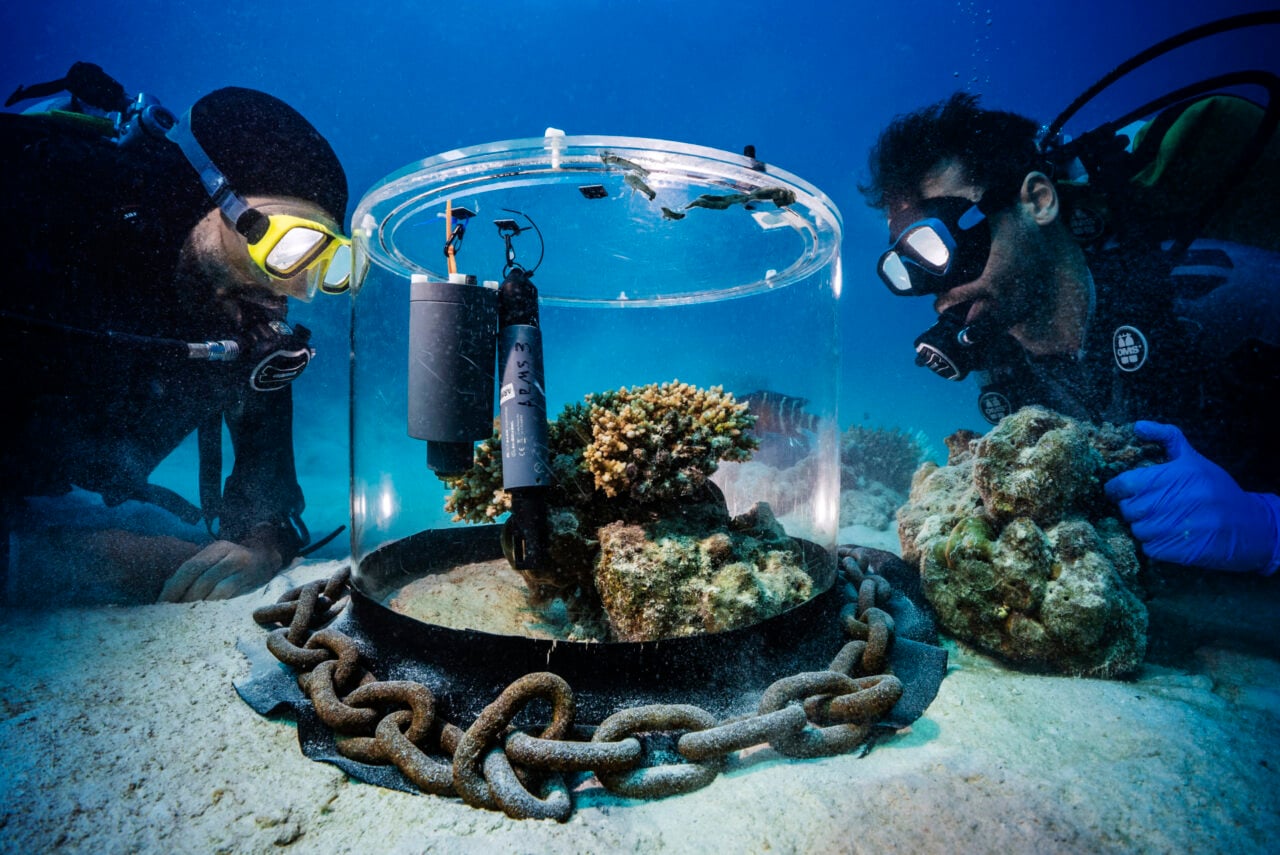
As global warming threatens corals, scientists search for reefs that can take the heat

MAJURO, Marshall Islands—Perched on the bow of an aluminum landing craft, Anne Cohen gazed a few yards ahead of the vessel toward a yellow robot gliding across the emerald Majuro lagoon.

The unmanned surface vehicle, called Yellowfin, was quickly becoming one of the coral researcher’s most dependable guides in these Central Pacific waters.

“She’s the best dive buddy,” said Cohen, a tenured scientist at the Woods Hole Oceanographic Institution in Cape Cod. Programmed to navigate to a precise set of coordinates, the robot cut through small swells like a tiny sailboat without a mast, directing Cohen toward a destination she had traveled thousands of miles to revisit.

Read full article

Comments

© Lukasz Larsson Warzecha/Getty Images

  •  

China’s new flexible brain-computer chip retains 94% efficiency after 18 months

A team of researchers from China and Japan has developed a ultra-flexible brain implant electrode array. 

It overcomes a major hurdle in brain-computer interfaces (BCIs): the physical mismatch between stiff metal electrodes and soft brain tissue, which typically leads to chronic inflammation and signal degradation.

The development comes from Tsinghua University’s Shenzhen International Graduate School, the University of Tokyo and the Chinese Academy of Sciences’ Shenzhen-Hong Kong Institute of Brain Science.

Researchers tested the flexible brain implant in animal trials. Interestingly, it achieved long-term signal clarity and safe, stable functionality over an 18-month period.

Soft brain implant

Neuroscientists pursuing the dream of a highly functional brain-computer interface often face the issue of the fleshy wall. The human brain is naturally soft. The advanced electrode arrays implanted in the brain to read thoughts or restore movement are made of rigid metals like platinum.

When you put something hard against something soft inside a moving body, friction wins. Over time, the brain jiggles, the metal rubs, and chronic inflammation forms a wall of protective scar tissue. Signals degrade, and the implant goes blind.

The new development is based on an all-organic, ultra-flexible implant material called Chip (conductive hydrogel with interfacial percolation). 

In the past, trying to use hydrogels, which are water-swollen polymer networks, for brain implants was difficult. These materials are biocompatible but have some issues, such as poor electrical conductivity and a tendency to swell like sponges when in contact with bodily fluids. Swelling distorts the microscopic grid of electrode channels, ruining any hope of micro-engineering. 

The researchers defeated both problems with a manufacturing hack.

To begin with, the hydrogel was pre-anchored to a rigid, ultrathin parylene substrate to fully lock its shape. Then, it was carved using high-precision photolithography while it was completely dry.

The result is a 128-channel array that is a mere 9 micrometers thick — far thinner than a strand of human hair. Moreover, microscopic channels were packed tightly to achieve a data density 10 times higher than any previous hydrogel implant.

As per the study paper, it has an electrical conductivity of 2,512 S/cm, letting it catch the faintest whispers of cellular thought. 

Tested on rabbits

To see if the material could survive the wet environment of a living body, the team implanted the arrays into rabbits. 

For over 550 days, the freely moving animals broadcast crystal-clear neural activity. Even after 18 months, the signal-to-noise ratio remained at 94 percent of its day-one clarity. When the researchers examined the brain tissue using histological staining, they found almost no inflammation, no angry immune response, and no thick scar tissue.

“The resulting all-organic ECoG array conforms to the cortical surface, minimizing foreign body response and providing exceptional signal quality, with the longest record up to 550 d[ays],” the team noted in the study paper. 

The South China Morning Post (SCMP) reported that it demonstrated exceptional durability and safety by tolerating 1,000 cycles of 30 percent tensile strain. It is the absolute maximum deformation real brain tissue can withstand. 

Throughout this intense stress testing, the material maintained stable electrical performance, showing less than a 4 percent variation in its conductivity.

BCIs are advancing rapidly, but their long-term survival inside the body has always been the weak point. Invasive brain implants should ideally last a lifetime rather than just a few years. This new class of organic hydrogel could eventually solve the gap between machine and mind, offering a durable solution for the long term.

💾

A team of researchers from China and Japan has developed an ultra-flexible brain implant electrode array. 
  •  
❌