
❌

Reading view

Earth’s First Land Animals May Never Have Been Amphibian-Like After All
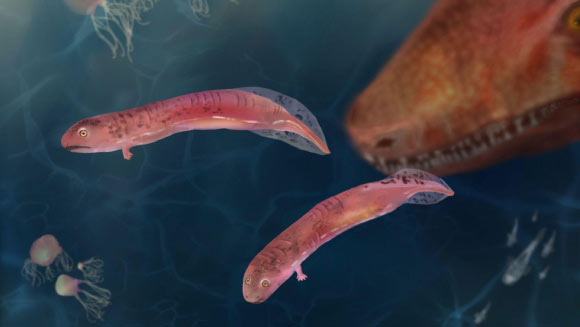
New fossil evidence suggests that embolomeres did not undergo a metamorphosis the way that modern amphibians do when growing up, which challenges a long-standing scientific belief that amphibians, reptiles, and mammals evolved from animals that had a tadpole stage. Image credit: Berit Godring.

Paleontologists from the Field Museum of Natural History have described the fossilized remains of baby embolomeres, crocodile-like predators that prowled ancient rivers and swamps between 350 and 280 million years ago.

The post Earth’s First Land Animals May Never Have Been Amphibian-Like After All appeared first on Sci.News: Breaking Science News.
  •  

125-Million-Year-Old Crocodile Relative Reveals Its True Colors

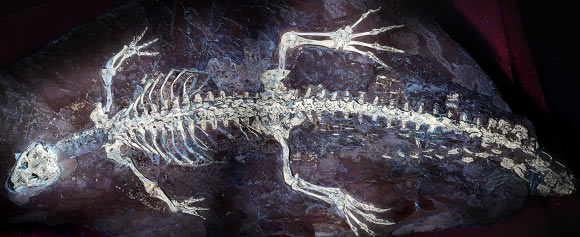
The holotype specimen of Montsecosuchus depereti. Image credit: Castillo-Visa et al., doi: 10.1093/zoolinnean/zlag076.

Exceptionally preserved skin of Montsecosuchus depereti, an extinct crocodylomorph no larger than a house cat that prowled the tropical wetlands of Early Cretaceous Spain, has allowed paleontologists to reconstruct details of its scales, sensory organs and even possible banded markings along its tail.

The post 125-Million-Year-Old Crocodile Relative Reveals Its True Colors appeared first on Sci.News: Breaking Science News.

  •  
❌