 Login

Archaeologists Found What May Be a Wooden ‘Prototype’ of Stonehenge, Predating the Famous Stone Monument by 500 Years
 Two vanished posts suggest ancient Britons tracked solstices before Stonehenge rose.
 Two vanished posts suggest ancient Britons tracked solstices before Stonehenge rose.

Editor’s Note: This week we’re at the 248th AAS meeting in Pasadena, CA. Along with a team of authors from Astrobites, we will be writing updates on selected events at the meeting and posting each day. Follow along here or at astrobites.com for daily summaries, or follow @astrobites.bsky.social on Bluesky for more coverage. The usual posting schedule for AAS Nova will resume on 22 June
When the universe first formed, the only elements present were the three lightest — hydrogen, helium, and lithium. Today, there are 118 confirmed chemical elements that make up the periodic table. So where did the heavier elements come from, when were they first created, and what can they tell us about the first stars that formed in the universe? In the final plenary of AAS 248, Ian Roederer (North Carolina State University) walked us through how ultraviolet observations are the key to understanding the origin of the elements.
We know that hydrogen, helium, and lithium were cycled through the earliest stars in the universe, where fusion and other processes produced the first heavy elements that were spit back out into the cosmos when these stars ended their lives as supernovae. According to Roederer, within just the first two or three generations of stars, every element with stable or long-lived isotopes had already been created. For the heaviest of these elements, the dominant source is likely a process called r-process nucleosynthesis, in which a rapid burst of neutrons bombards atomic nuclei, resulting in the quick capture of the neutrons to form very massive nuclei that subsequently decay to stable isotopes.

Illustration of two neutron stars approaching a merger, emitting gravitational waves as they draw closer together. [ESO/L. Calçada/M. Kornmesser; CC BY 4.0]
But remember all those news headlines about how binary neutron star mergers produce gold and platinum? Roederer points out that these were all inferred results — we didn’t actually observe direct evidence of gold and platinum in the aftermath of this explosion. That’s because it’s very difficult to detect the spectroscopic emission lines of heavy elements. To do so effectively, Roederer argues, requires high-resolution ultraviolet (UV) spectroscopy. He showed that in a cool star, high-resolution UV spectra provide a 50% increase in the number of elements you can detect. The heaviest of elements are only detectable with spectra in the UV range.
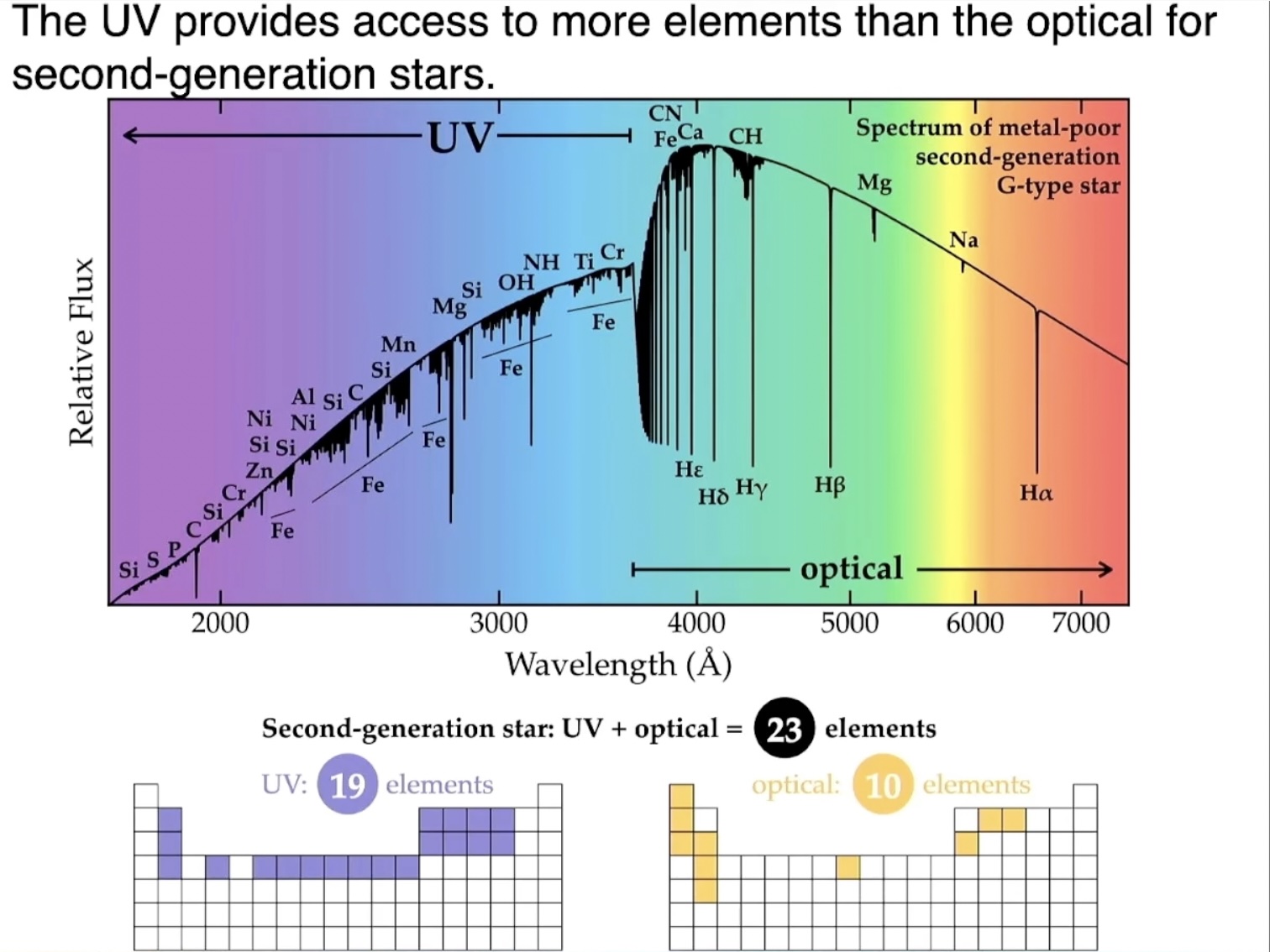
An example spectrum for a second-generation star shows how the UV is critical for identifying a broad range of elements. [Roederer 2026]
Roederer ended his talk with a look ahead at the future of UV spectroscopy and the path to the universe’s first stars. Right now, the only mission we have that produces high-resolution UV spectroscopy is Hubble. NASA’s next big flagship mission with a high-resolution spectrograph, the Habitable Worlds Observatory (HWO), will be transformational in the ability to detect — or verify the absence of — heavy elements in stellar atmospheres. An observatory like HWO will provide our best shot at identifying low-mass, metal-free stars that survive from the first generation of stars in our universe. As Roederer concluded, “The future of studying the origin of the elements is bright in the UV.”
You can read Astrobites’s interview with Ian Roederer here.
The post AAS 248: Day 4 appeared first on AAS Nova.

Nothing's next budget phone is the latest victim of RAMageddon. As 9to5Google reports, Nothing co-founder Akis Evangelidis announced in a post on X that a follow-up to the CMF Phone 2 Pro won't be coming this year:
We were working on a successor but with memory prices where they are right now, we can't build a phone that feels like a genuine step forward at a price that makes sense for CMF. As a result, we've decided not to launch a new CMF phone this year.
Last week, Nothing CEO and co-founder Carl Pei also said the RAM shortage has impacted the cost of the company's mid-range phone, stating, "For Phone 4A, memory costs doubled between …

The Great Tang is the largest, most luxurious SUV to launch under the BYD brand. After a hot start in China, racking up a record 150,000 orders ahead of launch, BYD is bringing the flagship electric SUV overseas, including Europe, by the end of 2026.
In the Electrek Podcast, we discuss the most popular news in the world of sustainable transport and energy. In this week’s episode, we discuss Jamie’s first drive in Aptera’s solar car, Tesla Cybercab specs revealed, Lucid Cosmos design leak, and more.
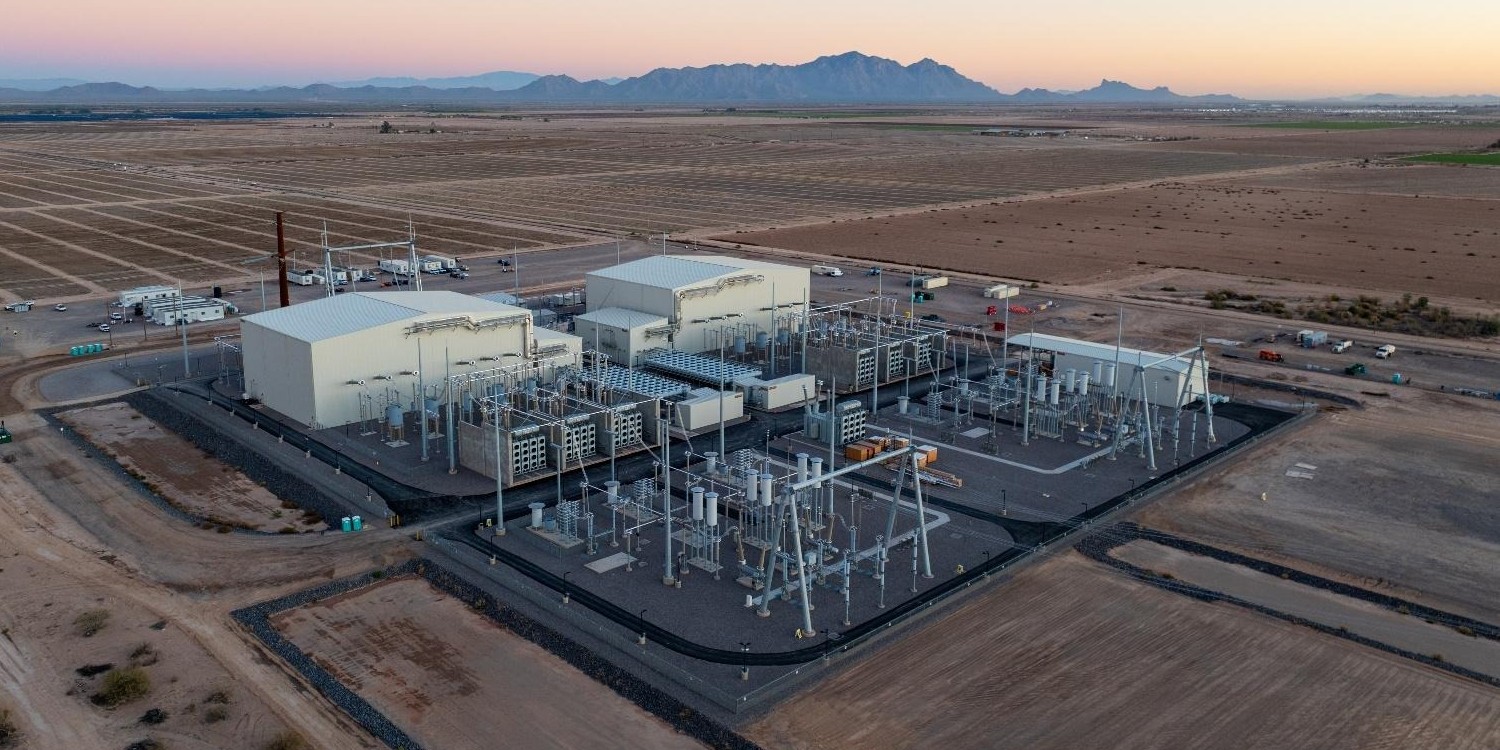
SunZia, an $11 billion wind-and-power-line project and one of the largest US clean energy transmission projects ever built, is officially online.

Jio Platforms, which owns India’s largest telco, is looking to lease broadband capacity from satellite constellations to jumpstart its own sovereign LEO network in the country.
The post India’s Jio lays out sovereign LEO constellation plan ahead of IPO appeared first on SpaceNews.

The Kona EV is making a comeback, but it will look much different this time with Hyundai’s new design and latest infotainment setup.

Relativity Space, the rocket company led by former Google executive Eric Schmidt, was picked to launch NASA's Aeolus payload to Mars in 2028, as reported earlier by TechCrunch. Under a new public-private partnership, Relativity Space will provide the "spacecraft, rocket, and cruise operations" to fly Aeolus to Mars, where the payload will "provide the first integrated, daily, global view of Martian winds, temperatures, dust, and clouds."
The Aeolus payload will have four instruments on board for studying the Martian atmosphere, which NASA says will "directly inform entry, descent, and landing systems and support safer, more predictable mis …

The newest Mercedes-Benz VLE 300 electric MPV combines 800V battery tech with limousine-level luxury, top-shelf infotainment options, room for eight, and enough rear legroom to make an S-Class feel like a mini Cooper.

We’re closing out this week’s Green Deals with a bang! Leading the charge of Early Prime deals is Aventon’s newly launched 4th of July Sale with new and returning smart e-bike low prices, like the Aventure 3 All-Terrain e-bikes at a new $1,749 low + the Aventure M Mid-Drive All-Terrain e-bike at a new $2,649 low, among others. We also secured exclusive $320 savings on the Yozma IN 10 Electric Dirt Bike starting from a new $879 low, as well as the best current pricing on Jackery’s 1,070Wh Explorer 1000 V2, 2,042Wh Explorer 2000 V2, and 5,040Wh Explorer 5000 Plus power stations starting from $429. We also spotted Segway’s 40-mile Max G30P Electric Scooter back at its lowest price, as well as a new Early Prime low price on the Govee Matter Outdoor Lamp Post. All this and more are waiting for you below, and don’t forget about all the hangover deals either, which have been collected together at the bottom of the page, like yesterday’s up to 60% Father’s Day and Prime Day savings from Heybike and Hiboy, and more.
Head below for other New Green Deals we’ve found today and, of course, Electrek’s best EV buying and leasing deals. Also, check out the new Electrek Tesla Shop for the best deals on Tesla accessories.

Smart lighting company Philips Hue has launched its first wired wall modules. Installed behind existing wall switches, the new devices bring non-smart lights into the Hue ecosystem for the first time. Hue also announced new Play table and floor lamps that are more affordable versions of its Signe series, along with upgrades to its E14 candle bulbs that add a broader white light spectrum and Matter-over-Thread compatibility.
The new lights are now available globally; however, the Wired Wall Switch Modules are Europe-only. Signify CTO George Yianni told The Verge that there are currently no plans to launch them in the US, but the company woul …
