Login

Amazon in Talks to Sell Custom AI Chips
Amazon may sell Trainium AI chips beyond AWS as cloud providers look for Nvidia alternatives in the fast-growing AI infrastructure market.

With the market capitalization of AI companies soaring, US Senator Bernie Sanders is looking to give the American people a piece of the action.
The veteran senator for Vermont has introduced the American AI Sovereign Wealth Fund Bill, aiming to give the public a 50 percent ownership in the largest AI companies in the US. It’s a timely move with both OpenAI and Anthropic preparing for the imminent IPOs.
Sanders is not the only one pondering such a move. As the bill notes, OpenAI has proposed the creation of a “Public Wealth Fund” giving citizens a stake in “AI-driven economic growth,” while Anthropic has proposed a sovereign wealth fund to “shape the sector’s behavior.” President Trump’s advisors are also contemplating the possibility of the government grabbing a stake in major AI corporations, according to media reports.
Sovereign wealth funds are not a new idea: Many administrations across the world have implemented them, notably Norway which has about $2 trillion in its wealth fund.
Sanders’ proposal would give the public a direct ownership stake in the largest AI companies, but, he said, it wasn’t just about the wealth. “The foundation of AI is based on the collective knowledge of humanity and the creative work of tens of millions of people. The American people must have the ability to slow it down and make sure that AI benefits humanity, not just the richest people on the planet. That’s precisely what this legislation does,” he said.

It is tempting to date cloud computing from the launch of Amazon S3 in 2006 and the rise of infrastructure as a service (IaaS) that followed. That was certainly the moment the market changed in a visible, irreversible way. But the truth is that cloud began earlier, in the 1990s, when software as a service (SaaS), application hosting, managed services providers, and various forms of remote subscription computing started to reshape how enterprises thought about owning and operating technology. Even then, the core value proposition was familiar: Let someone else run the infrastructure, abstract the complexity, deliver capability as a service, and allow the business to consume only what it needs.
What AWS changed was the scale, accessibility, and precision of the execution. Amazon turned infrastructure into a programmable utility. It made compute and storage available in ways that were elastic, self-service, API-driven, and globally reachable. That was the breakthrough. Enterprises had outsourced pieces of technology before, but now they could rent raw infrastructure with unprecedented speed and flexibility. The launch of Amazon S3 was especially important because it provided a durable, scalable storage foundation that became one of the building blocks for modern digital business.
Technology markets are rarely transformed by the first company to think of an idea. They are transformed by the first company to make that idea operationally real, economically viable, and broadly consumable. AWS did exactly that. It built a model for infrastructure as a service that allowed enterprises, startups, and eventually governments to rethink the entire life cycle of IT delivery.
Looking back from 2026, it is difficult to remember how radical this concept once seemed. At the time, many enterprise leaders considered public cloud too risky, too immature, too uncontrolled, or simply too foreign for conventional IT governance. There were concerns about security, compliance, vendor dependency, performance, data residency, and reliability. Many of those concerns were valid. Early cloud adoption often ran ahead of cloud maturity, and many organizations discovered that moving quickly did not always mean moving wisely.
Still, the economics of agility overwhelmed the inertia of the old model. Provisioning that once took months could be done in minutes. Capital expenditure gave way, at least in part, to operating expenditure. Experimental workloads became easier to justify. Digital businesses could scale without building data centers first. AWS led that transition, and the rest of the industry followed, including competitors that helped mature the market.
If the first decade of cloud was about acceleration, the second decade was about correction. Enterprises learned that cloud was not automatically cheaper, not automatically simpler, and not automatically better. It was better when used with discipline. It was more cost-effective when architected intelligently. It was more resilient when governance, operations, and security were designed into the system rather than added later.
This is when the industry grew up. We learned about cloud financial management because too many organizations assumed elasticity would control cost, only to discover that unused resources, poor workload placement, and fragmented accountability could drive spending far beyond expectations. We learned that public cloud could provide extraordinary innovation and reach, but also that not every workload belongs there. Latency, sovereignty, compliance constraints, legacy integration challenges, and predictable high-volume workloads all forced a more nuanced view.
We also learned about concentration risk. As enterprises standardized on a small number of hyperscalers, questions emerged around resilience, lock-in, and strategic dependency. The answer was never simplistic multicloud posturing for its own sake. It was architectural realism. Use the public cloud where it creates a clear advantage. Keep options open where business risk requires it. Understand portability, but do not romanticize it. In other words, cloud became less ideological and more practical.
Perhaps the most important shift of all is that we no longer debate whether cloud is real or whether enterprises should use it. That argument is over. Cloud is baked into the cake. It is part of enterprise operating reality. The modern enterprise assumes on-demand infrastructure, platform services, automation pipelines, managed databases, identity fabrics, observability stacks, and globally distributed application delivery. Even when workloads remain on-premises or at the edge, they are often built, governed, or operated with cloud-native thinking.
This is maturity. Cloud is not a project or a trend. It is not even a strategy by itself. It is an enabling model that now underpins enterprise strategy. Businesses no longer ask whether to adopt cloud in the abstract. They ask how much cloud, which cloud services, under what governance model, at what cost profile, and in support of which business outcomes.
That may sound less exciting than the early days of disruption, but it is actually the mark of success. The most powerful technologies eventually disappear into standard practice. Electricity, networking, virtualization, and mobile platforms all went through this process. Cloud has done the same.
As enterprises move aggressively into AI, cloud has entered another pivotal phase. AI is not replacing cloud. It is intensifying the importance of cloud while also changing how value is measured. Training, tuning, deploying, and governing AI systems require immense computational scale, specialized infrastructure, distributed data access, and operational consistency. Public cloud providers are well positioned to offer those capabilities, particularly with GPUs, AI platforms, managed model services, and data integration tools.
But this is not a repeat of the early cloud era. Enterprises are more sober now. They know the importance of cost, latency, and data gravity. They know that governance and accountability matter more in AI than perhaps anywhere else in modern IT. The role of cloud in the AI race is therefore foundational, but not absolute. Some AI workloads will run in public cloud. Some will be distributed across edge computing environments. Some will remain in private environments for reasons of sovereignty, economics, or control. The key is not to force a universal answer. The key is to create an architecture that aligns AI ambitions with operational reality.
Cloud should play the role it has gradually earned: not as a religion, but as a strategic utility. For AI, the cloud is where many enterprises will source scale, experimentation speed, global reach, and managed innovation. The winning organizations understand where cloud creates leverage and where other operating models make more sense.
The real story of the past 20 years is not just that AWS launched S3 and helped popularize infrastructure as a service. It is that cloud changed enterprise behavior. It normalized service consumption over asset ownership. It moved architecture toward abstraction, automation, and modularity. It forced IT organizations to broker capability rather than build everything from scratch. It redefined speed as a core competitive requirement.
And now, as AI becomes the next forcing function, cloud stands less as a novelty and more as the platform on which the next era will be built. That is a remarkable outcome for something that, in many ways, started with the old idea that computing could be delivered remotely on a subscription basis. We have been heading here for longer than many people realize. In the past two decades, led in large measure by AWS and the broader hyperscale movement it accelerated, cloud has evolved from a gamble to an indispensable foundation.
Hard to believe? Yes. But also inevitable in retrospect.

As AI shifts from output-generating large language models (LLMs) to armies of agents taking actions on their own, there is a growing threat that failures could affect system reliability.
Temporal, a Bellevue, WA firm founded in 2019, hopes to solve that problem by stabilizing AI and long-running computing processes through “durable execution,” a technology that reliably resurrects failed computing processes on other hosts. If a machine crashes in the middle of agentic AI transactions, the company resurrects the function on a different host so it can continue exactly where it left off. Temporal says its durable execution process comes with a 100% durability guarantee.
The company was solving these kinds of distributed-systems problems long before the generative AI (genAI) rush, and today it powers infrastructure from Coinbase to Airbnb to OpenAI.
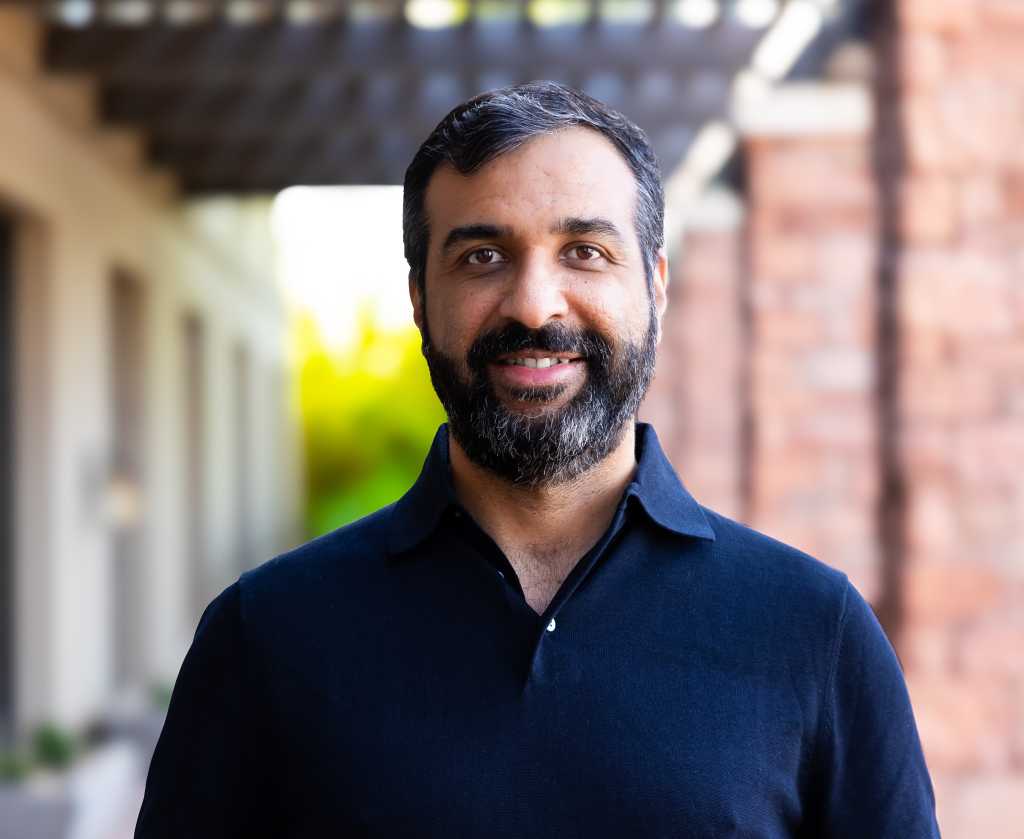
For IT decision-makers, Temporal’s offerings promise to bring reliability to AI operations — especially in regulated industries. Co-founder Samar Abbas spoke recently with Computerworld about his company’s technology, AI reliability, execution and what IT leaders need to keep in mind when evaluating and deploying agentic AI.
How did Temporal come to be a backbone powering AI system? “OpenAI recently announced we power many of their products underneath the cover — that’s where Temporal comes in.
“A couple of years ago, as LLMs got smarter, use cases were about generating outputs. Now, the industry is moving into agentic solutions, where AI isn’t just generating outputs, it’s taking actions. The longer these systems run, the more tools they invoke and the more value they create.
“They’re evolving into a whole army of agents coordinating to get complex tasks done. This starts to look like distributed systems. We become that execution authority, the reliability backbone for those agentic systems to get their tasks done from A to Z.”
What is Temporal doing in the backend to keep them stable? “It’s a new paradigm for building applications, we call that durable execution. If you write a function and a failure happens, you lose all of your state. When a machine crashes, we maintain the state. We seamlessly resurrect that function on a different host and continue executing exactly where it left off, without you as a developer writing a single line of code.
“It’s not just a cache, it’s an operating system guaranteeing execution in the presence of failure. We provide 100% durability guarantees behind it. People can use it for mission-critical use cases like transcribing doctor conversations, where even losing one [word] has big implications.”
Did this challenge exist before AI? “My co-founder and I have been at it pretty much our entire careers, spanning almost three decades. We’ve been solving this problem of distributed systems, at Amazon, Microsoft and then Uber, before starting Temporal. We are definitely pre-AI.
“As more workloads move to cloud and become distributed, it introduces this class of failures. This is the fifth time I’m building this system. I built simple workflow, then [a] durable task framework at Azure, then Cadence at Uber, now Temporal. The company is roughly seven years old, but the code base is over 10 years old, because we started at Uber and it’s been running in production ever since.”
And now you tackle that same problem at AI scale? “The funny thing is, especially with AI, that same problem is now at such a massive scale, it’s gone on steroids, with agentic systems coming online and doing real work. We’ve been powering every Coinbase transaction, every Snap story, every Airbnb booking, every Yum Brands order — KFC, Pizza Hut, Taco Bell.
“A couple of years ago, it looked like we’d over-invested in the scale and reliability of the platform. Then AI showed up in such a big way that now I’m asking the team: how do we scale another 10x, 100x, even 1000x? These agents are hitting the market in a way we couldn’t have imagined.”
Can you give a concrete example of that 100% guarantee? “When you’re moving money — debit or credit — imagine a failure happens after you’ve debited an account. Temporal guarantees execution of the entire function from start to finish, in the presence of all sorts of failures. At the end of the day, we’re in the business of selling reliability.
“Developers today spend 80% of their time building resiliency into their systems by working with low-level primitives like queues, databases, retry mechanisms and durable timers, and stitching them together. What we provide eliminates that. And that reliability is exactly what’s becoming critical as enterprises move agents into production.”
Why should CIOs and other IT leaders care about AI reliability? “These agents are now real, no longer prototypes or [proofs of concept]. They’re doing meaningful work in those organizations. Reliability and durability weren’t on the radar for CIOs 12 months ago. Now, it’s the blocker. Especially in regulated industries, if a transaction gets left in the middle, it has real regulatory concerns.
“That’s what’s holding them back from transitioning into the AI stage. It comes up in pretty much every conversation, in the first 10 minutes I’m talking to a CIO.”
CW: Where do the hardest problems sit today? “Security, governance, identity, authorization, authentication. This is where majority of the problems exist, and the ecosystem is so immature. Even things like MCP, I see organizations struggling to implement MCPs to build these agents. This is an area ripe for innovation and a lot of work, including here at Temporal.”
What skills should developers and CIOs build for the AI age? “The biggest skill now is that developers need to be more product focused. Product-minded engineers are the ones who will thrive, because the whole software development flow, writing code by hand, debugging by hand, testing it, is going to look completely different. The job of an engineer is now building the system that builds the system.
“Two things are happening in this AI world. First, a lot more engineers are coming into the fold, because companies like Replit or Lovable are making software development approachable for people who haven’t been professionally trained. Second, there’s going to be a lot more applications written than ever before. The problem space is shifting toward how we run all those applications safely and reliably, with all the guardrails. That’s where the industry is headed.”