 Login

Washington Wants a Piece of the AI Boom
Trump officials reportedly discussed AI equity stakes, raising new questions about frontier model access, regulation, and open-source AI.


Physicists with LHCb Collaboration at CERN’s Large Hadron Collider (LHC) have detected the elusive Ωcc⁺ baryon, a particle containing two charm quarks and one strange quark, completing a long-sought family of doubly charmed baryons first predicted over half a century ago.
The post CERN Physicists Discover Third and Final Member of Doubly Charmed Baryon Family appeared first on Sci.News: Breaking Science News.
With mass immigration we are witnessing a clash of sexual civilisations, says Bettina Arndt: two incompatible systems of rules about men, women and desire are colliding and the consequences are playing out in courtrooms.
The post The Clash of Sexual Civilisations appeared first on The Daily Sceptic.
Oxfordshire has become the first council to start a legal battle to ban residents from raising Union and St George flags on or near public highways due to the "distress" they cause.
The post Oxfordshire Seeks First Ban on Union Flags in Street appeared first on The Daily Sceptic.
Scientists from Asia Pacific’s largest paint and coating manufacturer have developed a new “ultra-black” automotive coating using carbon nanotubes that absorbs over 99% of the light it receives, resulting in the darkest black of any currently available paint or coating.
The NIPSEA Group’s research team said its new ultra-black coating, which they describe as “deep, jet black,” meets stringent automotive standards, a critical requirement in markets like China, where trendy, luxury vehicles in the darkest colors are in high demand.
According to a statement announcing the new ultra-black coating, BMW first introduced a concept car in 2019 with a vertically aligned carbon nanotube (VACNT) array outer coating. Due to the unique material properties of carbon nanotubes, including the ability to bend or absorb light, the researchers said that its introduction “set off a race” among auto manufacturers to create a similar, ‘black hole’ effect with a pronounced dark appearance.
“Automotive coating companies have been actively pursuing innovations in color technology to develop mass-processable ultra-black coating solutions with extreme blackness,” explained Zhiwei Liu, a research chemist with the company’s Color Technology Group, Core R&D, and an author on the study outlining the new coating.
The researchers note that ultra-black coatings are in unusually high demand in Asian countries, where having the darkest vehicle can represent a status symbol. has become a “key selling point” in China.
“Deep black finishes have long been the premium choice and signature color for luxury cars due to their elegant appearance, powerful visual impact, and luxurious undertone,” the researcher explained.
Although scientists have explored more practical ways to achieve the desired ultra-black effect, the new research once again leverages the unusual properties of carbon nanotubes to create an ultra-black coating that is darker than even the darkest commercially available alternative.
According to the team’s statement, they began by exploring methods to combine the benefits of carbon nanotubes with a black pigment that would serve as the coating’s color base. Critically, the team needed to create a nano-sized carbon black pigment-carbon nanotube composite that was also stable at a wide range of temperatures. and moisture conditions.
After exploring several formulations, Liu and colleagues succeeded in a stable nanotube-pigment composite. Next, the team incorporated the new carbon nanotube-based mixture into a coating binder and sprayed it onto a model car.
Because the new ultra-black coating uses structural absorption of light rather than the carbon black dispersion method used in current approaches, tests revealed an average absorption of 99.90% across all visible wavelengths. The team said its new coating also displayed “excellent long-term stability” during water and humidity tests.
Although the light absorption levels set a new standard for the darkest achievable automotive coating, Liu said advancements in dispersing technology and equipment leave his team “room for improvements.” The researcher highlighted potential advancements in “practical processability of carbon-nanotube-containing nanomaterials.”
Liu and colleagues also noted that increasing the proportion of carbon nanotubes in the material could further increase its light-absorbing capacity. However, they conceded, this approach “would also bring difficulties in industrial-grade processability.”
When discussing potential future improvements, the team said scientists could fabricate multilayered ultra-black coatings. In theory, they note that this approach could result in a “gradient refractive index that reduces interface reflection and further enhances light absorption efficiency,” producing an even darker look than their single-layer version.
Although the ultra-black automotive coating is not yet commercially available, the team said they have already completed a “proof of concept” manufacturing design. Still, they conceded, given technical and regulatory challenges that remain, “it may still be a while before ultra-black cars made with this film will be able to hit the road.”
“Further efforts will focus on the verification of coating application window and the comprehensive film performance validations of carbon black pigment-carbon nanotube composite-based ultra-black automotive coating,” Liu concluded.
The study “Robust ultra-black automotive coating with structural absorption and high absorption efficiency based on waterborne carbon black/CNT composite” was published in Matter & Light.
Christopher Plain is a Science Fiction and Fantasy novelist and Head Science Writer at The Debrief. Follow and connect with him on X, learn about his books at plainfiction.com, or email him directly at christopher@thedebrief.org.
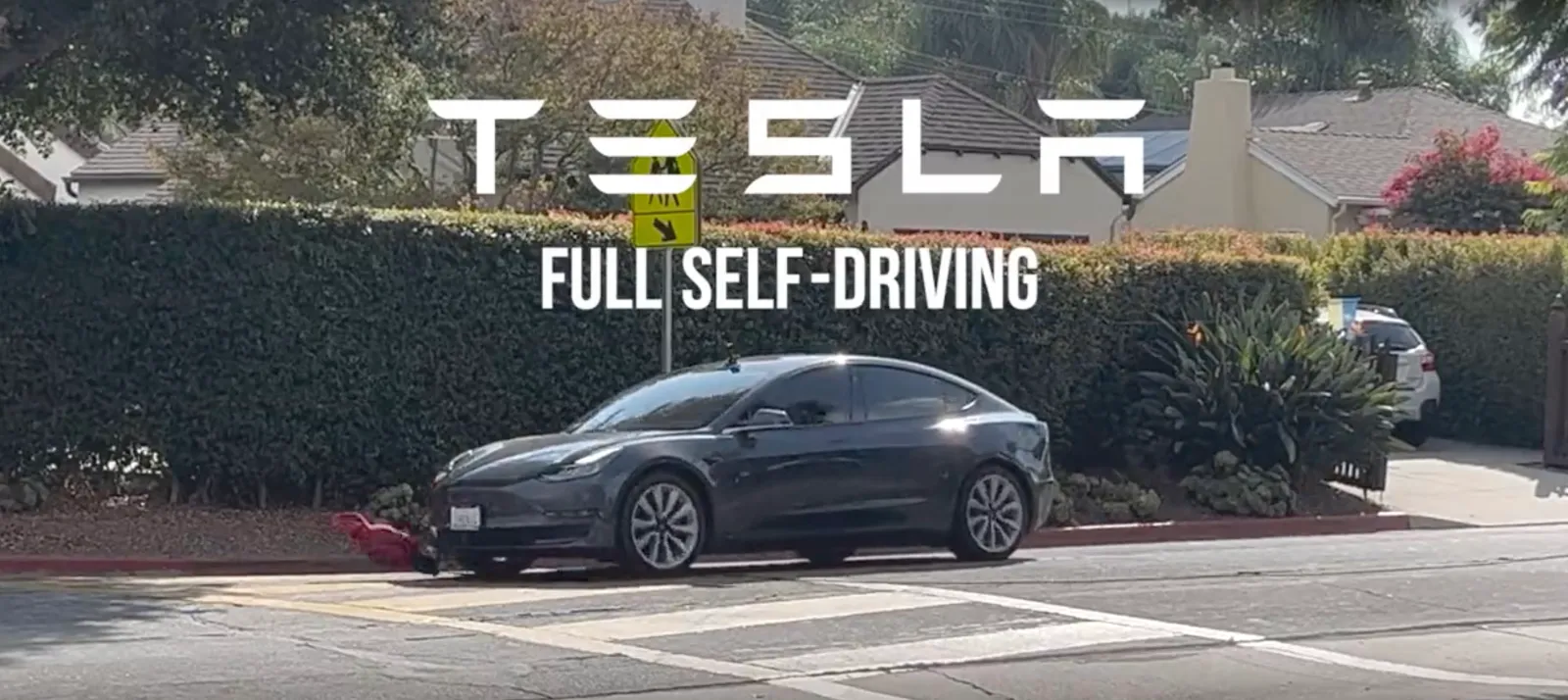
Elon Musk says Tesla’s Full Self-Driving will soon remember your parking preferences and let you talk to it through Grok, like giving directions to an Uber driver.
The features sound useful, and they reflect how genuinely impressive FSD has become — but they also underscore that it remains a supervised driver-assist system, not the unsupervised self-driving Tesla has sold to owners for years.
Do Instagram ao YouTube, as gigantes tecnológicas antecipam as férias de verão para dar aos pais maior controlo e segurança das atividades dos seus filhos nas redes sociais.
The post Meta e Google reforçam segurança das crianças e adolescentes com novos controlos parentais appeared first on Tek Notícias.

Welcome to this week’s installment of The Intelligence Brief… in a recent sworn statement, it was revealed that the Pentagon has reportedly leveraged Elon Musk’s xAI to assist in the launch of as many as 2,000 munitions in the recent U.S. war with Iran. In our coverage, we’ll be looking at 1) how the recent revelations were brought to light in a lawsuit focused on possible violations of the Clean Air Act, 2) how a “frontier” AI chatbot became key part of the Pentagon’s military efforts, and 3) why lawmakers are sounding alarms over the potential misuse of AI systems, and the need for ensuring their safe use while restricting major decisions to human operators.
“We must act now—not to stifle technological progress, but to establish clear rules of the road that keep humans in charge and keep AI’s use in warfare smart and safe.”
If you enjoy the news and perspectives offered by The Debrief, make sure that you aren’t missing our stories by making us one of your “preferred sources” on Google News. You can simply follow this link to add The Debrief to your list of favorites, and you can read more about Google’s preferred sources in our article here.
This week, as an initial deal aiming to end the U.S. war with Iran comes to fruition, it was revealed that thousands of missiles launched by the U.S. were fired by Elon Musk’s Grok chatbot.
The revelation emerged as part of a sworn statement pushing to protect the military’s use of Musk’s AI systems that could be impacted by a lawsuit, which alleges his xAI data centers are contributing to illegal pollution in black communities.
The statement, made by Cameron Stanley, the Pentagon’s chief digital and artificial intelligence officer, states that Musk’s AI chatbot helped to facilitate the deployment of “over 2,000 munitions to 2,000 distinct targets within 96 hours during Operation Epic Fury,” which Stanley called “a testament to the greatly increased operational efficiency made possible by the Grok Gov Model.”
In Stanley’s sworn statement this week, the Pentagon official tasked with overseeing the Department of War’s use of AI wrote that xAI’s Grok is one of just four proprietary AI models “capable of supporting national security applications.”
Stanley wrote that xAI also “remains one of just three enterprise providers equipped to sustain mission-critical operations across Secret and Top-Secret classified networks for the foreseeable future due to the enormous resources required for initial certification.”
“DoW currently relies on derivatives of xAl’s commercial offerings known as the Grok Gov Model,” according to Stanley, who goes on to note in his statement that the AI chatbot has been deployed in systems that include Maven Smart Systems, where it assists in supporting “vital national security missions, including targeting, intelligence, readiness, and recruitment,” and also aids in a range of other military tasks.
“The Grok Gov Model offers features unique to xAI that are found in no other frontier Al model,” Stanley wrote. As an illustration of its capability, Stanley then made the chilling revelation of just how involved in military activities the xAI chatbot has recently become.
“To further illustrate the uses of the Grok Gov Model within DoW, MSS frontier workflows enabled U.S. forces to deploy over 2,000 munitions to 2,000 distinct targets within 96 hours during Operation Epic Fury, a testament to the greatly increased operational efficiency made possible by the Grok Gov Model,” Stanley wrote in his testimony.
As reported by The Independent, the sworn statement provided by Stanley appears to represent the first confirmation by an official within the Trump Administration that Elon Musk’s AI is being used to control U.S. weapons used against Iran.
Since the conflict began in February, the Trump administration has faced scrutiny over U.S.-led attacks that have resulted in civilian deaths, with mounting questions over the military’s use of AI during the conflict.
In an analysis by the Lieber Institute at West Point, Jessica Dorsey and Luke Moffett noted that AI systems “are frequently framed as ushering in an era of unprecedented precision and efficiency in warfare,” but in reality, issues that include recent figures involving as many as 1,700 civilian deaths as of May 2026 “calls that narrative into serious question.”
“CENTCOM claimed it was generating 1,000 targets per hour,” Moffett and Dorsey wrote, adding that while “such capabilities are often framed as enhancing precision… they also introduce new layers of abstraction between decision-makers and the consequences of their actions.”
The U.S. Department of Justice has argued that a pending court ruling could significantly impact the Pentagon’s use of AI if it is prevented from deploying xAI across its systems.
In an effort to prevent such setbacks, the Trump administration has requested that a lawsuit launched by the NAACP be dismissed by a Mississippi-based federal judge. The lawsuit claims that Musk’s xAI Colossus 2 data center, which relies on several dozen gas-powered turbines, is operating in violation of the Clean Air Act. Presently, the turbines are being operated without permits, the lawsuit asserts.
In his sworn statement this week, Stanley called Musk’s xAI systems a “long-term strategic tool vital to maintaining our technological advantage against adversaries.”
However, opponents of such measures in Washington argue that new regulations must help to ensure that crucial military decisions—especially those which impact human lives—must also be made by humans.
“The most critical decisions affecting our national security and the lives of our service members must always be made by human beings, not unaccountable machines,” wrote U.S. Senator Kirsten Gillibrand (D, NY) in a statement earlier in June.
Gillibrand also recently introduced a bill that aims to restrict military decisions that could potentially impact human lives to human operators, and to implement a ban on AI in governing the use of nuclear weapons, as well as autonomous weapons capabilities and domestic surveillance.
In her statement this month, Gillibrand argued that the Pentagon “is moving toward deploying incredibly powerful AI technology without commonsense guardrails in place, which could have catastrophic consequences that make all of us less safe.”
“We must act now—not to stifle technological progress, but to establish clear rules of the road that keep humans in charge and keep AI’s use in warfare smart and safe,” Gillibrand added.
That concludes this week’s installment of The Intelligence Brief. You can read past editions of our newsletter at our website, or if you found this installment online, don’t forget to subscribe and get future email editions from us here. Also, if you have a tip or other information you’d like to send along directly to me, you can email me at micah [@] thedebrief [dot] org, or reach me on X: @MicahHanks.

Here are the top stories we’re covering right now…

For many people, having a glass of wine with dinner or a beer with friends feels like a normal part of life. Alcohol is often linked to celebrations, relaxation, and social events. However, scientists have been uncovering a growing number of health risks associated with drinking. For years, research has shown that alcohol can increase […]
The post Even Moderate Alcohol Drinking May Raise Pancreatic Cancer Risk appeared first on Knowridge Science Report.
 It's really not that big of an effort, and it's absolutely worth it.

 Older adults with higher vitamin C levels showed stronger brain-network markers.
Standing for Reform against Ed Davey's wife in a Lib Dem heartland, Chris Larkin found shy supporters, hostile middle-class lecturers and an unexpected guardian angel in a tower block.
The post My Kamikaze Attempt to Beat Ed Davey’s Wife in the Local Elections as a Reform Candidate appeared first on The Daily Sceptic.


Elon Musk has exercised the entirety of his 2018 Tesla (TSLA) CEO pay package, acquiring 303,960,630 shares for a paper gain of about $116 billion, according to a new SEC filing.
But he didn’t sell a single share to do it — and the stock he received is locked up until 2028.
