
❌

Reading view

Nuclear waste could be turned into advanced reactor fuel with US firms’ new deal

Advanced nuclear technology firm Oklo and TRISO nuclear fuel producer Standard Nuclear have finalized a memorandum of understanding to work together on fuel recycling, advanced manufacturing, and utilizing excess US plutonium.

This commercial agreement provides Oklo with its initial third-party buyer pathway for materials processed at its upcoming Tennessee facility. It follows an announcement by the US Department of Energy that selected both companies among five enterprises to enter advanced negotiations for the federal Surplus Plutonium Utilization Program.

The non-binding agreement outlines a framework for the companies to evaluate technical and commercial details. Under the material offtake portion of the agreement, Standard Nuclear will review specifications and delivery timelines for reprocessed uranium and uranium-transuranic streams.

These materials will originate from Oklo’s planned recycling plant in Oak Ridge and will serve as raw inputs for Standard Nuclear’s production of TRISO fuel, which is a specialized fuel type designed for high-temperature advanced reactors.

Supply chain integration

β€œThe collaboration would focus on the supply of reprocessed uranium (RepU) and uranium-transuranic material (U/TRU) streams from used nuclear fuel, which could serve as feedstock for TRISO fuel manufacturing,” said Oklo in a press release.

The second major component of the agreement focuses on managing federal weapons-grade material. The two companies plan to coordinate on licensing requirements, specialized packaging, facilities, and secure transportation networks.Β 

This logistical framework is intended to safely convert surplus domestic plutonium into usable fuel for next-generation commercial reactors, providing consistent clean electricity to the power grid.

Jacob DeWitte, co-founder and chief executive officer of Oklo, stated that his company focuses on converting used nuclear material into functional fuel supplies to help build the domestic supply chains required for deploying advanced reactors.Β 

β€œThis partnership represents a compelling pathway to source feedstock materials for our TRISO fuel manufacturing and radioisotope power systems and is an important step in strengthening domestic fuel feedstock supply sources,” added Kurt Terrani, chief executive officer of Standard Nuclear.Β 

Addressing domestic nuclear waste

The commercial effort addresses a significant domestic inventory challenge, as the United States currently stores approximately 100,000 metric tons of used nuclear fuel from traditional commercial reactors.Β 

Rather than leaving these stockpiles in long-term storage, the collaboration attempts to extract remaining energy resources from the waste.

Oklo is currently designing a fast test reactor named Pluto that runs specifically on plutonium. The goal of the Pluto project is to prove that surplus military plutonium can function as an interim fuel source for commercial electricity generation instead of remaining a permanent disposal issue.

At the same time, Standard Nuclear operates as an independent, reactor-agnostic fuel developer, meaning its TRISO fuel can be utilized across various third-party reactor designs for both terrestrial power grids and space exploration systems.Β 

The company also builds radioisotope power systems, which are compact electricity generators used by defense agencies and aerospace programs. These systems will rely directly on the specific isotopes recovered during the recycling processes managed by Oklo.
  •  

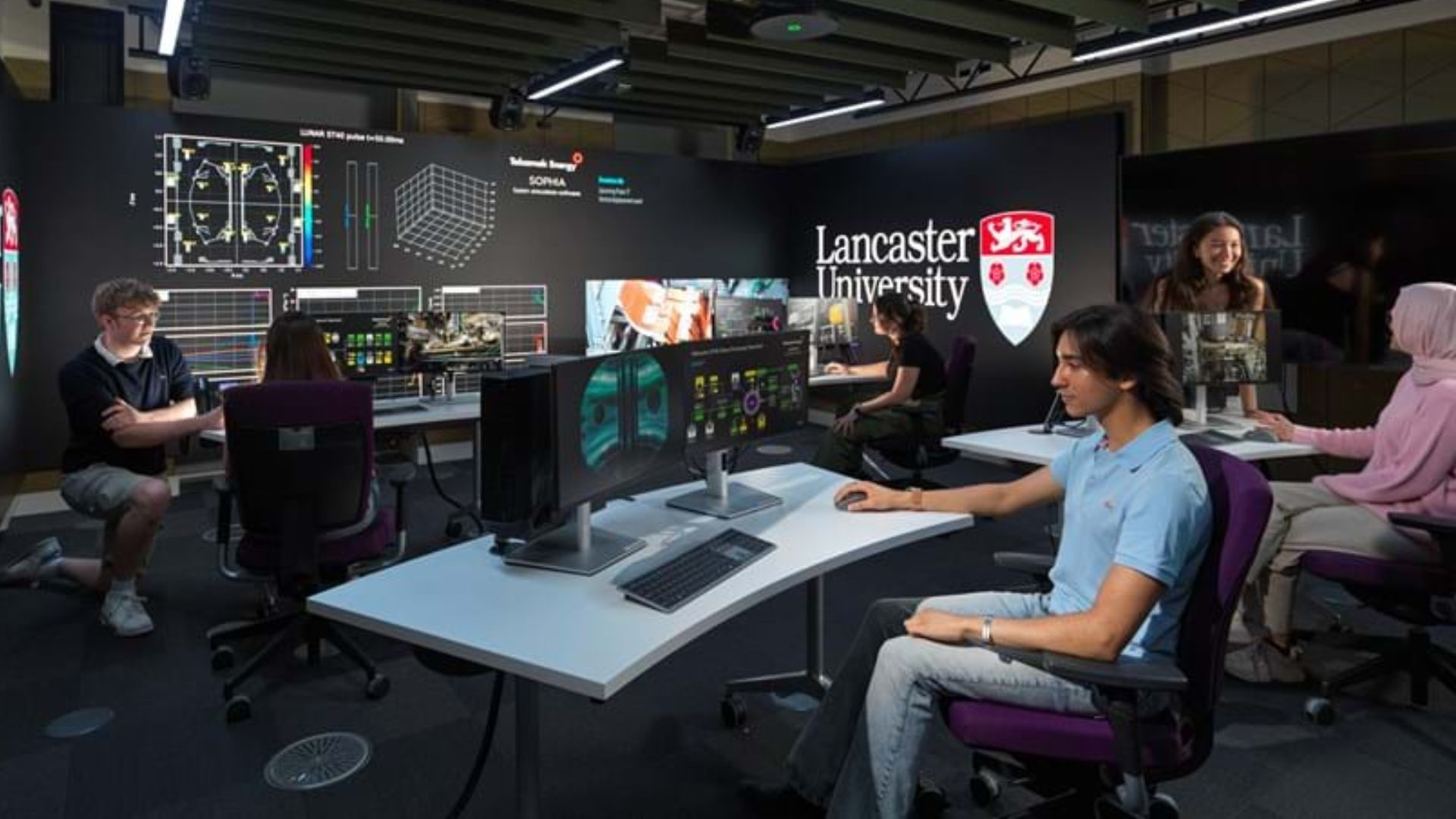
UK’s new nuclear control room simulator mimics multiple reactor types safely

Lancaster University has officially unveiled a first-of-its-kind nuclear facility control room simulator, featuring a highly adaptable design that can mimic several distinct reactor types.Β 

β€œThe pioneering simulator will support the nation’s clean energy goals and help enhance the country’s future nuclear safety,” said the university in a press release.

The facility functions as a training platform to prepare personnel for the domestic clean energy sector and to test safety protocols. Because the layout and internal computing architecture can be altered, operators can model multiple power generation technologies rather than relying on a single static layout.

Multi-reactor simulations

The physical setup features a three-sided wrap-around visual display and audio-visual recording tools. Instructors use these cameras and microphones to review how students handle complex scenarios and provide performance feedback. The physical desks and chairs can be moved into different positions to replicate the unique control room spaces found at real power utilities.

β€œIt has also been designed so that furniture can be reconfigured to represent different control room layouts,” noted the researchers.

The system runs industrial software codes produced by specialized companies, including Westinghouse, GSE Solutions, Tokamak Energy, and Norway’s Institute for Energy Technology. These configurations allow the machinery to mimic the operation of Pressurized Water Reactors, which currently make up the majority of international nuclear plants.

The software can also be used to simulateΒ Small Modular Reactors, smaller units designed for flexible grid deployment, and tokamak fusion systems, which use magnetic fields to contain high-temperature plasma.

β€œThis high-fidelity simulator will enable us to create simulations of scenarios where nuclear facilities are cyber attacked, providing valuable in-depth learning experiences for our cyber security students, some of which may become future cyber security professionals protecting our critical national infrastructure,” concluded Professor Paul Smith, Principal Investigator of the initiative

Practical training for safety behavior

The facility supports several academic areas simultaneously to address shortages in technical workforces. Although Lancaster University offers the only single-honors undergraduate degree in Nuclear Engineering in the United Kingdom, this project also relies heavily on the institution’s existing cybersecurity infrastructure.Β 

The university holds official accreditation as an Academic Center of Excellence in Cyber Security Research and Education from the National Cyber Security Center.

During practical exercises, instructors can inject simulated malware or network intrusions into the control software. Students must identify these digital anomalies, establish defenses, and maintain regular plant operations under active threat conditions. This training aims to prepare graduates to protect real national infrastructure from network breaches.

Beyond engineering and computer science, the university’s Psychology Department uses the simulator to study human performance. Researchers examine how teams analyze data, communicate, and make decisions during unexpected technical failures or emergency alarms.Β 

This behavioral data is used to improve safety guidelines for industrial settings where human error carries high risks. The new facility, built on the university campus next to the existing Data Immersion Suite, consolidates the institution’s digital modeling assets.

  •  
❌