 Login

The Birth-Control Pill May Encourage Binge Eating
But not for all women
The post The Birth-Control Pill May Encourage Binge Eating appeared first on Nautilus.


But not for all women
The post The Birth-Control Pill May Encourage Binge Eating appeared first on Nautilus.
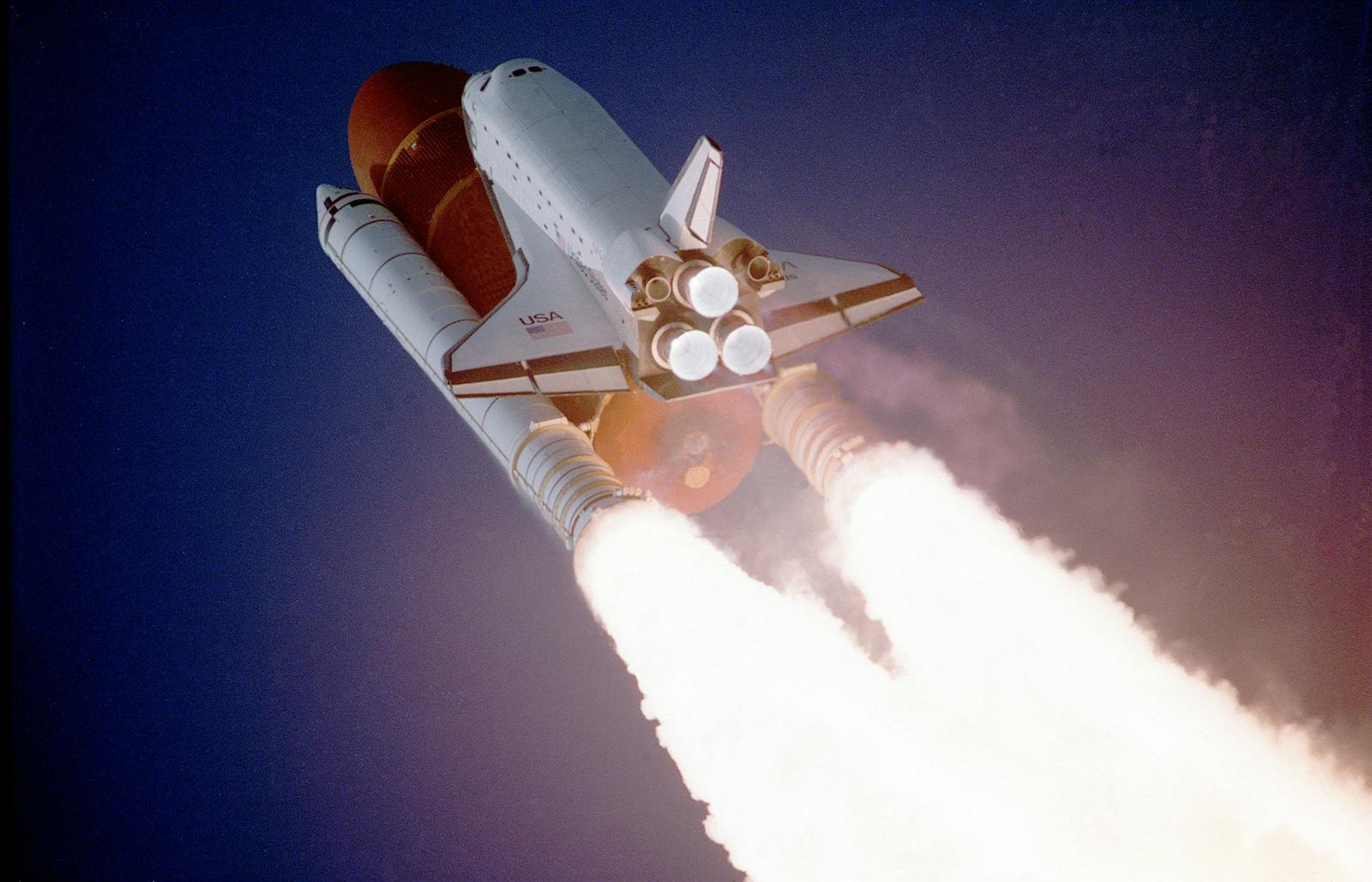
The thing that has happened to the global space economy over the past 25 years is the kind of phenomenon that is easier to see in retrospect than to recognise while it is occurring. In 2000, the entire global space industry generated approximately $130 billion in annual revenue, almost all of it from government programmes and satellite communications. By 2023, the figure had reached approximately $630 billion. By 2035, on the most widely-cited forecast available, it is projected to reach $1.8 trillion — making space comparable in economic scale to the current global semiconductor industry, and substantially larger than the global pharmaceutical industry. The growth is occurring above the cloud line, mostly out of sight of the populations whose lives are being increasingly shaped by it, and at a pace that exceeds essentially any other major economic sector currently being tracked by long-range forecasters.
According to the World Economic Forum’s April 2024 announcement of the $1.8 Trillion Opportunity report developed with McKinsey & Company, the central finding of the analysis is that the bulk of the space economy’s growth between now and 2035 will not come from rockets, exploration missions, or moonwalks. It will come from terrestrial industries that have begun to depend, in fundamental but mostly invisible ways, on satellite-enabled services. Earth observation. Satellite communications. Positioning, navigation, and timing services. Weather forecasting. Supply-chain tracking. These are the categories projected to drive the substantial majority of the new value, and the industries most affected are not aerospace companies but supply-chain and transportation firms, food and beverage producers, retail chains, insurance companies, and the digital communications sector — none of which traditionally classified themselves as space companies, and most of which will not be aware of how dependent their operations have become on orbital infrastructure until something disrupts it.
Per McKinsey’s overview of the space economy structure, the field can be usefully divided into two distinct halves. The first is what McKinsey calls “the backbone” — the satellites, launchers, ground stations, and physical infrastructure that constitute the traditional space industry. This category includes SpaceX, Blue Origin, Rocket Lab, the various government space agencies, satellite manufacturers, and the companies that build and operate the orbital and ground hardware. The second half is “the reach” — the much larger ecosystem of applications, services, and businesses that depend on the backbone to deliver value to end users on Earth. Ride-hailing apps that rely on GPS satellites. Agricultural operations that use Earth-observation imagery for crop management. Logistics companies that track shipments via satellite. Climate monitoring services. Financial-services firms that use satellite-derived timing signals for high-frequency trading.
The growth projection puts most of the new value in the reach rather than the backbone. The McKinsey-WEF analysis specifies that traditional hardware and service providers will see their share of the total space economy slowly decrease over the next decade, while the reach grows substantially faster than the backbone. The implication is that the space industry of 2035 will look substantially different from the space industry of today — not because the rockets and satellites will be radically different, but because the population of companies and customers depending on them will have expanded across nearly every major sector of the global economy.
The drivers that have attracted the most popular attention — asteroid mining, lunar resource extraction, helium-3 fusion fuel, space-based manufacturing, orbital tourism — are largely not the drivers of the $1.8 trillion projection. They are aspirational additions to the space economy that may or may not materialise in the projected timeframe. Asteroid mining, in particular, has been promoted by various ventures over the past decade — Planetary Resources, Deep Space Industries, AstroForge — but no commercial asteroid-derived material has yet been brought to market, and the engineering and financial obstacles remain substantial. Lunar resource extraction is closer to operational reality, with NASA’s Artemis programme planning to demonstrate water-ice extraction from permanently shadowed polar craters in the 2030s, but commercial-scale lunar mining is unlikely to contribute meaningfully to the global economy before 2040 at the earliest.
What is real and immediately driving the growth is mostly less glamorous. Satellite mega-constellations are real — SpaceX’s Starlink alone has launched approximately 7,000 satellites and is on track for tens of thousands more. Amazon’s Project Kuiper, OneWeb, and several Chinese constellations are also deploying at scale. The total number of operational satellites in orbit has grown from approximately 2,000 in 2018 to more than 10,000 currently, and is projected to exceed 100,000 by 2030. Earth-observation services have matured to the point where commercial satellite imagery is now used routinely by agricultural insurance providers, commodity traders, climate scientists, and intelligence agencies. Commercial space stations, designed to replace the International Space Station when it retires in 2030, are under active development by Axiom Space, Voyager Space (Starlab), and the Blue Origin / Sierra Space joint venture (Orbital Reef). These are not science fiction. They are construction projects with timelines and financing.
As reported by a December 2025 World Economic Forum analysis of developing economies in the space sector, the geographic distribution of space-economy growth is also shifting substantially. For most of the post-Apollo era, the global space sector was dominated by the United States and Russia, with significant activity in Europe and Japan. The picture in 2025 is more diverse. India successfully landed Chandrayaan-3 on the Moon’s south pole in 2023 — the first country to reach the south pole — and operates a substantial domestic launch industry. China’s space programme has approximate parity with NASA on several metrics and is targeting a crewed lunar landing by 2030. The United Arab Emirates has a Mars orbiter and is participating in lunar missions. Brazil, Nigeria, Mexico, and several Southeast Asian countries are building domestic satellite capabilities. The space economy is becoming, for the first time, a multipolar industry in which substantial value is generated outside the historical aerospace powers.
The structural risks to the projection are real and worth noting. The continued accumulation of orbital debris raises the long-term possibility of the Kessler syndrome — a cascading collision sequence that could render certain orbital altitudes unusable. The regulatory framework for space activity remains fragmented and inadequate to the scale of commercial activity now underway. Geopolitical tensions between the major space powers could produce export controls, technology restrictions, or worse. As covered in a 2024 Innovator analysis of the WEF/McKinsey findings, the $1.8 trillion figure is itself a base-case projection; the report’s upside scenario reaches $2.3 trillion, and the downside scenarios — in which orbital congestion, regulatory failure, or geopolitical disruption substantially slow the growth trajectory — produce significantly lower numbers. The most likely outcome is that the actual 2035 space economy lands somewhere in the broad range between these scenarios. The basic direction, however, is no longer seriously contested. Space is now an industrial sector at the scale of pharmaceuticals or semiconductors, growing faster than either, and is no longer adequately described as a frontier.
The post By 2035, the global space economy is predicted to reach roughly $1.8 trillion in annual value — up from approximately $630 billion in 2024 — driven by satellite mega-constellations, Earth observation services, commercial space stations, and the early stages of lunar resource extraction, in a quiet industrial revolution that many economists believe will exceed the speed of every previous economic transition in modern history appeared first on Space Daily.

The popular framing of emotional pain treats it as something metaphorical. The broken heart of unrequited love, the sting of rejection, the ache of grief, the cutting remark, the wound that will not heal: the language of physical injury used to describe emotional injury is so widespread across cultures and languages that it has been treated, until quite recently, as a poetic convention rather than a scientific claim. People who use the language to describe their suffering are usually understood to be reaching for a metaphor that captures something about the intensity of what they feel.
The peer-reviewed neuroscience of the past two decades has substantially complicated this picture.
What the brain imaging evidence has shown, across multiple research teams, multiple methodologies, and multiple populations, is that emotional pain is not metaphorically similar to physical pain. The two states activate substantially overlapping neural systems, produce substantially similar behavioural and physiological responses, and respond to substantially the same pharmacological interventions. The language of broken hearts and stinging rejection is, on the strongest current reading of the evidence, more literally accurate than the popular framing has assumed.
The foundational peer-reviewed study of the neuroscience of social pain was published in October 2003 by Naomi Eisenberger, Matthew Lieberman, and Kipling Williams in the journal Science. The team designed an experiment to induce social rejection in a controlled laboratory setting while participants were inside a functional magnetic resonance imaging scanner. They used a computer game called Cyberball, in which the participant played a virtual ball-tossing game with what they believed were two other human players. After a brief inclusion phase in which all three players passed the ball to each other, the two other players began passing the ball only to each other, excluding the participant for the remainder of the game.
The two other players were not, in fact, human. They were computer-controlled. The exclusion was a designed feature of the experiment. From the participant’s subjective experience, however, they had just been deliberately excluded from a social activity by two people they had been interacting with moments earlier.
The brain activation pattern during the exclusion phase was the most significant finding of the study. The dorsal anterior cingulate cortex, a region of the brain that processes the affective component of physical pain, was significantly more active during exclusion than during inclusion. The level of activation correlated positively with the participant’s self-reported distress at being excluded. The same region of the brain that becomes active when a person is burned, cut, or struck became active when the same person was ignored in a virtual ball-tossing game.
The Eisenberger team’s interpretation, supported by the subsequent literature, was that the human brain treats social exclusion as a form of injury. The neural alarm system that evolved to alert humans to physical damage to their bodies is, on the available evidence, the same alarm system that alerts humans to damage to their social bonds.
The strongest follow-up evidence for the Eisenberger thesis came from a different direction. In 2010, a team led by Nathan DeWall at the University of Kentucky, with colleagues at Toronto, Florida, UCLA, Florida State, and Georgia College, published a study in Psychological Science that asked a simple question. If social pain and physical pain activate the same neural systems, then a pharmacological intervention that reduces physical pain should also reduce social pain. The team tested this prediction directly.
Participants in the first experiment took either 1,000 milligrams of acetaminophen, the active ingredient in Tylenol and Panadol, or a placebo, every day for three weeks. They reported their daily experience of social pain (feelings of rejection, exclusion, hurt feelings) on a standardised scale throughout the study period. The participants who took acetaminophen reported significantly lower social pain than those who took placebo, with the difference emerging gradually over the three weeks and becoming statistically significant by the end of the study.
The second experiment, also with three weeks of acetaminophen or placebo, used functional magnetic resonance imaging at the conclusion of the dosing period. Participants played the same Cyberball exclusion game while being scanned. The acetaminophen group showed significantly reduced neural activation in the dorsal anterior cingulate cortex and the anterior insula during the exclusion condition, compared with the placebo group. The pharmacological intervention designed to reduce physical pain had reduced both the felt experience and the brain activation associated with social pain.
The finding was substantial. Acetaminophen is one of the most widely used pain relievers in the world, taken by hundreds of millions of people for headaches, muscle aches, fever, and other physical conditions. Its mechanism of action involves central nervous system effects rather than purely peripheral pain blocking, which is the reason it can affect the brain regions that process social pain in addition to the brain regions that process physical pain. The DeWall team noted that this finding has implications for the treatment of social rejection, chronic loneliness, and the social aspects of grief, although they emphasised that acetaminophen is not a recommended long-term treatment for any of these conditions.
A third major piece of evidence came from a 2011 study by Ethan Kross, Marc Berman, Walter Mischel, Edward Smith, and Tor Wager, published in the Proceedings of the National Academy of Sciences. The Kross team designed the most powerful induction of social pain that had been attempted in a brain imaging study. They recruited 40 participants who had experienced an unwanted romantic break-up within the previous six months and who reported that thinking about their ex-partner still produced significant emotional distress. The participants were placed in an fMRI scanner and shown alternating photographs of their ex-partner and of a familiar but emotionally neutral acquaintance. In a separate task, the same participants experienced a moderate physical pain stimulus, applied as heat to the forearm.
The Kross team found that thinking about the rejecting ex-partner activated not only the affective regions of the brain associated with physical pain, as the Eisenberger team had shown, but also the somatosensory regions, including the secondary somatosensory cortex and the dorsal posterior insula. These are the brain regions that process the felt sensory quality of physical pain, not merely the emotional response to it. The activation pattern in these regions during the romantic rejection condition was 88 per cent predictive of physical pain when compared with a database of more than 500 published pain studies.
The finding moved the science forward in an important way. Until 2011, the strongest interpretation of the Eisenberger data was that social and physical pain shared the affective components but probably not the sensory components. The Kross data suggested that, at sufficient intensity, social pain activates the sensory components as well. The brain of a person looking at a photograph of an ex-partner who has recently rejected them is, on the available evidence, doing something substantially similar to the brain of a person who has been physically burned.
Our team came across an interesting short video that explains the psychology behind what happens when someone has been through too much in life. If this article resonates, it’s worth a watch – click here to view it.
The current best evolutionary explanation for these findings is that the social attachment system in the human brain piggybacked on the existing physical pain system rather than developing a separate alarm mechanism of its own. Mammalian young, including human infants, require an unusually long period of caregiving to survive. An infant separated from its caregivers will die. The evolutionary pressure to keep infants attached to caregivers, and caregivers attached to infants, has been one of the strongest selection pressures shaping the human brain over the past several hundred thousand years.
The existing physical pain system, which had evolved to register damage to body tissue and motivate behaviour that reduces such damage, was already capable of producing a sufficiently intense aversive signal. The most parsimonious evolutionary solution was to extend this signal to social loss, so that the threat of being separated from social bonds would feel as urgent and unbearable as the threat of physical injury. The result is that the human brain treats damage to relationships, exclusion from social groups, and the loss of attachment figures as variants of the same general category of threat that includes physical wounds.
This explanation, sometimes called the social attachment piggyback hypothesis, has been articulated in detail by Eisenberger in subsequent papers and is the standard evolutionary interpretation of the imaging findings. It is also consistent with the cross-cultural ubiquity of physical pain language in descriptions of social loss. Speakers of unrelated languages, in unrelated cultures, with no shared history of metaphor formation, describe rejection and grief in substantially the same terms. The convergence on physical pain vocabulary appears to be driven by the underlying neural reality rather than by any cultural transmission.
The social-pain-physical-pain overlap thesis is not, despite the strength of the evidence above, fully settled in the peer-reviewed literature.
A 2014 study by Choong-Wan Woo, Tor Wager, and colleagues, published in Nature Communications, applied a more sophisticated form of brain imaging analysis called multivariate pattern analysis to data on both social rejection and physical pain. The Woo team found that while the same anatomical brain regions are activated by both kinds of pain, the precise neural patterns within those regions are distinct. The brain appears to be using the same general neighbourhood for both kinds of pain, but it is doing different things within that neighbourhood.
The Woo finding does not negate the Eisenberger and Kross results. It does mean that the strongest possible interpretation, in which social and physical pain are essentially the same experience differently triggered, is too strong. The current best reading is that the two kinds of pain share substantial neural infrastructure but are not identical. The overlap is genuine and substantial. The identity claim is too strong on the available evidence.
A separate methodological concern is that the laboratory inductions of social pain, including the Cyberball game and the ex-partner photograph paradigm, are short-duration acute experiences that may not perfectly model the chronic social pain of long-term loneliness, sustained grief, or persistent interpersonal trauma. The neural systems engaged by acute laboratory rejection may differ in important ways from those engaged by months or years of sustained social suffering. The peer-reviewed evidence on chronic social pain is thinner than the evidence on acute laboratory social pain, although the available work suggests broadly similar neural patterns.
Several things follow from the neuroscience of social pain that are worth saying clearly.
The first is that the popular framing in which emotional suffering is treated as fundamentally different from physical suffering, less real, less serious, less worthy of medical attention, is not supported by the available evidence. The brain treats damage to social bonds as a category of injury and produces a measurable distress signal that overlaps substantially with the distress signal produced by physical injury. The chronic loneliness that the World Health Organization now treats as a global public health concern, the grief that follows the death of a close attachment figure, and the social rejection that produces measurable mortality in long-term studies are all, on the available evidence, registering in the brain as forms of sustained low-grade pain.
The second is that the language people use to describe their emotional suffering is, on the strongest current reading, an accurate report of what is happening rather than a poetic exaggeration of it. A person who describes a breakup as feeling like being punched in the chest is not being dramatic. They are providing the most accurate available verbal description of a neural state that genuinely shares features with being punched in the chest.
The third is that the pharmacological evidence suggests interesting possibilities for the treatment of acute social pain, although the practical implications remain genuinely contested. The DeWall finding that acetaminophen reduces social pain has been replicated and extended in subsequent work, but the long-term implications for grief management, loneliness intervention, and the treatment of attachment-related disorders are not yet established.
The fourth, on the strongest current reading of approximately twenty years of peer-reviewed neuroscience, is that the human capacity for enduring pain extends to the capacity for enduring social pain, because the same neural systems are involved in both, and the same biological constraints determine what can be borne and for how long.
The popular framing has, in a sense, always known this.
The neuroscience is just confirming what every person who has ever lost someone has already been trying to say.
The post Research into the neuroscience of social rejection has shown that the brain regions that activate when a person is excluded, rejected, or grieving a lost relationship are the same regions that activate during physical injury, with the overlap being so substantial that a standard over-the-counter painkiller measurably reduces both kinds of pain, because the human brain has co-opted the physical pain system to register damage to social bonds appeared first on Space Daily.
Joanna Gray has a new low to report from the coal face of what remains of British education: the trend for blank walls in classrooms. This miserable "display diet" is designed, inevitably, to help the 'neurodiverse'.
The post We Should Push Back Against the Trend for Blank Walls in Schools appeared first on The Daily Sceptic.
