
❌

Reading view

Eno humanoid robot aims to become the general-purpose machine for every workplace
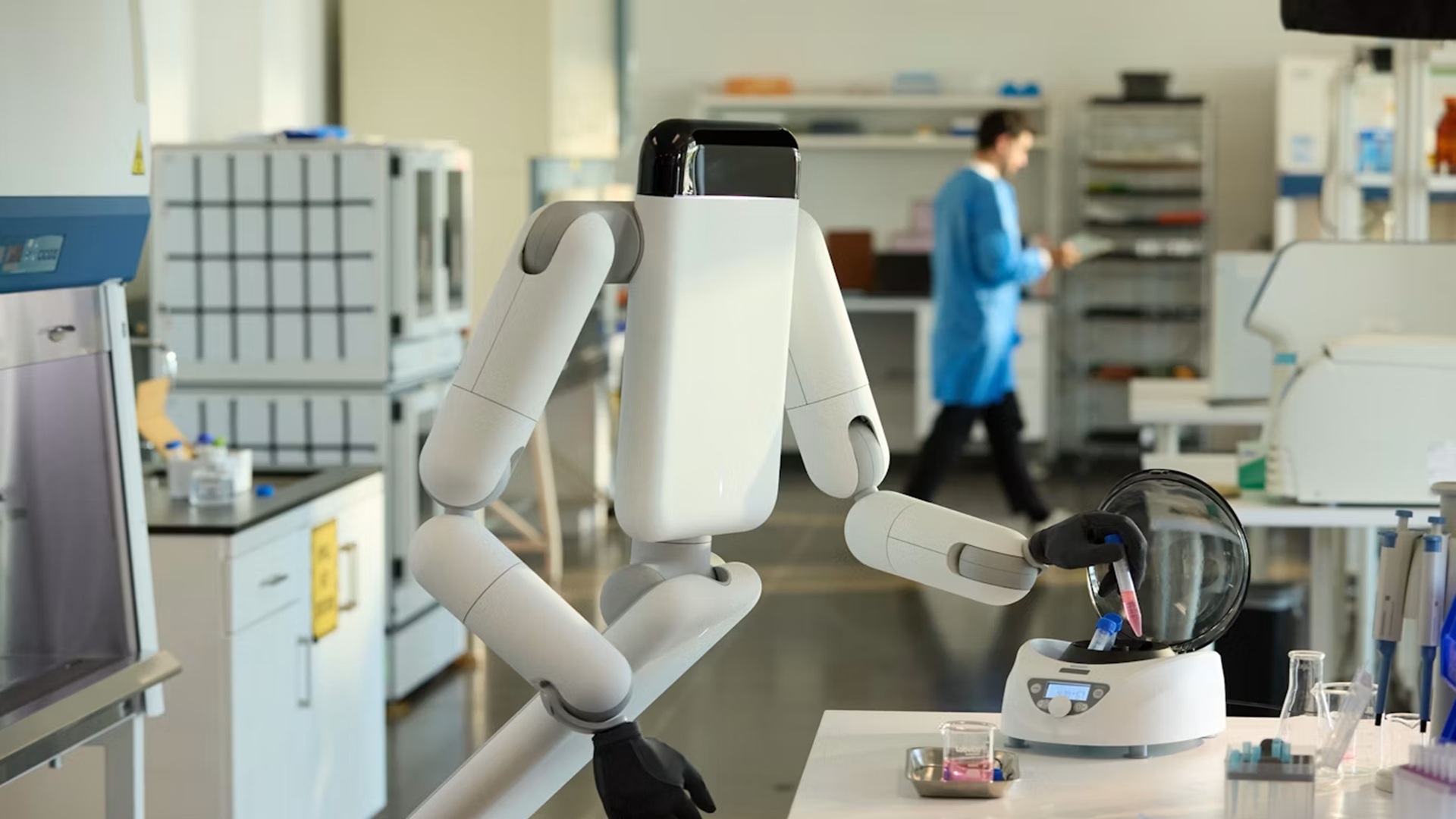
Genesis AI has unveiled Eno, its first general-purpose robot, as the company pushes toward building machines that can work across factories, laboratories, hospitals, hotels and eventually homes.

The robot combines Genesis AI’s custom hardware with GENE, the company’s robotics foundation model, which serves as Eno’s control system. According to the company, the robot is designed to perform complex tasks, adapt to changing environments and complete objectives with minimal human intervention.

Genesis AI said Eno differs from traditional industrial robots because it is built to operate as a physical agent rather than execute a fixed set of commands. The company claims the system can understand goals, reason through changing conditions, retain memory and carry out multi-step tasks over extended periods.

The announcement comes as companies across the robotics sector race to develop humanoid and general-purpose robots capable of handling a wider range of real-world jobs with less specialized programming.

Built beyond humanoids

Instead of closely resembling a human, Eno uses a wheeled base topped by an adjustable tower structure. The robot can change its height and reach in real time and fold into a more compact form when not in use.

Its most human-like features are its robotic hands. Genesis AI says the hands match the form and function of human hands, allowing Eno to use existing tools and interact with environments already designed for people.

“The only path to creating a robot that can truly deliver value to society and excel in the real world is through intentional design and a single, comprehensive system,” said Zhou Xian, co-founder and CEO of Genesis AI.

“From day one we’ve approached our design and engineering through a production mindset built around bringing our hardware, software and intelligence together as a whole.”

The company said Eno was designed alongside GENE so that the robot’s body and intelligence system function as a single platform. GENE is intended to give the robot human-level dexterity and the ability to handle long-horizon tasks that require planning and adaptation.

Showing robotic intent

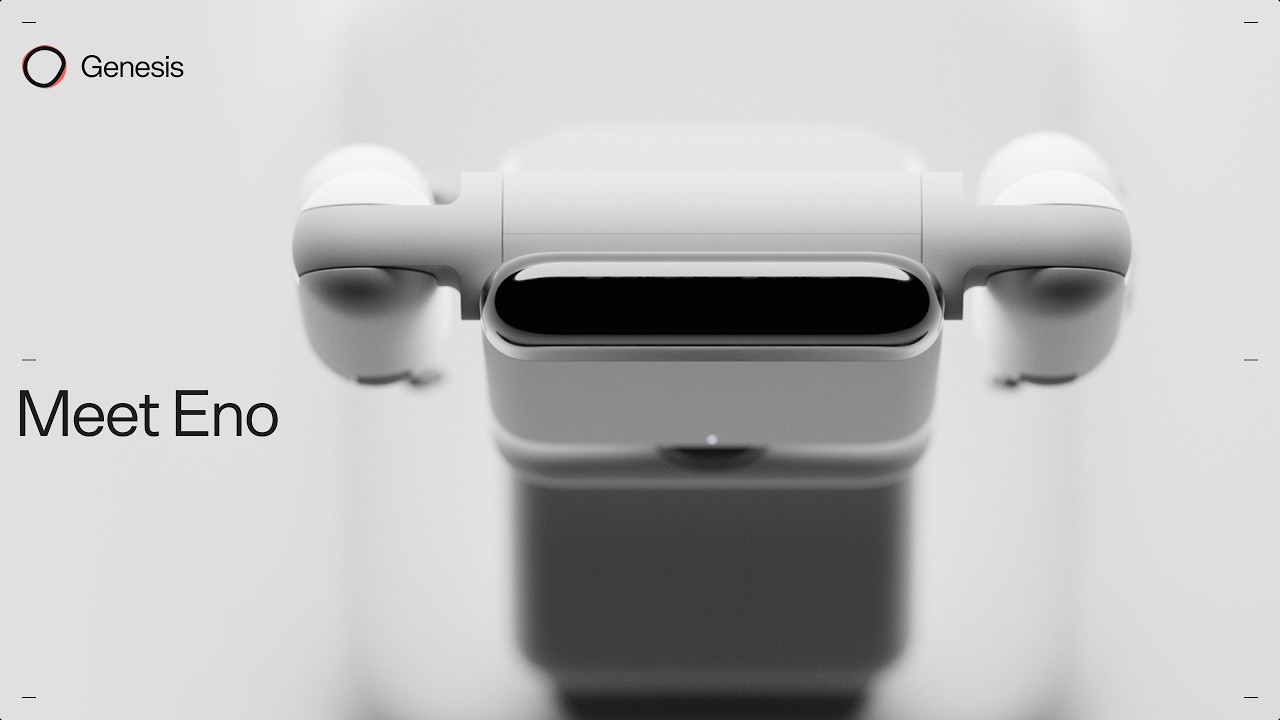
One of Eno’s distinguishing features is an optional built-in screen that displays the robot’s reasoning process, operational status and intended actions in real time.

Genesis AI said the feature is designed to improve transparency and help people understand what the robot is doing as it works alongside human operators.

“What Genesis is building with Eno is a fundamentally new model for extending human capability through advanced robotics,” said Eric Schmidt, former Google CEO and Genesis AI investor.

“The breakthrough is not replacing human expertise, but amplifying it — making advanced robotics genuinely useful, accessible, and scalable across industries.”

According to the company, Eno could eventually manage entire workflows rather than perform isolated actions. Examples include keeping production lines supplied, coordinating tasks across facilities and preparing workspaces for the next shift.

Genesis AI plans to begin production and targeted customer deployments before the end of 2026. Initial deployments will focus on manufacturing, logistics and laboratory environments, followed by hospitality and healthcare settings. Consumer-focused applications are expected at a later stage.

The company recently raised $105 million in seed funding and says additional robotic platforms are already under development as part of its broader roadmap for general-purpose robotics.
💾

French startup Genesis AI unveils Eno, a general-purpose robot designed to handle complex tasks across industries.
  •  

SpaceX acquires Cursor in $60B stock deal as race for coding tools intensifies

SpaceX has agreed to acquire coding startup Cursor in a $60 billion all-stock deal, according to a filing with the U.S. Securities and Exchange Commission (SEC). The acquisition deepens the Elon Musk-led company’s push into artificial intelligence software and developer tools just days after its record-breaking Nasdaq debut.

The deal brings San Francisco-based Anysphere, the company behind Cursor, under the SpaceX umbrella as thje company looks to strengthen its position against rivals such as OpenAI and Anthropic in the fast-growing AI coding market.

SpaceX announced the massive deal in a post on X, saying: “SpaceX has exercised the option to acquire @cursor_ai in an all-stock transaction with the goal of building the world’s most useful AI models.”

SpaceX has exercised the option to acquire @cursor_ai in an all-stock transaction with the goal of building the world’s most useful AI models.

For the past few months, SpaceXAI has been jointly training a model with Cursor, which will be released in Cursor and Grok Build soon.… https://t.co/X5mepgXgjJ

— SpaceX (@SpaceX) June 16, 2026

The company added that it has been jointly training a model with Cursor over the past several months and plans to release it in both Cursor and Grok Build, xAI’s coding agent, in the near future.

Code meets compute

The acquisition comes after an agreement between the two companies in April that gave SpaceX the right to acquire Cursor at a predetermined valuation. According to SpaceX’s SEC filing, the companies also entered into a compute partnership under which SpaceX would provide GPU cluster capacity and collaborate on improving existing models, including Grok, while potentially developing new AI products together.

In the filing, SpaceX described software development as a strategically important AI use case because it generates structured, verifiable data and frequent user feedback. The company said Cursor’s coding workflows provide valuable developer interaction data, including coding prompts, iteration cycles and software architecture decisions that could help improve model training and inference.

Cursor has emerged as one of the fastest-growing AI software companies since its founding in 2022. Reports suggest that the company has reached roughly $2.6 billion in annualized business-to-business revenue and has recently been discussing a funding round that would have valued it at $50 billion.

The startup’s coding assistant is widely used by developers to generate, edit, and review software code. Cursor counts major companies such as Stripe, Adobe and Nvidia among its users, while Nvidia CEO Jensen Huang has described it as his “favourite enterprise AI service.”

Data powers expansion

SpaceX said the acquisition will help advance its broader AI strategy by integrating its models more directly into developer workflows and expanding distribution through high-engagement software products.

“We look forward to working closely with the Cursor team to advance our frontier AI capabilities,” SpaceX said in its announcement.

Cursor also welcomed the deal, posting on X: “We’re excited to join forces with @SpaceX to advance the frontier of useful AI. Expect significant improvements to Cursor soon.”

We're excited to join forces with @SpaceX to advance the frontier of useful AI. Expect significant improvements to Cursor soon. https://t.co/62IMr2sgEy

— Cursor (@cursor_ai) June 16, 2026

The acquisition follows SpaceX’s blockbuster stock market debut last week. Reuters reported that the company’s valuation climbed above $2 trillion after the listing. The company’s shares surged further Tuesday, briefly pushing SpaceX past Amazon by market value.

SpaceX expects the transaction to close during the third quarter of 2026, subject to regulatory approvals. Once completed, the deal would give the company direct control of one of the industry’s most prominent AI coding platforms while expanding access to developer data that it believes can strengthen future versions of Grok and other AI models.

  •  

Tiny vision chip sees, processes, and stores data for next-gen autonomous systems

Researchers in Australia have developed a neuromorphic vision chip that can see, process, and store visual information in a single device, mimicking how the human eye and brain work together. The small chip, built using doped indium oxide, is designed to reduce reliance on external processors and enable faster decision-making in applications such as autonomous systems.

The work was led by engineers at RMIT University, with contributions from Deakin University and the University of Melbourne. The team says the device combines sensing, processing, and memory functions in one platform, removing the need for separate hardware components that typically slow down machine vision systems.

Unlike conventional imaging systems that capture data and send it to external processors, the new chip performs computation directly where the light is detected. The sensing layer, which is thousands of times thinner than a human hair, is engineered to respond to light and retain information over time, allowing it to function more like a biological visual system.

The researchers say this integrated approach could reduce energy consumption and improve response speed in real-time environments. The device was tested using ultraviolet light, and the team is now working to extend its capabilities to visible and infrared light for broader applications.

Brain-like vision system

The chip is designed to mimic the way the human eye captures light and how the brain processes and stores visual input. It performs multiple tasks on a single platform, including sensing incoming light, processing signals, and storing visual information for later use.

Team leader Professor Sumeet Walia said the goal was to remove the delay and energy cost of transferring data between separate systems. “We’ve made real-time decision making a possibility with our invention, because it doesn’t need to process large amounts of irrelevant data and it’s not being slowed down by data transfer to separate processors.”

The device also showed the ability to retain visual information for longer periods without frequent electrical refresh signals, which reduces energy use and improves efficiency.

First author and RMIT PhD researcher Aishani Mazumder said the system draws inspiration from how the brain processes information. “Neuromorphic vision systems are designed to use similar analog processing to the human brain, which can greatly reduce the amount of energy needed to perform complex visual tasks compared with today’s technologies.”

Toward autonomous machines

The researchers say the technology could be used in self-driving cars, autonomous robots, and monitoring systems that operate in dangerous environments. Possible applications include object recognition in vehicles, detection systems in remote or hazardous areas, and advanced imaging for forensics and industrial inspection.

Because the chip integrates multiple functions into a single element, it could also support longer-term autonomous operation without heavy computational infrastructure. The team says this makes it suitable for systems that need to adapt quickly to changing environments.

The device mimics the retina’s ability to capture an entire image and the brain’s ability to interpret and store it, enabling a more compact and efficient approach to machine vision. The researchers believe this could eventually lead to vision systems that improve with experience, similar to biological systems.

The team used specialized nanofabrication and microscopy facilities at RMIT University, with support from the Australian Research Council and the National Computational Infrastructure.

The study appears in the journal Advanced Functional Materials.

  •  
❌