Login

‘Superconducting puddles’: Diamond’s hidden networks could power future quantum chips
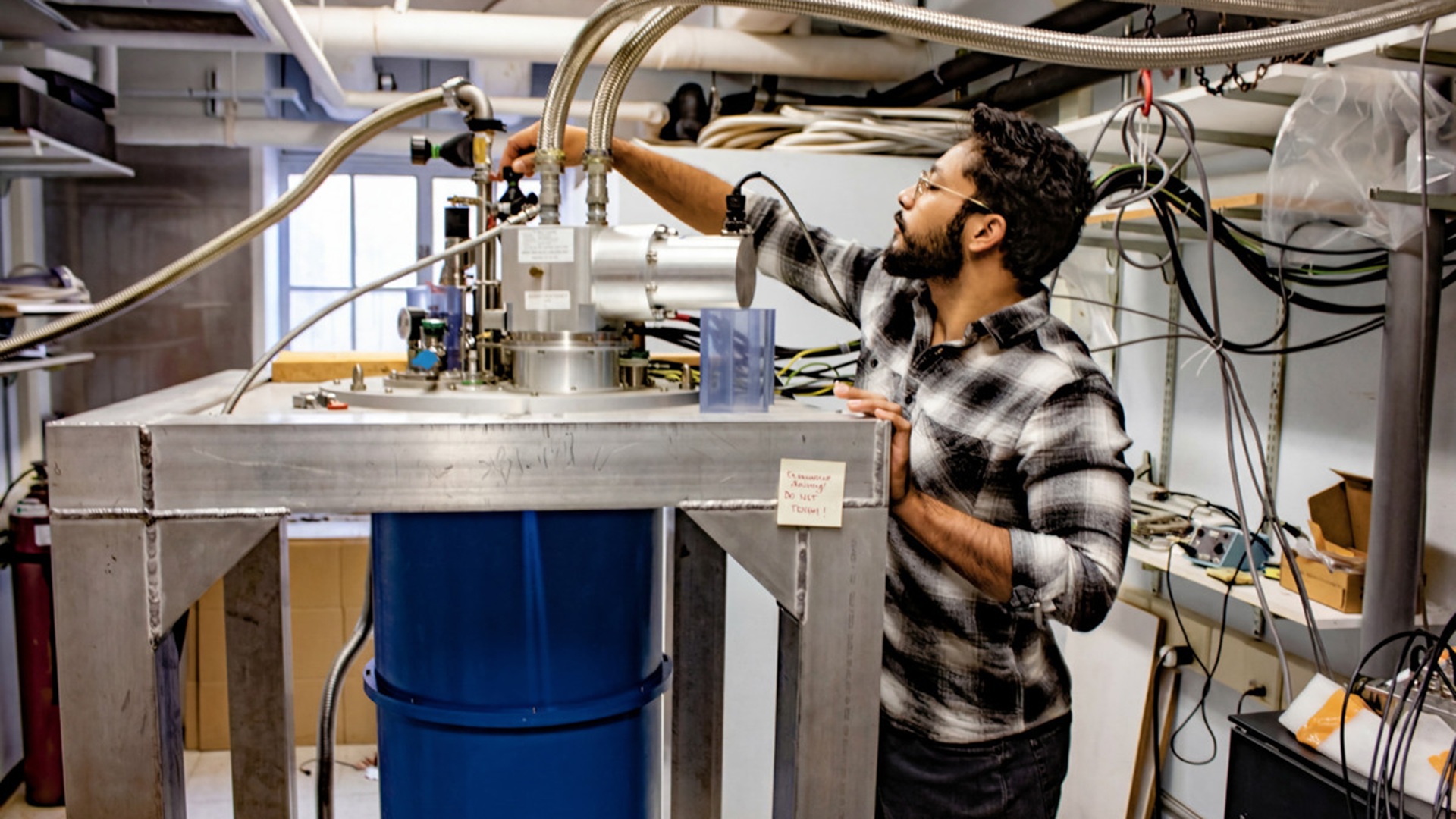
US scientists have shed light on the physics behind diamond’s superconductivity, which could help engineers develop more powerful quantum devices, including multifunction quantum chips.
The joint research team consisted of experts from the US Department of Energy’s (DOE) Argonne National Laboratory (ANL), Pennsylvania State University, and the University of Chicago Pritzker School of Molecular Engineering. It discovered new insights into how electricity can flow through a diamond without resistance under the right conditions.
The findings could lead to multifunctional quantum chips capable of combining several quantum technologies within a single material. “This offers a new way of thinking by integrating superconducting and semiconductor behavior to create opportunities for multifunction quantum devices,” David Awschalom, PhD, from UChicago PME, said.
According to Awschalom, who is the Liew Family Professor of Quantum Science and Engineering and Physics at UChicago PME and the director of the Chicago Quantum Exchange, the breakthrough could make quantum technologies more efficient and better integrated with classical technologies.
An unexpected discovery
Diamond is valued in advanced technology because of its exceptional hardness, optical properties, and thermal conductivity (Tc). It features the highest thermal conductivity and mineral hardness of any material known. It can also become superconducting when doped with boron, an element that alters its electrical conductivity.
More than two decades ago, scientists discovered that diamond can also become superconducting when doped with atoms of boron, an element that can alter its electrical behavior. Until now, however, the mechanisms behind the phenomenon remained largely unclear.
To analyze the phenomenon, the researchers synthesized high-quality diamond thin films, which contained carefully distributed boron atoms. They were stunned to find that despite appearing structurally uniform, the films had a hidden mosaic of microscopic superconducting regions.
The research team called these regions “puddles.” It was further discovered that they eventually connect with one another, therefore allowing electrical current to travel through the material without resistance.
“This serendipitous discovery caught us totally by surprise because these are structurally homogeneous, crystalline films,” Nitin Samarth, PhD, the Verne M. Willaman Professor of Physics and Materials Science and Engineering at Penn State, and co-corresponding author of the paper, said. “So, the question was: Where is this granularity coming from?”
A new quantum platform
According to the researchers, these superconducting regions are not fixed. Their shape and behavior can be modified by changing magnetic fields, temperature, and electrical currents. The researchers believe they can learn to connect them more efficiently by identifying how electrons move between them.
This could boost the performance of future quantum devices and allow them to operate at higher temperatures. Meanwhile, several parameters can be adjusted independently to tailor the material’s properties, including boron concentration, crystal orientation, mechanical strain, and dimensionality.
“We now have a reliable roadmap for engineering diamond superconductors by independently adjusting the material’s core properties,” Samarth said in a press statement. “There are a lot of exciting possibilities here, for both quantum and classical technology.”
Awschalom noted that the discovery could lead to the creation of multifunctional quantum-on-chip devices. “Imagine a future technology that combines light, spin, superconductivity, and magnetism, all in a single material that one could also integrate with today’s microelectronics,” he concluded.
The study has been published in the journal Proceedings of the National Academy of Sciences (PNAS).