An anonymous reader quotes a report from Ars Technica: The driving technology company Mobileye plans to launch a robotaxi service in an as-yet-unnamed US city in 2027, it said earlier today. The service will be vertically integrated, using Mobileye's Moovit mobility platform to interact with customers booking rides, coordinate drivers, and so on. The Israeli company, which was bought by Intel in 2017 before going public again in 2022, says it will start with around 100 robotaxis early next year. The company first rose to prominence in the mid-2010s, when Tesla began using Mobileye's advanced driving assistance systems (ADAS) as part of Autopilot. That relationship lasted until 2016, when Mobileye dropped Tesla as a customer after being alarmed that a driver assistance system was being sold to end users as driverless technology. Since then, Mobileye has continued to work with other partners on ADAS and autonomous vehicles.
It has developed a new "SuperVision" ADAS that combines cameras and radar sensors, used by Porsche and Polestar, among others. On the robotaxi front, it has partnered with Volkswagen Group's MOIA to develop a commercially available robotaxi based on the VW ID. Buzz minivan, and last year, Mobileye revealed plans to work with Lyft to deploy robotaxis in Dallas, "as soon as" this year. [...] If Mobileye's experience with the initial 100 robotaxis goes well, it says it will scale up to around 17,000 robotaxis within the following five years. "The robotaxi revolution has only just begun, and its potential for transforming how we travel around the world continues to increase," Shashua said. "This initiative is not a replacement for our existing partnerships; it is an extension of them," said Amnon Shashua, founder and CEO of Mobileye. "We remain deeply committed to enabling automakers and mobility providers with Mobileye Drive. At the same time, operating our own service allows us to accelerate adoption, gain direct operational experience, and showcase the full potential of autonomous mobility."
Mobileye apparently wants to own some of the robotaxi market, even if that puts it in direct competition with companies it supplies its self-driving system to.
The company said the cuts were part of a restructuring meant to help scale to profitability. Rivian recently pushed back its profitability goal to invest in autonomy.
Against all odds, the Tesla Cybercab is in production. And while Elon Musk's company may not have a very coherent plan for the tiny, autonomous two-seater, it's still taking the necessary steps to certify the EV's legitimacy. As such, Tesla recently filed paperwork with the Environmental Protection Agency that reveal many of the Cybercab's specs, including its weight, battery size, and preliminary range estimates.
What these documents reveal is the lightest, most range efficient vehicle Tesla has ever produced - and quite possibly one of the most efficient EVs ever produced.
The EPA filings confirm the Cybercab runs on a single front-mou …
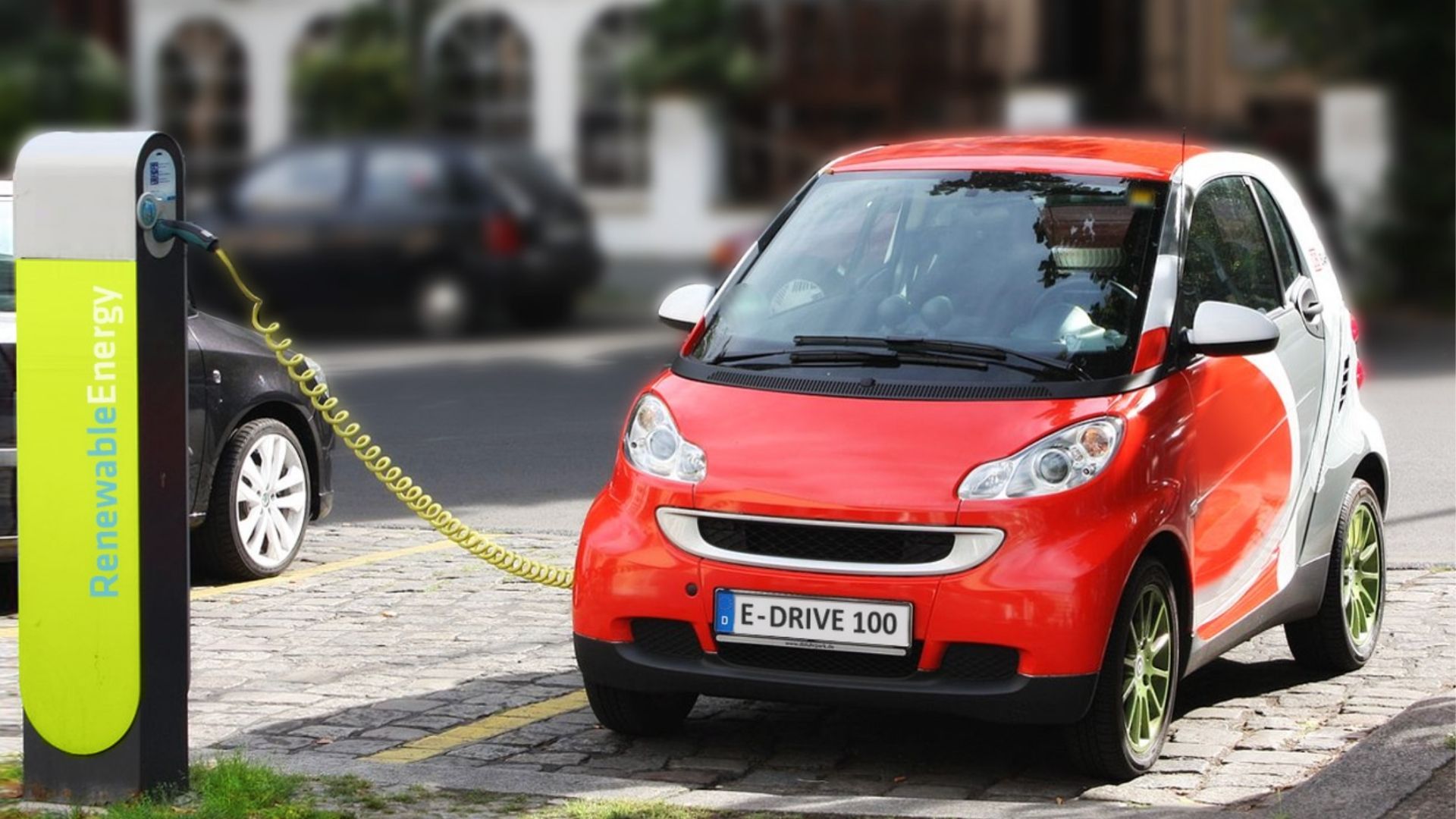
Electric cars and hydrogen cars are often compared as rival technologies. However, both are electric at the wheel. The main difference is how they store and deliver energy.
Battery-electric vehicles, or BEVs, store electricity directly in a battery pack. Hydrogen fuel-cell vehicles, or FCEVs, store energy as hydrogen and convert it into electricity inside the vehicle.
Both offer zero tailpipe emissions, but they differ sharply in efficiency, infrastructure, cost, and likely use cases.
Over the next two decades, battery EVs are expected to dominate passenger cars. Hydrogen vehicles are more likely to serve specific transport sectors such as long-haul trucks, buses, coaches, and high-use commercial fleets.
How the technologies work
A battery EV is charged by plugging into the electricity grid. The electricity is stored in a lithium-ion battery and then sent to an electric motor that drives the wheels. Because the process is direct, BEVs are highly efficient. Their electricity-to-wheel efficiency is often above 70 percent.
Hydrogen vehicles use a more complex chain. Hydrogen is produced elsewhere, compressed, stored, transported, and then refuelled into the vehicle. Inside the vehicle, a fuel cell combines hydrogen with oxygen to produce electricity. That electricity powers the motor.
The fuel-cell stack itself is usually below 70 percent efficient. When the full green hydrogen chain is included, from electricity generation to hydrogen production, compression, transport, and conversion, the final well-to-wheel efficiency can fall closer to 20–30 percent.
This means hydrogen vehicles use much more primary energy than battery EVs when both are powered by the same renewable electricity. This efficiency gap is one of the strongest arguments in favor of battery EVs for regular passenger transport.
Efficiency, range, and cost
Battery EVs have a clear advantage in energy use and running costs. Since fewer conversion steps are involved, more of the original electricity reaches the wheels. This usually makes BEVs cheaper to operate per kilometer.
Hydrogen vehicles have an advantage in refueling time and potential range. Many FCEVs can be refueled in about 5 minutes, and some models offer 300–400 miles of range or more.
This makes hydrogen attractive for vehicles that need long range and cannot afford long charging breaks.
For private cars, this advantage is less decisive. Most daily driving distances are short enough for modern battery EVs. Home charging, workplace charging, and public fast charging can cover most passenger vehicle use cases.
For commercial transport, the calculation changes. Trucks, buses, and fleet vehicles often run for long hours and need quick turnaround. In these cases, refueling speed, payload, and route flexibility can matter more than maximum energy efficiency.
Infrastructure challenge
Infrastructure is another major difference.
Battery EVs can use the existing electricity network. Charging infrastructure still needs major expansion, and power grids will require upgrades, but the basic system already exists. EVs can be charged at homes, offices, depots, highways, and public charging stations.
Hydrogen needs a new supply chain. It requires clean hydrogen production, compression, storage, transport, and dedicated refueling stations. This makes deployment slower and more expensive.
There is also the emissions issue. Hydrogen cars produce no tailpipe emissions, but most hydrogen today is still produced using fossil fuels, especially natural gas.
Low-emissions hydrogen accounted for less than 1 percent of global production in 2024/2025. For hydrogen vehicles to deliver major climate benefits, the fuel must increasingly come from low-emission or renewable sources.
Market outlook
The market already shows a major lead for battery EVs. Global electric car sales exceeded 20 million in 2025, reaching about 25 percent of total car sales. The IEA expects sales to grow to 23 million in 2026, representing around 28 percent of total car sales.
Hydrogen vehicles are growing from a much smaller base. One estimate values the hydrogen fuel-cell vehicle market at about $0.2 billion in 2024, rising to around $2.1 billion by 2030. That shows rapid growth in percentage terms, but the market remains tiny compared with battery EVs.
Some forecasts suggest fuel-cell vehicles may account for only around 4 percent of zero-emission vehicles by 2044. However, hydrogen could have a stronger role in heavy transport, especially in long-distance trucks and high-use commercial fleets.
Final verdict
Battery EVs are likely to go further in mainstream adoption. They are more efficient, easier to scale, cheaper to run, and already supported by a fast-growing charging network.
Hydrogen is unlikely to replace battery EVs in normal passenger cars. Its future is more specialized. It can be useful in sectors where battery technology is limited, including long-haul trucking, intercity coaches, industrial fleets, shipping, and possibly aviation.
The future is not a simple electric-versus-hydrogen battle. Battery EVs are set to dominate everyday road transport, while hydrogen will compete in the harder-to-electrify parts of the transport system.
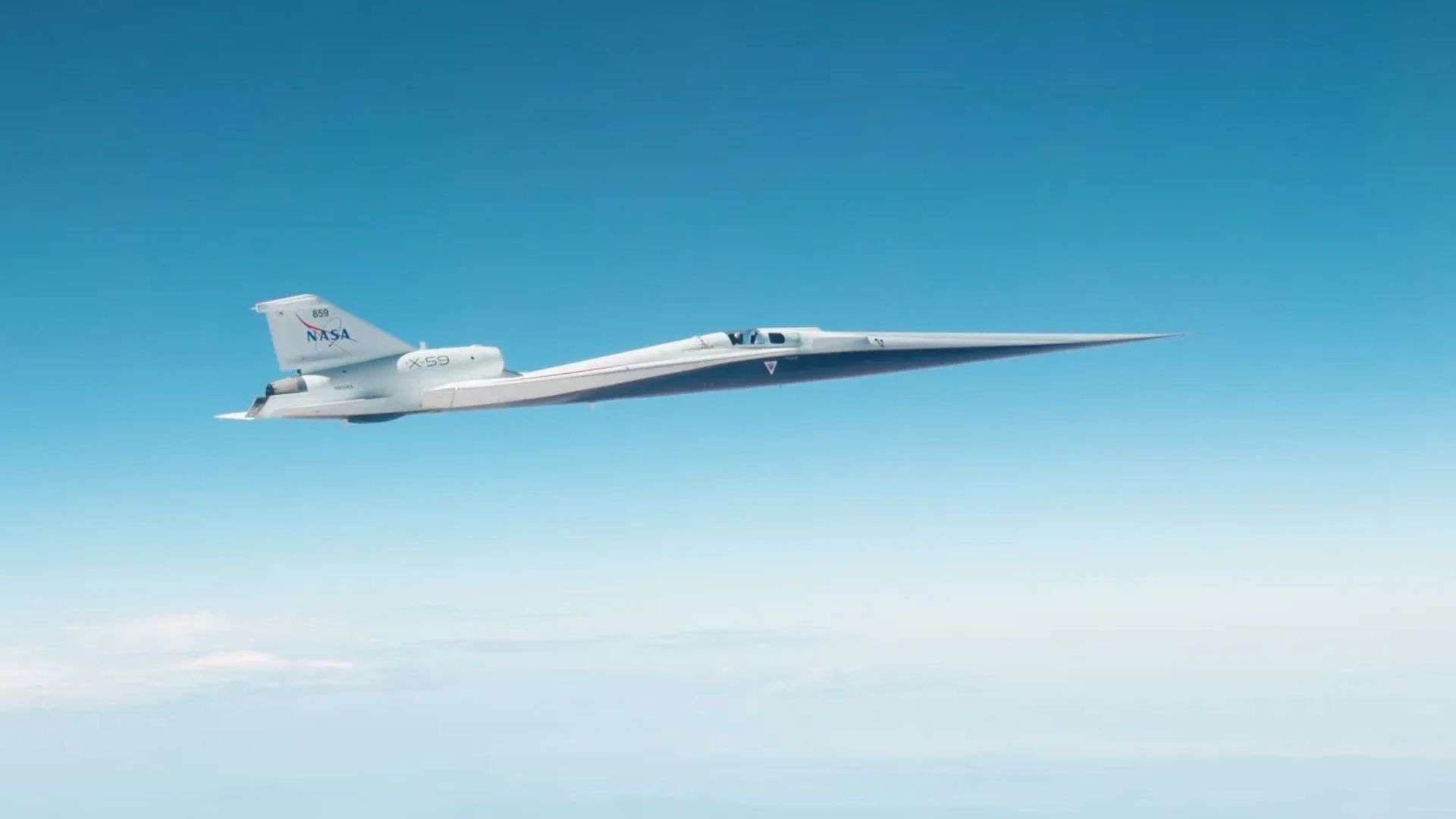
Slicing through the atmosphere at 55,000 feet, NASA’s experimental X-59 reached a vital milestone on Friday, June 12, by hitting Mach 1.4 (roughly 924 mph).
Hitting these exact numbers is a huge deal. Mach 1.4 at 55,000 feet represents the identical speed and cruising height the aircraft will use when it eventually flies over populated American towns.
“Each flight brings NASA one step closer to flying the X-59 over communities and gathering feedback that could help shape the future of commercial supersonic flight over land,” NASA stated.
Achieving flight conditions
For over fifty years, international aviation regulators have strictly banned civilian supersonic flights over land due to the deafening, window-rattling disruption of sonic booms.
Established in 1973, this absolute ban has locked commercial air travel to standard subsonic speeds to protect populated areas on the ground.
Developed in partnership with Lockheed Martin, NASA’s X-59 is an experimental aircraft designed for supersonic flight.
In a rapid sequence of testing milestones, NASA test pilot Jim “Clue” Less first flew the X-59 to Mach 1.1 (713 mph) at 43,400 feet during an 81-minute flight from Edwards Air Force Base on June 5.
Just one week later, on June 12, the experimental craft successfully pushed its performance envelope even further, accelerating to Mach 1.4 at even higher altitude.
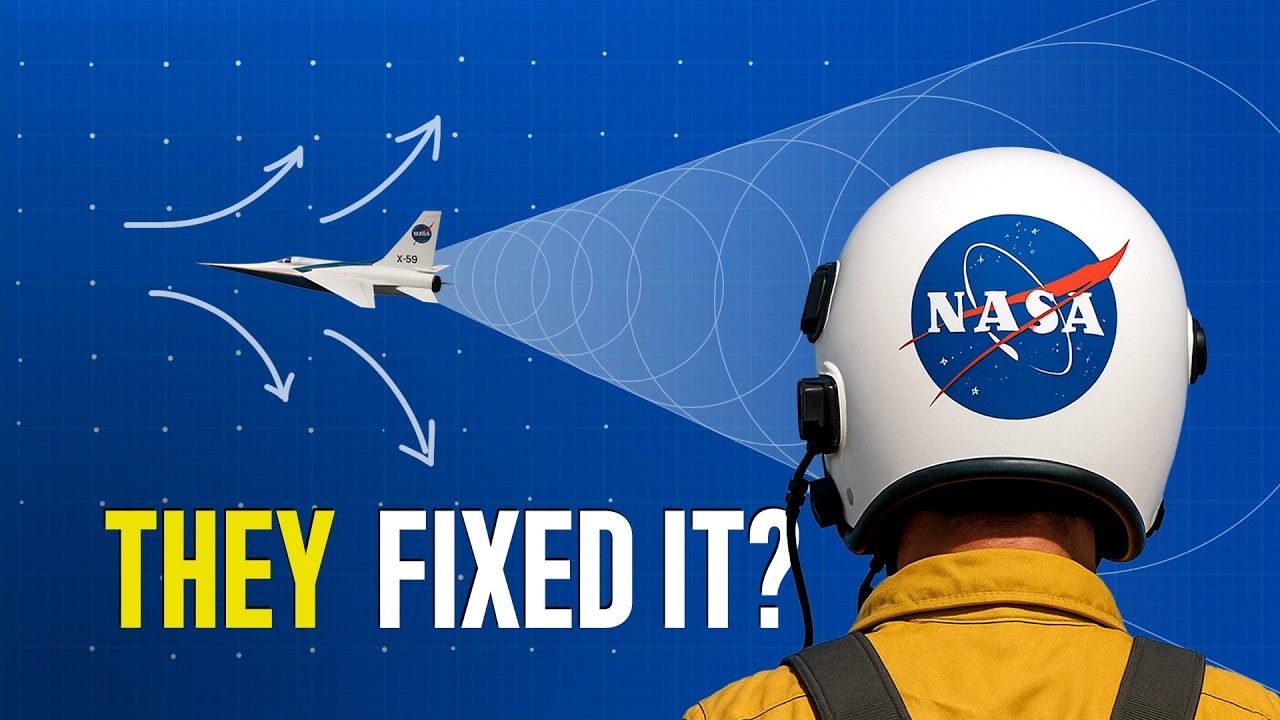
How does the plane bypass the classic explosion? It comes down to design. Standard supersonic jets create air-pressure ripples that quickly clump together into a single, massive shockwave.
The X-59 is built like a needle. Its ultra-long, slender shape separates those air-pressure waves and prevents any combination from occurring. Rather than a loud boom, people on the ground should theoretically hear a gentle, car-door-like “thump.”
Currently, pilots are steadily pushing the aircraft through a battery of complex maneuvers, varying speeds, and diverse altitudes to find its absolute physical performance limits.
Engineers will thoroughly measure the aircraft’s supersonic acoustic signature using ground microphone arrays to confirm that the quiet thump is performing exactly as intended.
Eventually, NASA will take the X-59 out of isolated test spaces and fly it directly over several U.S. communities to openly survey real public perception of the sound.
The F-15 companion
Right now, verifying the plane’s actual acoustic signature is a bit tricky. During these early test flights, the X-59 is trailed closely by a NASA F-15 research fighter jet.
The trailing jet is about to become a critical scientific tool. In upcoming tests, engineers will mount a specialized, shock-sensing probe to the F-15’s nose. This will let researchers fly directly into the wake of the X-59, mapping out its invisible pressure waves and gathering real-time data on its low-boom performance.
Once the data from the community overflights has been fully gathered, NASA plans to hand the findings to international regulatory boards. The hope is to replace the decades-old speed limits with a new, noise-based standard.
If the public agrees that the X-59 is quiet enough, the aviation industry could see a cutting of cross-country commercial flight times squarely in half.
 Login